Pawpaw — health benefits and uses
An Appalachian and Indigenous woodland food eaten ripe from the tree.
The Short Answer
Pawpaw is a nutrient-dense native North American fruit with a custard-like texture, providing 61mg of vitamin C and 80 calories per 100g serving. While rich in antioxidants, it contains neurotoxic acetogenins in its skin and seeds, so only the ripe pulp should
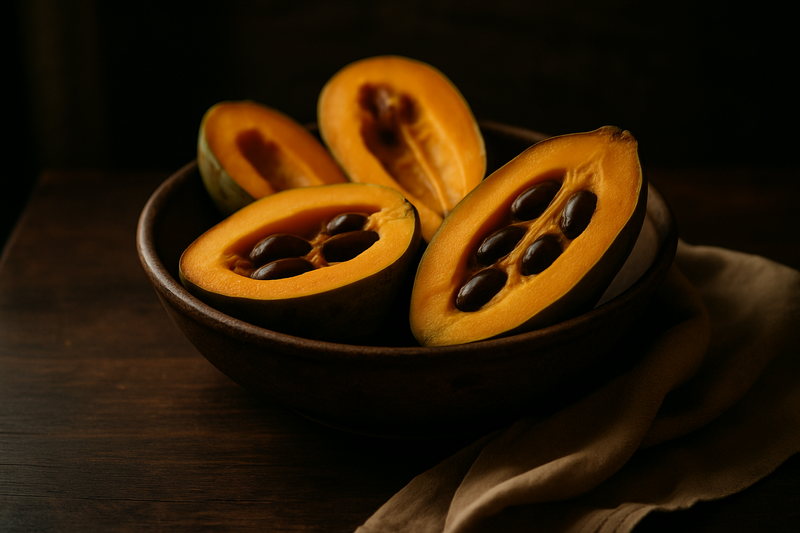
Pawpaw · Photograph
Discover pawpaw fruit health benefits and side effects in this evidence-aligned guide. Learn about American pawpaw nutrition facts, how to eat it safely, which parts to avoid, and what the current science actually says about this unique native North American fruit.
Key Nutrients
% Daily Value based on 2,000 cal diet
Key active compounds
- Annonacin — An acetogenin (long-chain plant compound with a specific ring structure) found in the seeds, skin, and pulp. It inhibits mitochondrial complex I (an enzyme your cells need to make energy) and is neurotoxic in cell and animal models. Present in highest concentrations in the seeds and skin; measurable but lower amounts in ripe pulp.
- Squamocin — A second acetogenin in pawpaw that shares the same mechanism of toxicity as annonacin. Contributes to the cytotoxic (cell-killing) profile seen in laboratory studies.
- Carotenoids — Pigmented plant compounds, some of which convert to vitamin A in the body. Pawpaw reportedly contains more carotenoids than most other temperate fruits, supporting antioxidant and immune functions.
- Phenolic antioxidants — Plant compounds with a phenol chemical structure that protect cells from oxidative damage. The specific phenolic profile of pawpaw is not yet fully mapped.
- Vitamin C — A water-soluble antioxidant present in notable amounts; supports immune function and collagen production.
Prep and pairing ideas
Pawpaw pulp is soft enough to scoop straight from a ripe fruit with a spoon — no knife required once it gives to gentle pressure. Here are three practical ways to use it.
1. Eat it fresh with a pinch of citrus salt Halve a ripe pawpaw, discard the seeds, and scoop the pulp. A tiny pinch of flaky sea salt and a squeeze of lime sharpens the tropical flavor. Best eaten within a day of ripening.
2. Blend it into a smoothie Frozen pawpaw pulp blends seamlessly with banana, kefir or plant-based yogurt, and a handful of spinach. The custard texture makes it a natural thickener — use about ¼ to ½ cup alongside one banana.
3. Use it as a banana substitute in baked goods Ripe pawpaw pulp swaps 1:1 for mashed banana in muffins, quick breads, and pancakes. It adds a floral, mango-like note. Because some vitamin C is heat-labile (destroyed by heat), the fresh version retains more of that nutrient than baked preparations.
Myths vs. facts about pawpaw
Myth 1: "Pawpaw is just like soursop — both are superfruits with the same benefits." Fact: Pawpaw (Asimina triloba) and soursop (Annona muricata) are both Annonaceae family members and share acetogenin chemistry, but they are different species with different culinary histories. Neither has robust human clinical trial evidence for health benefits, and both carry acetogenin safety considerations. Treat them as related but distinct fruits.
Myth 2: "Because it is natural and grown without pesticides, it is completely safe to eat as much as you want." Fact: "Natural" does not mean unlimited. Annonacin is a naturally occurring compound in pawpaw with documented neurotoxic effects in cell and animal models. The amount in a casual seasonal serving is very different from daily, heavy consumption over years. Natural plus reasonable portions equals sensible; natural plus unlimited consumption does not equal safe.
Myth 3: "Pawpaw supplements can fight cancer because lab studies show it kills cancer cells." Fact: Cell-culture findings cannot be directly translated to human outcomes. The acetogenins that kill cancer cells in a dish are the same compounds that are neurotoxic in neuronal models. No human clinical trial has demonstrated that pawpaw supplements treat or prevent any cancer, and major oncology centers explicitly note the absence of such evidence alongside safety concerns.
Bottom line
Pawpaw is a genuinely delicious, nutrient-rich fruit that deserves more attention in North American whole-food eating. Its pulp offers a meaningful hit of vitamin C, copper, magnesium, and fiber in a package unlike any other temperate fruit. As an occasional seasonal food — scooped fresh, blended, or baked — it fits neatly into a varied plant-based diet.
The sensible guardrails are clear: scoop the pulp, leave the seeds and skin behind, keep portions moderate, and enjoy it during its brief harvest season rather than seeking it year-round through concentrated supplements. If you have a neurological condition, are pregnant, or take medications for Parkinson's disease, talk to your healthcare provider before making pawpaw a regular part of your diet.
There is real scientific curiosity surrounding pawpaw — it just has not yet translated into human clinical evidence. For now, its best role is as a flavorful, locally sourced seasonal fruit, not a therapeutic supplement.
How Pawpaw Compares
| Compared with | What's different |
|---|---|
| Pawpaw vs. Soursop | Grows in tropical climates; has a more acidic, pineapple-like tang and spiky green skin. |
| Pawpaw vs. Mango | Firmer, fibrous texture compared to pawpaw's custard-like pulp; contains no neurotoxic acetogenins. |
| Pawpaw vs. Banana | Higher starch content and less vitamin C; lacks the floral, tropical aroma of pawpaw. |
Health Benefits
Shop This Ingredient
Stock your pantry with quality pawpaw.
Buy on AmazonAs an Amazon Associate, Plantopedia earns from qualifying purchases. This costs you nothing extra and helps us keep the encyclopedia free.
Frequently Asked Questions
Important context before diving in: No controlled human clinical trials have evaluated pawpaw fruit for any specific health outcome. Every potential benefit described below is extrapolated from pawpaw's nutrient profile or from laboratory (in vitro) and animal studies. Treat these as reasonable possibilities, not proven effects. Heart and circulation Pawpaw provides potassium, magnesium, vitamin C, and dietary fiber — all nutrients consistently associated with healthy blood pressure and vascular function in broader dietary research. However, no human study has linked pawpaw intake specifically to lower blood pressure, reduced cholesterol, or fewer cardiovascular events. Any heart-health benefit is inferred from its overall nutrient package, not from pawpaw-specific trials. Digestive health and microbiome The roughly 2.6 g of fiber per half-cup serving can contribute to stool bulk and regularity as part of a high-fiber diet. Some people, though, experience nausea or loose stools after eating larger portions of pawpaw — a sign that individual tolerance varies. Start with a small serving if you are new to it. Again, no clinical trials have tested pawpaw specifically for gut health outcomes. Blood sugar and metabolism Pawpaw contains naturally occurring sugars alongside its fiber and micronutrients. Its carbohydrate profile is broadly similar to other fresh fruits, and general evidence suggests that whole fruit, including its fiber, is preferable to juice for blood sugar management. That said, no glycemic index or glycemic load data exist specifically for pawpaw, and people managing diabetes should count it the same way they would any moderate-sugar fruit. Large portions add meaningful carbohydrate, so reasonable serving sizes matter. Inflammation and recovery Laboratory studies show that pawpaw extracts can inhibit the growth of certain cancer cell lines and suggest anti-inflammatory activity in cell-based models. These findings are scientifically interesting but have not been tested in humans. Importantly, the same acetogenin compounds responsible for these effects in the lab are also the compounds with neurotoxicity concerns — making concentrated extracts a poor strategy for seeking anti-inflammatory benefits.
The seasonal forager or local food enthusiast Wants nutrient-dense whole food that is locally grown and ecologically sound. Can use pawpaw's short harvest window (late August through October in most regions) to add variety to a plant-forward diet. Benefits from the vitamin C and copper hit without any supplements. The fiber-focused plant-based eater Looking to diversify fruit intake beyond common supermarket staples. Pawpaw's fiber, magnesium, and antioxidant carotenoids complement a legume- and vegetable-heavy diet. Works well blended into smoothies or used as a banana substitute in recipes during its brief season.
This is the most important safety section on this page. Please read it carefully. The ripe pulp is considered acceptable food in moderate, occasional amounts. Regulatory assessments have found no evidence that normal culinary consumption of ripe pawpaw pulp is unsafe for most healthy adults. The seeds and skin are not edible. They contain significantly higher concentrations of annonacin and squamocin — the neurotoxic acetogenins. Always scoop out and discard the seeds; do not chew them. Peel or avoid the skin. Chronic heavy intake raises concern. Annonacin inhibits mitochondrial complex I in neurons, and epidemiologic work on other Annonaceae fruits (especially soursop in the Caribbean) has linked high, long-term consumption to an atypical form of parkinsonism. At least one case report describes a progressive supranuclear palsy-like syndrome in someone who consumed pawpaw habitually over many years. Pawpaw supplements and concentrated extracts are a different risk category. They concentrate acetogenins far beyond what you get in a serving of fresh fruit. No human clinical trials document their safety or benefit. Major oncology and pharmacology resources advise against using them. Use extra caution if you: Have Parkinson's disease or any movement or neurodegenerative disorder. Are pregnant or breastfeeding (safety data are absent; medicinal use is not recommended). Are giving pawpaw to young children regularly. Take dopaminergic medications (e.g., levodopa) or other Parkinson's treatments. Take chemotherapy drugs (acetogenin interactions in humans are unstudied). Have a known allergy or contact sensitivity to Annonaceae plants (pawpaw skin contact can cause dermatitis in some people).
There is no established therapeutic or "safe upper limit" dose because no clinical trials have defined one. Based on traditional food use and the safety reasoning in current literature, a practical framework looks like this: Typical culinary serving: ½ to 1 medium fruit (roughly 50–150 g of pulp, or about ¼ to ¾ cup), eaten occasionally during the short harvest season. Start low if you are new to it: Begin with a small spoonful to assess GI tolerance. Some people experience nausea or loose stools at larger servings. Do not eat daily in large quantities over extended periods — this is where neurotoxicity concerns from chronic acetogenin exposure become more relevant. Do not eat the seeds or skin at all. Do not take pawpaw extracts or supplements as a substitute for medical treatment or as a regular health strategy. Think of pawpaw the way you might think of an unusual wild mushroom: wonderful as an occasional seasonal food prepared correctly; not something to eat in large amounts every day, and never eaten in the wrong form.
Quick Answers
Common questions, answered in a line.
Pawpaw pulp can be eaten fresh with a spoon, blended into smoothies, or used as a 1:1 substitute for mashed bananas in baked goods like muffins and pancakes. For the best flavor, eat ripe fruit within one day of ripening and consider adding a pinch of salt or lime.
Pawpaw contains annonacin and squamocin, which are natural acetogenins that have shown neurotoxic and cytotoxic (cell-killing) effects in laboratory and animal models. These compounds inhibit mitochondrial complex I, which is the enzyme cells need to produce energy.
Pawpaw is a good source of Vitamin C, carotenoids, and phenolic antioxidants, along with minerals like copper and magnesium and dietary fiber. Its high carotenoid content supports immune function and provides more of these antioxidants than most other temperate fruits.
There is no human clinical trial evidence proving that pawpaw can treat or prevent cancer, despite laboratory studies showing its compounds can kill cells in a dish. Major oncology centers warn that the same compounds that kill cancer cells in labs are also toxic to nerve cells.
While pawpaw and soursop are both members of the Annonaceae family and share similar acetogenin chemistry, they are different species with distinct culinary histories. Neither fruit has robust human evidence for health benefits, and both require similar safety considerations regarding neurotoxicity.
Individuals with neurological conditions, those who are pregnant, or people taking medications for Parkinson's disease should consult a healthcare provider before eating pawpaw. The fruit's acetogenins have documented neurotoxic effects that may interact with these specific health concerns.
For Readers in the USA
Local context — sourcing, seasonality, and regional notes.
Pawpaw trees are native to the Eastern United States and Midwest, thriving in USDA Hardiness Zones 5 through 9 from northern Florida to southern Ontario. You can find them growing wild in the fertile bottomlands of the Appalachian hills and throughout the Ohio River Valley.
The American pawpaw has a very short harvest window, typically peaking from late August through early October depending on your latitude. Because the fruit is highly perishable and bruises easily, it is rarely found in standard grocery stores and is best sought at local farmers markets during these months.
While you won't usually find them at chains like Kroger or Whole Foods, you can buy pawpaw pulp online from specialty orchards in states like Kentucky and Ohio. Some high-end regional markets in the Mid-Atlantic and Midwest may carry them briefly, but mail-order frozen pulp is the most reliable way to source them year-round.
The pawpaw holds a unique place in American history, famously enjoyed by George Washington and Thomas Jefferson, and relied upon by the Lewis and Clark expedition. Today, it is celebrated at dedicated regional events like the Ohio Pawpaw Festival, which highlights its status as the largest edible fruit native to North America.
AI Clinical Review
- Accurately presents pawpaw as a nutrient-dense seasonal fruit, with vitamin C, fiber, magnesium, and copper comparable to reputable nutrition databases.
- Clearly distinguishes edible pulp from inedible seeds/skin and explains that acetogenins (plant compounds that can harm nerve cells at high doses) are concentrated outside the pulp.
- Appropriately emphasizes that proposed benefits are inferred from its nutrient profile; there are no human clinical trials showing disease outcomes from pawpaw.
- Sensibly cautions against supplements/extracts, which can concentrate acetogenins well beyond levels found in typical servings of fresh fruit.
- Human data are lacking for cardiometabolic, anti-inflammatory, or gut/microbiome outcomes; current claims rely on general fruit-and-vegetable evidence or lab studies.
- The real-world dose of annonacin from typical ripe pulp and any “safe upper limit” are not well defined; levels likely vary by cultivar, ripeness, and preparation.
- Observational links between heavy Annonaceae fruit intake and atypical parkinsonism come mostly from other species/regions; how this translates to occasional pawpaw intake remains uncertain.
- Glycemic index/load and specific effects on blood sugar control have not been established for pawpaw.
- Portion guidance: 1/2–1 medium fruit (about 50–150 g pulp) occasionally during the short season is a practical range; avoid chronic large daily intakes.
- Do not consume seeds or skin; discard them. Avoid pawpaw supplements or concentrated extracts due to uncertain benefit and higher acetogenin exposure.
- Extra caution for people with Parkinson’s disease or other neurologic conditions, those who are pregnant or breastfeeding, young children, and anyone taking dopaminergic medications or chemotherapy—check with your clinician first.
- Start with a small amount to gauge tolerance; some individuals report nausea or loose stools. For diabetes management, count pawpaw like other moderate-sugar fruits and keep portions modest.
Seeds and skin contain annonaceous compounds and are not edible; some people get GI upset.
References
- USDA FoodData Central — Pawpaw nutritional data (fdc.nal.usda.gov)
- MyPlate / USDA — Healthy fruit intake guidance (myplate.gov)
- Annonacin in Asimina triloba fruit: implication for neurotoxicity (PubMed) (pubmed.ncbi.nlm.nih.gov)
- Determination of neurotoxic acetogenins in pawpaw — squamocin and annonacin analysis (PubMed) (pubmed.ncbi.nlm.nih.gov)
- Neurotoxicity of dietary supplements from Annonaceae species — review (SAGE Journals) (journals.sagepub.com)
- American pawpaw — integrative medicine monograph (Memorial Sloan Kettering Cancer Center) (mskcc.org)
- Pawpaw uses, benefits and dosage — pharmacology monograph (Drugs.com) (drugs.com)
- Growth-inhibitory effects of pawpaw extracts on gastric and cervical cancer cells (PubMed) (pubmed.ncbi.nlm.nih.gov)
- McLaughlin review of pawpaw acetogenins and safety (University of Kentucky / USDA) (kysu.edu)
- USDA ARS National Clonal Germplasm Repository — Asimina germplasm information (ars.usda.gov)
Know Your Numbers
Eating healthy is a start. Now get to know your biomarkers.
Food changes bloodwork — inflammation, lipids, blood sugar and nutrient status all respond to what you eat. 59 markers from $59.
- Results in 7–10 days at 2,000+ Quest sites
- Licensed provider reviews every result
- One flat price, no membership, HSA/FSA eligible
Educational information only, not medical advice. Panels are ordered and reviewed through our licensed partner; Plantopedia may earn a commission.