Beyond simple sweetness, discover how Vitamin C, potassium, and skin-concentrated antioxidants create a bioactive matrix that supports heart
Fiber + phytonutrients; use as a whole-food sweet, snack, or smoothie base
The Short Answer
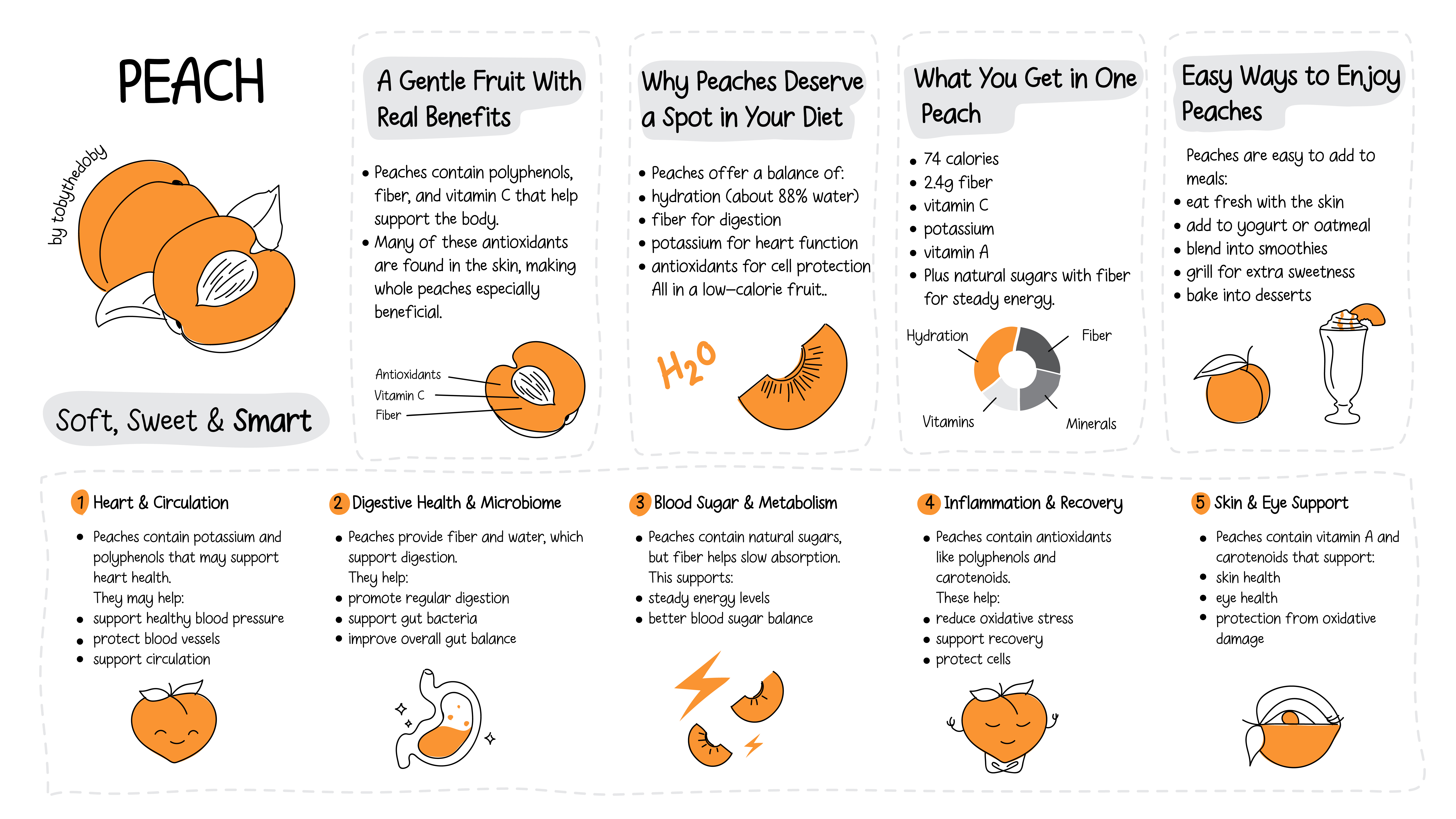
Peaches are a low-calorie fruit providing 2.4g of fiber and 15% of your daily Vitamin C per medium serving. They are rich in skin-concentrated polyphenols and potassium, which support heart health and digestion.

Peach · Photograph
Peaches stand out among fruits for their specific combination of micronutrients and secondary metabolites. A single medium peach delivers about 15% of your daily vitamin C needs, meaningful fiber for digestive motility, and potassium for cardiovascular function—all for just 74 calories.
Key Nutrients
% Daily Value based on 2,000 cal diet
Why Peach Health Benefits Matter for Your Wellness Routine
Peaches stand out among fruits for their specific combination of micronutrients and secondary metabolites. A single medium peach delivers about 15% of your daily vitamin C needs, meaningful fiber for digestive motility, and potassium for cardiovascular function—all for just 74 calories.
The health benefits of peaches are primarily concentrated in the skin, which contains a high density of polyphenols. Unlike processed snacks, peaches offer these compounds in a hydrated, whole-food package that the body can efficiently metabolize. Their high water content (roughly 88%), combined with natural fiber, promotes satiety, making them an ideal tool for weight management and cellular hydration.
Key Active Compounds in Peaches
Several key bioactive molecules drive the therapeutic potential of peaches:
- Polyphenols: Specifically, chlorogenic and neochlorogenic acids, which act as antioxidants to reduce oxidative stress and potentially inhibit LDL cholesterol oxidation.
- Carotenoids: Includes beta-carotene, lutein, and zeaxanthin, which are essential for ocular health and systemic immune support.
- Caffeic Acid: A phenolic compound with documented anti-inflammatory properties.
- Beta-cryptoxanthin: A provitamin A carotenoid that supports bone health and respiratory function.
- Soluble and Insoluble Fiber: Peaches provide a dual-fiber profile that supports both cholesterol management and bowel regularity.
- Potassium: A vital electrolyte that mitigates the effects of sodium on blood pressure.
Conclusion
Peaches offer a compelling combination of essential vitamins, fiber, and antioxidant compounds that support heart health, digestion, and systemic recovery. While many of the most dramatic findings currently stem from laboratory settings, the peach's established nutritional profile makes it an excellent functional food for daily wellness.
To maximize the health benefits of peaches, consume them fresh with the skin intact and pair them with a protein source to optimize metabolic stability. Ready to build more nutrient-rich meals using peaches? Our meal planner can help you incorporate peaches and other beneficial ingredients into your weekly routine.
How Peach Compares
| Compared with | What's different |
|---|---|
| Peach vs. Nectarine | Peaches have fuzzy skin and a softer texture; nectarines have smooth skin and a firmer, tarter bite. |
| Peach vs. Apricot | Peaches are sweeter and softer; apricots are smaller, more tart, and contain significantly more Vitamin A. |
Health Benefits
Things to Know
FODMAP Awareness: Peaches contain sorbitol, a sugar alcohol. Individuals with IBS or fructose intolerance may experience bloating or digestive sensitivity.
Kidney Considerations: Because peaches contain potassium, those with chronic kidney disease (CKD) or on potassium-sparing diuretics should monitor their portions.
Dental Health: Like all fruits, those containing natural sugars and acids are best rinsed with water after consumption to protect tooth enamel.
The Pit: Never consume the peach pit (stone), as it contains amygdalin, which can release cyanide when metabolized.

Common Uses
- —Eating a whole peach (with the skin) paired with almonds or Greek yogurt to stabilize blood sugar levels.
- —Consuming fresh peaches as a natural source of sorbitol and fiber to prevent constipation and support the microbiome.
- —Using the high water and natural sugar content of peaches for quick energy and hydration before physical activity.
- —Slicing peaches into a spinach salad to utilize Vitamin C for better plant-based iron uptake.
- —Substituting processed sweets with a fresh peach to satisfy cravings while providing heart-protective polyphenols.
- —Regular consumption to build up carotenoid levels that assist in internal skin protection and repair.
Glossary
Shop This Ingredient
Stock your pantry with quality peach.
Buy on AmazonAs an Amazon Associate, Plantopedia earns from qualifying purchases. This costs you nothing extra and helps us keep the encyclopedia free.
Frequently Asked Questions
Yes, the skin is safe and is the most nutrient-dense part of the fruit. It contains the highest concentration of polyphenol antioxidants and fiber. To minimize pesticide exposure, wash fresh peaches thoroughly under running water or choose organic options when possible.
The soluble fiber (pectin) in peaches binds to bile acids in the digestive tract, helping the body excrete cholesterol. Furthermore, the antioxidants in peaches may prevent LDL cholesterol from oxidizing, which reduces the risk of plaque buildup in the arteries. However, these effects are best seen as part of a high-fiber diet.
For most people, eating 1–2 peaches daily is a healthy way to increase their intake of vitamins and fiber. However, because they are high in sorbitol (a FODMAP), people with sensitive digestion should monitor for bloating. Those with advanced kidney disease should also account for the potassium content in their daily totals.
Peaches have a low-to-moderate glycemic index. Their fiber content slows the digestion of natural sugars, which prevents rapid spikes in blood glucose. For optimal blood sugar stability, pair your peach with a handful of nuts or Greek yogurt to further slow carbohydrate absorption.
There is no "perfect" time, but eating a peach as a pre-workout snack provides hydrating water and quick-acting natural sugars. Alternatively, eating one with a meal can enhance the absorption of non-heme iron from plant-based foods due to the fruit's vitamin C content.
Quick Answers
Common questions, answered in a line.
Peaches provide approximately 15% of your daily Vitamin C needs, meaningful fiber for digestive motility, and potassium for cardiovascular function. They also contain essential carotenoids like lutein and zeaxanthin, which support ocular health and systemic immune function.
Peaches support heart health through potassium, which helps mitigate the effects of sodium on blood pressure, and polyphenols like chlorogenic acid. These antioxidants may reduce oxidative stress and potentially inhibit the oxidation of LDL cholesterol.
Yes, peaches can help with weight loss because they are low in calories and have a high water content of roughly 88%. The combination of natural fiber and high hydration promotes satiety, making them an ideal tool for weight management.
Peaches support digestion by providing a dual-fiber profile of soluble and insoluble fiber, which promotes bowel regularity. Additionally, they contain sorbitol, a natural sugar alcohol that can help prevent constipation and support the microbiome.
You should never consume the peach pit or stone because it contains amygdalin, which can release cyanide when metabolized. While the fruit itself is healthy, the pit is unsafe for human consumption.
Peaches contain carotenoids and polyphenols that assist in internal skin protection and repair. These antioxidants are primarily concentrated in the skin, providing a bioactive matrix that helps combat oxidative stress.
Individuals with Irritable Bowel Syndrome (IBS) or fructose intolerance may experience bloating due to the sorbitol in peaches. Additionally, those with chronic kidney disease (CKD) should monitor portions due to the fruit's potassium content.
For Readers in the USA
Local context — sourcing, seasonality, and regional notes.
The peak season for fresh U.S. peaches typically runs from May through late September, with the most diverse varieties available in July and August. While California produces the largest volume, states like Georgia and South Carolina are famous for their high-quality summer harvests.
California is the top producer of peaches in the U.S., followed by South Carolina and Georgia, which are culturally synonymous with the fruit. Other significant growing regions include New Jersey, Pennsylvania, and Washington, each offering unique local varieties at farmers markets.
Fresh peaches are widely available at major grocery chains like Kroger, Publix, and Whole Foods, while local farmers markets offer the best selection of tree-ripened fruit in the summer. During the off-season, American shoppers primarily find peaches in the canned or frozen aisles.
The USDA Organic label ensures that peaches were grown without synthetic pesticides or fertilizers, which is important for those eating the nutrient-dense skin. Because peaches consistently appear on the "Dirty Dozen" list due to pesticide residue, many U.S. consumers prioritize buying organic.
AI Clinical Review
- Skin Importance: Correctly emphasizes that peeling a peach removes the majority of its antioxidant polyphenols and a significant portion of its fiber.
- Vascular Mechanism: Accurately notes the role of peach compounds in modulating angiotensin II, a scientifically sound pathway for blood pressure management.
- Dual Fiber Profile: Properly identifies the presence of both soluble (pectin) and insoluble fiber, which is essential for comprehensive gut health.
- Low-Glycemic Impact: Correctly labels peaches as having a moderate glycemic impact despite their sweetness, thanks to the fiber-sugar matrix.
- Vitamin C and Iron: Rightly suggests pairing peaches with plant-based iron sources to maximize mineral bioavailability.
- Cancer Cell Inhibition: While laboratory studies on peach polyphenols and cancer cells are promising, these are currently "test-tube" results and lack the human clinical data required for medical claims.
- Insulin Secretion: The potential for peach extracts to stimulate insulin secretion is an emerging area of research that has yet to be replicated in large-scale human metabolic trials.
- Dosage for Systemic Anti-inflammation: While peaches neutralize free radicals in lab settings, the specific number of peaches required daily to measurably lower human C-reactive protein (CRP) is not yet standardized.
- Sorbitol Sensitivity Variance: The impact of peach sorbitol on the gut varies significantly between individuals, requiring more personalized digestive research.
- The Pit Danger: As noted, the peach stone contains amygdalin; ensure patients (and those with pets) know to never crack open or consume the inner kernel.
- FODMAP/IBS Trigger: Because peaches are high in sorbitol, they can cause significant bloating in patients with IBS or fructose malabsorption.
- Pesticide Management: Peaches often rank high on the "Dirty Dozen" list; advise thorough washing or choosing organic to limit intake of synthetic residues.
- CKD Precautions: For patients with advanced Chronic Kidney Disease, the potassium in peaches must be strictly accounted for in their daily mineral limits.
- Canned vs. Fresh: Clinically, "peaches in heavy syrup" should be avoided as they negate the metabolic benefits by introducing inflammatory levels of refined sugar.
Frame as food education, not disease treatment.
References
- USDA FoodData Central - Peach (Raw) Nutritional Profile: Primary source for macronutrient and vitamin concentrations.
- Journal of Nutritional Biochemistry - Peach Antioxidants and Inflammation: Research regarding the anti-inflammatory pathways of stone fruit polyphenols.
- Texas AgriLife Research - Peach Polyphenols and Cardiovascular Benefits: Study on the effects of peach compounds on LDL cholesterol and blood pressure.
- American Heart Association - Potassium and Heart Health: Clinical guidance on how potassium-rich foods like peaches support vascular function.
- Mayo Clinic - Fiber Benefits for Digestive Health: Evidence-based overview of how soluble fiber supports regularity and metabolic health.
Know Your Numbers
Eating healthy is a start. Now get to know your biomarkers.
Food changes bloodwork — inflammation, lipids, blood sugar and nutrient status all respond to what you eat. 59 markers from $59.
- Results in 7–10 days at 2,000+ Quest sites
- Licensed provider reviews every result
- One flat price, no membership, HSA/FSA eligible
Educational information only, not medical advice. Panels are ordered and reviewed through our licensed partner; Plantopedia may earn a commission.