Red Yeast Rice (Angkak) — health benefits and uses
Traditional Chinese food culture used red yeast rice for circulation and digestion.
The Short Answer
Red yeast rice contains monacolin K, a natural compound chemically identical to the cholesterol-lowering drug lovastatin. It is used both as a culinary colorant (angkak) and a supplement to support cardiovascular health by inhibiting the liver's cholesterol
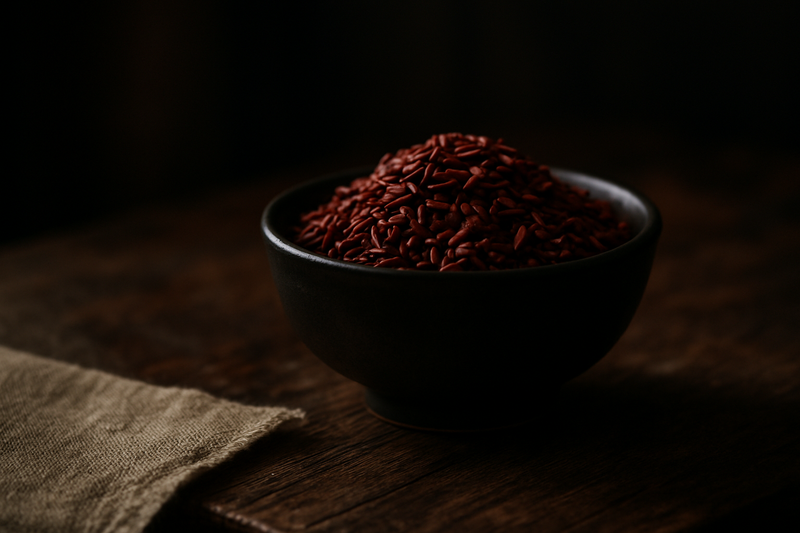
Red Yeast Rice (Angkak) · Photograph
Discover the science-backed red yeast rice benefits and side effects, from cholesterol and heart health to blood sugar support. Learn safe dosage, key interactions, and how culinary angkak compares to supplements — all in plain English.
Key Nutrients
% Daily Value based on 2,000 cal diet
Key active compounds in red yeast rice
- Monacolin K (lovastatin): The star player. A polyketide (a class of naturally occurring chemical produced by microorganisms during fermentation) that reversibly inhibits HMG-CoA reductase — the rate-limiting enzyme the liver uses to manufacture cholesterol. Monacolin K is chemically identical to the prescription drug lovastatin.
- Other monacolins (J, L, and more): A family of related fermentation compounds that may add to the overall cholesterol-lowering effect, though monacolin K remains the most studied.
- Monascus pigments (rubropunctamine, monascorubramine): The azaphilone pigments responsible for that vivid red color. They have antioxidant properties in laboratory studies; their clinical role in humans is still emerging.
- Phytosterols (beta-sitosterol, campesterol): Plant sterols that structurally resemble cholesterol and may reduce how much cholesterol the gut absorbs.
- Unsaturated fatty acids (oleic, linoleic, linolenic acids): Mono- and polyunsaturated fats that support cardiovascular health and may modestly improve lipid profiles.
- Isoflavones and polyphenols: Antioxidant compounds detected in some red yeast rice analyses; their specific contribution in humans is not yet well defined.
- B-complex vitamins including niacin: Generated during fermentation; niacin in particular has independent roles in energy metabolism and lipid regulation.
- Citrinin (a contaminant, not a benefit): A nephrotoxin (kidney-damaging compound) that can appear as a by-product of Monascus fermentation. High-quality supplements are verified citrinin-free; this is a critical label check.
Buying guide: how to choose a safe red yeast rice product
This is one ingredient where label literacy genuinely matters for safety.
- Look for "citrinin-free" or "citrinin tested below detection limit" on the label or manufacturer's website. Citrinin contamination is the main kidney safety concern in lower-quality products.
- Check for stated monacolin K content. Reputable supplement-grade products specify monacolin K in milligrams per serving. If a label only says "red yeast rice powder" with no monacolin disclosure, you cannot gauge potency or safety.
- Third-party testing certification (USP, NSF International, ConsumerLab) means an independent lab has verified the contents match the label and tested for contaminants.
- Whole grain culinary angkak purchased from a reputable Asian grocery store for cooking purposes does not need to meet supplement standards — it is used in tiny amounts as a seasoning.
- Avoid products that make explicit drug-equivalent claims without disclosing monacolin content; this is a red flag for inconsistent manufacturing.
- Store both forms in a cool, dry place away from direct light, as Monascus pigments can degrade with heat and UV exposure.
Prep and pairing ideas
Used as angkak in the kitchen, red yeast rice is a natural colorant and mild umami-forward seasoning rather than a nutritional powerhouse on its own. Here are three practical ways to use it:
1. Red-braised proteins (hong shao pork or tofu) A small amount of dried angkak grains or powder added early in a braise imparts that signature lacquer-red color and subtle earthy depth without artificial food dye. The long cooking time allows the pigments to infuse the braising liquid evenly.
2. Filipino bagoong and atchara condiments Angkak is a traditional coloring in Filipino fermented shrimp paste and pickled vegetable preparations. Using it alongside vinegar-pickled vegetables means you are combining a naturally colored fermented whole grain with probiotic-rich fermented vegetables — a good gut-health pairing.
3. Red rice vinegar and marinades Red rice vinegar gets its color from angkak. A splash in a vinaigrette or quick marinade adds a mild tanginess and subtle color without any of the pharmacological dose concerns — because the amounts involved are tiny. Pair with leafy greens, tofu, or cold noodles for a light dish with layered flavor.
Bottom line
Red yeast rice (angkak) is one of the most rigorously studied fermented foods in cardiovascular nutrition research. The evidence for standardized red yeast rice extracts lowering LDL cholesterol is strong — multiple meta-analyses and large clinical trials support it, and some cardiovascular outcome data suggests it may reduce major cardiac events in high-risk populations.
As a culinary ingredient, it is a beautifully natural food dye and mild savory flavor-builder that is safe and enjoyable for most people.
As a supplement, it is essentially a natural pharmaceutical that should be treated with the same respect, same precautions, and same medical oversight as a prescription statin. It is not a risk-free "natural alternative" — the very thing that makes it effective also makes it capable of the same side effects as the drugs it resembles.
If you are managing high cholesterol and curious about red yeast rice, the most useful step you can take is bringing this page to your next clinician appointment and asking whether a quality-verified, citrinin-free extract is appropriate for your specific situation.
Looking for more ways to support your cardiovascular and metabolic health through food? Explore the Plantopedia cardiovascular health hub.
How Red Yeast Rice (Angkak) Compares
| Compared with | What's different |
|---|---|
| Red Yeast Rice (Angkak) vs. Red Cargo Rice | A polished rice variety with zero monacolin K or cholesterol-lowering properties. |
| Red Yeast Rice (Angkak) vs. Red Miso | A salty, fermented paste used for flavor rather than as a concentrated monacolin supplement. |
Health Benefits
Things to Know
Never combine with prescription statins: (lovastatin, simvastatin, atorvastatin, rosuvastatin, etc.) without direct medical supervision — additive HMG-CoA reductase inhibition sharply raises the risk of myopathy (muscle damage) and liver toxicity.
Avoid if you have active liver disease: or persistently elevated liver enzymes. Red yeast rice can further strain the liver.
Avoid during pregnancy and breastfeeding.: Monacolin exposure is not considered safe during these periods; statins are contraindicated in pregnancy.
Use with caution if you have chronic kidney disease,: particularly because citrinin contamination in lower-quality products poses additional nephrotoxic (kidney-damaging) risk.
CYP3A4-inhibiting drugs: — including some antifungals (e.g., ketoconazole), certain macrolide antibiotics (e.g., clarithromycin), and some calcium channel blockers — can raise monacolin K levels in the blood, increasing myopathy risk exactly as they do with lovastatin.
Avoid with heavy or regular alcohol use,: which compounds hepatotoxicity (liver toxicity) risk.
Other lipid-lowering agents: (fibrates, high-dose niacin): possible additive muscle and liver effects; discuss with your doctor.
Report any unexplained muscle pain, weakness, or brown/dark urine immediately: — these can signal myopathy or the rare but serious condition rhabdomyolysis (rapid muscle breakdown that can damage the kidneys).
Liver enzyme monitoring: (a blood test your doctor can order) is recommended before starting and periodically during supplementation, as is standard practice with statin therapy.
Shop This Ingredient
Stock your pantry with quality red yeast rice (angkak).
Buy on AmazonAs an Amazon Associate, Plantopedia earns from qualifying purchases. This costs you nothing extra and helps us keep the encyclopedia free.
Frequently Asked Questions
This is where the science is strongest. Multiple large randomized controlled trials (studies where participants are randomly assigned to a treatment or a placebo) and systematic meta-analyses (pooled statistical analyses of many trials) have examined red yeast rice for cardiovascular outcomes. Heart and circulation A 2021 meta-analysis published in Frontiers in Pharmacology pooling 15 high-quality randomized controlled trials found that standardized red yeast rice extracts significantly reduced LDL cholesterol, total cholesterol, and triglycerides compared to placebo. Average LDL reductions across meta-analyses range from approximately 1.0 mmol/L (about 39 mg/dL), which is comparable to low-intensity statin therapy. The most compelling cardiovascular outcome data comes from a large Chinese secondary-prevention trial involving 4,870 patients who had already experienced a heart attack. Those who received standardized red yeast rice had significantly fewer non-fatal heart attacks, less coronary artery bypass surgery, and lower total mortality compared to placebo. Several trials have also specifically studied people who cannot tolerate standard statins due to muscle pain (myalgia). Red yeast rice appears to lower LDL in many of these individuals with better tolerability, though the mechanism behind why is still debated. Important context: Nearly all robust cardiovascular data comes from standardized, citrinin-free supplement extracts with controlled monacolin K content — not from angkak used as a food seasoning. Food-level use delivers far smaller monacolin doses and cannot be assumed to replicate supplement trial outcomes. Digestive health and microbiome Red yeast rice is a fermented food, and fermented foods in general have been linked to a more diverse gut microbiome (the community of bacteria and microorganisms living in the digestive tract). However, direct human evidence that red yeast rice specifically benefits the gut microbiome is currently very limited. The fiber and resistant starch from the rice substrate may provide modest prebiotic support, but this has not been well studied in isolation. Blood sugar and metabolism Some clinical studies using red yeast rice as part of multi-ingredient nutraceutical combinations (often with berberine or policosanol) report modest improvements in fasting blood glucose and other metabolic syndrome parameters. Metabolic syndrome refers to a cluster of conditions — high blood sugar, excess abdominal fat, high triglycerides, low HDL, and high blood pressure — that together raise cardiovascular risk. However, human evidence for red yeast rice alone improving blood sugar is limited and often confounded by the other ingredients in these combination products. Preclinical (animal and laboratory) data is more supportive, but those findings do not always translate to humans. This is an area to watch, not one to rely on yet. Inflammation and recovery In some trials, red yeast rice combined with antioxidant nutrients reduced hs-CRP (high-sensitivity C-reactive protein — a blood marker of systemic inflammation). Monascus pigments also show antioxidant activity in laboratory models. However, most anti-inflammatory outcome data comes from combination formulas, not red yeast rice alone, and human evidence relies on surrogate markers (measurable signals like hs-CRP) rather than hard endpoints like reduced hospitalizations. Anti-inflammatory benefits should be considered adjunctive and emerging.
This question cuts to the heart of what makes red yeast rice unusual. Culinary angkak (food form): Used in small amounts as a natural colorant and flavor in Chinese, Filipino, and other Asian dishes Provides very low monacolin K doses — clinically meaningful lipid-lowering effects from food use alone are unlikely Safe to use as a seasoning ingredient in the same way you would use a spice or natural food dye Still contains pigments, sterols, and fermentation compounds that may offer modest benefits over time Standardized supplement extract (capsule or tablet): Used in virtually all human trials showing significant LDL reduction Provides a controlled dose, typically 3–10 mg monacolin K per day (often as 600 mg extract twice daily) Must be third-party tested and verified citrinin-free to be safe Carries genuine statin-like risks; requires clinician oversight, especially if you take any other medications Regulated differently across countries — in the EU, supplements containing more than 3 mg monacolin K per day require a prescription in some member states Combination nutraceutical formulas: Common commercial products pair red yeast rice with berberine, coenzyme Q10, policosanol, or antioxidants May show enhanced results in trials, but effects cannot be attributed solely to red yeast rice Adds another layer of complexity for identifying side effects and drug interactions Bottom line on form: For culinary enjoyment and mild supportive nutrition, food-grade angkak is fine. For meaningful cholesterol management, only standardized supplement extracts have human trial support — and those require a conversation with your doctor first.
For culinary food use (angkak as a seasoning): No specific dosage applies. Use as you would a spice — typically ½ to 1 teaspoon of dried angkak powder or a few grains for color in a dish. The monacolin contribution at these amounts is minimal. For supplement use (cholesterol support): Human trials have most commonly used 600 mg of standardized red yeast rice extract twice daily (1,200 mg/day total), providing approximately 3–10 mg of monacolin K per day. This range is roughly comparable to 1–10 mg of lovastatin. Start-low guidance: Begin at the lower end of the monacolin K range Have baseline liver enzymes checked before starting Recheck liver enzymes at 6–12 weeks Report any muscle pain, tenderness, or weakness promptly Do not self-dose to match a prescription statin dose — this must be supervised There is no universally agreed "safe" over-the-counter dose because product quality and monacolin content vary so widely. The safest approach is to use a quality-verified, third-party-tested, citrinin-free product under clinician guidance rather than self-prescribing based on online information.
Quick Answers
Common questions, answered in a line.
Red yeast rice contains Monacolin K, a compound chemically identical to the prescription drug lovastatin that blocks the enzyme the liver uses to make cholesterol. It also contains phytosterols and unsaturated fatty acids that may reduce cholesterol absorption in the gut.
Citrinin is a nephrotoxin, or kidney-damaging compound, that can be produced as a harmful by-product during the fermentation of red yeast rice. High-quality supplements are verified citrinin-free, which is a critical safety check for consumers.
You should never combine red yeast rice with prescription statins like atorvastatin or simvastatin without medical supervision. Doing so sharply increases the risk of liver toxicity and myopathy, which is serious muscle damage.
When shopping for red yeast rice, look for products labeled "citrinin-free" and those that specify the exact milligrams of Monacolin K per serving. It is also recommended to choose supplements with third-party certifications from organizations like USP or NSF International.
Red yeast rice, known as angkak, is a natural red food dye and seasoning used in dishes like red-braised pork, Filipino shrimp paste (bagoong), and red rice vinegar. In cooking, it adds a mild umami flavor and deep earthy depth without the risks associated with high-dose supplements.
Avoid red yeast rice if you have active liver disease, chronic kidney disease, or if you are pregnant or breastfeeding. It should also be avoided by those who consume alcohol heavily or take drugs that inhibit the CYP3A4 enzyme, such as certain antibiotics or antifungals.
For Readers in the USA
Local context — sourcing, seasonality, and regional notes.
In the U.S., you can find whole-grain angkak or red yeast rice powder at major Asian grocery chains like H-Mart, 99 Ranch Market, or Mitsuwa Marketplace. While it is rarely stocked in conventional supermarkets like Kroger or Safeway, it is widely available through national online retailers specializing in fermentation supplies.
The FDA regulates red yeast rice supplements as unapproved drugs if they contain high levels of monacolin K, meaning US-sold supplements often have inconsistent or undisclosed potencies. Because the FDA prohibits manufacturers from marketing these products as cholesterol-lowering drugs, it is crucial for American consumers to look for third-party seals like USP or NSF to ensure quality.
While red yeast rice is not commercially farmed in the U.S., it is readily available year-round as a shelf-stable fermented product. In American kitchens, it is most frequently used during the Lunar New Year or for traditional Filipino-American gatherings to naturally dye festive dishes like Char Siu (BBQ pork) or fermented fish (balao-balao).
AI Clinical Review
- Clearly explains that red yeast rice (angkak) contains monacolin K (chemically identical to lovastatin) and that standardized extracts can lower LDL by roughly 15–30% in clinical trials.
- Distinguishes well between culinary angkak (tiny monacolin exposure) and supplement-grade extracts (clinically active), so readers don’t conflate food use with therapeutic dosing.
- Accurately frames red yeast rice as “statin‑like,” emphasizing real risks (muscle symptoms, liver enzyme elevations) and the need to avoid combining with prescription statins without supervision.
- Provides practical buying guidance (citrinin‑free verification, monacolin content disclosure, third‑party testing), which is essential for safety.
- Gut‑health and “probiotic” benefits for red yeast rice specifically are not well demonstrated in humans; most data are from general fermented‑food research or lab studies.
- Blood sugar and anti‑inflammatory effects often come from combination products (e.g., with berberine or antioxidants), making it hard to credit red yeast rice alone.
- Product variability (strain, fermentation, standardization) and differing regulations mean results from certain standardized preparations may not generalize to all supplements on the market.
- Long‑term safety and outcomes in diverse populations outside controlled trials remain less well characterized.
- Typical research dosing for cholesterol uses standardized extract 600 mg twice daily (about 1,200 mg/day total), delivering roughly 3–10 mg/day of monacolin K—do not self‑titrate to “match” a statin dose.
- Avoid supplement use in pregnancy or breastfeeding, with active liver disease, or with heavy alcohol intake; use caution in chronic kidney disease due to citrinin concerns.
- Drug interactions mirror statins: do not combine with prescription statins; CYP3A4 inhibitors (some antibiotics/antifungals, certain heart meds, grapefruit) can raise levels and increase side‑effect risk—clinician oversight and periodic labs are advisable.
- Culinary angkak used as a coloring/flavoring contributes negligible monacolin and is generally safe for most people; treat supplements as pharmacologic and choose third‑party tested, citrinin‑free products with stated monacolin content.
Contains naturally occurring monacolin (a statin-like compound); avoid with statins or liver concerns and consult a clinician.
References
- USDA FoodData Central — nutrient database reference (fdc.nal.usda.gov)
- PMC review: Red Yeast Rice — composition, cardiovascular benefits, and safety overview (pmc.ncbi.nlm.nih.gov)
- PubMed review: Effect of red yeast rice in dyslipidemia and other conditions (pubmed.ncbi.nlm.nih.gov)
- PMC review: Red Yeast Rice for Hypercholesterolemia — clinical evidence and mechanisms (pmc.ncbi.nlm.nih.gov)
- PMC meta-analysis: Red Yeast Rice Preparations Reduce Mortality, Major Cardiovascular Events and Risk Factors in Metabolic Syndrome (pmc.ncbi.nlm.nih.gov)
- JACC review: Red Yeast Rice for Hypercholesterolemia — cardiology journal perspective (jacc.org)
- PMC trial: Safety and Efficacy of Red Yeast Rice as Alternative Therapy for Hyperlipidemia (pmc.ncbi.nlm.nih.gov)
- Frontiers in Pharmacology meta-analysis: Red Yeast Rice for Hyperlipidemia — 15 RCTs pooled (frontiersin.org)
- Drugs.com (clinical reference): Red Yeast Rice uses, benefits, dosage, and interactions (drugs.com)
- National Lipid Association — Lipid Spin: Red Yeast Rice as alternative therapy for hyperlipidemia (lipid.org)
Know Your Numbers
Eating healthy is a start. Now get to know your biomarkers.
Food changes bloodwork — inflammation, lipids, blood sugar and nutrient status all respond to what you eat. 59 markers from $59.
- Results in 7–10 days at 2,000+ Quest sites
- Licensed provider reviews every result
- One flat price, no membership, HSA/FSA eligible
Educational information only, not medical advice. Panels are ordered and reviewed through our licensed partner; Plantopedia may earn a commission.