Sago — health benefits and uses
A staple starch of Papua New Guinea and island Southeast Asia for thousands of years.
The Short Answer
Sago is a gluten-free starch extracted from sago palms, used primarily for quick energy and as a thickening agent. It is nearly pure carbohydrate, providing 332 calories per 100g serving with minimal protein and fat.
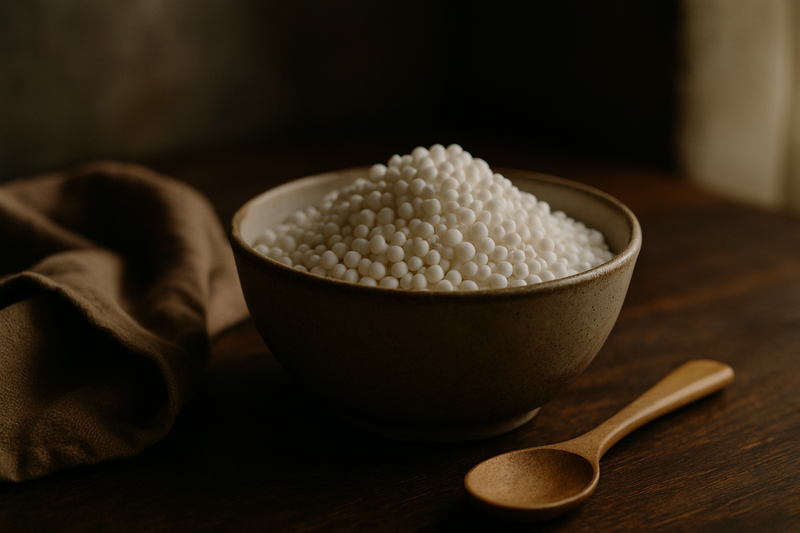
Sago · Photograph
Discover sago health benefits and nutrition facts — from quick energy and gluten-free cooking to blood sugar effects and smart pairing tips. A plain-English guide to sago pearls, glycemic index, and how to use sago in healthy puddings and porridge.
Key Nutrients
% Daily Value based on 2,000 cal diet
Key Active Compounds in Sago
Unlike herbs, berries, or cruciferous vegetables, sago does not contain a meaningful array of phytochemicals (plant-based bioactive compounds). Its "active" content is almost entirely structural forms of starch. Here is what matters:
- Rapidly digestible starch (RDS): The dominant fraction in ordinary sago pearls — starch that breaks down quickly into glucose in the small intestine, producing a fast rise in blood sugar. This explains sago's high glycemic index.
- Slowly digestible starch (SDS): A smaller fraction that releases glucose more gradually. Cassava-based sago pearls may contain slightly more SDS than palm-based varieties, potentially moderating the glycemic response slightly, though sago overall still behaves as a high-glycemic refined starch.
- Resistant starch (RS): A fraction of starch that the small intestine cannot digest; it travels to the large intestine where gut bacteria ferment it, producing short-chain fatty acids that support gut health. Standard sago pearls contain very little RS (under 0.5 g per 100 g). However, laboratory-modified versions called RS2 and RS4 sago have been studied in clinical trials and show meaningful effects on blood sugar — more on this in the benefits section.
Myths vs. Facts About Sago
Myth 1: "Sago is a superfood rich in vitamins and minerals." Fact: Sago is nearly pure starch. It contains only trace amounts of calcium, iron, and magnesium — nowhere near meaningful contributions to your daily needs. It has no significant vitamins A, C, B-group, or antioxidants.
Myth 2: "Sago is safe for diabetics because it's light and easy to digest." Fact: "Easy to digest" and "blood sugar safe" are not the same thing. Sago digests easily because it breaks down rapidly into glucose, which is precisely what raises blood sugar quickly. People with diabetes should use small portions paired with protein and fiber, and ideally discuss sago's place in their meal plan with a dietitian.
Myth 3: "All sago pearls are the same as tapioca pearls." Fact: Traditional sago comes from the sago palm (Metroxylon sagu), while tapioca comes from cassava (Manihot esculenta). In many markets, especially in South Asia, the pearls are used interchangeably and may even be sold under each other's names, and nutritionally they are very similar. But they are technically different plants and different starches. See the FAQ section for more on sago vs. tapioca.
Prep and Pairing Ideas
Sago pearls need to be soaked before cooking. Here is a simple method:
- Rinse 1/4 cup (45 g) of dry sago pearls under cold water.
- Soak in cold water for 30 minutes to 2 hours (or overnight for large pearls) until they soften slightly.
- Drain, then simmer in fresh water or plant-based milk for 10–15 minutes, stirring frequently, until pearls turn translucent with just a small white dot at the center.
- Add flavoring — vanilla, cardamom, a small amount of maple syrup — and your chosen toppings.
Three smart pairings to boost the nutritional value of any sago dish:
- Sago + mango + chia seeds — A classic Southeast Asian combination. Mango adds vitamin C, folate, and natural sweetness; chia seeds add omega-3 fatty acids, fiber, and protein, all of which slow glucose absorption and improve the overall nutrient density of the bowl.
- Sago porridge + coconut milk + mixed lentils (sabudana khichdi) — The traditional Indian approach is nutritionally smart: adding roasted peanuts, green chillies, and sometimes legumes introduces protein, healthy fats, and micronutrients that transform sago from empty starch into a more balanced meal.
- Sago pudding + mixed berries + crushed walnuts — Berries add antioxidants, fiber, and a lower-sugar natural sweetness; walnuts provide plant-based protein, omega-3 fats, and magnesium. This combination substantially lowers the glycemic load of the dish and adds nutrients sago lacks entirely.
Bottom Line
Sago is a refined palm starch that delivers quick, clean energy in a gluten-free, easily digestible package. Its sago health benefits are real but specific: it works well as a rapid carbohydrate source for active people, as a safe gluten-free starch for those with celiac disease, and as a culturally important food in traditional Asian cuisines. Research on specially processed sago resistant starch (RS2/RS4) is genuinely promising for blood sugar management, but those findings do not extend to the pearls in everyday desserts and porridge.
The honest sago nutrition picture is that it is nearly empty of fiber, protein, vitamins, and minerals. That makes pairing non-negotiable. Sago combined with mango, berries, nuts, seeds, or legumes becomes a much more nutritionally complete dish than sago with sugar and cream alone.
Used occasionally, in moderate portions, and alongside nutrient-dense whole foods, sago is a perfectly reasonable ingredient. Used as a staple without balance, it is a high-glycemic refined starch that offers calories but little else.
If you are looking to build a food-as-medicine approach to your starch choices, explore the ingredients in our related guides below — or visit our goals section to find strategies that match your health priorities.
Looking to align your starch choices with a specific wellness goal? Browse Plantopedia's goals library to find eating patterns built around what matters to you.
How Sago Compares
| Compared with | What's different |
|---|---|
| Sago vs. Tapioca | Extracted from the pith of sago palms rather than the tubers of the cassava plant. |
| Sago vs. Rice Pearls | Made from rice flour; higher in protein and typically used for noodles rather than pearls. |
Health Benefits
Things to Know
Diabetes and blood sugar conditions: Standard sago has a high glycemic index and can sharply raise postprandial blood glucose, especially in sweetened preparations. Keep portions small (30–45 g dry), and always pair with protein and fiber. Monitor glucose if you are adjusting sago intake.
Prediabetes and metabolic syndrome: The same guidance applies — sago is not a "safe" refined starch for carbohydrate-sensitive individuals.
Weight management: Sago is calorie-dense (around 350 kcal per 100 g dry) and nutritionally sparse. Large portions can displace more nutrient-dense foods without offering satiety benefits.
Children and older adults: Those who rely heavily on sago as a staple food are at risk of inadequate protein, fiber, vitamins, and minerals if meals are not well balanced.
Celiac disease: Sago itself is gluten-free; check packaging for cross-contamination risk.
Medication interactions: If you take insulin, sulfonylureas, or other glucose-lowering medications, high-GI meals like sago pudding can cause large blood sugar spikes that complicate dose management. Discuss with your prescriber.
Pregnancy: Sago is generally safe in moderate culinary amounts during pregnancy, but its low nutrient density means it should not displace iron-, folate-, and protein-rich foods that are critical during gestation.
No known food-drug pharmacokinetic interactions: (direct effects on how a drug is absorbed or metabolized) have been documented for sago specifically, beyond the general glycemic management concern above.

Best Forms
the most common form; versatile for puddings, porridge, and sabudana-based dishes. Cook by soaking and then simmering until translucent.
used as a thickener for sauces, soups, and gluten-free baking. Nutritionally identical to pearls.
pre-cooked for faster preparation, but often has an even higher glycemic index because the starch has already been gelatinized (a process that makes starch easier for the body to break down rapidly).
a research-stage product not widely available commercially; relevant to blood sugar science but not something most people will find in a grocery store.
Prep Ideas
- — Rinse 1/4 cup (45 g) of dry sago pearls under cold water.
- — Soak in cold water for 30 minutes to 2 hours (or overnight for large pearls) until they soften slightly.
- — Drain, then simmer in fresh water or plant-based milk for 10–15 minutes, stirring frequently, until pearls turn translucent with just a small white dot at the center.
- — Add flavoring — vanilla, cardamom, a small amount of maple syrup — and your chosen toppings.
- — **Sago + mango + chia seeds** — A classic Southeast Asian combination. Mango adds vitamin C, folate, and natural sweetness; chia seeds add omega-3 fatty acids, fiber, and protein, all of which slow glucose absorption and improve the overall nutrient density of the bowl.
- — **Sago porridge + coconut milk + mixed lentils (sabudana khichdi)** — The traditional Indian approach is nutritionally smart: adding roasted peanuts, green chillies, and sometimes legumes introduces protein, healthy fats, and micronutrients that transform sago from empty starch into a more balanced meal.
- — **Sago pudding + mixed berries + crushed walnuts** — Berries add antioxidants, fiber, and a lower-sugar natural sweetness; walnuts provide plant-based protein, omega-3 fats, and magnesium. This combination substantially lowers the glycemic load of the dish and adds nutrients sago lacks entirely.
Glossary
Shop This Ingredient
Stock your pantry with quality sago.
Buy on AmazonAs an Amazon Associate, Plantopedia earns from qualifying purchases. This costs you nothing extra and helps us keep the encyclopedia free.
Frequently Asked Questions
Here is where it is important to be precise. Sago is not a therapeutic food with a strong clinical evidence base. Most of the claimed sago health benefits are either (a) properties of starch in general, (b) about specially processed resistant starch forms, or (c) indirect benefits from being gluten-free. That said, there are real, evidence-supported reasons to include it thoughtfully. Heart and Circulation There is no strong human clinical trial evidence that standard sago consumption directly benefits the heart. Sago is naturally cholesterol-free and almost completely fat-free, which sounds positive, but its high glycemic load — the combined effect of glycemic index and portion size on blood sugar — and lack of fiber mean that eating large amounts regularly may actually be less favorable for cardiometabolic health than eating whole grains or legumes. Major dietary guidelines, including those from MyPlate and the Dietary Guidelines for Americans, recommend emphasizing whole grains and limiting refined starches. Sago, as a refined starch, is best treated as an occasional carbohydrate choice rather than a daily staple from a heart health perspective. Digestive Health and Microbiome Standard sago pearls are very low in dietary fiber — under 0.5 g per 100 g — so they do not significantly feed the gut microbiome (the community of trillions of bacteria that live in the large intestine) the way fiber-rich foods do. In fact, because sago is mostly rapidly digested in the small intestine, little reaches the colon to be fermented. Where things get more interesting is with specially processed RS2 and RS4 sago resistant starch. Research including in vitro (lab-based) and some human work suggests these modified forms may increase fermentation in the colon and support production of short-chain fatty acids, which have anti-inflammatory effects on the gut lining. However, this applies to lab-modified products, not the pearls in your pantry. For everyday digestive support, pair sago dishes with fiber-rich ingredients — fresh or dried fruit, nuts, seeds, or legumes. Blood Sugar and Metabolism This is the most clinically nuanced area of sago nutrition. On one hand, everyday sago pearls have a high glycemic index (GI), often reported between 67 and 85 depending on cooking method and portion. Glycemic index measures how quickly a food raises blood sugar compared to pure glucose. A GI above 70 is generally considered high. Sago pudding made with added sugar and coconut milk will have an even higher glycemic load. On the other hand, a human trial published in 2023 (PubMed PMID 36755355) found that meals containing sago-derived RS2 and RS4 resistant starch significantly reduced the incremental area under the curve for blood glucose (a measure of the total blood sugar spike after a meal) compared with control meals. RS2 sago showed the greatest effect. These meals also improved insulin response and increased GLP-1 (glucagon-like peptide-1, an appetite and insulin-regulating hormone). The key caveat: these findings apply only to specially processed resistant starch products, not standard sago pearls. For people managing blood sugar — including those with type 2 diabetes or prediabetes — standard sago is a high-GI food that warrants caution and smaller portions paired with protein and fiber. Hormones and Cycle Health There is no meaningful published evidence connecting sago specifically to hormonal health or menstrual cycle function. Sago's high-carbohydrate, low-micronutrient profile means it does not provide the iron, magnesium, or B vitamins that tend to be relevant in discussions of cycle health. Inflammation and Recovery Sago's primary evidence-based role in recovery is as a quick carbohydrate source for athletes. A narrative literature review on sago-based foods found that sago-derived carbohydrates can help sustain physical performance and support faster recovery after exercise in healthy, active individuals, owing to the rapid availability of glucose. This is essentially the same mechanism as sports gels or rice cakes — fast fuel. There is no direct evidence that sago reduces systemic inflammation markers such as C-reactive protein (CRP) in humans. Any potential indirect anti-inflammatory effect would come from RS-enriched forms via gut microbiome changes, and that remains speculative at this stage.
Yes — sago is naturally and completely gluten-free. Analyses of sago flour confirm it consists almost entirely of starch with no detectable gluten-forming proteins (the proteins found in wheat, barley, and rye that trigger reactions in people with celiac disease). This makes sago one of the safest starch-based thickeners and grain alternatives for people with celiac disease (an autoimmune condition triggered by gluten) or non-celiac gluten sensitivity. Here is a practical breakdown of the forms you will encounter: Dry sago pearls — the most common form; versatile for puddings, porridge, and sabudana-based dishes. Cook by soaking and then simmering until translucent. Sago flour or starch powder — used as a thickener for sauces, soups, and gluten-free baking. Nutritionally identical to pearls. Instant or pregelatinized sago — pre-cooked for faster preparation, but often has an even higher glycemic index because the starch has already been gelatinized (a process that makes starch easier for the body to break down rapidly). RS2/RS4 resistant starch sago — a research-stage product not widely available commercially; relevant to blood sugar science but not something most people will find in a grocery store. For gluten-free cooking, look for sago labeled as processed in a gluten-free certified facility if celiac disease is a concern, since cross-contamination during packaging is possible.
Athletes and active people needing quick fuel Looking for a light, rapidly absorbed carbohydrate before or after exercise Struggle to tolerate high-fiber foods around training due to GI discomfort Need a gluten-free energy source that is gentle on the stomach Can easily pair sago with a protein source (nut butter, legumes, dairy or plant-based milk) post-workout to support recovery People managing celiac disease or gluten sensitivity Need safe starch-based alternatives for thickening sauces, making puddings, or replacing wheat-based desserts Want a culturally familiar ingredient that works in South or Southeast Asian cooking Must check for cross-contamination from certified gluten-free processing facilities Should balance sago with nutrient-dense gluten-free whole foods (quinoa, buckwheat, legumes, vegetables) to avoid nutrient gaps
There is no officially established recommended daily intake for sago. The question of "how much sago per day is safe" is really a question about your overall carbohydrate intake and dietary balance. Practical guidance based on available evidence: A typical culinary portion is 30–50 g of dry sago pearls (roughly one heaping tablespoon to 1/4 cup), which provides approximately 100–180 calories and 26–44 g of carbohydrate once cooked. For most healthy adults, one small-to-moderate serving of sago as part of a balanced meal (paired with protein and fiber) a few times per week is unlikely to cause harm. People with type 2 diabetes, prediabetes, or insulin resistance should keep portions toward the smaller end (30 g dry or less) and always combine sago with protein and fiber to blunt the glycemic response. Using sago as a daily staple or in large portions without pairing is where nutritional inadequacy and blood sugar management become genuine concerns. Start with a small amount if sago is new to your diet and observe how your digestion and energy levels respond. The broader message from dietary guidelines is consistent: whole grains and legumes should form the foundation of starch intake, with refined starches like sago used selectively and in moderate portions.
Quick Answers
Common questions, answered in a line.
Sago contains mostly rapidly digestible starch (RDS), which breaks down quickly into glucose and causes a fast rise in blood sugar. While it contains a small amount of slowly digestible starch, its overall high glycemic index means it behaves as a refined starch in the body.
Sago is not considered a superfood because it is nearly pure starch and lacks significant amounts of vitamins, minerals, or antioxidants. It contains only trace amounts of calcium, iron, and magnesium, offering very little towards your daily nutritional requirements.
Standard sago is not typically recommended for diabetics because it is a high-glycemic refined starch that raises blood sugar quickly. If consumed, it should be kept to small portions and always paired with protein and fiber to help moderate the glycemic response.
Traditional sago is derived from the sago palm (Metroxylon sagu), whereas tapioca pearls are made from the cassava root (Manihot esculenta). While they are often used interchangeably in cooking and have similar nutritional profiles, they come from entirely different plant sources.
To prepare sago, rinse the pearls, soak them in cold water for 30 minutes to 2 hours until softened, then simmer in liquid for 10–15 minutes. The pearls are ready when they become translucent with just a small white dot remaining in the center.
To make sago more nutritious, pair it with fiber and protein sources like chia seeds, mango, mixed lentils, or walnuts. These additions help slow down glucose absorption and provide the vitamins, healthy fats, and antioxidants that sago lacks on its own.
Sago is generally safe during pregnancy in moderate amounts, but it should not replace nutrient-dense foods like those rich in iron, folate, and protein. Because it is a refined starch, it is important to balance sago with whole foods to support gestational health.
For Readers in the USA
Local context — sourcing, seasonality, and regional notes.
In the United States, you can find sago pearls at major Asian grocery chains like H-Mart, 99 Ranch Market, and Patel Brothers, as well as through large online retailers. While conventional supermarkets often stock cassava-based tapioca, authentic palm sago is more commonly found in the international or specialty aisles of these dedicated regional markets.
Although the sago palm (Metroxylon sagu) is not commercially grown for food in the U.S. mainland, it is commonly found as a landscape plant in USDA Hardiness Zones 9 through 11, including Florida, California, and Hawaii. Consumers should be aware that the ornamental "Sago Palm" (Cycas revoluta) often found in American gardens is a different, highly toxic species and should never be used for food.
In the U.S., sago and tapioca are often used interchangeably in recipes like "bubble tea" or "pudding," but the FDA requires food labels to accurately list ingredients by their common or usual names. When shopping for sago, look for the "Certified Gluten-Free" label if you have celiac disease, as this ensures the product meets U.S. standards for preventing cross-contamination with wheat or barley.
In the U.S., sago is most frequently consumed within the context of cultural dishes like Indian Sabudana Khichdi or Southeast Asian Mango Sago, often served as a comforting breakfast or dessert. It has also gained popularity in the American "health food" scene as a grain-free thickener for Paleo-style recipes and as a base for gluten-free boba pearls.
AI Clinical Review
- Accurately describes sago as a refined, nearly pure starch with minimal protein, fiber, and micronutrients, and notes its naturally gluten‑free status.
- Correctly highlights sago’s high glycemic index (GI—how quickly a food raises blood sugar) and the practical value of pairing with protein, fat, and fiber to blunt spikes.
- Appropriately distinguishes standard sago pearls from resistant starch–enriched forms (RS2/RS4), clarifying that glucose‑lowering effects seen in studies apply to the modified versions, not everyday pearls.
- Sensibly positions sago as an occasional, rapid‑energy carbohydrate (e.g., for athletes or during fasting/illness) rather than a daily dietary foundation.
- Human research on sago‑derived RS2/RS4 is limited (few trials, modest sample sizes). Effects on long‑term outcomes (A1C, weight, cardiometabolic risk) remain uncertain.
- Potential differences in glycemic impact between palm‑based and cassava‑based “sago” are suggested but not well established; cooking method, particle size, and pregelatinization also vary GI and need more head‑to‑head data.
- Microbiome and anti‑inflammatory benefits are plausible for RS‑enriched products, but real‑world evidence using typical culinary preparations is sparse.
- Claims around exercise recovery largely reflect rapid carbohydrate availability; comparative trials versus other refined carbs (rice, maltodextrin) are limited.
- Portions: a practical dry serving is ~30–50 g. Individuals with diabetes, prediabetes, or insulin resistance should favor the lower end, pair with protein/fiber, and consider checking post‑meal glucose.
- Forms matter: instant/pregelatinized pearls often have a higher GI; RS2/RS4 products are not the same as standard pearls—read labels carefully.
- Celiac disease: sago is inherently gluten‑free but check for certified gluten‑free processing to minimize cross‑contamination risk.
- Nutrient density: children, older adults, and those who are pregnant should avoid letting sago displace protein‑ and micronutrient‑rich foods.
- Medications: people using insulin or sulfonylureas should be cautious with sweetened sago dishes due to potential post‑meal glucose excursions; discuss with a clinician if unsure.
Nearly pure starch with little else nutritionally; pair with fruit, legumes, or nuts.
References
- USDA FoodData Central — sago starch nutritional composition (fdc.nal.usda.gov)
- MyPlate grains guidance — role of refined vs whole grain starches in healthy eating (myplate.gov)
- Human trial: postprandial glucose-lowering effects of sago RS2 and RS4 resistant starches in humans (PubMed 36755355) (pubmed.ncbi.nlm.nih.gov)
- Healthline — sago nutrition, benefits, and uses overview (healthline.com)
- Wikipedia — sago: botanical origins, traditional processing, and global uses (en.wikipedia.org)
- Tap Health — glycemic index of sago and practical guidance for diabetics (tap.health)
- Science Insights — where sago comes from: palm trees to pearls (processing overview) (scienceinsights.org)
- ANJ Group health brochure — sago as a functional staple food (anj-group.com_2oyaVA20210122112848.pdf)
- Journal UWKS — narrative literature review on sago's positive nutritional character and exercise recovery (journal.uwks.ac.id)
- Zandu Care — is sago good for diabetes diet? (zanducare.com)
Know Your Numbers
Eating healthy is a start. Now get to know your biomarkers.
Food changes bloodwork — inflammation, lipids, blood sugar and nutrient status all respond to what you eat. 59 markers from $59.
- Results in 7–10 days at 2,000+ Quest sites
- Licensed provider reviews every result
- One flat price, no membership, HSA/FSA eligible
Educational information only, not medical advice. Panels are ordered and reviewed through our licensed partner; Plantopedia may earn a commission.