Salak (Snake Fruit) — health benefits and uses
Used in Indonesian traditional remedies to aid digestion.
The Short Answer
Salak, or snake fruit, is a crunchy tropical fruit that provides 8.4 mg of vitamin C and 2.6 grams of fiber per 100g serving. It is best eaten by peeling the scaly skin and removing the large internal seeds, offering a sweet-tart flavor profile similar to a

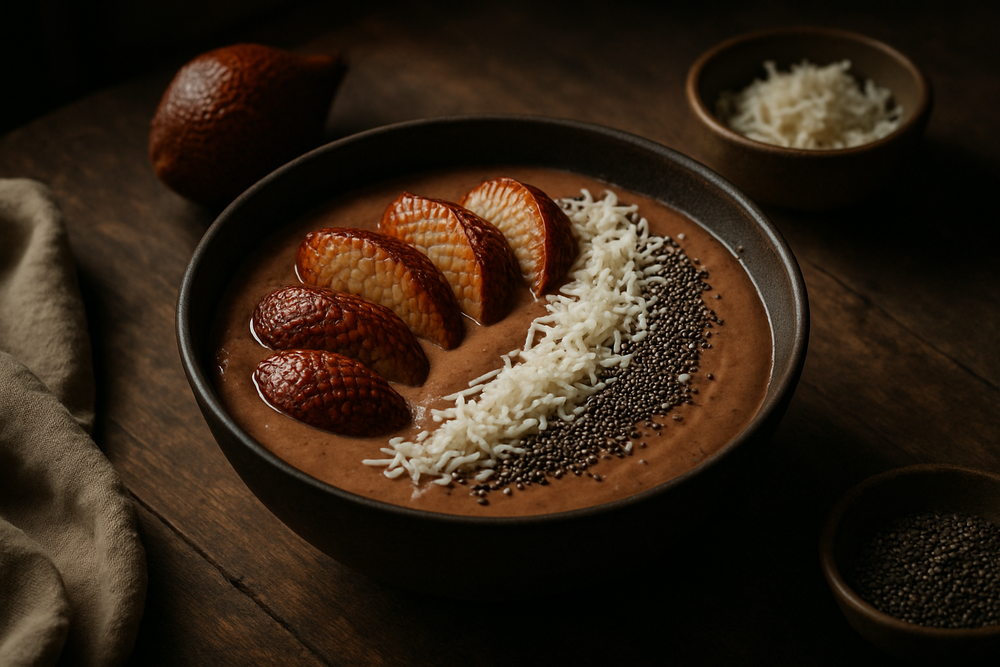
Salak (Snake Fruit) · Photograph
Discover snake fruit (salak) health benefits and side effects, including its fiber, vitamin C, antioxidants, and how to safely eat this tropical fruit raw or in fruit salads.
Key Nutrients
% Daily Value based on 2,000 cal diet
Key active compounds in snake fruit
The beneficial potential of salak comes largely from its mix of phytonutrients — naturally occurring plant chemicals that support health in various ways.
- Phenolic compounds — A broad class of plant chemicals that act as antioxidants, helping to neutralize free radicals (unstable molecules that can damage cells) and potentially supporting vascular and cellular health.
- Flavonoids — A subgroup of polyphenols (plant compounds with multiple phenol groups) including compounds similar to quercetin and catechins; these provide antioxidant and possible anti-inflammatory activity in lab studies.
- Beta-carotene and carotenoids — Pigmented compounds that function as antioxidants and can be converted by the body into vitamin A, supporting eye and immune health.
- Tannins — Astringent plant compounds that contribute to the slightly dry, gripping sensation on the palate and have antioxidant properties; in large amounts they can affect mineral absorption and digestive comfort.
- Pectin — A soluble dietary fiber (a type of fiber that dissolves in water) found in the cell walls of salak flesh; pectin forms a gel in the digestive tract, supporting stool consistency and feeding beneficial gut bacteria.
Prep and pairing ideas
Salak's crisp texture and sweet-tart flavor make it surprisingly versatile.
Common pairings:
- Salak + mango + lime — Mango softens the bite of salak's tartness; lime juice adds brightness and boosts the vitamin C content of the whole salad. This combination also gives you a wider range of carotenoids than either fruit alone.
- Salak + coconut yogurt + toasted coconut — The probiotic bacteria in yogurt complement salak's prebiotic pectin, supporting the gut from two directions. A small handful of toasted coconut adds crunch and healthy fats to help with satiety.
- Salak + pineapple + fresh mint — Pineapple's bromelain enzyme (a natural digestive enzyme) pairs well with salak's fiber for digestive-focused snacking. Fresh mint lifts the flavor and makes this a refreshing post-meal palate cleanser.
Basic prep: Snap the pointed tip off the fruit, then peel sections of the scaly rind downward like a banana. The flesh separates naturally into two or three lobes. Discard the hard brown seed inside each lobe. Use immediately or store peeled segments in an airtight container in the fridge for up to two days.
Bottom line
Snake fruit (salak) is a nutritionally honest tropical fruit — not a superfood in the marketing sense, but a genuinely good source of dietary fiber, vitamin C, potassium, and a range of plant antioxidants. The evidence for its specific health effects in humans is thin simply because few clinical trials have studied it directly. What is well established is that eating a variety of whole fruits, including less familiar ones like salak, consistently supports digestive health, cardiovascular health, and long-term wellbeing. Salak earns its place on the plate — peeled, fresh, and ideally alongside other colorful fruits — as one more way to make eating more plants both enjoyable and genuinely nourishing.
How Salak (Snake Fruit) Compares
| Compared with | What's different |
|---|---|
| Salak (Snake Fruit) vs. Lychee | Salak is firm and crunchy like an apple, whereas lychee is soft, floral, and juicy. |
| Salak (Snake Fruit) vs. Rambutan | Salak has a scaly, dry skin and higher fiber, while rambutan is hairy with a jelly-like texture. |
Health Benefits
Things to Know
Remove the rind completely.: The spiny, scaly skin is not edible and can cause mouth or throat injury. Always peel salak fully before eating.
Hydrate when eating tannin-rich fruit.: Tannins — the compounds that cause that slightly dry sensation — can contribute to digestive discomfort or slower gut transit in large amounts. Drink enough water throughout the day.
Constipation risk at very high intakes.: Paradoxically, eating very large amounts of tannin-containing foods without adequate fluids may worsen constipation in some people, even though fiber generally helps.
Kidney disease and potassium.: A single serving of salak is a modest potassium source, but people on potassium-restricted diets (often prescribed for chronic kidney disease) should count all fruit servings with their healthcare team.
Diabetes and carbohydrate counting.: Salak contributes roughly 22 g carbohydrate per 100 g, which should be factored into meal planning for anyone using insulin or blood sugar-lowering medications.
Children and choking.: The firm segments and central seed may pose a choking risk for young children. Cut into small pieces and remove the seed before serving to toddlers.
Palm-family allergy.: Specific salak allergy reports are rare, but people with known sensitivities to palm-family plants might introduce it cautiously.
No known specific drug interactions: have been documented for salak in the scientific literature. Standard precautions for fruit intake apply: discuss any significant dietary changes with your doctor if you take medications for blood pressure, blood sugar, or kidney disease.
Prep Ideas
- — **Salak + mango + lime** — Mango softens the bite of salak's tartness; lime juice adds brightness and boosts the vitamin C content of the whole salad. This combination also gives you a wider range of carotenoids than either fruit alone.
- — **Salak + coconut yogurt + toasted coconut** — The probiotic bacteria in yogurt complement salak's prebiotic pectin, supporting the gut from two directions. A small handful of toasted coconut adds crunch and healthy fats to help with satiety.
- — **Salak + pineapple + fresh mint** — Pineapple's bromelain enzyme (a natural digestive enzyme) pairs well with salak's fiber for digestive-focused snacking. Fresh mint lifts the flavor and makes this a refreshing post-meal palate cleanser.
Glossary
Shop This Ingredient
Stock your pantry with quality salak (snake fruit).
Buy on AmazonAs an Amazon Associate, Plantopedia earns from qualifying purchases. This costs you nothing extra and helps us keep the encyclopedia free.
Frequently Asked Questions
Most evidence is drawn from salak's nutrient and phytochemical profile plus broader fruit-intake research. Controlled human trials using salak specifically do not yet exist, so the language below reflects that reality. Digestive health and microbiome Salak provides roughly 2.6 g of dietary fiber per 100 g, including pectin — the soluble kind of fiber that acts as a prebiotic, meaning it feeds beneficial bacteria in the colon. Adequate dietary fiber is one of the best-established tools for supporting bowel regularity, and the fiber in salak contributes to that goal in the same way fiber from other whole fruits does. People who struggle with occasional constipation may find that adding whole fruit — salak included — alongside plenty of water helps maintain comfortable digestion. No trials have tested salak alone for gut outcomes, so these benefits reflect general fiber evidence applied to salak's composition. Heart and circulation Salak contains about 256 mg of potassium per 100 g, a mineral that helps the body manage blood pressure by counterbalancing sodium's effects on blood vessel tone. It also delivers phenolic antioxidants and beta-carotene that, in lab studies, reduce oxidative stress — a process thought to contribute to arterial damage over time. These components make salak a reasonable addition to a heart-healthy, plant-forward diet, but no studies have directly linked salak consumption to lower blood pressure or fewer cardiovascular events. Think of it as one of many fruits playing a supporting role rather than a standalone therapy. Blood sugar and metabolism With about 22 g of carbohydrate and 2.6 g of fiber per 100 g, salak sits in the moderate-carbohydrate range for fruits — similar to mango or banana in terms of carb density. The fiber helps slow glucose absorption somewhat compared with refined carbohydrates. No glycemic index or insulin-response study has been published for salak, so people managing blood sugar should treat it like other tropical fruits: enjoy a modest portion alongside protein or fat to blunt any glucose spike, and monitor their own response. Inflammation and recovery Salak's flavonoids, phenolics, tannins, and beta-carotene all show antioxidant activity in laboratory analyses, which may indirectly support the body's ability to manage chronic low-grade inflammation. This kind of oxidative stress is associated with a range of chronic conditions. However, these studies were conducted on fruit extracts in test tubes, not in people, so the anti-inflammatory potential of eating fresh salak remains theoretical. A varied diet rich in many colorful fruits and vegetables will always have a stronger evidence base than any single food. Salak fruit benefits for memory and eye health In Indonesian food tradition, salak is sometimes called the "fruit of memory," a nod to its potassium and antioxidant content. Potassium supports nerve signaling and beta-carotene supports visual function, so these associations have a nutritional rationale. That said, no human studies have tested salak intake and cognitive or visual outcomes specifically. These benefits, while plausible, should be viewed as possible contributions of a nutrient-rich fruit to an overall healthy diet rather than established effects.
Fruit-variety seekers and adventurous eaters Looking to move beyond apples, bananas, and grapes Want fiber and antioxidants from a genuinely different flavor profile Enjoy texture variety — salak is unusually crisp for a tropical fruit People building a higher-fiber, plant-forward plate Trying to reach daily fiber goals (25–38 g) through whole foods rather than supplements Interested in supporting gut microbe diversity with prebiotic pectin Want a portable, lower-calorie snack with natural sweetness
Fresh and peeled is always the best starting point. Here is how the main forms compare: Fresh peeled, eaten raw — The gold standard. No added sugar, maximum fiber, best antioxidant retention. Snap off the tip, peel back the scaly skin in sections, and enjoy the segments directly. Remove the central seed — it is not edible. In a tropical fruit salad — Salak segments hold their crunch well, making them an excellent textural contrast to softer fruits like mango, papaya, or lychee. A squeeze of lime juice brightens the flavor and adds a little extra vitamin C. Blended into a smoothie — Retains fiber if the whole flesh goes in. Straining it into a clear juice removes much of the fiber and increases how quickly the natural sugars hit the bloodstream. Pickled or candied salak — Popular in parts of Indonesia as a condiment or snack. These versions can be high in added sugar or sodium; best treated as an occasional treat rather than a daily health food. Dried or fried chips — Commercial processing and added flavorings change the nutrient picture significantly. Fun as an occasional snack, but not a substitute for fresh fruit.
There is no established therapeutic dose for salak — it is a food, not a supplement. In traditional eating patterns across Southeast Asia, one to three small fruits (roughly 50–150 g of peeled flesh) per sitting is typical. Within a balanced diet, that range translates to: 40–125 calories from natural fruit sugars and fiber 1–4 g fiber contributing toward a daily goal of 25–38 g 11–38 mg potassium — modest but meaningful alongside other fruit and vegetable servings Most healthy adults can enjoy salak daily as part of their overall fruit intake without concern. If you are new to it, start with one or two small fruits and see how your digestion responds, especially if you are sensitive to tannin-rich foods. People with diabetes, kidney disease, or GI conditions should check with their healthcare provider about appropriate portions. Looking to plan your fruit and fiber goals around whole foods like salak? See our food-as-medicine goal guides for practical frameworks.
Quick Answers
Common questions, answered in a line.
You peel a snake fruit by snapping off its pointed tip and pulling the scaly rind downward in sections, similar to peeling a banana. Once the skin is removed, the flesh naturally separates into lobes; be sure to discard the hard brown seed found inside each lobe before eating.
Snake fruit contains high levels of antioxidants such as phenolic compounds, flavonoids, and beta-carotene. These active plant chemicals help neutralize free radicals, which are unstable molecules that can cause cellular damage and impact overall vascular health.
Snake fruit provides a combination of pectin and tannins that support digestive health. The pectin acts as a soluble fiber that forms a gel to support stool consistency and feed gut bacteria, while pairing the fruit with pineapple can provide bromelain enzymes for further digestive support.
Eating snake fruit may cause constipation if consumed in very large quantities without adequate hydration due to its tannin content. While its fiber generally aids digestion, the astringent tannins can slow gut transit if you do not drink enough water throughout the day.
People with chronic kidney disease should consult their healthcare team before eating salak because it is a source of potassium. Those on potassium-restricted diets need to carefully count all fruit servings to manage their condition safely.
Snake fruit contains approximately 22 grams of carbohydrates per 100 grams of fruit. Individuals managing diabetes should factor this carbohydrate count into their daily meal planning, especially if they are using insulin or other blood sugar-lowering medications.
You should never eat the rind of a snake fruit because the spiny, scaly skin is inedible and can cause injury to the mouth or throat. Always ensure the fruit is fully peeled and the internal hard seeds are discarded before consumption.
For Readers in the USA
Local context — sourcing, seasonality, and regional notes.
In the United States, salak is primarily found at specialty Asian grocery stores like H-Mart or 99 Ranch Market and high-end tropical fruit boutiques. Because it is an imported tropical fruit, you are less likely to find it at standard national chains like Kroger or Safeway unless they have a robust exotic produce section.
Commercial salak production is extremely limited in the U.S., though small-scale cultivation exists in tropical climates like Hawaii and Southern Florida. Most snake fruit sold in the Lower 48 is imported from Southeast Asia, specifically Indonesia or Thailand, under strict USDA APHIS import regulations.
Since salak is imported to the U.S. from tropical regions, it is often available year-round, though peak quality and supply typically occur during the summer months. Availability can fluctuate based on import logistics and USDA inspection schedules at major ports of entry.
Snake fruit is generally considered safe by the FDA, but it is important to ensure the scaly skin is intact and free of mold before purchasing. The USDA requires specific phytosanitary treatments, such as irradiation or cold treatment, for imported salak to prevent the introduction of foreign pests.
AI Clinical Review
- Clear, accurate guidance on what’s edible and how to prepare salak; emphasizing full peeling and seed removal is important for safety.
- Balanced nutrition snapshot: salak provides fiber, vitamin C, potassium, and polyphenol antioxidants, and it’s appropriately framed as a wholesome fruit rather than a “superfood.”
- Properly cautious about health claims—benefits are inferred from general fruit and fiber research, with no salak‑specific human trials to date.
- Practical tips on forms (fresh vs. smoothie vs. juice) and on carbohydrate awareness for readers managing blood glucose.
- Digestive, cardiovascular, anti‑inflammatory, and cognitive benefits are biologically plausible but rely mostly on lab data or broader fruit research; human studies on salak itself are lacking.
- The glycemic index and insulin response for salak haven’t been established; real‑world effects will vary with ripeness, portion size, and meal context.
- Nutrient values can vary by cultivar and ripeness; the listed iron (2 mg/100 g) is higher than typical for fruit and may not generalize across databases.
- The serving calculation for potassium (~11–38 mg per 50–150 g) appears inconsistent with the table (~256 mg/100 g). That serving would more likely provide ~130–380 mg potassium.
- Portions: 1–3 small fruits (about 50–150 g peeled) fits well within daily fruit goals; if tannins (astringent plant compounds) bother your stomach, increase gradually and stay well hydrated.
- Safety: peel completely to avoid mouth/throat irritation, remove the hard seed, and cut pieces for young children; rare palm‑family allergies are possible, so introduce cautiously if you have related sensitivities.
- Health conditions and meds: people with chronic kidney disease or those on potassium‑sparing diuretics, ACE inhibitors, or ARBs should count the potassium; individuals with diabetes should include ~22 g carbs/100 g in their plan and consider pairing with protein or fat.
- Form matters: fresh fruit or whole‑fruit smoothies retain fiber; juices, candied/pickled versions, and chips can add sugar, salt, or fat and won’t offer the same fiber benefits.
Remove spiny rind before eating.
References
- USDA FoodData Central — fruit nutrition data (fdc.nal.usda.gov)
- MyPlate fruit guidance (USDA) (myplate.gov)
- Nutrition-and-you.com — salak nutrition facts and health benefits (nutrition-and-you.com)
- WebMD — health benefits of snake fruit (webmd.com)
- Mega We Care — salak snake fruit benefits overview (megawecare.com)
- SnapCalorie — salak nutrition data (snapcalorie.com)
- Step to Health — salak characteristics and benefits (steptohealth.com)
- Ismail et al. 2018 — phytochemical and antioxidant analysis of salak (research article) (2024.sci-hub.se)
- Blue Circle Foundation — salak food profile (bluecircle.foundation)
- Foodtasia — snake fruit guide (culinary and nutritional context) (foodtasia.com)
Know Your Numbers
Eating healthy is a start. Now get to know your biomarkers.
Food changes bloodwork — inflammation, lipids, blood sugar and nutrient status all respond to what you eat. 59 markers from $59.
- Results in 7–10 days at 2,000+ Quest sites
- Licensed provider reviews every result
- One flat price, no membership, HSA/FSA eligible
Educational information only, not medical advice. Panels are ordered and reviewed through our licensed partner; Plantopedia may earn a commission.