Santol — health benefits and uses
A traditional Thai and Filipino fruit eaten fresh, pickled, or spiced.
The Short Answer
Santol is a tart Southeast Asian fruit with a cotton-like pulp that provides 14 mg of Vitamin C and 328 mg of potassium per cup. While the pulp is a healthy snack, the large seeds must never be swallowed as they can cause intestinal obstruction.

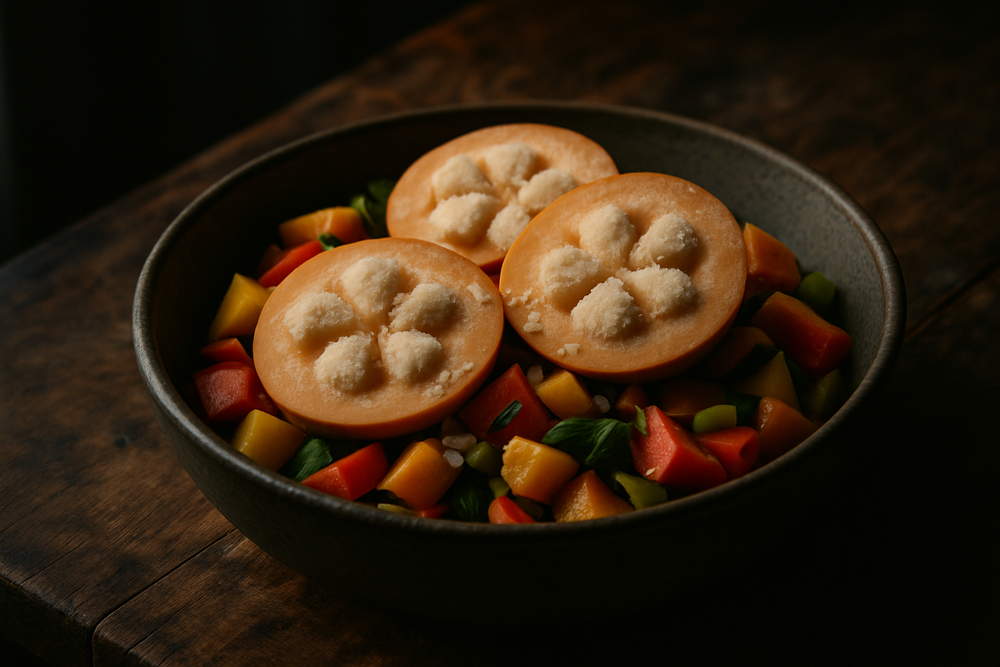
Santol · Photograph
Discover the santol fruit health benefits, full nutrition facts, and how to eat this tart Southeast Asian cotton fruit safely — including why you should never swallow the seeds. Evidence-aligned, layperson-friendly guide.
Key Nutrients
% Daily Value based on 2,000 cal diet
Key active compounds in santol
The edible pulp is relatively simple nutritionally, but the broader plant contains a range of bioactive (biologically active) molecules. Here's what research has identified:
- Koetjapic acid — a seco-oleanane triterpene (a type of plant-derived compound with a partially broken ring structure) found in the bark. In lab and animal studies, it shows anti-inflammatory, anti-tumor, and antiangiogenic (blood vessel growth–inhibiting) effects. Not yet tested in human trials.
- Bryonolic acid, katonic acid, indicic acid — related triterpene (multi-ring carbon) acids from the fruit hulls and heartwood. Preclinical studies link them to anti-inflammatory and cytotoxic (cell-killing) activity against certain cancer cell lines.
- Sentulic acid and related secotriterpenes — isolated from bark and stems; show antibacterial and anti-inflammatory effects in lab settings.
- Flavonoids and polyphenols (including catechin) — antioxidant compounds present in various parts of the plant. Catechin is the same broad class found in green tea. Their levels in the edible pulp specifically are not well characterized.
- Saponins — surface-active glycosides (sugar-linked molecules) concentrated in the bark, with antimicrobial properties in lab tests. Not relevant to normal fruit consumption.
- Limonoids (e.g., sandoricin) — highly oxygenated compounds concentrated in the seeds and non-edible tissues; show insecticidal and cytotoxic effects in vitro (in a test tube or cell culture).
Important context: Almost all exciting compound research uses concentrated extracts from bark, seeds, or heartwood — not the pulp. The amounts of these compounds in normal fruit servings are far lower than doses used in lab studies.
Prep and pairing ideas
Santol is most rewarding when you embrace its tartness rather than fight it. Here are three practical ways to enjoy it:
1. Classic fresh snack with salt and chili Halve the fruit, suck the pulp from each seed section, and dip in a small pinch of sea salt and dried chili flakes. The salt tempers the acidity and the chili adds complexity. This is how it's eaten across Southeast Asia — simple, no equipment needed.
2. Santol green mango salad (som tum–style) Julienne strips of unripe santol flesh (seeds removed) and toss with shredded green papaya or cabbage, lime juice, fish sauce or soy sauce, palm sugar, crushed peanuts, and fresh chili. The santol's tartness acts like tamarind, adding depth without extra souring agent. This style of eating pairs the fruit's modest fiber with protein from peanuts and a rainbow of fresh vegetables.
3. Santol jam on whole grain toast Cook ripe pulp (seeds removed and discarded) low and slow with a small amount of coconut sugar and a cinnamon stick until thickened. Spread a tablespoon on whole grain toast. You get the fruit's flavor with some fiber from the bread, and far less added sugar than commercial jam. Store refrigerated and use within one week.
Buying guide
Optional module 2 — Buying guide:
Fresh santol is primarily available in Southeast Asian countries (Philippines, Thailand, Indonesia, Cambodia, Malaysia) during its main season — roughly June to October, though this varies by region and variety. In Western countries, you may find it at Southeast Asian grocery stores or specialty tropical fruit suppliers. Choose fruits that feel heavy for their size, with skin that gives slightly but isn't mushy. Avoid cracked or heavily bruised specimens.
Yellow vs. red/brown santol: Yellow santol (Bangkok variety) tends to be sweeter and less fibrous; red-skinned or brown-skinned varieties (more common in the Philippines and parts of Indonesia) are often more tart and fibrous. Both are nutritionally similar.
Candied santol is sold in Southeast Asian specialty stores and online as a packaged sweet. Always check the sugar content on the label — some products contain added salt or food dye alongside substantial sugar. Look for versions with minimal added ingredients.
Frozen santol pulp (seeds already removed) is occasionally available at Southeast Asian grocery stores and removes the seed-safety concern entirely. It's a practical option if you want to use santol in smoothies or cooking without sourcing fresh fruit.
Supplement note: There are no standardized, commercially available santol supplements with human efficacy data. Bark or extract preparations marketed online are not regulated medicines and are not recommended.
Bottom line
Santol is a genuinely enjoyable, low-calorie tropical fruit with a nutrient profile that fits well into a plant-rich diet — potassium for blood pressure support, vitamin C for immune function and iron absorption, some fiber for gut health, and a flavor that beats most supermarket fruits for sheer excitement. Research on Sandoricum koetjape is scientifically interesting, particularly the triterpene compounds from the bark, but those findings are lab-based and not yet transferable to eating the fruit.
The most important thing to remember about santol has nothing to do with antioxidants or phytochemicals: spit the seeds out, always. That one habit makes santol a safe, delightful addition to your fruit repertoire. For everyone else — especially those managing diabetes, kidney disease, reflux, or hypertension — the form and portion of santol you choose matters more than the fruit itself.
Eat it fresh, tart, and whole. Let the seed go. Enjoy the experience.
How Santol Compares
| Compared with | What's different |
|---|---|
| Santol vs. Mangosteen | White cottony pulp is sucked from large seeds; mangosteen has smaller, segments that melt away. |
| Santol vs. Custard Apple | Significantly more acidic and tart than the creamy, sweet profile of custard apple. |
Health Benefits
Things to Know
Never swallow the seeds.: The hard, large santol seeds can cause intestinal obstruction or bowel perforation requiring emergency surgery. This is a documented, serious risk — not a theoretical one. Teach children this rule explicitly, and supervise young children eating santol.
Seed risk is highest for: children, older adults, and anyone with prior abdominal surgery, gut strictures (narrowings in the intestine), diverticular disease, or motility disorders (conditions affecting how the intestine moves food along).
Acidity and reflux: Santol is notably tart. People with gastroesophageal reflux disease (GERD) or peptic ulcers may find it irritating, especially in large amounts or on an empty stomach.
Kidney disease: Santol contains moderate potassium. Those on potassium-restricted diets should check with their care team about portion size.
Diabetes: Fresh santol in typical portions is similar to other tropical fruits. Candied or syrup-packed versions add significant sugar and should be counted in meal planning for anyone taking insulin or blood sugar–lowering medications.
Potassium-raising medications: ACE inhibitors, ARBs, and potassium-sparing diuretics can raise serum (blood) potassium. Very high overall fruit intake could be a concern; santol's potassium is moderate but should be factored in.
Pregnancy: Eating the ripe fruit in normal food amounts is generally considered acceptable. Concentrated extracts from bark or stem have shown pharmacological activity in animal studies, and their safety in pregnancy is unknown — avoid non-food preparations.
No known drug–santol interactions: have been confirmed in human studies. Theoretical interactions exist with anticoagulants or cytotoxic drugs based on preclinical triterpene data, but these are speculative.
Shop This Ingredient
Stock your pantry with quality santol.
Buy on AmazonAs an Amazon Associate, Plantopedia earns from qualifying purchases. This costs you nothing extra and helps us keep the encyclopedia free.
Frequently Asked Questions
Here's what the current evidence actually supports, broken down by body system. Where human studies exist, we say so. Where the evidence is only from labs or animals, we're clear about that too. Heart and circulation Santol doesn't have its own cardiovascular clinical trials, but the nutrient dots connect reasonably well. Each 100 g serving provides around 328 mg of potassium — about 7% of your daily value — and potassium is consistently linked in large population studies to healthier blood pressure and lower cardiovascular risk. The fiber in santol, while modest, also fits the pattern of a heart-supportive whole-food diet. No study has specifically tested santol against a heart-disease outcome in humans. Consider its heart benefit as "fruit diet plausible" rather than "santol proven." People on potassium-restricted diets (often prescribed for advanced kidney disease) should factor santol's potassium into their overall daily tally. Digestive health and microbiome Santol pulp contains dietary fiber and pectin (a soluble fiber — a type that dissolves in water and can form a gel — that feeds beneficial gut bacteria). General evidence on fruit fiber is solid: it supports bowel regularity, feeds a healthy gut microbiome (the community of microorganisms living in your digestive tract), and may reduce constipation risk. Whether santol specifically moves the needle hasn't been directly tested. What has been documented with high certainty is the digestive danger of swallowing the seeds. Multiple surgical case series from the Philippines and Thailand record patients — including children and older adults — who needed emergency bowel surgery after swallowing santol seeds, with some cases resulting in death. Symptoms include severe abdominal pain, bloating, inability to pass stool, fever, and signs of infection. Always suck the pulp and spit the seeds. Blood sugar and metabolism Fresh santol pulp contains about 9.5 g of natural sugars and 13.7 g of total carbohydrates per 100 g — similar to many other tropical fruits. In reasonable portions, this is unlikely to be problematic for most healthy people. Candied santol or santol in syrup, however, can contain substantially more sugar and is not well-suited for people managing diabetes or prediabetes. Preclinical studies on bark and leaf extracts show enzyme inhibition relevant to glucose metabolism, but those findings use concentrations far beyond what you'd get from eating the fruit. There are no human trials on santol and blood sugar. Inflammation and recovery This is where santol science gets genuinely interesting — and genuinely preliminary. The bark and stem of the santol tree yield triterpene compounds (koetjapic acid and related molecules) that, in mouse and cell culture studies, inhibit inflammatory signals (including prostaglandin E2, a key inflammation messenger) at levels comparable to reference anti-inflammatory drugs like indomethacin. That's a meaningful lab finding. But it's not a reason to eat more santol pulp, because these effects were produced by purified compounds at pharmacological doses, not by eating fruit. Think of it as a promising lead for future drug development, not a current dietary prescription. Santol fruit benefits for immune system Vitamin C is santol's clearest immune-relevant nutrient. At 14 mg per 100 g serving (about 16% of the daily value), it's a meaningful contributor — not as rich as guava or citrus, but a genuine addition to daily intake. Vitamin C supports the production and function of white blood cells, acts as an antioxidant (a molecule that neutralizes damaging free radicals), and helps the body absorb non-heme iron (the form of iron found in plant foods). The flavonoids and polyphenols in santol also contribute antioxidant capacity, though their concentrations in the edible pulp haven't been precisely measured.
Each form of santol has a different nutritional profile and a different practical fit. Here's a plain-language breakdown: Fresh whole fruit (pulp sucked from seeds) is the gold standard. You cut the fruit open, suck or gently scrape the tart-sweet white flesh from around each large seed, and spit the seed out. This preserves all the fiber, vitamin C, potassium, and characteristic sour flavor. It's also the form with the best-established safety profile for normal food quantities. Candied or preserved santol (in sugar syrup, jams, or chutneys) is a popular Southeast Asian street food and pantry staple. Cooking may reduce some vitamin C but retains minerals and some fiber. The trade-off: substantially more sugar and calories. Treat it like any sweet condiment — enjoyable in moderation, not an everyday health food. Seeds must be removed before cooking. Pickled or salted santol (brined with salt, chili, or fish paste) is common with green, unripe fruit. Flavorful, but high in sodium — relevant if you're watching blood pressure or kidney health. Juice or smoothies made from strained santol pulp eliminate fiber and seed-ingestion risk, but concentrate natural sugars. Portion control matters, especially for those monitoring blood sugar. Bark, peel, or seed extracts are used in traditional medicine and studied in pharmacology labs. These are not standardized, not approved as medicines, and not recommended for self-treatment. Their safety in humans at therapeutic doses is unknown.
Optional module 1 — Who benefits most: The adventurous whole-food eater in a tropical climate Looking to diversify fruit intake beyond the usual apple-banana-orange rotation Enjoys tart, complex flavors and is willing to learn a new eating technique (suck, don't swallow) Already eats a broadly plant-rich diet and wants to add a culturally rich, low-calorie option The person building iron and vitamin C intake on a plant-based diet Eating primarily plant foods, where non-heme iron (less easily absorbed than animal iron) is the main dietary iron source Benefits from santol's simultaneous presence of vitamin C (which enhances non-heme iron absorption) and a small amount of iron in the same fruit Interested in expanding tropical fruit options that contribute meaningfully to micronutrient goals
There is no established therapeutic dose for santol. As a food, the practical answer is: as much as you enjoy, within the context of your overall diet — with two firm limits. Limit 1: Never swallow the seeds. This is a hard safety rule, not a moderation guideline. Limit 2: Watch the form. Fresh santol pulp is low in calories (59 per 100 g) and can fit into most eating patterns. Candied or preserved santol adds sugar quickly — a small serving of candied santol can contain several times the sugar of the fresh fruit. In practice, one to three medium fruits as a snack or alongside a meal is a reasonable amount for most healthy adults. If you're managing blood sugar, kidney disease, or reflux, adjust based on guidance from your health professional. Start with one fruit if you're unfamiliar with santol's tartness, particularly if you have a sensitive stomach. Some people find the acidity causes mild GI discomfort (gas, loose stools, or reflux) if they eat a large quantity in one sitting — this is common with many acidic fruits. Looking to build a broader plan around fruit and whole-food eating? Browse Plantopedia's plant-forward goals for practical frameworks.
Quick Answers
Common questions, answered in a line.
You must never swallow santol seeds because they can cause life-threatening intestinal obstruction or bowel perforation. These large, hard seeds do not digest and often require emergency surgery if ingested; always spit them out and supervise children closely.
Santol contains bioactive compounds like koetjapic acid and various triterpenes that show anti-inflammatory and anti-tumor potential in laboratory settings. While these compounds are mostly concentrated in the bark and hulls, the edible pulp provides antioxidants like catechin.
Fresh santol is generally safe for people with diabetes when eaten in moderation, similar to other tropical fruits. However, you should avoid candied or syrup-packed santol, as these versions contain high amounts of added sugar that can impact blood glucose levels.
Santol has a notable tart and acidic profile that may irritate the digestive tract of those with GERD or peptic ulcers. If you suffer from frequent heartburn, it is best to avoid eating large amounts of the fruit, especially on an empty stomach.
Santol is primarily in season from June to October in Southeast Asian countries like the Philippines and Thailand. When buying, look for fruit that feels heavy for its size and yields slightly to pressure without being mushy or cracked.
Yellow santol, often called the Bangkok variety, is typically sweeter and less fibrous than the red or brown varieties. Red-skinned santol tends to be more tart and has a more fibrous texture, though both types offer similar nutritional value.
Santol contains moderate levels of potassium, which may be a concern for individuals on potassium-restricted diets or those taking medications like ACE inhibitors. If you have kidney disease, consult your healthcare team regarding safe portion sizes for this fruit.
For Readers in the USA
Local context — sourcing, seasonality, and regional notes.
In the United States, fresh santol is primarily available at specialized H Mart locations, 99 Ranch Markets, or independent Southeast Asian grocers in states like California, Florida, and Texas. Because it is a tropical import, you are more likely to find it in metropolitan areas with large Filipino or Thai communities.
Commercial santol production in the U.S. is extremely limited to tropical microclimates in Southern Florida and Hawaii, as the tree cannot tolerate frost. Most santol found in American markets is imported from Southeast Asia, typically arriving between June and October.
The FDA does not have specific regulations for santol, but like all imported produce, it must meet USDA APHIS phytosanitary requirements to prevent the introduction of tropical pests. When buying processed versions like jarred santol in syrup, look for the nutrition facts label to monitor sodium and added sugar levels.
In the US, you may find santol labeled as "Cotton Fruit" or "Lolly Fruit" due to the fluffy, white texture of its inner pulp. In Filipino-American markets, it is almost exclusively referred to by its Tagalog name, Santol.
AI Clinical Review
- Presents santol as a nutritious whole food, not a cure-all, and clearly separates lab findings on bark/seed extracts from what you get by eating the pulp.
- Nutrient profile is reasonable: low calorie, modest fiber, and meaningful potassium and vitamin C that fit well in a plant-forward diet.
- Seed safety is emphasized appropriately; the risk of intestinal obstruction or perforation from swallowing seeds is real and well documented.
- Practical guidance on forms (fresh vs. candied/pickled/juice) and how sugar or sodium can change health impacts is on point.
- Most anti-inflammatory/anticancer claims come from triterpene-rich extracts (plant compounds tested mainly in cells/animals); there are no human trials showing benefit from eating the fruit itself.
- The antioxidant/polyphenol content of the edible pulp isn’t well characterized, so its real-world impact on inflammation or immunity is uncertain.
- No controlled human studies link santol specifically to outcomes like blood pressure, glycemic control, or microbiome changes; current benefits are inferred from general fruit/fiber research.
- Food composition data vary by variety and ripeness, so exact nutrient numbers should be viewed as approximate.
- Safety first: never swallow the seeds; supervise children and anyone with swallowing difficulties or gut motility issues.
- Portions: there’s no therapeutic dose—treat it as food. If new to santol or sensitive to acidity/reflux, start with 1 fruit; up to 1–3 medium fruits/day can fit most diets if tolerated.
- Form matters: fresh pulp retains fiber; juices remove fiber and concentrate sugars; candied/pickled products can be high in added sugar or sodium—important for diabetes or hypertension management.
- Check with a clinician if you have chronic kidney disease or take potassium-raising medications (ACE inhibitors, ARBs, potassium‑sparing diuretics), have a history of bowel strictures/abdominal surgery, or are pregnant and considering non‑food extracts.
Do not swallow the seeds; they are hard and can cause intestinal problems.
References
- USDA FoodData Central (nutrient database) — (fdc.nal.usda.gov)
- MyPlate – Fruits: General guidance on daily fruit intake — (myplate.gov)
- **Scoping review: Health benefits of santol fruits and bioactive products from **Sandoricum koetjape — Journal of Food Biochemistry, 2022 (pubmed.ncbi.nlm.nih.gov)
- Anti-inflammatory agents from Sandoricum koetjape Merr. — Journal of Natural Products, 2004; preclinical study of triterpenes (pubmed.ncbi.nlm.nih.gov)
- Koetjapic acid review: anticancer mechanism of action — European Journal of Medical Research, 2024 (eurjmedres.biomedcentral.com)
- Cytotoxic triterpenes from Sandoricum koetjape stems — Journal of Natural Products, 1992 (pubmed.ncbi.nlm.nih.gov)
- Surgical case series: Small bowel obstruction from swallowed santol seeds — EuroRad case report (eurorad.org)
- Swallowed santol seeds causing intestinal perforation — Philippine surgical case series (members.tripod.com)
- Gastrointestinal complications from ingested santol seeds — Thai Veterinary Medical Journal / case documentation (he02.tci-thaijo.org)
- PROSEA Plant Resources of South East Asia — Sandoricum koetjape composition data (prosea.prota4u.org)
Know Your Numbers
Eating healthy is a start. Now get to know your biomarkers.
Food changes bloodwork — inflammation, lipids, blood sugar and nutrient status all respond to what you eat. 59 markers from $59.
- Results in 7–10 days at 2,000+ Quest sites
- Licensed provider reviews every result
- One flat price, no membership, HSA/FSA eligible
Educational information only, not medical advice. Panels are ordered and reviewed through our licensed partner; Plantopedia may earn a commission.