Sea Grapes — health benefits and uses
An Okinawan longevity food traditionally eaten fresh from the sea.
The Short Answer
Sea grapes are a nutrient-dense seaweed containing just 4 calories per 1/2 cup serving. They are a rare plant source of marine omega-3s (DHA and EPA) and provide a significant 1.3 mg of iodine per serving.
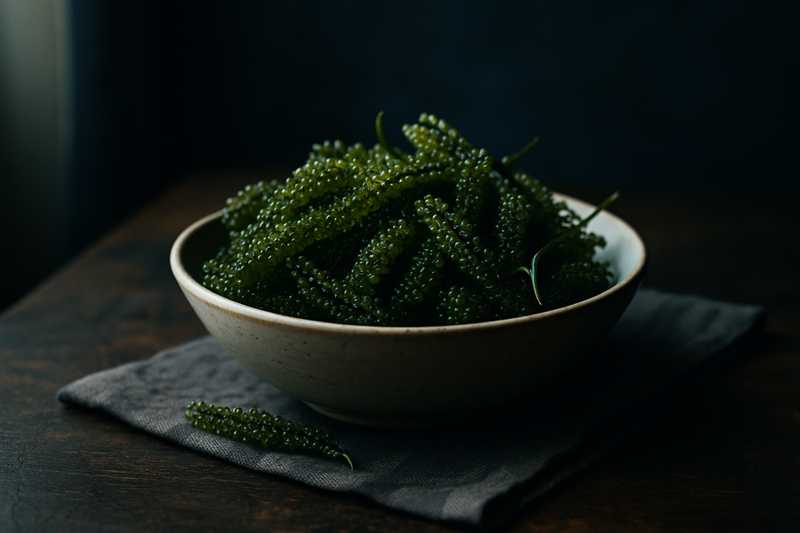
Sea Grapes · Photograph
Discover sea grapes health benefits and side effects — from heart health and blood sugar support to bone and immune health. Learn sea grapes nutrition facts, how much to eat per day, and who should be cautious about this green caviar seaweed.
Key Nutrients
% Daily Value based on 2,000 cal diet
Key Active Compounds in Sea Grapes
Sea grapes earn their nutritional credibility partly through a unique chemistry not found in most land vegetables.
- Sulfated polysaccharides (including β-1,3-xylan): Complex, sulfur-containing carbohydrate chains found in Caulerpa species. Early studies show antioxidant, anti-inflammatory, and anti-proliferative (cell-growth-slowing) activity in lab settings.
- Caulerpin: A pigment compound called a bis-indole alkaloid. Preclinical research suggests antibacterial and antioxidant roles.
- Caulerpenyne: A sesquiterpene (a class of chemical compound built from carbon and hydrogen units) with cytotoxic effects in cell studies — meaning it can interfere with abnormal cell growth — though concentrated amounts may also have toxic effects.
- Phenolic compounds: A broad family of plant molecules that donate electrons to neutralize harmful free radicals (unstable molecules that can damage cells). Sea grape extracts show meaningful free-radical-scavenging activity in lab assays.
- Marine omega-3 fatty acids (DHA, EPA, and ALA): Polyunsaturated fatty acids typically associated with fish and fish oil. Sea grapes are one of the very few plants that contain the marine forms DHA and EPA alongside the plant form ALA — a nutritionally noteworthy fact for people eating entirely plant-based diets.
Prep and Pairing Ideas
Sea grapes are easy to prepare and beautiful on a plate. Here are three practical ways to use them.
Classic Okinawan-style sea grape salad Rinse 40–50 g fresh sea grapes thoroughly under cold water. Pat dry. Serve alongside julienned cucumber, thinly sliced radish, and a light dressing of rice vinegar, a few drops of sesame oil, and a pinch of chilli flakes. The pairing with cucumber adds crunch and water content; the vinegar brightens the briny flavour without adding sodium.
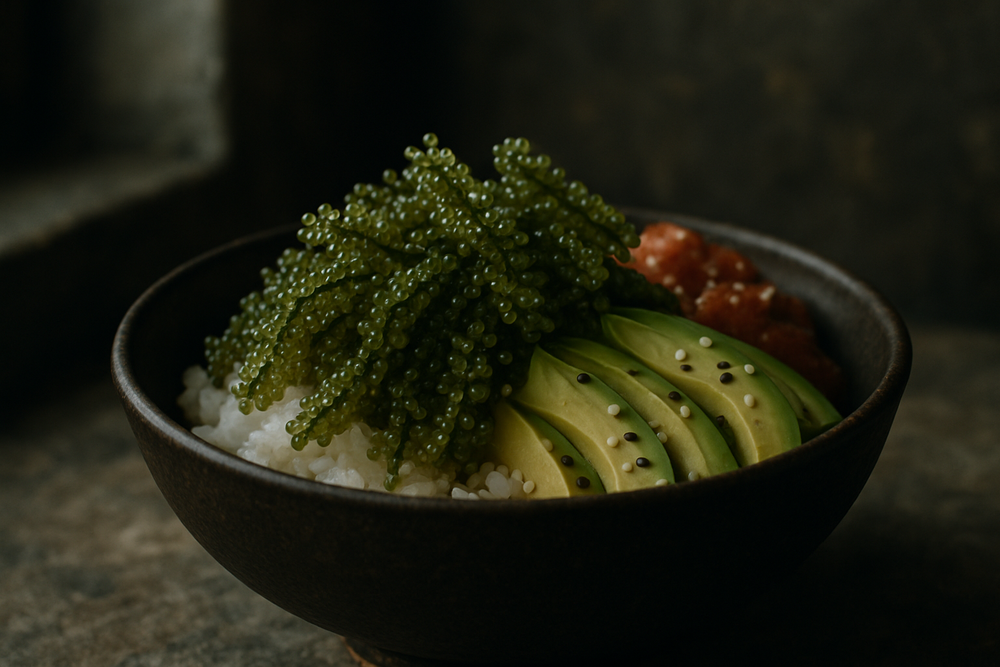
Ponzu citrus bowl topping Use 30–40 g fresh sea grapes as a topper on a grain bowl (brown rice or quinoa, edamame, sliced avocado). Drizzle with ponzu sauce (a citrus-soy blend). The vitamin C in the citrus helps your body absorb the non-heme iron in the sea grapes — a smart nutritional pairing.
Sea grape and mango salsa Fold 20 g rinsed sea grapes into a fresh mango-tomato salsa with red onion, coriander, and lime juice. The sweetness of mango balances the brine beautifully. Serve as a topping for grilled tofu or rice paper rolls. The vitamin C in mango and lime again boosts iron absorption.
Bottom Line
Sea grapes are a genuinely interesting sea vegetable with a distinctive texture, a nutrient-dense profile, and an active research community building the case for their health applications. They're a natural source of iodine, minerals, plant-based omega-3s, and bioactive compounds that show real promise for heart health, blood sugar balance, and anti-inflammatory support in early research.
The honest limitation: almost all of that research is from animal models and lab studies. Human clinical trials are largely absent. Sea grapes are best approached as a flavorful, nutritious whole food — not a supplement or therapy — eaten in moderate portions as part of a varied, plant-rich diet.
Their high iodine and sodium content are real considerations that separate them from most land vegetables. For healthy people without thyroid concerns, moderate enjoyment of fresh sea grapes is safe and potentially beneficial. For anyone with thyroid disease, kidney issues, high blood pressure, or who is pregnant or on thyroid medication, a conversation with a healthcare provider is the right first step.
How Sea Grapes Compares
| Compared with | What's different |
|---|---|
| Sea Grapes vs. Kombu | Sea grapes have a signature 'popping' texture, while kombu is thick, leathery, and used for broth. |
| Sea Grapes vs. Wakame | Sea grapes are eaten raw and fresh; wakame is usually dried and has a silky, leafy texture. |
Health Benefits
Things to Know
Iodine overload is a real risk.: The daily adequate intake of iodine for adults is 150 mcg. A 100 g fresh serving of sea grapes may provide roughly 1.3–2 mg (1,300–2,000 mcg) — potentially 8–13 times the daily requirement. This is fine occasionally for healthy people with no thyroid issues, but not as a daily large serving.
Thyroid disorders: People with hypothyroidism, hyperthyroidism, Hashimoto's thyroiditis, Graves' disease, or thyroid nodules should consult a doctor before eating sea grapes regularly.
Medications: Sea grapes may interact with levothyroxine (thyroid hormone replacement), methimazole or propylthiouracil (antithyroid drugs), lithium, antihypertensive medications (especially diuretics and ACE inhibitors), and any drug that affects thyroid function or sodium-potassium balance.
Kidney disease: People with chronic kidney disease should monitor intake of iodine, sodium, potassium, and phosphorus found in sea grapes and coordinate with their renal care team.
Pregnancy and breastfeeding: Iodine needs are higher during pregnancy and lactation, but excessive iodine from seaweed can also be harmful to fetal and infant thyroid development. Discuss with a healthcare provider.
Children: More sensitive to excess iodine and sodium; small, occasional food-based portions only — not supplements.
Water source matters: Like all seaweeds, sea grapes can absorb heavy metals from their environment. Source from reputable, regulated aquaculture operations.
Start small: If new to seaweed, begin with 20–30 g fresh and see how your body responds before eating larger portions regularly.
Glossary
Shop This Ingredient
Stock your pantry with quality sea grapes.
Buy on AmazonAs an Amazon Associate, Plantopedia earns from qualifying purchases. This costs you nothing extra and helps us keep the encyclopedia free.
Frequently Asked Questions
The research on sea grapes is genuinely exciting — and genuinely early. Here's what the evidence actually says, benefit area by benefit area. Heart and Circulation Sea grapes contain a combination of ingredients that are independently linked to cardiovascular health: soluble fiber (which can help modulate cholesterol), magnesium and potassium (minerals associated with healthy blood pressure), and marine omega-3 fatty acids (linked to reduced inflammation and triglyceride levels in humans). In animal studies, sea grape extract reduced total cholesterol, blood glucose, and oxidative stress markers in rats fed high-fat, high-cholesterol diets, suggesting cardiometabolic potential. Reviews classify sea grapes as a candidate nutraceutical (a food with medicine-like properties) for obesity-related metabolic disorders. Important caveat: No controlled human clinical trials have tested sea grapes for cardiovascular outcomes. And because sea grapes — especially salted preparations — can be high in sodium, eating large amounts regularly could potentially increase blood pressure in salt-sensitive individuals, partially offsetting any benefit. Digestive Health and Microbiome Sea grapes provide both insoluble and soluble dietary fiber. Analysis of dried sea grape biomass reports roughly 17.5% total dietary fiber by dry weight — mostly insoluble. In practice, a fresh 50 g serving still contributes meaningfully to daily fiber intake. Fiber supports stool bulk, bowel regularity, and feeds beneficial gut bacteria (a process called prebiotic fermentation). The high water content (95%) may also help keep digestion moving gently. No sea-grape-specific human trials on gut microbiome outcomes exist yet, so current understanding is extrapolated from its fiber content and broader seaweed research. Blood Sugar and Metabolism In preclinical (animal and lab) studies, sea grape extracts inhibit α-glucosidase — an enzyme involved in breaking down carbohydrates in the gut, slowing the rise of blood sugar after meals. Animal models of metabolic syndrome showed improvements in blood glucose and insulin sensitivity with sea grape supplementation. The Philippine National Nutrition Council notes sea grapes' potential to help manage blood sugar, citing their nutrient profile and these preclinical results. Bottom line for blood sugar: Sea grapes may be a useful low-calorie, fiber-rich addition to a blood-sugar-friendly eating pattern, but they should not replace medication or medical management of diabetes or prediabetes. Hormones and Thyroid Health This is one area where the nutrient-based evidence for sea grapes is relatively strong — though it's still not from direct clinical trials on sea grapes specifically. Iodine is essential for the thyroid gland to make the hormones T3 and T4, which regulate metabolism, energy, and growth. Iodine deficiency causes goiter (abnormal enlargement of the thyroid). The Philippine National Nutrition Council estimates that about 40 g of sea grapes per day can supply enough iodine to help prevent iodine-deficiency goiter, with 150 g providing approximately 2 mg of iodine. Double-edged sword: The same high iodine content that helps iodine-deficient individuals can trigger or worsen thyroid problems in people who already have thyroid disorders, autoimmune thyroid disease, or who take thyroid medications. This is the most clinically significant safety concern with sea grapes — see the cautions section below. Inflammation and Recovery Sea grapes' sulfated polysaccharides, caulerpin, and phenolic compounds show meaningful antioxidant and anti-inflammatory activity in vitro (in cell cultures) and in animal models. Preclinical work suggests they can reduce oxidative stress (cellular damage from free radicals) and modulate inflammatory signaling pathways linked to metabolic syndrome. There are currently no clinical trials evaluating sea grapes' effect on inflammatory markers — such as C-reactive protein or interleukin-6 — in humans. The evidence is mechanistic and promising, but not yet proven in people. Bone Health and Immune Support Sea grapes supply calcium, magnesium, phosphorus, copper, vitamin C, and provitamin A carotenoids — a mineral and vitamin package that contributes to bone mineralization, collagen formation, and immune defense when part of a nutrient-sufficient diet. Laboratory studies also report cytotoxic (cell-damaging) activity of sea grape extracts against various cancer cell lines, but these are early-stage findings in a dish, not in living humans. Sea grapes are a genuinely mineral-rich food that can complement a bone-health or immune-support eating pattern — they just aren't a treatment for any specific condition.
The Adventurous Plant-Based Eater Looking for novel sources of marine omega-3s without eating fish Wants to add variety and mineral density to a vegetable-forward diet Enjoys fresh, textural, briny foods as part of Asian-inspired meals The Seaweed-Curious Home Cook in an Iodine-Light Diet Lives in a region where iodized salt is not the norm, or avoids added salt entirely Wants to top up iodine naturally through whole food sources Is comfortable with moderate, mindful serving sizes
Fresh whole clusters (best choice for most people) Fresh sea grapes are rinsed to remove surface salt, then eaten raw in salads, with rice, or as a side dish dressed with citrus, vinegar, or sesame. This is the form closest to traditional use and the one most aligned with whole-food, plant-based eating. The bead-like fronds stay crisp and deliver that signature briny pop. Brined or salted sea grapes These are preserved in salt or brine for shelf life. The sodium content rises significantly in this form. Always rinse well in fresh water before eating, and consider a 15-minute soak if you're watching sodium. Not ideal for people with high blood pressure. Dried sea grape powder Used in research and occasionally in supplement capsules. Nutrient analysis of dried powder shows approximately 44% carbohydrates, 14% lipids, 7% protein, and 17.5% dietary fiber by dry weight — along with very high sodium and iodine concentration. Powdered supplements are not equivalent to eating fresh sea grapes; they deliver far higher doses of active compounds and should be used with extra caution. Extracts (research use) Concentrated ethanolic and polysaccharide extracts are what researchers use in most cell and animal studies. These are not currently available as consumer food products, and the doses used in preclinical work cannot be directly translated to food servings.
There's no single universal "dose" for sea grapes as a food, but the following ranges reflect traditional use and available nutritional guidance: Typical food serving: 20–50 g fresh sea grapes per occasion, eaten as part of a meal — this is the range used in traditional Southeast Asian and Okinawan cuisine. Iodine-focused guidance: The Philippine National Nutrition Council suggests approximately 40 g per day as an amount that supports iodine sufficiency for most healthy adults without thyroid conditions. Upper practical limit: 150 g in one sitting provides roughly 2 mg (2,000 mcg) of iodine — far above the daily requirement and approaching levels where thyroid disruption becomes a concern in susceptible individuals. This should not be a regular serving size. Start-low advice: If you're new to sea grapes or seaweeds generally, begin with 20–30 g a few times per week rather than daily. Pay attention to any unusual symptoms such as throat discomfort, neck swelling, palpitations, or unusual fatigue, which could signal thyroid sensitivity. Supplement powders and extracts: No safe human dose has been established. Avoid self-dosing concentrated sea grape supplements without medical supervision, especially if you have any thyroid or kidney condition.
Quick Answers
Common questions, answered in a line.
Sea grapes are one of the rare plant sources that contain marine omega-3 fatty acids, specifically DHA and EPA, alongside the plant form ALA. These polyunsaturated fats are typically found in fish and are highly beneficial for those following a strictly plant-based diet.
Sea grapes contain a unique pigment compound called caulerpin and sulfated polysaccharides that show antioxidant, anti-inflammatory, and antibacterial properties in early research. These bioactive compounds help neutralize harmful free radicals and may slow abnormal cell growth.
To maximize iron absorption from sea grapes, pair them with foods high in vitamin C, such as citrus-based ponzu sauce, mango, or lime juice. The vitamin C helps the body more effectively process the non-heme iron found in this sea vegetable.
People with thyroid disorders, such as Hashimoto's or Graves' disease, and those with kidney disease should consult a doctor before eating sea grapes due to their high iodine and sodium content. These minerals can interfere with thyroid function and renal health if consumed in excess.
Sea grapes may interact with thyroid hormone replacements like levothyroxine, antithyroid drugs, lithium, and certain blood pressure medications like ACE inhibitors. These interactions occur because the seaweed can affect thyroid function and the body's sodium-potassium balance.
A 100g serving of sea grapes can provide between 1.3 to 2 mg of iodine, which is roughly 8 to 13 times the daily recommended intake for adults. While safe for occasional consumption by healthy individuals, this high concentration makes it unsuitable for large daily servings.
For a classic Okinawan preparation, rinse 40–50g of fresh sea grapes and serve them with julienned cucumber and a light dressing of rice vinegar and sesame oil. You can also use them as a crunchy topper for grain bowls or fold them into a fresh mango salsa.
For Readers in the USA
Local context — sourcing, seasonality, and regional notes.
In the United States, you can find sea grapes at H Mart, Mitsuwa Marketplace, and other specialized Asian grocers, or via online retailers that ship them packed in brine. While rarely stocked in conventional supermarkets like Kroger or Safeway, they are increasingly popular in Hawaii and coastal California markets.
Sea grapes (Caulerpa lentillifera) are primarily imported to the US from Southeast Asia, but they can be grown in warm, tropical US waters like those in Hawaii and Southern Florida. Most commercially available sea grapes in the mainland US are sustainably farmed in land-based aquaculture tanks to ensure water quality.
While the FDA does not have specific regulations for "green caviar," sea grapes are classified as a seaweed food product and must meet general US food safety standards for heavy metals and contaminants. Look for brands that display USDA Organic certification or provide third-party testing to ensure they were harvested from clean, unpolluted waters.
AI Clinical Review
- Gives a balanced picture: sea grapes are nutrient-dense (iodine, minerals, fiber) with intriguing bioactives, while emphasizing that most data are preclinical.
- Highlights the two big safety levers—iodine and sodium—and offers practical serving guidance (small, fresh portions; rinse well), which aligns with clinical nutrition practice.
- Appropriately frames potential heart, blood sugar, and anti-inflammatory benefits as promising but not a substitute for medical treatment.
- Clearly identifies higher-risk groups (thyroid disorders, pregnancy, kidney disease, children) and possible medication interactions.
- Human trials are limited for cardiometabolic, inflammation, and gut microbiome outcomes, so effective dose, frequency, and long‑term safety remain uncertain.
- The presence and amount of marine omega‑3s (EPA/DHA) can vary by species, harvest conditions, and preparation; typical fresh servings may contribute only modest amounts.
- In‑vitro “cytotoxic” or antimicrobial findings do not translate to cancer or infection treatment claims in people.
- Iodine and other nutrient levels can fluctuate widely with growing waters and processing, so real‑world intake may differ from listed values.
- Iodine: the adult tolerable upper intake level is about 1,100 mcg/day; a 100 g fresh serving may exceed this—keep portions modest and avoid large daily intakes, especially with any thyroid condition.
- Sodium: brined/salted products can be very high in sodium; thorough rinsing or a brief soak helps, and fresh forms are preferable if you have hypertension or heart/kidney disease.
- Form matters: powders and extracts concentrate iodine and bioactives and lack established safe dosing; stick to food forms unless a clinician advises otherwise.
- Sourcing: like other seaweeds, sea grapes can accumulate heavy metals—choose reputable, tested aquaculture sources when possible.
High in sodium and iodine; eat fresh and in moderation.
References
- USDA FoodData Central — seaweed and sea vegetable nutrient data (fdc.nal.usda.gov)
- Philippine National Nutrition Council — Facts You Should Know About Sea Grapes (nnc.gov.ph)
- **Comprehensive review: nutrients, phytochemicals, and health benefits of **Caulerpa lentillifera (pmc.ncbi.nlm.nih.gov)
- Animal study: sea grape supplementation improves metabolic risk factors in high-fat-diet rats (frontiersin.org)
- Polysaccharides from Caulerpa lentillifera: phytochemical and bioactivity analysis (pubmed.ncbi.nlm.nih.gov)
- **Composition study and cardiovascular/metabolic risk factor analysis for **Caulerpa lentillifera (pmc.ncbi.nlm.nih.gov)
- Phytochemical analysis, antioxidant activity, and cytotoxic properties of sea grape extracts (pmc.ncbi.nlm.nih.gov)
- **Nutritional evaluation of tropical green seaweeds including **Caulerpa lentillifera (scispace.com)
- Nutraceutical potential of Caulerpa sp. from the Kei Islands (pubs.aip.org)
- MyPlate — USDA guidance on vegetables and sea vegetables (myplate.gov)
Know Your Numbers
Eating healthy is a start. Now get to know your biomarkers.
Food changes bloodwork — inflammation, lipids, blood sugar and nutrient status all respond to what you eat. 59 markers from $59.
- Results in 7–10 days at 2,000+ Quest sites
- Licensed provider reviews every result
- One flat price, no membership, HSA/FSA eligible
Educational information only, not medical advice. Panels are ordered and reviewed through our licensed partner; Plantopedia may earn a commission.