Wakame — health benefits and uses
A Japanese dietary staple valued as a mineral-dense sea food.
The Short Answer
Wakame is a nutrient-dense brown seaweed that provides 196 mcg of folate and 150 mg of calcium per 100g serving. It is best known for its silky texture in miso soup and contains unique compounds like fucoxanthin and fucoidans.
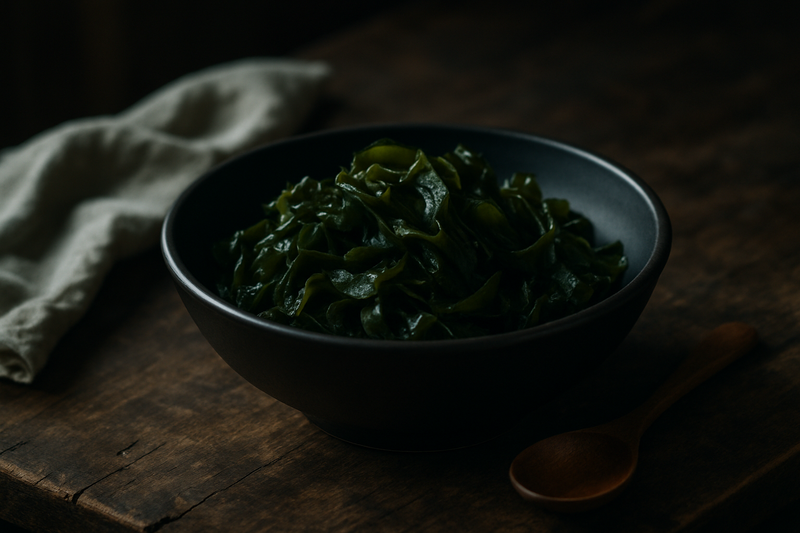
Wakame · Photograph
Discover the wakame seaweed health benefits and side effects, from heart health and bone support to iodine and sodium risks. Learn how much to eat, how to use it in miso soup and seaweed salads, and who should take extra care.
Key Nutrients
% Daily Value based on 2,000 cal diet
Key active compounds
- Fucoxanthin — A golden-brown carotenoid (pigment) unique to brown seaweeds. Acts as an antioxidant and has shown anti-inflammatory and fat-metabolism effects in cell and animal studies; human data is promising but still early.
- Fucoidans — Sulfated polysaccharides (complex sugar molecules with sulfur groups attached) found in the cell walls of brown algae. Preclinical research links them to immune-modulating, anticoagulant (blood-thinning), and antiviral activity.
- Alginates — Viscous (gel-forming) soluble fibers from brown algae cell walls. They form a thick gel in the digestive tract that slows gastric emptying (how quickly food leaves your stomach) and may blunt post-meal blood sugar and fat spikes.
- Other polyphenols and carotenoids — Minor antioxidant compounds that contribute to wakame's overall antioxidant capacity, though their individual clinical roles aren't yet well defined.
Prep and pairing ideas
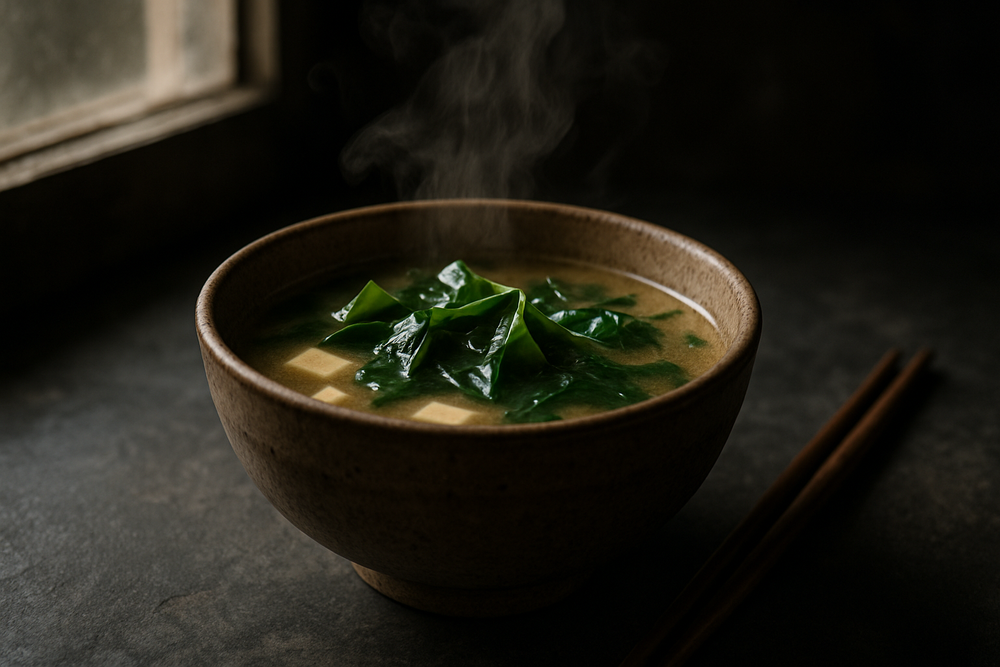
Miso soup (the classic): Soak 1–2 teaspoons of dried wakame in cold water for 5 minutes. Drain, roughly chop, and add to your miso broth just before serving — heat gently, as extended boiling can degrade heat-sensitive nutrients. This is the most traditional and lowest-sodium way to enjoy wakame, since the miso itself provides plenty of umami.
Seaweed salad: Rehydrate dried wakame, drain well, and toss with rice vinegar, sesame oil, a small amount of soy sauce (low-sodium if preferred), sesame seeds, and thinly sliced cucumber. The acidity of the vinegar balances wakame's oceanic flavour and brings out its silky texture.
Grain bowls: Add a small handful of rehydrated wakame to a bowl of brown rice, quinoa, or soba noodles with edamame, shredded carrots, and a ginger-sesame dressing. Wakame adds mineral density and a satisfying chewy-silky contrast without overwhelming the dish.
Buying guide:
- Dried strips over powder when you want portion control — it is easy to measure by weight or rough volume.
- Check for additives: Some ready-to-eat packs include monosodium glutamate, sugar, or artificial colouring. Plain dried wakame needs none of these.
- Country of origin matters: Products from Japan or Korea with third-party testing (look for heavy metal certification on the label or brand website) are a safer long-term choice.
- Storage: Once opened, dried wakame keeps well in a sealed container away from moisture and direct light. Rehydrated wakame should be refrigerated and used within two days.
Bottom line
Wakame is a genuinely impressive sea vegetable — mineral-dense, low in calories, and home to unique compounds like fucoxanthin and fucoidans that you simply cannot get from land plants. The clinical evidence is still catching up, but human data does suggest it can help moderate blood lipids after a fatty meal, and its nutritional profile makes it a valuable addition to a plant-forward diet, especially for iodine and bone-supportive minerals.
The necessary counterpoint: wakame's iodine and sodium content are among the highest of any commonly eaten food. A few grams go a long way. Used as a flavour-and-nutrition accent in miso soup and seaweed salads — the way it has been eaten in Japan and Korea for generations — it fits comfortably into most healthy diets. Used in large, supplement-style doses or eaten daily in quantity, it can push iodine into territory that stresses thyroid function.
The sweet spot is modest and mindful: small servings, good sourcing, and awareness of your own health context. If you have thyroid disease, take blood thinners, manage blood pressure, or are pregnant, talk to your healthcare provider before making wakame a regular habit.
Curious how wakame fits into your overall health goals? Explore how sea vegetables and other plant foods support specific body systems at /health.
How Wakame Compares
| Compared with | What's different |
|---|---|
| Wakame vs. Kombu | Kombu is much thicker and tougher, used primarily for soup stocks rather than eating directly. |
| Wakame vs. Nori | Nori is processed into flat, dry sheets for sushi, whereas wakame is leafy and rehydrates into silkier pieces. |
Health Benefits
Things to Know
Thyroid conditions: Hyperthyroidism, hypothyroidism, Hashimoto's disease, or Graves' disease — all warrant caution. High iodine intake from wakame can worsen or complicate these conditions. Speak to your doctor before eating it regularly.
Thyroid medications: Levothyroxine (a thyroid hormone replacement) and anti-thyroid drugs can both be affected by sudden changes in iodine intake. Keep your intake consistent and modest.
Anticoagulants (blood thinners): Wakame contains vitamin K, which influences blood clotting. If you take warfarin or a similar drug, large or inconsistent servings of wakame can alter your medication's effect. Discuss any new dietary additions with your prescriber.
Hypertension and sodium-restricted diets: 100 g of raw wakame provides roughly 872 mg sodium — more than a third of the recommended daily limit. Frequent large servings are not appropriate for people managing blood pressure through diet.
Kidney disease: High sodium and certain minerals in wakame may need to be limited. Check with a renal dietitian.
Pregnancy and breastfeeding: Both iodine deficiency and excess can affect maternal and fetal thyroid function. Modest culinary amounts are generally considered acceptable, but concentrated supplement use is not recommended without medical guidance.
Seafood or seaweed allergies: If you have a known allergy to shellfish or other seaweeds, introduce wakame cautiously.
Heavy metals: As a marine plant, wakame can concentrate environmental contaminants including arsenic and cadmium. Sourcing from reputable producers and limiting serving frequency reduces this risk.
Prep Ideas
- — **Dried strips over powder** when you want portion control — it is easy to measure by weight or rough volume.
- — **Check for additives:** Some ready-to-eat packs include monosodium glutamate, sugar, or artificial colouring. Plain dried wakame needs none of these.
- — **Country of origin matters:** Products from Japan or Korea with third-party testing (look for heavy metal certification on the label or brand website) are a safer long-term choice.
- — **Storage:** Once opened, dried wakame keeps well in a sealed container away from moisture and direct light. Rehydrated wakame should be refrigerated and used within two days.
Glossary
Shop This Ingredient
Stock your pantry with quality wakame.
Buy on AmazonAs an Amazon Associate, Plantopedia earns from qualifying purchases. This costs you nothing extra and helps us keep the encyclopedia free.
Frequently Asked Questions
Heart and circulation The most direct human evidence comes from a small Japanese clinical trial in which adults ate a high-fat test meal with or without wakame. The wakame group showed a smaller rise in postprandial (after-eating) triglycerides, remnant lipoprotein cholesterol, and chylomicron levels — all markers linked to cardiovascular risk when chronically elevated. The researchers attributed the effect partly to wakame's alginates slowing fat absorption in the gut. Reviews of brown seaweed research also describe modest antihypertensive (blood-pressure-lowering) effects associated with wakame consumption, possibly linked to its peptides and mineral content. However, it is important to note that most of this data is from short-term or single-meal studies. Long-term cardiovascular outcome trials — the kind needed to say "wakame protects the heart" — simply do not exist yet. Practical framing: Wakame can be one part of a heart-friendly, whole-food diet. It is not a replacement for lifestyle changes or medication. Digestive health and microbiome Wakame's alginates and fucoidans form gels in the gut that can slow the movement of food and nutrients through the digestive tract. This may support satiety (the feeling of fullness), help maintain regularity, and potentially feed beneficial gut bacteria — though wakame-specific human gut microbiome trials are lacking. Traditional culinary use in soups and salads provides small amounts of these fibers that are generally well tolerated. Large, non-traditional amounts can cause gas, bloating, or loose stools in sensitive individuals. Blood sugar and metabolism Wakame's soluble fibers may slow carbohydrate digestion and moderate post-meal glucose (blood sugar) spikes. Reviews of seaweed research describe potential improvements in insulin sensitivity — the body's ability to respond to the hormone insulin — but most studies use mixed seaweed interventions, not wakame alone, and the evidence is early. Fucoxanthin has shown antidiabetic effects in cell and animal models, influencing glucose metabolism and fat storage, but robust human trials focused specifically on wakame and blood sugar are still limited. For now, wakame fits naturally into blood-sugar-friendly meals as a low-glycemic, mineral-rich vegetable. Hormones and thyroid health This is where wakame's benefits and risks intersect most sharply. Iodine is essential for making thyroid hormones (T3 and T4), which regulate metabolism, energy, and growth throughout the body. In populations where iodine deficiency is common, even small amounts of wakame can be a meaningful dietary contribution. The problem is the dose. A standard 100 g serving of raw wakame delivers roughly 4,200 mcg of iodine — about 28 times the recommended daily intake. Even typical culinary amounts (a few grams dried) can easily meet the full daily need. Too much iodine over time can disrupt thyroid function in both directions: triggering either an overactive thyroid (hyperthyroidism) or, paradoxically, an underactive one (hypothyroidism), particularly in people with pre-existing thyroid conditions or autoimmune thyroid disease. Bottom line on thyroid: Small, occasional servings support normal iodine intake where deficiency is a risk. Regular large portions, concentrated supplements, or frequent use in people with thyroid disease require medical oversight. Inflammation and recovery Fucoxanthin and fucoidans have both shown anti-inflammatory activity in laboratory and animal models — reducing markers of oxidative stress (cellular damage from unstable molecules called free radicals) and modulating inflammatory signaling pathways. Human evidence specifically measuring inflammatory markers after wakame intake is limited; most clinical work tracks metabolic outcomes like lipids rather than inflammation directly. Wakame fits well into an anti-inflammatory dietary pattern, but the evidence is not yet strong enough to call it a clinical anti-inflammatory treatment. Bone health and calcium Wakame provides a meaningful combination of bone-relevant nutrients: 150 mg calcium (15% DV), 107 mg magnesium (27% DV), 1.4 mg manganese (70% DV), and modest vitamin K per serving. Seaweed reviews attribute potential bone-protective (antiosteoporotic) effects to wakame and kombu based on this mineral density and some experimental bone-turnover data, but human fracture or bone-mineral-density trials specific to wakame are sparse. Still, as a mineral-dense plant food, wakame can complement other bone-supportive foods and habits in a whole-food diet.
Dried wakame strips or flakes are the most widely available form and the most practical for home cooking. A small pinch (1–5 g dry) rehydrates to 5–30 g of soft, silky seaweed in about 5 minutes. This is the form with the best-studied culinary use and the most predictable nutritional profile. Rehydrated, ready-to-eat wakame is sold in some Asian grocery stores, often already seasoned. Check the label for added sodium or sweeteners, which can significantly increase the sodium load beyond what's already present naturally. Powdered wakame or seasoning blends are used as an umami-rich condiment sprinkled over rice, noodles, or soups. They are convenient but easy to overuse — a few teaspoons can stack up iodine and sodium quickly. Wakame extracts and supplements (often marketed around fucoxanthin or fucoidan) are less studied in their purified forms. Doses and compositions vary widely between products, and there is no strong evidence that supplements outperform modest culinary use of the whole food. Practical tip: Start with dried strip wakame from a reputable source. Look for products that list country of origin (Japan or Korea are common quality benchmarks) and ideally third-party testing for heavy metals — a genuine consideration for any sea vegetable.
There is no universal recommended dose for wakame, but traditional culinary practice and the existing research both point toward small, condiment-sized portions as the appropriate range. Practical starting point: 1–5 g dried (about 5–30 g rehydrated) per serving, a few times per week rather than daily. This is roughly the amount in a typical bowl of restaurant miso soup. Why the limit? Even 2–3 g of dried wakame provides approximately 500–1,000 mcg of iodine — well above the 150 mcg daily requirement and approaching or exceeding the 1,100 mcg tolerable upper intake level set by health authorities for adults. Daily large servings stack iodine intake quickly. Who should stay lower: People with thyroid conditions, those on thyroid medications, pregnant and breastfeeding individuals, and anyone on a strict low-sodium diet should keep portions at the smaller end and ideally get personalised guidance from a healthcare provider. General principle: Think of wakame as a flavour-forward mineral boost rather than a volume ingredient. A little goes a long way, both for flavour and for nutrient delivery.
People following a plant-based diet concerned about iodine Iodine is hard to get reliably from plants alone (iodized salt is the common workaround, but not everyone uses it). A few grams of dried wakame a couple of times a week can cover the daily iodine requirement without supplementation. Wakame also brings calcium, magnesium, folate, and manganese — nutrients that plant-based eaters sometimes need to be more intentional about. People looking to add more variety to their vegetable intake Sea vegetables offer phytochemicals (fucoxanthin, fucoidans) that no land vegetable can provide. Wakame is one of the mildest-tasting sea vegetables, making it an accessible starting point. Its texture and umami flavour make it easy to slip into familiar dishes like soups and salads without a dramatic change in eating habits.
Quick Answers
Common questions, answered in a line.
Wakame is a mineral-dense sea vegetable rich in iodine, bone-supportive minerals, and unique compounds like fucoxanthin and fucoidans. It is also a source of alginates, which are viscous fibers that may help blunt post-meal blood sugar and fat spikes.
You can use wakame by soaking dried strips in cold water for 5 minutes before adding them to miso soup, seaweed salads, or grain bowls. For the best results, add it to hot broth just before serving to avoid degrading heat-sensitive nutrients through boiling.
People with thyroid conditions, those taking blood thinners, or individuals on sodium-restricted diets should be cautious with wakame. Its high iodine content can stress thyroid function, while its vitamin K and sodium levels can interfere with certain medications and blood pressure management.
Wakame contains active compounds like fucoxanthin, fucoidans, and alginates. Fucoxanthin is a pigment with antioxidant properties, fucoidans are complex sugars linked to immune support, and alginates are fibers that slow gastric emptying.
When buying wakame, choose dried strips over powder for better portion control and look for products from Japan or Korea with third-party heavy metal certification. Always check the label for unnecessary additives like MSG, sugar, or artificial coloring.
Wakame is high in sodium, with 100 grams of the raw seaweed providing approximately 872 mg of sodium. This represents more than one-third of the recommended daily limit, making large servings unsuitable for those on sodium-restricted diets.
Wakame contains vitamin K, which plays a role in blood clotting and can alter the effects of anticoagulant medications like warfarin. If you take blood thinners, you should discuss consistent wakame intake with your healthcare provider.
For Readers in the USA
Local context — sourcing, seasonality, and regional notes.
You can find wakame at major US retailers like Whole Foods Market, Wegmans, and H-Mart, or specialty health stores like Sprouts Farmers Market. While large chains often stock it in the international aisle, Asian supermarkets provide the widest selection of dried and frozen varieties.
In the US, wakame is most commonly served as a chilled seaweed salad (goma wakame) in sushi restaurants or as a staple ingredient in miso soup. It has also gained popularity as a topping for trendy poke bowls and plant-based grain bowls in fast-casual dining.
The FDA classifies seaweed generally as "Generally Recognized as Safe" (GRAS), but American consumers should look for USDA Organic labels to ensure the seaweed was harvested without synthetic fertilizers or pesticides. Because seaweed absorbs minerals from the water, organic certification or third-party heavy metal testing is highly recommended for US buyers.
While wakame is native to the Northwest Pacific, it is now found along the Atlantic coast of the US and parts of Southern California, though it is often considered an invasive species here. Most culinary wakame sold in the US is imported from Japan or South Korea to ensure high quality and traditional processing.
AI Clinical Review
- Clearly explains wakame’s standout nutrients (especially iodine, magnesium, calcium, manganese) and positions typical portions as small, condiment-sized servings.
- Accurately notes unique brown-seaweed compounds (fucoxanthin, fucoidans, alginates) and their proposed mechanisms, without overstating benefits.
- Summarizes the best human signal to date: modest blunting of post‑meal blood lipids in small trials, likely via gel‑forming fibers that slow absorption.
- Provides practical guidance on forms (dried vs. seasoned or powdered) and sensible sourcing considerations, including heavy‑metal testing.
- Long‑term outcomes (e.g., cardiovascular events, bone density, glucose control) have not been tested; most studies are short and small.
- Fucoxanthin and fucoidan data are largely preclinical or from mixed‑seaweed interventions; dose, bioavailability, and clinically meaningful effects in humans remain uncertain.
- Specific effects on the human gut microbiome and inflammation markers need better‑designed trials focused on wakame alone.
- Iodine content varies by species, harvest area, and processing, so real‑world iodine dose per serving can be hard to predict.
- Portion guidance is prudent: about 1–5 g dried per serving, used a few times per week. Even small amounts can meet or exceed the 150 mcg daily iodine need, and the adult upper limit is 1,100 mcg/day.
- People with thyroid disease (hypo-, hyper-, Hashimoto’s, Graves’), those on levothyroxine or antithyroid drugs, and anyone pregnant or breastfeeding should keep intake modest and consistent, and discuss with a clinician.
- Wakame and some ready-to-eat seaweed salads can be high in sodium; individuals with hypertension or kidney disease should account for this.
- Contains vitamin K and may affect warfarin dosing if intake is large or inconsistent; allergy to seaweed/shellfish is another reason to introduce cautiously. Choosing reputable brands with contaminant testing helps manage heavy‑metal risk.
High in iodine and sodium; use in modest amounts.
References
- USDA FoodData Central — Wakame, raw (nutrition data) (fdc.nal.usda.gov)
- Healthline — 8 Surprising Health Benefits of Wakame Seaweed (healthline.com)
- NIH Office of Dietary Supplements — Iodine Fact Sheet (safety, upper limits, thyroid interactions) (ods.od.nih.gov)
- J-Stage — Clinical trial: Undaria pinnatifida (wakame) attenuates postprandial triglycerides and remnant lipoprotein cholesterol in adults (human trial) (jstage.jst.go.jp)
- Informatics Journals — The Health-Promoting Properties of Seaweeds: Clinical Evidence Based on Wakame and Kombu (systematic review) (informaticsjournals.co.in)
- Biovie — Wakame: Brown Seaweed with Exceptional Nutritional Benefits (phytochemicals overview) (biovie.fr)
- Nutrivore — Wakame Nutrient Profile (nutrivore.com)
- Leslie Beck RD — Seaweed Nutrition Overview (including iodine and sodium safety context) (lesliebeck.com)
- University of Rochester Medical Center — Iodine (thyroid health reference) (urmc.rochester.edu)
- MyPlate.gov — Vegetables (public health dietary guidance) (myplate.gov)
Know Your Numbers
Eating healthy is a start. Now get to know your biomarkers.
Food changes bloodwork — inflammation, lipids, blood sugar and nutrient status all respond to what you eat. 59 markers from $59.
- Results in 7–10 days at 2,000+ Quest sites
- Licensed provider reviews every result
- One flat price, no membership, HSA/FSA eligible
Educational information only, not medical advice. Panels are ordered and reviewed through our licensed partner; Plantopedia may earn a commission.