Spirulina — health benefits and uses
Used as a nutrient-dense superfood across modern wellness traditions.
The Short Answer
Spirulina is a nutrient-dense blue-green algae containing 4 grams of protein and 2 mg of iron per tablespoon. It is best used as a powder in smoothies or juices to mask its earthy flavor while providing potent antioxidant phycocyanin.
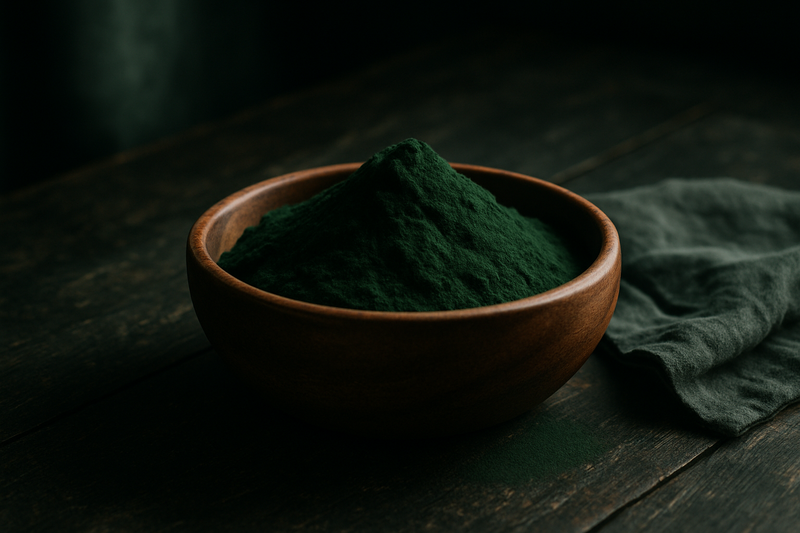
Spirulina · Photograph
Discover the real spirulina health benefits and side effects, backed by human research. Learn how much spirulina to take daily, how to use spirulina powder in smoothies, who should avoid it, and how to choose a safe, contaminant-tested source.
Key Nutrients
% Daily Value based on 2,000 cal diet
Key active compounds
- Phycocyanin — A blue pigment–protein complex unique to cyanobacteria that gives spirulina its vivid blue-green color. It is spirulina's star antioxidant, scavenging harmful reactive oxygen species (unstable molecules that can damage cells) and dialing down inflammatory signals in laboratory and animal studies, with supporting evidence from human trials.
- Carotenoids (including beta-carotene) — Fat-soluble pigments that act as vitamin A precursors and contribute to spirulina's overall antioxidant capacity. Levels vary between products.
- Gamma-linolenic acid (GLA) — A plant-derived omega-6 fatty acid present in small amounts. GLA is considered a pro-resolving fatty acid that may contribute to spirulina's mild anti-inflammatory profile.
- Chlorophyll — The green photosynthetic pigment present in spirulina's cell structure. It contributes antioxidant activity and is sometimes associated with detoxification support, though direct human data are limited.
- Tocopherols and phenolic compounds — Vitamin E variants and plant phenolics that add another layer of antioxidant protection, likely acting synergistically with phycocyanin and carotenoids.
Buying guide: choosing a safe spirulina
This is the most important decision you will make with spirulina. Spirulina grown in uncontrolled or polluted water can accumulate heavy metals (lead, mercury, arsenic) and may be contaminated with microcystins — hepatotoxic (liver-damaging) toxins produced by other cyanobacteria. These contaminants are invisible, odorless, and tasteless.
What to look for on the label:
- Third-party tested — Look for a seal from NSF International, USP, Informed Sport, or a comparable independent certifier. This means the product has been tested for heavy metals, microcystins, and label accuracy.
- Country of origin and production environment — Products grown in closed, controlled systems or well-monitored open ponds in regulated countries (USA, EU, Japan) carry lower contamination risk. Vague sourcing is a red flag.
- No proprietary blends — Choose products that list spirulina as a single ingredient in a clearly stated amount per serving, so you know exactly what you are getting.
- Certifications relevant to your diet — Organic, non-GMO, vegan, or Kosher certifications can signal additional quality oversight.
- Avoid spirulina from Hawaii's open ponds vs. mainland closed systems — Neither is inherently unsafe, but open-pond systems require rigorous water-quality monitoring; ask the brand directly if this information is not on their website.
Practical tip: Start with a small quantity from a new brand. If a product causes unusual side effects beyond mild initial GI adjustment, stop use and consult a healthcare provider.
Prep and pairing ideas
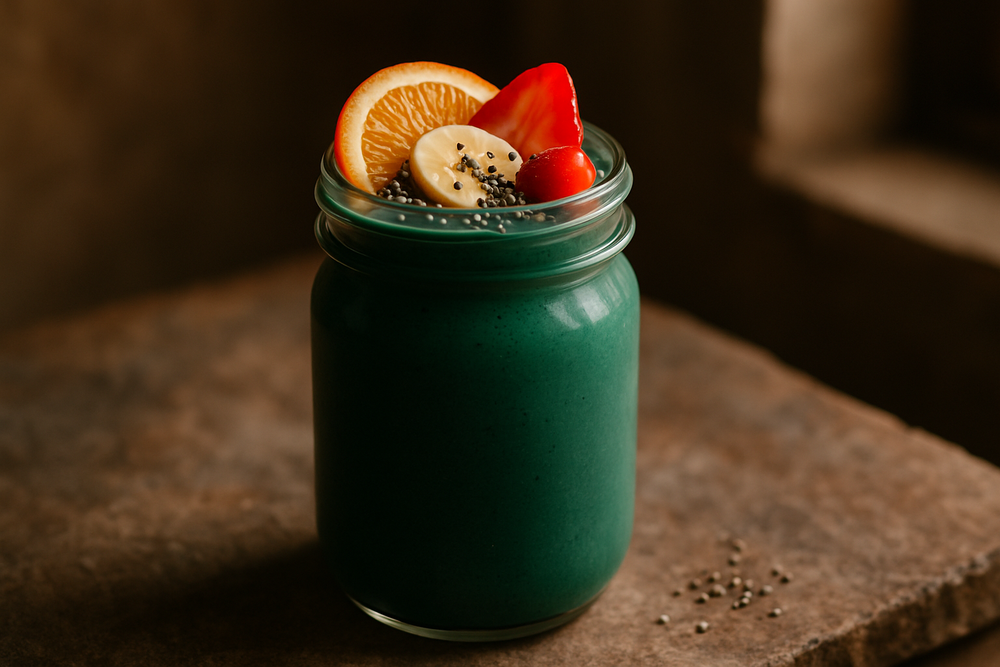
Green smoothie base: Blend 1 teaspoon (about 3 g) spirulina powder with frozen mango, banana, spinach, and a splash of oat milk. The sweetness of the fruit offsets the marine flavor completely. Add a squeeze of orange juice to boost non-heme iron absorption from the spirulina.
Miso-tahini dressing: Whisk 1 teaspoon spirulina powder with 2 tablespoons tahini (sesame paste), 1 tablespoon white miso, lemon juice, garlic, and enough water to reach a pourable consistency. Drizzle over grain bowls or roasted vegetables.
Energy bites: Mix spirulina powder (1 teaspoon) into a base of rolled oats, almond butter, maple syrup, dark chocolate chips, and a pinch of sea salt. Roll into balls and refrigerate. Each bite delivers a small protein and iron boost alongside healthy fats that aid absorption of spirulina's fat-soluble carotenoids.
Pairing rationale: Fat-soluble compounds like carotenoids and GLA in spirulina are better absorbed when eaten alongside healthy fats (tahini, nut butter, avocado). Vitamin C–rich foods (orange, mango, kiwi, bell pepper) enhance non-heme iron absorption. Lemon or lime also helps balance spirulina's earthy taste.
Bottom line
Spirulina is one of the most nutritionally dense whole foods available in supplement form — an impressive source of complete protein, iron, and antioxidant pigments in just a tablespoon of green powder. The evidence supporting its spirulina powder benefits for cholesterol, blood pressure, and blood sugar is encouraging, especially for people managing cardiometabolic risk factors, though effects are modest and studies are generally short-term.
Where spirulina shines most clearly is as a practical, concentrated nutrient addition for people eating plant-based diets, who want to close gaps in protein and iron intake without relying on processed supplements.
The non-negotiable caveat: product quality determines safety. Choose a third-party tested brand, start at a low dose, and if you have any of the medical conditions listed above, speak to a healthcare professional before adding spirulina to your routine.
Looking to pair spirulina with other food-as-medicine strategies? Explore the Plantopedia goals hub to find ingredient combinations matched to your specific health priorities.
How Spirulina Compares
| Compared with | What's different |
|---|---|
| Spirulina vs. Chlorella | Chlorella is a true algae with a hard cell wall; spirulina is a cyanobacteria and easier to digest. |
| Spirulina vs. Wheatgrass powder | Wheatgrass is a land plant with a grassy taste, whereas spirulina has a savory, seaweed-like flavor. |
Health Benefits
Things to Know
Phenylketonuria (PKU): People with this genetic metabolic disorder must strictly limit phenylalanine (an amino acid). Spirulina's high protein content makes it unsuitable for anyone with PKU.
Autoimmune conditions: Spirulina may stimulate immune activity, which could theoretically worsen conditions like lupus, multiple sclerosis, or rheumatoid arthritis. Most practitioners advise against spirulina if you are on immunosuppressant drugs.
Gout and kidney stones: Spirulina's nucleic acid (DNA and RNA) content may raise uric acid levels. High uric acid is the primary driver of gout and some kidney stones; avoid or limit spirulina if you have these conditions.
Chronic kidney disease: Extra protein, minerals, and uric acid may be difficult for impaired kidneys to handle. Check with your nephrologist (kidney specialist) before using spirulina.
Pregnancy and breastfeeding: Robust safety data are lacking. Most authorities advise caution or avoidance during these periods.
Anticoagulants (e.g., warfarin): Spirulina contains vitamin K, which influences how blood clots. Consistent intake may affect INR (a measure of how long blood takes to clot) in people using warfarin; monitor levels carefully.
Antihypertensive medications: Spirulina may have modest blood pressure–lowering effects. Combining it with these medications could increase the risk of blood pressure dropping too low.
Antidiabetic medications: As noted above, spirulina may lower blood glucose; discuss with your doctor if you are using insulin or oral hypoglycemics.
Allergy: People with known allergies to seaweed, algae, or cyanobacteria should avoid spirulina.
Children: More vulnerable to toxin exposure. Pediatric use should involve only rigorously contaminant-tested products and should happen under medical guidance.
Start low: Even in healthy adults, starting at 1 g/day and increasing gradually over one to two weeks can help minimize digestive adjustment symptoms.
Glossary
Shop This Ingredient
Stock your pantry with quality spirulina.
Buy on AmazonAs an Amazon Associate, Plantopedia earns from qualifying purchases. This costs you nothing extra and helps us keep the encyclopedia free.
Frequently Asked Questions
Heart and circulation A 2020 review published in Open Heart (BMJ) evaluated clinical trials using 2–8 g of spirulina daily for 2–24 weeks and concluded that supplementation can modestly reduce total cholesterol, LDL-C (often called "bad" cholesterol), and triglycerides (a type of blood fat), while slightly raising HDL-C ("good" cholesterol). A 2024 review on cardiometabolic risk factors similarly reported consistent beneficial effects on lipid profiles across multiple randomized and non-randomized human studies. The improvements are real but modest, and they are most evident in people who start with elevated blood lipids or blood pressure. Spirulina should be viewed as an adjunct to — not a substitute for — a heart-healthy diet, regular movement, and any prescribed medications. Most studies are short-term and use small samples, which limits firm conclusions about long-term cardiovascular outcomes. Digestive health and microbiome Direct evidence on spirulina and the gut microbiome (the community of microorganisms in your digestive tract) in humans is still limited. Chlorophyll and plant compounds in spirulina may support detoxification pathways in the gut, and spirulina's protein density could indirectly support gut-lining integrity, but large-scale human trials on this specific outcome are lacking. This is an area to watch as research develops. Blood sugar and metabolism The Open Heart review notes that spirulina supplementation in the 2–8 g/day range improved fasting blood glucose and markers of insulin resistance in several human trials involving people with type 2 diabetes or metabolic syndrome (a cluster of conditions — high blood sugar, excess body fat around the waist, and abnormal cholesterol — that increase disease risk). The 2024 cardiometabolic review reports similar findings, including modest benefits for body weight and BMI when spirulina was used alongside lifestyle measures. Improvements in blood sugar are more apparent in people who start with elevated glucose levels. Long-term data beyond 12 weeks are limited. If you use insulin or blood sugar–lowering medications, spirulina's glucose-lowering potential means you should discuss this with your clinician before adding it, to avoid the risk of blood sugar dropping too low (hypoglycemia). Inflammation and oxidative stress Spirulina's antioxidant and anti-inflammatory reputation is its most mechanistically well-supported claim. Phycocyanin has been shown in lab studies to suppress inflammatory mediators — including COX-2 (an enzyme involved in producing inflammatory signals) and pro-inflammatory cytokines (small proteins that amplify immune responses). Human trials have recorded reductions in malondialdehyde (MDA), a marker of oxidative stress (damage from unstable molecules), alongside improvements in lipids and glucose. That said, most anti-inflammatory evidence comes from secondary outcomes in small metabolic trials. Dedicated, large-scale human trials with primary inflammatory endpoints — such as CRP (C-reactive protein, a blood marker of inflammation), IL-6 (interleukin-6, another inflammatory signal), or clinical symptom scores — are still needed before firm claims can be made.
Spirulina powder The most versatile whole-food form. One to two teaspoons (roughly 3–5 g) blend into smoothies, green juices, salad dressings, or dips. The flavor is distinctly marine and earthy — masking it with fruit, citrus, or nut butter generally works well. Powder gives you flexibility to adjust your dose up gradually, and it dissolves quickly into liquids for faster absorption than tablets. Tablets and capsules Compressed spirulina powder in fixed-dose units, typically 500 mg per tablet. Convenient for consistent, measured dosing — most clinical trials have used tablets for this reason. A standard approach is 2–6 tablets per day (1–3 g) spread across meals. Tablets produce no taste at all, which is their main advantage for people who dislike the flavor. Flakes and granules A less common culinary form. Sprinkle over salads, bowls, or porridge for texture, color, and a small nutritional boost. Typical quantities (1–2 teaspoons, around 2–3 g) fall within general-health dose ranges. Fortified products (bars, drinks, mixes) Spirulina appears as a functional ingredient in many packaged foods, but the actual spirulina content is often well below the doses used in clinical trials. Check the label before assuming a spirulina-branded product delivers a meaningful amount.
There is no universally established recommended dose, but research and practical use suggest a sensible framework: General health / first-time use: 1–2 g per day (roughly ½ teaspoon powder or 2–4 standard 500 mg tablets). Start here for the first one to two weeks to assess tolerance. General ongoing use: 2–3 g per day is a common maintenance dose for most healthy adults. Doses used in clinical trials: 2–8 g per day for 2–24 weeks. The cardiovascular and glycemic benefits described above were typically seen at 4–8 g/day in people with elevated baseline values. Upper end: Some studies have used up to 10 g/day without serious acute toxicity, but long-term safety data at high doses are limited. This range is not recommended without medical supervision. Timing: Spreading your dose across two meals (e.g., morning and midday) may reduce the risk of GI discomfort and could help with steady nutrient availability throughout the day. If you are taking spirulina for a specific health goal alongside medication, work with your clinician to determine an appropriate dose and to monitor any relevant lab values.
Quick Answers
Common questions, answered in a line.
Phycocyanin is a unique blue pigment-protein complex in spirulina that serves as a powerful antioxidant. It works by scavenging harmful reactive oxygen species and reducing inflammatory signals, as demonstrated in laboratory, animal, and human trials.
You should avoid spirulina if you have phenylketonuria (PKU), autoimmune conditions like lupus or MS, gout, kidney stones, or chronic kidney disease. These restrictions are due to spirulina's high protein, nucleic acid, and immune-stimulating properties.
To ensure spirulina is safe, look for a "third-party tested" seal from independent certifiers like NSF International, USP, or Informed Sport. This verification confirms the product is free from heavy metals, microcystins, and other hidden toxins.
Spirulina may interact with blood thinners like warfarin due to its vitamin K content, as well as medications for high blood pressure and diabetes. Because spirulina can lower blood sugar and pressure, combining it with these drugs may cause levels to drop too low.
Yes, spirulina is a practical source of complete protein and non-heme iron for those on plant-based diets. It helps close nutritional gaps without relying on processed supplements, providing a concentrated nutrient boost in just a small serving.
You can make spirulina taste better by blending it with sweet fruits like mango or banana, or mixing it into a savory miso-tahini dressing. Adding citrus juices like lemon or orange not only masks the earthy flavor but also improves the absorption of spirulina's iron.
You should take spirulina with healthy fats like avocado, tahini, or nut butter to improve the absorption of its fat-soluble carotenoids and GLA. Additionally, pairing it with vitamin C-rich foods helps your body better absorb its non-heme iron content.
For Readers in the USA
Local context — sourcing, seasonality, and regional notes.
In the U.S., you can find spirulina at major retailers like Whole Foods Market, Sprouts Farmers Market, and GNC, as well as via online retailers like Amazon. Many local health food stores and co-ops also stock it in the supplement aisle or bulk section.
Commercial spirulina in the U.S. is primarily grown in large-scale aquatic farms in California and Hawaii, where the warm, sunny climate allows for year-round production. These facilities use controlled ponds to ensure the algae thrives in alkaline water conditions.
The USDA Organic seal on spirulina ensures it was produced without synthetic fertilizers, irradiation, or genetic engineering, which provides an extra layer of oversight for U.S. consumers. However, even organic products should be checked for third-party heavy metal testing.
In American kitchens, spirulina is most commonly used as a "superfood" booster in green smoothies, smoothie bowls, and cold-pressed juices. It has also gained popularity in the U.S. as a natural food coloring for artisanal "mermaid" lattes and vegan desserts.
AI Clinical Review
- Accurately describes spirulina as a nutrient-dense, whole-food cyanobacterium, highlighting its unusually high protein per tablespoon and meaningful non-heme (plant-based) iron.
- Summarizes human research well: benefits on lipids, blood pressure, and fasting glucose are modest and most apparent in people with elevated baselines.
- Correctly identifies phycocyanin as a key antioxidant/anti-inflammatory pigment and frames its mechanistic support without overstating clinical outcomes.
- Emphasizes product safety (heavy metals, microcystins) and the value of third‑party testing—crucial, practical guidance.
- Long‑term data are limited; most trials run 2–24 weeks, so durability of benefits and effects on hard outcomes (e.g., cardiovascular events) remain unknown.
- Anti‑inflammatory claims rely largely on biomarkers from small studies; consistent reductions in clinical inflammation measures (like CRP or IL‑6) are not yet well established.
- Gut microbiome and “detox” effects are plausible but not confirmed by robust human trials.
- Weight and body‑composition findings are mixed and generally secondary to cardiometabolic outcomes.
- Dose: 1–3 g/day is a reasonable starting range; trials often use 4–8 g/day for specific goals. Powder allows gradual titration; tablets/capsules offer convenience. Many “spirulina‑fortified” foods contain too little to match trial doses.
- Safety and sourcing matter most: choose third‑party certified products to reduce risk of heavy metals and microcystins (liver toxins). Start low to minimize GI upset.
- Medication interactions: spirulina may modestly lower blood pressure and glucose and contains vitamin K—people on antihypertensives, diabetes medications, or warfarin should consult their clinician and monitor appropriately.
- Populations needing caution or avoidance: autoimmune conditions (especially on immunosuppressants), PKU, gout or uric‑acid kidney stones, chronic kidney disease, pregnancy/breastfeeding, and children—seek individualized medical advice first.
Choose tested, contaminant-free sources; those with phenylketonuria should avoid.
References
- USDA FoodData Central — Seaweed, spirulina, dried (FDC ID 170495), nutrition data per serving (fdc.nal.usda.gov)
- Medical News Today — Spirulina: Benefits, risks, and dosage, general overview and safety (medicalnewstoday.com)
- PubMed (2016) — "The antioxidant, immunomodulatory, and anti-inflammatory activities of Spirulina": human and mechanistic review (pubmed.ncbi.nlm.nih.gov)
- Open Heart / BMJ (2020) — Effects of spirulina supplementation on weight loss and blood lipids: narrative review of human trials (openheart.bmj.com)
- Tandfonline (2024) — Effects of Spirulina supplementation on cardiometabolic risk factors: comprehensive review of human studies (tandfonline.com)
- Verywell Health — Spirulina: Potential Benefits and Side Effects, public-health safety overview (verywellhealth.com)
- Darwin Nutrition — Spirulina dangers and real risks: contamination and caution groups (darwin-nutrition.fr)
- Dietary Supplement Database (2026) — Spirulina: Complete Science-Based Guide, dosing and interactions (dietarysupplementdb.com)
- ClinicalTrials.gov — Registered study: Effects of Spirulina Supplementation on Mental Health Outcomes (NCT06936202) (clinicaltrials.gov)
- Molecules / PMC (2025) — Spirulina nutrient composition comparison table (pmc.ncbi.nlm.nih.gov)
Know Your Numbers
Eating healthy is a start. Now get to know your biomarkers.
Food changes bloodwork — inflammation, lipids, blood sugar and nutrient status all respond to what you eat. 59 markers from $59.
- Results in 7–10 days at 2,000+ Quest sites
- Licensed provider reviews every result
- One flat price, no membership, HSA/FSA eligible
Educational information only, not medical advice. Panels are ordered and reviewed through our licensed partner; Plantopedia may earn a commission.