Explore why strawberries are a strategic "metabolic protector" for individuals with insulin resistance. This deep dive explains how anthocya
Fiber + phytonutrients; use as a whole-food sweet, snack, or smoothie base
The Short Answer
Strawberries are a nutrient-dense fruit providing 89 mg of Vitamin C per cup—nearly 100% of the daily value—and are rich in anthocyanins that support heart health and insulin sensitivity.

Strawberry · Photograph
Strawberries matter for wellness because they offer one of the highest concentrations of anthocyanins in the human diet, providing cellular protection that most other fruits cannot match. Strawberries stand out in the fruit world for their exceptional antioxidant density. They contain 2–11 times higher levels of phenolic compounds than most other fruits, with anthocyanins providing about 70% of their total antioxidant capacity.
Key Nutrients
% Daily Value based on 2,000 cal diet
Why Strawberry Health Benefits Matter for Your Wellness
Strawberries matter for wellness because they offer one of the highest concentrations of anthocyanins in the human diet, providing cellular protection that most other fruits cannot match. Strawberries stand out in the fruit world for their exceptional antioxidant density. They contain 2–11 times higher levels of phenolic compounds than most other fruits, with anthocyanins providing about 70% of their total antioxidant capacity.
This translates to real-world health benefits: clinical studies show that regular strawberry consumption helps reduce cardiovascular disease risk and supports a healthy inflammatory response. Unlike "exotic" superfoods, strawberries are an accessible, affordable, and science-backed whole food that provides more Vitamin C than an orange.
Key Active Compounds
A specialized group of polyphenols and organic acids that work synergistically to protect the heart and metabolic systems drives the health-promoting power of strawberries.
- Anthocyanins (primarily pelargonidin): Water-soluble pigments that create the red color and provide powerful antioxidant effects.
- Ellagic acid and ellagitannins: Polyphenolic compounds studied for their potential cancer-protective and antimicrobial properties.
- Procyanidins: Condensed tannins that support cardiovascular health by improving blood vessel elasticity.
- Flavonoids (quercetin, catechin, kaempferol): Plant compounds with potent anti-inflammatory effects.
- Phenolic acids: Organic compounds that contribute to the total antioxidant capacity and help neutralize free radicals.
- Vitamin C (ascorbic acid): An essential antioxidant vitamin; strawberries are among the top fruit sources globally.
- Folate (B9): A B-vitamin crucial for cell division, DNA synthesis, and reducing homocysteine levels.
Nutrition Snapshot
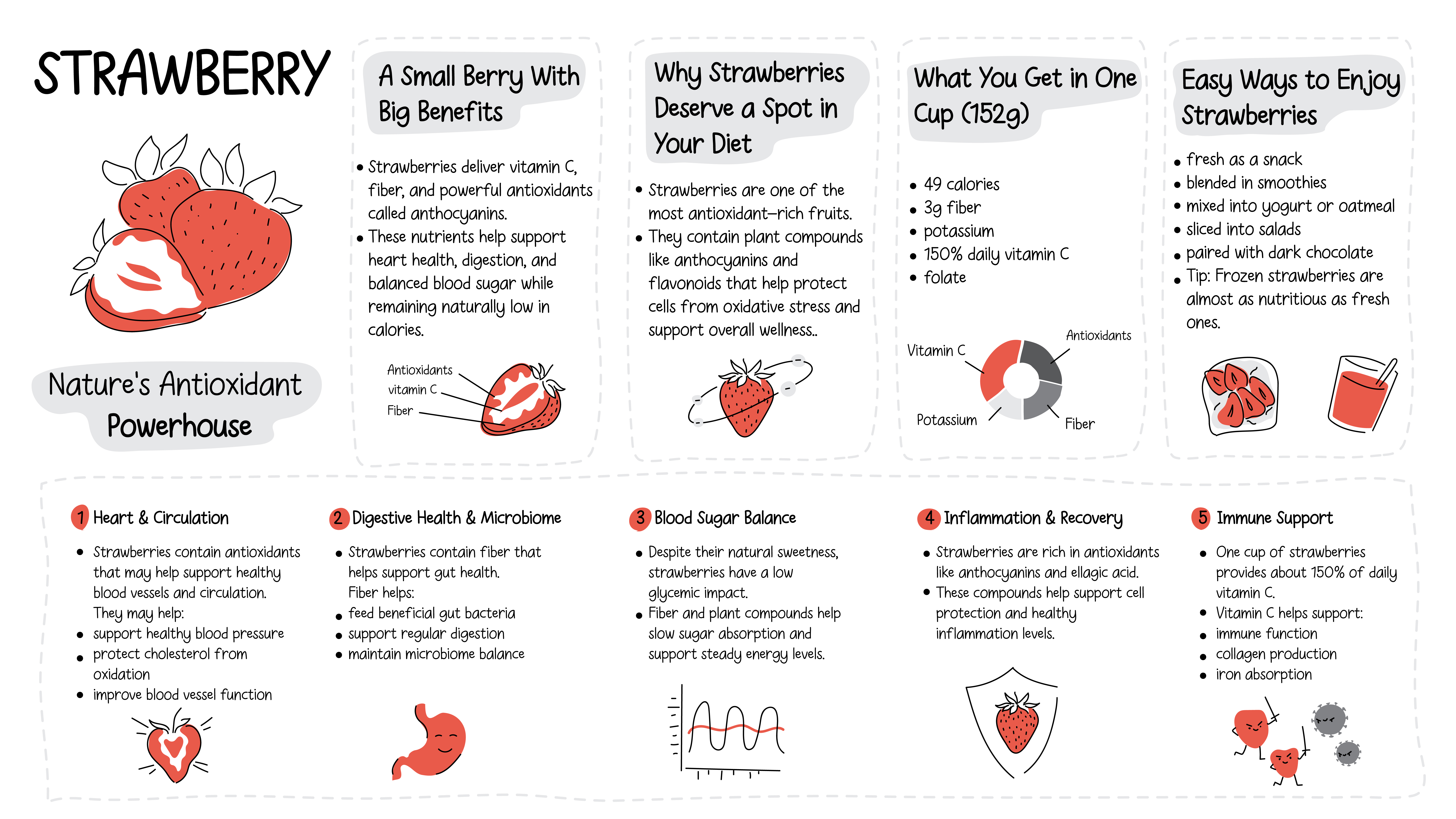
A single cup of strawberries serves as a high-fiber, low-glycemic vehicle for essential minerals like manganese and potassium, supporting both bone health and electrolyte balance. One cup (152g) of fresh strawberries provides:
- Calories: 49
- Carbohydrates: 11.7g (including 3g fiber)
- Sugar: 7g (naturally occurring)
- Vitamin C: 89mg (approx. 150% of Daily Value)
- Folate: 43μg (approx. 11% DV)
- Potassium: 233mg (essential for muscle function and blood pressure)
- Manganese: Supports bone formation and blood clotting.
The high water content contributes to hydration and satiety, making strawberries an ideal food for weight management.
Buying Guide: Fresh vs. Frozen vs. Processed
To maximize nutritional benefits, consumers should prioritize fresh or unsweetened frozen strawberries, as processed versions often lose heat-sensitive vitamins and gain inflammatory added sugars.
- Fresh Strawberries: The gold standard for flavor and Vitamin C. Look for firm, bright red berries; once picked, they do not ripen further, so avoid those with white or green shoulders.
- Frozen Strawberries: Often more nutritious than "fresh" berries that have traveled long distances. They are frozen at peak ripeness, preserving nearly all anthocyanins and fiber.
- Dried Strawberries: Concentrated in sugar and calories. While they retain fiber, the Vitamin C content is often significantly reduced.
- Freeze-Dried: A better alternative to heat-dried; it preserves the physical structure and most heat-sensitive antioxidants.
Conclusion
The strawberry is a premier antioxidant powerhouse that offers significant health benefits for the heart, gut, and metabolic systems. Its unique ability to inhibit sugar absorption and protect the vascular lining makes it a vital component of an anti-inflammatory diet.
Ultimately, whether fresh or frozen, the strawberry represents a science-backed way to lower systemic inflammation and improve cardiovascular resilience. By incorporating this low-calorie, nutrient-dense berry into your daily routine, you are leveraging one of nature's most effective tools for long-term wellness. Ready to incorporate more antioxidant-rich foods into your routine? Our meal planner can help you create balanced meals that include strawberries and other nutrient-dense ingredients.
How Strawberry Compares
| Compared with | What's different |
|---|---|
| Strawberry vs. Blueberries | Strawberries have significantly higher Vitamin C (89mg vs 15mg per cup). |
| Strawberry vs. Raspberries | Strawberries are lower in sugar and calories than raspberries per serving. |
Health Benefits
Things to Know
Allergies: People with birch pollen allergies may experience "Oral Allergy Syndrome" (itching in the mouth) when eating raw strawberries.
Oxalates: Strawberries contain moderate levels of oxalates; individuals with a history of calcium-oxalate kidney stones should monitor portion sizes.
Pesticide Residue: Strawberries frequently appear on the "Dirty Dozen" list. Organic or thorough washing with a baking soda solution is recommended.
Warfarin Interactions: While Vitamin K levels are low, those on blood-thinning medication should maintain a consistent intake of all vitamin-K-containing fruits.
Strawberries + Greek Yogurt: Probiotics may enhance the bioavailability of strawberry polyphenols, while protein ensures sustained energy.
Strawberries + Spinach: The Vitamin C in strawberries increases the absorption of non-heme iron found in spinach by up to three times.
Strawberries + Black Pepper: Some evidence suggests piperine in pepper may enhance the absorption of antioxidants like quercetin.

Common Uses
- —Eating strawberries alongside high-carbohydrate meals to act as a "metabolic protector" against glucose spikes.
- —Pairing strawberries with spinach or other plant-based iron sources to triple iron uptake via high Vitamin C content.
- —Using strawberries in smoothies to neutralize exercise-induced free radicals and lower C-reactive protein (CRP) levels.
- —Adding strawberries to Greek yogurt to create a synbiotic effect that enhances the bioavailability of antioxidants.
- —Consuming strawberries as a natural source of folate to support fetal brain and spinal cord development.
- —Using fresh or frozen strawberries as a high-volume, low-calorie alternative to processed sweets.
Active Compounds
Water-soluble pigments that create the red color and provide powerful antioxidant effects.
Polyphenolic compounds studied for their potential cancer-protective and antimicrobial properties.
Condensed tannins that support cardiovascular health by improving blood vessel elasticity.
Plant compounds with potent anti-inflammatory effects.
Organic compounds that contribute to the total antioxidant capacity and help neutralize free radicals.
An essential antioxidant vitamin; strawberries are among the top fruit sources globally.
A B-vitamin crucial for cell division, DNA synthesis, and reducing homocysteine levels.
Glossary
Shop This Ingredient
Stock your pantry with quality strawberry.
Buy on AmazonAs an Amazon Associate, Plantopedia earns from qualifying purchases. This costs you nothing extra and helps us keep the encyclopedia free.
Frequently Asked Questions
Yes, in many cases, frozen strawberries are just as nutritious—if not more so—than fresh berries. Because they are flash-frozen at peak ripeness, their anthocyanins and fibers are perfectly preserved. While there may be a minor loss of Vitamin C over long-term storage, they remain a high-potency antioxidant source.
Strawberries are an exceptional tool for weight management because they have a very low energy density (only 49 calories per cup) but a high water and fiber content. This combination promotes satiety, helping you feel full for longer and reducing the likelihood of overeating calorie-dense processed snacks.
Strawberries are generally safe to eat with blood pressure medications and can even provide complementary support due to their potassium and flavonoid content. However, if you are on a potassium-sparing diuretic or the blood-thinner Warfarin, you should maintain a consistent intake and consult your doctor to ensure balance.
To remove the maximum amount of pesticide residue, rinse strawberries under cool running water just before consumption. For a deeper clean, soak them in a solution of 1 teaspoon of baking soda per 2 cups of water for 5–10 minutes, then rinse again and pat dry to maintain texture.
Absolutely. Strawberries are highly beneficial during pregnancy because they are a natural source of folate (Vitamin B9), which is essential for the healthy development of the baby's brain and spinal cord. Their high Vitamin C content also helps the mother absorb iron, which is critical for preventing pregnancy-related anemia.
Quick Answers
Common questions, answered in a line.
Strawberries are exceptional antioxidant sources because they contain 2–11 times higher levels of phenolic compounds than most other fruits. Anthocyanins, which provide their vibrant red color, account for approximately 70% of the fruit's total antioxidant capacity.
Strawberries provide more Vitamin C than oranges, with one cup containing approximately 89mg or 150% of the Daily Value. This high concentration of ascorbic acid makes them one of the top fruit sources of the essential antioxidant vitamin globally.
Eating strawberries alongside high-carbohydrate meals can act as a "metabolic protector" to help prevent sharp glucose spikes. Their unique ability to inhibit sugar absorption and protect the vascular lining makes them an ideal choice for a metabolic-friendly diet.
Strawberries significantly improve iron absorption because their high Vitamin C content can triple the uptake of non-heme iron from plant sources like spinach. This synergistic effect makes pairing berries with leafy greens a strategic nutritional choice.
Individuals with birch pollen allergies may experience Oral Allergy Syndrome, which causes itching in the mouth when eating raw strawberries. Additionally, those with a history of calcium-oxalate kidney stones should monitor portions due to the fruit's moderate oxalate levels.
Strawberries contain a specialized group of polyphenols, including anthocyanins, procyanidins, and flavonoids, that work together to protect the heart. Regular consumption is linked to reduced cardiovascular disease risk by improving blood vessel elasticity and lowering inflammation.
For Readers in the USA
Local context — sourcing, seasonality, and regional notes.
California and Florida produce over 95% of the strawberries grown in the U.S., ensuring availability year-round despite the peak domestic season running from April through June. While California dominates summer production, Florida provides the majority of the nation's winter crop between December and March.
Fresh strawberries are a staple at major U.S. retailers like Walmart, Kroger, and Costco, but seasonal "U-Pick" farms and local farmers markets are popular for obtaining regional heritage varieties. For those seeking convenience, frozen organic options are widely available under store brands like Whole Foods Market's 365 or Target's Good & Gather.
Strawberries consistently appear on the Environmental Working Group’s "Dirty Dozen" list, leading many U.S. consumers to prioritize USDA Organic certified berries to minimize synthetic pesticide exposure. The USDA Organic seal ensures the fruit was produced without prohibited pesticides and meets strict federal environmental standards.
While the common Garden Strawberry dominates the U.S. market, regional favorites like the tiny, flavorful Alpine strawberry or the white-fleshed Pineberry have gained popularity in specialty grocery stores. Cultural traditions like the Strawberry Shortcake—officially designated as the state dessert of Missouri—highlight the fruit's deep roots in American cuisine.
AI Clinical Review
- Anthocyanin Dominance: Correctly identifies that anthocyanins (specifically pelargonidin) account for 70% of the strawberry's antioxidant capacity.
- Insulin Sensitivity: Accurately highlights the strawberry's role in blunting the insulin response, making it clinically relevant for pre-diabetes management.
- Vitamin C Superiority: Properly notes that strawberries are a more concentrated source of Vitamin C than many citrus fruits per serving.
- Frozen Bioavailability: Correctly observes that frozen strawberries retain nearly all their nutritional value and may be superior to fresh berries that have aged during transport.
- Folate Importance: Effectively links the natural folate in strawberries to critical functions like DNA repair and pregnancy health.
- Ellagic Acid and Cancer: While strawberry ellagitannins show potential antimicrobial and cancer-protective properties in lab settings, definitive human clinical trials for cancer prevention are ongoing.
- Black Pepper Synergism: The theory that piperine enhances strawberry antioxidant absorption is an emerging area of nutritional science that requires more robust human validation.
- Metabolite Mapping: Research into exactly how gut microbes transform strawberry polyphenols into active anti-inflammatory metabolites is still in the early stages.
- Long-term Cognitive Impact: Similar to other berries, the role of strawberries in preventing age-related cognitive decline is promising but needs more longitudinal data.
- Pesticide Residue: Strawberries are high on the "Dirty Dozen" list; clinicians should recommend organic varieties or thorough washing with a baking soda solution.
- Kidney Stone Risk: The moderate oxalate content in strawberries means patients with a history of calcium-oxalate stones should be mindful of portion sizes.
- Oral Allergy Syndrome: Be aware that patients with birch pollen allergies may experience cross-reactivity (itching or swelling) when eating raw strawberries.
- Sugar Concentration in Dried Fruit: Advise patients that dried strawberries lose Vitamin C and are significantly more calorie-dense than fresh or frozen versions.
- Warfarin Consistency: While not high in Vitamin K, patients on blood thinners should keep their overall strawberry intake consistent to avoid fluctuations in medication efficacy.
Frame as food education, not disease treatment.
References
- Nutrients Journal - Bioactive compounds and health effects of strawberries
- USDA FoodData Central - Strawberry Nutritional Profile
- Journal of Agricultural and Food Chemistry - Strawberry Anthocyanins and Human Health
- American Journal of Clinical Nutrition - Berries and Cardiovascular Risk Factors
- NIH - Folate Fact Sheet for Health Professionals
- Environmental Working Group (EWG) - Pesticides in Produce Guide
Know Your Numbers
Eating healthy is a start. Now get to know your biomarkers.
Food changes bloodwork — inflammation, lipids, blood sugar and nutrient status all respond to what you eat. 59 markers from $59.
- Results in 7–10 days at 2,000+ Quest sites
- Licensed provider reviews every result
- One flat price, no membership, HSA/FSA eligible
Educational information only, not medical advice. Panels are ordered and reviewed through our licensed partner; Plantopedia may earn a commission.
Filed Under
Health Goals This Supports
Related Ingredients
Best Foods for Long-Term Cognitive Health
Observational studies consistently link a Mediterranean or MIND-style pattern to slower cognitive decline, while randomized trials have been far more modest. Here is what each food contributes, and why the pattern and your vascular health matter more than any single item.
Polyphenols and the Brain: A Simple Guide
A plain-language explanation of what polyphenols are, the step-by-step route by which they might influence the brain, and an honest reading of what human trials have and have not shown.
Vitamin C Foods Beyond Oranges
Oranges are a good vitamin C source but far from the best. A ranked look at everyday foods that outperform them, why they qualify, and how to use them without wasting the vitamin.