White Kidney Beans — health benefits and uses
A Mediterranean pantry bean for hearty, filling meals.
The Short Answer
White kidney beans are high-protein legumes providing 7.8g of protein and 6.7g of fiber per cup. They contain phaseolamin, a natural compound that may help regulate blood sugar by slowing the digestion of starches.
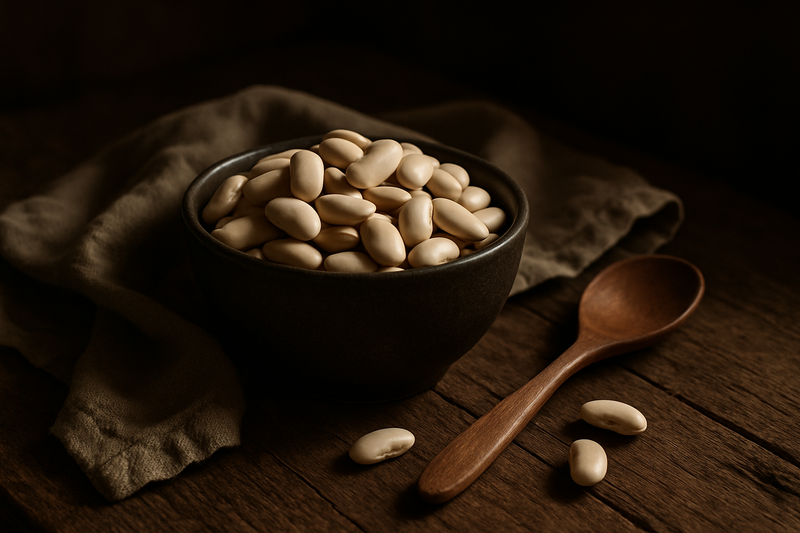
White Kidney Beans · Photograph
Discover the white kidney beans health benefits backed by research: plant protein, resistant starch, heart-supportive fiber, and emerging blood sugar data. Includes nutrition facts, safe cooking guidance, and honest notes on side effects and who should take care.
Key Nutrients
% Daily Value based on 2,000 cal diet
Key active compounds
- Resistant starch — A fraction of starch that bypasses digestion in the small intestine and is fermented by bacteria in the colon, acting as a prebiotic (food for beneficial gut bacteria) and producing short-chain fatty acids that may support insulin sensitivity and colon health.
- Polyphenols — Antioxidant plant chemicals (including flavonoids and phenolic acids) concentrated in the bean's seed coat; associated with anti-inflammatory effects and cardiovascular protection in lab and observational research.
- Alpha-amylase inhibitors (phaseolamin) — Protein-based compounds that partially block alpha-amylase, the digestive enzyme that breaks down complex carbohydrates, slowing starch digestion and blunting the blood sugar spike after a carbohydrate-heavy meal.
- Saponins — Naturally occurring glycosides (sugar-linked compounds) in legumes; show cholesterol-lowering and immune-modulating effects in experimental studies, though robust human data are limited.
- Lectins — Carbohydrate-binding proteins that are abundant in raw kidney beans and toxic when the beans are undercooked. Full boiling denatures (destroys) them, making cooked beans safe.
- Phytates (phytic acid) — Phosphorus-containing compounds that can mildly reduce the absorption of minerals like iron and zinc (called an antinutrient effect), but also have antioxidant properties. Soaking and cooking lower phytate levels.
Prep and pairing ideas
White kidney beans have a mild, slightly creamy flavor that takes on whatever seasoning you give them. Their firm texture means they hold their shape better than smaller white beans when stirred, making them ideal for longer-cooked dishes.
Three practical pairings:
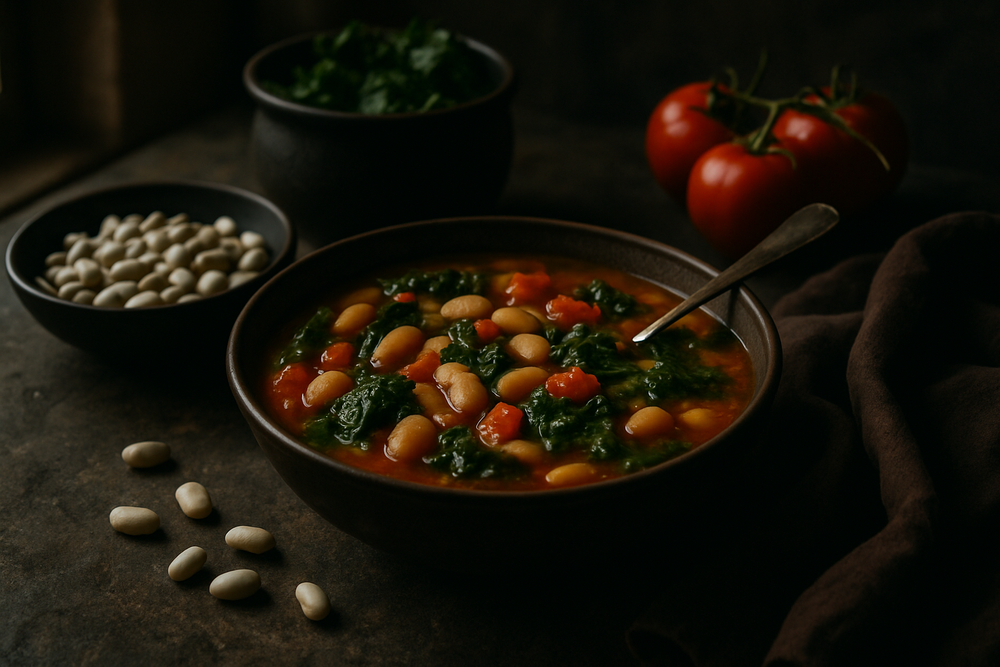
- White kidney beans + tomatoes + leafy greens (Tuscan-style soup or salad): The vitamin C in tomatoes boosts iron absorption from the beans. Wilted kale or spinach adds calcium and additional iron. A drizzle of olive oil adds fat-soluble nutrient absorption. Classic Italian ribollita and pasta e fagioli are built on this combination.
- White kidney beans + whole grains (farro, brown rice, or barley): Legumes are high in the amino acid lysine but modest in methionine; grains are the opposite. Eating them together over the course of the day (they do not need to be in the same meal) gives you a complete amino acid profile from plant sources. The combination also creates a lower glycemic load than the grain alone.
- White kidney beans + lemon juice or vinegar + fresh herbs (quick salad or dip): The acid brightens the mild bean flavor, makes the dish feel lighter, and the vitamin C in lemon boosts non-heme iron absorption. A quick smashed white bean dip with lemon and rosemary is ready in five minutes from a can and works as a protein-rich snack or sandwich spread.
Bottom line
White kidney beans are genuinely worth eating regularly. They are among the most nutrient-dense affordable whole foods available — rich in plant protein, fiber, resistant starch, folate, and iron, with a good evidence base linking legume consumption to lower LDL cholesterol, better blood pressure, and improved blood sugar management. The evidence for whole cooked white kidney beans specifically is largely inferred from broader legume research, but the nutritional profile makes that inference reasonable.
The non-negotiable safety rule: always fully boil kidney-type beans. Raw or undercooked kidney beans contain lectins that cause acute food poisoning. Canned beans are safe straight from the tin after rinsing. Everything else — how often, in what recipe, paired with what — is flexible and should fit your taste and lifestyle.
If you are curious about WKBE supplements for weight management or blood sugar support, the early evidence is modestly promising, but these are supplements, not food, and should be approached with appropriate medical oversight.
If you are looking to build more legumes into a specific health goal, the Plantopedia goals hub has practical meal-pattern guides organized by health focus.
How White Kidney Beans Compares
| Compared with | What's different |
|---|---|
| White Kidney Beans vs. Navy Beans | Smaller, softer, and creamier texture; ideal for thickening soups and purees. |
| White Kidney Beans vs. Cannellini Beans | Larger with a meaty texture and slightly nutty flavor; holds shape better in stews. |
| White Kidney Beans vs. Red Kidney Beans | Higher in fiber and protein, but contain more lectins that require thorough boiling. |
Health Benefits
Things to Know
Raw or undercooked kidney beans are toxic.: Even slow cookers may not reach a high enough temperature quickly enough to fully destroy lectins. Always boil kidney-type beans in fresh water (discard the soaking water) at a rolling boil for at least 10 minutes, then simmer until completely tender. Canned beans are pre-cooked and safe to eat directly from the can after rinsing.
Gradual introduction reduces gas.: Beans contain oligosaccharides (a type of fermentable carbohydrate) that gut bacteria ferment, producing gas. Starting with a few tablespoons per day and building up over 2–3 weeks gives your microbiome time to adapt.
IBS and FODMAP sensitivity: People with irritable bowel syndrome or known sensitivity to fermentable carbohydrates (FODMAPs) may find beans exacerbate symptoms. A low-FODMAP dietitian can help identify your individual threshold.
Chronic kidney disease (CKD): People with CKD may need to limit potassium and phosphorus. Beans are meaningful sources of both. Work with a renal dietitian before including beans regularly if you have CKD.
Iron absorption: The non-heme iron in beans is best absorbed alongside vitamin C-rich foods. Phytates in beans modestly reduce mineral absorption; soaking and cooking reduce phytate content.
WKBE supplements and diabetes medications: If you take insulin, sulfonylureas, GLP-1 agonists, or SGLT2 inhibitors, the carbohydrate-blocking action of WKBE could amplify your medication's glucose-lowering effect, increasing hypoglycemia (low blood sugar) risk. Do not start WKBE supplements without talking to your prescriber.
Potassium-sparing diuretics or ACE inhibitors: High potassium intake from beans may interact with medications that raise blood potassium levels; monitor with your doctor if you are in this category.
Legume allergy: If you have a known allergy to peanuts, soy, or other legumes, discuss cross-reactivity risk with a clinician before significantly increasing bean intake.
Pregnancy: Beans are an excellent source of folate, iron, and protein during pregnancy. Fully cooked beans are safe; WKBE supplements have not been adequately studied in pregnancy and should be avoided.
Prep Ideas
- — **White kidney beans + tomatoes + leafy greens (Tuscan-style soup or salad):** The vitamin C in tomatoes boosts iron absorption from the beans. Wilted kale or spinach adds calcium and additional iron. A drizzle of olive oil adds fat-soluble nutrient absorption. Classic Italian ribollita and pasta e fagioli are built on this combination.
- — **White kidney beans + whole grains (farro, brown rice, or barley):** Legumes are high in the amino acid lysine but modest in methionine; grains are the opposite. Eating them together over the course of the day (they do not need to be in the same meal) gives you a complete amino acid profile from plant sources. The combination also creates a lower glycemic load than the grain alone.
- — **White kidney beans + lemon juice or vinegar + fresh herbs (quick salad or dip):** The acid brightens the mild bean flavor, makes the dish feel lighter, and the vitamin C in lemon boosts non-heme iron absorption. A quick smashed white bean dip with lemon and rosemary is ready in five minutes from a can and works as a protein-rich snack or sandwich spread.
Glossary
Shop This Ingredient
Stock your pantry with quality white kidney beans.
Buy on AmazonAs an Amazon Associate, Plantopedia earns from qualifying purchases. This costs you nothing extra and helps us keep the encyclopedia free.
Frequently Asked Questions
Heart and circulation Eating legumes regularly is consistently linked to lower LDL cholesterol (the "bad" type associated with arterial plaque) and modest improvements in blood pressure, according to observational studies and intervention trials reviewed by the Harvard T.H. Chan School of Public Health. The likely mechanisms are multiple: soluble fiber forms a gel in the gut that traps cholesterol-containing bile acids and carries them out of the body; potassium counteracts sodium's blood-pressure-raising effect; plant protein replaces some saturated-fat-heavy animal protein; and polyphenols may protect blood vessel walls from oxidative damage. Most of this evidence comes from broad legume research rather than white kidney bean-specific trials, but the compositional profile of white kidney beans matches well with what drives these effects. Evidence level: moderate, based on mixed-legume human data. Digestive health and microbiome White kidney beans provide both insoluble fiber (which adds bulk to stool and supports bowel regularity) and soluble fiber and resistant starch (which feed beneficial gut bacteria and prompt them to produce short-chain fatty acids like butyrate). Butyrate is the primary energy source for the cells lining the colon and plays a role in maintaining gut barrier integrity. Early human and preclinical (lab and animal) data on WKBE suggest it may also shift the composition of the gut microbiome in potentially beneficial ways, though this research is at an early stage. Evidence level: moderate for fiber-related digestive benefits in legumes generally; emerging for WKBE-specific microbiome effects. Blood sugar and metabolism This is where white kidney bean research gets most specific. Standardized WKBE supplements — concentrated to deliver a consistent dose of the alpha-amylase inhibitor phaseolamin — have been tested in randomized, placebo-controlled trials (the gold standard for clinical evidence). Across studies using roughly 1,000–1,500 mg per day taken before carbohydrate-rich meals, researchers observed modest but statistically significant reductions in body weight (approximately 1.8–3.5 kg over 8–12 weeks), reductions in body fat percentage, and improvements in markers of carbohydrate metabolism and postprandial (after-meal) blood glucose. Whole cooked white kidney beans also produce a lower blood sugar response than refined carbohydrates — thanks to fiber, protein, resistant starch, and the naturally present alpha-amylase inhibitors — but direct trials isolating whole white kidney beans for glycemic control are limited. Evidence level: emerging to moderate for WKBE supplements; inferred for whole beans from general legume data. Inflammation and recovery White kidney beans contain polyphenols and other bioactive compounds with antioxidant activity. WKBE has shown improvements in oxidative stress markers (measurements of cellular damage from free radicals) in some early clinical work, and observational studies consistently link higher legume intake with lower levels of inflammatory markers like C-reactive protein (CRP). These findings are promising but should be considered preliminary until larger, longer trials specifically examine white kidney beans for systemic inflammation. Evidence level: emerging.
Cooked dried beans are the gold standard. You get the full nutritional matrix — fiber, resistant starch, protein, polyphenols, vitamins, and minerals — plus the lowest cost per serving. The tradeoff is planning ahead: dried kidney-type beans need soaking (preferably overnight) followed by vigorous boiling for safety reasons (see the cautions section below). Canned white kidney beans are nutritionally close to home-cooked and are completely safe — they are pre-cooked at high temperature during the canning process. Rinsing canned beans under running water for about 30 seconds removes roughly 40% of added sodium and some of the oligosaccharides (fermentable carbohydrates) that can cause gas. Canned beans are a practical everyday option with no compromise on safety. Bean flours and purees (blended cooked white kidney beans) retain most of the fiber and protein and work well stirred into soups for creaminess or used in baked goods. Processing may slightly alter the glycemic response, but the nutritional profile remains strong. WKBE capsules or tablets are a concentrated supplement standardized for alpha-amylase inhibitor activity — typically 500–1,000 mg taken once or twice daily before meals. They are not a replacement for eating whole beans and should be treated as a supplement with a specific, narrow evidence base (modest weight management and glycemic support). If you're considering WKBE supplements, discuss it with a healthcare provider first, especially if you take diabetes medication.
Dried white kidney beans: Look for uniform ivory color with no visible cracks, shriveling, or mottling; older beans take longer to cook and may never fully soften. Store in an airtight container away from light and moisture; best used within 1–2 years. Avoid bulk bins with a high turnover if you want consistent cooking times. Canned white kidney beans: Look for cans labeled "no added salt" or "low sodium" to keep control of your sodium intake. BPA-free lining is increasingly common and worth checking the label for if that is a concern. "White kidney beans" and "cannellini beans" are sometimes used interchangeably on labels; cannellini are a slightly different cultivar (smaller, more oval, earthier flavor) but are nutritionally very similar and can be substituted freely in recipes. WKBE supplements: Look for products standardized to a specific alpha-amylase inhibitor activity (often expressed as AIU — alpha-amylase inhibitory units per gram). Third-party testing certification (NSF, USP, or Informed Sport) is a good quality signal. Clinical trials typically used 1,000–1,500 mg/day total; avoid products recommending very high doses without evidence.
Major dietary guidelines and nutrition organizations suggest aiming for roughly 3 cups of cooked legumes per week as part of an overall healthy eating pattern — that works out to roughly ½ cup on most days, which is a practical, achievable target. You can certainly eat more; legumes have no established upper safe limit for healthy adults, and traditional diets in Blue Zones (regions with exceptional longevity) often include a full cup or more per day. Start at 2–3 tablespoons per day if you are new to beans and work up slowly over 2–3 weeks to allow your gut to adapt. There is no evidence that eating more than 1 cup per day of cooked white kidney beans provides additional measurable benefit for most people, though it does not appear harmful either. For WKBE supplements specifically, clinical trials used 1,000–1,500 mg per day, divided across 1–2 meals. This is a narrow, supplement-specific dose range, not a guide to whole food consumption. Do not assume more is better; the evidence base thins quickly above these ranges.
Quick Answers
Common questions, answered in a line.
Raw or undercooked kidney beans contain lectins that are toxic and cause acute food poisoning. To ensure safety, you must boil dried beans at a rolling boil for at least 10 minutes before simmering until tender; canned beans are pre-cooked and safe to eat after rinsing.
White kidney beans contain alpha-amylase inhibitors (phaseolamin) that partially block the enzymes responsible for breaking down complex carbohydrates. This process slows starch digestion and can blunt the blood sugar spike that typically follows a carbohydrate-heavy meal.
You should avoid white kidney bean (WKBE) supplements during pregnancy because they have not been adequately studied for safety in this population. However, fully cooked white kidney beans are considered safe and provide beneficial nutrients like folate, iron, and protein.
White kidney beans are a significant source of potassium and phosphorus, which may need to be limited for those with chronic kidney disease (CKD). It is recommended to consult with a renal dietitian before adding beans to your diet if you have kidney issues.
To reduce gas and bloating, start by eating only a few tablespoons of beans per day and gradually increase your intake over two to three weeks. This gives your gut microbiome time to adapt to the oligosaccharides, which are fermentable carbohydrates found in the beans.
Eating white kidney beans with whole grains like brown rice or barley provides a complete amino acid profile because the beans' lysine complements the grains' methionine. This combination also results in a lower glycemic load than eating the grains by themselves.
Pairing white kidney beans with vitamin C-rich foods, such as tomatoes, lemon juice, or leafy greens, significantly boosts the absorption of their non-heme iron. Additionally, soaking and cooking the beans helps reduce phytates, which are compounds that can interfere with mineral absorption.
For Readers in the USA
Local context — sourcing, seasonality, and regional notes.
In the United States, white kidney beans are most commonly sold as "Cannellini beans" in the canned goods aisle of major retailers like Walmart, Kroger, and Publix. You will typically find them shelved alongside other varieties like chickpeas and black beans, available in both conventional and USDA Organic options.
White kidney beans are a cool-season crop primarily grown in northern US states like Michigan, Nebraska, and Idaho, with the commercial harvest typically occurring in late summer and early fall. While the harvest is seasonal, they are available year-round in US grocery stores in shelf-stable dried or canned forms.
The USDA requires that canned white kidney beans labeled as "Organic" are grown without synthetic fertilizers or pesticides and are processed without chemical preservatives. Additionally, the FDA provides specific guidance on cooking dried kidney beans to ensure high heat destroys lectins, a safety standard followed by all US commercial canneries.
While "Cannellini" is the most popular regional name in the US (inspired by Italian-American cuisine), you may also find similar varieties labeled as "Great Northern" or "Navy beans" in Southern and Midwestern cooking. While they are all white beans, the kidney variety is distinct for its larger size and firmer texture, which is preferred for hearty American dishes like minestrone or white chili.
AI Clinical Review
- Strong nutrition snapshot: about 7–8 g protein and ~7 g fiber per ½ cup cooked, plus meaningful folate, iron, and magnesium—useful for plant-forward eaters. Pairing with vitamin C to improve non‑heme iron absorption is sound advice.
- Safety emphasis is appropriate: undercooked kidney-type beans can cause acute illness; a vigorous boil makes them safe. Canned beans are pre-cooked and, when rinsed, reduce sodium and some gas‑forming carbs.
- Cardiometabolic benefits are well framed: the LDL cholesterol and blood pressure improvements seen with legumes overall plausibly extend to white kidney beans given their fiber, potassium, and polyphenols.
- Glycemic and weight data are accurately characterized: whole beans help lower meal glycemic impact; standardized white kidney bean extract (WKBE) has shown modest, short‑term benefits in small randomized trials.
- Direct trials on whole cooked white kidney beans for specific outcomes (cholesterol, blood pressure, glycemic control) are limited; most benefits are inferred from mixed‑legume research.
- WKBE findings come from relatively small, short‑duration studies using specific standardized extracts; real‑world effectiveness, optimal dosing windows, and long‑term safety—especially in pregnancy—remain uncertain.
- Microbiome and inflammation effects are promising but early; larger, longer clinical studies are needed to confirm durability and clinical relevance.
- Reported weight changes with WKBE vary across studies and typically depend on overall diet quality and calorie balance; it is not a stand‑alone solution.
- Practical intake: ~½ cup cooked on most days (about 3 cups/week) fits major dietary guidance. If you’re new to beans, start with a few tablespoons daily and increase over 2–3 weeks to minimize gas.
- Preparation matters: discard soaking water and boil vigorously for at least 10 minutes before simmering until fully tender. Slow cookers may be unsafe unless beans are pre‑boiled. Canned beans are a safe, convenient alternative; choose low‑sodium and rinse ~30 seconds.
- Medication and condition cautions: WKBE can enhance glucose‑lowering and raise hypoglycemia risk if you use insulin or secretagogues (e.g., sulfonylureas). People with chronic kidney disease or on potassium‑sparing diuretics/ACE inhibitors should monitor potassium; those with legume allergies should exercise caution. Avoid WKBE in pregnancy due to limited data.
- Form and dosing: Whole beans remain the foundation. If considering WKBE, typical studied totals are 1,000–1,500 mg/day taken before carb‑rich meals; look for products with defined alpha‑amylase inhibitor activity and third‑party testing, and discuss with your clinician.
Must be boiled hard; kidney-type beans require full cooking to destroy lectins.
References
- Harvard T.H. Chan School of Public Health — Legumes and Pulses overview (nutritionsource.hsph.harvard.edu)
- USDA FoodData Central — White kidney beans, cooked nutritional data (fdc.nal.usda.gov)
- Nutrients journal systematic review — Therapeutic potential of white kidney beans (Phaseolus vulgaris) (pmc.ncbi.nlm.nih.gov)
- PubMed randomized controlled trial — Wang et al., regular intake of WKBE induces weight loss vs placebo in obese adults (semanticscholar.org)-to-Wang-Chen/a80cc2b4facee1d3b840f19abf9919e66ed3c85e)
- PubMed randomized trial — WKBE effects on gut microbiota, body weight, and metabolic health (pmc.ncbi.nlm.nih.gov)
- NutraIngredients — WKBE may promote body weight and fat loss (2024 trial summary) (nutraingredients.com)
- PubMed meta-analysis — Legume consumption and cardiometabolic risk markers (pubmed.ncbi.nlm.nih.gov)
- DaVita Kidney Care — Legumes as plant-based protein, guidance for kidney disease patients (davita.com)
Know Your Numbers
Eating healthy is a start. Now get to know your biomarkers.
Food changes bloodwork — inflammation, lipids, blood sugar and nutrient status all respond to what you eat. 59 markers from $59.
- Results in 7–10 days at 2,000+ Quest sites
- Licensed provider reviews every result
- One flat price, no membership, HSA/FSA eligible
Educational information only, not medical advice. Panels are ordered and reviewed through our licensed partner; Plantopedia may earn a commission.