Abiu — health benefits and uses
An Amazonian fruit eaten fresh and used in folk remedies for coughs.
The Short Answer
Abiu is a tropical fruit with a sweet, caramel-like flavor and a jelly-like texture. To eat it, simply cut the fruit in half and scoop out the pale flesh with a spoon, being careful to avoid the large seeds and the sticky latex found just under the skin.

Abiu · Photograph
Discover abiu fruit health benefits, nutrition facts, and how to eat it safely. Learn about this caramel-flavored tropical fruit, its vitamin C content, fiber, and what to watch out for — including the sticky latex near the skin.
Key Nutrients
% Daily Value based on 2,000 cal diet
Key active compounds in abiu
- Vitamin C (ascorbic acid): A water-soluble antioxidant that supports immune function, helps the body make collagen (the structural protein in skin and connective tissue), and improves iron absorption. Abiu contains roughly 25 mg per 100 g, though values range widely between cultivars.
- Carotenoids (including beta-carotene): Pigmented plant compounds that your body can convert into vitamin A. They also act as antioxidants — molecules that neutralise harmful free radicals (unstable molecules that can damage cells). Abiu's pale yellow flesh signals a modest carotenoid content.
- Polyphenols / phenolic compounds: A broad family of plant chemicals that includes flavonoids. In studies on other fruits, polyphenols are linked to reduced inflammation and better vascular (blood vessel) function. Abiu likely contains these, though its specific polyphenol profile has not been fully mapped.
- Dietary fiber: A mix of soluble and insoluble plant material that feeds gut bacteria, slows digestion, and helps with bowel regularity.
- Potassium: A mineral that helps regulate fluid balance, nerve signals, and blood pressure.
- Calcium and phosphorus: Minerals that work together in bone and tooth structure.
Prep and pairing ideas
Abiu needs almost no preparation. Here is how to get the most from it:
- Rinse the outside. Even though you will not eat the peel, washing reduces surface bacteria.
- Halve and scoop. Cut the fruit in half lengthwise and use a dessert spoon to scoop out the pulp, the same way you would eat a kiwi fruit.
- Remove the seeds. There are typically one to four flat seeds inside. Remove them before eating or serving to children.
- Serve immediately. The pulp oxidises and can become slightly sticky once exposed to air, so eat fresh or store scooped pulp in an airtight container in the refrigerator for no more than a day.
Common pairings
- Abiu + lime juice: A squeeze of fresh lime brightens the sweetness, adds extra vitamin C, and prevents the pulp from browning. Works well in a fruit bowl.
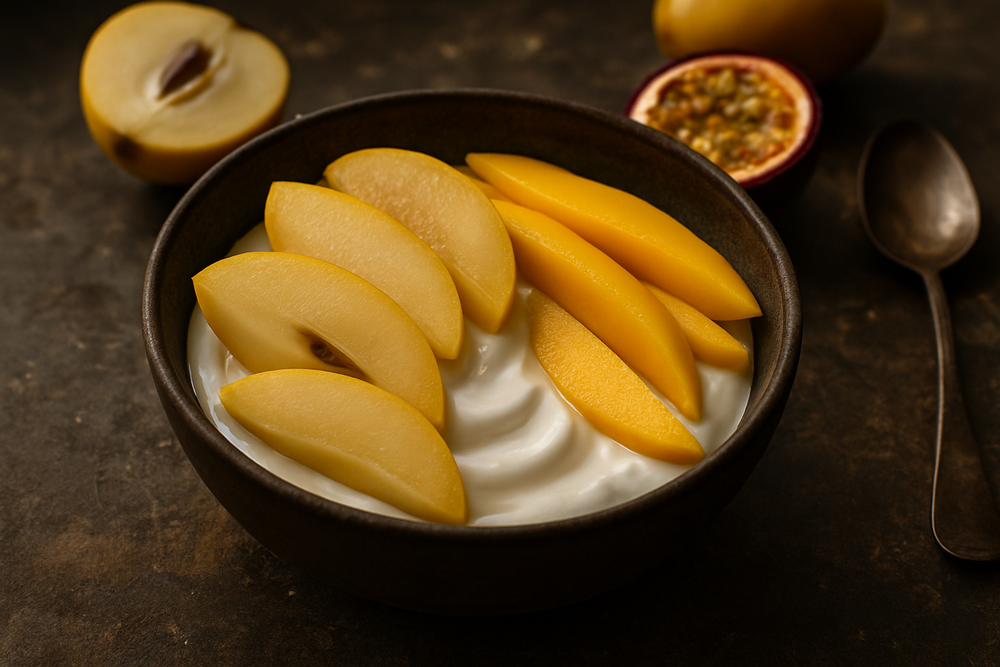
- Abiu + coconut yogurt: The caramel notes of abiu complement the mild tang of plant-based coconut yogurt for a dessert-like, fiber-and-probiotic-rich breakfast bowl. Adding granola or seeds adds satisfying crunch and protein.
- Abiu + mango and passionfruit: Combining abiu with other vitamin C–rich tropical fruits builds a genuinely diverse antioxidant profile and a natural dessert that needs no added sugar.
Bottom line
Abiu is a genuinely enjoyable whole fruit — low in fat, rich in natural sweetness, and a useful contributor of vitamin C, fiber, potassium, and antioxidant plant compounds. It has no magic properties that have been proven in clinical trials, but it fits neatly into the body of evidence showing that eating a varied, colorful range of whole fruits supports long-term heart, digestive, and metabolic health.
The single most important practical tip: eat only the clear pulp and avoid the sticky latex near the peel. Beyond that, abiu is a pleasant, nutritious addition to any fruit rotation — especially if you enjoy naturally sweet, caramel-flavored flavors without added sugar.
Want to build an eating plan around fruits like abiu? Explore Plantopedia's goals-based guides to find fruit combinations matched to your health priorities.
How Abiu Compares
| Compared with | What's different |
|---|---|
| Abiu vs. Caimito (Star Apple) | Abiu has a caramel-custard flavor, while Caimito is often described as milky and grape-like. |
| Abiu vs. Canistel (Egg Fruit) | Abiu has a smooth, jelly-like texture; Canistel is much drier, with a texture like cooked egg yolk. |
| Abiu vs. Sapodilla | Abiu is sweeter and milder, whereas Sapodilla has a distinct malty, brown sugar flavor and grainy texture. |
Health Benefits
Things to Know
Sticky latex warning: The white latex just beneath the peel can stick to your lips like glue and may cause mild local irritation. Eat only the clear, translucent interior pulp. Do not eat the peel, the latex layer, or the seeds.
Latex allergy cross-reactivity: People with latex allergies or known allergies to other Sapotaceae family fruits (such as sapodilla or mamey) may be at higher risk of a cross-reactive allergic response. Start with a very small amount if this applies to you.
Diabetes and blood sugar: Abiu is a sugary tropical fruit. People using insulin, sulfonylureas, GLP-1 agonists, or other glucose-lowering medications should count abiu toward their carbohydrate budget and monitor their response.
Kidney disease: Abiu contributes potassium. If you are on a potassium-restricted diet due to chronic kidney disease or are taking potassium-sparing diuretics or ACE inhibitors (blood pressure medications that raise potassium levels), count abiu as part of your total daily potassium and discuss portion sizes with your dietitian.
Children and older adults: The seeds and the sticky latex near the peel present a choking or aspiration risk for young children and people with swallowing difficulties. Scoop only the clean pulp and check for seeds before serving.
GI sensitivity: Large amounts of any sweet fruit can cause bloating or loose stools in people with irritable bowel syndrome (IBS) or fructose sensitivity. Start with a small portion and increase gradually.
Pregnancy: No specific concerns are documented for abiu eaten as a food in normal amounts. General fruit intake guidelines apply.
Best Forms
Look for golden-yellow skin that gives slightly under gentle thumb pressure, similar to a ripe mango. Avoid fruits with cracks, mould, or areas of brown discolouration. In Western markets, abiu is typically found at specialty tropical fruit sellers, Asian grocery stores, or farmers markets in subtropical regions (Queensland, Hawaii, South Florida). Season is generally late summer to autumn in the Southern Hemisphere.
Increasingly available at specialty importers. Freezing preserves most nutrients including vitamin C, provided no sugar has been added. Check the label — the only ingredient should be abiu pulp.
Rarely available and not well studied. Drying concentrates sugars and may reduce heat-sensitive vitamin C.
There are no standardised abiu supplements. If you see an abiu extract product, there is no clinical evidence base to support a specific health claim.
Prep Ideas
- — Rinse the outside. Even though you will not eat the peel, washing reduces surface bacteria.
- — Halve and scoop. Cut the fruit in half lengthwise and use a dessert spoon to scoop out the pulp, the same way you would eat a kiwi fruit.
- — Remove the seeds. There are typically one to four flat seeds inside. Remove them before eating or serving to children.
- — Serve immediately. The pulp oxidises and can become slightly sticky once exposed to air, so eat fresh or store scooped pulp in an airtight container in the refrigerator for no more than a day.
- — Abiu + lime juice: A squeeze of fresh lime brightens the sweetness, adds extra vitamin C, and prevents the pulp from browning. Works well in a fruit bowl.
- — Abiu + coconut yogurt: The caramel notes of abiu complement the mild tang of plant-based coconut yogurt for a dessert-like, fiber-and-probiotic-rich breakfast bowl. Adding granola or seeds adds satisfying crunch and protein.
- — Abiu + mango and passionfruit: Combining abiu with other vitamin C–rich tropical fruits builds a genuinely diverse antioxidant profile and a natural dessert that needs no added sugar.
Glossary
Shop This Ingredient
Stock your pantry with quality abiu.
Buy on AmazonAs an Amazon Associate, Plantopedia earns from qualifying purchases. This costs you nothing extra and helps us keep the encyclopedia free.
Frequently Asked Questions
No human clinical trials have studied abiu on its own. The potential benefits below are based on abiu's nutrient content combined with broader, well-established research on fruit consumption, vitamin C, fiber, and potassium — not on abiu-specific studies. Heart and circulation Potassium helps counteract the blood-pressure-raising effects of sodium, and vitamin C has been linked in large observational studies to better endothelial function (the ability of blood vessel walls to relax and contract properly). Abiu contributes both, in modest amounts. Large cohort studies and meta-analyses (research that pools data from many studies) consistently associate higher total fruit intake with lower rates of coronary heart disease and stroke. Abiu's contribution should be seen as part of an overall fruit-rich dietary pattern, not as a standalone cardiovascular treatment. Digestive health and microbiome With roughly 3 g of fiber per 100 g serving, abiu supports bowel regularity and feeds the beneficial bacteria that make up your gut microbiome. Human studies on dietary fiber — across many fruit and vegetable types — show that consistent intake reduces constipation and may lower the risk of colorectal disease over time. Abiu's benefit here is modest and comparable to other sweet tropical fruits; it is the water and fiber combination, not a unique compound, that does most of the work. Blood sugar and metabolism Abiu is a sweet fruit with moderate natural sugars, so it is not a low-sugar food. That said, eating whole fruit — as opposed to drinking juice — preserves fiber, which slows sugar absorption and blunts the post-meal blood sugar spike. General dietary evidence supports whole fruit consumption as compatible with healthy blood sugar management when portion sizes are sensible and the fruit replaces refined sweets rather than adding to them. Inflammation and recovery Vitamin C is one of the best-studied dietary antioxidants. Higher vitamin C intake from whole foods is consistently associated in human research with lower markers of oxidative stress — a state where free radicals outpace the body's ability to neutralise them — and lower levels of inflammatory markers. Abiu contributes roughly 28% of the daily value for vitamin C in a 100 g serving, making it a useful addition to an anti-inflammatory eating pattern, though not a replacement for a varied diet.
Buying guide Fresh is the gold standard for abiu, and it is how the fruit is almost always consumed. Here is what to look for: Fresh whole fruit: Look for golden-yellow skin that gives slightly under gentle thumb pressure, similar to a ripe mango. Avoid fruits with cracks, mould, or areas of brown discolouration. In Western markets, abiu is typically found at specialty tropical fruit sellers, Asian grocery stores, or farmers markets in subtropical regions (Queensland, Hawaii, South Florida). Season is generally late summer to autumn in the Southern Hemisphere. Frozen pulp: Increasingly available at specialty importers. Freezing preserves most nutrients including vitamin C, provided no sugar has been added. Check the label — the only ingredient should be abiu pulp. Dried or powdered: Rarely available and not well studied. Drying concentrates sugars and may reduce heat-sensitive vitamin C. Supplements: There are no standardised abiu supplements. If you see an abiu extract product, there is no clinical evidence base to support a specific health claim. Label tip: For frozen pulp, "unsweetened" or "no added sugar" on the label means you are getting the whole-food benefit without extra refined sugars.
There is no established therapeutic dose for abiu because it has not been studied as a medicine — it is a food. For practical guidance, the USDA MyPlate framework recommends adults aim for 1.5 to 2 cups of fruit per day from a variety of sources. A single small abiu (roughly 100 to 150 g of pulp) fits comfortably within that daily target alongside other fruits and vegetables. If you are new to abiu or have a sensitive digestive system, start with half a fruit and see how your body responds before increasing. People managing blood sugar should stick to one small fruit per sitting and pair it with a source of protein or healthy fat (such as a handful of nuts) to slow sugar absorption further. There is no evidence that eating more abiu provides additional benefit beyond what you would get from general fruit variety and adequate total intake.
Quick Answers
Common questions, answered in a line.
To eat abiu, rinse the fruit, cut it in half lengthwise, and use a spoon to scoop out the clear, translucent pulp. Avoid eating the peel, the seeds, or the sticky white latex found just beneath the skin, as the latex can stick to your lips and cause irritation.
Abiu is a good source of vitamin C, dietary fiber, potassium, and carotenoids like beta-carotene. It also contains essential minerals such as calcium and phosphorus, as well as antioxidant polyphenols that support overall heart and digestive health.
If you have a latex allergy, you should be cautious with abiu due to potential cross-reactivity, especially since the fruit contains a sticky latex layer near the peel. It is recommended to start with a very small amount and monitor for an allergic response.
Abiu is a sugary tropical fruit, so individuals with diabetes should count it toward their daily carbohydrate budget and monitor their blood sugar response. This is particularly important for those using insulin, GLP-1 agonists, or other glucose-lowering medications.
Abiu contains potassium, which means people on a potassium-restricted diet for chronic kidney disease should consult a dietitian regarding portion sizes. It is also important to monitor intake if you are taking blood pressure medications like ACE inhibitors that can raise potassium levels.
Abiu has a naturally sweet, caramel-like flavor profile. To enhance this taste, you can pair it with lime juice to brighten the sweetness or mix it with coconut yogurt and mango for a dessert-like tropical fruit bowl.
For Readers in the USA
Local context — sourcing, seasonality, and regional notes.
In the United States, abiu is primarily grown in the tropical climates of Hawaii and Southern Florida, particularly in the Homestead area. While it remains a niche crop, small-scale growers in these regions supply local markets during the peak summer and early fall harvest months.
You can typically find abiu at specialty tropical fruit vendors, Florida farmers markets, or through online retailers like Miami Fruit that ship nationwide. While rarely stocked at major chains like Kroger or Safeway, it is occasionally spotted in H-Mart or other large Asian supermarkets that specialize in exotic imports.
When buying abiu in the US, look for the USDA Organic seal to ensure it was grown without synthetic pesticides or fertilizers. Because abiu is a specialty tropical fruit, it is often sold at a premium price point, so checking for firm, bright yellow skin without bruising ensures you are getting the best value for your money.
AI Clinical Review
- Provides a clear, realistic overview: abiu is a tasty whole fruit that contributes vitamin C, fiber, and potassium without making “superfood” claims.
- Safety guidance is practical and important—only the translucent pulp is edible; the peel/latex can irritate the mouth and should be avoided.
- Places potential benefits in the context of overall fruit-rich eating patterns rather than abiu-specific effects, which reflects the current evidence base.
- Offers sensible portions and pairing tips for blood-sugar management and notes appropriate cautions for latex sensitivity, kidney disease, and young children.
- There are no human clinical trials on abiu itself; health statements are extrapolated from research on nutrients (vitamin C, fiber, potassium) and general fruit intake.
- Reported nutrient values vary by cultivar and ripeness, and abiu is not standardized in major nutrient databases—so figures are best viewed as estimates.
- The polyphenol and carotenoid profile of abiu hasn’t been well mapped, so any antioxidant-related claims remain provisional.
- Glycemic index/load data for abiu are not established; advice for diabetes relies on broader evidence for whole fruits.
- Portion guidance: 1 small fruit (~100–150 g pulp) fits within typical daily fruit goals; people with diabetes should count it toward their carb budget and consider pairing with protein/fat.
- Safety: eat only the clean pulp, remove seeds, and avoid contact with the sticky latex; introduce cautiously if you have a latex or Sapotaceae-fruit allergy history.
- Kidney/medication caution: because abiu contributes potassium, those with chronic kidney disease or on ACE inhibitors/ARBs or potassium‑sparing diuretics should discuss portions with a clinician.
- GI tolerance: like other sweet fruits, larger amounts may trigger bloating or loose stools in people with IBS or fructose sensitivity—start small and assess your response.
Sticky latex near the skin can cling to the lips; eat only the clear pulp.
References
- USDA MyPlate — Fruit Group guidance (recommended daily fruit intake framework): (myplate.gov)
- USDA FoodData Central — nutrient database (general daily value reference context; abiu not yet listed as a standalone entry): (fdc.nal.usda.gov)
- University of Hawaii CTAHR — Abiu horticulture factsheet F*N-24** (composition ranges, cultivation, and eating guidance for abiu): (ctahr.hawaii.edu)
- A Better Choice — Abiu seasonal produce profile (practical buying, storage, and nutritional overview): (abetterchoice.com.au)
- Specialty Produce — Abiu fruit information and facts (variety, flavour, and culinary use): (specialtyproduce.com)
- Fruitsinfo — Abiu fruit nutrient composition (per-100-g values across cultivars): (fruitsinfo.com)
- Medindia — Health benefits of abiu fruit (nutrient-by-nutrient overview with referenced benefit areas): (medindia.net)
- Aune et al. (2017) — Fruit and vegetable intake and risk of cardiovascular disease, total cancer, all-cause mortality (meta-analysis, BMJ): (doi.org)
- Slavin & Lloyd (2012) — Health benefits of fruits and vegetables (review covering fiber, vitamin C, and phytochemical evidence, Advances in Nutrition): (doi.org)
- NIH Office of Dietary Supplements — Vitamin C fact sheet (evidence base for vitamin C, immune function, and antioxidant roles): (ods.od.nih.gov)
Know Your Numbers
Eating healthy is a start. Now get to know your biomarkers.
Food changes bloodwork — inflammation, lipids, blood sugar and nutrient status all respond to what you eat. 59 markers from $59.
- Results in 7–10 days at 2,000+ Quest sites
- Licensed provider reviews every result
- One flat price, no membership, HSA/FSA eligible
Educational information only, not medical advice. Panels are ordered and reviewed through our licensed partner; Plantopedia may earn a commission.