Angelica — health benefits and uses
Traditional European warming digestive and circulatory herb.
The Short Answer
Angelica is a medicinal and culinary herb known for its musky, celery-like stems that provide 8.6g of fiber and 103mg of vitamin C per 100g. It is most commonly candied for baking or paired with rhubarb to reduce tartness in desserts.
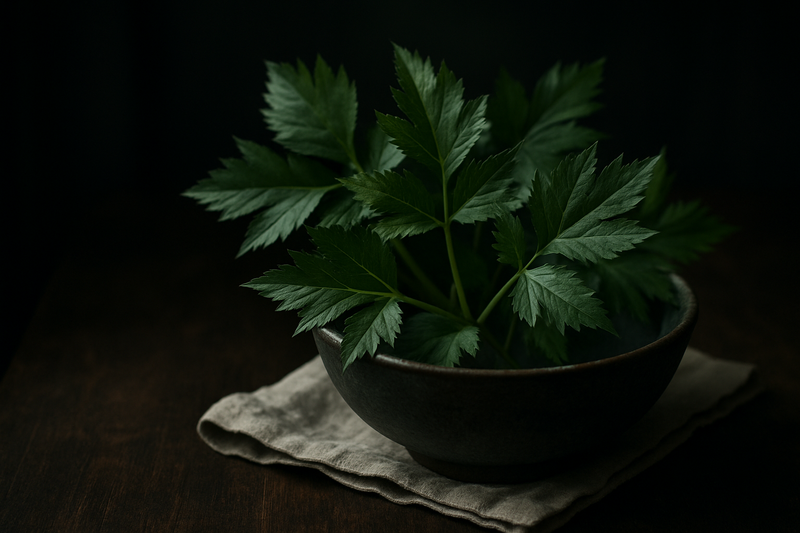
Angelica · Photograph
Discover the angelica herb health benefits and side effects in one clear guide — from candied stems used in baking to digestive support, anti-inflammatory compounds, sun sensitivity risks, and what science says about dosage, drug interactions, and pregnancy safety.
Key Nutrients
% Daily Value based on 2,000 cal diet
Key active compounds in angelica
- Furanocoumarins — photosensitizing coumarin derivatives (for example, psoralen, bergapten) concentrated in leaves, stems, and roots. They contribute to antimicrobial activity but can significantly amplify the skin's reaction to UV light.
- Flavonoids and chalcones — polyphenolic antioxidants; A. keiskei contains unique chalcones called 4-hydroxyderricin and xanthoangelol that appear to drive many of its metabolic benefits in human studies.
- Volatile oils (essential oils, including ligustilide) — aromatic monoterpenes and phthalides responsible for angelica's musky, celery-like scent. They have carminative (gas-relieving) and spasmolytic (muscle-relaxing) properties that plausibly support digestion.
- Saponins — surface-active glycosides associated with immunomodulatory and anti-inflammatory effects in experimental models.
- Vitamin B12 and folate — found notably in A. sinensis root; support red blood cell formation and nervous system function.
Prep and pairing ideas
Common pairings
- Angelica stems + rhubarb: The classic Nordic and British combination. Angelica's natural sweetness reduces the tartness of rhubarb in compotes and crumbles, and the pairing has been used for centuries precisely because it allows you to use less added sugar.
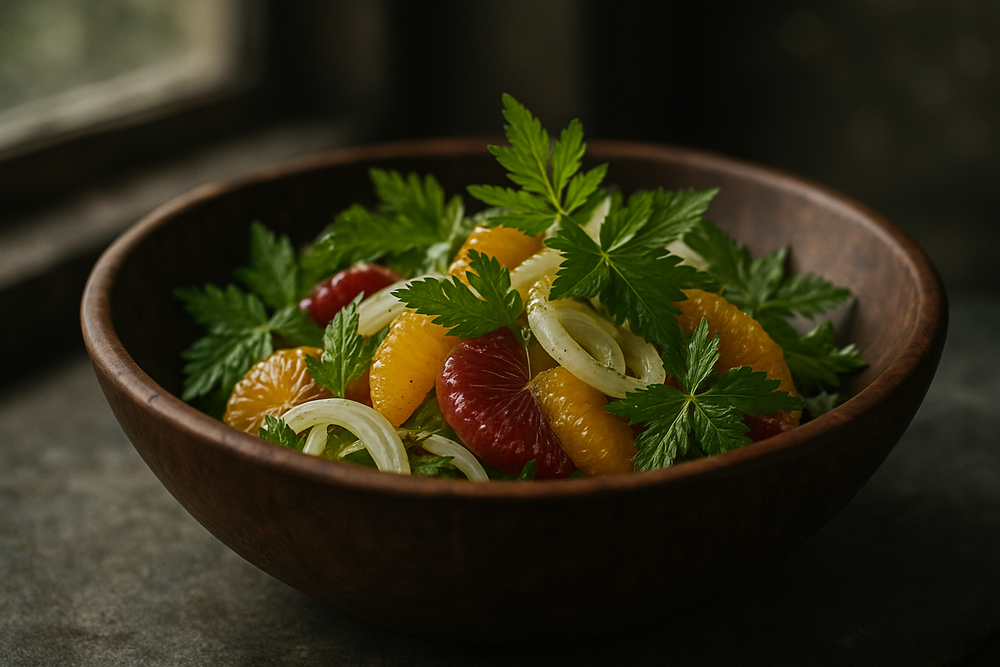
- Angelica leaves + fennel + citrus zest: All three share overlapping aromatic compounds (anise-like and musky notes). Together they make an elegant marinade for fish or a broth base for steamed shellfish. The complementary volatile oils make the combination more than the sum of its parts aromatically.
- Dried angelica seeds + juniper + cardamom (for homemade cordials): This trio forms the backbone of many classic botanical drinks. Steep the dried seeds with juniper berries and cracked cardamom in warm water with a little honey for a non-alcoholic aromatic cordial that highlights angelica's digestive bitter-carminative tradition.
General prep tips:
- Young spring stems and leaves are most tender and least bitter; harvest or buy before the plant flowers.
- To candy stems at home: blanch strips in boiling water, simmer in a 1:1 sugar syrup until translucent, then dry on a rack overnight.
- Handle fresh leaves with gloves in bright sunlight to avoid furanocoumarin-related skin reactions.
- Store fresh stems like celery — upright in a glass of cold water in the fridge, wrapped loosely.
Bottom line
Angelica is a genuinely interesting herb with a long culinary and medicinal history. As a whole plant food — fresh leaves in a salad, a braised stem in a soup, a strip of candied angelica on a cake — it contributes vitamin C, fiber, and aromatic compounds that may support digestion and provide antioxidant activity. The case for stronger health benefits is more compelling for related species (A. keiskei for metabolic syndrome, A. sinensis for gynecological support) than for culinary A. archangelica itself, and most of that evidence is still building.
The side effects deserve real respect: photosensitivity, bleeding risk with anticoagulants, potential uterine stimulation, and hormone-sensitive tissue interactions are not hypothetical concerns — they are grounded in the plant's chemistry. Culinary use at normal cooking amounts is considered low risk for most healthy adults. Medicinal doses are a different matter entirely and should only be used with professional guidance.
If you are exploring herbs for digestive support, anti-inflammatory eating, or overall wellness, angelica is a worthwhile and flavorful addition to a diverse, plant-rich diet — just go in informed.
Looking to explore more herbs and foods with digestive or anti-inflammatory potential? Browse the Plantopedia goals hub for curated collections built around specific health aims.
How Angelica Compares
| Compared with | What's different |
|---|---|
| Angelica vs. Fennel | Milder anise-like flavor with edible bulbs, whereas angelica has musky, celery-like stems. |
| Angelica vs. Rhubarb | Hollow, bright green stalks used for sweets; rhubarb is tart, red, and requires more sugar. |
| Angelica vs. Celery | Lower in fiber and calcium, with a thin stalk compared to angelica's thick, fibrous stems. |
Health Benefits
Things to Know
Photosensitivity risk: Furanocoumarins in angelica — even in culinary amounts if skin contact occurs — can make your skin significantly more sensitive to UV light. Wear sunscreen if you are handling fresh plants in sunlight, and be alert to this effect when consuming larger amounts.
Pregnancy: avoid medicinal doses.: Angelica may stimulate uterine contractions. Medicinal preparations (teas, tinctures, supplements) are widely contraindicated during pregnancy. Small amounts used in cooking are considered a lower-risk context, but caution is still warranted.
Breastfeeding: Safety data are insufficient; most sources advise avoiding medicinal doses while breastfeeding.
Blood thinners (warfarin, aspirin, clopidogrel): Coumarins in angelica can potentiate anticoagulant and antiplatelet drugs, increasing bleeding risk. Do not combine without medical advice.
Diabetes medications and insulin: A. keiskei extracts have lowered blood glucose in trials; combining with hypoglycemic drugs could cause blood sugar to drop too low.
Hormone-sensitive conditions: Endometriosis, uterine fibroids, and estrogen-receptor-positive cancers (breast, ovarian, uterine) may be affected by the estrogen-like activity reported for some Angelica species — particularly A. sinensis preparations.
Pre-surgery: Discontinue any angelica supplement at least two weeks before scheduled surgery because of potential effects on blood clotting.
Photosensitizing medications: Combining angelica with drugs that already increase UV sensitivity (certain antibiotics, retinoids, psoralens) amplifies sunburn risk.
Children: More susceptible to concentrated herbal preparations; culinary amounts are less of a concern, but supplements are not recommended without professional guidance.
Prep Ideas
- — Angelica stems + rhubarb: The classic Nordic and British combination. Angelica's natural sweetness reduces the tartness of rhubarb in compotes and crumbles, and the pairing has been used for centuries precisely because it allows you to use less added sugar.
- — Angelica leaves + fennel + citrus zest: All three share overlapping aromatic compounds (anise-like and musky notes). Together they make an elegant marinade for fish or a broth base for steamed shellfish. The complementary volatile oils make the combination more than the sum of its parts aromatically.
- — Dried angelica seeds + juniper + cardamom (for homemade cordials): This trio forms the backbone of many classic botanical drinks. Steep the dried seeds with juniper berries and cracked cardamom in warm water with a little honey for a non-alcoholic aromatic cordial that highlights angelica's digestive bitter-carminative tradition.
- — Young spring stems and leaves are most tender and least bitter; harvest or buy before the plant flowers.
- — To candy stems at home: blanch strips in boiling water, simmer in a 1:1 sugar syrup until translucent, then dry on a rack overnight.
- — Handle fresh leaves with gloves in bright sunlight to avoid furanocoumarin-related skin reactions.
- — Store fresh stems like celery — upright in a glass of cold water in the fridge, wrapped loosely.
Glossary
Shop This Ingredient
Stock your pantry with quality angelica.
Buy on AmazonAs an Amazon Associate, Plantopedia earns from qualifying purchases. This costs you nothing extra and helps us keep the encyclopedia free.
Frequently Asked Questions
Digestive health and the microbiome Angelica has one of its oldest and best-supported traditional reputations in digestion. Herbalists have long classified A. archangelica as a "bitter carminative," meaning it both stimulates digestive secretions (via bitter taste receptors) and helps expel gas. The plant's volatile oils are thought to relax smooth muscle in the gut wall, which could explain its traditional use for cramping and bloating. Modern monographs acknowledge these uses but note that well-designed randomized controlled trials specifically on A. archangelica leaf and stem are still thin on the ground. The supporting evidence is largely observational, drawn from clinical herbal practice, or extrapolated from mechanistic studies. For most healthy adults, using small culinary amounts — a few grams of leaf in a salad or a stem braised in a soup — is considered safe and may gently support digestion without the risks associated with concentrated preparations. Inflammation and recovery Across the Angelica genus, coumarins, flavonoids, chalcones, and saponins have all shown anti-inflammatory activity in cell and animal models, inhibiting pro-inflammatory chemical messengers and reducing tissue damage. Human evidence is more limited. The clearest data in people come from metabolic syndrome trials with A. keiskei extracts, which found improvements in liver enzymes (ALT and GGT — markers of liver inflammation) and increased plasma antioxidant capacity. Traditional use for arthritis, rheumatism, bronchitis, and colds is plausible given these mechanisms, but direct clinical proof for the culinary herb is still preliminary. Blood sugar and metabolism This is where the science is most interesting — and most species-specific. A systematic review of six human studies on Angelica keiskei (ashitaba) in patients with metabolic syndrome found that five of those studies reported meaningful benefits: lower fasting blood glucose, reduced visceral fat, decreased liver enzymes, and lower ghrelin (a hunger hormone), alongside higher plasma antioxidant capacity. The active drivers appear to be the plant's unique chalcones. Importantly, no comparable clinical trials exist for A. archangelica leaf or stem as a blood-sugar tool. So while the research on ashitaba is genuinely encouraging, it cannot be automatically transferred to culinary angelica or to dong quai root preparations. Heart and circulation Angelica sinensis root has been studied in experimental and some clinical settings for cardiovascular effects — including widening of coronary arteries, inhibition of platelet clumping, and protection of the vascular endothelium (the thin inner lining of blood vessels). Most of this data is mechanistic, animal-based, or comes from multi-herb traditional formulas, making it difficult to isolate angelica's specific contribution. The metabolic syndrome improvements seen with A. keiskei (reduced visceral fat and blood glucose) may indirectly support heart health, but direct evidence on cardiovascular events is currently lacking for all Angelica species. Hormones and cycle health Angelica sinensis (dong quai) root is one of the most widely used herbs in Traditional Chinese Medicine for menstrual pain, irregular cycles, and menopausal vasomotor symptoms (hot flashes). Small clinical studies and herbal formula research have reported benefits for these conditions, but results are inconsistent, and most formulas include several other herbs, making it hard to attribute effects to angelica alone. The plant contains vitamin B12, folate, and phenolic compounds that may support healthy red blood cell production. One important note: some Angelica species appear to have mild estrogen-like activity and may stimulate uterine contractions. This creates real safety considerations (see "Things to know before starting" below) that apply especially to medicinal-dose preparations, not to the small amounts used in cooking.
Buying guide | Form | Best for | Label tip | | --- | --- | --- | | Fresh leaves and stems | Salads, soups, braised dishes; maximum vitamin C and fiber | Look for firm, bright green stalks with no yellowing or sliminess | | Candied stems | Cake decoration, baking, confectionery | Check sugar content; true candied angelica uses the whole stem, not artificial flavoring | | Dried leaves or seeds | Flavoring cordials, broths, herbal teas | Buy from a reputable herb supplier that identifies the species (A. archangelica) | | Dried root (tea / decoction) | Traditional digestive or gynecological herbal practice | Clarify whether it is A. archangelica or A. sinensis; potency differs significantly | | Tincture / fluid extract | Concentrated herbal medicine; requires professional guidance | Check for standardization information and alcohol percentage on the label | | Standardized A. keiskei capsules | Metabolic health research context | Look for chalcone content listed on the label; treat as a supplement, not a food | Fresh or lightly dried culinary forms carry the least risk and are the most appropriate for everyday use. Candied stems are a delightful way to encounter the herb in baking — the sugar preserves some aromatic compounds, though the nutritional profile changes substantially. Concentrated forms (tinctures, essential oil, high-dose root tea) should not be treated as casual kitchen staples; their coumarin content and potency warrant professional oversight.
There is no single established daily dose because the answer depends heavily on which form and which species you are using. Culinary amounts (generally regarded as safe): Fresh leaf or stem in food: a few grams to roughly 10–20 g added to a dish is a normal culinary portion with a low risk profile. Candied stems as a cake decoration: typically 5–15 g; the main consideration here is added sugar rather than the herb itself. Seeds used as a flavoring spice: small pinches (under 2 g) as with any culinary spice. Traditional herbal medicine ranges (require professional oversight): A. archangelica dried root in tea: traditionally a few grams per day, usually 2–5 g in decoction. A. sinensis (dong quai) root: 6–15 g/day within multi-herb Traditional Chinese Medicine formulas — a range used by practitioners, not a self-dosing recommendation. Tinctures and standardized extracts: potency varies enormously by product; follow the label only under professional guidance. Research doses (not for self-administration): A. keiskei chalcone-enriched extracts: doses in metabolic syndrome trials varied; no consensus optimal dose yet established. The general rule: start low, use culinary forms first, and escalate to concentrated preparations only with a qualified herbalist or integrative health practitioner involved. If you are on any medication or have a chronic condition, check interactions before adding even herbal teas.
Quick Answers
Common questions, answered in a line.
You should avoid using medicinal doses of angelica during pregnancy because it may stimulate uterine contractions. While small amounts used in cooking are considered lower risk, medicinal preparations like tinctures, teas, and supplements are widely contraindicated for pregnant women.
Angelica stems are traditionally paired with rhubarb in crumbles and compotes to reduce the fruit's tartness. This centuries-old British and Nordic combination is popular because the herb's natural sweetness allows you to use less added sugar in the recipe.
Yes, angelica can cause photosensitivity because it contains furanocoumarins, which are compounds that amplify the skin's reaction to UV light. Even culinary contact with fresh leaves or stems in bright sunlight can lead to skin reactions, making sunscreen and gloves essential during handling.
Angelica may increase the risk of bleeding if taken with blood thinners like warfarin, aspirin, or clopidogrel. The coumarins found in the plant can potentiate anticoagulant and antiplatelet drugs, so you should not combine them without medical advice.
To candy angelica stems, blanch strips in boiling water, simmer them in a 1:1 sugar syrup until they become translucent, and then let them dry on a rack overnight. For the best results, use young spring stems harvested before the plant flowers, as they are the most tender.
People with hormone-sensitive conditions like endometriosis, uterine fibroids, or estrogen-receptor-positive cancers should use caution with angelica. Some species, particularly A. sinensis, have reported estrogen-like activity that may interact with these conditions.
Angelica keiskei contains unique antioxidants called chalcones, specifically 4-hydroxyderricin and xanthoangelol, which drive its metabolic benefits. These polyphenolic compounds have been linked to blood sugar management and other metabolic improvements in human studies.
For Readers in the USA
Local context — sourcing, seasonality, and regional notes.
In the United States, Angelica archangelica is most easily cultivated in USDA Hardiness Zones 4 through 7, favoring the cooler climates of the Northeast, Pacific Northwest, and Midwest. The plant requires consistently moist, fertile soil and struggles in the intense heat of the American South.
While rarely found in standard supermarkets like Kroger or Safeway, fresh angelica is occasionally available at high-end specialty grocers, farmers markets in the Pacific Northwest, or through online nurseries specializing in live herbs. Most Americans access it in dried form through apothecaries or as candied pieces in specialty baking supply stores.
When foraging for wild angelica in the U.S., you must exercise extreme caution to avoid Water Hemlock (Cicuta maculata), a highly toxic native lookalike that often grows in the same wet habitats. Distinguishing features include angelica's unique globose flower clusters and its distinct, celery-like fragrance compared to the deadly hemlock.
The FDA classifies Angelica archangelica as Generally Recognized as Safe (GRAS) for use as a natural flavoring or adjuvant in food. However, as a dietary supplement, it is regulated under the Dietary Supplement Health and Education Act (DSHEA), meaning the FDA does not approve its medicinal safety or efficacy before it is marketed.
AI Clinical Review
- Clearly distinguishes among Angelica archangelica (culinary), A. sinensis (dong quai), and A. keiskei (ashitaba), noting that evidence does not automatically transfer across species.
- Summarizes plausible digestive benefits (bitter/carminative effects and smooth‑muscle relaxation) while acknowledging the lack of robust randomized trials for culinary A. archangelica.
- Highlights meaningful safety issues—especially photosensitivity from furanocoumarins and potential interactions with anticoagulants, diabetes medications, and hormone therapies.
- Appropriately frames culinary use as lower risk and separates it from higher‑potency forms (root teas, tinctures, standardized extracts) that warrant professional guidance.
- Provides realistic nutrition context: fresh leaves/stems can be vitamin C‑ and fiber‑rich, while typical culinary portions are smaller than the 100 g reference.
- Human data for A. archangelica’s digestive or anti‑inflammatory effects remain limited; most support comes from traditional use and mechanistic studies rather than well‑controlled trials.
- Metabolic benefits are strongest for A. keiskei chalcone‑rich extracts; optimal dosing, product standardization, and long‑term outcomes are not yet established.
- Evidence for A. sinensis in gynecologic and cardiovascular contexts is mixed and often derived from multi‑herb formulas, making angelica’s specific contribution hard to isolate.
- Nutrition databases differ in coverage for angelica; bioavailability and realistic intake from typical culinary amounts are not well characterized.
- Pregnancy: avoid medicinal doses; use caution during breastfeeding. Those with hormone‑sensitive conditions (e.g., ER‑positive cancers, endometriosis, fibroids) should consult a clinician before use.
- Drug interactions: heightened bleeding risk with anticoagulant/antiplatelet therapy; potential additive glucose‑lowering with diabetes medications; amplified sun sensitivity with photosensitizing drugs.
- Practical dosing: keep to culinary amounts (roughly 5–20 g fresh leaf/stem in dishes; <2 g seeds as spice); avoid self‑directed use of tinctures/essential oils; stop supplements at least 2 weeks before scheduled surgery.
- Photosensitivity: handle fresh plants carefully in bright sun and be cautious with concentrated preparations, which raise the risk more than occasional culinary use.
Can increase sun sensitivity; avoid medicinal doses in pregnancy.
References
- USDA FoodData Central — nutrition reference for angelica and related herbs (fdc.nal.usda.gov)
- Fineli Finnish Food Composition Database — Angelica archangelica nutritional data (fineli.fi)
- Drugs.com Natural Products Database — angelica uses, dosage, and safety overview (drugs.com)
- PMC review: Phytochemical constituents, folk medicinal uses, and pharmacological activities of Angelica species (pmc.ncbi.nlm.nih.gov)
- PMC systematic review: Angelica keiskei and metabolic syndrome — human trial evidence (pmc.ncbi.nlm.nih.gov)
- PubMed review: Natural medicine — the genus Angelica (Guo et al., 2004) (pubmed.ncbi.nlm.nih.gov)
- ScienceDirect topic overview: Angelica sinensis — pharmacology and cardiovascular/hormonal research (sciencedirect.com)
- Herbal Reality monograph: Angelica archangelica — traditional and clinical use (herbalreality.com)
- Spandidos Publications: Pharmacological and traditional uses of Angelica species (experimental and clinical review) (spandidos-publications.com)
- Healthline: Angelica root benefits, uses, and side effects — accessible safety overview (healthline.com)
Know Your Numbers
Eating healthy is a start. Now get to know your biomarkers.
Food changes bloodwork — inflammation, lipids, blood sugar and nutrient status all respond to what you eat. 59 markers from $59.
- Results in 7–10 days at 2,000+ Quest sites
- Licensed provider reviews every result
- One flat price, no membership, HSA/FSA eligible
Educational information only, not medical advice. Panels are ordered and reviewed through our licensed partner; Plantopedia may earn a commission.