Broccoflower — health benefits and uses
A brassica hybrid combining the family's beneficial compounds.
The Short Answer
Broccoflower is a green hybrid of broccoli and cauliflower that provides 56 mg of vitamin C and 57 mcg of folate per cup. It offers a milder, sweeter flavor than broccoli and is rich in glucosinolates and fiber.

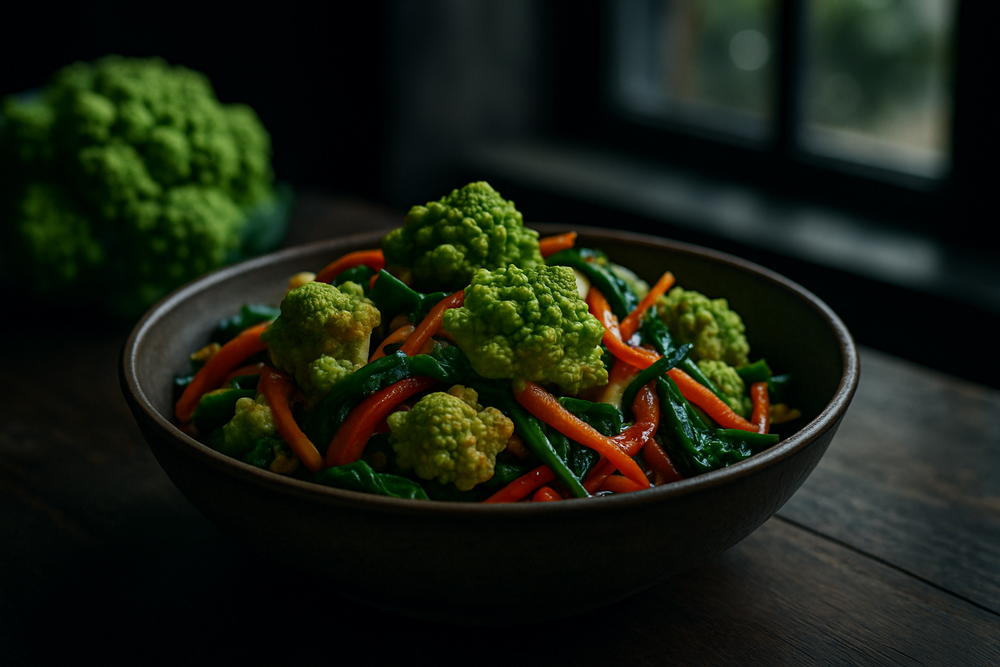
Broccoflower · Photograph
Discover broccoflower health benefits and nutrition facts, from its vitamin C and fiber content to its role in heart health, digestion, and blood sugar balance. Learn how this mild, green broccoli-cauliflower hybrid fits into a whole-food, plant-based diet.
Key Nutrients
% Daily Value based on 2,000 cal diet
Key Active Compounds in Broccoflower
- Glucosinolates — Sulfur-containing compounds found in all Brassica vegetables. When you chop, chew, or lightly cook broccoflower, an enzyme called myrosinase converts these into biologically active molecules including isothiocyanates and indoles (see Glossary). These are the compounds most studied for anti-inflammatory and potential cancer-protective effects.
- Phenolic compounds — A broad family of plant antioxidants including flavonoids and phenolic acids. Studies on Brassica inflorescences (the flower-head part of the plant, which is what you eat) show strong free-radical scavenging capacity, meaning they can neutralize unstable molecules that damage cells.
- Carotenoids — Pigment compounds such as beta-carotene that give broccoflower its green tint. They act as antioxidants and some serve as precursors to vitamin A.
- Indoles and isothiocyanates (including sulforaphane-like compounds) — The end products of glucosinolate breakdown. Extensively studied in broccoli for their ability to support the body's detoxification pathways and cellular defense mechanisms.
- Dietary fiber — Not a phytochemical, but worth listing here because it feeds beneficial gut bacteria (acting as a prebiotic), supports cholesterol management, and slows glucose absorption.
Prep and Pairing Ideas
Broccoflower's mild, slightly sweet flavor makes it one of the most versatile cruciferous vegetables in the kitchen.
Three practical pairings:
- Broccoflower + lemon + olive oil — The acid from lemon brightens the natural sweetness, and olive oil improves absorption of fat-soluble carotenoids. Works beautifully steamed or roasted. A simple, everyday preparation.
- Broccoflower + chickpeas + turmeric — Combines two anti-inflammatory-associated ingredients. Roast together for a sheet-pan meal that adds plant protein, additional fiber, and curcumin (the active compound in turmeric) to the plate.
- Broccoflower + garlic + white beans — Blanch broccoflower, then sauté briefly with garlic, white beans, and a splash of vegetable broth. The beans boost protein and creaminess; garlic adds allicin, another bioactive compound studied for cardiovascular effects. Works as a main or hearty side.
Other quick ideas:
- Blend steamed broccoflower into soups for extra creaminess and nutrients
- Use raw florets as a crudité with hummus or tahini dip
- Add to stir-fries with tofu, ginger, and tamari for a complete plant-based meal
- Mash with olive oil, nutritional yeast, and garlic as a low-carb potato substitute
Bottom Line
Broccoflower is a mild, green cruciferous vegetable that earns its place in a healthy, plant-focused diet. It delivers an impressive nutritional return for very few calories — particularly for vitamin C, folate, and fiber — alongside a full toolkit of phytochemicals including glucosinolates, phenolic compounds, and carotenoids that have been linked to heart health, reduced inflammation, digestive support, and more in broader cruciferous vegetable research.
No human clinical trials have tested broccoflower in isolation, so its specific benefits are extrapolated from its nutrient profile and the robust science behind Brassica vegetables as a group. That is a sensible extrapolation — but it means the evidence is moderate, not definitive, for most claimed benefits.
The takeaway is simple: broccoflower is a very safe, very nutrient-dense vegetable with a mild flavor that makes it easy to eat often. Roast it, steam it, mash it, or snack on it raw. Eat it alongside a variety of other vegetables. That combination is exactly what the best dietary evidence recommends.
How Broccoflower Compares
| Compared with | What's different |
|---|---|
| Broccoflower vs. Broccoli | Slightly sweeter and milder flavor than standard broccoli with a denser, cauliflower-like texture. |
| Broccoflower vs. Cauliflower | Contains higher levels of chlorophyll and carotenoids, giving it a green hue instead of white. |
Health Benefits
Things to Know
Warfarin and blood thinners: Broccoflower contains vitamin K, which plays a role in blood clotting. Large or sudden changes in how much you eat can affect how warfarin works (measured by a test called INR). Keep your intake consistent and discuss it with your doctor or pharmacist if you are on this medication.
Thyroid conditions: Glucosinolates in raw cruciferous vegetables can have mild goitrogenic (thyroid-interfering) effects at very high intakes, especially in people with low iodine intake or poorly controlled hypothyroidism. Normal portions of cooked broccoflower are generally considered safe. If you have a thyroid condition, keep intake moderate and consistent rather than extreme.
Antidiabetic medications: If you significantly increase vegetable intake and reduce refined carbohydrates, your blood sugar patterns may change. Monitor accordingly and consult your provider about medication adjustments if needed.
IBS or sensitive digestion: Start with small cooked portions and increase gradually. Raw broccoflower in large amounts is a common trigger for gas and bloating.
Kidney disease: Broccoflower contains moderate potassium. People on a medically supervised low-potassium diet (for advanced chronic kidney disease) should check portion sizes with their dietitian.
Brassica allergy: Rare, but cross-reactive allergy to broccoflower is possible in people already allergic to broccoli or cauliflower.
Pregnancy: Folate in broccoflower is beneficial during pregnancy. Vitamin K and the broader nutrient profile are also supportive. No specific restrictions apply to broccoflower in pregnancy at culinary amounts.
Best Forms
Maximizes vitamin C and preserves myrosinase (the enzyme that activates glucosinolates). Best for people without digestive sensitivity; great for snacking with dips or tossing into salads.
The gentlest cooking method. Preserves most vitamin C and glucosinolate activity while making fiber easier to digest. Aim for 4–5 minutes of steaming until just fork-tender but still bright.
Higher heat concentrates flavor dramatically, making broccoflower sweeter and nuttier. Some vitamin C is lost, but fat-soluble compounds and phenolics survive well. Toss florets with a small amount of olive oil, salt, and your choice of spices at 200–220°C (400–425°F) for 20–25 minutes.
Quick, high-heat cooking with a little oil. Good nutrient retention for a short cook time.
Blanched before freezing, so some water-soluble nutrients are reduced. Still nutritious, convenient, and a great way to keep cruciferous vegetables accessible year-round.
Cooked and blended as a lower-carb alternative to mashed potatoes. Useful for blood sugar management and increasing vegetable intake invisibly in family meals.
Prep Ideas
- — Broccoflower + lemon + olive oil — The acid from lemon brightens the natural sweetness, and olive oil improves absorption of fat-soluble carotenoids. Works beautifully steamed or roasted. A simple, everyday preparation.
- — Broccoflower + chickpeas + turmeric — Combines two anti-inflammatory-associated ingredients. Roast together for a sheet-pan meal that adds plant protein, additional fiber, and curcumin (the active compound in turmeric) to the plate.
- — Broccoflower + garlic + white beans — Blanch broccoflower, then sauté briefly with garlic, white beans, and a splash of vegetable broth. The beans boost protein and creaminess; garlic adds allicin, another bioactive compound studied for cardiovascular effects. Works as a main or hearty side.
- — Blend steamed broccoflower into soups for extra creaminess and nutrients
- — Use raw florets as a crudité with hummus or tahini dip
- — Add to stir-fries with tofu, ginger, and tamari for a complete plant-based meal
- — Mash with olive oil, nutritional yeast, and garlic as a low-carb potato substitute
Glossary
Shop This Ingredient
Stock your pantry with quality broccoflower.
Buy on AmazonAs an Amazon Associate, Plantopedia earns from qualifying purchases. This costs you nothing extra and helps us keep the encyclopedia free.
Frequently Asked Questions
No study has specifically enrolled broccoflower eaters in a clinical trial, so the evidence below is drawn from its nutritional profile and from human research on cruciferous vegetables as a group. Benefits are real but should be understood in that context. Heart and Circulation Observational studies consistently link higher cruciferous vegetable intake with lower cardiovascular risk, better blood pressure control, and healthier cholesterol levels. Several mechanisms are plausible for broccoflower specifically: Fiber helps reduce LDL (low-density lipoprotein, the "bad" cholesterol) by binding to bile acids in the digestive tract. Potassium supports healthy blood pressure, especially in the context of a lower-sodium diet. Phenolic antioxidants may protect LDL from oxidation, a key step in the development of arterial plaques. Low calorie density makes broccoflower a useful tool for managing weight, which is independently protective for heart health. Evidence here is moderate — strong associations in population studies, plausible mechanisms, but no broccoflower-specific clinical trial yet. Digestive Health and Microbiome This is one of the better-supported areas. Broccoflower provides roughly 2–3 g of dietary fiber per cup, which: Adds bulk to stools and supports regular bowel movements Acts as a prebiotic — meaning it feeds beneficial bacteria in the large intestine May reduce the risk of diverticular disease (small pouches that can form in the colon wall) with consistent, long-term intake Because broccoflower contains fermentable carbohydrates similar to broccoli and cauliflower, it can cause gas or bloating in people with sensitive digestion, particularly when eaten raw in large portions. Steaming or roasting until tender typically improves tolerance significantly. Blood Sugar and Metabolism Broccoflower is very low in digestible carbohydrates (4 g net carbs per cup) and has essentially no sugar-spiking potential on its own. Research on low-glycemic vegetable patterns shows improvements in post-meal blood glucose and insulin sensitivity. Practical applications include: Using roasted broccoflower as a side dish instead of rice, pasta, or potatoes Adding it to mixed-vegetable dishes to increase volume and fiber without raising carbohydrate load significantly Mashing cooked broccoflower as a lower-carb potato alternative These are modest, dietary-pattern-level effects rather than dramatic interventions. Hormones and Cycle Health Evidence here is emerging and indirect. Cruciferous vegetables — including broccoflower — contain glucosinolates that break down into indoles, compounds studied for their influence on estrogen metabolism in the liver. Human trials using broccoli-derived supplements have shown changes in the ratio of estrogen metabolites, which may be relevant for hormone-sensitive conditions. However, no trial has tested broccoflower specifically in this context. Eating broccoflower regularly as part of a vegetable-rich diet is unlikely to cause any negative hormonal effect and may be gently supportive of healthy estrogen clearance. Inflammation and Recovery Chronic, low-grade inflammation (long-term, low-level activation of the immune system) underlies many chronic diseases. In population studies, higher cruciferous vegetable intake is associated with lower circulating markers of inflammation such as C-reactive protein (CRP). In laboratory and animal models, glucosinolate-derived isothiocyanates and phenolic compounds from Brassica plants consistently reduce oxidative stress and dampen inflammatory signaling pathways. Broccoflower's phytochemical profile suggests similar potential, though this has not been tested directly in human clinical trials.
Unlike some ingredients that come in powders, extracts, or capsules, broccoflower is almost always eaten as a whole food — which is actually ideal. Here is how different preparations compare: Raw florets — Maximizes vitamin C and preserves myrosinase (the enzyme that activates glucosinolates). Best for people without digestive sensitivity; great for snacking with dips or tossing into salads. Lightly steamed — The gentlest cooking method. Preserves most vitamin C and glucosinolate activity while making fiber easier to digest. Aim for 4–5 minutes of steaming until just fork-tender but still bright. Roasted — Higher heat concentrates flavor dramatically, making broccoflower sweeter and nuttier. Some vitamin C is lost, but fat-soluble compounds and phenolics survive well. Toss florets with a small amount of olive oil, salt, and your choice of spices at 200–220°C (400–425°F) for 20–25 minutes. Stir-fried or sautéed — Quick, high-heat cooking with a little oil. Good nutrient retention for a short cook time. Frozen florets — Blanched before freezing, so some water-soluble nutrients are reduced. Still nutritious, convenient, and a great way to keep cruciferous vegetables accessible year-round. Mashed or pureed — Cooked and blended as a lower-carb alternative to mashed potatoes. Useful for blood sugar management and increasing vegetable intake invisibly in family meals. Tip: Chopping or crushing broccoflower and letting it sit for 5–10 minutes before cooking activates more myrosinase and may increase the amount of beneficial isothiocyanates your body absorbs.
The Low-Carb or Blood Sugar Conscious Eater Looking to replace starchy sides without giving up satisfying volume Wants to increase vegetable variety beyond the usual broccoli or cauliflower routine Appreciates broccoflower's milder flavor as a more accessible entry point to cruciferous eating The Gut Health Focused Individual Trying to increase dietary fiber through whole foods rather than supplements Wants a prebiotic-rich vegetable that is easy to prepare in multiple ways May benefit from starting with cooked portions to ease digestion before adding raw broccoflower
There is no established specific daily target for broccoflower. The broader guidance is helpful context: USDA MyPlate recommends adults eat 2½ to 3 cups of vegetables per day, with specific encouragement to include dark-green and cruciferous varieties weekly (the target is about 1½ to 2½ cups of dark-green vegetables per week for adults). A practical starting point is 1 cup raw or ½ to 1 cup cooked per serving, a few times per week, as part of overall vegetable variety. If you are new to cruciferous vegetables or have digestive sensitivity, start with ½ cup cooked and increase gradually over 1–2 weeks to allow your gut bacteria to adapt. There is no known upper limit for broccoflower as a food, and eating it daily is reasonable and safe for most people. More is not always better — variety across the vegetable kingdom tends to deliver broader benefits than large amounts of any single vegetable. If you are aiming to use broccoflower for a specific health goal, a registered dietitian can help you build a plan around it. Looking to build a full plant-based eating pattern around vegetables like broccoflower? Explore Plantopedia's health goals guides for evidence-based eating strategies.
Quick Answers
Common questions, answered in a line.
Broccoflower contains glucosinolates, phenolic compounds, and carotenoids like beta-carotene that serve as antioxidants. These compounds help neutralize unstable molecules that damage cells and have been studied for their potential anti-inflammatory and cancer-protective effects.
Broccoflower supports digestion by providing dietary fiber, which acts as a prebiotic to feed beneficial gut bacteria. This fiber also helps slow glucose absorption and supports general cholesterol management.
You can cook broccoflower by steaming, roasting, sautéing, or blanching it to use in soups, stir-fries, and mashes. Pairing it with olive oil is recommended to improve the absorption of its fat-soluble carotenoids.
People taking the blood thinner warfarin should be cautious because broccoflower contains vitamin K, which plays a role in blood clotting. Large or sudden changes in intake can affect medication efficacy, so it is important to keep consumption consistent.
Broccoflower is a mild, green hybrid of broccoli and cauliflower that is low in calories but high in vitamin C, folate, and fiber. It belongs to the Brassica family and contains sulfur-containing compounds called glucosinolates.
Broccoflower is generally considered safe for people with thyroid conditions when eaten in normal, cooked portions. However, raw cruciferous vegetables contain glucosinolates that may have mild thyroid-interfering effects at very high intakes, especially if iodine levels are low.
Yes, broccoflower is beneficial during pregnancy because it provides folate, vitamin K, and a broad nutrient profile. There are no specific restrictions for consuming it in culinary amounts while pregnant.
For Readers in the USA
Local context — sourcing, seasonality, and regional notes.
In the United States, most broccoflower is grown in California and Arizona, making it available year-round in major grocery stores. While peak season is traditionally fall through spring, the specialized climate of the Salinas and Imperial Valleys ensures a steady supply for American consumers throughout the year.
You can find broccoflower at major US retailers like Whole Foods Market, Trader Joe's, and Kroger, often sold under the brand name Romanesco or simply as 'Green Cauliflower.' It is also a staple at West Coast and Northeast farmers markets during the cooler months, typically from October to April.
Broccoflower must meet the same USDA National Organic Program standards as any other vegetable to carry the 'USDA Organic' seal. This certification ensures the produce is grown without prohibited synthetic fertilizers or pesticides, which is a common choice for US consumers looking to minimize pesticide residue in cruciferous vegetables.
While the terms are often used interchangeably in US produce aisles, 'broccoflower' typically refers to the lime-green, cauliflower-shaped variety, whereas 'Romanesco' is the variety with distinct pointed, fractal-like spirals. Both are hybrids of the same family and offer similar nutritional profiles, though Romanesco is often more expensive in specialty US markets.
AI Clinical Review
- Clearly identifies broccoflower as a cruciferous vegetable with a nutrient profile similar to broccoli/cauliflower, highlighting meaningful vitamin C, folate, vitamin K, and fiber at very low calories.
- Accurately explains glucosinolates converting to isothiocyanates/indoles and notes phenolics and carotenoids—compounds linked to antioxidant and anti‑inflammatory activity in Brassica research.
- Appropriately frames health effects (heart, digestion, glycemic control) as dietary‑pattern benefits supported by observational and mechanistic data, not miracle claims.
- Offers practical cooking guidance (light steaming, roasting) and the myrosinase “chop and rest” tip to potentially boost beneficial compounds, while acknowledging vitamin C is heat‑sensitive.
- There are no broccoflower‑specific human trials; benefits are inferred from its composition and data on cruciferous vegetables broadly—directionally reasonable, but not definitive.
- Anti‑inflammatory and cancer‑protective narratives rely largely on observational studies and preclinical work; human dose–response, effective amounts, and long‑term outcomes remain uncertain.
- Hormone/estrogen‑metabolism effects are mostly shown with concentrated broccoli‑derived supplements; it’s unclear how much typical food‑portion broccoflower contributes.
- Exact nutrient values and phytochemical yields vary by cultivar, growing conditions, and preparation (e.g., heat can lower vitamin C; enzyme activity differs with cooking).
- If you take warfarin (or similar vitamin K–antagonist blood thinners), keep cruciferous intake consistent and coordinate with your clinician, as vitamin K can alter INR.
- People with hypothyroidism or low iodine should favor cooked portions and moderate, steady intake of raw crucifers; discuss big dietary changes with your healthcare team.
- Those with IBS or sensitive digestion may tolerate smaller, cooked servings (about ½–1 cup) better than large raw portions; advance as tolerated.
- Individuals with advanced chronic kidney disease (potassium restriction) and those on glucose‑lowering medications should individualize portions and monitor labs/glucose, respectively; allergy to Brassica is rare but possible.
Very safe.
References
- USDA FoodData Central — Broccoflower and cruciferous vegetable nutrient data (fdc.nal.usda.gov)
- USDA MyPlate — Vegetables food group guidance including dark-green and cruciferous vegetables (myplate.gov)
- Broccoflower raw nutrition facts — aggregated from retail and USDA sources (feastapp.ai)
- Broccoflower raw nutrient profile per 100 g (inlivo.com)
- CalorieKing — Broccoflower raw calories and nutrients (calorieking.com)
- PubMed — Chemical composition, antimicrobial and antioxidant properties of Brassica vegetable extracts (human-relevant phytochemical study) (pubmed.ncbi.nlm.nih.gov)
- Eco-vector Journal — Phenolic compounds and antioxidant activity in Brassica inflorescences (journals.eco-vector.com)
- FoodStruct — Broccoli vs cauliflower nutrition comparison (foodstruct.com)
- NIH Office of Dietary Supplements — Vitamin K fact sheet (relevant to warfarin interaction) (ods.od.nih.gov)
- NIH NCCIH — Cruciferous vegetables and cancer risk overview (cancer.gov)
Know Your Numbers
Eating healthy is a start. Now get to know your biomarkers.
Food changes bloodwork — inflammation, lipids, blood sugar and nutrient status all respond to what you eat. 59 markers from $59.
- Results in 7–10 days at 2,000+ Quest sites
- Licensed provider reviews every result
- One flat price, no membership, HSA/FSA eligible
Educational information only, not medical advice. Panels are ordered and reviewed through our licensed partner; Plantopedia may earn a commission.