Chamomile — health benefits and uses
Apothecary-style botanical angle; culinary use and evidence-aware claims
The Short Answer
Chamomile is a caffeine-free herbal infusion made from dried flowers, containing the antioxidant apigenin which is linked to relaxation and improved sleep quality.

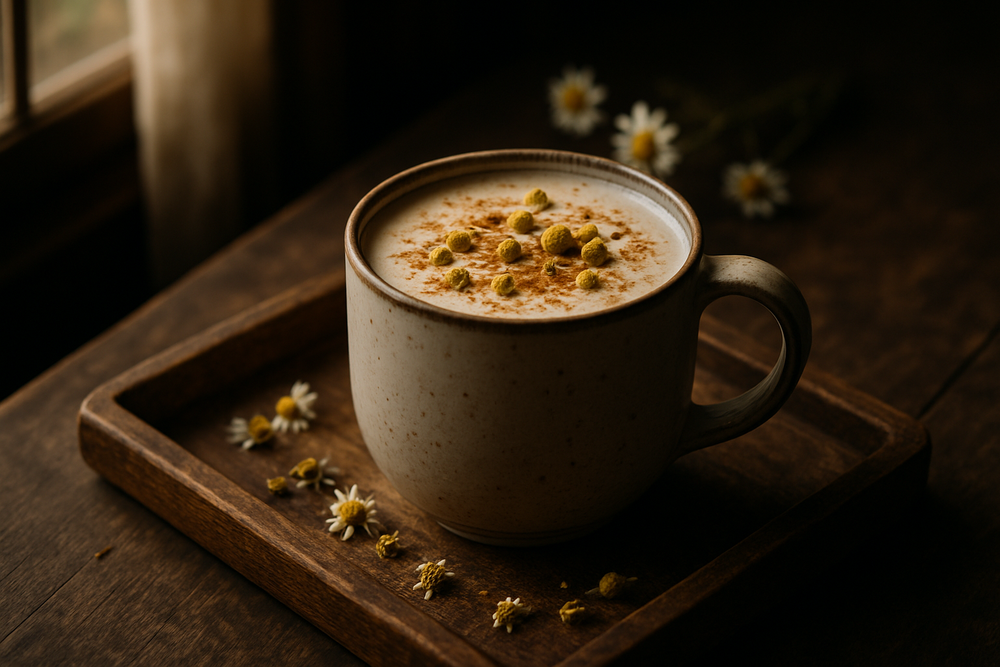
Chamomile · Photograph
Chamomile is one of the world's oldest and most loved culinary botanicals — a sun-yellow flower steeped in history, flavor, and quiet ritual. Derived from the dried flower heads of Matricaria chamomilla (German chamomile) or Chamaemelum nobile (Roman chamomile), it has been brewed as a soothing tisane (an herbal infusion, not a true tea from the Camellia sinensis plant) for thousands of years across Europe, the Middle East, and North Africa.
Key Nutrients
% Daily Value based on 2,000 cal diet
Key active compounds
Chamomile's character comes from a layered mixture of flavonoids (plant pigment compounds with antioxidant properties) and aromatic terpenoids (compounds responsible for scent and some biological activity). Here are the main players:
- Apigenin — A flavone (a type of flavonoid) abundant in chamomile flowers. Apigenin can bind to receptors in the brain associated with relaxation and is thought to be a key driver of chamomile's mild calming and sleep-supportive effects. It also acts as an antioxidant.
- Luteolin — Another flavone with antioxidant and anti-inflammatory (reducing the body's overactive inflammatory response) activity; adds to chamomile's overall polyphenol profile.
- Quercetin and related flavonoids — Polyphenols (broad class of plant compounds) found in many plant foods; support antioxidant defenses and vascular function.
- α-Bisabolol and bisabolol oxides — Sesquiterpene alcohols (aromatic compounds from chamomile's essential oil) with documented antispasmodic (muscle-relaxing), anti-inflammatory, and skin-soothing properties. Also responsible for chamomile's characteristic floral scent.
- Chamazulene — A blue-tinted sesquiterpene formed when chamomile flowers are heated or dried; associated with anti-inflammatory activity in laboratory research and gives some chamomile extracts their distinctive blue color.
- Coumarins (herniarin, umbelliferone) — A group of aromatic compounds naturally present in chamomile; at the low levels in tea they are generally safe, but they underlie the reason people on blood-thinning medications should be cautious with very large or concentrated chamomile preparations.
Common pairings
Three classic chamomile pairings worth trying:
- Chamomile + honey + lemon — The original. Honey echoes chamomile's natural sweetness; lemon brightens the floral notes and adds vitamin C. A perfect wind-down drink or base for a simple syrup to drizzle over yogurt or fruit.
- Chamomile + vanilla + oat milk — Steep chamomile flowers in warm oat milk with a vanilla pod or a drop of extract. The result is a creamy, lightly sweet latte-style drink that pairs beautifully with evening routines and works brilliantly as a base for chamomile custards or panna cotta.
- Chamomile + stone fruits (peach, apricot, plum) — Chamomile's apple-like undertone bridges naturally to stone fruit. Use a chamomile infusion as the poaching liquid for fresh peaches, add a few flowers to a peach compote, or blend a cooled chamomile brew into a stone fruit smoothie.
Prep and pairing ideas
Classic chamomile tea: Use one to two teaspoons of loose dried flowers (or one tea bag) per 200–250 mL of water heated to around 90–95 °C (just off the boil). Steep for five to seven minutes. Steeping too long or at a full rolling boil can increase bitterness. Strain, and enjoy as is or with a small drizzle of honey and a strip of lemon peel.
Cold brew chamomile: Add two tablespoons of dried flowers to 500 mL of cold, filtered water. Cover and refrigerate for six to eight hours or overnight. Strain and serve over ice. The cold extraction produces an especially clean, delicate floral flavor with very little bitterness — great as a base for sparkling water mocktails.
Chamomile simple syrup: Bring equal parts sugar (or coconut sugar) and water to a gentle simmer with two tablespoons of dried chamomile flowers. Stir to dissolve, remove from heat, steep fifteen minutes, then strain. Use in cocktails, drizzle over yogurt or oatmeal, or blend into salad dressings.
Chamomile-infused oat milk: Gently warm oat milk (do not boil), add a tablespoon of dried flowers per 250 mL, steep eight minutes, and strain. Use immediately or refrig
How Chamomile Compares
| Compared with | What's different |
|---|---|
| Chamomile vs. Peppermint | Milder, apple-like flavor compared to the cooling, menthol profile of peppermint. |
| Chamomile vs. Green Tea | Contains no caffeine or tannins, unlike the astringent true tea leaves of Camellia sinensis. |
| Chamomile vs. Lavender | Offers a subtle floral sweetness rather than the intense, soapy floral notes of lavender. |
Health Benefits
Things to Know
Ragweed and daisy-family allergies: Chamomile belongs to the Asteraceae (daisy) family. People allergic to ragweed, chrysanthemums, or marigolds have a higher risk of allergic reactions to chamomile, ranging from mild itching or hives to, rarely, more serious responses. Patch-test topical uses first.
Blood-thinning medications (warfarin, aspirin, clopidogrel, direct oral anticoagulants): Chamomile contains natural coumarins. Case reports suggest that large or concentrated chamomile preparations may enhance anticoagulant effects. Occasional cups of tea are unlikely to be a problem for most people, but consistent heavy use should be discussed with your prescriber.
Sedative medications and sleep aids: Chamomile has mild calming properties that could add to the sedative load of benzodiazepines, zolpidem, or antihistamines. Large amounts should not be combined with these medications without medical guidance.
Diabetes medications (insulin, oral hypoglycemics): Because chamomile tea may modestly lower blood glucose, people on diabetes medications should monitor their levels and let their clinician know if they plan to drink it regularly.
Pregnancy: Occasional culinary use (a cup of tea) is commonly practiced and considered low risk by many, but high-dose or medicinal use is not well studied. Many guidelines advise against concentrated chamomile products during pregnancy due to limited safety data.
Breastfeeding: Modest amounts of chamomile tea are generally considered acceptable; high-dose supplements or very heavy daily use lack robust safety data.
Infants and young children: Traditional use for colic exists, but safety and dosing are not well established for young children. Never add honey to chamomile tea for children under one year due to botulism risk.
Pre-surgery: Herbal products with potential blood-thinning or sedative properties are often paused before surgery. If you drink chamomile heavily, mention it to your surgical team.
Best Forms
Best for culinary creativity. Whole or coarsely cut flower heads deliver the richest aroma, make visual inspection easy, and can be used in teas, cold brews, syrups, poaching liquids, and infused milks. Store in an airtight container away from light and heat; quality is best within one to two years.
The most convenient everyday option. Pre-portioned and consistent, though the finer particle size may produce a slightly different flavor. Great for routine hydration and evening rituals.
Steeping dried flowers in warm simple syrup, oat milk, or light vinegar unlocks chamomile's floral, apple-honey character for use in desserts, baked goods, dressings, and mocktails.
Concentrated chamomile flavor preparations exist for consistent, measurable flavoring in professional or high-volume cooking contexts; useful but generally beyond the scope of an everyday apothecary kitchen.
Shop This Ingredient
Stock your pantry with quality chamomile.
Buy on AmazonAs an Amazon Associate, Plantopedia earns from qualifying purchases. This costs you nothing extra and helps us keep the encyclopedia free.
Frequently Asked Questions
Chamomile has been examined in humans across several health areas. Evidence ranges from solid to early-stage; framing below reflects that range honestly. Sleep and relaxation This is chamomile's best-studied territory in humans. In one randomized controlled trial (an experiment where participants are randomly assigned to a treatment or a comparison group), postpartum women with sleep difficulties who drank chamomile tea daily for two weeks reported meaningfully better sleep quality and lower symptoms of low mood compared with a control group — although benefits faded after the tea was stopped. A separate small trial in older adults found that an oral chamomile extract taken over about a month improved sleep quality scores versus a placebo (an inactive comparison treatment). For mild anxiety, standardized chamomile extracts (stronger than ordinary tea) reduced anxiety scores in randomized, double-blind (neither participant nor researcher knew who got what) trials. Together, these studies support chamomile as a gentle wind-down beverage — though they do not establish it as a treatment for insomnia or anxiety disorders. Digestive health and the gut Chamomile has a centuries-long tradition as an after-dinner digestive. Modern human research specifically on chamomile tea for adult digestion is sparse; much of the clinical data involves combination herbal formulas. The likely mechanism is a mix of the warm liquid itself, mild bitterness that stimulates digestive juices, and bisabolol's antispasmodic (muscle-tension-easing) properties on smooth muscle in the gut wall. Research supports describing chamomile as a gentle, calming after-meal tisane that may ease the occasional feeling of fullness or abdominal discomfort — not as a treatment for diagnosed gastrointestinal conditions. Blood sugar and metabolic health Several small randomized trials in adults with type 2 diabetes (a condition where blood sugar regulation is impaired) have tested chamomile tea as an add-on to standard care. Participants drinking chamomile tea two to three times daily after meals for around eight weeks showed modest improvements in fasting blood glucose (blood sugar measured after a period without eating), HbA1c (a marker of average blood sugar over about three months), and blood lipids (fats in the blood including cholesterol and triglycerides) compared with controls. These were tea-strength infusions, not high-dose supplements. Research suggests chamomile may be a supportive lifestyle choice alongside evidence-based medical and nutrition care — it is not a substitute for prescribed diabetes management. Inflammation and antioxidant support Chamomile's flavonoids and terpenoids show anti-inflammatory and antioxidant activity in cell and animal studies. In the metabolic trials above, improvements in oxidative stress markers were noted as secondary outcomes, suggesting a real but modest antioxidant effect from regular tea drinking. Evidence does not support chamomile as a primary intervention for inflammatory conditions, but it can fit comfortably in a plant-forward, anti-inflammatory eating pattern. Hormones and cycle health Small studies have explored chamomile for premenstrual symptoms and sleep disturbance linked to postpartum hormonal changes. Results are preliminary, often involve other herbs, and no direct hormonal effects have been measured. Chamomile is best described as a comforting botanical that may ease the experience of cyclical or life-stage changes (think: a calming evening cup during a difficult PMS week) rather than a direct hormone modulator.
Chamomile is remarkably versatile. Here is how the main forms compare: Loose dried flowers — Best for culinary creativity. Whole or coarsely cut flower heads deliver the richest aroma, make visual inspection easy, and can be used in teas, cold brews, syrups, poaching liquids, and infused milks. Store in an airtight container away from light and heat; quality is best within one to two years. Tea bags — The most convenient everyday option. Pre-portioned and consistent, though the finer particle size may produce a slightly different flavor. Great for routine hydration and evening rituals. Culinary infusions (syrups, infused milks, vinegars) — Steeping dried flowers in warm simple syrup, oat milk, or light vinegar unlocks chamomile's floral, apple-honey character for use in desserts, baked goods, dressings, and mocktails. Culinary flavorings and extracts — Concentrated chamomile flavor preparations exist for consistent, measurable flavoring in professional or high-volume cooking contexts; useful but generally beyond the scope of an everyday apothecary kitchen. Buying tip: Look for whole or lightly broken flower heads with a clear golden-yellow color and a distinct fresh, floral scent — not musty or hay-like. Organic labeling reduces the chance of pesticide residue on flowers, which are often used unpeeled and unprocessed.
Quick Answers
Common questions, answered in a line.
Chamomile is not a true tea from the Camellia sinensis plant; it is an herbal infusion, or tisane, made from the dried flower heads of Matricaria chamomilla or Chamaemelum nobile. It has been brewed for thousands of years across Europe, North Africa, and the Middle East for its flavor and soothing properties.
Chamomile tea may help with sleep and relaxation because it contains apigenin, a flavone that can bind to specific receptors in the brain associated with calming effects. This active compound, along with aromatic terpenoids, is a key driver of the plant's mild sedative-like benefits.
To prepare classic chamomile tea, steep one to two teaspoons of dried flowers in 90–95 °C water for five to seven minutes. Avoid using a full rolling boil or steeping for too long, as this can increase the bitterness of the botanical infusion.
Chamomile contains natural coumarins, which are compounds that may enhance the effects of blood-thinning medications like warfarin, aspirin, or clopidogrel. While occasional cups are generally safe, those on anticoagulants should avoid heavy or concentrated use without consulting a prescriber.
People with allergies to the Asteraceae family—including ragweed, chrysanthemums, marigolds, or daisies—have a higher risk of an allergic reaction to chamomile. Symptoms can range from mild itching and hives to more serious responses, so a patch test is recommended for topical use.
Cooking with chamomile works well when paired with honey, lemon, vanilla, oat milk, or stone fruits like peaches and apricots. Its natural apple-like undertones make it an excellent base for simple syrups, poaching liquids, custards, and even salad dressings.
You can make cold brew chamomile by steeping two tablespoons of dried flowers in 500 mL of cold filtered water for six to eight hours in the refrigerator. This cold extraction method results in a clean, delicate floral flavor with very little bitterness compared to hot steeping.
For Readers in the USA
Local context — sourcing, seasonality, and regional notes.
Chamomile grows as a summer annual or perennial across most of the United States, typically blooming from May through September. While it thrives in USDA hardiness zones 3 through 9, gardeners in hotter regions like the South should plant it in spring to avoid the intense mid-summer heat.
In the U.S., you can find chamomile tea at major retailers like Walmart, Kroger, and Whole Foods, while fresh or high-quality dried flowers are common at local farmers markets. For organic varieties, look for the USDA Organic seal to ensure the flowers were grown without synthetic pesticides or fertilizers.
German chamomile is the most common variety grown in U.S. home gardens because it is a hardy self-seeding annual that handles various American climates well. Roman chamomile is often used in the U.S. as a perennial groundcover or "herbal lawn" in temperate regions like the Pacific Northwest.
AI Clinical Review
- Clearly distinguishes chamomile as a caffeine‑free tisane and accurately notes it contributes phytochemicals, not meaningful calories or nutrients.
- Appropriately highlights human studies using tea‑strength infusions, with the best signals for sleep quality and modest benefits in type 2 diabetes when used alongside standard care.
- Explains key actives (e.g., apigenin, bisabolol) and their plausible mechanisms in plain language, consistent with current pharmacology (apigenin may act on calming brain receptors).
- Offers practical, food‑first preparation guidance (hot and cold infusions, simple syrup) that aligns with how most people use chamomile.
- Digestive benefits are supported more by tradition and combination formulas than by rigorous trials of chamomile tea alone in adults.
- Sleep and anxiety data come from small or specific populations, and effects often diminish after stopping; stronger evidence exists for standardized extracts than for everyday tea.
- Metabolic findings (glucose, HbA1c, lipids) are modest, short‑term, and heterogeneous; not enough to consider chamomile a primary treatment.
- Claims around hormones, PMS, and postpartum symptoms remain preliminary; direct hormonal changes have not been demonstrated.
- Typical culinary use is 1–3 cups/day of tea‑strength infusion (about 1 tea bag or 1–2 tsp dried flowers per 8 oz/240 mL); clinical tea trials in diabetes often used 2–3 cups after meals for ~8 weeks.
- Allergy caution for those sensitive to ragweed or other Asteraceae plants; consider starting with a small amount and avoid topical use without a patch test if you have pollen allergies.
- Potential interactions: anticoagulants/antiplatelets (due to natural coumarins), sedatives (additive calming), diabetes medications (small glucose‑lowering effect); mention heavy use before surgery.
- Pregnancy and breastfeeding: occasional tea is commonly considered low risk, but avoid high‑dose supplements; avoid honey in any chamomile given to infants under 1 year and note that pediatric dosing isn’t well established.
Use culinary framing; avoid treatment claims or supplement-dose guidance.
References
- PubMed — Nutrients, phytochemicals and bioactivity of wild Roman chamomile: a comparison between the herb and its preparations (pubmed.ncbi.nlm.nih.gov)
- PubMed — Chamomile: A systematic review of adverse events (pubmed.ncbi.nlm.nih.gov)
- PubMed — A review of the bioactivity and potential health benefits of chamomile tea (Matricaria recutita L.) (pubmed.ncbi.nlm.nih.gov)
- PMC, National Library of Medicine — Chamomile: A Review of Its Traditional Uses, Chemical Constituents, Pharmacological Activities and Quality Control Studies (pmc.ncbi.nlm.nih.gov)
- PMC, National Library of Medicine — Chamomile: A herbal medicine of the past with bright future (pmc.ncbi.nlm.nih.gov)
- NIH National Center for Complementary and Integrative Health — Chamomile (nccih.nih.gov)
- ScienceDirect — S0965229925000676 (sciencedirect.com)
- USDA FoodData Central — USDA FoodData Central (fdc.nal.usda.gov)
- Wiley Online Library — Ptr.6349 (onlinelibrary.wiley.com)
Know Your Numbers
Eating healthy is a start. Now get to know your biomarkers.
Food changes bloodwork — inflammation, lipids, blood sugar and nutrient status all respond to what you eat. 59 markers from $59.
- Results in 7–10 days at 2,000+ Quest sites
- Licensed provider reviews every result
- One flat price, no membership, HSA/FSA eligible
Educational information only, not medical advice. Panels are ordered and reviewed through our licensed partner; Plantopedia may earn a commission.