Choy Sum — health benefits and uses
An everyday Cantonese green prized for its mild sweetness.
The Short Answer
Choy sum is a nutrient-dense leafy green providing 425 mcg of folate and 40 mg of vitamin C per serving, making it excellent for heart health and immune support.

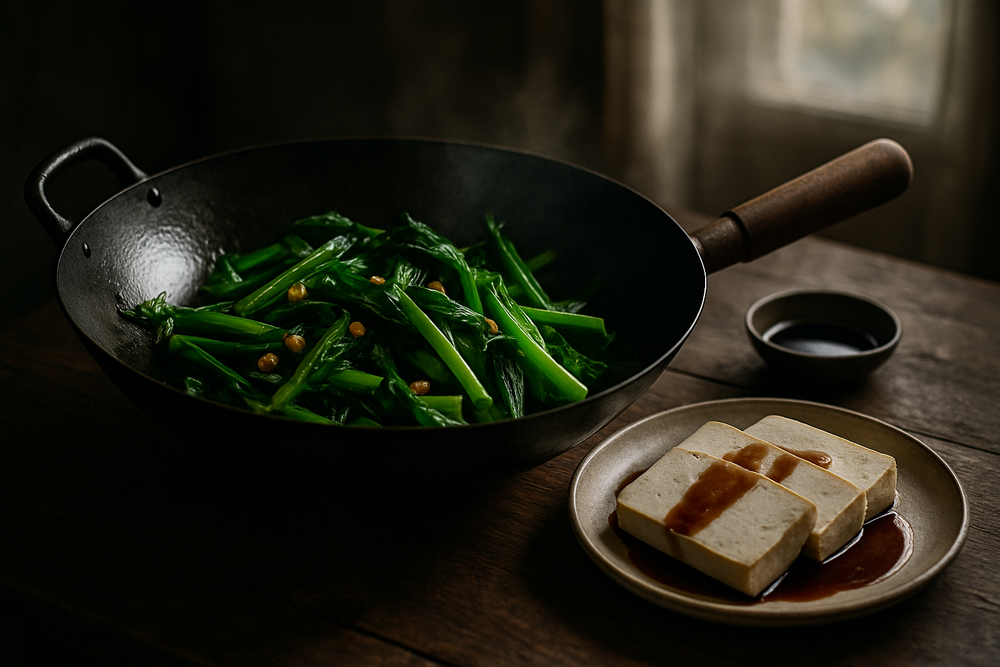
Choy Sum · Photograph
Discover the choy sum health benefits backed by nutrition science — from heart and bone support to digestion and immunity. Includes nutrition facts per serving, safe daily intake guidance, and a quick garlic stir-fry method.
Key Nutrients
% Daily Value based on 2,000 cal diet
Key active compounds
- Glucosinolates and isothiocyanates — Sulfur-containing compounds unique to brassica vegetables. When you chop or chew choy sum, an enzyme called myrosinase converts glucosinolates into isothiocyanates, which are studied for their role in activating the body's own detoxification enzymes and potentially reducing long-term cellular damage.
- β-carotene (beta-carotene) — A provitamin A carotenoid (a pigment the body converts to vitamin A) that acts as an antioxidant and supports immune function, vision, and the health of skin and mucosal barriers.
- Lutein and related carotenoids — Yellow-green pigments found in leafy greens. Research links higher lutein intake to reduced oxidative stress in eye tissue and better long-term eye health.
- Phenolic compounds (flavonoids and others) — A broad category of plant polyphenols that contribute to the vegetable's overall antioxidant capacity. An antioxidant is a compound that helps neutralise unstable molecules called free radicals, which can damage cells over time.
- Folate (vitamin B9) — Technically a vitamin rather than a phytochemical, but present at unusually high levels in choy sum and critical for DNA synthesis, cell division, and cardiovascular health.
Prep and pairing ideas
Choy sum needs minimal preparation: trim the bottom centimetre off the stems, wash well, and it is ready. Larger stems can be halved lengthways so they cook at the same rate as the leaves.
Classic garlic stir-fry — Heat a wok or wide pan until smoking, add a tablespoon of neutral oil (or sesame oil for flavour), toss in two to three crushed garlic cloves, add choy sum, and stir constantly for two to three minutes. Finish with a small splash of soy sauce or oyster sauce. Serve immediately.
Pairing with tofu or tempeh — Choy sum's mild, slightly sweet flavour complements the savoury depth of fermented soy foods. The combination delivers plant-based protein, calcium, and iron in one dish.
Pairing with sesame seeds — A scatter of toasted sesame seeds adds healthy fats that further improve carotenoid absorption, plus a small boost of calcium and magnesium.
Pairing with brown rice or soba noodles — Choy sum's fibre and folate work well alongside whole grains in a balanced bowl. The greens offset the starch-heaviness of a noodle dish and slow the overall glycaemic response.
Bottom line
Choy sum is a genuinely impressive leafy green: exceptionally low in calories, high in folate, vitamin C, and provitamin A, and packed with the glucosinolates that make the entire brassica family so well regarded in nutrition research. The evidence that it directly prevents or treats specific diseases is limited because researchers have studied the brassica family broadly rather than this individual vegetable. What is well established is that eating a variety of leafy and cruciferous greens regularly is associated with healthier hearts, better digestion, stronger bones, and more resilient immune function — and choy sum is one of the easiest, fastest, and most versatile ways to get there.
It is very safe for most people, affordable, and quick to cook. If it is not already in your weekly rotation, it is worth adding.
Looking to build more vegetable-forward meals around ingredients like choy sum? Explore our vegetable and leafy green goals guide.
How Choy Sum Compares
| Compared with | What's different |
|---|---|
| Choy Sum vs. Bok Choy | Choy sum has thinner stems and a sweeter, more floral taste compared to the peppery crunch of bok choy. |
| Choy Sum vs. Gai Lan (Chinese Broccoli) | Choy sum is more delicate with tender stems, while Gai Lan is thicker, bitterer, and takes longer to cook. |
Health Benefits
Things to Know
Warfarin and other vitamin K antagonists: Leafy brassicas are generally rich in vitamin K (the nutrient that helps blood clot). If you take warfarin or a similar anticoagulant (a medication that reduces blood clotting), sudden large changes in leafy green intake can affect how the drug works. The solution is not to avoid choy sum but to keep your intake consistent week to week and let your prescribing doctor know your diet.
Thyroid conditions: Very large raw quantities of brassica vegetables contain goitrogens — compounds that can theoretically interfere with iodine uptake by the thyroid gland. Normal culinary amounts of cooked choy sum are very unlikely to be clinically significant, but people with active thyroid conditions managed by medication should mention high brassica intake to their doctor.
Digestive sensitivity: If you are new to cruciferous vegetables or increasing fibre quickly, start with smaller portions (half a cup cooked) and build up gradually to avoid gas or bloating.
Brassica allergy: Rare, but if you have a known allergy to mustard-family plants (brassicas), exercise caution.
Pregnancy: The high folate content is beneficial, but dietary folate does not replace a prenatal folic acid supplement. Follow your healthcare provider's guidance.
Food safety: Wash choy sum thoroughly under running water before cooking, paying attention to where stems meet leaves where soil can collect.
Glossary
Shop This Ingredient
Stock your pantry with quality choy sum.
Buy on AmazonAs an Amazon Associate, Plantopedia earns from qualifying purchases. This costs you nothing extra and helps us keep the encyclopedia free.
Frequently Asked Questions
Heart and circulation Choy sum contributes several nutrients that population research consistently links to better cardiovascular health. Its potassium content (around 335 mg per 100 g) supports healthy blood pressure by helping balance the effects of sodium in the diet. Folate plays a role in managing homocysteine — an amino acid that, at elevated levels, is associated with higher cardiovascular risk. Vitamin C and carotenoids act as antioxidants that may help protect the lining of blood vessels. None of this means choy sum alone prevents heart disease, but as part of a diet rich in vegetables, it contributes to the nutrient pattern that large observational studies consistently associate with lower cardiovascular risk. Digestive health and microbiome Each 100 g serving of choy sum provides roughly 2 g of dietary fibre. Fibre adds bulk to stools, supports regular bowel movements, and acts as a fuel source for beneficial bacteria in the large intestine (the gut microbiome). Increasing your vegetable intake gradually — choy sum included — is one of the simplest evidence-based steps for improving digestive regularity. Some people notice mild gas or bloating when they increase brassica vegetables quickly; cooking choy sum until tender and building up portion size over a week or two usually makes this easier to manage. Blood sugar and metabolism Choy sum is very low in carbohydrates (around 3 g per 100 g) and has a negligible effect on blood glucose on its own. More broadly, research on non-starchy vegetable intake shows that replacing refined carbohydrates with vegetables like choy sum can improve glycaemic control — the body's ability to manage blood sugar levels — over time. This makes choy sum a practical choice for people managing blood sugar, whether or not they have diabetes. Inflammation and recovery Chronic low-grade inflammation — where the immune system stays mildly activated over months or years — is implicated in many long-term health conditions. Choy sum's antioxidant vitamins (C and provitamin A) and polyphenols help reduce oxidative stress, which is one of the drivers of this kind of inflammation. Human studies using diets rich in cruciferous and leafy green vegetables have shown improvements in blood markers of oxidative stress, suggesting choy sum can play a supporting role when eaten as part of a plant-forward pattern. Bone health and immune support The combination of calcium, vitamin C, and provitamin A in choy sum makes it a useful contributor to both bone health and immune function. Calcium is the primary mineral in bone tissue; vitamin C is needed for collagen synthesis, which gives bones their flexible scaffold; and vitamin A supports the integrity of mucosal barriers — the body's first line of defence against pathogens. Iron (around 1.5 mg per 100 g) also matters: it is required to make haemoglobin, the protein that carries oxygen in red blood cells. Plant-sourced iron (called non-haeme iron) is absorbed less readily than meat-sourced iron, but eating choy sum alongside a vitamin C–rich food or within a vitamin C–rich meal (it already contains its own) can meaningfully boost absorption.
Pregnant women and people trying to conceive Choy sum is one of the richest whole-food sources of folate, a B vitamin that is critical for preventing neural tube defects in early pregnancy. It also provides calcium and iron, two minerals with higher requirements during pregnancy. Note: folate from food is not the same as folic acid from supplements; most guidelines still recommend a supplement in early pregnancy alongside dietary sources. People following plant-based or vegan diets Choy sum contributes calcium and iron without any animal products, making it a practical tool for meeting these often-challenging targets on a plant-only diet. Its vitamin C content within the same serving helps improve non-haeme iron absorption naturally. The high folate content is a bonus for anyone who may not be eating much fortified food.
For maximum nutrient retention, quick cooking methods beat prolonged boiling. Here is how the main options compare: Stir-frying with garlic (recommended) — A high-heat wok or pan, a little oil, crushed garlic, and two to four minutes of cooking is the traditional approach and also the nutritionally sound one. The brief exposure to heat softens the stems without destroying much vitamin C or causing significant folate loss. The oil helps your body absorb fat-soluble carotenoids (beta-carotene and lutein) more effectively. Steaming or blanching — A good alternative that retains colour and most micronutrients when kept under five minutes. Useful if you want a neutral base to dress with sauce at the table. Adding to soups or noodle broths — Stir choy sum in at the very end of cooking to limit heat exposure. The broth captures water-soluble vitamins like vitamin C and folate that leach out of the leaves, so you consume them in the liquid rather than losing them. Prolonged boiling — The least efficient method. Extended water boiling causes the most leaching of water-soluble vitamins. If you boil, keep it brief (two to three minutes maximum) and drink or use the cooking water.
No specific daily dose of choy sum has been established in clinical trials. General vegetable intake guidelines (such as those from the USDA MyPlate and the WHO) recommend filling roughly half your plate with vegetables and fruit at each meal, with a wide variety across the week. A practical starting point for choy sum: 1 to 2 cups raw (100–200 g) per serving, two to four times per week, is a reasonable culinary portion that contributes meaningfully to your daily vegetable target. If you are eating it for its folate specifically (for example, in early pregnancy), one 100 g portion per day alongside other folate-rich foods can contribute significantly toward the 400–600 mcg daily target. There is no evidence of harm from eating larger amounts in healthy people. The main practical limits are digestive comfort (start lower if you are brassica-new) and, for those on warfarin, consistency rather than quantity. Start low, build gradually if you are introducing it for the first time, especially if your current vegetable intake is low.
Quick Answers
Common questions, answered in a line.
Choy sum is a source of glucosinolates and isothiocyanates, sulfur-containing compounds that help activate the body's natural detoxification enzymes. These unique brassica compounds are studied for their ability to potentially reduce long-term cellular damage.
Choy sum supports eye health through its high levels of lutein and beta-carotene, which are pigments that reduce oxidative stress in eye tissue. Research specifically links higher lutein intake from leafy greens to better long-term vision and eye health.
Choy sum contains exceptionally high levels of folate (vitamin B9), which is a critical nutrient for DNA synthesis and healthy cell division. While beneficial during pregnancy, the article notes that dietary folate should not replace a prenatal folic acid supplement.
Cooking choy sum with healthy fats, such as sesame oil or toasted sesame seeds, can significantly improve your body's absorption of its fat-soluble carotenoids. The greens also pair well with fermented soy foods like tofu to provide a complete boost of plant-based protein and calcium.
If you take warfarin or similar anticoagulants, you should maintain a consistent weekly intake of choy sum rather than making sudden large changes to your diet. This is because leafy brassicas are rich in vitamin K, which plays a key role in blood clotting and can affect medication efficacy.
People with thyroid conditions should consult their doctor before consuming very large raw quantities of choy sum, as it contains goitrogens that can theoretically interfere with iodine uptake. However, normal culinary amounts of cooked choy sum are unlikely to be clinically significant.
To prepare choy sum, simply trim the bottom centimeter off the stems and wash the vegetable thoroughly under running water to remove soil. If you have larger stems, you can halve them lengthways to ensure they cook at the same rate as the delicate leaves.
For Readers in the USA
Local context — sourcing, seasonality, and regional notes.
You can find choy sum at major H Mart locations, 99 Ranch Market, and increasingly at mainstream retailers like Whole Foods or Safeway in metropolitan areas. If your local grocer doesn't stock it, check regional farmers markets in California or the Northeast during the spring and fall.
In the US, choy sum is primarily grown in California, Arizona, and Florida, with the peak seasons occurring from late fall through early spring. While greenhouse technology allows for year-round availability, you will find the most tender and affordable bunches during these cooler months.
Look for the USDA Organic seal to ensure the choy sum was grown without synthetic pesticides, a common concern for leafy greens. While the FDA does not have specific guidelines for choy sum, it classifies it under the general safety standards for leafy cruciferous vegetables.
In American grocery stores, choy sum is frequently labeled as "Yu Choy" or "Chinese Flowering Cabbage." Do not confuse it with Bok Choy, which has much thicker, whiter bulbs, or Gai Lan (Chinese Broccoli), which has thicker, tougher stems and larger leaves.
AI Clinical Review
- Clear, accurate framing of choy sum as a low‑calorie, nutrient‑dense brassica with meaningful vitamin C, provitamin A, potassium, calcium, iron, and fiber.
- Solid explanation of glucosinolates/isothiocyanates and their antioxidant roles, without overpromising on disease prevention.
- Practical cooking guidance (quick stir‑fry/steam, add a little oil, use broth to retain water‑soluble vitamins) aligns with evidence on nutrient retention and carotenoid absorption.
- Thoughtful safety notes on vitamin K and warfarin, thyroid goitrogens (primarily a concern with large raw intakes), and gradual fiber increases for digestive comfort.
- Most health benefits cited come from studies on cruciferous or leafy greens as a group; there are few randomized trials isolating choy sum itself.
- Reported micronutrient values—especially folate—vary by cultivar, maturity, soil, and databases; treat the numbers as estimates rather than exact figures.
- Improvements in glycemic control or inflammatory markers with more non‑starchy vegetables are typically modest and depend on the overall dietary pattern.
- Conversion of glucosinolates to isothiocyanates depends on myrosinase (an enzyme that can be reduced by prolonged heat), so preparation details can influence bioactive yield.
- Practical intake: 1–2 cups raw (about 100–200 g) per serving several times per week fits general vegetable guidance; in pregnancy, continue a folic acid supplement (typically 400–800 mcg/day) even with folate‑rich foods.
- If you take warfarin or another vitamin K antagonist, keep leafy‑green intake consistent and coordinate with your clinician for INR monitoring.
- People with thyroid disease or iodine deficiency should avoid very large amounts of raw crucifers; usual cooked portions are generally fine when iodine needs are met.
- For sensitive digestion, introduce gradually; and if you’re watching sodium for blood pressure, use lighter amounts of salty sauces (e.g., soy or oyster) in stir‑fries.
Very safe.
References
- USDA FoodData Central — nutrition data for leafy and cruciferous vegetables (fdc.nal.usda.gov)
- USDA MyPlate — vegetable group guidance and daily recommendations (myplate.gov)
- Nutrition-and-you — choy sum nutrition facts and health benefits overview (nutrition-and-you.com)
- University of Hawai'i Nutrition Center — choi sum nutrient profile (nutritioncenter.ctahr.hawaii.edu)
- Veggycation (Horticulture Innovation Australia) — choy sum nutrition and health claims guide (veggycation.com.au)
- Diversivore — how to choose, use, and cook choy sum (diversivore.com)
- Hong Kong EatSmart — leafy vegetables: flowering Chinese cabbage (choy sum) (school.eatsmart.gov.hk)
- Netmeds Health Library — choy sum nutrition, health benefits, and side effects (netmeds.com)
- Studylib — Veggycation choy sum nutrition information panel and health claims (studylib.net)
- DietCompass — choy sum vegetable nutrition facts per 100 g (dietcompass.org)
Know Your Numbers
Eating healthy is a start. Now get to know your biomarkers.
Food changes bloodwork — inflammation, lipids, blood sugar and nutrient status all respond to what you eat. 59 markers from $59.
- Results in 7–10 days at 2,000+ Quest sites
- Licensed provider reviews every result
- One flat price, no membership, HSA/FSA eligible
Educational information only, not medical advice. Panels are ordered and reviewed through our licensed partner; Plantopedia may earn a commission.