Coconut Flakes — health benefits and uses
Dried coconut is a pantry staple across South and Southeast Asia.
The Short Answer
Unsweetened coconut flakes are a high-fiber, low-sugar food providing 5g of fiber and 18g of fat per 28g serving. They are particularly rich in manganese, a mineral essential for bone health and antioxidant function.
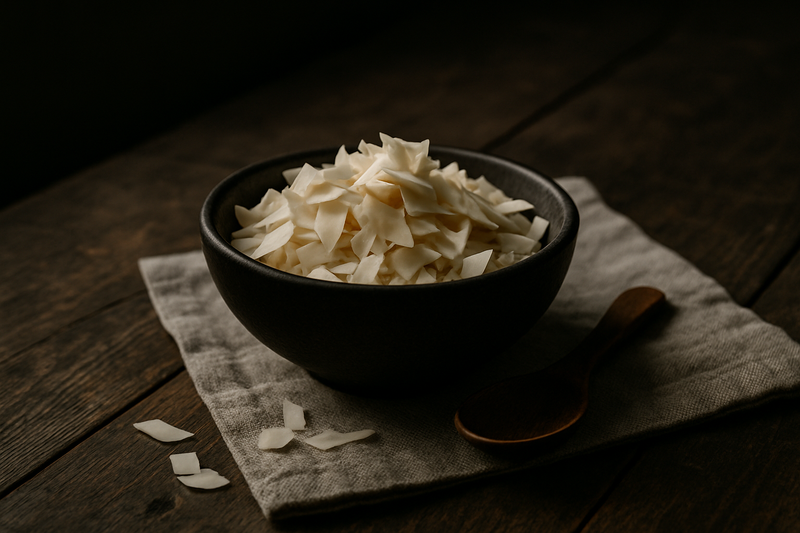
Coconut Flakes · Photograph
Discover coconut flakes health benefits and nutrition facts, from fiber and medium-chain fats to cholesterol research. Learn how to use unsweetened coconut flakes in granola, curries, and snacks — plus safety tips for high-cholesterol and dairy-free diets.
Key Nutrients
% Daily Value based on 2,000 cal diet
Key active compounds
- Lauric acid — The dominant fatty acid in coconut fat (roughly 45–50% of total fat). A medium-chain saturated fatty acid thought to raise both LDL ("bad") and HDL ("good") cholesterol, and studied for antimicrobial properties in lab settings.
- Caprylic and capric acids — Shorter medium-chain fatty acids present in smaller amounts; both are components of the MCT fraction.
- Insoluble dietary fiber — The major fiber type in coconut meat (roughly 56 g out of every 60 g of total fiber per 100 g of coconut flour equivalent). Non-dissolving fiber that adds stool bulk and may bind bile acids, potentially reducing cholesterol reabsorption.
- Soluble dietary fiber — A smaller fraction (~4 g per 100 g of coconut flour equivalent) that can slow digestion and modestly blunt blood sugar spikes.
- Manganese — A trace mineral cofactor (helper molecule) essential for antioxidant enzymes and bone formation; coconut flakes are a particularly rich source.
- Copper — Supports iron metabolism, connective tissue repair, and immune function.
Myths vs facts: coconut flakes edition
Myth 1: "Coconut is a tree nut, so nut allergy sufferers must avoid it." Fact: The FDA classifies coconut as a tree nut for labeling purposes, but true coconut allergy is biologically distinct and relatively rare. Most people with peanut or common tree nut (almond, cashew) allergies tolerate coconut without issue. That said, if you have a known coconut allergy or strong multi-tree-nut reactivity, skip it and check with an allergist.
Myth 2: "Coconut flakes are basically candy — full of sugar." Fact: Sweetened coconut flakes have added sugar. Unsweetened coconut flakes contain less than 1 g of naturally occurring sugar per serving. The label is the deciding factor — check the ingredients list for "sugar," "dextrose," or "corn syrup."
Myth 3: "MCTs in coconut flakes will boost your metabolism like coconut oil supplements." Fact: Coconut flakes do contain MCTs, but the concentration is much lower than in concentrated MCT oil, and the research on metabolic "boosting" comes almost entirely from pure MCT oil studies — not from dried coconut meat. Any metabolic effect from adding a tablespoon of coconut flakes to granola would be modest at best.
Prep and pairing ideas
Coconut flakes shine as a textural accent. Here are three practical pairings backed by culinary and nutritional logic:
1. Oat-based granola — Toast unsweetened flakes with rolled oats, a drizzle of olive oil, and cinnamon at 160°C (325°F) until golden. The coconut fat helps other ingredients crisp, the fiber from both oats and coconut contributes to satiety, and the flavor profile eliminates the need for much added sugar. Start with 2–3 tablespoons per batch.
2. Thai or Indian-inspired curries — Stir a tablespoon of unsweetened flakes into a butternut squash or lentil curry at the end of cooking, or toast and scatter over the finished dish. Coconut fat is naturally compatible with fat-soluble spices like turmeric and cumin, and the texture contrast works well with soupy dishes.
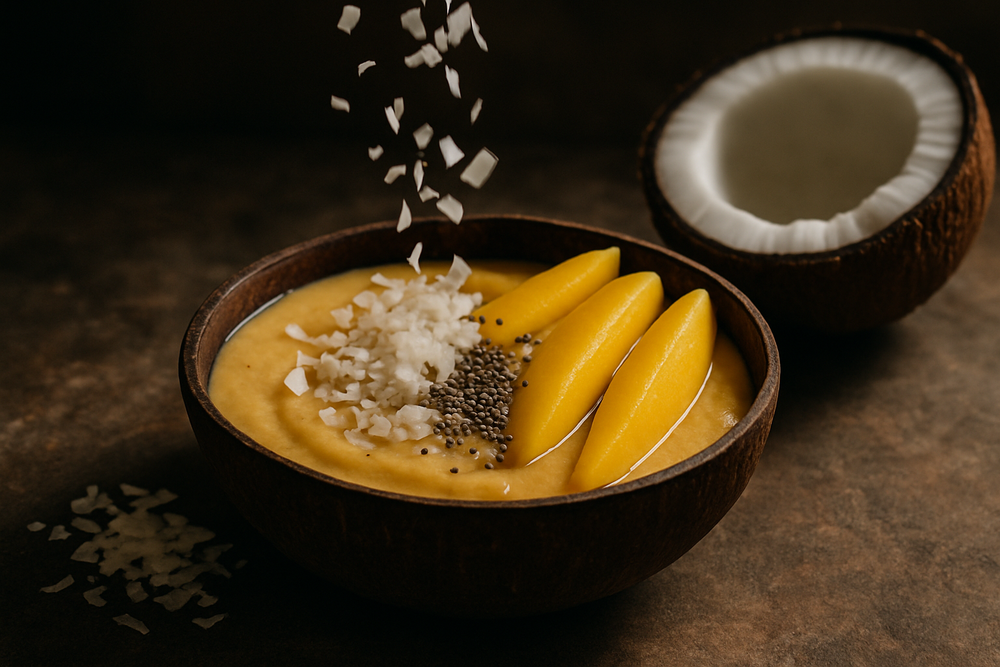
3. Smoothie bowls or yogurt (dairy-free) — Sprinkle over blended açaí or mango bowls alongside hemp seeds and sliced banana. The flakes add crunch, slow digestion via fat and fiber, and help balance the natural fruit sugar load — making the bowl more filling than fruit alone.
Bottom line
Unsweetened coconut flakes are a genuinely interesting whole-food ingredient: high in saturated fat, yes, but also meaningfully high in fiber, rich in manganese, and backed by at least two small human trials suggesting fiber-driven cholesterol benefits when used as part of a structured diet. They're not a superfood to eat by the cupful, and they're not the dietary villain they're sometimes painted as either.
The practical take: use them in tablespoon-sized amounts as a textural, flavorful addition to granola, curries, and snacks; always choose unsweetened; and keep the rest of your saturated fat intake in check so the coconut fat has room in your daily budget. If cardiovascular disease or high cholesterol is in the picture, get a personalized recommendation from your healthcare provider before making them a daily fixture.
How Coconut Flakes Compares
| Compared with | What's different |
|---|---|
| Coconut Flakes vs. Desiccated coconut | Finely ground with less texture; better for baking cakes and energy balls. |
| Coconut Flakes vs. Fresh coconut meat | Contains significantly more moisture and fewer calories per gram due to water content. |
| Coconut Flakes vs. Coconut oil | Concentrated fat source without the 5g of dietary fiber found in flakes. |
Health Benefits
Things to Know
High saturated fat: A quarter-cup provides ~16 g of saturated fat, about 80% of the traditional 20 g daily value. If you're already eating butter, cheese, or red meat daily, adding large amounts of coconut flakes on top can push saturated fat well above guidelines.
Calorie density: At ~185 calories per quarter-cup, coconut flakes can contribute to excess energy intake if portions aren't watched. Measure out servings rather than sprinkling freely from the bag.
Cholesterol and CVD: If you have high LDL cholesterol, hypertriglyceridemia (high blood triglycerides), or established cardiovascular disease, speak with your doctor before making coconut flakes a regular fixture. The fiber may help, but the saturated fat may work against lipid-lowering therapy goals.
Statin users and lipid medications: Large amounts of coconut flakes may counteract the dietary saturated fat restriction that underpins lipid-lowering medication effectiveness.
Fat malabsorption disorders: Conditions like pancreatitis, Crohn's disease with fat malabsorption, or exocrine pancreatic insufficiency require overall fat restriction — discuss with your care team.
Coconut allergy: Rare but real. Symptoms range from oral itching to anaphylaxis in severe cases. People with known coconut allergy should avoid coconut flakes and all coconut products.
Sweetened varieties and diabetes: The added sugar in sweetened flakes affects blood glucose management. Always choose unsweetened if blood sugar is a concern.
Pregnancy: Unsweetened coconut flakes are generally considered safe in food amounts during pregnancy. No specific contraindications are documented, but very high saturated fat intake is generally discouraged in any context.
Glossary
Shop This Ingredient
Stock your pantry with quality coconut flakes.
Buy on AmazonAs an Amazon Associate, Plantopedia earns from qualifying purchases. This costs you nothing extra and helps us keep the encyclopedia free.
Frequently Asked Questions
This is the question most people want answered — and the honest answer is "it depends, and the evidence is more nuanced than most headlines suggest." Heart and circulation A controlled human study published in the Journal of Nutrition enrolled adults with moderately elevated cholesterol and had them consume test breakfasts containing either 15% or 25% coconut flakes. Both levels significantly reduced total cholesterol, LDL cholesterol (often called "bad" cholesterol — the kind that contributes to arterial plaque), and triglycerides (blood fats linked to cardiovascular risk) compared with baseline. A separate trial using a traditional dietary supplement combining coconut milk and coconut flakes reported reductions in LDL and increases in HDL ("good") cholesterol in the general population, with no adverse lipid effects. Researchers believe the fiber is the key mechanism: insoluble fiber binds bile acids in the gut, pulling them out in stool so the liver must pull more cholesterol from the blood to make new bile acids. This is the same basic mechanism behind oat beta-glucan and other fiber-based cholesterol strategies. The important caveats: both studies were small and short-term. Participants ate coconut flakes as part of structured test meals — not as a typical handful over granola. And mainstream cardiovascular guidelines (American Heart Association, NHS) still recommend limiting total saturated fat, so the fiber benefit does not cancel out the saturated fat story entirely. If you have existing heart disease or significantly elevated LDL, discuss coconut flakes specifically with your care team. Digestive health and microbiome The fiber in coconut flakes is predominantly insoluble, meaning it doesn't dissolve in water. It passes largely intact through the small intestine and reaches the colon where it adds bulk to stool, supporting regularity and reducing transit time. A quarter-cup serving provides about 18% of the daily fiber target — a meaningful contribution from a food most people think of as a fat source. There are no dedicated clinical trials on coconut flakes and gut microbiome composition yet, but the general fiber-gut health connection is one of nutrition science's most consistent findings. Note: a sudden increase in any insoluble fiber can cause temporary gas or bloating in some people. Starting with one tablespoon and building up gradually is a practical way to avoid this. Blood sugar and metabolism Unsweetened coconut flakes are relatively low in digestible (net) carbohydrates — roughly 2–3 g per serving once fiber is subtracted. This makes them a naturally low-glycemic (low blood-sugar-spiking) ingredient. No human trials have measured blood sugar responses specifically to coconut flakes, so any glycemic benefit is extrapolated from their fiber and low-carb profile rather than direct evidence. Swapping a sweetened granola cluster for unsweetened coconut flakes almost certainly reduces the glycemic load of your breakfast; eating coconut flakes alone won't "control" blood sugar in any clinically proven sense. Inflammation and recovery Lab and animal research suggests lauric acid may have antimicrobial and immune-modulating properties, but human clinical trials measuring inflammatory markers (like C-reactive protein, a blood marker for systemic inflammation) in people eating coconut flakes have not been published in the available literature. Any inflammation-related claims for coconut flakes should be treated as early-stage and not yet established in humans.
Unsweetened dried coconut flakes or chips are the default choice for whole-food, plant-based eating. They retain the full fiber and fat matrix, no added sugar, and work across sweet and savory applications. Sweetened coconut flakes are worth avoiding as a daily staple. The added sugars increase calorie load and glycemic impact without adding nutrition. Fine for an occasional dessert garnish. Toasted coconut flakes have the same basic nutritional profile as raw flakes — the dry-roasting process changes flavor and texture but doesn't dramatically alter fat or fiber content. Some heat-sensitive micronutrients may reduce slightly. Coconut flour is a finely milled product made from dried, defatted coconut meat. It has a much higher fiber concentration (around 60%) and less fat than flakes — useful for baking but a different product entirely.
There is no formally established recommended daily amount for coconut flakes, so guidance is built from nutrient logic and portion awareness. Practical everyday range: 1–4 tablespoons (approximately 8–30 g) per day for most healthy adults. This gives you flavor and texture, a useful fiber boost, and some mineral contribution without dramatically elevating daily saturated fat intake. 1 tablespoon (7 g): 47 calories, 4 g saturated fat. A light daily sprinkle — easy to fit into any dietary pattern. 2 tablespoons (14 g): 93 calories, 8 g saturated fat. Good middle ground for granola or curry use. 4 tablespoons / ¼ cup (28 g): 185 calories, 16 g saturated fat. Nutritionally meaningful but takes up most of a day's saturated fat budget — best reserved for people with lower saturated fat from other sources. Start low if you're new to coconut: Begin with 1 tablespoon to gauge digestive tolerance, especially if your usual fiber intake is low. Build up gradually over one to two weeks. On keto and very-low-carb diets: Unsweetened coconut flakes fit well — roughly 2–3 g net carbs per tablespoon. Their fat density also supports higher fat intake targets in those dietary frameworks. Evidence specifically on coconut flakes for keto outcomes is limited, but their macro profile is naturally compatible.
Quick Answers
Common questions, answered in a line.
Unsweetened coconut flakes are a rich source of manganese, copper, and dietary fiber, particularly insoluble fiber. They also contain medium-chain fatty acids like lauric acid, which has been studied for its potential antimicrobial properties.
People with tree nut allergies can often eat coconut, as it is biologically distinct from nuts like almonds or cashews. While the FDA classifies it as a tree nut for labeling, true coconut allergies are relatively rare, though you should consult an allergist if you are unsure.
Unsweetened coconut flakes contain less than 1 gram of naturally occurring sugar per serving, making them a low-sugar food. However, sweetened varieties contain added sugars like dextrose or corn syrup, so it is important to check the ingredients label.
Coconut flakes may help with blood sugar because their fat and fiber content can slow digestion and modestly blunt blood sugar spikes. To avoid negative impacts, individuals with blood sugar concerns should always choose unsweetened varieties.
Coconut flakes contain medium-chain triglycerides (MCTs), but their concentration is much lower than in pure MCT oil supplements. Research suggests that any metabolic boosting effect from adding small amounts of flakes to food would be modest at best.
Coconut flakes are high in fiber, specifically insoluble fiber which adds bulk to stool and may help bind bile acids. This process potentially reduces cholesterol reabsorption, though the flakes are also very high in saturated fat.
You can use coconut flakes by toasting them into oat-based granola, stirring them into Thai or Indian-inspired curries, or sprinkling them over smoothie bowls. They work well as a textural accent that pairs naturally with fat-soluble spices like turmeric and cumin.
For Readers in the USA
Local context — sourcing, seasonality, and regional notes.
While the U.S. imports most coconut products from Southeast Asia, a small amount of coconut is grown domestically in tropical areas like Southern Florida, Hawaii, and U.S. territories like Puerto Rico and Guam. In these regions, fresh coconuts are available year-round, though peak production often aligns with the warmer, humid summer months.
You can find unsweetened coconut flakes in the baking aisle or the natural foods section of major U.S. retailers like Whole Foods Market, Trader Joe’s, Kroger, and Publix. They are typically sold in bags labeled as 'shredded,' 'flaked,' or 'chips,' with organic options frequently available in specialty health food stores.
The USDA requires that coconut be listed as a 'tree nut' on food labels, meaning products containing coconut flakes must highlight them as an allergen despite coconut being a fruit. This federal classification is intended to protect consumers, though many Americans with common tree nut allergies (like walnuts or almonds) find they do not react to coconut.
In the U.S., coconut flakes are a staple in 'Seven Layer Bars,' German Chocolate Cake frosting, and as a topping for fruit-based 'ambrosia' salads commonly served at potlucks and holiday gatherings. Modern American food culture also uses them heavily in keto-friendly snacks and paleo-style trail mixes as a grain-free crunch.
AI Clinical Review
- Clearly distinguishes whole coconut flakes from refined coconut oil and highlights the meaningful fiber (~5 g per ¼ cup) plus minerals like manganese and copper.
- Accurately notes that coconut fat is mostly saturated (rich in lauric acid) and emphasizes keeping total saturated fat within heart‑health guidelines.
- Fairly summarizes small human studies suggesting modest LDL/total cholesterol reductions, plausibly via fiber binding bile acids, while acknowledging study size and duration limits.
- Offers practical, consumer‑friendly guidance on portions (about 1–4 tablespoons/day) and prioritizing unsweetened products to avoid added sugars.
- Lipid effects are based on small, short‑term trials under structured conditions; it’s uncertain how results translate to larger, long‑term, free‑living diets or higher daily intakes.
- The unique role of lauric acid (which can raise both LDL and HDL) makes net cardiovascular impact complex and not fully resolved.
- Claims around glycemic control, inflammation, and microbiome shifts are largely inferred from nutrient profiles or non‑human data; direct human trials with coconut flakes are limited or absent.
- A ¼ cup (~28 g) delivers about 16 g saturated fat—close to a full day’s limit for many people—so balance other saturated fat sources and measure portions.
- Choose unsweetened flakes for everyday use; packaged toasted versions can include added oils or sugars—check ingredient lists.
- People with high LDL, cardiovascular disease, hypertriglyceridemia, or those on lipid‑lowering therapy should discuss routine use with a clinician; those with fat‑malabsorption disorders or known/suspected coconut allergy should be cautious or avoid.
- If new to higher‑fiber foods, start with ~1 tablespoon and increase gradually to reduce gas/bloating; in pregnancy, typical food amounts are fine, but avoid habitually high saturated fat intakes and choose unsweetened forms if managing blood glucose.
High in saturated fat; choose unsweetened. Rare coconut allergy.
References
- USDA FoodData Central — nutrient database for coconut products (fdc.nal.usda.gov)
- Human trial: Cholesterol-lowering effect of coconut flakes in adults with moderately raised cholesterol (pubmed.ncbi.nlm.nih.gov)
- Human trial: Cholesterol-lowering effect of coconut flakes — full text via Academia.edu (academia.edu)
- Human trial: Impact of traditional coconut milk and flake supplement on lipid profile — PMC full text (pmc.ncbi.nlm.nih.gov)
- Review: Study on the nutritional benefits of coconut-based products (2025 academic review) (usab-tm.ro)
- Coconut flakes nutrition and health benefits overview — Global Resources Direct (globalresourcesdirect.com)
- Organic unsweetened coconut flakes nutrition facts — Nuts.com product label data (nuts.com)
- Unsweetened coconut flakes nutrition facts — Eat This Much database (eatthismuch.com)
- Coconut flakes nutrition facts — Nutriscan database (nutriscan.app)
- Coconut flakes nutrition value overview — Global Resources Direct (globalresourcesdirect.com)
Know Your Numbers
Eating healthy is a start. Now get to know your biomarkers.
Food changes bloodwork — inflammation, lipids, blood sugar and nutrient status all respond to what you eat. 59 markers from $59.
- Results in 7–10 days at 2,000+ Quest sites
- Licensed provider reviews every result
- One flat price, no membership, HSA/FSA eligible
Educational information only, not medical advice. Panels are ordered and reviewed through our licensed partner; Plantopedia may earn a commission.