Coconut Manna — health benefits and uses
Coconut flesh has long been a staple fat across tropical Ayurvedic and island diets.
The Short Answer
Coconut manna is a creamy spread made from pureed whole coconut flesh, containing both the natural oils and the fiber of the fruit. Unlike coconut oil, it provides 2 grams of dietary fiber per 100-calorie tablespoon and has a dense, fudge-like texture.
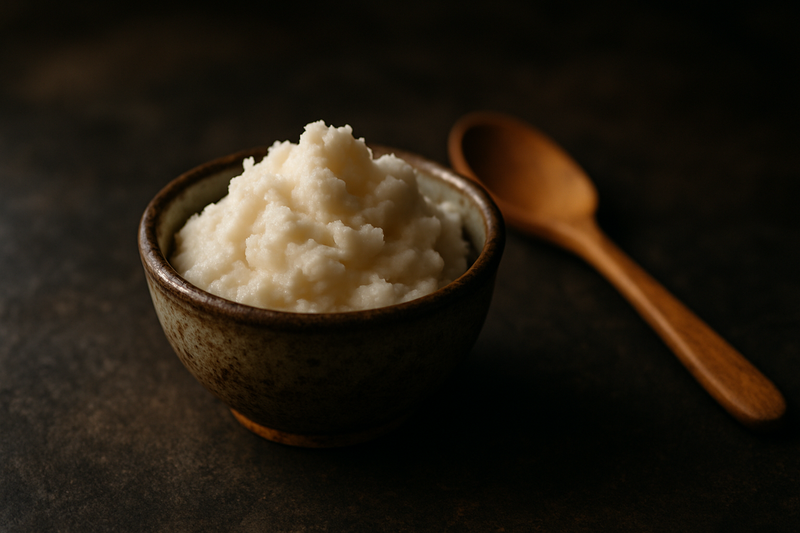
Coconut Manna · Photograph
Explore coconut manna nutrition and health benefits, including how this pureed whole-coconut spread compares to coconut oil, its fiber content, saturated fat considerations, and the best ways to use it in plant-based and dairy-free cooking.
Key Nutrients
% Daily Value based on 2,000 cal diet
Key active compounds
- Lauric acid — A 12-carbon saturated fatty acid that makes up the majority of coconut fat. It has documented antimicrobial activity in laboratory studies, but in human diets it still behaves primarily as a cholesterol-influencing saturated fat.
- Medium-chain triglycerides (MCTs) — Fats built from medium-length carbon chains (roughly 6–12 carbons). They are absorbed more quickly than longer-chain fats and oxidized (burned) more readily for energy. Coconut fat contains MCTs naturally, though at lower concentrations than purified MCT oil.
- Coconut polyphenols — Naturally occurring plant antioxidants (molecules that can neutralize cell-damaging free radicals) found in the flesh. Levels in commercially processed coconut manna are modest and not well measured in human studies.
- Dietary fiber — Mostly insoluble fiber from the coconut flesh cell walls, which supports gut regularity and contributes to the product's lower glycemic impact compared with pure coconut oil.
Prep and pairing ideas
Coconut manna solidifies to a firm white paste below about 76 °F (24 °C). This is completely normal — the coconut oil fraction is simply crystallizing. To soften it, sit the jar in a bowl of warm water for a few minutes, or microwave in 10-second bursts, stirring between each. Always stir before measuring to blend the oil back through the fiber.
Three practical pairings:
- Coconut manna + dark chocolate: Melt together in a 1:1 ratio for a simple, dairy-free chocolate coating or truffle filling. The fiber in the manna slightly mutes the sweetness for a less cloying result.
- Coconut manna + warming spices (cinnamon, cardamom, ginger): Stir into oatmeal or spread onto warm toast. The spices balance the rich coconut sweetness and add their own bioactive compounds.
- Coconut manna + banana or mango in a smoothie: The fat and fiber slow sugar absorption from the fruit, while the tropical flavor profiles are a natural match. Blend from frozen for the best texture.
In baking: Substitute coconut manna 1:1 for coconut oil in recipes that call for a solid fat. Expect a slightly denser, more moist crumb and a subtle coconut flavor that comes through more than with refined oil.
As a spread: Use thin layers (about half a teaspoon) on rice cakes, crackers, or warm flatbreads. Thick layers add up in saturated fat quickly.
Bottom line
Coconut manna is a minimally processed, dairy-free whole-food fat that offers something refined coconut oil cannot: fiber. It fits naturally into vegan, paleo, and ketogenic kitchens as a spread or baking ingredient. Its flavor is rich and genuinely tropical, and it needs nothing added to it.
The limitation is clear and worth repeating: coconut manna is very high in saturated fat. The current weight of human evidence does not support using it as a heart-healthy fat, and it should not displace unsaturated fats like olive oil as a dietary staple. Used in small portions — a teaspoon to tablespoon at a time — as part of a diverse, plant-forward diet, it is a reasonable whole-food ingredient with a better nutritional profile than pure coconut oil or dairy butter.
The "is coconut manna healthy?" question doesn't have a yes or no answer. It depends on how much you use, what it replaces in your diet, and your individual health context. For most people, a small daily portion alongside plenty of vegetables, legumes, and whole grains is unlikely to cause harm and adds genuine culinary versatility.
How Coconut Manna Compares
| Compared with | What's different |
|---|---|
| Coconut Manna vs. Coconut Oil | Contains 2g of fiber and 1g of protein per tablespoon, whereas coconut oil is 100% pure fat. |
| Coconut Manna vs. Coconut Milk | Made from pureed coconut flesh rather than water, providing significantly higher fat and calories. |
Health Benefits
Things to Know
Saturated fat is the main concern.: One tablespoon covers 40% of the recommended daily saturated fat limit. People with high LDL cholesterol, existing heart disease, or a doctor-advised low-saturated-fat diet should use it sparingly and count it within their daily fat budget.
Coconut allergy, while rare, is real.: If you have a tree nut or other food allergy, confirm with an allergist before trying coconut products. The FDA classifies coconut as a tree nut for labeling purposes, though it is botanically a fruit.
Calorie density is high.: At ~100 calories per tablespoon, it is easy to add several hundred untracked calories to a day if you use it freely. This matters for anyone monitoring total calorie intake.
Medication interactions are indirect.: There are no known direct drug–nutrient interactions with coconut manna, but people on cholesterol-lowering medications (statins, ezetimibe) may be advised by their doctor to limit saturated fat, which would include coconut manna. People on blood sugar medications should factor in the calorie and fat content when meal planning.
Pregnancy and breastfeeding: No specific evidence of harm, but intake should remain within normal saturated fat guidelines. Check with your midwife or doctor if you have any concerns.
GI tolerance: Introducing large amounts of concentrated coconut fat quickly can cause loose stools or nausea in some people. Start with a teaspoon and build up gradually.
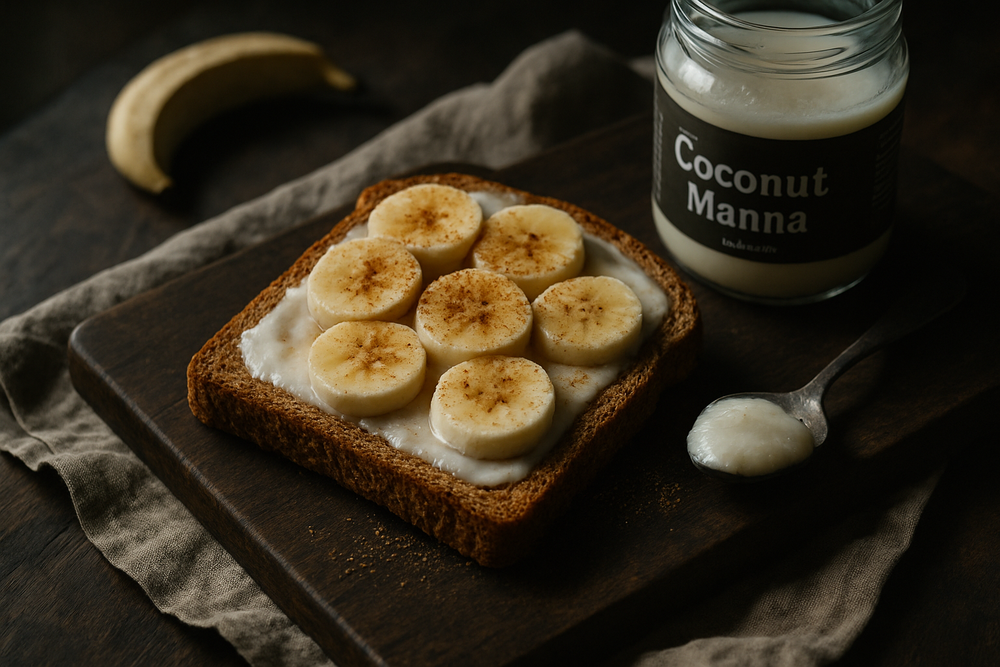
Prep Ideas
- — Coconut manna + dark chocolate: Melt together in a 1:1 ratio for a simple, dairy-free chocolate coating or truffle filling. The fiber in the manna slightly mutes the sweetness for a less cloying result.
- — Coconut manna + warming spices (cinnamon, cardamom, ginger): Stir into oatmeal or spread onto warm toast. The spices balance the rich coconut sweetness and add their own bioactive compounds.
- — Coconut manna + banana or mango in a smoothie: The fat and fiber slow sugar absorption from the fruit, while the tropical flavor profiles are a natural match. Blend from frozen for the best texture.
Glossary
Shop This Ingredient
Stock your pantry with quality coconut manna.
Buy on AmazonAs an Amazon Associate, Plantopedia earns from qualifying purchases. This costs you nothing extra and helps us keep the encyclopedia free.
Frequently Asked Questions
The honest answer is that human clinical evidence specifically on coconut manna is thin. Most research has studied coconut oil, coconut flour, or whole coconut diets. Where that research exists, the picture is mixed. Below is a breakdown by body system, calibrated to the actual evidence level. Heart and circulation Coconut manna is high in saturated fat, and the most consistent finding from human trials on coconut fat is that it raises LDL cholesterol (often called "bad" cholesterol) compared with unsaturated plant oils like olive or canola. Some trials show a simultaneous rise in HDL ("good" cholesterol), but no randomized controlled trial has demonstrated that eating coconut products reduces heart attack or stroke risk. For individuals with elevated LDL, existing cardiovascular disease, or a family history of heart disease, major guidelines suggest treating coconut manna like any other saturated fat source: use it occasionally and within your overall saturated fat budget rather than as a primary cooking fat. It is not evidence-based to market coconut manna as heart-protective. Digestive health and microbiome This is where coconut manna has a genuinely useful story to tell. Because it retains the flesh's fiber, it contributes to stool bulk and gut regularity in a way that refined coconut oil cannot. General human evidence firmly supports dietary fiber for bowel health and a diverse gut microbiome (the community of bacteria and other microbes living in your digestive tract). Two to three grams of fiber per tablespoon is modest by the standards of vegetables or legumes, but meaningful when compared with zero-fiber fat alternatives. If you swap coconut manna for butter or refined coconut oil in a recipe, you are getting a small but real fiber upgrade. Blood sugar and metabolism Coconut manna is low in net carbohydrates — digestible carbs that actually raise blood sugar. With around 3 g total carbs and 2 g fiber per tablespoon, the net carb count lands near 1 g. The fat and fiber content together slow gastric emptying (how quickly food leaves the stomach), which can flatten the blood sugar rise from a meal when coconut manna is used as part of a balanced dish. There are no direct human trials showing coconut manna improves blood sugar control or insulin sensitivity. Any glycemic benefit is indirect and depends heavily on what else is in the meal. It fits comfortably into low-carb or ketogenic eating patterns, but it should not be framed as a blood-sugar treatment. Inflammation and recovery Coconut flesh contains phenolic compounds that have shown anti-inflammatory and antimicrobial activity in cell cultures and animal experiments. Lauric acid specifically has demonstrated antimicrobial effects in laboratory settings. However, translating these findings to meaningful anti-inflammatory benefits in humans eating tablespoon-sized portions of coconut manna requires much more clinical research than currently exists. Eating a broadly diverse, minimally processed plant-focused diet is associated with lower chronic inflammation in population studies — but that reflects the whole dietary pattern, not any single ingredient.
The right form depends entirely on what you want from the ingredient. Choose coconut manna if you want: Fiber alongside your fat A thick, spreadable texture for toast, smoothies, or raw desserts A more whole-food profile (retains protein, polyphenols, fiber) A dairy-free, creamy ingredient for baking or frosting Choose coconut oil if you want: A neutral, pourable cooking fat with a higher smoke point Zero fiber (relevant for certain clinical diets) A longer shelf life and easier measuring A fat that stays liquid longer at room temperature From a saturated fat standpoint, both are very similar per gram of fat. Coconut manna just packages that fat with the rest of the coconut flesh. Neither is a better choice than unsaturated plant oils for cardiovascular risk management. The question of "coconut manna vs coconut oil" is mostly a culinary decision rather than a health one.
The whole-food plant-based cook Wants a dairy-free butter alternative that comes from a single ingredient Values fiber even in fat-forward foods Uses small amounts for spreads, sauces, and raw dessert fillings Appreciates that it doesn't contain emulsifiers, palm oil, or additives The keto or low-carb eater Needs high-fat, low-net-carb foods to maintain a ketogenic metabolic state Finds coconut manna useful for fat bombs, smoothies, and baking without grains Can work around its solidifying behavior by gently warming the jar Should still track saturated fat intake within their overall food plan
There is no established therapeutic dose for coconut manna because it is a food, not a supplement. For practical guidance: Most adults can include 1–2 tablespoons (14–28 g) per day as part of a varied diet without significant concern, provided their overall saturated fat intake stays within recommended limits (typically under 10% of total daily calories, or about 20–22 g saturated fat on a 2,000-calorie diet). Because one tablespoon already delivers 8 g of saturated fat, two tablespoons of coconut manna alone accounts for roughly 16 g — close to the full daily recommended maximum before eating anything else. Start with 1 teaspoon if you are new to coconut products or have a sensitive gut. Build up over one to two weeks. People with elevated LDL or cardiovascular risk should talk to a dietitian before making coconut manna a daily habit. Keeping portions to half a tablespoon (about 7 g) as a flavoring rather than a primary fat source is a reasonable middle ground. If you are looking for foods to build a dietary pattern around specific health goals, Plantopedia's goals guide can help you match ingredients to what you are working toward.
Quick Answers
Common questions, answered in a line.
You can use coconut manna as a 1:1 substitute for coconut oil in baking recipes that call for a solid fat. This swap will produce a slightly denser, more moist crumb and a subtle coconut flavor that is more pronounced than when using refined oil.
Coconut manna contains dietary fiber, mostly insoluble fiber from the coconut flesh cell walls, which supports gut regularity. This fiber content also contributes to a lower glycemic impact compared to pure coconut oil.
To soften coconut manna, place the jar in a bowl of warm water for a few minutes or microwave it in 10-second bursts, stirring in between. This is necessary because the product solidifies into a firm white paste when temperatures drop below 76 °F (24 °C).
Coconut manna is very high in saturated fat, with one tablespoon providing approximately 40% of the recommended daily limit. While it is a whole-food alternative to butter, it should not displace unsaturated fats like olive oil as a dietary staple.
Coconut manna contains lauric acid, a 12-carbon saturated fatty acid that has shown antimicrobial activity in laboratory studies. It also contains coconut polyphenols, which are naturally occurring plant antioxidants that can neutralize cell-damaging free radicals.
Coconut manna contains naturally occurring medium-chain triglycerides (MCTs), which are fats absorbed and oxidized for energy more quickly than long-chain fats. However, the concentration of MCTs in coconut manna is lower than what is found in purified MCT oil.
Introducing large amounts of concentrated coconut fat like coconut manna too quickly can cause nausea or loose stools in some individuals. It is recommended to start with a small amount, such as one teaspoon, and increase your intake gradually to assess tolerance.
For Readers in the USA
Local context — sourcing, seasonality, and regional notes.
In the U.S., you can find coconut manna at major natural food chains like Whole Foods Market and Sprouts Farmers Market, or in the "Natural" aisle of stores like Kroger and Safeway. It is often labeled as "coconut butter" or "creamed coconut" depending on the brand.
While most coconut manna is imported from Southeast Asia, the USDA Organic seal ensures it meets strict U.S. production standards, including no synthetic fertilizers or pesticides. Look for the green and white USDA sticker on the glass jar to ensure high-quality, non-GMO sourcing.
Coconut manna is a staple in U.S. Keto and Paleo communities because it provides high-fat, low-carb satiety without the dairy found in traditional butter. It is frequently used in "fat bomb" recipes and as a thickening agent for Bulletproof-style coffee in American wellness circles.
AI Clinical Review
- Clearly distinguishes coconut manna (aka coconut butter) from coconut oil, noting the retained fiber and small amount of protein versus zero fiber in oil.
- Provides realistic nutrition estimates per tablespoon (~100 kcal, 2–3 g fiber, ~8 g saturated fat) and explains why portion size matters.
- Accurately reflects cardiovascular evidence: coconut fats tend to raise LDL compared with unsaturated oils; no clinical trials show reduced heart events.
- Sensibly frames potential benefits (fiber for regularity, low net carbs, culinary versatility) without overstating health claims.
- Direct human trials on coconut manna itself (lipids, glycemia, inflammation, microbiome) are sparse; most data come from coconut oil or whole-coconut studies.
- Antimicrobial/anti-inflammatory effects of lauric acid and coconut polyphenols are mainly from lab or animal work; relevance at typical serving sizes is uncertain.
- MCT-related claims warrant nuance: coconut fat contains some medium-chain fatty acids, but lauric acid often acts metabolically more like a long-chain fat; health effects may differ from purified MCT oil.
- Practical intake: 1 tablespoon per day is a reasonable ceiling for many adults if total saturated fat stays under ~10% of calories; those with high LDL, familial risk, or cardiovascular disease should be more restrictive and consult a clinician.
- Allergy and labeling: coconut allergy is uncommon but real; in the U.S., coconut is labeled as a tree nut (though botanically a fruit)—people with nut allergies should confirm tolerance.
- GI tolerance and use: large or sudden intakes can cause loose stools or nausea; start with a teaspoon and increase gradually. Not ideal for high-heat cooking; best as a spread or in no/low-heat recipes.
- Special populations/meds: individuals managing cholesterol (including those on statins) or closely monitoring calories and blood sugars should account for its high saturated fat and energy density when planning meals.
High in saturated fat; solidifies when cool and needs stirring. Rare coconut allergy.
References
- USDA FoodData Central — nutritional composition of coconut products (fdc.nal.usda.gov)
- Organic Coconut Manna Nutrition Facts per tablespoon — label data (recipal.com)
- Nutiva Coconut Manna product nutrition panel — retail label data (giantfood.com)
- CalorieKing — Coconut Manna calorie and macronutrient data (calorieking.com)
- Carb Manager — net carbohydrate breakdown for coconut manna (carbmanager.com)
- Foodin Coconut Manna — nutrition content per 100 g (ruohonjuuri.com)
- PubMed — human trial and meta-analysis data on coconut oil and lipid profiles (pubmed.ncbi.nlm.nih.gov)
- American Heart Association — Dietary Fats and Cardiovascular Disease guidance (heart.org)
- NIH National Center for Complementary and Integrative Health — Coconut Oil overview (nccih.nih.gov)
Know Your Numbers
Eating healthy is a start. Now get to know your biomarkers.
Food changes bloodwork — inflammation, lipids, blood sugar and nutrient status all respond to what you eat. 59 markers from $59.
- Results in 7–10 days at 2,000+ Quest sites
- Licensed provider reviews every result
- One flat price, no membership, HSA/FSA eligible
Educational information only, not medical advice. Panels are ordered and reviewed through our licensed partner; Plantopedia may earn a commission.