Creamed Coconut — health benefits and uses
A concentrated form of the coconut fat central to tropical cooking.
The Short Answer
Creamed coconut is a concentrated block of dehydrated, ground coconut meat that provides 19g of fat and significant Manganese (2.5mg) per 2-tablespoon serving. It acts as a shelf-stable thickener for curries and a dairy-free base for desserts.
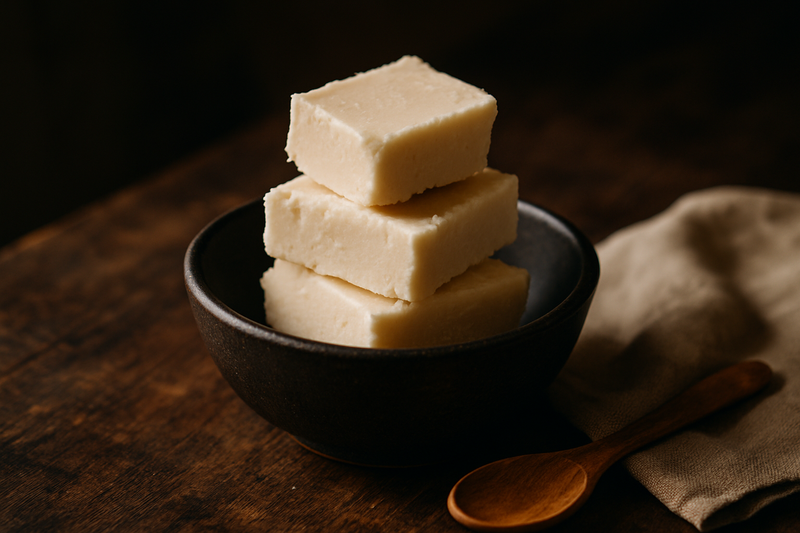
Creamed Coconut · Photograph
Discover the creamed coconut health benefits and side effects, including nutrition facts, saturated fat content, how it compares to coconut cream, and how to use it safely in curries and dairy-free desserts.
Key Nutrients
% Daily Value based on 2,000 cal diet
Key active compounds in creamed coconut
- Medium-chain triglycerides (MCTs): Fats made up of medium-length fatty acid chains (8–12 carbons). They are absorbed more quickly than long-chain fats and are transported directly to the liver, where they can be converted into energy or ketones (molecules the brain can use for fuel). Coconut fat is one of the richest dietary sources.
- Lauric acid: A 12-carbon saturated fatty acid that makes up roughly half of coconut fat. It raises both LDL cholesterol (linked to heart disease risk) and HDL cholesterol (often considered protective) in human studies. Its net effect on cardiovascular health is debated but generally viewed as less favorable than unsaturated fats.
- Caprylic acid (C8) and capric acid (C10): Shorter MCTs present in smaller quantities. These are the forms studied in purified MCT-oil research, though creamed coconut delivers them in culinary rather than therapeutic doses.
- Phenolic compounds: Plant antioxidant molecules found in coconut meat. They may help neutralize free radicals in laboratory models, but their practical contribution from typical culinary amounts of creamed coconut has not been quantified in human trials.
- Dietary fiber: Retained from the whole coconut meat. Supports bowel regularity and may contribute to satiety, though the absolute amount per serving is modest.
Prep and pairing ideas
Melting into curries: Cut or grate 20–25 g of the block into a simmering curry base in the last 5 minutes of cooking. It thickens the sauce and adds a deep coconut flavour without the wateriness of canned milk. Stir well to prevent graininess.
Blending into desserts: Grate creamed coconut into bliss balls, raw cheesecake bases, or chocolate bark. It firms up in the refrigerator, providing structure without dairy. Start with 1–2 tablespoons per batch of 12 balls to keep saturated fat per piece manageable.
DIY coconut cream: Dissolve 100 g of creamed coconut block in 100 ml of hot water, blend briefly, and you have a rough equivalent of canned coconut cream — useful when you have the block but no tins. Adjust the ratio for a thinner coconut milk.
Common pairings
- Creamed coconut + turmeric + black pepper: A classic trio for golden curry bases. The fat in the block helps dissolve turmeric's fat-soluble curcuminoids (active compounds), and the pepper contains piperine, which further improves their absorption.
- Creamed coconut + dark chocolate (70%+) + sea salt: Melt together as a raw truffle or bark coating. The combination balances coconut's sweetness with bitter cocoa flavour; the salt amplifies both. Keep portions small — this is a treat food.
- Creamed coconut + lime juice + fresh chilli: Whisked into a warm sauce or dressing for noodles or slaw. The acidity of lime cuts through the fat richness, and the chilli provides capsaicin (the active compound responsible for heat), making a vibrant, dairy-free dressing.
Myths vs. facts
Myth 1: "Creamed coconut is the same as coconut cream." Fact: They are completely different products. Creamed coconut is a solid block of ground dried coconut meat containing fat and fiber. Coconut cream is a liquid extracted from fresh grated coconut mixed with water, sold in tins. They behave differently in cooking and have different nutritional profiles.
Myth 2: "Because coconut fat raises HDL cholesterol, it's heart-healthy." Fact: Coconut fat does raise HDL ("good") cholesterol, but it also raises LDL ("bad") cholesterol and total cholesterol significantly. Human trials and systematic reviews conclude that the net effect on cardiometabolic risk is adverse compared with unsaturated fats. HDL alone is not a reliable marker of reduced heart disease risk.
Myth 3: "Creamed coconut is a rich MCT source that boosts metabolism the way MCT oil does." Fact: Creamed coconut does contain MCTs, but in culinary doses — typically a few grams per serving. The metabolic effects studied in clinical trials use purified MCT oil at 15–30 g per day in controlled settings. A small knob of creamed coconut melted into a curry does not deliver a therapeutic MCT dose.
Bottom line
Creamed coconut is a genuinely useful whole-food ingredient for anyone cooking dairy-free or plant-based food. Its preservation of fiber and minerals sets it apart from refined coconut oil, and in small amounts it enriches curries, desserts, and sauces in a way few other ingredients can match.
The honest trade-off is its saturated fat density. Research on coconut fats is consistent: regular high intake raises LDL cholesterol, and that matters for cardiovascular health. Used as a culinary seasoning — 15–28 g melted into a pot that serves four — the risk is well managed for most healthy adults. Used generously every day, it deserves the same scrutiny as any other high-saturated-fat food.
If you are eating a broadly varied, plant-rich diet with plenty of whole grains, legumes, vegetables, and unsaturated fats (olive oil, avocado, nuts, seeds), a modest amount of creamed coconut fits the picture comfortably. If your diet is already heavy in saturated fat, or if you have cardiovascular risk factors, it warrants more care and a conversation with your healthcare provider.
Explore more about how dietary fats fit your overall health picture at /goals.
How Creamed Coconut Compares
| Compared with | What's different |
|---|---|
| Creamed Coconut vs. Coconut Cream | A solid block of ground coconut meat; coconut cream is a liquid extracted from the pulp. |
| Creamed Coconut vs. Coconut Oil | Much higher in fiber and minerals because it contains the whole, dehydrated coconut flesh. |
| Creamed Coconut vs. Cream of Coconut | Unsweetened and highly concentrated; cream of coconut is a syrupy liquid used for cocktails. |
Health Benefits
Things to Know
Saturated fat budget: At ~17 g saturated fat per 28 g serving, a single generous use of the block can exceed the American Heart Association's daily limit of ~13 g. Keep portions small if you use it regularly.
Cholesterol and heart disease: People with elevated LDL cholesterol, existing cardiovascular disease, or a strong family history of heart disease should limit high-saturated-fat foods including creamed coconut and discuss their fat intake with a clinician.
Type 2 diabetes and metabolic syndrome: The calorie density may hinder weight management and glycemic control if portions are large or frequency is high.
Gallbladder and pancreatic conditions: Very high-fat foods can trigger or worsen symptoms of gallstones, pancreatitis, or fat malabsorption disorders.
Lipid-lowering medications (statins, fibrates): High coconut fat intake can raise LDL and may work against the intended effect of these drugs if saturated fat goals are consistently exceeded.
Antidiabetic medications: Factor the calorie density into meal planning to avoid energy surplus that could impair glucose control.
Weight-loss programs or GLP-1 medications: Treat as a discretionary, high-calorie ingredient; frequent use may slow progress.
Coconut allergy / tree nut sensitivity: Avoid all coconut-based products.
Pregnancy: No specific ban, but general advice to moderate saturated fat still applies. Speak with your midwife or dietitian.
Children: Occasional small amounts in family meals are unlikely to cause harm in an otherwise varied diet; regular heavy use is not recommended.
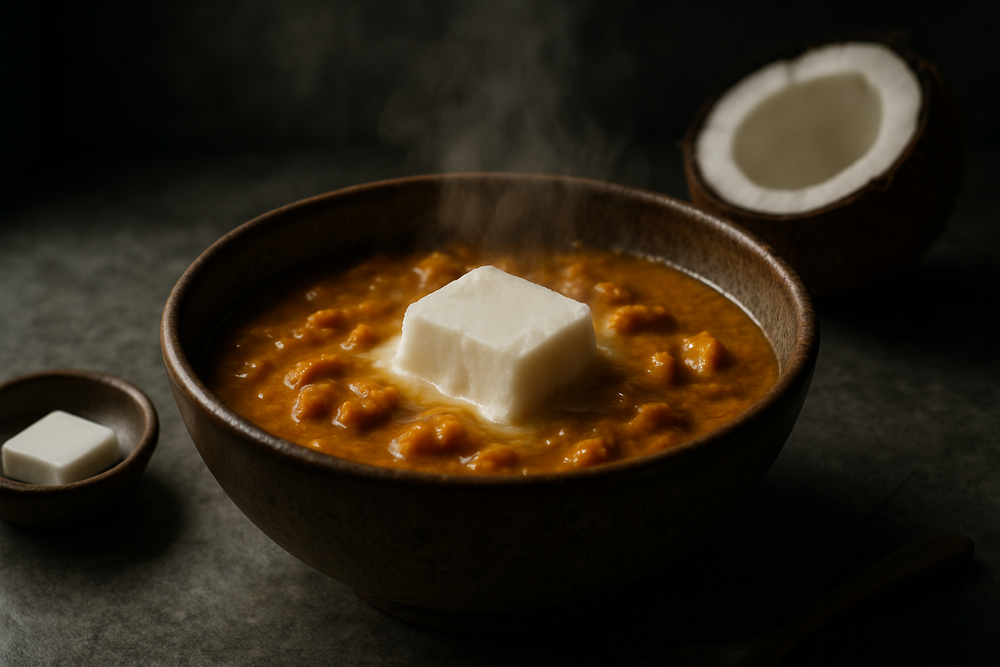
Prep Ideas
- — **Creamed coconut + turmeric + black pepper:** A classic trio for golden curry bases. The fat in the block helps dissolve turmeric's fat-soluble curcuminoids (active compounds), and the pepper contains piperine, which further improves their absorption.
- — **Creamed coconut + dark chocolate (70%+) + sea salt:** Melt together as a raw truffle or bark coating. The combination balances coconut's sweetness with bitter cocoa flavour; the salt amplifies both. Keep portions small — this is a treat food.
- — **Creamed coconut + lime juice + fresh chilli:** Whisked into a warm sauce or dressing for noodles or slaw. The acidity of lime cuts through the fat richness, and the chilli provides capsaicin (the active compound responsible for heat), making a vibrant, dairy-free dressing.
Glossary
Shop This Ingredient
Stock your pantry with quality creamed coconut.
Buy on AmazonAs an Amazon Associate, Plantopedia earns from qualifying purchases. This costs you nothing extra and helps us keep the encyclopedia free.
Frequently Asked Questions
Heart and circulation This is where the evidence is clearest and most cautionary. Human clinical trials on coconut fats — primarily coconut oil and coconut cream, whose fatty acid profiles are very similar to creamed coconut — consistently show that high intake raises both total cholesterol and LDL cholesterol compared with polyunsaturated or monounsaturated oils. A 2021 systematic review published in Circulation concluded that coconut oil has an adverse effect on lipid parameters linked to cardiometabolic health. HDL cholesterol (often called "good" cholesterol) also rises with coconut fat intake, which some proponents highlight. However, mainstream guidelines from the American Heart Association emphasize that the LDL and total cholesterol increases are the dominant concern, and they specifically advise replacing saturated fats like coconut oil with unsaturated alternatives to reduce cardiovascular risk. Because creamed coconut is concentrated whole coconut fat, its saturated fat profile mirrors coconut oil. Small culinary amounts are unlikely to dramatically shift your risk, but regular generous portions could meaningfully raise LDL over time, particularly if other saturated fats are also present in the diet. Digestive health and microbiome Creamed coconut retains the dietary fiber from dried coconut meat, unlike refined coconut oil. Fiber is consistently associated with better bowel regularity, slower gastric emptying (meaning you feel full longer), and a more diverse gut microbiome in nutrition research. In that sense, creamed coconut has a mild digestive advantage over its refined-fat counterparts. That said, the fiber content per typical culinary serving is modest, and most of the gut-health work is being done by the fat rather than by coconut-specific compounds. The very high fat load can also cause gastrointestinal discomfort, loose stools, or nausea in people not accustomed to high-fat meals, and it may aggravate symptoms in anyone with gallbladder disease or fat malabsorption. Blood sugar and metabolism The relatively low net carbohydrate content and the presence of fat and fiber in creamed coconut mean it is unlikely to spike blood sugar the way a sugary ingredient would. When it replaces refined carbohydrates or sweetened dairy in a recipe, the glycemic (blood sugar) effect of the overall dish may be blunted. However, this is a general effect of fat and fiber, not something unique to coconut. More importantly, the extreme calorie density of creamed coconut means that frequent or large use could contribute to excess energy intake, which over time may worsen insulin resistance and weight management — particularly for people with prediabetes or type 2 diabetes. Evidence is mixed and no robust human trials have directly tested creamed coconut on glycemic control. Inflammation and recovery In laboratory and animal studies, coconut phenolic compounds and certain fatty acids show antioxidant and anti-inflammatory activity. These findings are preliminary and have not been validated in long-term human trials with creamed coconut. Human studies on coconut fats have mostly measured lipid profiles rather than inflammatory markers. There is also a theoretical concern that habitual high intake of saturated fat can indirectly promote pro-inflammatory states via adverse lipid changes and cardiovascular risk accumulation, even if isolated coconut compounds look anti-inflammatory in a test tube.
Creamed coconut block vs. coconut cream vs. coconut milk — which should you choose? These three products are genuinely different, and understanding the distinction will help you buy and use them correctly. | Product | What it is | Fat content | Fiber | Best use | | --- | --- | --- | --- | --- | | Creamed coconut block | Ground dried whole coconut meat | Very high (69 g/100 g) | Yes | Enriching curries, desserts, DIY cream | | Coconut cream (canned) | First press of grated coconut in water | High (24 g/100 g) | Minimal | Creamy sauces, soups, whipped toppings | | Coconut milk (canned) | Diluted coconut cream | Moderate (17 g/100 g) | Minimal | Curries, rice dishes, smoothies | | Coconut oil | Extracted and refined coconut fat | Very high (100 g/100 g) | None | High-heat cooking, baking | For a whole-food approach, the block edges out refined coconut oil because it preserves fiber and minerals. For convenience and consistent results in creamy sauces, canned coconut cream is often easier to control. The block is harder to disperse evenly if not properly melted first. Melting tip: The creamed coconut block can become grainy or separate if melted unevenly. The most reliable method is to stand the sealed packet in a bowl of hot water for 10–15 minutes, then knead or shake before opening. Alternatively, grate the block directly into hot liquid in the pan — the heat from the dish melts it gradually and distributes it evenly.
There is no established therapeutic dose for creamed coconut — it is a culinary ingredient, not a supplement. Most coconut fat research uses around 20–30 g of coconut oil per day in controlled trials, which gives a rough reference point. Practical guidance: Small culinary use (15–28 g per dish, shared across 2–4 servings): This is the sweet spot for most people. Your individual portion lands at around 4–7 g of saturated fat — meaningful but manageable within a varied diet. Moderate use (28–50 g per dish): Reasonable occasionally, but keep the rest of the day's saturated fat low — avoid butter, full-fat dairy, and other tropical oils on the same day. Large or daily heavy use (50 g+ per day): Not advisable for most people, particularly those with cardiovascular risk factors or weight management goals. Start low: If creamed coconut is new to your diet, begin with a small amount (one tablespoon / 15 g) to check for digestive tolerance before scaling up.
Quick Answers
Common questions, answered in a line.
Creamed coconut is a solid block of ground, dried coconut meat, whereas coconut cream is a liquid extracted from fresh coconut mixed with water. Because the block includes the whole meat, it contains dietary fiber that is absent in the liquid canned version.
Creamed coconut contains medium-chain triglycerides (MCTs) and lauric acid, which can be converted into energy or ketones for the brain. However, these are present in culinary amounts rather than the high therapeutic doses used in clinical MCT oil research.
You can make a coconut cream substitute by dissolving 100 grams of creamed coconut block into 100 milliliters of hot water and blending briefly. This creates a thick liquid suitable for recipes when you do not have canned coconut cream available.
Creamed coconut contains phenolic compounds, which are plant antioxidant molecules found in coconut meat. While these help neutralize free radicals in laboratory models, their specific impact on human health from typical cooking amounts has not yet been quantified.
A 28-gram serving of creamed coconut contains approximately 17 grams of saturated fat. This amount can exceed the American Heart Association's recommended daily limit of about 13 grams, so it is important to keep portions small.
Creamed coconut contains lauric acid, which raises both LDL (bad) cholesterol and HDL (good) cholesterol. Systematic reviews suggest that its net effect on heart health is less favorable than unsaturated fats, as it significantly raises total cholesterol levels.
To use creamed coconut in a curry, grate or cut 20–25 grams of the block and stir it into the simmering base during the last five minutes of cooking. This thickens the sauce and adds deep flavor without the wateriness found in canned coconut milk.
For Readers in the USA
Local context — sourcing, seasonality, and regional notes.
In the US, creamed coconut is most commonly found in the international or baking aisles of major grocery chains like Kroger, Whole Foods, and Wegmans, or at specialty Caribbean and Asian markets. You will typically find it sold as a shelf-stable, 7-ounce (200g) solid block wrapped in plastic inside a small cardboard box.
While coconuts are commercially grown in Florida, Hawaii, and Puerto Rico, the creamed coconut blocks sold in the US are almost exclusively imported from tropical regions like Southeast Asia or the Caribbean. These products are available year-round because the processing of dried coconut meat allows for a long shelf life regardless of local harvest seasons.
Look for the USDA Organic seal to ensure the coconut was grown without synthetic pesticides and the "Non-GMO Project Verified" label if you wish to avoid genetically engineered inputs. Since creamed coconut is a single-ingredient product, it generally falls under FDA labeling requirements for "saturated fat" content, which must be clearly listed on the Nutrition Facts panel.
In US culinary contexts, creamed coconut is a staple in Caribbean-American communities for making "rice and peas" and in Southeast Asian-American kitchens for thickening authentic laksa or rendang. It has also gained mainstream popularity in the US "Paleo" and "Keto" communities as a dairy-free, shelf-stable alternative to heavy cream or butter.
AI Clinical Review
- Clearly explains what creamed coconut is (ground whole coconut meat) and distinguishes it from coconut oil, coconut cream, and coconut milk.
- Accurately highlights its very high saturated fat and calorie density, using practical serving sizes and familiar guidelines (e.g., AHA limits and FDA Daily Value).
- Summarizes the clinical evidence well: coconut fats tend to raise both LDL (“bad”) and HDL (“good”) cholesterol, with LDL increases being the key cardiovascular concern compared with unsaturated oils.
- Offers sensible culinary use guidance (small amounts, shared across a dish) and positions it as a flavorful, dairy‑free ingredient rather than a health supplement.
- Direct human studies on creamed coconut blocks are limited; most findings come from coconut oil or cream, so conclusions are inferred rather than proven for this exact form.
- Antioxidant/anti‑inflammatory claims rely largely on lab or animal data; benefits at typical culinary doses in humans remain uncertain.
- Effects on blood sugar, weight management, and the gut microbiome with usual household amounts have not been rigorously quantified and likely vary by individual.
- The “MCT” narrative is nuanced: lauric acid dominates coconut fat and may not act like the shorter MCTs used in studies of purified MCT oil.
- Portion guidance and tolerance: start around 1 tablespoon (~15 g); when used, 15–28 g spread across 2–4 servings keeps per‑person saturated fat modest and may reduce GI upset.
- Who should be cautious: people with high LDL or cardiovascular disease, diabetes/prediabetes, those on statins or GLP‑1 medications, and anyone with gallbladder or pancreatic conditions—discuss regular use with a clinician.
- Allergy and labeling: coconut is a major allergen for U.S. labeling; avoid if allergic. Cross‑reactivity with tree nuts is uncommon but possible.
- Form matters for nutrition: the block retains fiber/minerals; canned cream/milk are diluted emulsions; coconut oil is fiber‑free and nearly 100% saturated fat—choose based on recipe needs and your saturated‑fat budget.
Very high in saturated fat; melt before use. Distinct from coconut cream and butter.
References
- USDA FoodData Central — Nuts, coconut meat, dried (desiccated), creamed (FDC ID 168585): nutritional data for fat, fiber, manganese, copper, and energy content (fdc.nal.usda.gov)
- Nutri-DB USDA-derived nutrient profile for creamed coconut — extended micronutrient data including manganese and copper per serving (nutri-db.com)
- Batchbase USDA Foods — coconut cream and related coconut products, nutrient comparison (batchbase.com.au)
- Science Insights — "Is Coconut Cream Healthy? Benefits, Fats and Risks" — overview of saturated fat content and American Heart Association recommendations for coconut products (scienceinsights.org)
- Healthline — "What Is Coconut Cream? Benefits, Uses, Downsides" — layperson-facing explainer on coconut cream nutrition and culinary uses (healthline.com)
- PubMed — Neelakantan N et al. (2020), systematic review and meta-analysis: "The Effect of Coconut Oil Consumption on Cardiovascular Risk Factors" — shows consistent LDL and total cholesterol rises with coconut oil vs. unsaturated oils in human trials (pubmed.ncbi.nlm.nih.gov)
- Cambridge University Press / British Journal of Nutrition — "The role of dietary coconut for the prevention and treatment of Alzheimer's disease: Potential mechanisms of action" — reviews MCT evidence and cognitive outcomes (cambridge.org)
- FatSecret / USDA — Coconut milk or cream (liquid, canned) — comparative nutrition facts for coconut cream serving sizes (androidembeddedregional.fatsecret.com?portionid=35348&portionamount=1.000)
- Recipal / USDA — Nuts, coconut cream, raw (liquid expressed from grated meat) — nutrient data used for product comparison (recipal.com)
Know Your Numbers
Eating healthy is a start. Now get to know your biomarkers.
Food changes bloodwork — inflammation, lipids, blood sugar and nutrient status all respond to what you eat. 59 markers from $59.
- Results in 7–10 days at 2,000+ Quest sites
- Licensed provider reviews every result
- One flat price, no membership, HSA/FSA eligible
Educational information only, not medical advice. Panels are ordered and reviewed through our licensed partner; Plantopedia may earn a commission.