Cream of Tartar — health benefits and uses
A traditional baking acid derived from winemaking.
The Short Answer
Cream of tartar is a powdery byproduct of winemaking used to stabilize egg whites or aquafaba and prevent sugar crystallization. It acts as a dry acid that, when paired with baking soda, creates the chemical reaction necessary for dough to rise.
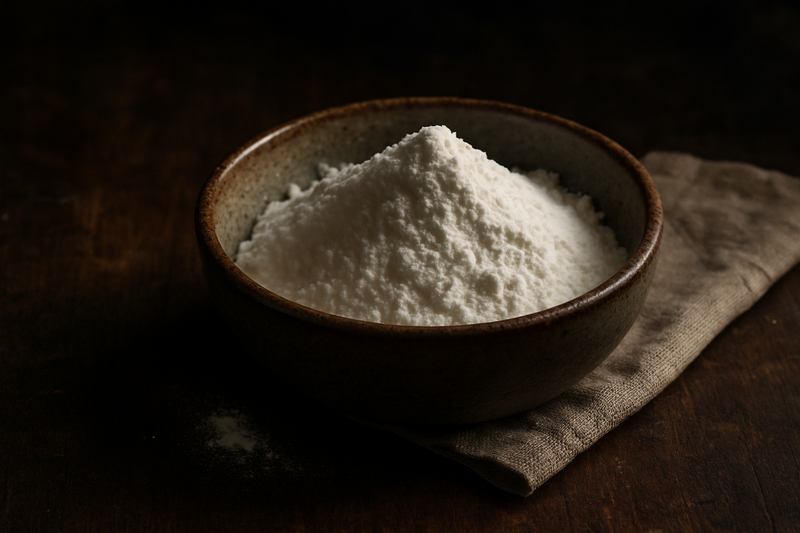
Cream of Tartar · Photograph
Explore the real cream of tartar health benefits, uses, and side effects. Learn how this grape-derived powder supports vegan baking, contributes potassium, and why large doses can be dangerous — especially for people with kidney disease or on certain medications.
Key Nutrients
% Daily Value based on 2,000 cal diet
Key active compounds
- Potassium bitartrate (the whole molecule): The salt form of tartaric acid bound to potassium. Acts as an acidulant (a substance that makes something more acidic), a chelating agent (one that binds to metal ions), and a foam stabilizer in food systems.
- Tartaric acid: An organic dicarboxylic acid (a carbon-based molecule with two acid groups) found naturally and abundantly in grapes. It is responsible for cream of tartar's sour taste and its reactivity with baking soda to produce carbon dioxide gas for leavening. Tartaric acid has demonstrated antioxidant activity in grape research, but cream of tartar is used at amounts too small for this to be practically significant in food.
- Potassium: An essential mineral electrolyte (a mineral that carries an electrical charge in body fluids) that supports nerve conduction, muscle contraction, and blood pressure regulation. At roughly 20% potassium by weight, cream of tartar is one of the most potassium-dense ingredients in the spice rack — for better and for worse.
Prep and pairing ideas
Cream of tartar shines in a handful of specific culinary applications where its acidity genuinely matters:
Common pairings
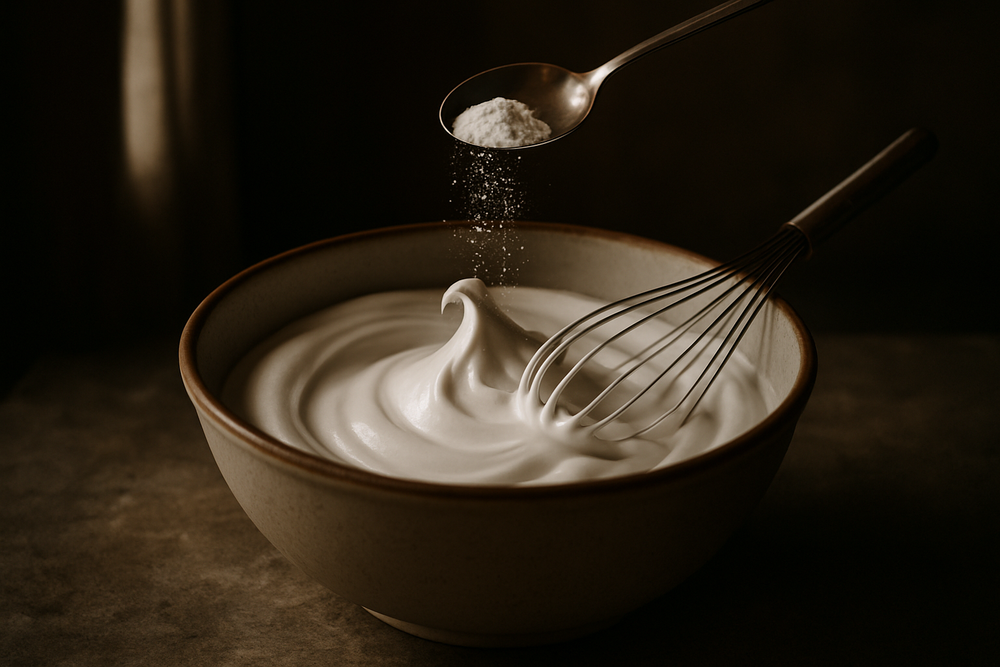
- Cream of tartar + aquafaba (chickpea liquid): Add ⅛ teaspoon of cream of tartar per 3 tablespoons of aquafaba before whipping. The acid lowers the pH of the liquid, which tightens the protein bonds and helps the foam achieve stiff, glossy peaks suitable for plant-based meringues, pavlova, and mousse. Without it, aquafaba foam is noticeably less stable.
- Cream of tartar + baking soda in baked goods: The classic leavening pairing. When cream of tartar meets baking soda (sodium bicarbonate) in a wet batter, they react immediately to produce carbon dioxide bubbles, giving cakes, muffins, and pancakes lift. A common starting ratio is ½ teaspoon cream of tartar to ¼ teaspoon baking soda to replace 1 teaspoon of commercial baking powder. This gives you a starch-free, single-ingredient leavening option.
- Cream of tartar + sugar syrup for candy and frosting: Stirring a small pinch into boiling sugar syrup prevents the sugar from recrystallizing, keeping caramels, toffees, and glossy frostings smooth rather than grainy. The acid interferes with the sugar crystal formation process — a useful trick for plant-based confectionery.
General prep tips:
- Measure precisely — cream of tartar is potent and a little goes a long way. Too much can leave a metallic or sour taste in baked goods.
- Sift it with dry ingredients to ensure even distribution and avoid clumps that can cause uneven leavening.
- For aquafaba, add cream of tartar before you start whipping, not midway through, for the best results.
Bottom line
Cream of tartar is a genuinely useful, whole-food-derived kitchen acid with one standout nutritional trait: a high potassium density for its tiny serving size. In the amounts used in recipes, it is safe for most healthy people, contributes a modest potassium bump, and performs specific culinary jobs — stabilizing aquafaba, activating baking soda, and preventing sugar crystallization — that few other ingredients do as cleanly.
Where things go wrong is when people cross the line from ingredient to supplement. The evidence for cream of tartar as a constipation remedy, detox agent, or blood pressure tool is essentially absent, while the documented risks of large oral doses are real and serious. If you are a plant-based baker looking for a WFPB-friendly leavening acid and aquafaba stabilizer, cream of tartar earns a place in your spice drawer. If you are hoping to take it by the spoonful for health reasons, the science says to look elsewhere.
For personalized guidance on potassium intake, kidney health, or digestive support, consult a registered dietitian or your healthcare provider.
How Cream of Tartar Compares
| Compared with | What's different |
|---|---|
| Cream of Tartar vs. Baking powder | A complete leavening agent containing cream of tartar plus a starch and baking soda. |
| Cream of Tartar vs. Baking soda | A base that requires an acid like cream of tartar to react and create lift in baking. |
| Cream of Tartar vs. Lemon juice | A liquid acid that provides similar pH lowering but can change the texture of foams. |
Health Benefits
Things to Know
Kidney disease: This is the most important caution. If you have chronic kidney disease (CKD) or any condition that impairs your kidneys' ability to excrete potassium, even moderate amounts of cream of tartar could push potassium to dangerous levels. Discuss potassium-containing ingredients with your nephrologist (kidney specialist) or dietitian.
Potassium-sparing diuretics: Medications like spironolactone, amiloride, and triamterene reduce how much potassium your kidneys flush out. Adding extra dietary potassium — especially if you were consuming cream of tartar as a remedy — raises hyperkalemia risk significantly.
ACE inhibitors and ARBs: Common blood pressure drugs including lisinopril, enalapril, losartan, and valsartan can raise serum (blood) potassium. Culinary amounts of cream of tartar are unlikely to cause problems, but large doses would add to this risk.
NSAIDs in high doses: Certain non-steroidal anti-inflammatory drugs (e.g., high-dose ibuprofen, indomethacin) can impair renal potassium excretion and compound the risk.
Potassium supplements and salt substitutes: If you already use a potassium-based salt substitute or potassium supplements, adding cream of tartar in non-culinary amounts could push total potassium intake too high.
Children: Spoonfuls of cream of tartar as a home remedy could easily exceed safe potassium intakes for children. Keep it as a kitchen ingredient, not a supplement.
Pregnancy and breastfeeding: Non-culinary, medicinal-style dosing has not been studied in pregnancy and is not recommended.
Never use it as a home remedy for constipation: The documented hyperkalemia case report involved someone doing exactly this. There are safer, evidence-based options for constipation relief.
GRAS status applies to culinary use: The "Generally Recognized as Safe" designation in the US covers cream of tartar as a food ingredient at recipe-appropriate amounts — it does not endorse supplemental dosing.
Best Forms
Baking powder is a pre-mixed blend of cream of tartar (or another acid) with baking soda and a starch filler. If you want control over the acid-to-base ratio in a recipe — or want to avoid added starches — buy pure cream of tartar and combine it yourself with baking soda (typically ¼ teaspoon baking soda per ½ teaspoon cream of tartar as a rough baking powder substitute).
The ingredient list should read "potassium bitartrate" or "cream of tartar" with nothing else. Some products labeled "tartar sauce" or "tartar cream" are completely different condiments — double-check.
Cream of tartar is used in small amounts, so a 2–4 oz jar will last most home bakers a long time. Buy smaller rather than larger to ensure freshness.
Keep in a tightly sealed container away from moisture and heat. Properly stored, it lasts at least 3–4 years, though it does not technically expire — just test it by checking it still produces fizz when mixed with warm water and baking soda.
Certified organic cream of tartar is available and is produced from organic wine operations, which may matter if you prefer to minimize synthetic agricultural inputs throughout your pantry.
Prep Ideas
- — **Cream of tartar + aquafaba (chickpea liquid):** Add ⅛ teaspoon of cream of tartar per 3 tablespoons of aquafaba before whipping. The acid lowers the pH of the liquid, which tightens the protein bonds and helps the foam achieve stiff, glossy peaks suitable for plant-based meringues, pavlova, and mousse. Without it, aquafaba foam is noticeably less stable.
- — **Cream of tartar + baking soda in baked goods:** The classic leavening pairing. When cream of tartar meets baking soda (sodium bicarbonate) in a wet batter, they react immediately to produce carbon dioxide bubbles, giving cakes, muffins, and pancakes lift. A common starting ratio is ½ teaspoon cream of tartar to ¼ teaspoon baking soda to replace 1 teaspoon of commercial baking powder. This gives you a starch-free, single-ingredient leavening option.
- — **Cream of tartar + sugar syrup for candy and frosting:** Stirring a small pinch into boiling sugar syrup prevents the sugar from recrystallizing, keeping caramels, toffees, and glossy frostings smooth rather than grainy. The acid interferes with the sugar crystal formation process — a useful trick for plant-based confectionery.
- — Measure precisely — cream of tartar is potent and a little goes a long way. Too much can leave a metallic or sour taste in baked goods.
- — Sift it with dry ingredients to ensure even distribution and avoid clumps that can cause uneven leavening.
- — For aquafaba, add cream of tartar before you start whipping, not midway through, for the best results.
Glossary
Shop This Ingredient
Stock your pantry with quality cream of tartar.
Buy on AmazonAs an Amazon Associate, Plantopedia earns from qualifying purchases. This costs you nothing extra and helps us keep the encyclopedia free.
Frequently Asked Questions
Heart and circulation Potassium is well established in nutrition science as a mineral that helps counterbalance sodium's blood-pressure-raising effect by supporting healthy kidney function and blood vessel relaxation. Because cream of tartar is roughly 20% potassium by weight, some articles suggest it could support heart health. The reality is more nuanced. No clinical trials have tested cream of tartar specifically for blood pressure, cholesterol, or any cardiovascular outcome. The potassium contribution from a teaspoon used in a batch of cookies is real but modest — and it arrives in the context of an entire recipe, not as a direct supplement. If potassium intake is your goal, whole foods like lentils, sweet potato, and leafy greens are better studied and deliver the mineral alongside fiber and other beneficial nutrients. Cream of tartar should not be treated as a cardiovascular supplement. Digestive health and microbiome This is where cream of tartar's reputation as a home remedy is most widespread — and most problematic. Potassium bitartrate has been studied in pharmaceutical rectal suppository preparations (combined with sodium bicarbonate) for chronic constipation, and those formulations have shown benefit in clinical settings. However, those are carefully dosed, medically supervised treatments delivered rectally, not spoonfuls of kitchen powder taken by mouth. Case reports in medical literature describe severe, life-threatening hyperkalemia (dangerously high blood potassium) in people who ingested large amounts of cream of tartar orally as a constipation remedy — in one documented case, approximately six tablespoons (about 84 g). At that dose, potassium delivery is massive and the kidneys can be overwhelmed. There are no quality human trials supporting oral cream of tartar as a digestive supplement, and reputable health sources explicitly caution against it. In normal cooking amounts, cream of tartar's acidic nature may have a minor role in the overall acid balance of a dish, but there is no meaningful evidence it directly benefits the gut microbiome (the community of microorganisms living in your digestive tract). Blood sugar and metabolism No human clinical trials or observational studies have evaluated cream of tartar for blood sugar control, insulin sensitivity, or diabetes risk. Claims circulating online that it helps with blood sugar, weight loss, or "detox" are anecdotal. There are no known mechanisms specific to potassium bitartrate that would explain a glucose-lowering effect, and credible health writers consistently note the absence of this evidence. Hormones and cycle health Cream of tartar's nutritional profile — essentially potassium plus trace minerals — does not include known hormone-modulating compounds. No human studies assess it for hormonal balance, reproductive health, or endocrine outcomes. Popular claims that it aids smoking cessation by "clearing nicotine" or balances hormones are not backed by clinical research. Inflammation and recovery No human trials have measured inflammatory markers — such as C-reactive protein (CRP, a blood marker of inflammation) or cytokines (immune signaling proteins) — in response to cream of tartar intake. The existing literature focuses on food science and safety. Any suggestion that cream of tartar reduces inflammation is speculative and not evidence-based.
Cream of tartar comes in essentially one culinary form: a fine, white, odorless crystalline powder sold in small jars or packets in the baking aisle. There are no meaningful quality differences between major brands for culinary purposes. Here is how to choose and use it well. Buying guide Pure potassium bitartrate vs. baking powder: Baking powder is a pre-mixed blend of cream of tartar (or another acid) with baking soda and a starch filler. If you want control over the acid-to-base ratio in a recipe — or want to avoid added starches — buy pure cream of tartar and combine it yourself with baking soda (typically ¼ teaspoon baking soda per ½ teaspoon cream of tartar as a rough baking powder substitute). Label check: The ingredient list should read "potassium bitartrate" or "cream of tartar" with nothing else. Some products labeled "tartar sauce" or "tartar cream" are completely different condiments — double-check. Container size: Cream of tartar is used in small amounts, so a 2–4 oz jar will last most home bakers a long time. Buy smaller rather than larger to ensure freshness. Storage: Keep in a tightly sealed container away from moisture and heat. Properly stored, it lasts at least 3–4 years, though it does not technically expire — just test it by checking it still produces fizz when mixed with warm water and baking soda. Organic options: Certified organic cream of tartar is available and is produced from organic wine operations, which may matter if you prefer to minimize synthetic agricultural inputs throughout your pantry.
There is no established Recommended Dietary Allowance (RDA) or official daily limit for cream of tartar as a food ingredient. The guidance that exists is practical and context-dependent: In cooking (recommended approach): Leavening: Typical recipe amounts range from ⅛ teaspoon to 1 teaspoon per whole recipe — often divided across multiple servings. This is the safest and best-studied context. Aquafaba stabilizer: ⅛ to ¼ teaspoon per cup of aquafaba. Again, spread across a whole batch. At these culinary amounts, you are likely consuming well under ½ teaspoon per serving, which delivers under 250 mg of potassium — a modest, normal part of a balanced diet for healthy adults. What to avoid: Tablespoon-level oral doses as a remedy: Completely unsupported by clinical evidence and documented as dangerous. Six tablespoons in a single sitting caused life-threatening hyperkalemia in a published case report. Daily "supplement" doses: No evidence supports this, and the potassium accumulation risk over time is real for susceptible individuals. Practical guideline: Use cream of tartar as the recipe calls for — typically ¼ to 1 teaspoon total per recipe batch, not per person, not per day. If you are considering using it therapeutically for any purpose, speak with a healthcare provider first. For most healthy adults eating it as a kitchen ingredient, there is nothing to worry about. For the caution groups listed above, even culinary use may warrant a conversation with a doctor or dietitian.
Quick Answers
Common questions, answered in a line.
Cream of tartar is a white, acidic powder known chemically as potassium bitartrate, which is a byproduct of grape fermentation. It acts as an acidulant and stabilizer in cooking, commonly used to give lift to baked goods and volume to whipped foams.
Adding cream of tartar to aquafaba lowers its pH, which tightens protein bonds and creates the stiff, glossy peaks needed for vegan meringues and mousses. Without this acidic stabilizer, aquafaba foam is significantly less stable and prone to collapsing.
Cream of tartar is a highly concentrated source of potassium, an essential electrolyte that supports muscle contraction, nerve conduction, and blood pressure regulation. It consists of roughly 20% potassium by weight, making it one of the most mineral-dense ingredients in a typical spice rack.
You can create a starch-free baking powder by mixing 1/2 teaspoon of cream of tartar with 1/4 teaspoon of baking soda. When these two ingredients meet moisture in a batter, they react to produce carbon dioxide bubbles that make cakes and muffins rise.
In candy making, a pinch of cream of tartar prevents sugar syrup from recrystallizing, ensuring that caramels and frostings remain smooth rather than grainy. The acid interferes with the formation of sugar crystals during the boiling process.
People with chronic kidney disease (CKD) should avoid cream of tartar because their kidneys may be unable to flush out the high levels of potassium it contains. Consuming it can lead to hyperkalemia, a dangerous condition where blood potassium levels become too high.
No, you should never use cream of tartar as a home remedy for constipation due to the risk of severe potassium toxicity. There is no scientific evidence supporting its use as a laxative or detox agent, and documented cases show large doses can be life-threatening.
For Readers in the USA
Local context — sourcing, seasonality, and regional notes.
You can find cream of tartar in the spice aisle of major American grocery chains like Walmart, Kroger, Safeway, and Whole Foods Market. It is typically sold in small plastic or glass tins alongside common baking staples like cinnamon and baking soda.
While not a crop itself, cream of tartar is a byproduct of the US wine industry, primarily sourced from grapes grown in California's Napa and Sonoma valleys. Because it is a shelf-stable powder harvested during the winemaking process, it is available year-round across all 50 states.
Yes, the US Food and Drug Administration (FDA) classifies cream of tartar (potassium bitartrate) as "Generally Recognized as Safe" (GRAS) for use as a direct food ingredient. It must meet specific purity standards outlined in the Food Chemicals Codex to be sold for human consumption.
For a product to be labeled as "Organic Cream of Tartar" in the US, it must be processed from certified organic grapes in accordance with USDA National Organic Program standards. While standard cream of tartar is a natural byproduct, organic versions ensure no synthetic pesticides were used during the grape cultivation.
AI Clinical Review
- Clearly identifies cream of tartar as potassium bitartrate, a grape‑derived culinary acid that is Generally Recognized as Safe (GRAS) in normal recipe amounts.
- Accurately notes its best‑supported kitchen roles: stabilizing aquafaba/egg‑white foams and activating baking soda for leavening.
- Provides realistic nutrition framing: meaningful for potassium per teaspoon (~495 mg) but otherwise not a notable source of nutrients at typical serving sizes.
- Appropriately cautions against using tablespoon‑level doses as a “remedy,” highlighting documented cases of dangerous high potassium (hyperkalemia).
- No clinical trials evaluate oral cream of tartar for blood pressure, constipation, “detox,” glycemic control, or weight loss; any health claims beyond culinary utility remain untested.
- Data on microbiome or anti‑inflammatory effects are lacking; proposed benefits here are speculative.
- Constipation data relate to specific rectal suppository preparations (with sodium bicarbonate), not to ingesting the kitchen powder—these are not interchangeable.
- Stick to culinary amounts: typically 1/8–1 teaspoon per recipe batch (often divided across multiple servings). Avoid “supplement” dosing.
- High‑risk groups should consult a clinician before regular use: chronic kidney disease, Addison’s disease (low aldosterone), or anyone taking potassium‑raising drugs (e.g., ACE inhibitors, ARBs, potassium‑sparing diuretics) or using potassium‑based salt substitutes.
- For children, pregnancy, and breastfeeding, avoid non‑culinary dosing; safety data for medicinal use are absent.
- Product form matters: pure cream of tartar is different from baking powder (which already includes a base and starch). Read labels to avoid unintended ingredient loads, especially sodium or added starches.
High in potassium; use as directed in recipes.
References
- USDA FoodData Central — Leavening agents, cream of tartar (nutrition data) (fdc.nal.usda.gov)
- USDA ARS Handbook 72 — Nutritive Value of Foods, cream of tartar entry (ars.usda.gov)
- NutritionDataHub — Leavening agents, cream of tartar (USDA-derived nutrition facts) (nutritiondatahub.com)
- Case report: Life-threatening hyperkalemia from cream of tartar ingestion (PMC / peer-reviewed) (pmc.ncbi.nlm.nih.gov)
- Healthline — Cream of Tartar: Benefits, Uses, and Side Effects (evidence review) (healthline.com)
- iCliniq Wellness — The Good Versus Bad Side of Cream of Tartar (safety overview) (wellness.icliniq.com)
- American Society of Baking — Cream of Tartar (culinary science reference) (asbe.org)
- Recipal — Nutrition facts, cream of tartar (USDA-derived) (recipal.com)
- Healthifyme — Impressive Health Benefits and Uses of Cream of Tartar (healthifyme.com)
- American Sport and Fitness — Cream of Tartar Nutrition Facts: Pros and Cons (americansportandfitness.com)
Know Your Numbers
Eating healthy is a start. Now get to know your biomarkers.
Food changes bloodwork — inflammation, lipids, blood sugar and nutrient status all respond to what you eat. 59 markers from $59.
- Results in 7–10 days at 2,000+ Quest sites
- Licensed provider reviews every result
- One flat price, no membership, HSA/FSA eligible
Educational information only, not medical advice. Panels are ordered and reviewed through our licensed partner; Plantopedia may earn a commission.