Curry Powder — health benefits and uses
Flavor-first apothecary angle; use food amounts rather than supplement claims
The Short Answer
Curry powder is a blend of dried spices, typically containing turmeric, coriander, cumin, and fenugreek. It is used to add earthy flavor and golden color to dishes like dals, stews, and roasted vegetables.

Curry Powder · Photograph
Curry powder is one of the most recognisable spice blends in the world — and also one of the most misunderstood. It is not a single plant or herb but a curated mixture of dried spices, typically built around turmeric (Curcuma longa), coriander (Coriandrum sativum), cumin (Cuminum cyminum), fenugreek (Trigonella foenum-graecum), and chili pepper, with ginger, mustard seed, cardamom, cinnamon, and cloves appearing in many versions.
Key Nutrients
% Daily Value based on 2,000 cal diet
Buying guide — what to look for on the label
When selecting a commercial curry powder, a few label details are worth checking:
- Salt listed as an ingredient? Many standard blends include added salt, which quietly raises the sodium of a dish. Opt for a salt-free blend when possible so you control seasoning.
- Ingredient order — Spices are listed by weight. If turmeric and coriander appear first, the blend leans golden and earthy. If chili or pepper leads, expect more heat.
- "Organic" certification — Worth seeking if you use curry powder daily, since you are consuming the spices concentrated; organic reduces pesticide residue exposure.
- Packaging — Dark glass or sealed metallic tins protect volatile aromatic compounds better than clear plastic. Bulk-bin curry powder can be economical but oxidises faster; buy in smaller quantities and use within six months.
- Freshness test — Open the tin and smell it. A dull, flat scent means the aromatic oils have degraded. Fresh curry powder should smell vivid, layered, and complex.
Prep and pairing ideas
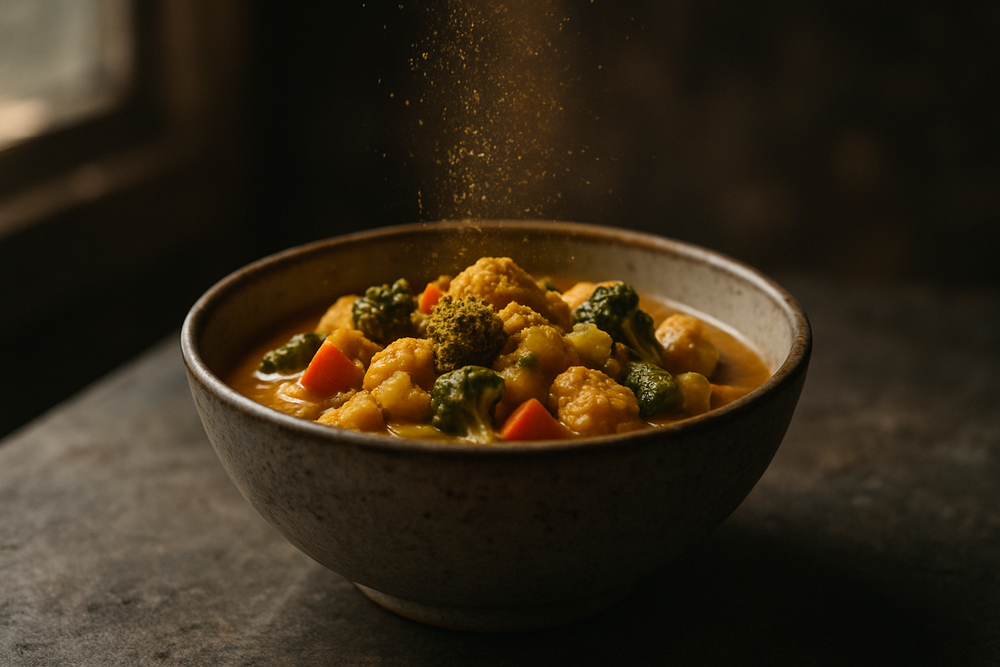
Curry powder is most aromatic when it is briefly bloomed in warm fat or dry-toasted before liquid is added. This step — common in South Asian cooking — releases the volatile oils in the spices and deepens flavour significantly.
Three practical pairings:
- Curry powder + legumes (lentils, chickpeas, black beans) — Legumes provide fibre, plant protein, and slow-digesting carbohydrates; curry powder makes them deeply savoury and aromatic. This is the foundation of a dal or chana masala and is arguably the highest-value combination in a whole-food, plant-based diet.
- Curry powder + coconut milk + leafy greens (spinach, kale, chard) — The fat in coconut milk helps dissolve and absorb fat-soluble curcumin from the turmeric in the blend, potentially improving bioavailability (the proportion your body can actually use). Leafy greens add magnesium, folate, and vitamin K to the dish.
- Curry powder + roasted root vegetables (sweet potato, carrot, parsnip) — Natural sweetness in roasted roots balances the earthy bitterness of turmeric and the warmth of ginger. A squeeze of lemon juice at the end brightens the whole dish. This combination works as a side dish, a grain-bowl topping, or a soup base.
Quick practical tips:
- Start with ½ teaspoon per serving if you or your guests are new to the flavour, and increase from there.
- Add a pinch of black pepper to dishes using curry powder — piperine (the active compound in pepper) significantly increases curcumin absorption.
How Curry Powder Compares
| Compared with | What's different |
|---|---|
| Curry Powder vs. Turmeric | A single ground plant root used for color, whereas curry is a complex blend of many spices. |
| Curry Powder vs. Garam Masala | A spice blend focusing on warmth and sweetness like cinnamon, lacking the turmeric and heat of curry. |
| Curry Powder vs. Harissa | A North African paste with high oil and chili content, whereas curry is a dry, turmeric-forward powder. |
Health Benefits
Things to Know
Acid reflux and gastritis: Chili-heavy blends may worsen symptoms. Choose mild or sweet varieties and use smaller amounts.
Fenugreek allergy: Fenugreek is a legume-family seed and can cross-react with peanut or chickpea allergies in some people. Check the blend's ingredient list if you have known legume sensitivities.
Mustard allergy: Some blends include mustard seed, which is a significant allergen for some individuals.
Anticoagulant medications (e.g., warfarin, DOACs): High-dose turmeric, ginger, or fenugreek supplements may have mild antiplatelet (blood-thinning) effects. Culinary curry amounts are unlikely to be clinically significant, but disclose regular high-spice intake to your prescriber.
Blood-sugar-lowering medications (insulin, sulfonylureas, GLP-1 agonists, SGLT2 inhibitors): Large intakes of fenugreek or curcumin supplements can enhance glucose lowering; monitor for hypoglycaemia (low blood sugar) if you use both. Culinary use is generally fine.
Gallstones or biliary obstruction: High-dose turmeric supplements are cautioned in this group; culinary curry powder is usually tolerated, but speak with your doctor if you have active symptoms.
Pregnancy and breastfeeding: Culinary amounts in food are generally regarded as safe. Concentrated spice supplements are a different matter — use only under professional guidance.
Sodium: Many commercial blends contain added salt. Read the label and account for this in your total daily sodium budget.
Prep Ideas
- — Curry powder + legumes (lentils, chickpeas, black beans) — Legumes provide fibre, plant protein, and slow-digesting carbohydrates; curry powder makes them deeply savoury and aromatic. This is the foundation of a dal or chana masala and is arguably the highest-value combination in a whole-food, plant-based diet.
- — Curry powder + coconut milk + leafy greens (spinach, kale, chard) — The fat in coconut milk helps dissolve and absorb fat-soluble curcumin from the turmeric in the blend, potentially improving bioavailability (the proportion your body can actually use). Leafy greens add magnesium, folate, and vitamin K to the dish.
- — Curry powder + roasted root vegetables (sweet potato, carrot, parsnip) — Natural sweetness in roasted roots balances the earthy bitterness of turmeric and the warmth of ginger. A squeeze of lemon juice at the end brightens the whole dish. This combination works as a side dish, a grain-bowl topping, or a soup base.
- — Start with ½ teaspoon per serving if you or your guests are new to the flavour, and increase from there.
- — Add a pinch of black pepper to dishes using curry powder — piperine (the active compound in pepper) significantly increases curcumin absorption.
Shop This Ingredient
Stock your pantry with quality curry powder.
Buy on AmazonAs an Amazon Associate, Plantopedia earns from qualifying purchases. This costs you nothing extra and helps us keep the encyclopedia free.
Frequently Asked Questions
Curcumin and curcuminoids — Polyphenolic (multi-ring plant) pigments from turmeric; responsible for the golden colour and much of the antioxidant and anti-inflammatory research linked to curry. Gingerols and shogaols — Phenolic compounds from ginger that contribute warmth, mild anti-nausea effects, and circulation support. Cuminaldehyde and terpenes — Aromatic compounds from cumin seed that give curry its earthy depth and may support digestion. Capsaicinoids — The pungent (heat-producing) compounds in chili peppers; can stimulate digestion and mild thermogenesis (calorie-burning heat) but may irritate sensitive guts. Phenolic acids and flavonoids — A broad family of antioxidant compounds contributed by coriander, fenugreek, cinnamon, cloves, and other spices in the blend.
Research on curry powder as a blend is limited. Most of the evidence comes from trials on its individual spice components, often at supplement-level doses. The following reflects what is known, translated to what it means at the dinner table. Heart and circulation There are no large randomised trials (the gold standard of clinical research) testing generic curry powder on heart outcomes. However, turmeric-derived curcumin supplements — commonly 500–2,000 mg of concentrated extract per day — have shown modest improvements in total cholesterol, LDL (low-density lipoprotein, sometimes called "bad" cholesterol), and some markers of endothelial (blood vessel lining) function in people with metabolic syndrome. Fenugreek and chili have also been associated with small blood lipid improvements in higher-intake studies. At culinary amounts, the direct effect is likely modest. The indirect benefit, though, is real: curry powder makes heart-supportive dishes — dals, bean stews, spiced vegetables — more palatable, reducing the appeal of high-sodium sauces and ultra-processed alternatives. Look for salt-free blends to keep sodium in check. Digestive health and microbiome Several key curry ingredients — ginger, cumin, coriander, fenugreek, and chili — have traditional and research-supported reputations as carminatives (agents that help relieve gas and bloating). Ginger has solid human trial data for reducing nausea (including pregnancy-related nausea) and supporting gastric emptying (the speed at which the stomach moves food into the intestines). Fenugreek's soluble fibre (the type that dissolves in water) can support stool bulk and help moderate blood sugar spikes after meals. For most people, curry-seasoned food is gently warming and appetite-stimulating. In sensitive individuals, especially those with acid reflux or gastritis, chili-heavy blends may aggravate symptoms. Starting with mild or sweet blends and building up is a sensible approach. Blood sugar and metabolism Curry powder has not been tested as a blood sugar intervention, but several of its spices have. Fenugreek seed in larger amounts (5–25 g per day in trials) has shown improvements in fasting glucose and HbA1c (a three-month average blood sugar marker) in people with type 2 diabetes. Turmeric and ginger show modest benefits in insulin sensitivity in supplement trials. These are doses far above what typical cooking delivers. The practical take: curry powder seasons the kinds of foods — legumes, vegetables, whole grains — that are genuinely beneficial for blood sugar management. That is the most honest framing of how it fits. Inflammation and recovery The anti-inflammatory reputation of curry comes primarily from turmeric and ginger. Numerous clinical trials using concentrated curcumin extracts have reported reductions in CRP (C-reactive protein, a common inflammation marker) and improvements in joint discomfort in conditions like osteoarthritis. Ginger supplements at 1–3 g per day have shown modest benefits in pain and inflammatory markers. These doses exceed what seasoning delivers, but the underlying biology is real. Think of curry powder as a gentle, cumulative contributor to an overall anti-inflammatory food pattern — not a therapeutic intervention in its own right. Cognitive and mood health (emerging) A small number of observational studies in Asian populations found associations between habitual curry consumption and better cognitive performance in older adults, likely linked to curcumin's antioxidant properties. This evidence is preliminary, cross-sectional (a snapshot in time, not proof of cause), and subject to lifestyle confounding. It does not justify treating curry powder as a brain supplement — but it supports the broader case for a spice-rich, plant-forward diet.
Yes, form matters, and so does what is (or isn't) in the tin. Standard yellow curry powder The everyday workhorse — turmeric, coriander, cumin, fenugreek, chili, ginger, and sometimes mustard seed and cloves. Versatile in dry rubs, sautés, soups, and stews. Salt-free curry powder The same flavour profile without added sodium. The better default for heart-conscious cooking and for anyone monitoring blood pressure or fluid retention. Sweet or mild curry powder Emphasises cinnamon, cloves, and sweeter aromatics with less chili heat. Great for sensitive digestive systems, children's meals, or lighter vegetable dishes. Hot or Madras-style curry powder Higher chili and black pepper content. Use sparingly and build heat gradually to assess your tolerance. Homemade blend The gold standard for customisation. You choose your turmeric-to-chili ratio, can exclude spices you are sensitive to, and can freshly toast whole seeds before grinding for superior depth of flavour.
Quick Answers
Common questions, answered in a line.
Curry powder is a curated mixture of various dried spices, typically consisting of turmeric, coriander, cumin, fenugreek, and chili pepper. Many versions also include ginger, mustard seed, cardamom, cinnamon, and cloves to create its distinct flavor profile.
To get the best flavor from curry powder, briefly bloom the spice blend in warm fat or dry-toast it before adding any liquids. This traditional South Asian cooking step releases volatile aromatic oils and significantly deepens the final flavor of the dish.
When buying curry powder, check the label for added salt, the order of ingredients, organic certification, and protective packaging like dark glass or metallic tins. A fresh blend should have a vivid, complex scent rather than a dull or flat aroma.
Curry powder pairs exceptionally well with legumes like lentils and chickpeas, coconut milk with leafy greens, and roasted root vegetables like sweet potatoes or carrots. These combinations provide a balance of fiber, healthy fats, and natural sweetness that complements the earthy spices.
You can increase the health benefits of curry powder by adding a pinch of black pepper and a source of fat, such as coconut milk, to your dish. The piperine in black pepper and the fat in coconut milk help improve the body's ability to absorb curcumin from the turmeric.
People with allergies to peanuts, chickpeas, or mustard should be cautious, as curry powder often contains fenugreek (a legume) or mustard seed. Those with acid reflux, gallstones, or those taking blood-thinning and blood-sugar medications should also monitor their intake or consult a doctor.
For Readers in the USA
Local context — sourcing, seasonality, and regional notes.
In the U.S., you can find curry powder at major retailers like Walmart, Kroger, and Whole Foods, as well as specialty spice shops and Asian grocery stores like H-Mart or Patel Brothers. Most American supermarkets stock it in the spice aisle under brands like McCormick, Morton & Bassett, or Simply Organic.
The USDA Organic seal on curry powder ensures the spices were grown without synthetic pesticides or GMOs and were not treated with irradiation. Looking for this label is particularly beneficial for spices like turmeric and cumin, which are often imported and may be subject to different agricultural standards.
While curry powder is a British-Indian invention, it has become a staple in American "fusion" dishes like curried chicken salad and deviled eggs, reflecting a distinct Western culinary adaptation. In the U.S., "Madras Curry Powder" is a commonly sought-out variety known for being slightly spicier and more vibrant than standard "Yellow Curry" blends.
AI Clinical Review
- Accurately explains that curry powder is a blend, not a single herb, and that its health value is mostly about enabling a plant‑forward eating pattern rather than acting like a drug.
- Correctly notes that most human research involves concentrated extracts (especially curcumin and ginger) and that culinary amounts are smaller, so expected effects are modest.
- Highlights digestive “carminative” spices (gas‑relieving, soothing to the gut) like ginger, cumin, and coriander, which aligns with clinical and traditional evidence.
- Practical advice on blooming spices and pairing with fat and black pepper to enhance curcumin absorption (bioavailability) is sound and actionable.
- Sensible emphasis on salt‑free blends to keep sodium in check for heart health.
- There are few randomized trials on curry powder as a complete blend; most findings come from isolated components at higher, supplement‑level doses, so results don’t translate directly to everyday cooking.
- Cardiometabolic and glucose benefits seen with fenugreek or curcumin often use amounts well above typical culinary intake; synergy of multiple spices at food‑level doses remains uncertain.
- Observational links between habitual curry intake and cognition are not proof of cause; controlled trials with culinary doses are limited.
- Microbiome and anti‑inflammatory effects from spice‑rich diets are biologically plausible, but high‑quality human studies using real‑world recipes are still emerging.
- Dose and form: Most people use about ½–1 teaspoon per serving; blends vary widely in turmeric, chili, and fenugreek content. Curcumin content is low in seasonings, and absorption improves when cooked with fat and a pinch of black pepper (piperine).
- Safety and sensitivities: Chili‑forward blends can aggravate reflux or gastritis. Fenugreek and mustard appear in many mixes and can trigger allergies; fenugreek may cross‑react in people with peanut/chickpea allergy.
- Medications and conditions: High‑dose spice supplements (turmeric/curcumin, ginger, fenugreek) may interact with anticoagulants/antiplatelets and glucose‑lowering drugs; people with gallstones or biliary obstruction should avoid high‑dose turmeric supplements. Culinary use is generally safe—check with your clinician if unsure.
- Quality and sodium: Some commercial blends include salt; salt‑free options help manage blood pressure. Aroma and potency fade over time—buy smaller amounts and store in a sealed, light‑protected container, ideally using within 6–12 months.
Use culinary framing; avoid treatment claims or supplement-dose guidance.
References
- PubMed — Curcumin content of turmeric and curry powders (pubmed.ncbi.nlm.nih.gov)
- PubMed — Curry powder as a vehicle for iron fortification: effects on iron absorption (pubmed.ncbi.nlm.nih.gov)
- PubMed — Studies on the effect of curry leaves supplementation (Murraya Koenigi) on lipid profile, glycated proteins and amino acids in non-insulin-dependent diabetic patients (pubmed.ncbi.nlm.nih.gov)
- PMC, National Library of Medicine — Curcumin-rich curry consumption and life expectancy: Singapore longitudinal ageing study (pmc.ncbi.nlm.nih.gov)
- USDA FoodData Central — USDA FoodData Central (fdc.nal.usda.gov)
- ScienceDirect — S0165614708002526 (sciencedirect.com)
Know Your Numbers
Eating healthy is a start. Now get to know your biomarkers.
Food changes bloodwork — inflammation, lipids, blood sugar and nutrient status all respond to what you eat. 59 markers from $59.
- Results in 7–10 days at 2,000+ Quest sites
- Licensed provider reviews every result
- One flat price, no membership, HSA/FSA eligible
Educational information only, not medical advice. Panels are ordered and reviewed through our licensed partner; Plantopedia may earn a commission.