Drumstick (Moringa Pods) — health benefits and uses
A pillar of Ayurvedic and South Asian folk medicine for overall nourishment.
The Short Answer
Drumstick pods are highly nutritious tropical vegetables providing 97 mg of Vitamin C and 4.2 g of fiber per 100g. They are typically simmered in stews like sambar, where the inner pulp and seeds are scraped out and eaten while the woody outer skin is
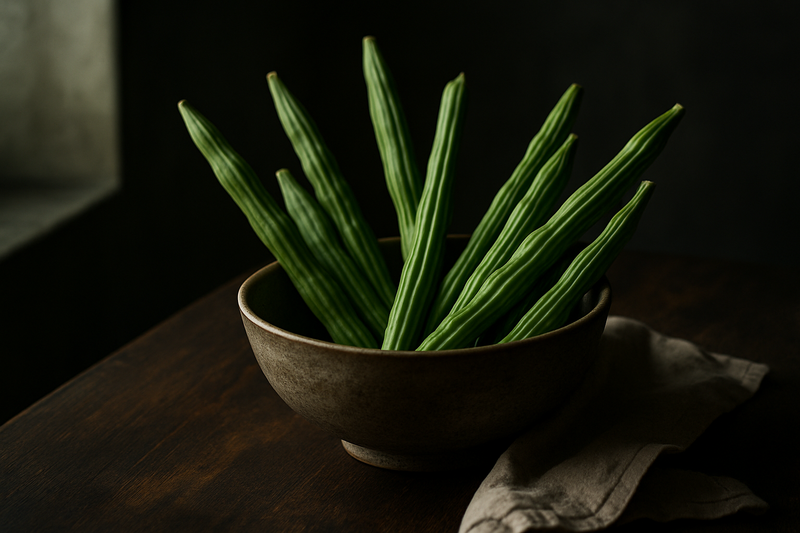
Drumstick (Moringa Pods) · Photograph
Discover the drumstick vegetable health benefits backed by evidence — from vitamin C and fiber to antioxidants and heart support. Learn how to cook moringa pods, what nutrients they contain per serving, and who should take care with them.
Key Nutrients
% Daily Value based on 2,000 cal diet
Key active compounds in drumstick pods
The inner pulp and seeds of drumstick pods contain a range of bioactive plant chemicals. Here is what research has identified:
- Flavonoids (quercetin, kaempferol): A class of polyphenols — plant-based compounds that influence how cells respond to stress — with antioxidant and anti-inflammatory activity in lab studies.
- Phenolic acids (ferulic acid, caffeic acid): Smaller polyphenolic molecules linked to antioxidant and potential cell-protective effects in preclinical research.
- Glucosinolates and isothiocyanates: Sulfur-containing compounds similar to those in broccoli and cabbage (cruciferous vegetables). When chewed or chopped, enzymes convert glucosinolates into isothiocyanates, which have been studied for their role in supporting the body's natural detoxification pathways.
- Carotenoids (including beta-carotene): Yellow-orange pigments that act as antioxidants and can be converted to vitamin A. Pods contain lower amounts than moringa leaves.
- Steroids and terpenoids: Lipid-derived compounds proposed to contribute to anti-inflammatory effects in animal studies, though their role in humans eating pods as food is not well defined.
Myths vs facts about drumstick moringa pods
Myth 1: "You should eat the whole pod — the skin has nutrients too." Fact: The outer skin of drumstick pods is extremely fibrous, practically indigestible, and not meant to be eaten. The inner pulp and seeds are the edible and nutrient-rich parts. Eating the outer skin does not increase nutrition and may cause digestive discomfort.
Myth 2: "Moringa pods cure diabetes and lower blood pressure." Fact: Drumstick pods contain nutrients and plant compounds that may support blood sugar management and healthy blood pressure as part of an overall healthy diet. No clinical trial has shown that eating pods alone treats or cures diabetes or hypertension. "Cures" is language the evidence does not support.
Myth 3: "Moringa supplements and drumstick pods are interchangeable." Fact: Commercial moringa supplements are almost always made from leaves, and occasionally seeds — not pods. Their concentration of active compounds, safety data, and recommended doses are quite different from eating cooked pods as a vegetable. Do not assume supplement research applies to the culinary vegetable, or vice versa.
Prep and pairing ideas
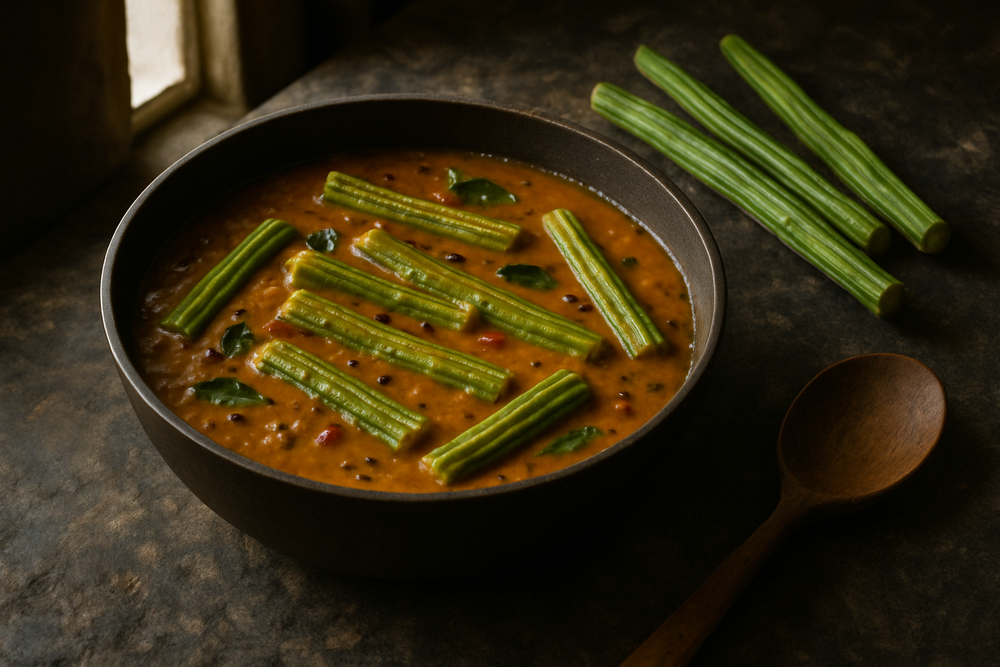
South Indian sambar (the classic): Drumstick pods are simmered with split pigeon peas (toor dal), tamarind, tomatoes, and a spiced tempering of mustard seeds, curry leaves, and dried chili. The combination of legumes and pods creates a high-fiber, high-protein, vitamin C-rich meal. The vitamin C in the pods actively boosts absorption of the iron from the lentils — a genuinely smart nutritional pairing.
Coconut milk curry: Pods cooked in a light coconut milk base with ginger, garlic, and green chili. The fat in coconut milk helps absorb fat-soluble carotenoids from the pods, making it a good pairing for antioxidant uptake.
Simple stir-fry with eggs: In South Indian home cooking, drumstick pods are sometimes stir-fried with scrambled eggs, garlic, and black pepper. The protein from eggs complements the modest protein in the pods, and the dish comes together quickly.
Bottom line
Drumstick pods — the long, ridged fruits of Moringa oleifera — are an underappreciated whole food vegetable with a genuinely impressive nutrient profile. A single 100 g serving delivers over a full day's vitamin C, 15% of your daily fiber, meaningful potassium and magnesium, and a collection of phytochemicals that are actively studied for antioxidant and anti-inflammatory effects.
The honest caveat is that most research on moringa's dramatic health effects is based on leaf or seed extracts, not culinary pods. Pod-specific human trials are limited. What we can say with confidence is that drumstick pods are a low-calorie, fiber-rich, nutrient-dense vegetable that fits well within any evidence-based dietary pattern that emphasizes whole plant foods — and that their culinary use, particularly in South Indian cooking, represents a smart way to add variety, color, and nutrition to your plate.
If you want to explore how vegetables like drumstick pods fit into your broader health goals, browse our whole food plant-based eating guides →
How Drumstick (Moringa Pods) Compares
| Compared with | What's different |
|---|---|
| Drumstick (Moringa Pods) vs. Green Beans | More fibrous, eaten by scraping out the inner pulp and seeds rather than consuming the whole pod. |
| Drumstick (Moringa Pods) vs. Okra | Contains significantly more Vitamin C (97mg vs 36mg) and higher potassium per 100g. |
Health Benefits
Things to Know
Kidney disease: Drumstick pods provide about 457 mg potassium per 100 g serving. People on potassium-restricted diets (often recommended in chronic kidney disease) should check their intake limits with their healthcare team.
Sensitive digestion / IBS: The fiber in drumstick pods may cause gas or bloating in people with irritable bowel syndrome (IBS) or those not accustomed to high-fiber foods. Introduce them gradually and watch your response.
Pregnancy: Eating drumstick pods as a normal culinary vegetable appears to be safe based on their long traditional use across South Asia. However, concentrated moringa extracts from roots or bark have raised concerns in pregnancy — avoid high-dose supplements while pregnant and focus on food-form pods in moderate amounts. Discuss with your midwife or doctor.
Diabetes medications: Broader moringa preparations (leaf/seed extracts) have documented blood-sugar-lowering effects and could theoretically enhance the effect of insulin or oral diabetes medications. This is less likely to be an issue with ordinary pod portions, but mention moringa use to your prescriber if you are on glucose-lowering drugs.
Blood pressure medications: The same logic applies — potassium from pods supports healthy blood pressure, but high-dose moringa extracts alongside antihypertensive drugs warrant clinical guidance.
Blood thinners: Limited evidence suggests moringa may have antiplatelet or anticoagulant activity at supplemental doses. If you take warfarin or similar medications, discuss any moringa use with your doctor.
Hormone-sensitive conditions: Human data on moringa and hormonal health are sparse and largely derived from non-pod plant parts. There is no strong evidence linking culinary pod consumption to hormonal disruption, but talk to your doctor if you have a hormone-sensitive condition and want to eat drumsticks regularly.
Glossary
Shop This Ingredient
Stock your pantry with quality drumstick (moringa pods).
Buy on AmazonAs an Amazon Associate, Plantopedia earns from qualifying purchases. This costs you nothing extra and helps us keep the encyclopedia free.
Frequently Asked Questions
Heart and circulation Drumstick pods are naturally low in calories and fat, and they supply two nutrients — fiber and potassium — that human dietary studies consistently link to healthier blood pressure and cardiovascular risk profiles. A 100 g serving delivers 457 mg of potassium, roughly 10% of the daily value, which contributes to the total potassium intake recommended by heart health guidelines. Research also identifies flavonoids, glucosinolates, and phenolic compounds in the pods with antioxidant and potential cardioprotective effects. In preclinical (animal and cell-based) studies, moringa preparations have shown cholesterol-lowering and antihypertensive activity. However, there are no randomized controlled trials — the gold standard for proving cause and effect — that have tested drumstick pods specifically for blood pressure, cholesterol, or cardiovascular events in people. Benefits for heart health should be understood as plausible and diet-pattern based, not proven by pod-specific clinical trials. Digestive health and microbiome Fiber is where drumstick pods shine most clearly. At about 4.2 g per 100 g cooked serving, they contribute meaningfully to the 25–38 g daily fiber target recommended by most health guidelines. High-fiber diets are consistently linked in human studies to better bowel regularity, reduced constipation risk, and lower rates of diverticular disease (a condition where small pouches form in the colon wall). The fiber in drumstick pods is predominantly insoluble, meaning it adds bulk to stools and helps food move through the digestive system efficiently. Some reviews suggest moringa fiber may support gut microbiome (the community of microorganisms living in your gut) diversity, but pod-specific human microbiome trials have not yet been done. If you are increasing fiber intake, do it gradually — jumping from low to high fiber quickly can cause temporary gas and bloating. Blood sugar and metabolism The fiber in drumstick pods can help slow carbohydrate digestion and blunt sharp rises in blood sugar after meals — a benefit consistently observed with high-fiber vegetables generally. Traditional medicine in South Asia and Africa has long used moringa plant parts, including pods, to help manage blood sugar. Experimental studies have shown that moringa compounds — particularly isothiocyanates and polyphenols — can influence glucose metabolism and insulin signaling in cell and animal models. However, these studies typically use concentrated leaf or seed extracts at doses much higher than what you'd get from eating pods as a vegetable. At present, no well-designed clinical trial has shown that eating drumstick pods alone significantly reduces fasting glucose or HbA1c (a three-month blood sugar average used to monitor diabetes) in humans. Blood sugar benefits are considered preliminary and fiber-driven at the culinary food level. Inflammation and recovery Chronic, low-grade inflammation — a persistent, low-level activation of the immune system — drives many modern diseases, including heart disease, type 2 diabetes, and some cancers. Drumstick pods provide vitamin C and a range of polyphenols and glucosinolates that, in laboratory studies, can dampen inflammatory signaling pathways and reduce oxidative stress (the imbalance between free radicals and the body's ability to neutralize them). Reviews of moringa consistently describe anti-inflammatory properties across multiple plant parts. However, there are no clinical trials that have measured inflammatory markers like CRP (C-reactive protein, a blood marker of inflammation) or cytokines (small proteins that regulate immune responses) specifically in response to eating drumstick pods. The anti-inflammatory case rests on the pods' phytochemical profile and general vegetable diet evidence rather than direct pod-focused human data. Immune support and antioxidant defense This is the strongest evidence area tied directly to the pod's nutrient content. A single 100 g serving of cooked drumstick pods delivers more than a full day's recommended vitamin C — a potent, water-soluble antioxidant essential for immune cell function, collagen synthesis (collagen is the structural protein that holds skin, joints, and blood vessels together), and iron absorption. Vitamin C cannot be stored in the body in significant amounts, so regular dietary sources matter. The combination of vitamin C with flavonoids and carotenoids in the pods creates a broad antioxidant network in the food. The pods also supply folate, which is important for DNA synthesis and immune cell production. Taken together, drumstick pods are a genuine whole-food contributor to day-to-day immune and antioxidant nutrition.
Fresh pods (whole, cooked) The standard culinary form. Long immature green pods are cut into 5–8 cm sections, simmered in water, sambar, or curry until tender, and the inner pulp is scraped out at the table. This is the form with the most traditional use data and the form most consistent with treating drumstick as a whole food vegetable. Nutritional values in this guide apply to this form. Frozen pods Available in South Asian grocery stores globally. Freezing preserves most macronutrients and minerals well, though vitamin C content may be slightly lower than fresh, depending on blanching and storage time. A practical, year-round alternative to fresh. Canned pods Less common but available. Sodium content can be higher in salted canned products — check labels and rinse if needed. Vitamin C will be reduced by the canning process more than by freezing. Moringa leaf powder or supplements This is a fundamentally different product — made from dried leaves, not pods. It is much more concentrated, lacks the fiber profile of whole pods, and has a different safety and dosing context. Research on moringa supplements does not directly apply to eating drumstick pods as a vegetable.
People looking to increase vegetable variety on a plant-based diet Drumstick pods bring a unique texture and flavor profile that adds variety beyond leafy greens and root vegetables. Their fiber and potassium content complement legume-heavy plant-based meals. The vitamin C boost helps maximize iron absorption from plant sources — a common concern in plant-based eating. People managing cardiovascular or metabolic health through diet The combination of fiber, potassium, and near-zero saturated fat makes drumstick pods a strong fit for heart-healthy dietary patterns like the DASH or Mediterranean diet. Their low calorie density (36 cal/100 g) makes them easy to include in calorie-conscious eating without sacrificing volume or satiety. Replacing higher-sodium processed foods with home-cooked drumstick dishes meaningfully shifts the nutritional balance of a meal.
There is no formally established upper limit or clinical dosing recommendation for drumstick pods as a food. In traditional South Asian diets, they are eaten in portions of roughly 50–100 g (about ½ to 1 cup) per serving, several times a week, as part of mixed dishes rather than in isolation. A practical starting point for most people unfamiliar with drumstick pods is one serving (around 50–100 g cooked) a few times per week, increasing gradually if you tolerate them well digestively. Daily consumption at moderate portions is consistent with traditional use and unlikely to cause harm in healthy adults. There is no benefit to eating very large quantities, and the high fiber content at very high doses could cause gastrointestinal discomfort. If you are exploring moringa in supplement form (leaf powder, capsules), that is a separate conversation with different dosing considerations — please consult a healthcare provider.
Quick Answers
Common questions, answered in a line.
No, you should not eat the outer skin of drumstick pods because it is extremely fibrous and practically indigestible. The edible and nutrient-rich parts are the inner pulp and seeds. Consuming the skin does not increase nutrition and may cause digestive discomfort.
Drumstick pods are not a cure for diabetes or high blood pressure, though they contain nutrients that may support blood sugar management and healthy blood pressure. No clinical trials have shown that eating the pods alone can treat or cure these conditions.
Drumstick pods are rich in Vitamin C, fiber, potassium, and magnesium, along with plant compounds like flavonoids and phenolic acids. A 100g serving provides over a full day's worth of Vitamin C and 15% of your daily fiber intake.
People with chronic kidney disease on potassium-restricted diets should be cautious, as drumstick pods contain 457 mg of potassium per 100g serving. You should check your intake limits with a healthcare team before adding them to your diet.
Traditional culinary use of drumstick pods is generally considered safe during pregnancy, but you should avoid high-dose concentrated extracts from moringa roots or bark. It is best to stick to moderate amounts of the vegetable and consult with a doctor.
Cooking drumstick pods with lentils or citrus increases nutrition because the Vitamin C in the pods boosts the absorption of iron from legumes. Pairing them with fats like coconut milk also helps the body absorb fat-soluble antioxidants like carotenoids.
Moringa supplements and drumstick pods are not the same; supplements are usually made from concentrated leaves or seeds rather than the vegetable pods. The safety data, concentration of active compounds, and recommended doses differ significantly between the two forms.
For Readers in the USA
Local context — sourcing, seasonality, and regional notes.
You can buy fresh drumstick pods at Indian grocery stores (like Patel Brothers), H-Mart, or other Asian supermarkets across the US. While rarely found in mainstream chains like Kroger or Safeway, some specialty health food stores may carry them in the refrigerated produce section.
In the US, drumsticks are commercially grown in frost-free regions like Southern Florida, Hawaii, and parts of Southern California and Texas. Because the tree is highly sensitive to cold, it is typically sold in northern states as an imported product from Mexico or India.
Look for "Moringa pods" or "Drumsticks" in the produce aisle, and occasionally "Sajjan ki Phalli" in Hindi-focused markets. They are usually sold in bundles of 5–10 pods and should feel firm and snap easily rather than bending or appearing shriveled.
The USDA does not have specific grading standards for drumstick pods, but they fall under general FDA guidelines for fresh produce safety. If buying organic, look for the USDA Organic seal to ensure the pods were grown without synthetic pesticides or fertilizers, which is common for imported specialty crops.
AI Clinical Review
- It clearly distinguishes drumstick pods (a whole-food vegetable) from moringa leaf/seed supplements and anchors benefits in known nutrients (vitamin C, fiber, potassium, magnesium).
- The vitamin C (~97 mg per 100 g cooked) and fiber (~4 g) estimates align with food-composition data and support plausible benefits for immunity, iron absorption from legumes, and bowel regularity.
- Cardiometabolic effects are framed appropriately as diet-pattern aligned (via fiber and potassium) rather than drug-like; the absence of pod-specific randomized trials is acknowledged.
- Practical prep guidance (eat inner pulp/seeds, discard fibrous skin) and form differences (fresh, frozen, canned) reflect real culinary use, including sodium and vitamin C changes with processing/cooking.
- Most mechanistic findings (antihypertensive, glucose-modulating, anti-inflammatory) come from leaf/seed extracts and preclinical models; high-quality human trials using pods as the test food are scarce.
- Microbiome support and “detoxification” via isothiocyanates are biologically plausible but not confirmed in pod-focused human studies; typical serving exposures remain uncertain.
- Nutrient content—especially vitamin C—varies by maturity, cultivar, processing, and cook time, so real-world dishes may deliver less than database values.
- Evidence that pod intake alone changes outcomes like HbA1c, LDL cholesterol, or CRP is currently insufficient.
- Typical portions of 50–100 g cooked per serving, a few times per week (or daily if tolerated), are reasonable; increase gradually if your diet is low in fiber.
- If you have chronic kidney disease or take ACE inhibitors/ARBs or potassium-sparing diuretics, the potassium (~457 mg per 100 g) warrants individualized guidance.
- If you use glucose-lowering or blood-pressure medications—or anticoagulants—mention moringa use to your clinician; food-level pods are unlikely to cause large effects, but supplements (usually from leaves/seeds) differ.
- In pregnancy and lactation, food-form pods in customary amounts appear acceptable; avoid root/bark and high-dose moringa extracts unless cleared by your clinician.
Only the inner pulp and seeds are eaten; the fibrous outer skin is discarded.
References
- USDA FoodData Central — moringa pods, cooked (nutrition data): (fdc.nal.usda.gov)
- MyPlate — vegetables and health: (myplate.gov)
- PMC review — Moringa oleifera as a prominent source of nutrients with potential health benefits: (pmc.ncbi.nlm.nih.gov)
- PMC integrative review — nutritional and pharmaceutical applications of Moringa oleifera: (ncbi.nlm.nih.gov)
- Journal of Pharmacy and Pharmacology systematic review — botany, traditional uses and pharmacology of Moringa oleifera (including pod phytochemicals): (academic.oup.com)
- PubMed — Moringa oleifera: a food plant with multiple medicinal uses (Fahey, 2005): (pubmed.ncbi.nlm.nih.gov)
- Cleveland Clinic — Moringa: What It Is, Benefits and Side Effects: (health.clevelandclinic.org)
- Healthline — Moringa oleifera: Nutrition and Benefits: (healthline.com)
- Functional Foods in Health and Disease — nutritional profiles of Moringa pods and their potential for human health (2025 review): (ffhdj.com)
- IJFBPR review — nutritional, antioxidant and medicinal significance of Moringa oleifera (2025): (frontiersrj.com)
Know Your Numbers
Eating healthy is a start. Now get to know your biomarkers.
Food changes bloodwork — inflammation, lipids, blood sugar and nutrient status all respond to what you eat. 59 markers from $59.
- Results in 7–10 days at 2,000+ Quest sites
- Licensed provider reviews every result
- One flat price, no membership, HSA/FSA eligible
Educational information only, not medical advice. Panels are ordered and reviewed through our licensed partner; Plantopedia may earn a commission.