Durian — health benefits and uses
Called the king of fruits in Southeast Asia and eaten as a heating, energizing food.
The Short Answer
Durian is a nutrient-dense fruit providing 9g of fiber and 1,059mg of potassium per cup. While it supports heart and nerve health, its high calorie count and organosulfur compounds mean it should be eaten in moderation and never combined with alcohol.
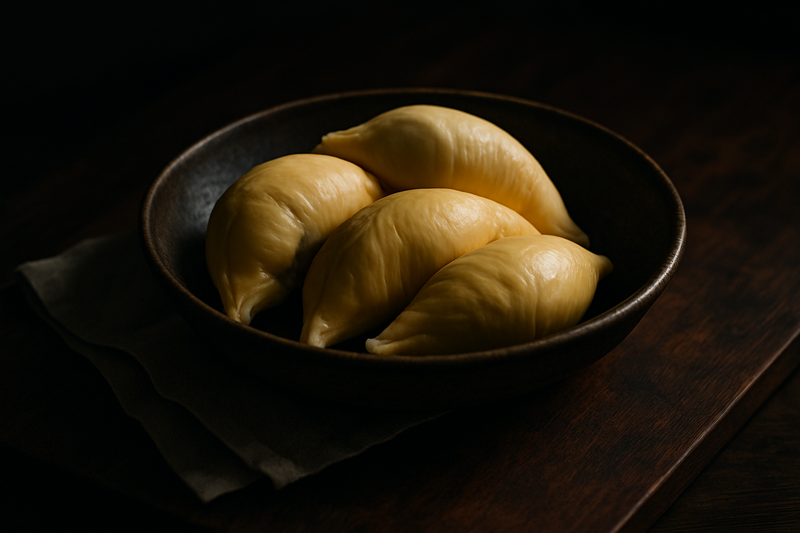
Durian · Photograph
Discover the real durian fruit health benefits and side effects — from its impressive potassium and fiber content to calorie density, blood sugar considerations, and the alcohol warning. Evidence-aligned, layperson-friendly guide.
Key Nutrients
% Daily Value based on 2,000 cal diet
Key active compounds
Durian's health-relevant chemistry goes beyond basic vitamins and minerals:
- Carotenoids (beta-carotene, alpha-carotene): Pigmented antioxidant compounds that also act as precursors to vitamin A. Support eye health and immune function; help neutralize free radicals — unstable molecules that can damage cells.
- Phenolic compounds (flavonoids and phenolic acids): A broad family of plant-derived molecules with antioxidant and potential anti-inflammatory properties. Found in many fruits and vegetables; durian contains a meaningful variety.
- Organosulfur compounds: The sulfur-containing volatiles primarily responsible for durian's characteristic aroma. Some organosulfur compounds in food show antioxidant and detoxification-related activity in laboratory studies, though specific health outcomes from durian's sulfur compounds in humans are not well established. These compounds are also suspected to interact with alcohol metabolism (see cautions below).
- B vitamins (thiamin, riboflavin, niacin, B6, folate): Unusually complete B-vitamin spectrum for a fruit, supporting energy metabolism and nervous system function.
Prep and pairing ideas
Durian is easiest to enjoy straight from the shell — split along the seams with a knife and scoop out the arils. Beyond eating it plain, here are three practical pairings that work well:
1. Durian + sticky rice (khao niao durian) A classic Southeast Asian pairing. The glutinous rice balances durian's richness and provides a complementary starchy base. Keep coconut cream additions moderate to manage overall calorie load.
2. Durian + unsweetened coconut yogurt Blending a small amount of durian pulp into thick coconut yogurt softens the intensity of the aroma while adding probiotics and protein. A practical way to stretch a small portion further.
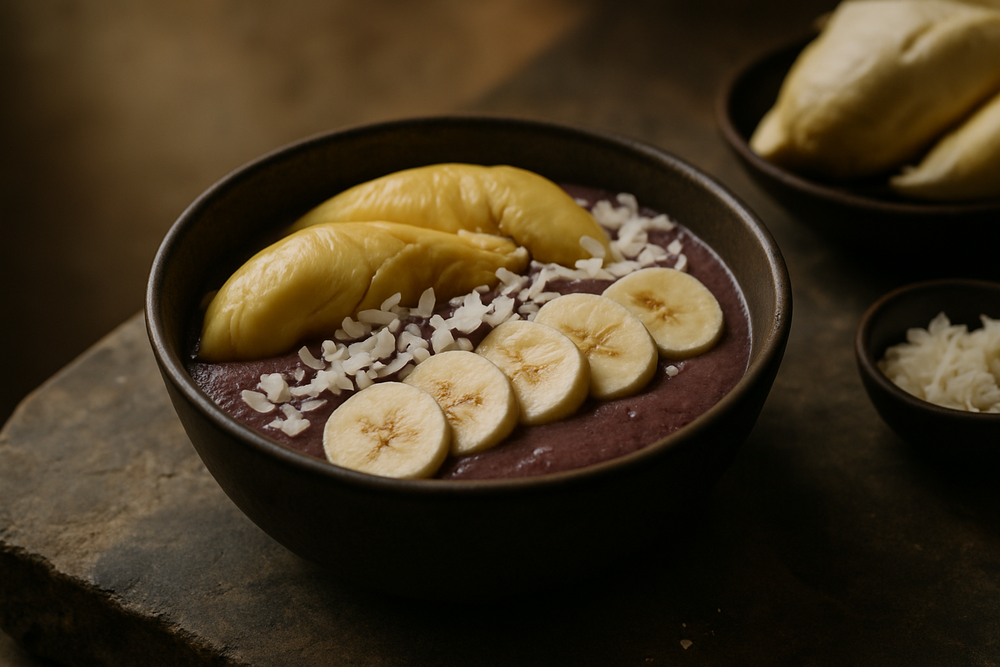
3. Durian + banana in a smoothie Frozen durian pulp and banana blended with water or oat milk creates a thick, naturally sweet smoothie without added sugar. The banana's pectin fiber complements durian's fiber mix. Add a handful of spinach to boost micronutrient density without affecting the flavor significantly.
Bottom line
Durian is a genuinely nutrient-dense whole fruit — one of the richest fruit sources of potassium, thiamin, and B6 you will find, with solid fiber and a diverse antioxidant profile. The evidence for specific health benefits is mostly indirect, extrapolated from its nutrient composition and general research on fruit-rich diets rather than from durian-specific clinical trials. What durian does well is replace processed, nutrient-poor desserts with something that at least delivers real fiber, vitamins, and minerals alongside its calories.
The main caveats are real: this is a high-calorie, high-carbohydrate fruit that demands portion awareness, especially for people managing weight, blood sugar, or kidney function. The alcohol interaction is a legitimate biochemical concern, not just a folk tale. Eat the rich, custardy arils fresh when you can, use frozen pulp when you cannot, and treat the ice cream and pastry versions as occasional pleasures. If you fit this fruit into a varied, plant-forward diet thoughtfully, it more than earns its throne.
How Durian Compares
| Compared with | What's different |
|---|---|
| Durian vs. Jackfruit | Jackfruit is starchy and mild, while durian is rich, custardy, and has a strong sulfur aroma. |
| Durian vs. Soursop | Soursop has a tart, citrus-like flavor and lower calorie density compared to the fatty durian. |
Health Benefits
Things to Know
Calorie density: One cup is ~357 calories. If you are managing your total calorie intake, a half-cup portion (~180 calories) is a more realistic single serving.
Blood sugar: High carbohydrate content. People with type 2 diabetes or insulin resistance should discuss durian portions with a dietitian.
Kidney disease: Durian is very high in potassium. Individuals with chronic kidney disease or reduced kidney function who have been told to limit dietary potassium should use caution or avoid durian.
Medication interactions:
Potassium-sparing diuretics (spironolactone, amiloride, triamterene): combining with high-potassium foods may raise blood potassium to unsafe levels (hyperkalemia — abnormally high potassium in the blood).
ACE inhibitors and ARBs (lisinopril, losartan, etc.): these blood pressure medications already raise potassium; frequent large servings of durian may add to that load.
Alcohol: Traditional guidance — and mechanistic concern — warns against eating durian with or shortly after drinking alcohol. Durian's organosulfur compounds may inhibit aldehyde dehydrogenase, the enzyme that breaks down acetaldehyde (a toxic byproduct of alcohol metabolism), potentially worsening flushing, nausea, and heart rate changes. High-quality human data are limited, but the caution is widely regarded as prudent.
Pregnancy: Folate content is a positive. However, the high calorie and carbohydrate load means portion control remains important. No specific contraindication exists, but check with your care provider.
Digestive sensitivity: High fat plus high fiber can cause bloating, gas, or loose stools in some individuals, especially in large portions.
Glossary
Shop This Ingredient
Stock your pantry with quality durian.
Buy on AmazonAs an Amazon Associate, Plantopedia earns from qualifying purchases. This costs you nothing extra and helps us keep the encyclopedia free.
Frequently Asked Questions
Most research on durian is in an early stage. Human clinical trials specific to durian are rare; benefits described below are either supported by broad fruit-intake evidence or extrapolated from durian's nutrient profile. "May support" and "research suggests" are doing honest work in this section. Heart and circulation Durian is high in two nutrients consistently linked to cardiovascular health in large human diet studies: potassium (an electrolyte that helps relax blood vessel walls and counteract the blood-pressure-raising effect of sodium) and dietary fiber (which is associated with improved LDL cholesterol — the type often called "bad" cholesterol — in meta-analyses of fiber supplementation trials). One cup delivers about 30% of the daily value for potassium and 32% for fiber. What the evidence does not provide is a single well-designed clinical trial showing that eating durian specifically lowers blood pressure or reduces heart disease risk. Durian benefits for heart health are currently inferred from its nutrient profile and general evidence that diets rich in whole fruits reduce cardiovascular risk. Its absence of sodium and cholesterol is also a point in its favor relative to many processed foods. Digestive health and gut health Durian's 9 g of fiber per cup makes it a respectable fiber source by any standard — most adults in Western countries consume well under 20 g daily, against a target of 25–38 g. Fiber adds bulk to stool, feeds beneficial gut bacteria, and supports regular bowel movements; these effects are supported by robust human evidence across many food sources, including fiber from fruit. Durian fruit for digestion is best framed as one useful contributor to overall fiber intake rather than a stand-alone remedy. No clinical trials have specifically tested durian for constipation, irritable bowel syndrome, or microbiome composition. Because durian is high in both fat and fiber, large portions may cause bloating or gastrointestinal discomfort in people with sensitive digestion. Blood sugar and metabolism Durian and blood sugar control is a nuanced conversation. On one hand, durian is high in carbohydrates (27 g per 100 g), which can raise blood glucose. On the other hand, its fiber and fat content may slow carbohydrate absorption compared with low-fiber, low-fat sweets — potentially producing a less sharp blood glucose spike. Evidence for this effect is theoretical for durian specifically. No robust glycemic index studies on durian have been published. People managing diabetes or insulin resistance should treat durian as a high-carbohydrate fruit, plan portions carefully within their total carbohydrate budget, and monitor their individual response. It is not a blood-sugar-lowering food; whether it can fit into a diabetes-friendly diet depends on the rest of the meal and the person's overall plan. Inflammation and recovery Durian's vitamin C (around 53% DV per cup), carotenoids, and phenolic compounds all contribute to the body's antioxidant defenses — the systems that neutralize free radicals linked to chronic inflammation and tissue damage. Diets high in antioxidant-rich fruits and vegetables are associated with lower markers of systemic inflammation in large observational studies. Durian-specific anti-inflammatory effects in humans have not been directly tested. The available review of durian's bioactives (Durian Bioactive Compounds Review, PMC 2019) confirms its antioxidant potential in laboratory models but stops well short of proven clinical outcomes. Consider durian a contributor to overall antioxidant intake in the context of a varied plant-forward diet. Energy and B-vitamin support Durian's unusually complete B-vitamin spectrum — thiamin, riboflavin, niacin, B6, and folate all in meaningful amounts — sets it apart from most fruits. B vitamins are coenzymes that help cells extract energy from carbohydrates, fat, and protein. This makes durian a genuinely energy-dense, energy-supporting food, though claims linking it directly to improved physical performance in humans are not supported by evidence.
Buying guide Fresh arils (best choice): Eating durian straight from the husk delivers the full fiber, vitamin, mineral, and phytochemical package with no added ingredients. Look for husks with slight give when pressed — a sign of ripeness. The aroma should be strong but not fermented or sour. If you are buying a whole durian, inspect for cracks or dark spots that indicate overripeness. Frozen pulp (excellent alternative): Flash-frozen durian pulp retains almost all macronutrients and most minerals. Vitamin C may decline slightly during extended storage, but frozen is a practical and nutritionally sound choice for people outside Southeast Asia. Thaw in the refrigerator overnight. Check the label for added sugar — good frozen durian needs none. Durian ice cream and pastries (occasional treat, not a health food): When durian is folded into ice cream, cakes, or pastries, you gain the flavor but dilute the fiber per calorie and add sugar and saturated fat. Enjoy these products as desserts, not as substitutes for whole fruit. Durian-flavored candies and snacks: Often contain minimal real durian. Primarily sugar and refined carbohydrate. Nutritional benefit is negligible. Unsweetened durian puree: Retains the fruit's fiber and micronutrients. Versatile in smoothies or as a spread. Read the ingredient list — some commercial purees add sugar or stabilizers.
No standardized therapeutic dose exists for durian; it is a food, not a supplement. Typical portions in culinary practice run from about 100 g to 300 g of pulp per occasion (roughly ½ to 1¼ cups), providing approximately 150 to 450 calories. Practical starting guidance: If you are new to durian, start with a 50–100 g portion (about ¼ cup) to assess tolerance for the fat and fiber content. For most healthy adults, 100–200 g per occasion (roughly ½ to ¾ cup) a few times per week is a reasonable range that keeps calorie and carbohydrate contributions manageable within a varied diet. Daily eating is not inherently problematic for a healthy person, but the calorie density means it can crowd out variety in the diet. Rotate it with other fruits. Is durian safe to eat every day? For healthy adults with no kidney issues or medication interactions, moderate daily portions are unlikely to cause harm. The risk comes primarily from eating very large amounts regularly, which may push total calorie and carbohydrate intake beyond individual targets.
Quick Answers
Common questions, answered in a line.
Durian is an exceptionally nutrient-dense fruit, providing high levels of potassium, fiber, and a full spectrum of B vitamins like thiamin and B6. It also contains carotenoids and phenolic compounds that offer antioxidant and potential anti-inflammatory support for the immune system.
You should avoid consuming alcohol with durian because its organosulfur compounds may inhibit the enzyme needed to break down toxic alcohol byproducts. This interaction can lead to symptoms like nausea, flushing, and heart rate changes due to the buildup of acetaldehyde.
People with chronic kidney disease should use caution or avoid durian because it is extremely high in potassium. High-potassium foods can be dangerous for those with reduced kidney function or those taking potassium-sparing diuretics and certain blood pressure medications.
A realistic single serving of durian is approximately a half-cup, which contains about 180 calories. A full cup reaches roughly 357 calories, making portion awareness essential for those managing weight or blood sugar due to its high calorie and carbohydrate density.
Durian contains a variety of antioxidants, including carotenoids like beta-carotene and phenolic compounds such as flavonoids. These molecules help neutralize free radicals, which are unstable molecules that can cause cellular damage and inflammation.
Durian is safe during pregnancy and provides beneficial folate, but the high calorie and carbohydrate content requires careful portion control. It is always best to consult with a healthcare provider regarding specific dietary changes during pregnancy.
People with type 2 diabetes or insulin resistance should consult a dietitian before eating durian due to its high carbohydrate content. While it is a whole fruit, its density can significantly impact blood sugar levels if portions are not managed.
For Readers in the USA
Local context — sourcing, seasonality, and regional notes.
You can find durian at major Asian grocery chains like H-Mart, 99 Ranch Market, and Mitsuwa Marketplace, as well as specialty exotic fruit retailers. While rare in standard supermarkets like Kroger or Safeway, frozen durian segments or whole frozen fruit are widely available in the freezer aisles of international markets across the U.S.
Fresh durian is rarely grown commercially in the U.S. mainland, but it is successfully cultivated in tropical Hawaii and sporadically in Southern Florida. Because it requires a strictly tropical climate with high humidity and no frost, the vast majority of durian sold in the U.S. is imported from Thailand or Malaysia.
Fresh durian is most available in U.S. markets during its peak Southeast Asian harvest seasons, typically from June to August and again from December to February. However, because it is frequently imported and sold frozen, you can find durian year-round in most major American metropolitan areas.
The FDA regulates imported durian to ensure it meets safety standards, and while it isn't common, you may find USDA Organic certified frozen durian in specialty health food stores. Most durian in the U.S. is imported under strict phytosanitary guidelines to prevent the introduction of foreign pests, which is why whole fresh durian is less common than frozen varieties.
AI Clinical Review
- Durian is accurately portrayed as an unusually energy-dense fruit that’s rich in potassium, fiber, and several B vitamins compared with most fruits.
- The heart-health discussion appropriately leans on established evidence for potassium and fiber from whole-diet studies rather than overstating durian-specific outcomes.
- Portion awareness is emphasized with practical serving sizes and clear calorie context, which is important for an energy-dense fruit.
- The guidance on forms (fresh vs. frozen vs. desserts) is sensible and consumer-friendly, highlighting when added sugars and fats dilute nutritional value.
- There are few well-controlled human trials testing durian itself on blood pressure, cholesterol, or inflammation; most benefits are inferred from its nutrient profile.
- Glycemic effects remain uncertain: durian’s fat and fiber may blunt spikes, but high-quality data on its glycemic index and after-meal glucose response are limited.
- Claims around antioxidant and organosulfur compounds are based largely on lab or animal models; translation to meaningful human outcomes isn’t established.
- Nutrient and phytochemical levels can vary by cultivar, ripeness, and storage/processing, which may change real-world effects.
- Practical intake: for most healthy adults, 100–200 g (about 1/2–3/4 cup) per occasion fits more easily into calorie and carbohydrate budgets; new users can start with 50–100 g.
- Potassium is very high: people with chronic kidney disease or on ACE inhibitors/ARBs or potassium‑sparing diuretics should limit or avoid frequent large portions and consult a clinician.
- For diabetes or insulin resistance: treat durian as a high‑carbohydrate fruit, consider pairing with protein/fat, and monitor personal glucose responses; it is not a proven low‑GI food.
- Alcohol: mixing durian with alcohol is traditionally discouraged and biochemically plausible; until better human data exist, spacing them several hours apart is a prudent approach.
High in calories; traditionally avoided with alcohol, which may worsen its metabolism.
References
- USDA FoodData Central — durian, raw or frozen (nutrition data reference) (fdc.nal.usda.gov)
- USDA MyPlate — Fruits Group guidance (myplate.gov)
- Bioactive Compounds, Nutritional Value, and Potential Health Benefits of Indigenous Durian Fruit — peer-reviewed review, PMC 2019 (pmc.ncbi.nlm.nih.gov)
- University of Rochester Medical Center — Durian, raw or frozen, USDA-derived nutrition facts (urmc.rochester.edu)
- Healthline — Durian Fruit: Potent Smell but Incredibly Nutritious (evidence-based overview) (healthline.com)
- DurianEd — Durian Nutrition Facts (USDA/FDA data summary) (durianed.com)
- Dr. Axe — Durian Fruit: Smelly but Nutrient-Dense (nutrient profile and uses overview) (draxe.com)
- Caring2U — The King of Fruits: 6 Interesting Facts (nutrition table and cultural context) (caring2u.com)
- BatchBase — Durian, raw or frozen, USDA FoodData Central-derived nutrient data (batchbase.com.au)
Know Your Numbers
Eating healthy is a start. Now get to know your biomarkers.
Food changes bloodwork — inflammation, lipids, blood sugar and nutrient status all respond to what you eat. 59 markers from $59.
- Results in 7–10 days at 2,000+ Quest sites
- Licensed provider reviews every result
- One flat price, no membership, HSA/FSA eligible
Educational information only, not medical advice. Panels are ordered and reviewed through our licensed partner; Plantopedia may earn a commission.