Sapodilla — health benefits and uses
Central American tradition used the fruit as a gentle digestive and energy food.
The Short Answer
Sapodilla is a sweet tropical fruit notable for its exceptionally high fiber content, providing 9 grams of dietary fiber and 25 mg of Vitamin C per cup. Its flavor is often described as a mix of brown sugar, malt, and pear.
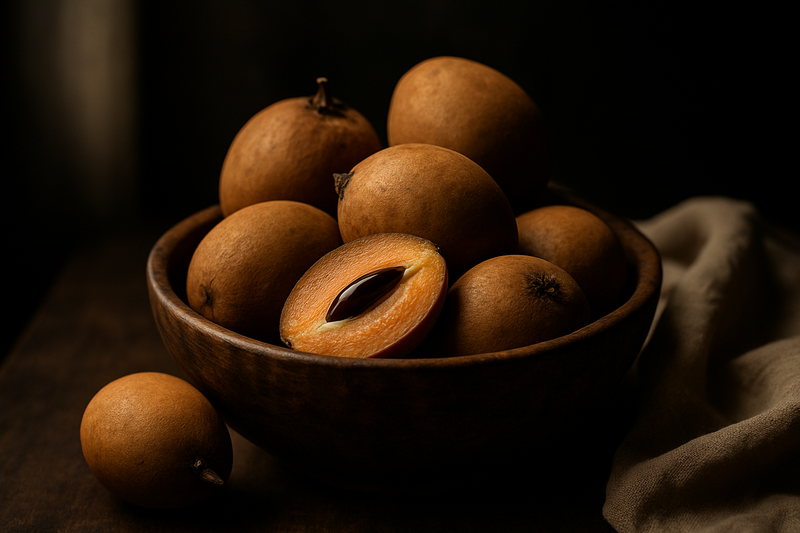
Sapodilla · Photograph
Discover sapodilla fruit health benefits and side effects — from its rich fiber and potassium content to blood sugar and digestion support. Learn how to eat it, how much is safe, and who should be cautious, with evidence-based guidance from Plantopedia.
Key Nutrients
% Daily Value based on 2,000 cal diet
Key active compounds
- Polyphenols — A broad family of plant compounds with antioxidant activity. Sapodilla contains multiple polyphenol types, including flavonoids, that may help neutralize free radicals (unstable molecules that can damage cells) and support vascular and gut health in mechanistic studies.
- Tannins — A specific subgroup of polyphenols that create the mouth-puckering dryness of unripe sapodilla. In ripe fruit at normal food amounts, tannins contribute antioxidant activity and may have mild antimicrobial properties, though this is mainly supported by traditional use and lab research rather than clinical trials.
- Vitamin C (ascorbic acid) — A water-soluble antioxidant vitamin that supports collagen production, immune defense, and the absorption of plant-based iron.
- Dietary fiber (mixed soluble and insoluble) — Promotes bowel regularity, feeds beneficial gut microbes, and helps slow the absorption of glucose (blood sugar) into the bloodstream.
Prep and pairing ideas
3 practical pairings
Sapodilla + Greek yogurt The tartness of yogurt cuts through the intense sweetness of the pulp, and the protein slows glucose absorption. Spoon chunks of ripe sapodilla over plain Greek yogurt and add a pinch of cinnamon for a satisfying, fiber- and protein-rich snack.
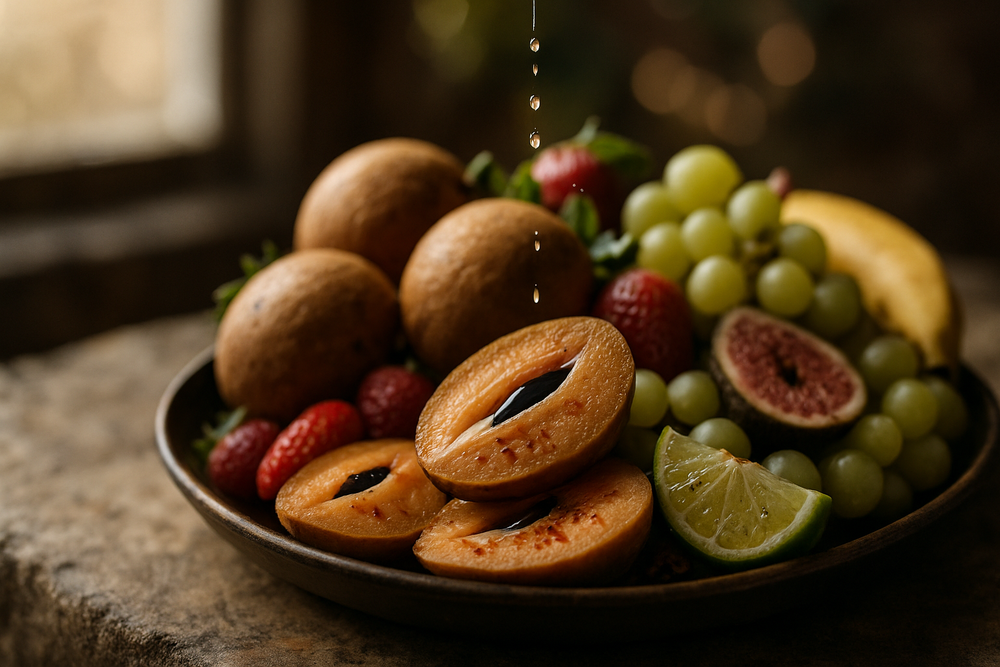
Sapodilla + lime juice and chili flakes A classic South Asian and Latin American approach. The acidity of lime brightens the malty sweetness, while a light sprinkle of chili flakes adds contrast. This combination transforms sapodilla into a savory-leaning snack and is a great way to experience the fruit if you find it too one-dimensionally sweet on its own.
Sapodilla + banana in a smoothie Blend half a ripe sapodilla with half a frozen banana, a cup of unsweetened plant milk, and a tablespoon of nut butter. The result is a creamy, energy-dense drink with fiber, potassium, and healthy fat — a useful option for people needing extra calories or a post-exercise recovery drink.
Bottom line
Sapodilla is a genuinely nutritious tropical fruit that stands out for its unusually high fiber content, pleasant vitamin C and potassium contribution, and rich collection of polyphenol antioxidants. Its malty, brown-sugar flavor makes it one of the more unusual and satisfying whole-fruit options available in tropical and specialty markets.
The honest caveat is that direct clinical trials on sapodilla are scarce. Most of what we can say about its health benefits is extrapolated from its nutrient profile and broader research on high-fiber, antioxidant-rich fruits. It is not a treatment or cure for any condition, but it is a genuinely good food that fits well into a whole-plant-food diet.
Eat it ripe, discard the seeds, watch your portions if sugar is a concern, and enjoy the experience of one of the more underrated tropical fruits on the planet.
Looking to explore more whole fruits and how they support specific health goals? Browse Plantopedia's goals library to find ingredient guides matched to your priorities.
How Sapodilla Compares
| Compared with | What's different |
|---|---|
| Sapodilla vs. Custard Apple (Cherimoya) | Malty, pear-like texture and brown sugar flavor vs. creamy, tropical custard flavor. |
| Sapodilla vs. Persimmon | Higher fiber content (9g vs 3g) and a grainy texture compared to the smooth, buttery texture of persimmon. |
Health Benefits
Things to Know
Unripe fruit caution: Unripe sapodilla contains very high levels of tannins and saponins (bitter, soap-like plant compounds), which cause intense mouth-puckering and can irritate the digestive tract. Only eat the fruit when it is fully ripe and soft.
Discard all seeds: The large, black seeds are inedible, contain compounds not safe for consumption, and are a choking hazard — especially for young children.
People with diabetes or prediabetes: Sapodilla's high natural sugar content means it should be treated like other sweet tropical fruits. Monitor portion size, pair with protein or fat, and factor it into your overall carbohydrate budget.
Chronic kidney disease: Sapodilla contains meaningful potassium per serving. People on a potassium-restricted diet should discuss how it fits into their meal plan with a dietitian or healthcare provider.
Potassium-affecting medications: Certain blood pressure drugs (such as ACE inhibitors and potassium-sparing diuretics) can raise blood potassium levels. Adding a high-potassium food like sapodilla without guidance may compound this effect.
Laxatives or bowel medications: Sapodilla's high fiber content may amplify the effect of laxatives or stool softeners, potentially causing excessive looseness.
Latex or fruit allergies: Sapodilla belongs to the Sapotaceae family. Allergic reactions are rarely reported but are possible. If you have latex allergy or react to other tropical fruits, introduce sapodilla cautiously.
Pregnancy: The folate in sapodilla is a genuine benefit for pregnancy; the fruit is generally considered safe in food amounts. Avoid medicinal-dose preparations from leaves or bark, which lack safety data in pregnancy.
Glossary
Shop This Ingredient
Stock your pantry with quality sapodilla.
Buy on AmazonAs an Amazon Associate, Plantopedia earns from qualifying purchases. This costs you nothing extra and helps us keep the encyclopedia free.
Frequently Asked Questions
Heart and circulation Sapodilla provides two nutrients that population-level research consistently links to heart health: potassium and dietary fiber. Potassium is an electrolyte that helps regulate blood pressure by counteracting the effects of sodium, and fiber is associated with improved cholesterol profiles. A medium sapodilla contributes around 328 mg of potassium and 9 g of fiber — meaningful contributions within an overall fruit-and-vegetable–rich diet. The fruit also contains polyphenols and vitamin C, both of which have antioxidant properties that, in observational studies, correlate with lower markers of cardiovascular risk. However, there are no clinical intervention trials that have specifically tested sapodilla for heart outcomes. Any cardiovascular benefit is inferred from its nutrient pattern and broader research on similar antioxidant-rich fruits, so the evidence is best described as emerging rather than established. Digestive health and microbiome This is where sapodilla's evidence is most persuasive, even if indirect. Nine grams of dietary fiber per medium fruit is a substantial amount — roughly one-third of most adults' daily target. Human studies consistently show that higher fruit-fiber intake increases stool bulk, reduces constipation, and feeds the gut microbiome (the community of beneficial bacteria living in your large intestine). Those studies examine dietary fiber broadly rather than sapodilla specifically, but the fiber in sapodilla is real and plentiful. Tannins in the ripe fruit may also exert mild antimicrobial effects in the gut, and traditional medicine has used sapodilla for digestive complaints, though modern clinical data to support these specific uses are lacking. One practical note: if you are not used to eating much fiber, adding a whole sapodilla in one sitting can cause gas, bloating, or loose stools. Start with half a fruit and increase gradually. Blood sugar and metabolism Sapodilla is a naturally sweet fruit with about 34 g of carbohydrates per medium serving, of which a significant proportion is simple sugar. This makes portion size genuinely important for anyone managing blood glucose. The good news is that its high fiber content slows the rate at which those sugars enter the bloodstream compared with a low-fiber sweet food — the fiber acts as a buffer. General human research supports the role of whole fruits and dietary fiber in reducing type 2 diabetes risk and improving glycemic control over time. No trials have specifically tested sapodilla in people with diabetes or prediabetes, so the fruit's glycemic effect in that population is not precisely known. People on glucose-lowering medications should treat sapodilla as they would other sweet tropical fruits: enjoy it in modest portions, pair it with protein or healthy fat, and check how it fits into their overall carbohydrate plan. Inflammation and recovery Sapodilla contains vitamin C and multiple polyphenol antioxidants, both of which — in population studies — are associated with lower markers of systemic inflammation (widespread low-grade inflammatory activity linked to chronic disease). In laboratory and animal models, sapodilla extracts show free-radical–scavenging activity, but these findings have not been replicated in controlled human trials. What can be said practically is that sapodilla fits into the category of polyphenol-rich, vitamin C–containing fruits that research links to better inflammatory health at the population level. It should not be interpreted as an anti-inflammatory treatment, but it can be a flavorful, nutrient-contributing part of a diet that supports overall inflammatory balance.
People looking for more dietary fiber Struggle to hit daily fiber targets (the US average is well below the recommended 25–38 g/day) Experience irregular bowel movements or mild constipation Want a genuinely sweet whole food that also feeds their gut microbiome Active people with higher energy and micronutrient needs Need calorie-dense whole foods to support training or recovery Want a portable, naturally sweet source of potassium and vitamin C post-workout Prefer energy from whole fruit rather than processed snacks
The golden rule with sapodilla is patience: eat it only when it is fully ripe. A ripe sapodilla yields gently to pressure — similar to a ripe peach — and the skin may show slight wrinkling or feel slightly rough. The flesh inside should be soft, deep caramel-brown, and very sweet. If the flesh is white, chalky, or makes your mouth pucker, the fruit is underripe and very high in tannins. To prepare: Rinse the fruit under water. Cut in half lengthwise or slice into quarters. Remove and discard the 3–6 shiny black seeds — always. They are not edible. Scoop the flesh with a spoon or peel and eat by hand. Forms and their trade-offs: Fresh ripe pulp — The best option. Retains all fiber, nutrients, and natural flavor. Most enjoyable at room temperature or slightly chilled. Blended into a smoothie — Works well; the whole pulp keeps the fiber intact. Good for adding to a protein smoothie to balance the sugar load. In a fruit salad or bowl — Pairs naturally with acidic fruits like pineapple, lime, or passion fruit, which offset its sweetness. Juice or nectar — Not ideal. Juicing removes most of the fiber and concentrates the natural sugars, making blood-sugar spikes more likely and reducing the satiety benefit.
There are no established therapeutic dosages for sapodilla because it has not been studied as a clinical intervention. The practical guide comes from general fruit-intake recommendations: most health authorities suggest roughly 1.5–2 cups of whole fruit per day for adults, with variety encouraged. A typical serving of sapodilla is ½ to 1 medium fruit (about 85–170 g of pulp). This gives you: A manageable 70–141 calories 4.5–9 g of fiber Meaningful amounts of vitamin C and potassium Start-low guidance: If sapodilla is new to you or you are not used to a high-fiber diet, begin with half a medium fruit. High-fiber foods introduced too quickly can cause gas, bloating, or loose stools. Increase gradually over one to two weeks. For blood-sugar management: One serving paired with a protein source (yogurt, nuts, or a legume-based dish) is a more sensible approach than eating a large quantity on its own.
For most healthy adults, ½ to 1 medium sapodilla (85–170 g of ripe pulp) per day fits comfortably within general fruit-intake guidelines and is unlikely to cause any side effects when introduced gradually. The main risk of overconsuming sapodilla is excess natural sugar and calorie intake, not toxicity. Large daily portions — say, two or more whole fruits every day — could meaningfully add to overall sugar and calorie loads, which matters most for people managing weight, blood glucose, or kidney potassium levels. Practically, think of sapodilla the way you would mango or banana: a delicious, nutritious whole fruit that works best as one component of a varied diet rather than a daily dietary staple eaten in unlimited quantities.
Quick Answers
Common questions, answered in a line.
You should only eat sapodilla when it is fully ripe and soft to avoid high levels of tannins and saponins. Unripe fruit contains bitter compounds that cause intense mouth-puckering and can irritate your digestive tract.
No, you must discard all sapodilla seeds before eating the fruit because they are inedible and contain unsafe compounds. The large, black seeds also pose a significant choking hazard, particularly for young children.
Sapodilla supports digestive health primarily through its high content of mixed soluble and insoluble dietary fiber. This fiber promotes bowel regularity, feeds beneficial gut microbes, and can help slow the absorption of sugar into the bloodstream.
People with diabetes can eat sapodilla but should monitor portion sizes due to its high natural sugar content. It is recommended to pair the fruit with protein or healthy fats, such as Greek yogurt or nut butter, to help manage glucose absorption.
Sapodilla contains several key antioxidants, including polyphenols like flavonoids, as well as vitamin C and tannins. These compounds help neutralize free radicals that can damage cells and support overall vascular and immune health.
People on potassium-restricted diets or those taking specific blood pressure medications, such as ACE inhibitors, should consult a doctor before eating sapodilla. The fruit contains meaningful amounts of potassium, which may interfere with these medications or conditions.
Sapodilla is generally considered safe to eat during pregnancy in normal food amounts and provides beneficial folate. However, you should avoid medicinal preparations made from sapodilla leaves or bark, as there is a lack of safety data for these forms.
For Readers in the USA
Local context — sourcing, seasonality, and regional notes.
In the United States, sapodilla is primarily grown in Southern Florida (Zone 10-11) and parts of Hawaii, where the tropical climate allows for year-round production. You may also find small-scale cultivation in protected areas of Southern California, though Florida remains the leading commercial source for domestic markets.
Sapodilla is most commonly found in Asian and Latin American grocery stores, such as H-Mart or local bodegas, rather than mainstream supermarket chains. Because it is a delicate tropical fruit, it is often sold at specialty farmers markets in Miami or Honolulu when in peak season.
In the US, sapodilla is often sold under regional names like "naseberry" (popular in West Indian communities) or "chico sapote" (common in Mexican-American markets). Understanding these names can help you locate the fruit in ethnic markets where it might not be labeled as sapodilla.
The USDA requires that all sapodilla imported to the US mainland from certain regions undergo specific phytosanitary treatments, such as irradiation, to prevent the spread of invasive fruit flies. Domestically grown Florida sapodilla is not subject to these specific import treatments, making it a preferred choice for some shoppers seeking local produce.
AI Clinical Review
- Accurately highlights sapodilla as a fiber-dense sweet fruit; a medium fruit (~170 g) providing ~9 g fiber is a meaningful contribution to regularity and fullness.
- Nutrient profile is sound: notable vitamin C, potassium, and copper alongside polyphenols (antioxidant plant compounds), with an appropriate reminder that the fruit is also energy-dense.
- Sensible blood-sugar guidance: portion control and pairing with protein/healthy fat align with diabetes nutrition practice.
- Clear safety basics—eat only when fully ripe and discard the inedible seeds—are correct and practical.
- There are no human clinical trials specifically testing sapodilla for heart, glycemic, microbiome, or inflammatory outcomes; most benefits are inferred from its nutrients and research on similar fruits.
- Antimicrobial/anti-inflammatory effects of tannins and other polyphenols are largely from lab or animal data; relevance at typical food portions is uncertain.
- The fruit’s precise glycemic index/load by ripeness or variety is not well characterized, so individual responses may vary.
- A practical intake for most adults is 1/2–1 medium fruit (about 85–170 g) within total daily fruit goals; increase gradually if you’re new to higher-fiber foods to limit gas or bloating.
- If you have diabetes or prediabetes, account for ~34 g carbohydrate per medium fruit and monitor your own glucose response; pair with protein or healthy fats.
- People with chronic kidney disease or on potassium-raising medicines (for example ACE inhibitors, ARBs, or spironolactone) should review portions with a clinician due to potassium content.
- Eat only fully ripe pulp; unripe fruit can cause GI upset from tannins, seeds are a choking hazard and not edible, and those with latex–fruit allergies should introduce cautiously. Avoid non-food herbal preparations (leaves/bark/seeds), especially in pregnancy, due to limited safety data.
Unripe fruit is very astringent and high in tannins; seeds are inedible.
References
- USDA FoodData Central — Sapodilla, raw (nutrient data) (fdc.nal.usda.gov)
- MyPlate fruit guidance — US Department of Agriculture (myplate.gov)
- Healthline — Sapodilla: Nutrition, Health Benefits, and More (healthline.com)
- WebMD — What Are the Health Benefits of Sapodillas? (webmd.com)
- ScienceDirect — Review of Manilkara zapota in human nutrition (2022) (sciencedirect.com)
- Nutrition-and-You — Sapodilla fruit nutrition facts and health benefits (nutrition-and-you.com)
- USDA / Growables — Sapodilla horticultural and compositional reference (growables.org)
- FoodStruct — Sapodilla nutritional composition and micronutrient profile (foodstruct.com)
Know Your Numbers
Eating healthy is a start. Now get to know your biomarkers.
Food changes bloodwork — inflammation, lipids, blood sugar and nutrient status all respond to what you eat. 59 markers from $59.
- Results in 7–10 days at 2,000+ Quest sites
- Licensed provider reviews every result
- One flat price, no membership, HSA/FSA eligible
Educational information only, not medical advice. Panels are ordered and reviewed through our licensed partner; Plantopedia may earn a commission.