Sugar Apple — health benefits and uses
Called sweetsop in the Caribbean, traditionally eaten to restore energy.
The Short Answer
Sugar apple is a sweet tropical fruit best eaten by pulling apart the ripe segments and spitting out the toxic seeds. One 100g serving provides 94 calories and 36.3mg of Vitamin C, which is approximately 40% of the daily value.
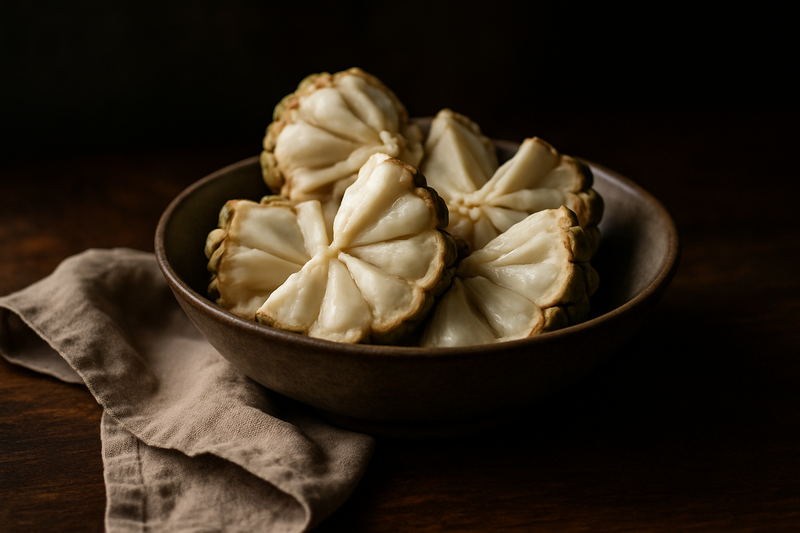
Sugar Apple · Photograph
Discover sugar apple health benefits, full nutrition facts, how to eat the fruit safely, and why the seeds are toxic. Evidence-based guide for smart, whole-food eaters.
Key Nutrients
% Daily Value based on 2,000 cal diet
Key active compounds in sugar apple
Sugar apple's pulp contains a range of bioactive plant compounds (phytochemicals — naturally occurring chemicals made by plants). Here's what's been identified:
- Vitamin C (ascorbic acid) — A water-soluble antioxidant (a molecule that neutralizes harmful free radicals) that supports immune defense and collagen production. Sugar apple provides roughly 36 mg per 100 g, about 40% of the daily value.
- Phenolic compounds — A broad family of plant metabolites with antioxidant and anti-inflammatory activity in laboratory studies. Found in the pulp, skin, and other plant parts.
- Flavonoids — A subgroup of phenolics (polyphenolic compounds) that may support vascular and metabolic health in experimental models; human evidence for sugar apple specifically is still limited.
- Terpenoids — Organic compounds linked to antimicrobial properties in preclinical (laboratory or animal) studies; not yet confirmed for dietary fruit intake.
- Acetogenins — Potent polyketide compounds unique to the Annonaceae plant family. These are concentrated in the seeds and non-edible parts, not the pulp. They show antitumor and pesticidal properties in the lab but are also neurotoxic and are the primary reason the seeds are dangerous.
- Alkaloids — Nitrogen-containing plant compounds with pharmacological effects. Present in seeds and other parts; some may be neurotoxic at higher doses.
Important: Acetogenins and alkaloids are found in meaningful amounts in the seeds and plant parts, not in the soft pulp you eat. Stick to the pulp.
How to eat sugar apple fruit — fresh vs other forms
The best, safest, and most nutritious way to enjoy sugar apple is fresh and whole. Here's how the main forms compare:
Fresh whole fruit (recommended) Crack the ripe fruit open with your hands — it should give easily when pressed. Pull the segments apart, place each piece in your mouth, enjoy the sweet pulp, and spit out the seeds. Do not bite down hard on the seeds. This is the traditional method and the safest one.
Deseeded pulp (bowls, desserts, smoothies) Scoop the pulp into a bowl, pick out every seed carefully, and use it in fruit bowls, plant-based ice cream, or smoothies. USDA nutrition data refers to this edible portion. Smoothies retain the fiber as long as you don't strain the pulp.
Juice (less preferred) Blending deseeded pulp into juice keeps most nutrients but loses fiber structure when strained. Most nutrition guidelines recommend whole fruit over juice — sugar apple is no exception.
Herbal extracts, teas, or decoctions (not recommended for self-use) Preparations using leaves, bark, or seeds are used in some traditional medicine systems. Evidence is almost entirely preclinical, and seed-based preparations carry documented hemolytic (red blood cell-destroying) and genotoxic (DNA-damaging) risks. Avoid these unless under qualified clinical supervision.
Prep and pairing ideas
Sugar apple is naturally sweet and custardy, so it pairs best with flavors and textures that either complement or contrast that richness.
Three practical pairings:
- Sugar apple + lime juice — A squeeze of fresh lime cuts through the sweetness and brightens the flavor. It also provides additional vitamin C and helps slow browning of the exposed pulp. Eat immediately for the best texture.
- Sugar apple + rolled oats or overnight oats — Spoon deseeded pulp over a bowl of oats. The fiber from both the fruit and the oats adds up quickly, making this a filling, slow-digesting breakfast that supports steady energy levels.
- Sugar apple + coconut milk (unsweetened) — A traditional pairing across South and Southeast Asia. Blend deseeded pulp with a small amount of unsweetened coconut milk for a simple, creamy dessert or smoothie base. The natural fat in coconut milk may help with absorption of fat-soluble phytochemicals in the pulp.
Simple prep steps:
- Choose a fruit that yields slightly to gentle pressure — under-ripe sugar apples are hard and flavorless.
- Wash the outside before breaking it open.
- Break or cut in half; pull segments away from the core.
- Pop each segment into your mouth, enjoy the pulp, and spit the seeds into a bowl.
- If deseeding for a recipe, use your fingers or a small spoon to remove every black seed. Check twice — seeds can hide inside the pulp.
- Eat fresh; the pulp oxidizes quickly once exposed to air.
Myths vs facts
Myth 1: "Custard apple and sugar apple are the same fruit." Fact: They are related but distinct. Sugar apple (Annona squamosa) has a knobby, segmented skin and sharply sweet flavor. Cherimoya (Annona cherimola) and soursop (Annona muricata) are cousins in the same family. "Custard apple" is sometimes used as a general term for the whole Annona genus, which adds confusion. Nutritional profiles are similar but not identical across species.
Myth 2: "The seeds are edible if you don't chew them." Fact: Swallowing whole seeds is generally considered low risk if the seed coat stays intact, but there is no benefit to doing so and the potential for harm exists if seeds are cracked during swallowing. The safe practice — strongly recommended — is to spit every seed out. Do not take chances, especially with children.
Myth 3: "Sugar apple extract can treat diabetes or high blood pressure." Fact: Animal and lab studies show interesting effects from Annona squamosa extracts, but no well-designed human clinical trial confirms these outcomes for dietary fruit intake. The fruit can be part of a diet that supports cardiometabolic health — that's different from being a treatment for a disease.
Bottom line
Sugar apple is a genuinely nutritious tropical fruit that earns its place in a whole-food, plant-based diet. It delivers meaningful vitamin C, useful dietary fiber, potassium, and several B vitamins in a single fresh serving. Research suggests it may support heart health, digestion, and antioxidant defense — but most specific disease-related claims are backed by lab or animal studies, not human clinical trials.
The fruit's one non-negotiable safety rule: the seeds are toxic. They can severely damage the eyes on contact and are harmful when ingested in concentrated form. Eat the pulp, spit the seeds. Everything else about sugar apple is about as uncomplicated as a tropical fruit gets.
If you're curious about adding more nutrient-dense fruits to your routine, sugar apple is a flavorful, fiber-rich way to do it — just keep expectations realistic and the seeds firmly in the discard bowl.
Explore more ways to eat for your health goals at Plantopedia /goals.
How Sugar Apple Compares
| Compared with | What's different |
|---|---|
| Sugar Apple vs. Soursop | Larger fruit with a sharper, tangy citrus-like flavor and spikey skin. |
| Sugar Apple vs. Cherimoya | Slightly lower fiber content and a smoother, custard-like texture without distinct segments. |
Health Benefits
Things to Know
Seed toxicity is real and serious.: Crushed or ingested seeds can cause severe eye damage (toxic keratoconjunctivitis — chemical injury to the surface of the eye and eyelids), and seed extracts are hemolytic to human red blood cells. Discard seeds immediately and keep them away from children and pets.
If seeds contact the eyes: , flush with clean water immediately and seek medical attention. This is a documented medical emergency, not a minor irritation.
Kidney disease: Sugar apple provides potassium. People with advanced chronic kidney disease (CKD) or those taking potassium-sparing diuretics, ACE inhibitors, or ARBs should check with their doctor about appropriate fruit intake, as excess potassium can cause dangerous heart rhythm problems (hyperkalemia).
Diabetes: The fruit's carbohydrate content (23.6 g per 100 g) means blood sugar impact is real. Count it in your meal plan.
Blood pressure medications: There is a theoretical additive effect with potassium-raising drugs; monitor as your doctor advises.
Anticoagulants / antiplatelet drugs (e.g., warfarin, aspirin therapy): Preclinical reports suggest some antiplatelet activity in Annona species. While not proven for the pulp, high intake or use of extracts alongside these medications warrants caution.
Pregnancy and breastfeeding: Eating the fresh fruit in normal amounts is unlikely to cause harm, but herbal preparations using seeds, leaves, or bark have not been assessed for safety and should be avoided.
Herbal or pesticide preparations: Seed extracts have documented genotoxic effects in animal studies and hemolytic effects on human red blood cells. Do not use them as home remedies or DIY pest control.

Prep Ideas
- — **Sugar apple + lime juice** — A squeeze of fresh lime cuts through the sweetness and brightens the flavor. It also provides additional vitamin C and helps slow browning of the exposed pulp. Eat immediately for the best texture.
- — **Sugar apple + rolled oats or overnight oats** — Spoon deseeded pulp over a bowl of oats. The fiber from both the fruit and the oats adds up quickly, making this a filling, slow-digesting breakfast that supports steady energy levels.
- — **Sugar apple + coconut milk (unsweetened)** — A traditional pairing across South and Southeast Asia. Blend deseeded pulp with a small amount of unsweetened coconut milk for a simple, creamy dessert or smoothie base. The natural fat in coconut milk may help with absorption of fat-soluble phytochemicals in the pulp.
- — Choose a fruit that yields slightly to gentle pressure — under-ripe sugar apples are hard and flavorless.
- — Wash the outside before breaking it open.
- — Break or cut in half; pull segments away from the core.
- — Pop each segment into your mouth, enjoy the pulp, and spit the seeds into a bowl.
- — If deseeding for a recipe, use your fingers or a small spoon to remove every black seed. Check twice — seeds can hide inside the pulp.
- — Eat fresh; the pulp oxidizes quickly once exposed to air.
Shop This Ingredient
Stock your pantry with quality sugar apple.
Buy on AmazonAs an Amazon Associate, Plantopedia earns from qualifying purchases. This costs you nothing extra and helps us keep the encyclopedia free.
Frequently Asked Questions
The honest answer is that most specific benefits are supported by promising but preliminary evidence. Here's a system-by-system look. Heart and circulation Sugar apple contains potassium (247 mg per 100 g), dietary fiber (4.4 g), and modest magnesium — all nutrients associated with lower blood pressure and healthier cholesterol levels in broad dietary research on fruits and fiber-rich diets. No rigorous human clinical trials have tested sugar apple pulp specifically for heart outcomes. Some reviews mention that Annona squamosa extracts may modify blood lipids and have antiplatelet (anti-clotting) effects in preclinical models, but these findings come from concentrated extracts, not from eating the fruit. Sugar apple can support heart health as part of an overall fruit-rich, whole-food diet — that's the most evidence-aligned statement we can make right now. Digestive health and gut support With 4.4 g of dietary fiber per 100 g, sugar apple is a genuinely good source of fiber — a nutrient most people don't get enough of. Dietary fiber bulks up stool, feeds beneficial gut bacteria, and supports regular bowel movements. These benefits are well established in broader fiber research, and sugar apple's fiber content fits the same pattern. No clinical trials have studied sugar apple specifically for constipation relief or changes to the gut microbiome (the community of microorganisms living in your digestive tract). But as a fiber-dense whole fruit, it fits neatly into the kind of diet that is backed by digestive health research. The soft, creamy pulp is also easy to chew, making it accessible for many people. Blood sugar and metabolism Sugar apple is a carbohydrate-rich fruit (23.6 g per 100 g), so it will raise blood sugar. The fiber content may help slow glucose absorption compared with refined carbohydrates, which is consistent with general fruit-and-fiber research — but this hasn't been tested for sugar apple in a controlled human study. Preclinical research on Annona squamosa extracts (mainly from leaves and bark) shows antidiabetic effects in animal models. These findings are interesting but cannot be applied directly to eating fresh fruit. People with diabetes can include sugar apple within their total fruit allowance — the key is portion control and counting the carbohydrates, not assuming special antidiabetic power. Inflammation and recovery The vitamin C, phenolics, and flavonoids in sugar apple pulp contribute measurable antioxidant activity in laboratory assays. Antioxidants help neutralize free radicals — unstable molecules linked to chronic inflammation and cell damage. No human trials have directly tested sugar apple for anti-inflammatory outcomes. Think of it as one more antioxidant-containing fruit in a plant-rich diet rather than a standalone anti-inflammatory therapy. That's a reasonable, science-consistent framing.
There is no established therapeutic dose for sugar apple — it's a whole fruit, not a supplement. General guidance: A reasonable serving is one small to medium fruit, yielding roughly 100–200 g of edible pulp. This fits within USDA dietary guidelines recommending 1.5–2 cups of fruit per day for most adults. Within that daily fruit budget, sugar apple can take up half to a full serving — but variety across different fruits is more valuable than eating large amounts of any single one. Start lower if you: Are new to high-fiber tropical fruits (start with half a fruit to assess digestive tolerance). Are managing blood sugar — track how your glucose responds to a small portion before eating more. Are on potassium-related medications — get dietary advice first. Research note: No controlled human trial has defined an optimal dose of sugar apple for any health outcome. The guidance above extrapolates from general fruit recommendations, not sugar-apple-specific data.
Quick Answers
Common questions, answered in a line.
Sugar apple seeds are toxic because they contain acetogenins and alkaloids, which are neurotoxic and can be harmful if ingested. These potent plant compounds are concentrated in the seeds and non-edible parts rather than the soft pulp, making it essential to spit every seed out.
To eat a sugar apple, crack the ripe fruit open with your hands, pull the segments apart, and enjoy the sweet pulp while spitting out the black seeds. You can also scoop the pulp into a bowl, carefully removing every seed for use in smoothies, fruit bowls, or desserts.
Sugar apple and custard apple are related but distinct species within the Annona genus. While "custard apple" is often used as a general term for the entire family, the true sugar apple (Annona squamosa) is recognized by its knobby, segmented skin and sharply sweet flavor.
Sugar apple pulp contains approximately 36 mg of Vitamin C per 100 g, which provides about 40% of the daily value. This water-soluble antioxidant supports immune defense and collagen production, and is joined by other compounds like phenolic metabolites and flavonoids.
You should avoid sugar apple seeds, skin, bark, and leaves, as these parts contain concentrated toxic compounds like acetogenins. Only the soft, fleshy pulp of the fruit is considered safe and nutritious for consumption.
People with advanced chronic kidney disease (CKD) or those taking potassium-sparing medications should consult a doctor before eating sugar apple due to its potassium content. Additionally, individuals on blood sugar or blood pressure medications should monitor their intake.
Sugar apple pairs well with lime juice to cut the sweetness, or with rolled oats to create a filling, high-fiber breakfast. It is also traditionally blended with unsweetened coconut milk for a creamy, tropical dessert or smoothie base.
For Readers in the USA
Local context — sourcing, seasonality, and regional notes.
In the United States, sugar apples are primarily grown in South Florida, particularly in Miami-Dade County, due to the region's subtropical climate. Small-scale cultivation also occurs in Hawaii and protected coastal areas of Southern California, though Florida remains the leading domestic producer.
The domestic sugar apple season in the U.S. typically runs from mid-summer through autumn, peaking between August and October. While Florida-grown fruit is seasonal, you may find imported varieties from South America or the Caribbean in specialty markets during other months.
You can buy sugar apples at specialty grocers like H Mart or 99 Ranch Market, and at local farmers markets in tropical regions like Florida and Hawaii. During peak season, some high-end retailers like Whole Foods or specialized tropical fruit distributors may also stock them in larger metropolitan areas.
Look for the USDA Organic seal to ensure the fruit was grown without synthetic pesticides, and always follow FDA food safety basics by washing the knobby skin thoroughly before handling. Because the fruit is often imported, the USDA APHIS monitors shipments to prevent the introduction of tropical pests into domestic orchards.
AI Clinical Review
- Clearly distinguishes the safe, edible pulp from toxic seeds and explains the real risk of eye injury from crushed seeds.
- Nutrition snapshot aligns with standard databases: sugar apple is a fiber‑rich, vitamin C–dense fruit with moderate potassium and modest B6/magnesium.
- Appropriately frames potential benefits (heart, digestion, antioxidant support) as consistent with fruit‑rich dietary patterns, not as disease treatments.
- Sensible, practical guidance on choosing, prepping, and favoring whole fruit over strained juice to retain fiber.
- Cardiometabolic benefits of sugar apple pulp specifically haven’t been confirmed in human trials; many citations use concentrated non‑pulp extracts or animal models.
- Antioxidant/anti‑inflammatory findings are largely from lab assays; it’s unclear how typical servings translate to clinical outcomes.
- Effects on post‑meal glucose in people with diabetes are plausible but not well studied for this fruit; real‑world glycemic impact likely varies by portion and meal context.
- A practical serving is about one small–medium fruit (≈100–200 g pulp); start smaller if new to high‑fiber fruits or if monitoring glucose.
- Seeds are hazardous: do not crush, blend, or allow eye contact; keep away from children and pets. Accidentally swallowing an intact seed is usually low risk but not advised.
- If you have chronic kidney disease or take potassium‑raising medications (ACE inhibitors, ARBs, potassium‑sparing diuretics), account for the potassium and confirm portions with your clinician.
- On blood thinners/antiplatelets (e.g., warfarin, aspirin, clopidogrel): routine fruit intake is generally fine, but avoid concentrated plant extracts from leaves/seed/bark; discuss any supplements with your care team.
Seeds are toxic and irritating to the eyes; do not crush or ingest them.
References
- USDA FoodData Central — Sugar-apples, raw (FDC ID 168175), full nutrient profile (fdc.nal.usda.gov)
- USDA MyPlate — Fruit group guidance and daily recommendations (myplate.gov)
- Ocular toxicity from custard apple seeds — peer-reviewed case series on toxic keratoconjunctivitis (pmc.ncbi.nlm.nih.gov)
- Hemolytic effects of Annona squamosa seed vs pulp extracts on human red blood cells (pmc.ncbi.nlm.nih.gov)
- Genotoxicity of Annona squamosa seed extract in animal models (pubmed.ncbi.nlm.nih.gov)
- Acute toxicity of Annona squamosa seed and leaf extracts — aquatic toxicology study (journalijar.com)
- Comprehensive review: ethnobotany, pharmacology, phytochemistry, and toxicity of Annona squamosa (journals.sagepub.com)
- Review: nutrition, bioactivities, and health benefits of custard apple — phytochemicals to application (pubmed.ncbi.nlm.nih.gov)
- Antioxidant and anti-inflammatory properties of Annona squamosa pulp — experimental study (jopir.in)
- Nutritional composition and traditional medicinal properties of Annona squamosa (growables.org)
Know Your Numbers
Eating healthy is a start. Now get to know your biomarkers.
Food changes bloodwork — inflammation, lipids, blood sugar and nutrient status all respond to what you eat. 59 markers from $59.
- Results in 7–10 days at 2,000+ Quest sites
- Licensed provider reviews every result
- One flat price, no membership, HSA/FSA eligible
Educational information only, not medical advice. Panels are ordered and reviewed through our licensed partner; Plantopedia may earn a commission.