Egg Fruit relative Lucuma — health benefits and uses
An Andean staple (Inca gold) eaten as a rich, filling energy food.
The Short Answer
Lucuma is a starchy Andean fruit known for its maple-caramel flavor and low glycemic index. It provides 11 grams of dietary fiber per 100g serving and is typically used as a nutrient-dense alternative to sugar in smoothies and desserts.

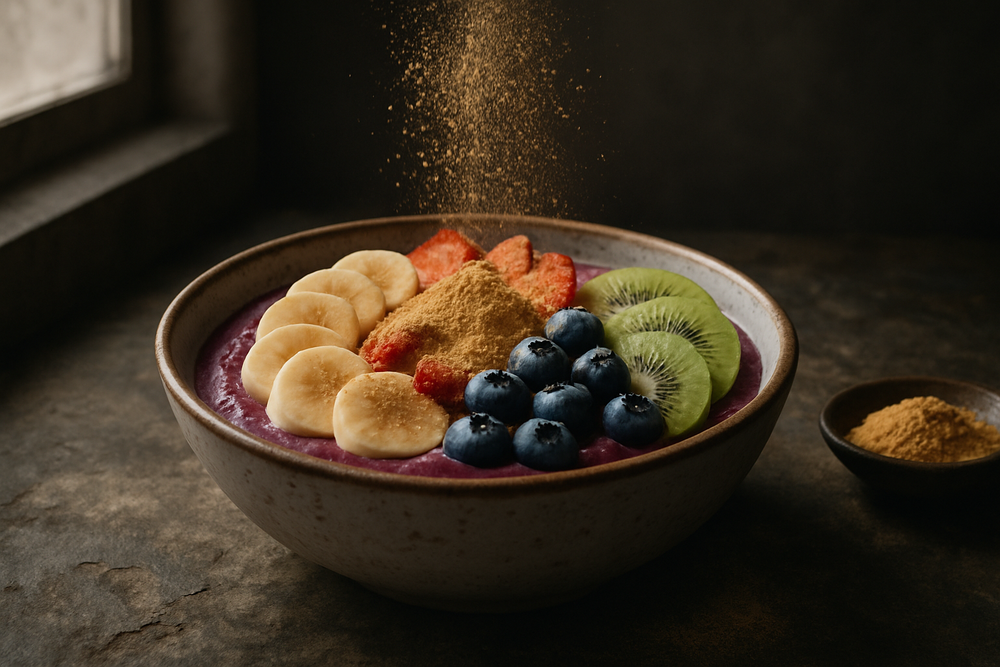
Egg Fruit relative Lucuma · Photograph
Discover lucuma powder health benefits, nutrition facts, and side effects. Learn how this Andean maple-caramel fruit compares to sugar, its glycemic index, best daily amounts, and who should use it with caution.
Key Nutrients
% Daily Value based on 2,000 cal diet
Key active compounds in lucuma
- Polyphenols (phenolic acids and flavonoids): Plant compounds with multiple phenol rings that act as antioxidants and may help dampen inflammation at the cellular level. Lucuma compares favorably to several other Peruvian fruits in polyphenol concentration.
- Carotenoids (β-carotene and related pigments): Fat-soluble pigments responsible for lucuma's deep yellow-orange color. β-Carotene is a provitamin A, meaning the body converts it to active vitamin A as needed.
- Phytosterols: Plant-derived compounds structurally similar to cholesterol. Small amounts from multiple plant foods can modestly support healthy cholesterol levels by competing with cholesterol for absorption in the gut.
- Triterpenes and bioactive lipids: A class of plant compounds found in the fruit flesh and seed oil with anti-inflammatory and antimicrobial activity in preclinical (lab and animal) models.
- α-Glucosidase-inhibiting compounds: Substances that can slow the intestinal enzyme responsible for breaking down complex carbohydrates into glucose, potentially blunting post-meal blood glucose spikes. Demonstrated in vitro (in cell studies) but not yet confirmed in long-term human trials.
- Niacin (vitamin B3) and other B vitamins: Energy-metabolism cofactors that are reported at meaningful levels in lucuma composition analyses.
Buying guide: choosing a quality lucuma powder
Lucuma powder is widely available online and in health food stores, but product quality varies. Here is what to look for:
- Single ingredient: The label should list only "lucuma powder" or "dried lucuma fruit (Pouteria lucuma)." No maltodextrin, fillers, or anti-caking agents.
- Country of origin: Products sourced from Peru or Chile and manufactured under food-safety certification (e.g., organic, non-GMO verified, or BRC/ISO certified) tend to be more reliably processed.
- Color and aroma: Quality powder is pale golden-yellow with a noticeable caramel-like scent even through the packaging. A dull, grayish color or lack of aroma may indicate over-processing or old stock.
- Packaging: Resealable, moisture-proof bags or airtight containers prevent clumping. Once opened, store in a cool, dry pantry or refrigerator and use within 6–12 months.
- Supplements vs. food powder: Plain food-grade lucuma powder is preferred over capsule supplements that may use concentrated extracts at doses not studied in humans.
Prep and pairing ideas
Lucuma powder dissolves easily into liquids and blends smoothly into batters, making it one of the more versatile fruit powders available.
Smoothies and shakes: Start with 1–2 tablespoons blended with frozen banana, oat milk, and a handful of spinach. The maple-caramel note rounds out green smoothies without the need for separate sweetener.
Plant-based "ice cream": Blend 2–3 tablespoons of lucuma powder into a frozen banana base with a splash of coconut milk. No added sugar needed — the lucuma provides sweetness and a custard-like body reminiscent of traditional Peruvian helado de lúcuma.
Overnight oats and porridge: Stir 1 tablespoon into rolled oats with chia seeds before refrigerating overnight. Pairs especially well with cinnamon and sliced dates.
Baked goods (brownies, muffins, energy bars): Substitute 2–3 tablespoons of lucuma powder for an equivalent amount of refined sugar in recipes. Expect a richer, more complex sweetness with slight caramel undertones.
Nut butter toast: Dust ½ teaspoon of lucuma powder over almond or cashew butter on whole-grain toast. The combination of natural fruit sweetness and healthy fat is satisfying and requires no jam or honey.
Bottom line
Lucuma powder is a genuinely interesting whole-food ingredient: it is real fruit, minimally processed, and brings a uniquely satisfying maple-caramel sweetness alongside meaningful fiber, provitamin A carotenoids, polyphenols, and B vitamins. Used in place of refined sugar in smoothies, desserts, and baked goods, it is a straightforward nutritional upgrade — more fiber, more phytonutrients, and a slightly more moderate impact on blood glucose.
What it is not — despite some enthusiastic marketing — is a low-GI miracle sweetener, a diabetes treatment, or a supplement with proven clinical outcomes. Its GI of about 68 is moderate, its carbohydrates count, and the anti-inflammatory and blood-sugar research is still largely at the lab-bench stage. Treat lucuma powder as a flavorful whole-food addition to an already varied, plant-rich diet, not as a shortcut to any specific health goal, and it earns its place in the pantry.
How Egg Fruit relative Lucuma Compares
| Compared with | What's different |
|---|---|
| Egg Fruit relative Lucuma vs. Canistel (Egg Fruit) | Lucuma is starchier with a maple-like taste, while Canistel is creamier and more musky. |
| Egg Fruit relative Lucuma vs. Persimmon | Lucuma is a dry, starchy fruit used as a sweetener, whereas Persimmon is juicy and honey-sweet. |
| Egg Fruit relative Lucuma vs. Maca Powder | Lucuma is a fruit powder with 11g of fiber; maca is a root with a more pungent, earthy flavor. |
Health Benefits
Things to Know
Carbohydrate counting: Lucuma powder is not a low-calorie or low-carb ingredient. Each tablespoon (~16 g) contributes roughly 14 g of carbohydrates. Factor this into your daily totals, especially if you follow a reduced-carbohydrate plan.
Diabetes and blood-sugar management: Lucuma has a moderate GI (~68). People using insulin, sulfonylureas, metformin, or other glucose-lowering medications should account for lucuma's carbohydrate load and monitor blood glucose as they would with any starchy fruit.
High-fiber adjustment: Adding several tablespoons of lucuma powder quickly can cause gas, bloating, or loose stools if your gut is not accustomed to the fiber load. Start with 1 teaspoon and increase gradually over 1–2 weeks.
Kidney disease: Lucuma contains potassium. People on potassium-restricted diets (often advised in chronic kidney disease) should discuss lucuma use with their dietitian before adding it regularly.
Antihypertensive medications and potassium: Those taking potassium-sparing diuretics or ACE inhibitors should be mindful of total dietary potassium from all fruit and vegetable sources, including lucuma.
Pregnancy and breastfeeding: Culinary amounts of lucuma powder are likely safe, as lucuma has been a traditional food for centuries, but concentrated supplements or extracts have not been studied in pregnant or breastfeeding populations. Stick to food-level use.
Sapotaceae allergy: Lucuma belongs to the same plant family as sapodilla and mamey sapote. If you have a known allergy to other Sapotaceae fruits, introduce lucuma cautiously and watch for any reaction.
No documented drug–food interactions: have been formally reported for lucuma at typical food amounts, but the general principle of notifying your healthcare provider about significant dietary additions applies.
Shop This Ingredient
Stock your pantry with quality egg fruit relative lucuma.
Buy on AmazonAs an Amazon Associate, Plantopedia earns from qualifying purchases. This costs you nothing extra and helps us keep the encyclopedia free.
Frequently Asked Questions
Heart and circulation Lucuma provides potassium, fiber, and antioxidant polyphenols — three nutrient categories that, in large dietary studies, are consistently associated with lower blood pressure and reduced cardiovascular risk. Lucuma extracts have also shown ACE-inhibiting activity in laboratory assays (ACE inhibition is one mechanism by which blood-pressure medications work), though this has not been translated into a clinical trial measuring real blood-pressure outcomes in humans. Until that evidence exists, heart-health benefits from lucuma are best understood as part of a broader pattern: eating more fiber-rich, polyphenol-rich whole fruits tends to support cardiometabolic health over time, and lucuma is a flavorful way to do that. Digestive health and microbiome Fiber is where lucuma's case is most straightforward. At roughly 11 g per 40 g serving, lucuma powder is unusually fiber-dense for a flavoring ingredient. Both soluble fiber (which feeds beneficial gut bacteria) and insoluble fiber (which adds bulk to stool and supports transit) appear to be present. Research on lucuma-specific effects on the gut microbiome — the community of microorganisms living in the digestive tract — does not yet exist, but general fiber research strongly supports adequate intake for bowel regularity, satiety, and colon health. Starting with 1 tablespoon and increasing gradually is the sensible approach for anyone new to lucuma, as a sudden jump in fiber can cause gas and bloating. Blood sugar and metabolism This is the most nuanced area. A glycemic index study using lucuma pulp calculated a GI of approximately 68 — placing it in the "moderate" category (55 or below is considered low, 70 or above is high). That is meaningfully lower than white sugar's GI of about 65–70 and far below glucose (GI 100), but it is not the "low-GI sweetener" that some marketing materials claim. In vitro studies show that lucuma compounds can inhibit the enzyme α-glucosidase, which could theoretically slow glucose absorption, but this mechanism has not yet been proven in longer-term human glucose-control studies. For people managing diabetes or insulin resistance, lucuma powder still needs to be counted as a carbohydrate source — not used freely as if it were stevia or monk fruit. Inflammation and recovery Lucuma scores well among Andean fruits in polyphenol content, and polyphenols are among the most studied dietary compounds for their ability to reduce markers of oxidative stress (cellular damage from unstable oxygen molecules) and inflammation. Lucuma seed oil has shown wound-healing and antibacterial activity in preclinical models, which aligns with traditional Andean use. However, no controlled human trial has measured inflammatory markers like C-reactive protein (CRP) before and after lucuma consumption. These benefits remain plausible but unproven at the clinical level.
Lucuma powder is the most practical and widely available form internationally, and it is what most of the research references. It concentrates the fruit's flavor, fiber, and phytonutrients without added ingredients. Fresh lucuma fruit is found in Andean markets and provides the same nutrients with more water content, but the intensely dry, starchy texture means most people outside Peru rarely eat it raw on its own. Frozen or pasteurized lucuma pulp retains more moisture than powder and is used in traditional Peruvian ice creams and sweets. It is occasionally found in specialty Latin American grocery stores. Lucuma extracts (polyphenol-rich fractions) are used in research settings and are starting to appear in some cosmetic and supplement products, but standardized consumer doses have not been established, and the evidence base for extract use beyond food amounts is thin. Lucuma nut oil is studied for topical wound-healing and antimicrobial applications rather than as an oral supplement, and is not a typical dietary addition. For most people, dehydrated lucuma powder at culinary amounts (1–3 tablespoons daily) offers the best balance of flavor, nutrition, convenience, and established safety.
There is no officially established recommended daily dose for lucuma powder because it is a food, not a regulated supplement. The practical range used in culinary contexts is 1–5 tablespoons (roughly 8–40 g) per day, with most recipes calling for 1–2 tablespoons per serving. A sensible starting point: Week 1: 1 teaspoon (about 5 g) mixed into a smoothie or oats to assess tolerance, particularly for digestion. Week 2 onward: Gradually increase to 1–2 tablespoons (16–32 g) daily if no digestive discomfort occurs. Upper culinary limit: 3–5 tablespoons daily is the typical maximum in recipe contexts, contributing roughly 420–700 calories from lucuma alone at the upper end — which for most people would crowd out other important foods. The glycemic-index study used a portion providing 50 g of available carbohydrate (a research dose, not a daily recommendation). For everyday use, 1–2 tablespoons is plenty to get the flavor, fiber contribution, and phytonutrients without significantly inflating your carbohydrate intake. Children and athletes: No specific guidance exists. Children can enjoy lucuma powder in age-appropriate recipe amounts. Athletes may find it a useful pre- or post-workout flavoring addition to smoothies, given its carbohydrate content, but it offers no special ergogenic (performance-enhancing) effect beyond the calories it provides.
Quick Answers
Common questions, answered in a line.
Lucuma powder has a moderate glycemic index (GI) of approximately 68. While it contains compounds that may slow glucose absorption in lab studies, it is not a low-GI sweetener and its carbohydrate content should be factored into daily totals by those managing blood sugar.
Lucuma powder is a whole-food sweetener that provides fiber, B vitamins, and antioxidants like polyphenols and carotenoids. Unlike refined sugar, it offers a maple-caramel flavor and a more complex nutritional profile, though it still contains significant carbohydrates.
Lucuma powder contains fiber, energy-metabolism cofactors like Niacin (B3), and carotenoids which the body converts into Vitamin A. It also features polyphenols and phytosterols that may support healthy cholesterol levels and provide antioxidant effects.
You can use lucuma powder as a sweetener in smoothies, plant-based ice cream, overnight oats, and baked goods. Because of its maple-caramel flavor, it pairs well with cinnamon, dates, and nut butters, and can often substitute for refined sugar in recipes.
High-quality lucuma powder should be a pale golden-yellow color with a distinct caramel-like aroma. Avoid products that appear dull or grayish, and ensure the label lists only a single ingredient—dried lucuma fruit—without fillers or anti-caking agents.
Individuals with kidney disease, those on potassium-restricted diets, or people taking potassium-sparing medications should use lucuma with caution. Because it contains potassium and significant fiber, it may also cause digestive upset if introduced too quickly into the diet.
Lucuma gets its deep yellow-orange color from carotenoids, specifically beta-carotene. These fat-soluble pigments act as provitamin A, which the body converts into active vitamin A to support various biological functions.
For Readers in the USA
Local context — sourcing, seasonality, and regional notes.
In the United States, lucuma powder is primarily found at health food chains like Whole Foods Market, Sprouts Farmers Market, and through major online retailers. While fresh lucuma is rare in the US due to import restrictions on the raw fruit, the dehydrated powder is widely available in the supplement or baking aisles.
While lucuma is native to the Andes, small-scale cultivation is possible in USDA Hardiness Zones 10 and 11, such as parts of Southern California and South Florida. Because the tree is sensitive to frost and extreme heat, it is not a common commercial crop in the US, leading most consumers to rely on imported Peruvian powder.
When shopping in the US, look for the USDA Organic seal and the Non-GMO Project Verified label to ensure the powder meets federal standards for pesticide use and genetic modification. Since lucuma powder is sold as a food or dietary supplement, the FDA regulates its labeling, but does not "approve" its health claims before they hit the market.
Lucuma is most famously used in the US within the Peruvian-American community, where lucuma-flavored ice cream is a staple at ethnic grocery stores and restaurants. It has also gained popularity in the US "superfood" scene as a natural, plant-based alternative to maple or caramel flavorings in vegan and paleo-friendly recipes.
AI Clinical Review
- Lucuma powder is accurately framed as a whole‑food flavoring that contributes meaningful fiber (~11 g per 40 g serving) and phytonutrients, not a zero‑calorie sweetener or therapeutic supplement.
- The glycemic index (GI) discussion is balanced: lucuma sits in the moderate range and should still be counted toward total carbohydrates, especially for people managing blood glucose.
- The overview of key compounds (carotenoids, polyphenols, phytosterols) aligns with what’s been identified in composition studies and traditional food use.
- Practical guidance is sensible: start with small amounts, use powder as the most accessible form, and consider it within MyPlate-style, whole‑food eating patterns.
- Most health claims (antioxidant, anti‑inflammatory, ACE and α‑glucosidase activity) come from cell or animal studies; rigorous human trials measuring clinical outcomes are limited.
- Reported GI and nutrient values may vary by cultivar, processing, and brand; standardized databases remain sparse, so exact micronutrient figures should be taken as estimates.
- Lucuma-specific effects on the gut microbiome and markers like C‑reactive protein (inflammation) have not been tested in well‑controlled human studies.
- Typical culinary use is 1–2 tablespoons daily; up to ~3–5 tablespoons is generally food‑level intake, but a quick jump in fiber can cause gas, bloating, or loose stools—titrate gradually.
- People with diabetes or insulin resistance should count lucuma’s carbohydrates and monitor responses as they would with other starchy fruits; it is not a substitute for very low‑GI sweeteners.
- Those with potassium restrictions (e.g., some chronic kidney disease) or on potassium‑sparing diuretics/ACE inhibitors should consider total dietary potassium and discuss regular use with a clinician.
- Use caution if you have known allergies to Sapotaceae fruits (e.g., sapodilla, mamey); in pregnancy or breastfeeding, stick to food amounts and avoid concentrated extracts due to limited data.
Very dry and starchy fresh; most often used as a powder.
References
- USDA FoodData Central — fruit and lucuma entries (fdc.nal.usda.gov)
- MyPlate.gov — Fruits guidance (myplate.gov)
- PubMed: Lucuma fruit nutritional value, antioxidants, and fatty acids (2025) (pubmed.ncbi.nlm.nih.gov)
- SciELO Peru: Lúcuma composition, bioactive compounds, antioxidant activity and health properties (2020) (scielo.org.pe)
- UPC Peru: Glycemic index study of Pouteria lucuma, Annona cherimola, and Mauritia flexuosa (repositorioacademico.upc.edu.pe)
- USC Scalar: Pouteria lucuma — historical and modern medical uses of the Andean lucuma fruit (scalar.usc.edu)
- ScienceDirect Topics: Pouteria lucuma overview (sciencedirect.com)
- WebMD: Lucuma health benefits, nutrients, uses (webmd.com)
- Healthline: 6 surprising benefits of lucuma powder (healthline.com)
- Darwin Nutrition: Lucuma — benefits, uses, dosage (darwin-nutrition.fr)
Know Your Numbers
Eating healthy is a start. Now get to know your biomarkers.
Food changes bloodwork — inflammation, lipids, blood sugar and nutrient status all respond to what you eat. 59 markers from $59.
- Results in 7–10 days at 2,000+ Quest sites
- Licensed provider reviews every result
- One flat price, no membership, HSA/FSA eligible
Educational information only, not medical advice. Panels are ordered and reviewed through our licensed partner; Plantopedia may earn a commission.