Epazote — health benefits and uses
Used in Mesoamerican tradition as a digestive and antiparasitic herb.
The Short Answer
Epazote is a pungent Mexican herb used to flavor beans and reduce flatulence. It contains ascaridole, a compound traditionally used to treat intestinal parasites, and provides high levels of manganese and folate.
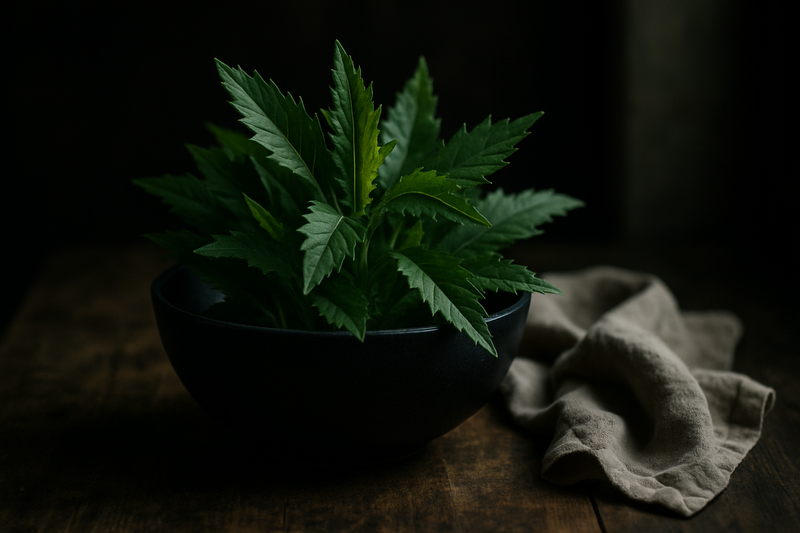
Epazote · Photograph
Discover epazote health benefits, uses, and safety in this evidence-aligned guide. Learn how this pungent Mexican herb may support digestion, what the nutrition facts show, and who should avoid it — including important pregnancy and toxicity warnings.
Key Nutrients
% Daily Value based on 2,000 cal diet
Key active compounds in epazote
The herb's distinctive smell and much of its biological activity come from its volatile essential oil, which makes up a small percentage of the fresh leaf by weight. The main phytochemicals include:
- Ascaridole — a monoterpene peroxide (a type of organic compound with a characteristic chemical structure) and the primary driver of epazote's historical use against intestinal worms. It is also the compound most associated with toxicity at high doses. Found almost exclusively in epazote, making it something of a botanical fingerprint.
- Limonene — a citrus-scented monoterpene also found in lemon peel and dill. Thought to have carminative (gas-reducing) and antispasmodic (muscle-relaxing) effects in the gut. Widely regarded as safe in food amounts.
- p-Cymene — an aromatic monoterpene with suggested antimicrobial and anti-inflammatory properties in laboratory studies.
- β-Myrcene — a monoterpene found in hops, bay leaves, and epazote. Small experimental studies suggest it may help relax intestinal muscle contractions, which could support its traditional use for cramps and bloating.
- Phenolic antioxidants (flavonoids and phenolic acids) — a broad group of plant compounds that neutralize free radicals (unstable molecules that can damage cells). Epazote's phenolics contribute to its antioxidant capacity and may have mild anti-inflammatory effects.
These compounds work together when you cook with fresh epazote, though heat does reduce the concentration of the more volatile ones — which is one reason culinary use is considered safer than consuming concentrated extracts or oil.
Buying guide: finding and selecting epazote
Fresh epazote is your best starting point. In the United States, it is most reliably found at Latin grocery stores (especially those catering to Mexican communities), specialty produce markets, and some farmers' markets during warmer months. Look for bright green, upright sprigs without yellowing leaves or slimy stems. The smell is unmistakable — if it doesn't have that strong resinous, slightly petroleum-like aroma, it may not be fresh.
Dried epazote is more widely available online and in Latin spice sections at well-stocked grocery stores. Look for a product that still has a distinct aroma when you open the bag — dried herbs that smell like nothing have usually lost their volatile compounds and won't contribute much. Store in an airtight container away from heat and light, and aim to use within six months.
Label tip: Some products labeled "Mexican tea" refer to epazote, since the herb goes by this name in parts of Latin America. Read ingredient lists carefully when buying packaged herb blends.
Growing your own is surprisingly practical. Epazote grows readily from seed in most climates during summer and can become quite prolific (it self-seeds enthusiastically). Growing your own gives you access to fresh leaves on demand and means you know exactly what you have.
Skip the essential oil supplements — as discussed above, there is no safe home use for concentrated epazote oil, and reputable supplement retailers do not commonly stock it for this reason.
Prep and pairing ideas
Epazote is not a background herb — its flavor is assertive and will define a dish. Use it where its character is welcome.
Classic: black beans with epazote. Add 1–2 fresh sprigs (or 1 teaspoon dried) to a pot of black beans in the last 20 minutes of simmering. Remove the stems before serving. This is the canonical use and the best starting point for anyone new to the herb. The long cook mellows the flavor and disperses the volatile compounds throughout the pot.
Quesadillas and tlayudas. Chopped fresh epazote leaves work well scattered over bean-filled quesadillas or mixed into refried beans. The heat of the tortilla coaxes out the aroma without over-concentrating it.
Corn-based dishes. In Oaxacan cooking, epazote appears in corn-based soups, tamales, and memelas (corn masa cakes). Its piney edge contrasts beautifully with the sweetness of fresh corn. A small amount — a few chopped leaves — goes a long way.
Egg dishes. In central Mexican cooking, a leaf or two of epazote is sometimes added to scrambled eggs or egg-based tacos. It adds a distinctly earthy, herbal note that pairs well with chili and cheese.
What it pairs with: Epazote is most naturally paired with other robust flavors — black or pinto beans, corn, chili peppers, tomatillo, and strong cheeses like queso fresco. It does not play well as a finishing herb the way cilantro or parsley does; it needs heat or time to soften.
Bottom line
Epazote is a genuinely useful culinary herb with a rich traditional history and a plausible biological rationale for its digestive reputation. Its nutrients — particularly folate, magnesium, calcium, and manganese — are meaningful contributors to a varied plant-rich diet, even at the small amounts used in cooking. The evidence for specific health benefits beyond flavor and modest nutritional contribution is preliminary and largely based on traditional use and laboratory data rather than human clinical trials.
The safety picture is clear: culinary use is appropriate for most healthy adults, and concentrated oil or medicinal doses are not. Pregnancy, breastfeeding, liver or kidney disease, seizure disorders, and pediatric use all warrant extra caution or avoidance of anything beyond small culinary flavoring.
The best way to use epazote is exactly the way Mexican cooks have used it for centuries: a couple of sprigs in a pot of beans, pulled out before serving, doing quiet and flavorful work in the background.
Looking for more ways to support digestive health through food? Explore the Plantopedia Digestive Health guide for ingredient pairings and meal strategies.
How Epazote Compares
| Compared with | What's different |
|---|---|
| Epazote vs. Cilantro | Cilantro has a bright, citrusy profile, while epazote is pungent and resinous with notes of gasoline. |
| Epazote vs. Mexican Oregano | Epazote contains the compound ascaridole for digestion; oregano is savory and lacks anti-parasitic use. |
Health Benefits
Things to Know
Culinary amounts are considered safe: for most healthy adults. One to two sprigs or about one tablespoon of chopped fresh leaves per serving is the conventional culinary dose.
Do not use medicinal doses, concentrated extracts, or essential oil without medical supervision.: The essential oil is potentially toxic at doses not far above culinary exposure.
Pregnancy: avoid beyond small culinary flavoring.: Historical reports link epazote — particularly its essential oil — to uterine stimulation and increased miscarriage risk. Pregnant individuals should treat this as a flavoring herb only (a small amount in an occasional bean dish is very different from drinking epazote tea daily) and consult their healthcare provider if uncertain.
Breastfeeding: insufficient safety data.: Potentially toxic volatile compounds may transfer through breast milk. Use conservatively and discuss with a healthcare provider.
Children and infants: are more susceptible to neurotoxicity and liver toxicity from epazote's active compounds. Avoid medicinal doses entirely in this group.
Liver and kidney disease: High doses or concentrated preparations may worsen hepatic or renal strain. Culinary amounts are likely fine, but discuss with your doctor if you have existing liver or kidney conditions.
Seizure disorders and CNS medications: Theoretical risk that ascaridole and related compounds could lower seizure threshold at medicinal doses. Avoid non-culinary use.
Drug interactions: Epazote at culinary levels is unlikely to cause significant drug interactions. At medicinal doses, there is theoretical concern with drugs metabolized by the liver (such as certain antiepileptics, statins, and psychotropics), anticonvulsants and sedatives (additive CNS effects), prescribed antiparasitic drugs (possible additive toxicity), and anticoagulants. No direct interaction studies have been conducted.
Start small if new to the herb: The strong flavor can be overwhelming, and a small number of people may experience GI sensitivity with larger amounts.
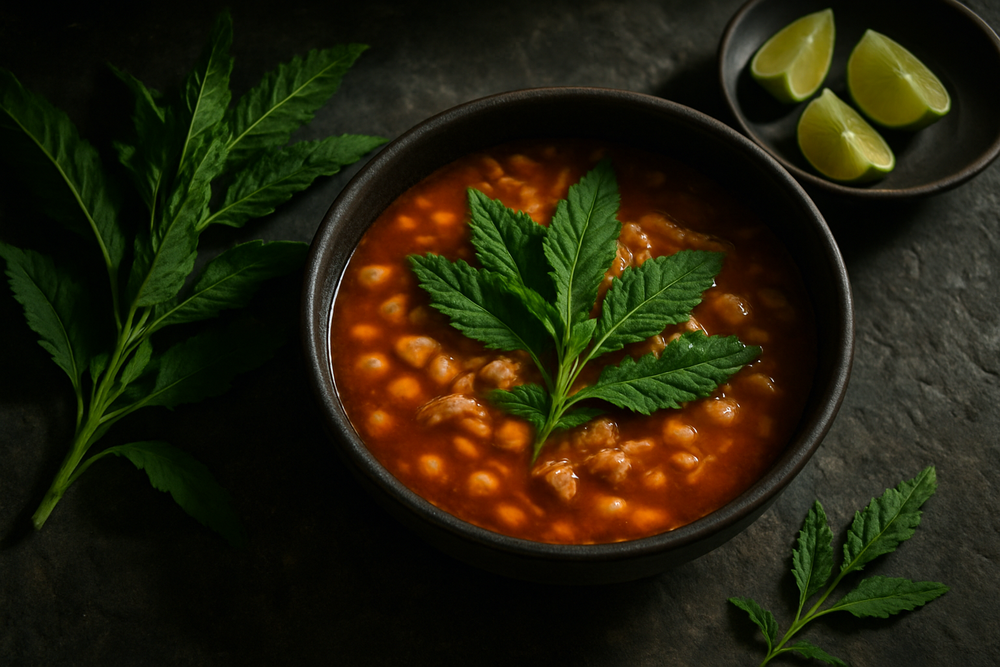
Shop This Ingredient
Stock your pantry with quality epazote.
Buy on AmazonAs an Amazon Associate, Plantopedia earns from qualifying purchases. This costs you nothing extra and helps us keep the encyclopedia free.
Frequently Asked Questions
Most evidence for epazote's health effects comes from traditional use, in vitro (laboratory) studies, and animal research. Human clinical data are limited. With that context clearly stated, here is what we know across the areas most often discussed. Digestive health and the epazote herb for bloating The most well-known use of epazote is as a digestive aid — specifically, adding it to beans to reduce gas and bloating. This is one of those traditions that makes biological sense: several of its volatile compounds, particularly limonene and β-myrcene, are associated with carminative (gas-dispersing) and antispasmodic effects on the gastrointestinal tract in experimental models. However, no randomized controlled trial (a rigorous study in humans) has tested whether epazote actually reduces flatulence or bloating compared to a control group. The evidence base is almost entirely ethnobotanical and mechanistic. Most practitioners who recommend it do so on the basis of centuries of consistent traditional use — which is meaningful context, but not clinical proof. In culinary practice, the herb is typically added in the last 15–20 minutes of cooking beans, where its volatile compounds season the dish and may exert a mild carminative effect. This amount — 1 to 2 sprigs — is widely considered safe for most adults. Heart and circulation There are no controlled human studies linking epazote to blood pressure, cholesterol, or cardiovascular outcomes. Any heart-health interest in this herb is grounded in its micronutrient profile: potassium and magnesium are both important for blood pressure regulation, the fiber content (3.8 g per 100 g) supports a heart-healthy diet, and the herb is essentially fat-free and sodium-free. These are meaningful contributions to a plant-rich diet, but they should not be read as evidence that epazote itself improves cardiovascular health. The nutrients help; the herb as a therapeutic agent has not been studied for this purpose. Blood sugar and metabolism Epazote has not been tested in human studies for effects on blood glucose or insulin. At culinary serving sizes, it is extremely low in calories (32 kcal per 100 g) and carbohydrates, and its fiber content is modestly beneficial in the context of a balanced diet. There is no basis for promoting it specifically as a blood-sugar-management tool. Inflammation and antioxidant activity Epazote contains vitamins A and C, folate, and a range of phenolic antioxidants. In laboratory systems, these compounds can neutralize free radicals and reduce markers of oxidative stress (a type of cellular damage linked to chronic inflammation). Extrapolating from this to "epazote reduces inflammation in people" is a significant leap. No human trials have tested epazote against inflammatory markers, pain, or any chronic inflammatory disease. Think of its antioxidant contribution as a modest bonus from seasoning your food thoughtfully — not as a therapeutic intervention. Epazote tea for intestinal parasites: what the evidence actually shows Epazote has a long traditional history as an anthelmintic — a substance used to expel intestinal worms. The active compound ascaridole is thought to be responsible. A 2015 pilot study reported approximately a 78% reduction in Ascaris lumbricoides (a type of intestinal roundworm) egg counts after three days of epazote infusion. This is genuinely interesting preliminary data. However, this was a small, poorly standardized pilot with significant methodological limitations, and it has not been replicated in larger, rigorous trials. More importantly, the same concentration of ascaridole that may harm parasites can also harm people. Using epazote in medicinal doses for parasite treatment without medical supervision is not appropriate, and the concentrated essential oil should never be used internally for this purpose. If you suspect intestinal parasites, the appropriate step is to see a healthcare provider.
Fresh leaves are the most practical and safest way to use epazote. Added to beans, soups, or stews during cooking, fresh sprigs deliver flavor and modest amounts of its bioactive compounds without concentrating the potentially toxic components. Dried epazote works as a substitute when fresh is unavailable. The drying process reduces volatile oil content, which means a somewhat milder flavor — and arguably a marginally safer profile — though it also means less of the carminative effect. Use about one teaspoon of dried herb for every tablespoon of fresh. Herbal infusions (tea) made from dried leaves have been used in traditional practice for digestive complaints and in the pilot antiparasitic work mentioned above. If you choose to make epazote tea, use a small, conservative amount (a few leaves or a small pinch of dried herb) and do not use it regularly or at high concentrations. This is not a preparation to experiment with at home for therapeutic purposes. Essential oil is where the risk becomes most serious. Epazote essential oil is rich in ascaridole and has been associated with nausea, vomiting, neurological symptoms, and liver and kidney damage. It should not be taken internally by anyone, and it is completely off the table for pregnant individuals, children, and people with liver or kidney conditions. There is no culinary or wellness application that warrants using the concentrated oil.
There is no established official daily intake recommendation for epazote. What is understood from traditional use and safety data is: Culinary range: 1–2 fresh sprigs (approximately 5–15 g fresh leaves) per serving of a dish, used as a flavoring herb. This is the safe and practical range for home cooking. Per pot: Traditional bean recipes typically use 1–2 sprigs for an entire pot of beans serving 4–6 people, which means individual exposure per serving is modest. Frequency: Daily use of epazote at culinary levels in bean or legume dishes is consistent with how the herb is used in traditional Mexican diets and is not associated with harm in healthy adults. What to avoid: Consuming multiple large bunches daily, preparing concentrated teas or decoctions regularly, or taking any form of epazote essential oil internally. If in doubt, start with less. If you are new to epazote, begin with a single sprig in a whole pot to get a feel for the flavor intensity before using more. Some people find it quite strong initially. There is no evidence that eating more epazote provides additional health benefits proportional to the dose — and given the concentration-dependent toxicity of its volatile compounds, more is not better.
Quick Answers
Common questions, answered in a line.
Epazote contains ascaridole, a monoterpene peroxide that has historically been used to treat intestinal worms. This specific compound acts as a biological fingerprint for the herb and is the primary driver behind its traditional use as an anthelmintic.
Epazote contains limonene and β-myrcene, compounds that are thought to have carminative (gas-reducing) and antispasmodic (muscle-relaxing) effects in the gut. These phytochemicals may help relax intestinal muscle contractions to support traditional uses for cramps and bloating.
It is recommended to avoid epazote beyond small culinary flavoring during pregnancy because historical reports link its essential oil to uterine stimulation and increased miscarriage risk. Pregnant individuals should consult a healthcare provider and avoid medicinal doses or daily tea.
Children and infants should avoid medicinal doses of epazote because they are more susceptible to neurotoxicity and liver toxicity from the herb's active compounds. While small culinary amounts used as flavoring are generally okay, concentrated preparations are not safe for this age group.
Fresh epazote is most reliably found at Latin grocery stores, specialty produce markets, and some farmers' markets during the warmer months. When selecting sprigs, look for bright green leaves and a strong, resinous, petroleum-like aroma that indicates freshness.
Epazote provides meaningful amounts of folate, magnesium, calcium, and manganese. While it also contains phenolic antioxidants that neutralize free radicals, these nutrients contribute to a varied plant-rich diet even in the small amounts used for cooking.
Epazote is traditionally added to black beans, corn-based dishes like tamales, quesadillas, and even scrambled eggs to add an earthy, herbal note. It is typically added during the last 20 minutes of cooking to allow the heat to mellow its assertive, piney flavor.
For Readers in the USA
Local context — sourcing, seasonality, and regional notes.
Epazote grows as a summer annual in most of the U.S. and can be found at farmers markets from July through September. In warmer USDA zones like 8 through 11 (including parts of California, Texas, and Florida), it may persist longer or grow as a perennial.
In the U.S., epazote is most commonly found at national Hispanic grocery chains like Northgate Market, Vallarta, or Fiesta Mart, as well as in the international aisle of some Whole Foods Market locations. If a local grocer does not stock it, it is often sold under the name "Mexican Tea" in dried form.
Epazote is considered an invasive weed in many parts of the U.S., particularly in the South and West, meaning it requires very little maintenance once planted in a home garden. Because it self-seeds aggressively, American gardeners often grow it in containers to prevent it from overtaking other plants.
While the FDA regulates epazote as a food seasoning, there is no specific USDA organic certification unique to this herb; look for the standard USDA Organic seal to ensure it was grown without synthetic pesticides. Always wash fresh bunches thoroughly, as they are often grown in sandy soil.
AI Clinical Review
- Clearly distinguishes tradition from science: epazote’s digestive reputation is rooted in long culinary use, with limited human trials.
- Accurately identifies key actives (notably ascaridole) and explains why essential oil poses toxicity concerns while culinary use is generally safe.
- Provides realistic nutrition context: the herb is nutrient-dense per 100 g but typically eaten in much smaller amounts.
- Offers practical kitchen guidance (fresh vs. dried, add near the end of cooking) that aligns with how volatile compounds behave with heat.
- Gas/bloating relief is biologically plausible (carminative terpenes) but not proven by randomized human studies; any effect is likely modest.
- Antiparasitic effects come from small, methodologically limited studies; not sufficient to recommend epazote as treatment.
- Claims around heart, blood sugar, and anti-inflammatory benefits lack clinical trials in humans; these remain hypotheses based on nutrients or lab data.
- Real-world nutrient impact per serving is smaller than the 100 g table suggests; helpful as part of a varied diet, not a sole source of folate or minerals.
- Typical safe culinary range: about 1–2 fresh sprigs (≈5–15 g) per pot serving 4–6 people; more is not better given volatility and taste intensity.
- Avoid medicinal doses, concentrated extracts, and do not ingest essential oil due to neuro‑ and hepatotoxicity risk.
- Extra caution or medical guidance: pregnancy and breastfeeding (avoid medicinal forms), children, liver or kidney disease, seizure disorders, and those on hepatically metabolized drugs, antiparasitics, sedatives, or anticoagulants.
- Form matters: fresh or dried leaves are preferred; teas should be weak and occasional if used at all. Introduce gradually if you’re sensitive to strong herbs.
Use small culinary amounts only; concentrated oil is toxic and it should be avoided in pregnancy.
References
- USDA FoodData Central — Epazote nutritional data (fdc.nal.usda.gov)
- University Hospitals nutrition facts, epazote raw 1 sprig (uhhospitals.org)
- Nutrition-and-you.com — Epazote herb nutrition facts and health benefits (nutrition-and-you.com)
- Botanical-online — Nutritional value of Mexican tea or epazote (botanical-online.com)
- Ask Ayurveda — Dysphania ambrosioides (Epazote) monograph, including pilot antiparasitic data (ask-ayurveda.com)
- Netmeds health library — Epazote health benefits, nutrition, uses, and precautions (netmeds.com)
- The Living Look — Mexican herb epazote: how to use it safely for digestion and flavor (thelivinglook.com)
- Williams Natural Foods blog — Epazote: the unique herb for flavor and digestive health (williamsnaturalfoods.com)
- Organic Facts — 7 surprising benefits of epazote (organicfacts.net)
- OnlyFoods.net — Epazote herb health benefits, nutritional facts, substitutes (onlyfoods.net)
Know Your Numbers
Eating healthy is a start. Now get to know your biomarkers.
Food changes bloodwork — inflammation, lipids, blood sugar and nutrient status all respond to what you eat. 59 markers from $59.
- Results in 7–10 days at 2,000+ Quest sites
- Licensed provider reviews every result
- One flat price, no membership, HSA/FSA eligible
Educational information only, not medical advice. Panels are ordered and reviewed through our licensed partner; Plantopedia may earn a commission.