Ajwain (Carom Seeds) — health benefits and uses
A classic Ayurvedic carminative for bloating and indigestion.
The Short Answer
Ajwain is a pungent spice used primarily to relieve gas and bloating due to high levels of thymol, which supports gut motility and digestion. A single teaspoon provides 1 gram of fiber and 22 calories, making it a potent digestive aid in small doses.
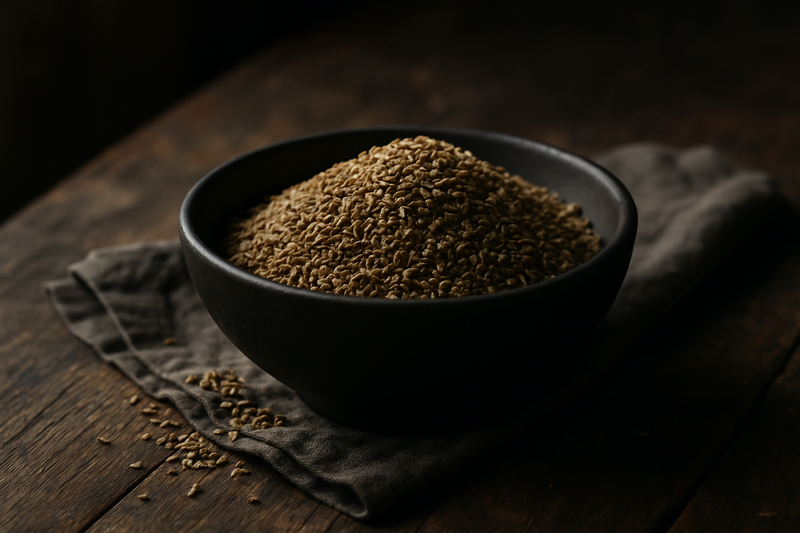
Ajwain (Carom Seeds) · Photograph
Discover the evidence-backed ajwain (carom seeds) benefits for digestion and health, including how this pungent seed may ease gas and bloating, its nutrition profile, safe daily amounts, pregnancy guidance, and easy ways to use it in everyday cooking.
Key Nutrients
% Daily Value based on 2,000 cal diet
Key active compounds
- Thymol — The principal essential oil constituent; responsible for ajwain's sharp flavor and much of its antimicrobial and antioxidant activity. At high doses (such as in essential oil form) it can also exert uterotonic (uterus-stimulating) effects.
- Carvacrol — A closely related phenolic compound that works alongside thymol; research suggests it may add to the anti-inflammatory and antimicrobial effects.
- γ-Terpinene and p-cymene — Volatile terpenes (aromatic carbon-based compounds) that contribute to the essential oil profile and may help support gut motility (the movement of food through the digestive tract).
- Flavonoids (quercetin-like compounds) — A class of plant polyphenols with antioxidant and cell-signaling properties; present in ajwain seeds and linked in lab studies to free-radical neutralisation.
- Dietary fiber — Even at spice-level doses, the seeds contribute a small amount of fiber that supports gut transit.
Prep and pairing ideas
Ajwain is forgiving in the kitchen. The cardinal rule is: use less than you think you need. Its flavor is intense and can overpower a dish quickly.
Toasting method: Heat a dry pan over medium heat. Add seeds and stir for 30–60 seconds until fragrant and very slightly darkened. Remove immediately and use straight away or cool and store in an airtight jar for up to a week.
Tempering (tarka): Add a pinch of seeds to hot oil or ghee for 20–30 seconds before pouring over dal (lentils), yogurt dishes, or cooked vegetables. The fat carries the essential oils through the dish.
In flatbread dough: A standard recipe of 2 cups wheat flour typically uses just ½–1 teaspoon of ajwain seeds — enough to notice, not enough to dominate.
Buying guide
Whole seeds vs. ground: Buy whole seeds whenever possible. The essential oils that give ajwain its flavor and bioactivity are locked in the seed and only fully released when crushed or heated. Ground ajwain loses potency quickly.
Fresh vs. old stock: Look for seeds with a strong, sharp aroma when you open the bag — dull-smelling ajwain has lost much of its essential oil content. Seeds should be a consistent grayish-green to khaki color; discolored or dusty-looking batches suggest age or poor storage.
Label tips: The ingredient list should say only "carom seeds" or "Trachyspermum ammi." Avoid blends with added salt, fillers, or anti-caking agents if you are using ajwain medicinally. Organic certification reduces pesticide residue concerns if you plan to use ajwain regularly in large quantities.
Storage: Whole seeds keep for 12–18 months in a sealed glass jar away from heat and light. Do not store in plastic near a stovetop.
Bottom line
Ajwain (carom seeds) is a well-loved spice with a biologically credible case for digestive support — particularly for gas, bloating, and sluggish digestion. Its rich profile of thymol, carvacrol, and flavonoids gives it real antioxidant and antimicrobial properties in lab settings, and traditional use across centuries is consistent with a food that does something useful for the gut. The honest limitation is that large, high-quality human trials are sparse, so the health benefits of carom seeds remain "emerging and plausible" rather than definitively proven.
Used in food — a pinch to a teaspoon a day in flatbreads, lentils, or a mild tea — ajwain is safe for most healthy adults and genuinely pleasurable to cook with. Concentrated preparations, strong decoctions, and essential oil carry real risk and are not appropriate for everyday self-care. Pregnancy in particular calls for caution: small amounts in food are fine; anything beyond that should be discussed with a midwife or clinician.
If you want to explore how ingredients like ajwain fit into a broader food-as-medicine approach, see how digestive health goals connect across many whole foods.
How Ajwain (Carom Seeds) Compares
| Compared with | What's different |
|---|---|
| Ajwain (Carom Seeds) vs. Fennel Seeds | Lacks the sharp, thyme-like thymol flavor and is primarily used for its cooling licorice profile. |
| Ajwain (Carom Seeds) vs. Dried Thyme | Contains similar thymol oil but has a woodier, milder flavor and lacks the digestive heat of ajwain. |
| Ajwain (Carom Seeds) vs. Cumin Seeds | Earthier and nuttier, whereas ajwain is significantly more pungent, bitter, and peppery. |
Health Benefits
Things to Know
Pregnancy: Keep use to small culinary amounts only (a pinch added to food). Medicinal doses, strong decoctions, and essential oil are discouraged due to evidence of uterotonic activity in preclinical models and precautionary advice from clinicians and traditional practice.
Breastfeeding: Precautionary avoidance of high-dose or concentrated forms; thymol-rich volatiles may transfer to breast milk. Culinary amounts are generally considered acceptable.
Peptic ulcer or severe GI irritation: Ajwain stimulates gastric secretions; high doses may aggravate existing stomach lining inflammation.
Liver disease: High-dose extracts and essential oil have shown liver strain in animal studies. Stick to culinary amounts.
Blood thinners (anticoagulants/antiplatelet drugs): Bioactive phenolics in ajwain could theoretically influence platelet function or hepatic (liver) drug metabolism. Avoid high-dose or concentrated preparations alongside these medications.
Antidiabetic medications: Possible additive blood-sugar-lowering effect at medicinal doses; monitor with your clinician.
Antihypertensive medications: Preclinical vasodilatory signals; culinary amounts are unlikely to matter, but concentrated forms warrant caution.
Pre-surgery: Medicinal-dose herbs are often paused before surgery due to uncertain effects on anesthesia and bleeding; mention ajwain supplements to your surgical team.
Children and infants: Small culinary amounts in food only; no concentrated preparations without pediatric guidance.
Ajwain essential oil: Not for internal self-use under any circumstances.

Glossary
Shop This Ingredient
Stock your pantry with quality ajwain (carom seeds).
Buy on AmazonAs an Amazon Associate, Plantopedia earns from qualifying purchases. This costs you nothing extra and helps us keep the encyclopedia free.
Frequently Asked Questions
Digestive health and microbiome This is where ajwain has the most traditional backing and the most plausible scientific support. Seeds are added to dishes specifically to reduce gas and bloating — and that practice has a biological rationale. Preclinical studies show that ajwain extracts increase the activity of digestive enzymes in the gut and stimulate bile secretion, both of which help break down food more efficiently. Animal studies also show anti-ulcer effects, suggesting the seeds may help protect the stomach lining rather than irritate it. In humans, the evidence is smaller in scale: practitioner experience, traditional observational data, and a handful of uncontrolled clinical reports suggest that ajwain water (a mild infusion of seeds steeped in hot water) can relieve dyspeptic symptoms — the cramping, bloating, and discomfort often loosely called "indigestion." This is not the same as a well-powered randomised controlled trial, but it is consistent with what we know about thymol's carminative properties. For ajwain seeds for acidity and indigestion, the evidence is enough to say "plausible and worth trying in food amounts" while noting that culinary use — rather than strong decoctions — is the appropriate starting point. Inflammation and recovery Ajwain's anti-inflammatory properties are real in animal and cell-based experiments: extracts reduce swelling in rats comparably to some non-steroidal anti-inflammatory drugs (NSAIDs) at high test doses. The active contributors appear to be thymol, carvacrol, and the flavonoid fraction, all of which interfere with pro-inflammatory signalling pathways in lab models. The honest caveat is that these studies use highly concentrated extracts — far more than you would get from a teaspoon of seeds on a paratha. Extrapolating to human outcomes requires caution. Daily culinary use may contribute a modest anti-inflammatory load as part of a broadly plant-rich diet, but ajwain should not be used as a stand-alone anti-inflammatory therapy, especially in concentrated supplement or essential oil form. Heart and circulation Animal studies suggest ajwain extracts may lower blood lipids (fats circulating in the blood, including cholesterol and triglycerides) and support certain heart-related parameters. Human cardiovascular data are largely absent. Traditional formulations sometimes include ajwain for lipid management, but no well-designed human trial has isolated ajwain for cholesterol or blood pressure outcomes. Culinary use is safe; concentrated supplementation for heart health is not yet evidence-supported. Blood sugar and metabolism Preclinical work hints at hypoglycemic (blood-sugar-lowering) effects of ajwain constituents, possibly through insulin-modulating pathways. No well-designed human trials have confirmed this. If you take glucose-lowering medications, combining them with medicinal doses of ajwain could theoretically amplify the effect, so let your clinician know. Antimicrobial and other properties Thymol and carvacrol have well-documented antimicrobial and antifungal activity in laboratory settings. Traditional systems describe ajwain as useful against intestinal parasites and respiratory complaints, and in-vitro (test-tube) research supports the antimicrobial plausibility. One observational clinical report involving 350 patients suggested ajwain may have contributed to the passage of certain urinary stones, but the methodology was limited and the finding should be treated as very preliminary. These properties are interesting but not yet confirmed in rigorous human trials.
Whole toasted seeds are the most practical and best-studied culinary form. Dry-roasting for 30–60 seconds in a pan releases the essential oils and softens the raw sharpness; the seeds can then go straight into dough, soups, or lentils. This is the form with the longest safety record and the most consistent use across traditional cuisines. Crushed or ground seeds release more of the essential oil faster, making the flavor more intense. They work well in spice blends and marinades. Potency per gram is higher, so use about half the amount you would use whole. Ajwain water — a mild infusion made by steeping up to 1 teaspoon of seeds in 2 cups of hot water — is the most common home remedy for gas and bloating. It is generally safe in moderate, occasional use for healthy adults. Repeatedly making very strong decoctions (boiling large amounts of seeds for a long time) is not recommended, particularly in pregnancy. Essential oil and concentrated extracts — these are the forms to avoid unless under medical supervision. They are thymol-rich, potent, and associated with uterotonic effects, liver strain at high doses, and gastrointestinal irritation. They are not appropriate for self-directed use.
For most healthy adults, a pinch to 1 teaspoon (roughly 2–5 grams) of whole seeds per day used in cooking is the range that traditional cuisines and available clinical guidance support. This amount is generally well tolerated and consistent with the culinary traditions of South Asian and Middle Eastern cooking. For occasional digestive relief (gas, bloating), ajwain water made from up to 1 teaspoon of seeds in 2 cups of hot water, drunk once or twice, is a common home approach. Start with ½ teaspoon if you are new to it. Medicinal-range doses in some traditional formulations go up to 1–2 teaspoons of seeds in a decoction (5–10 grams). This is the upper end of what appears in traditional literature, and the evidence base thins considerably here. Doses consistently above approximately 10 grams per day, frequent strong decoctions, or any essential oil preparation are associated with increased risk of gastrointestinal irritation, potential liver strain, and uterotonic effects — and are not recommended without clinical supervision. Start low: If ajwain is new to you, add a pinch to one dish and see how your gut responds before building up. Some people notice loose stools or mild nausea at higher amounts, which typically resolves when the dose is reduced.
Quick Answers
Common questions, answered in a line.
Pregnant women should limit ajwain to small culinary amounts, such as a pinch added to food. Medicinal doses, strong decoctions, and essential oils are discouraged because active compounds like thymol may have uterotonic (uterus-stimulating) effects.
Ajwain contains active compounds like thymol and carvacrol, which have demonstrated antimicrobial, antioxidant, and anti-inflammatory properties in lab settings. These compounds, along with volatile terpenes, are believed to support gut motility and neutralize free radicals.
To get the best flavor from ajwain, toast the seeds in a dry pan for 30–60 seconds or temper them in hot oil or ghee for 20–30 seconds. This process, known as tarka, releases the essential oils before you add the spice to lentils, yogurt, or vegetables.
Whole ajwain seeds should be stored in a sealed glass jar kept in a cool, dark place away from heat and light. When stored properly, whole seeds will maintain their potency and sharp aroma for approximately 12 to 18 months.
People with peptic ulcers or severe gastrointestinal irritation should be cautious with ajwain because it stimulates gastric secretions. High doses of the spice may aggravate existing inflammation of the stomach lining.
When buying ajwain, look for whole seeds with a consistent grayish-green to khaki color and a strong, sharp aroma. Avoid seeds that look dusty or discolored, as these signs suggest the spice is old and has lost its essential oil content.
Ajwain may interact with blood thinners, antidiabetic medications, and antihypertensive drugs. Because the seeds can influence platelet function and blood sugar levels, you should consult a clinician before using medicinal doses alongside these medications.
For Readers in the USA
Local context — sourcing, seasonality, and regional notes.
You can typically find ajwain in the international or spice aisles of major US grocery chains like Whole Foods Market and Wegmans, or at specialty retailers like Patel Brothers and H-Mart. Many American consumers also purchase high-quality organic carom seeds through online spice purveyors like Penzeys or Burlap & Barrel.
While ajwain is not widely grown on a commercial scale in the US, it can be cultivated as an annual herb in USDA Hardiness Zones 6 through 11 during the warm summer months. Home gardeners in states like California, Texas, and Florida find success planting it in well-drained soil once the risk of frost has passed.
When buying ajwain in the US, look for the USDA Organic seal to ensure the seeds were produced without synthetic pesticides or irradiation. Because the FDA regulates spices as food, checking for a "Non-GMO Project Verified" label can also provide additional quality assurance for health-conscious shoppers.
AI Clinical Review
- Clearly explains that ajwain’s main active compound is thymol and ties this to traditional carminative effects (gas‑relieving), aligning with plausible mechanisms seen in preclinical research.
- Appropriately distinguishes culinary use from concentrated preparations and emphasizes a food‑first approach for digestive comfort.
- Accurately frames anti‑inflammatory and antioxidant findings as mostly animal/cell data rather than proven human outcomes.
- Provides practical kitchen guidance (brief toasting/tempering) that matches how volatile oils are released and used traditionally.
- Human randomized trials for dyspepsia, IBS, ulcer protection, and overall “gut health” are limited; most evidence remains preclinical or observational.
- Cardiometabolic claims (cholesterol, blood pressure, blood sugar) and antimicrobial benefits in real‑world use are preliminary, with no standardized dosing.
- Safety and efficacy of “medicinal” doses (strong decoctions/extracts) lack consensus, and pharmacokinetic data in humans are sparse.
- Typical culinary amounts—a pinch up to about 1 teaspoon daily (≈2–5 g)—are generally well tolerated; avoid essential oil or high‑dose extracts unless supervised.
- Pregnancy and breastfeeding: stick to food amounts only; avoid strong teas, decoctions, and essential oil due to potential uterotonic effects and infant exposure to volatiles.
- If you have peptic ulcer disease, reflux, or liver disease, be cautious with concentrated forms; reduce or stop if you notice nausea, heartburn, or loose stools.
- If you use anticoagulants, diabetes or blood‑pressure medicines, or you have upcoming surgery, check with a clinician before using beyond culinary amounts.
Use small amounts; concentrated forms are not advised in pregnancy.
References
- USDA FoodData Central — spice and seed nutrition data (fdc.nal.usda.gov)
- Healthline: 6 Emerging Benefits and Uses of Carom Seeds (Ajwain) — overview of evidence levels for digestion, inflammation, and more (healthline.com)
- WebMD: Health Benefits of Ajwain — consumer-facing safety and benefit summary (webmd.com)
- MedicineNet: 8 Super Health Benefits of Ajwain (Carom Seeds) — clinical summary including antimicrobial and digestive evidence (medicinenet.com)
- IJARSCT: A Brief Review on Trachyspermum ammi — peer-reviewed literature review of phytochemistry and pharmacological activity (ijarsct.co.in)
- Apollo 247: Ajwain Benefits, Uses, Dosage & Side Effect Guide — clinician-reviewed dosage and safety guidance (apollo247.com)
- Babynama: Is Ajwain Safe During Pregnancy? — pregnancy-specific safety review with clinical input (babynama.com)
- Guide Ayurveda: Ajwain and Pregnancy — traditional and modern perspective on uterotonic concerns (guide-ayurveda.com)
- Grasproot: Ajwain Benefits, Uses & Safety — summary of emerging evidence across health areas (grasproot.com)
- Nutriofia: Ajwain Seeds Wholefood Profile — nutrition and phytochemical breakdown (nutriofia.com)
Know Your Numbers
Eating healthy is a start. Now get to know your biomarkers.
Food changes bloodwork — inflammation, lipids, blood sugar and nutrient status all respond to what you eat. 59 markers from $59.
- Results in 7–10 days at 2,000+ Quest sites
- Licensed provider reviews every result
- One flat price, no membership, HSA/FSA eligible
Educational information only, not medical advice. Panels are ordered and reviewed through our licensed partner; Plantopedia may earn a commission.