Fenugreek Seeds — health benefits and uses
An Ayurvedic and Middle Eastern staple traditionally used to support blood sugar and lactation.
The Short Answer
Fenugreek seeds are nutrient-dense legumes used to support blood sugar and iron levels. They provide 3 grams of fiber and 3.7 mg of iron per tablespoon, offering a savory, maple-like aroma when toasted for curries.
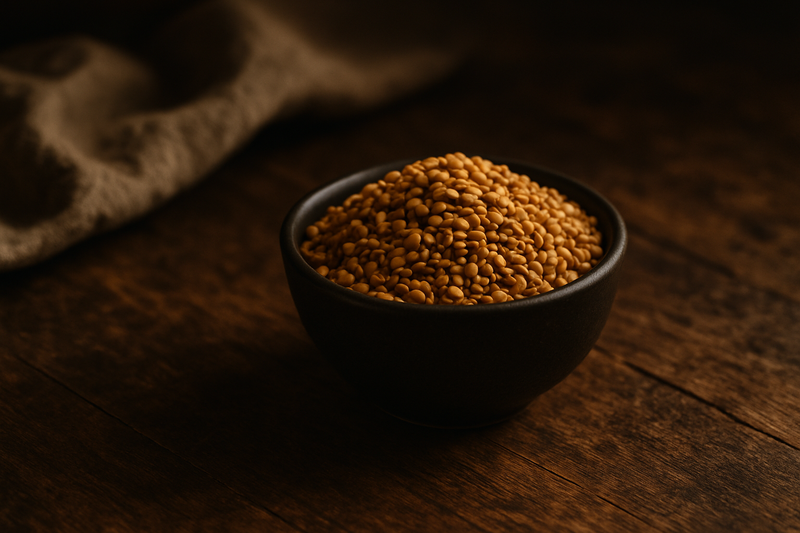
Fenugreek Seeds · Photograph
Discover the fenugreek seeds health benefits and side effects in one evidence-aligned guide. Learn how this iron-rich culinary seed may support blood sugar, cholesterol, and digestion — plus who should use caution and how to toast them perfectly for curries and spice blends.
Key Nutrients
% Daily Value based on 2,000 cal diet
Key active compounds in fenugreek seeds
- Galactomannan — A viscous, water-soluble polysaccharide (a type of long-chain carbohydrate that dissolves in water to form a gel). It makes up a large share of fenugreek's fiber and is thought to be the main driver of its blood sugar and cholesterol effects.
- Steroidal saponins (protodioscin, diosgenin derivatives) — Bioactive plant glycosides (sugar-bound compounds) concentrated in the seeds. They may influence cholesterol metabolism and hormone pathways, and are often enriched in commercial fenugreek extracts used in testosterone research.
- Trigonelline — A nitrogen-containing alkaloid (a naturally occurring plant chemical) also found in coffee. Early research suggests it may play a role in glucose control and nerve protection, though human evidence is still limited.
- Flavonoids and polyphenols — Antioxidant compounds that may help reduce oxidative stress (cell damage from unstable molecules called free radicals) and support the reduction of inflammation markers seen in small clinical trials.
- Plant protein — A meaningful contributor of amino acids relative to serving size, supporting fenugreek's classification as a protein food by USDA MyPlate guidelines.
Prep and pairing ideas
How to toast fenugreek seeds for curries without bitterness Heat a dry skillet over medium-low heat. Add the seeds in a single layer and shake the pan gently every 30 seconds. Stop when the seeds deepen slightly in color (light golden-brown, not dark brown) and release a warm, nutty, slightly maple-like aroma — usually about 1–2 minutes. Immediately remove from the heat and transfer to a cool surface. Even 30 extra seconds on a hot pan can push the seeds from pleasantly toasty to harshly bitter, so stay attentive.
Three practical pairings and why they work
- Fenugreek + lentils (dal): The classic pairing in South Asian cooking. Fenugreek's savory bitterness balances lentils' earthiness, while the combined fiber from both supports slower glucose absorption. A tempering of fenugreek seeds in mustard oil or ghee stirred through red lentil dal is a foundational technique.
- Fenugreek + tomato + lemon: Adding fenugreek powder to a tomato-based sauce with a squeeze of lemon does double duty — the acidic vitamin C from both tomato and lemon enhances absorption of fenugreek's non-heme iron. This pairing appears in North African and Indian spice blends.
- Fenugreek sprouts + leafy greens: Toss fresh fenugreek sprouts into a spinach or arugula salad with a light citrus dressing. Both fenugreek and leafy greens contribute iron, and the vitamin C in a citrus dressing boosts absorption of both. This is a low-heat, whole-food option that preserves heat-sensitive antioxidants.
Bottom line
Fenugreek seeds are a nutritionally dense, research-backed culinary ingredient that stands out for their iron content, meaningful fiber profile, and a genuinely impressive evidence base for modest improvements in blood sugar and cholesterol in people with diabetes and dyslipidemia. The key caveat is that most research doses are much higher than what you would typically use in cooking — the kitchen-level benefits are real but more modest than what clinical trials report at gram-scale powder doses.
For most people, fenugreek seeds are a safe and flavorful addition to a whole-food diet: toast them lightly for curries, sprout them for salads, or grind them into spice blends. Those with diabetes, heart conditions, or who are pregnant or on medications should treat fenugreek supplements with the same care they would any pharmacologically active substance — which is exactly what the evidence suggests it is.
Looking for evidence-based guidance on eating patterns that support blood sugar, heart health, or energy? Explore our goals-based ingredient collections at /goals.
How Fenugreek Seeds Compares
| Compared with | What's different |
|---|---|
| Fenugreek Seeds vs. Cumin Seeds | Fenugreek has a bitter, maple-like flavor, while cumin is earthy, citrusy, and warm. |
| Fenugreek Seeds vs. Fennel Seeds | Fenugreek is used for blood sugar and iron, while fennel is sweeter and used for digestion. |
| Fenugreek Seeds vs. Mustard Seeds | Fenugreek is a hard, rectangular seed; mustard seeds are tiny spheres with a pungent heat. |
Health Benefits
Things to Know
Blood sugar interactions: Fenugreek can lower blood glucose. If you take insulin, sulfonylureas, metformin, or other antidiabetic medications, combining them with significant fenugreek doses (especially supplements) may cause hypoglycemia (abnormally low blood sugar). Monitor blood glucose closely and tell your doctor.
Pregnancy — avoid supplemental doses: Fenugreek has uterine-stimulant effects. Health authorities including the NCCIH advise against supplemental amounts during pregnancy due to risk of uterine contractions, possible miscarriage or preterm labor, and links to congenital abnormalities in some reports. Small culinary amounts are generally considered lower risk, but caution is still warranted — ask your midwife or OB.
Breastfeeding: Commonly used as a galactagogue, but long-term safety data for mother and infant are limited. Use supplements cautiously and only with professional guidance.
Anticoagulants and blood thinners (warfarin, aspirin, clopidogrel, DOACs): Fenugreek may have mild antiplatelet properties. Combining it with blood-thinning medications at supplemental doses could increase bleeding risk.
Legume and peanut allergies: Fenugreek is a legume. Cross-reactivity with peanuts and other legumes has been reported. If you have a known legume allergy, introduce fenugreek cautiously and watch for allergic symptoms.
Hormone-sensitive conditions: Because fenugreek contains steroidal saponins with potential phytoestrogenic activity (plant compounds that can loosely mimic estrogen), caution is advised for people with hormone-sensitive cancers (certain breast, uterine, or prostate cancers) or those on hormonal therapies.
Maple syrup body odor: A harmless but notable side effect — fenugreek can cause a maple syrup-like smell in sweat and urine. This is not harmful and resolves when you stop using it.
Medication timing: If you are using fenugreek seeds medicinally, taking them with or just before meals may be most effective for blunting postprandial glucose spikes, based on trial protocols.
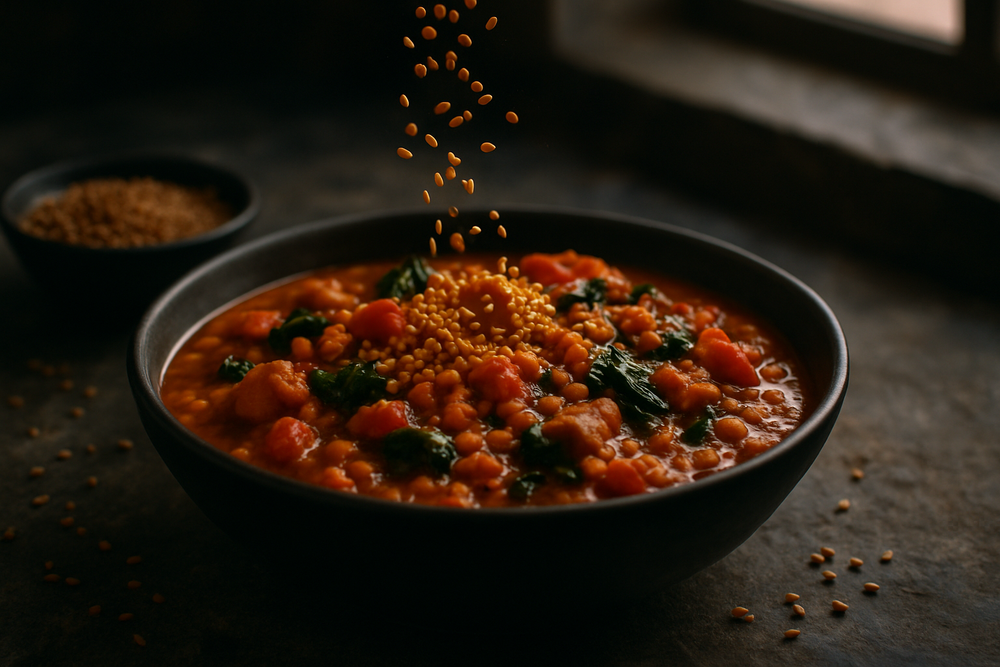
Prep Ideas
- — **Fenugreek + lentils (dal):** The classic pairing in South Asian cooking. Fenugreek's savory bitterness balances lentils' earthiness, while the combined fiber from both supports slower glucose absorption. A tempering of fenugreek seeds in mustard oil or ghee stirred through red lentil dal is a foundational technique.
- — **Fenugreek + tomato + lemon:** Adding fenugreek powder to a tomato-based sauce with a squeeze of lemon does double duty — the acidic vitamin C from both tomato and lemon enhances absorption of fenugreek's non-heme iron. This pairing appears in North African and Indian spice blends.
- — **Fenugreek sprouts + leafy greens:** Toss fresh fenugreek sprouts into a spinach or arugula salad with a light citrus dressing. Both fenugreek and leafy greens contribute iron, and the vitamin C in a citrus dressing boosts absorption of both. This is a low-heat, whole-food option that preserves heat-sensitive antioxidants.
Glossary
Shop This Ingredient
Stock your pantry with quality fenugreek seeds.
Buy on AmazonAs an Amazon Associate, Plantopedia earns from qualifying purchases. This costs you nothing extra and helps us keep the encyclopedia free.
Frequently Asked Questions
Heart and circulation Several meta-analyses of randomized controlled trials (RCTs — the gold standard of clinical research, where people are randomly assigned to treatment or placebo groups) have found that fenugreek supplementation produces modest but statistically significant improvements in lipid profiles. One meta-analysis of 12 RCTs (560 participants) reported reductions in total cholesterol (roughly 9 mg/dL), LDL ("bad") cholesterol (7 mg/dL), and triglycerides (14 mg/dL), alongside a small rise in HDL ("good") cholesterol (3.5 mg/dL). The likely mechanism: galactomannan forms a thick gel in the small intestine that traps bile acids (cholesterol-based molecules the body uses for digestion). When those bile acids are excreted rather than reabsorbed, the liver draws on blood cholesterol to make more, which nudges levels downward. Steroidal saponins may also reduce cholesterol absorption directly. Important nuance: Most trials are small, relatively short (4–24 weeks), and conducted in people with diabetes or existing high cholesterol. Long-term cardiovascular outcome data — whether fenugreek reduces heart attacks or strokes — do not yet exist. It is best viewed as a supportive dietary measure alongside proven strategies (dietary patterns, physical activity, prescribed medications), not a replacement for them. Digestive health and gut support Because fenugreek seeds are rich in both soluble and insoluble fiber, they naturally support bowel regularity and slow gastric emptying (the rate at which food leaves your stomach). The same galactomannan gel that helps blunt blood sugar spikes also acts as a prebiotic — a food source for beneficial gut bacteria — though robust human studies specifically measuring microbiome changes are still limited. Clinical trials on metabolic outcomes frequently note mild gastrointestinal effects like bloating, gas, and loose stools, particularly at the high powder doses (10–25 g/day) used in research settings. This signals a significant fermentable fiber load. At culinary amounts (1–2 teaspoons per dish), these effects are much less likely. Practical note: Soaking seeds overnight softens them and may reduce their gas-producing potential. Sprouting them (see below) is another way to improve digestibility while adding fresh texture to salads and bowls. Blood sugar and metabolism — fenugreek seeds benefits for diabetes management This is where the evidence is strongest. Multiple updated systematic reviews and meta-analyses of RCTs in adults with type 2 diabetes and prediabetes consistently show that fenugreek seed preparations can: Reduce fasting blood glucose by roughly 10–20 mg/dL Lower post-meal (postprandial) glucose spikes Decrease HbA1c (a 3-month average blood sugar marker) by approximately 0.5–0.8 percentage points Improve insulin sensitivity markers (HOMA-IR) These effects are thought to arise primarily from galactomannan slowing carbohydrate digestion and absorption, combined with potential direct effects of trigonelline on insulin secretion. Realistic expectations: Effect sizes are meaningful but modest — fenugreek is not a substitute for diabetes medication or a carefully managed diet. Most trials use it as an add-on to existing treatment. Doses ranged from 5–25 g/day of seed powder or 500–600 mg of standardized extract twice daily, far above typical culinary use. At very low doses (around 2 g/day), glycemic effects may be minimal. Inflammation and recovery A parallel-group RCT in adults with type 2 diabetes found that fenugreek seed consumption significantly reduced hs-CRP (high-sensitivity C-reactive protein, a key blood marker of inflammation) and increased SOD (superoxide dismutase, a protective antioxidant enzyme) compared with a control group. A separate double-blind RCT with fenugreek extract reported reductions in interleukin-1 (a pro-inflammatory signaling molecule). These are promising signals, but current human evidence is limited to small trials in diabetic populations focused on surrogate biomarkers rather than clinical endpoints like joint pain relief or respiratory inflammation. Fenugreek should not be positioned as a primary anti-inflammatory therapy; any benefit in this area is best understood as a secondary gain alongside its metabolic effects. Hormones and cycle health Men: Several RCTs using standardized fenugreek seed extracts (typically 500–600 mg/day enriched in protodioscin saponins) have reported modest increases in total and free testosterone (roughly 6–13% above baseline) and improvements in libido, sexual function, and body composition in athletic and middle-aged men. However, results are not consistent across all studies, and a systematic review concluded that while some trials show increases, the evidence is not yet definitive. Long-term effects on prostate health or fertility are unknown. Lactating individuals: Small triple-blind RCTs using fenugreek tea or capsules have shown increased breast milk volume in the early postpartum period (days 1–7) without serious adverse events, though prolactin levels and infant weight did not differ significantly from placebo groups, and benefits appeared transient. Fenugreek is widely used as a galactagogue (a substance traditionally used to stimulate milk production), but professional health bodies caution that high supplemental doses should be used carefully until larger safety studies are available.
The spice-forward home cook looking to boost nutrition Adding 1–2 teaspoons of lightly toasted seeds to curries, dals, or spice blends each week can meaningfully contribute to daily iron and fiber intake. Fenugreek pairs naturally with other whole plant foods — lentils, tomatoes, leafy greens — that amplify its benefits through complementary nutrients. Sprouting seeds at home is a low-cost, zero-waste way to get extra phytonutrients and texture without any special equipment. Adults managing blood sugar or cholesterol with diet and lifestyle Research suggests the most meaningful glycemic and lipid benefits occur in people with type 2 diabetes or elevated LDL who use fenugreek consistently at moderate-to-higher doses (well above typical culinary use) as part of a supervised dietary strategy. If you are on medications for either condition, discuss any significant increase in fenugreek intake with your healthcare provider first — the blood sugar lowering and potential anticoagulant effects can interact with common drugs. Starting with food-form fenugreek (whole seeds, ground powder in food) before considering concentrated supplements is a more cautious, food-first approach.
Whole seeds (culinary use) Whole seeds are ideal for tempering — a technique where spices are briefly fried in oil at the start of cooking to release fat-soluble aromatic compounds. Toast in a dry pan or in oil over medium heat until the seeds turn a few shades darker and smell nutty-sweet (not dark brown — see toasting tips below). Use in curries, dals, pickles, and spice blends. Soaking overnight softens them for easier digestion. Ground seed powder Grinding fenugreek releases more of its bioactive compounds and is the form most commonly used in clinical trials at doses of 5–30 g/day. Commercially ground powder can be added to flatbread dough (methi paratha), batters, and spice rubs. Freshly ground seeds have a more complex flavor than pre-packaged powder, which can turn bitter and stale quickly. Sprouted seeds Soak seeds for 8–12 hours, rinse, and drain twice daily for 2–3 days. The resulting sprouts are milder in flavor than raw seeds, making them easy to scatter over salads, grain bowls, and wraps. Sprouting may enhance some antioxidant and vitamin levels, though specific human trials on sprouted fenugreek are limited. This is an excellent option for those on a whole-food, plant-based (WFPB) diet who want to use fenugreek as a fresh food rather than a spice. Fenugreek tea Steeping crushed or whole seeds in hot water for 5–10 minutes produces a lightly bitter, maple-tinged tea. It is used traditionally for digestive support and lactation, and at least one RCT is currently underway testing its lipid-lowering effects. Dosing is variable and hard to standardize at home. Standardized supplements (extracts, capsules) Commercial extracts — often enriched in saponins or galactomannan — are what most hormone and testosterone RCTs have used. These offer precise dosing but exceed culinary food-form fenugreek by a wide margin. Use only under professional guidance, especially if you have a health condition or take medications.
There is no single universally agreed therapeutic dose, and the right amount depends heavily on your goal and whether you are using food-form seeds or supplements. Culinary use (lowest dose): 1 teaspoon to 1 tablespoon (roughly 2–11 g) of whole or ground seeds per dish is typical in cooking. This is the safest baseline and still contributes fiber, iron, and trace amounts of bioactive compounds. No special monitoring is needed at this level for most healthy adults. Research doses for blood sugar and cholesterol: Clinical trials have used 5–25 g/day of seed powder (divided across meals) and 500–600 mg/day of standardized extract (taken twice daily) for 8–12 weeks. These are significantly higher than culinary use and are associated with gastrointestinal side effects in some participants. Practical starting guidance: Start low — add 1 teaspoon of ground or toasted seeds to one meal per day for a week before increasing. If you are using seeds primarily for fiber and iron, culinary amounts are sufficient and food-form is always preferable to supplements. If you are considering higher doses for glycemic or cholesterol support, work with a healthcare provider to calibrate the amount relative to your medications and baseline labs. Gastrointestinal side effects (bloating, loose stools) are the most common signal that you have increased too quickly.
Quick Answers
Common questions, answered in a line.
Toasting fenugreek seeds requires heating a dry skillet over medium-low heat for 1–2 minutes until they turn light golden-brown and smell like maple. You must remove them immediately to prevent them from becoming harshly bitter, which can happen in as little as 30 extra seconds.
Fenugreek seeds contain a water-soluble fiber called galactomannan, which forms a gel that is thought to be the primary driver behind its positive effects on blood sugar and cholesterol. This viscous polysaccharide helps slow down the absorption of glucose in the digestive tract.
It is recommended to avoid supplemental doses of fenugreek during pregnancy because the seeds have uterine-stimulant effects. According to health authorities like the NCCIH, these effects could potentially lead to uterine contractions, miscarriage, or preterm labor.
Eating fenugreek can cause a harmless maple syrup-like odor in your sweat and urine. This side effect is not dangerous and will resolve naturally once you stop consuming the seeds or supplements.
People with peanut or legume allergies should use caution with fenugreek because it is a member of the legume family. Cross-reactivity has been reported, so it is best to introduce it slowly and monitor for any allergic symptoms.
Fenugreek pairs exceptionally well with lentils (dal), where its bitterness balances the lentils' earthiness, and with tomato and lemon, which provide vitamin C to boost iron absorption. You can also add fresh fenugreek sprouts to leafy green salads for a hit of antioxidants.
Fenugreek may interact with blood sugar medications, blood thinners like warfarin or aspirin, and hormonal therapies. Because it can lower blood glucose and has mild antiplatelet properties, combining it with these drugs may increase the risk of hypoglycemia or bleeding.
For Readers in the USA
Local context — sourcing, seasonality, and regional notes.
You can buy whole or ground fenugreek seeds at major US retailers like Whole Foods Market, Kroger, and Walmart, or at specialized Indian and Middle Eastern grocery stores. Local health food cooperatives often carry them in the bulk spice section for a more cost-effective option.
In the US, fenugreek is primarily grown as a cool-season crop in states with temperate climates like California and parts of the Pacific Northwest. While not as common as commodity crops, it is increasingly available as fresh greens (methi) at farmers markets during the spring and fall.
The FDA classifies fenugreek as 'Generally Recognized as Safe' (GRAS) for use as a spice or flavoring, though therapeutic supplements are regulated differently. For the highest quality, look for products with the USDA Organic seal to ensure they were produced without synthetic pesticides.
While often labeled as fenugreek in US stores, you may find the fresh leaves sold as 'methi' in Indian markets or the seeds referred to as 'hilbeh' in Middle Eastern specialty shops. These regional names refer to the same plant species used across various global cuisines.
AI Clinical Review
- Strong, evidence-aligned summary that fenugreek seed fiber (galactomannan) can modestly improve blood sugar and lipid markers, especially as an add-on in type 2 diabetes rather than a stand‑alone treatment.
- Clear nutrition snapshot: a tablespoon provides meaningful fiber, plant protein, and notable non‑heme iron, with practical advice to pair with vitamin C for better absorption.
- Helpful distinction between culinary use and the much higher research/supplement doses, with realistic expectations about effect size and common GI side effects at higher intakes.
- Safety section is appropriately cautious about pregnancy, diabetes medications, anticoagulants, and potential legume/peanut cross‑reactivity.
- Lipid improvements are based on short RCTs; we lack long‑term data showing reductions in heart attacks, strokes, or mortality.
- Hormonal effects (e.g., testosterone) rely on specific standardized extracts and show mixed results; durability and clinical relevance remain uncertain.
- Anti‑inflammatory and antioxidant findings come from small trials tracking biomarkers; it’s unclear how this translates to symptom relief or disease outcomes.
- Claims around microbiome benefits and advantages of sprouting are biologically plausible but not yet well supported by robust human studies.
- Dose matters: culinary amounts (about 1 tsp–1 Tbsp per dish) are generally safe; research protocols often use 5–25 g/day seed powder or ~500–600 mg standardized extract twice daily, which raises the likelihood of bloating or loose stools.
- For blood sugar management, taking fenugreek with meals may help blunt after‑meal spikes; anyone on insulin or other glucose‑lowering drugs should monitor closely to avoid hypoglycemia and coordinate changes with a clinician.
- Avoid supplemental doses in pregnancy; use caution and professional guidance during breastfeeding. People on anticoagulants/antiplatelets or with legume/peanut allergies should consult a clinician first.
- Form differences matter: whole or ground seeds in food contribute fiber and iron with smaller metabolic effects, while standardized extracts offer precise dosing but carry higher interaction risks.
Can lower blood sugar and stimulate the uterus; caution if diabetic or pregnant.
References
- USDA FoodData Central — fenugreek seed (ID 171324), nutrition data (fdc.nal.usda.gov)
- NIH National Center for Complementary and Integrative Health (NCCIH) — fenugreek safety overview (nccih.nih.gov)
- Meta-analysis of RCTs: fenugreek and glycemic parameters, updated systematic review (pubmed.ncbi.nlm.nih.gov)
- Meta-analysis: fenugreek supplementation on blood lipids and body weight (12 RCTs, 560 participants) (pubmed.ncbi.nlm.nih.gov)
- Meta-analysis: fenugreek on cardiometabolic risk factors in type 2 diabetes (pubmed.ncbi.nlm.nih.gov)
- RCT: fenugreek and inflammation/oxidative stress in type 2 diabetes (hs-CRP, SOD) (emrc.mui.ac.ir)
- RCT: double-blind trial of fenugreek extract on inflammation markers in type 2 diabetes (ibj.pasteur.ac.ir)
- Systematic review: herbs and testosterone, including fenugreek (pmc.ncbi.nlm.nih.gov)
- Narrative review: fenugreek multifaceted potential (PMC) (pmc.ncbi.nlm.nih.gov)
- PeaceHealth / clinician safety reference for fenugreek (peacehealth.org)
Know Your Numbers
Eating healthy is a start. Now get to know your biomarkers.
Food changes bloodwork — inflammation, lipids, blood sugar and nutrient status all respond to what you eat. 59 markers from $59.
- Results in 7–10 days at 2,000+ Quest sites
- Licensed provider reviews every result
- One flat price, no membership, HSA/FSA eligible
Educational information only, not medical advice. Panels are ordered and reviewed through our licensed partner; Plantopedia may earn a commission.