Fermented Beets — health benefits and uses
Fermentation and gut-culture angle; explain live-culture, sodium, and heat-treatment differences
The Short Answer
Fermented beets are beetroot preserved through lactic acid fermentation, providing 20% of the Daily Value for folate and 22% for manganese per half-cup serving. They contain live cultures and dietary nitrates that support gut health and blood flow.

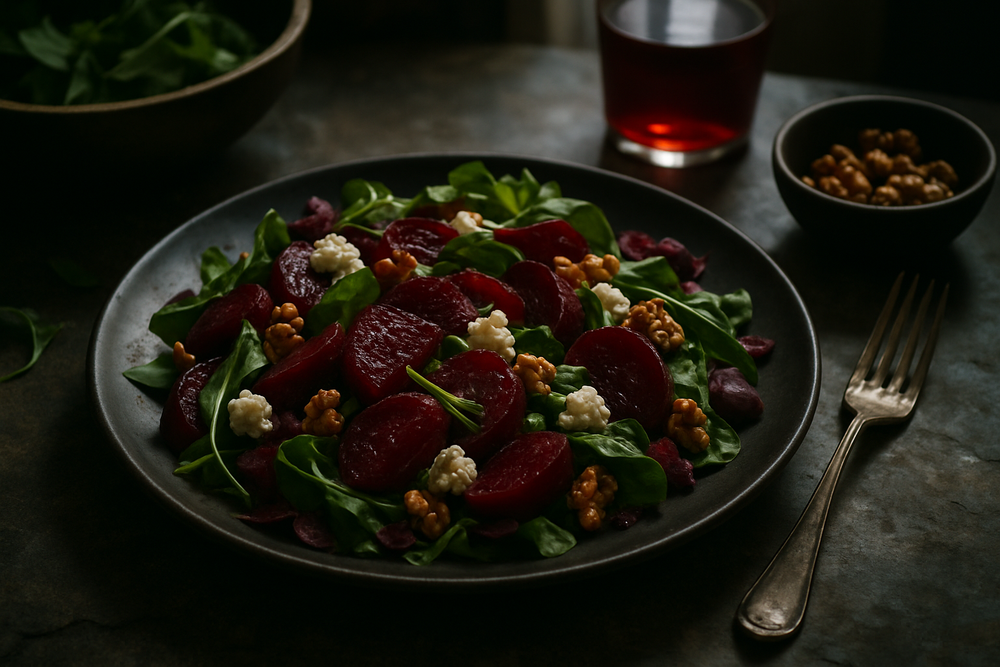
Fermented Beets · Photograph
Fermented beets are whole beetroot (Beta vulgaris) preserved through lactic acid fermentation — a process where naturally occurring bacteria convert the beet's sugars into organic acids, creating a tangy, earthy flavour and a product that may carry live microbes along with the nutritional profile of beets themselves. You might encounter them as beet kvass (a salty, sour beet drink), as sliced beets in a cloudy brine, or as part of a mixed fermented vegetable kraut.
Key Nutrients
% Daily Value based on 2,000 cal diet
Key active compounds
- Dietary nitrates — Inorganic compounds (NO₃⁻) present in high amounts in beetroot. The body converts them to nitric oxide, which relaxes blood vessel walls and may improve blood flow and exercise performance.
- Betalains (e.g., betanin) — The water-soluble red-purple pigments responsible for beet's colour. They act as antioxidants in lab and animal studies and may reduce oxidative stress in people who consume beet products regularly.
- Phenolic compounds — A broad family of plant molecules (including phenolic acids and flavonoids) that fermentation appears to increase in concentration and bioavailability, based on reviews of fermented beetroot juice.
- Betaine — A methyl-donor compound found naturally in beets that supports liver function and is linked to lower blood homocysteine levels in non-fermented beet research. Fermentation is unlikely to remove it.
- Organic acids (lactic acid, acetic acid) — Produced during fermentation. They create the sour flavour, act as natural preservatives, and may influence gut pH and post-meal blood sugar responses.
- Lactic acid bacteria (LAB) — Present in unpasteurised, lacto-fermented products. Species such as Lactobacillus plantarum are the same type of bacteria found in kimchi and sauerkraut and are associated with gut microbiome support.
How to choose fermented beets with live cultures — a buying guide
Shopping for fermented beets requires reading past the front-of-pack claims. Here is what to look for:
Labels that suggest live cultures are present:
- "Raw" or "unpasteurised"
- "Live and active cultures"
- "Keep refrigerated" (shelf-stable jars of pickled beets are almost always heat-treated)
- Ingredients list showing only: beets, water, salt — no vinegar, no preservatives like sodium benzoate
Labels that suggest no live cultures:
- "Pickled in vinegar" with no mention of fermentation
- Shelf-stable (no refrigeration needed)
- Heat-treated or "pasteurised" on the label
- Ingredients with added sugars, artificial colours, or preservatives
Sodium check: Look at the "per serving" sodium figure on the Nutrition Facts panel. Less than 140 mg per serving is considered low-sodium. Many fermented beet products deliver 2–4× that per serving. Some brands offer reduced-salt versions — worth seeking out if you are sodium-sensitive.
Fermented beet powders: These are convenient but less transparent. Look for products that disclose nitrate content (mg per serving) and whether any live organisms survived drying. Third-party tested products are preferable.
Prep and pairing ideas
Getting started with fermented beets at home: The simplest lacto-fermented beet recipe involves slicing or cubing raw beets, packing them into a clean jar, covering with a 2% salt brine (about 1 teaspoon non-iodised salt per 2 cups water), weighing the beets down below the brine surface, and leaving the jar loosely covered at room temperature for 5–14 days. Move to the fridge once it smells pleasantly sour. Iodised salt inhibits fermentation — use sea salt or pickling salt.
Three practical pairings:
- Fermented beets + leafy greens + walnuts — The earthy-sour beet pairs well with bitter greens like rocket or radicchio, and waln
How Fermented Beets Compares
| Compared with | What's different |
|---|---|
| Fermented Beets vs. Pickled Beets | Pickled beets use vinegar and sugar, while fermented beets rely on salt and lactic acid. |
| Fermented Beets vs. Beet Kvass | Kvass is the liquid tonic strained from fermented beets; the beets themselves are whole or sliced. |
| Fermented Beets vs. Sauerkraut | Both provide live cultures, but fermented beets are higher in dietary nitrates and folate. |
Health Benefits
Things to Know
Sodium is the main practical risk: for most people. High-sodium fermented beet products can work against cardiovascular benefits and raise concerns for people managing blood pressure or kidney function.
Beeturia: — red or pink urine after eating beets — is harmless and affects roughly 10–14% of people. It can be startling if you are not expecting it.
Oxalates: Beets are moderately high in oxalates (natural compounds that can contribute to kidney stones in susceptible people). Fermentation reduces but does not eliminate them. If you have a history of calcium oxalate kidney stones, speak to your doctor before adding large amounts of beets to your diet.
Histamine sensitivity: Fermented foods can be higher in histamine and biogenic amines, which may trigger symptoms (headache, flushing, digestive upset) in people with histamine intolerance or mast cell disorders.
Blood pressure medications: High intake of nitrate-rich beet products could amplify the effects of antihypertensive drugs (ACE inhibitors, ARBs, beta-blockers, calcium channel blockers), potentially causing dizziness or lightheadedness. If you are on these medications, check with your prescriber before significantly increasing your beet intake.
Diuretics: The high sodium in many fermented beet products may counteract blood pressure or fluid management strategies in people taking diuretics.
Immunocompromised individuals and pregnant people: Unpasteurised fermented foods carry a small theoretical risk of foodborne illness if prepared or stored improperly. Commercially produced, quality-controlled products made under hygienic conditions are the safer choice.
Diabetes: Some commercial pickled beet products contain added sugars. Always check the ingredients list, not just the front-of-pack health messaging.
Prep Ideas
- — Fermented beets + leafy greens + walnuts — The earthy-sour beet pairs well with bitter greens like rocket or radicchio, and waln
Shop This Ingredient
Stock your pantry with quality fermented beets.
Buy on AmazonAs an Amazon Associate, Plantopedia earns from qualifying purchases. This costs you nothing extra and helps us keep the encyclopedia free.
Frequently Asked Questions
Heart and circulation The best-supported link between beets and heart health runs through dietary nitrates. Multiple human clinical trials using beetroot juice (typically 70–500 ml per day) have shown modest but consistent reductions in systolic and diastolic blood pressure, improvements in exercise performance, and better vascular function. The mechanism is well established: beet nitrates → converted by oral bacteria → nitric oxide in the body → blood vessel dilation. Fermentation does not appear to destroy nitrates, so fermented beets likely offer similar nitrate-related effects at a comparable beet dose. However, direct controlled trials on fermented beets and blood pressure are still limited. A meaningful caveat: the sodium in brined or pickled beets can partially counteract the nitrate benefit, especially in people who are sodium-sensitive. If cardiovascular support is your goal, look for lower-sodium products or consider the brine an acquired-taste side effect to rinse off. Digestive health and microbiome Fermented beets can support digestion via two routes. First, the fibre in beets acts as a prebiotic — it feeds the beneficial bacteria already living in your large intestine. Second, unpasteurised lacto-fermented beets may deliver live lactic acid bacteria (such as Lactobacillus plantarum) that can add to your gut's microbial diversity. The Harvard T.H. Chan School of Public Health notes that fermented foods can supply microbes that interact with the gut microbiome — but also that not all fermented foods contain live cultures. Pasteurisation and shelf-stable storage kill bacteria. An animal study found that fermented beet juice improved gut microbiota composition and antioxidant status in rats, suggesting prebiotic and microbiota-modulating potential, but comparable human trials with fermented beetroot are limited. The digestive benefits are plausible and consistent with broader fermented vegetable research — just not as well documented for beets specifically as for yogurt or kimchi. Blood sugar and metabolism Two overlapping mechanisms may make fermented beets useful for post-meal blood sugar management. First, microbial fermentation consumes some of the beet's natural sugars, plausibly lowering the glycaemic load (a measure of how much a food raises blood sugar) compared to raw beets. Second, the acetic acid produced in vinegar-pickled or lacto-fermented products can blunt the spike in blood glucose after a meal — a benefit supported by human trials on vinegar, though not specifically on fermented beets. Evidence here is emerging rather than robust. Fermented beets are unlikely to work as a blood sugar treatment on their own, but they may be a smarter swap for more refined carbohydrate accompaniments. Watch for added sugars in commercial pickled beet products. Inflammation and recovery A 2024 review of fermented beetroot juice reported high phenolic content and strong antioxidant capacity, with anti-inflammatory effects observed in cell culture and animal models. Fermentation appears to increase phenolic availability relative to raw juice, which is encouraging. Reviews of plain beetroot also document anti-inflammatory and antioxidant effects, with some small human studies showing reduced oxidative stress markers after beetroot juice supplementation. At this stage, the anti-inflammatory data for fermented beets specifically is largely lab-based. Fermented beets are best understood as an antioxidant-rich food that supports a broader anti-inflammatory diet — not as a standalone treatment for inflammatory conditions.
This is one of the most common points of confusion, and the answer has real practical consequences. | Form | How it's made | Live cultures? | Sodium | Best for | |---|---|---|---|---| | Lacto-fermented beet slices | Beets in salted brine, 1–3 weeks at room temp | Possibly — if unpasteurised and refrigerated | High | Gut health, flavour, nitrates | | Beet kvass | Beets in brine, sometimes with a starter culture | Possibly — if raw and refrigerated | Moderate–high | Tonic, blood flow, culinary | | Vinegar-pickled beets (commercial jar) | Quick-pickled in vinegar, often heat-processed | Usually no | Moderate–high | Flavour, convenience | | Fermented beet powders/concentrates | Spray- or freeze-dried fermented beet juice | Variable, often no | Low | Portability; check nitrate + culture claims | | Mixed fermented veggie krauts with beets | Beets + cabbage or other veg co-fermented | Possibly — if raw | High | Diversity, flavour | Bottom line on form: For potential probiotic benefit, choose refrigerated, unpasteurised lacto-fermented beets or kvass and look for the words raw or live and active cultures. For nitrate-related heart and circulation benefits, any form that preserves the beet tissue (slices, kvass, powder) should retain nitrates, but watch sodium. For everyday culinary use, any form works.
Quick Answers
Common questions, answered in a line.
Fermented beets are high in dietary nitrates, which the body converts into nitric oxide to relax blood vessel walls and improve blood flow. These inorganic compounds may also enhance exercise performance by supporting cardiovascular efficiency.
To ensure fermented beets contain live cultures, look for labels marked "raw," "unpasteurised," or "keep refrigerated." If a product is shelf-stable at room temperature or contains vinegar and preservatives, the beneficial lactic acid bacteria have likely been destroyed by heat or chemical treatment.
Beeturia is a harmless condition where eating beets causes red or pink urine, affecting approximately 10–14% of the population. While it can be startling, it is not a cause for medical concern according to the nutritional profile of the vegetable.
You can make fermented beets at home by submerging sliced raw beets in a 2% salt brine—roughly one teaspoon of non-iodised salt per two cups of water. Allow the jar to sit at room temperature for 5 to 14 days until it smells pleasantly sour, then move it to the refrigerator.
Fermented beets contain nitrates that may amplify the effects of antihypertensive drugs like ACE inhibitors and beta-blockers, potentially causing dizziness. Additionally, the high sodium content in some fermented products can counteract the effectiveness of diuretics used for fluid management.
People with a history of calcium oxalate kidney stones should consult a doctor before consuming large amounts of fermented beets. While the fermentation process reduces the levels of oxalates found naturally in beetroot, it does not eliminate them entirely.
For Readers in the USA
Local context — sourcing, seasonality, and regional notes.
You can find raw fermented beets in the refrigerated produce or deli sections of major US retailers like Whole Foods Market, Sprouts Farmers Market, and many local food co-ops. Look for brands like Wildbrine or Cleveland Kitchen, which are widely distributed across the United States.
While beets are grown year-round in states like California, you will most commonly find fresh local beets for home fermentation at US farmers markets from June through October. In northern states, look for "storage beets" available throughout the winter months, which often have a higher sugar content ideal for fermentation.
To ensure your fermented beets meet federal standards for organic production, look for the green and white USDA Organic seal on the packaging. This seal guarantees the beets were grown without synthetic fertilizers or pesticides, and that the fermentation process follows strict NOP (National Organic Program) handling guidelines.
In the United States, "Beet Kvass" is the most common name for the fermented beet tonic found in health food stores, rooted in Eastern European traditions. You may also see them labeled as "Lacto-fermented Beets" or "Probiotic Beet Salad" in regional specialty markets.
AI Clinical Review
- Clearly distinguishes lacto-fermented beets from vinegar-pickled versions and explains why only unpasteurised, refrigerated products are likely to contain live cultures.
- Accurately summarizes the nitrate → nitric oxide pathway seen with beet products and notes that sodium in brined items can counter cardiovascular benefits.
- Appropriately frames microbiome, antioxidant, and phenolic claims as promising but not definitive for fermented beets specifically.
- Offers practical label-reading guidance (ingredients, “raw/unpasteurised,” refrigeration, and sodium levels) that helps consumers choose products that fit their goals.
- Most blood pressure, performance, and metabolic data come from plain beetroot juice or vinegar studies; randomized human trials using fermented beets themselves are limited.
- Probiotic benefits remain uncertain: live culture counts vary by brand and processing, survival through digestion isn’t guaranteed, and pasteurisation eliminates microbes.
- Anti-inflammatory and antioxidant effects for fermented beet preparations are based largely on lab and animal models; human dose–response and clinical relevance need clarification.
- Nitrate retention likely persists through fermentation, but actual nitrate content and bioavailability can differ across products (kvass, slices, powders), and standardisation is lacking.
- Sodium is the main practical risk: many products provide several hundred milligrams per 1/2 cup. If you monitor blood pressure or take diuretics, compare labels and mind portions.
- There is no established therapeutic dose for fermented beets. A practical food-first approach is modest servings (for example, 1/4–1/2 cup beets or 4–8 oz kvass with meals) as tolerated.
- Special situations: a history of calcium oxalate kidney stones, histamine intolerance, pregnancy, or immunocompromise warrants extra caution and preference for reputable, properly handled products.
- Medications: nitrate-rich beet foods may amplify the effects of antihypertensives in some people (lightheadedness). Discuss with your clinician if you plan regular, higher intakes.
- Only unpasteurised, refrigerated products are likely to contain live cultures; shelf-stable pickled beets are mainly for flavour. Added sugars in some pickled versions can raise carbs.
- If using beet nitrates for vascular benefits, be aware that frequent antiseptic mouthwash can blunt the oral-bacteria step that helps convert nitrates to nitric oxide.
Fermented does not always mean probiotic; note sodium and live/active culture differences.
References
- PubMed — Fermented beetroot modulates gut microbial carbohydrate metabolism in prediabetes and prevents high-fat diet induced hyperglycemia in a prediabetic model (pubmed.ncbi.nlm.nih.gov)
- PMC, National Library of Medicine — Phenolic Compounds and Antioxidant Properties of Fermented Beetroot Juices Enriched with Different Additives (pmc.ncbi.nlm.nih.gov)
- PMC, National Library of Medicine — Effect of Fermentation on the Nutritional Quality of the Selected Vegetables and Legumes and Their Health Effects (pmc.ncbi.nlm.nih.gov)
- PMC, National Library of Medicine — Effect of fermentation of chosen vegetables on the nutrient, mineral, and biocomponent profile in human and animal nutrition (pmc.ncbi.nlm.nih.gov)
- PubMed — Beetroot (Beta vulgaris L.) and naturally fermented beetroot juices from organic and conventional production: metabolomics, antioxidant levels and anticancer activity (pubmed.ncbi.nlm.nih.gov)
- USDA FoodData Central — USDA FoodData Central (fdc.nal.usda.gov)
- PubMed — Nutritional Evaluation of Beetroots (Beta vulgaris L.) and Its Potential Application in a Functional Beverage (pubmed.ncbi.nlm.nih.gov)
- Nature — Client Challenge (nature.com)
- Frontiers — Frontiers | Are fermented foods safe for human health? A systematic analysis of the literature (frontiersin.org)
Know Your Numbers
Eating healthy is a start. Now get to know your biomarkers.
Food changes bloodwork — inflammation, lipids, blood sugar and nutrient status all respond to what you eat. 59 markers from $59.
- Results in 7–10 days at 2,000+ Quest sites
- Licensed provider reviews every result
- One flat price, no membership, HSA/FSA eligible
Educational information only, not medical advice. Panels are ordered and reviewed through our licensed partner; Plantopedia may earn a commission.