Fermented Celeriac — health benefits and uses
European kitchens fermented celeriac to keep its savory aroma through winter.
The Short Answer
Fermented celeriac is a probiotic-rich root vegetable containing 300mg of potassium and only 36 calories per cup. It is traditionally used in remoulade or as a crunchy, tangy topping for grain bowls and salads to support gut health.
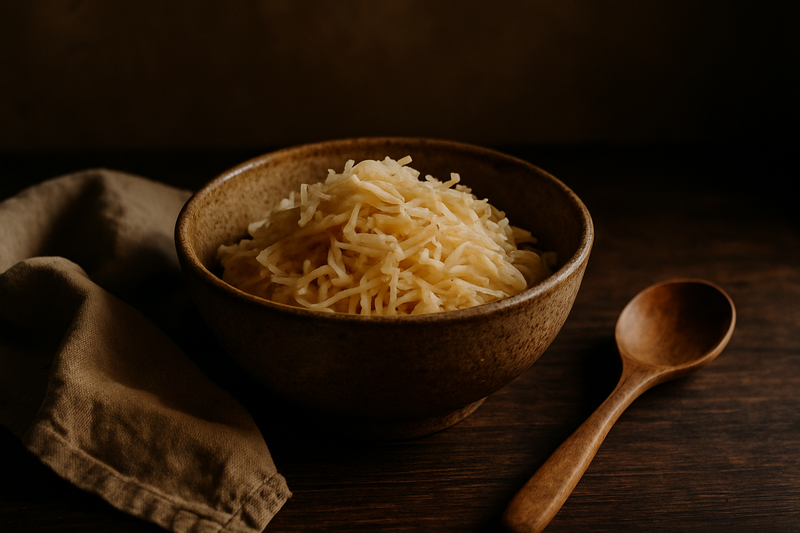
Fermented Celeriac · Photograph
Discover the fermented celeriac health benefits backed by food science: gut microbiome support, digestive health, low-calorie nutrition, and practical tips for making and using lacto-fermented celery root in remoulade salads and winter meals.
Key Nutrients
% Daily Value based on 2,000 cal diet
Key active compounds in fermented celeriac
- Lactic acid bacteria (LAB) — primarily Lactobacillus and Leuconostoc species that naturally drive lacto-fermentation, converting sugars to lactic acid and producing bioactive metabolites. These are the microbes responsible for the tang.
- Lactic acid and organic acids — the fermentation by-products that lower brine pH, preserve the vegetable, and may support a favourable gut environment.
- Phenolic compounds — including caffeic acid and p-coumaric acid, plant-derived antioxidant molecules present in celery-family vegetables. Fermentation modifies but does not eliminate them.
- Phthalides and aromatic terpenes — the signature fragrant compounds of the celery family, responsible for celeriac's distinctive aroma. In lab and animal models, celery-family phthalides have been linked to vasodilation effects, though human trial evidence is limited.
- Short-chain fatty acid (SCFA) precursors — fermentable fibres and oligosaccharides that gut bacteria convert into SCFAs such as butyrate and propionate, which support colon-cell health and gut barrier integrity.
Prep and pairing ideas
Classic winter remoulade salad: Drain and gently squeeze your fermented celeriac to remove excess brine. Toss with whole-grain mustard, a squeeze of lemon, a spoonful of tahini or plant-based mayo, and fresh dill or parsley. Serve alongside roasted root vegetables or lentil soup. The tang of the ferment does most of the seasoning work.
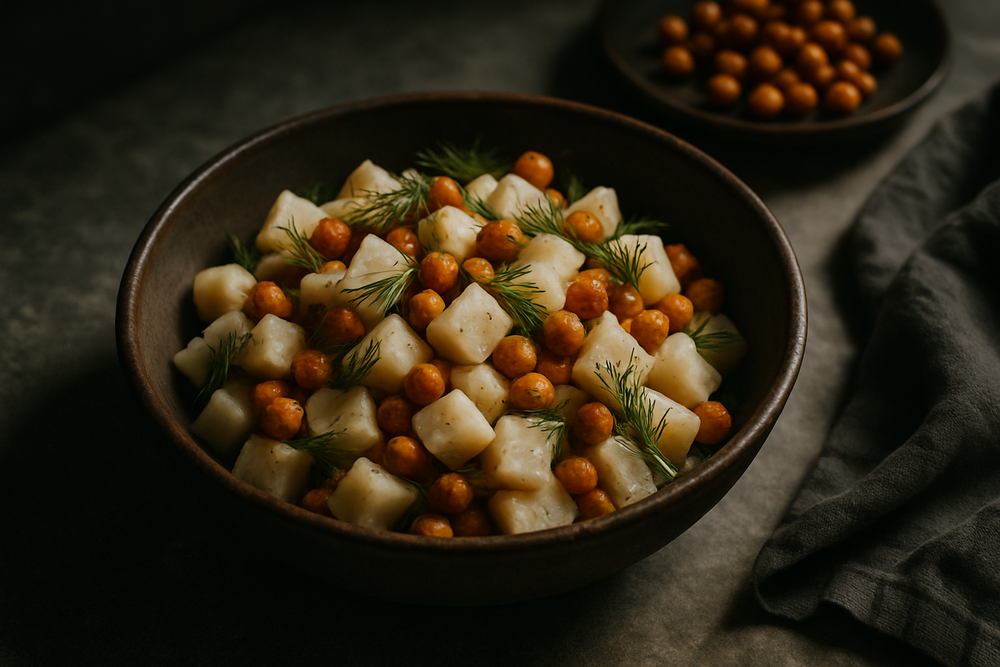
Grain bowl topping: Add a small scoop of fermented celeriac to farro, freekeh, or brown rice bowls. Its acidity brightens earthier grains and helps balance rich toppings like roasted chickpeas or avocado.
Taco or flatbread slaw: Substitute fermented celeriac for pickled cabbage as a punchy, crunchy slaw. Pair with black beans, lime, smoked paprika, and fresh coriander for a full WFPB (whole-food, plant-based) meal.
Buying guide: choosing the best fermented celeriac
Fresh / homemade is the gold standard for live LAB content. You control the salt level, fermentation time, and add-ins (caraway seed, mustard seed, and bay leaf are all traditional pairings). The trade-off is time (3–7 days minimum) and careful hygiene.
Refrigerated commercial jars labeled "raw," "unpasteurized," or "live cultures" are the best ready-to-eat option. Check the label for: sodium per serving, whether celeriac is the primary ingredient (or a minor one in a mixed-vegetable ferment), and that there are no unnecessary additives beyond salt, spices, and water.
Frozen celeriac is not typically sold pre-fermented, but you can ferment it yourself after thawing — texture will be softer and fermentation faster. Works well if fresh celeriac is unavailable.
Supplement capsules of "fermented vegetable extract" exist but are not equivalent to eating the food — they typically contain negligible fibre and variable microbe counts. The whole fermented vegetable is the more evidence-aligned choice.
Label tip: For a 2-ingredient ferment, the ingredient list should read: celeriac, salt (and optional spices). If the list is longer than that, check whether added vinegar is present — vinegar-pickled celeriac is not the same as lacto-fermented celeriac and will not contain live LAB.
Bottom line
Fermented celeriac is a flavourful, low-calorie, fibre-containing root vegetable that earns its place at the table on two counts: as an unusually good winter vegetable with a versatile culinary personality, and as a source of lactic acid bacteria that contribute to the growing body of evidence linking fermented food intake to improved gut microbial diversity and reduced low-grade inflammation. The evidence for those benefits comes primarily from broader fermented-food research — no clinical trials have isolated fermented celeriac alone — but the mechanisms are well-grounded and the food itself carries minimal risk for healthy adults eating it in normal serving sizes.
The practical watchpoints are sodium (the brine is salty, so monitor portion sizes if you have cardiovascular or kidney concerns) and the celeriac/celery allergy risk. Beyond that, making a jar of lacto-fermented celeriac or picking one up refrigerated is one of the simpler ways to add both probiotic diversity and vegetable variety to a plant-forward winter diet.
How Fermented Celeriac Compares
| Compared with | What's different |
|---|---|
| Fermented Celeriac vs. Fermented Celery | Milder, nuttier taste with a firmer texture compared to the sharp, watery crunch of celery. |
| Fermented Celeriac vs. Sauerkraut | Contains roughly 7.2g of carbs per cup, providing a starchier base than cabbage. |
Health Benefits
Things to Know
Sodium load: The most practically important caution. If you are on a sodium-restricted diet (hypertension, heart failure, kidney disease), measure your serving size and consider rinsing fermented celeriac under cold water before eating to reduce salt.
Celery / celeriac allergy: Celeriac is a major allergen in the EU and is botanically the same plant as celery. If you have a known celery or celeriac allergy, or have experienced oral allergy syndrome with celery-family foods, avoid fermented celeriac entirely — fermentation does not neutralise the allergenic proteins.
Histamine intolerance: Fermented vegetables can contain biogenic amines, including histamine, produced during fermentation. People with histamine intolerance, mast cell activation disorder, or those taking MAO-inhibitor medications should introduce fermented foods cautiously and monitor for symptoms (headache, flushing, hives, digestive upset).
IBS and sensitive digestion: Start with a very small portion (1–2 tablespoons) and increase gradually over 1–2 weeks. Some people experience transient gas or bloating when adding fermented foods to their diet; this usually settles.
Immunocompromised individuals: Prefer commercially prepared, quality-controlled products. Avoid ferments that show mold growth, unusual colours, or off-putting odours that go beyond normal sour tang.
Pregnancy and breastfeeding: Fermented celeriac is generally considered safe in culinary amounts. Avoid any jar that shows signs of spoilage. The sodium content is worth factoring into total daily salt intake.
Medication interactions: High sodium intake from regular large servings can blunt the effect of antihypertensive drugs (ACE inhibitors, ARBs, diuretics). MAO-inhibitor users should monitor biogenic amine intake from all fermented foods. Blood-sugar medications are unlikely to need adjustment for small servings, but any significant dietary shift towards higher fibre and lower carbohydrates warrants a conversation with your prescriber.
Glossary
Shop This Ingredient
Stock your pantry with quality fermented celeriac.
Buy on AmazonAs an Amazon Associate, Plantopedia earns from qualifying purchases. This costs you nothing extra and helps us keep the encyclopedia free.
Frequently Asked Questions
The evidence below covers what research says about the underlying mechanisms and the best-comparable fermented-vegetable studies. Where data are specific to celeriac, that is noted; where they are extrapolated from broader fermented-food research, that is also stated clearly. Digestive health and microbiome This is the most supported area for fermented foods generally. A landmark Stanford randomized controlled trial (Sonnenburg lab, 2021) found that adults who ate multiple daily servings of assorted fermented foods — including fermented vegetables like kimchi — for 10 weeks showed meaningful increases in gut microbiome diversity and decreases in several markers of immune activation, compared with a high-fibre diet group. Separate reviews confirm that habitual fermented-food intake is linked to distinct gut microbiome profiles and enriched levels of beneficial taxa like Lactobacillus. For fermented celeriac specifically, the same lactic acid bacteria responsible for sauerkraut and kimchi — Lactobacillus and Leuconostoc species — drive its fermentation. These microbes are transient in the gut (they don't permanently colonize), but research suggests they can still positively influence resident microbial activity, produce helpful metabolites, and support gut resilience while passing through. Celeriac also contributes fibre, which feeds resident gut bacteria and supports the production of SCFAs. Its fibre content is moderate rather than high, so think of it as one contributor in a fibre-rich eating pattern, not a standalone fibre supplement. Important nuance for IBS: Fermentation can reduce but does not eliminate fermentable carbohydrates (FODMAPs). People with irritable bowel syndrome may find small servings of fermented celeriac easier to tolerate than the raw root, but individual responses vary. Start with a small portion and see how you feel. Inflammation and immune balance The same Stanford trial found that a fermented-food-rich diet reduced circulating cytokines (signalling proteins involved in inflammation) compared with baseline. Several reviews of fermented foods describe plausible mechanisms: LAB interact with gut immune cells, increased microbial diversity can dampen inflammatory signalling, and SCFAs produced from fermentable fibres support the gut barrier. Celeriac's phenolic compounds add a small antioxidant contribution on top of this. However, the inflammation evidence is strongest for fermented-food dietary patterns, not any single ingredient. Fermented celeriac can be a helpful piece of an anti-inflammatory diet — not a standalone treatment. Blood sugar and metabolism Fermented celeriac is naturally low in carbohydrates and calories. Fermentation may slightly reduce residual simple sugars as LAB consume them during the process, potentially nudging the glycaemic impact a touch lower than raw celeriac. However, for a vegetable this low in carbs to begin with, the practical difference is small. Some reviews report that fermented foods have produced modest improvements in fasting glucose or insulin sensitivity in small human studies, but findings are inconsistent and often involve fermented dairy rather than vegetables. For blood sugar management, fermented celeriac is best understood as a low-energy, high-volume food that can displace more refined or energy-dense side dishes — that displacement effect is likely where the real metabolic value lies. Heart and circulation Celeriac is low in calories and provides potassium (≈300 mg per serving, 6% DV) and phosphorus, fitting comfortably into a cardiovascular-friendly eating pattern. Celery-family phthalides have shown vasodilatory effects in lab models, and some small fermented-food studies suggest modest lipid and blood pressure improvements, but evidence is heterogeneous and largely product-specific. Sodium caveat (important): Lacto-fermented brines are salty by design — that salt is what keeps the ferment safe. A typical half-cup serving of drained fermented celeriac may contribute 200–400 mg of sodium. For most healthy adults eating 1–2 small servings a day, this can fit into overall sodium allowances. For people with hypertension, heart failure, or chronic kidney disease on sodium restriction, portion size matters and rinsing the ferment before eating can meaningfully reduce salt load.
Homemade lacto-fermented celeriac Peel the knobby outer skin thoroughly (this is non-negotiable — the skin is bitter, tough, and difficult to ferment evenly). Shred or julienne the root, then massage with 2–3% non-iodized salt by weight (roughly 1–1.5 teaspoons per 500 g of shredded root). Pack into a clean jar, press down until the brine rises above the surface, and ferment at room temperature for 3–7 days, then move to the fridge. Iodized salt can inhibit LAB — use pickling or sea salt. Commercial unpasteurized fermented celeriac Look for "raw," "unpasteurized," or "live cultures" on the label. Refrigerated products in glass jars are most likely to retain active LAB. Sodium content per serving can vary widely between brands — check the label. Pasteurized commercial versions These are shelf-stable and safe but have lost most or all live cultures through heat treatment. You get the flavour and fibre, but not the microbiome-supporting microbes. Still a perfectly good vegetable; just not a "probiotic" source in the technical sense. Using the brine The liquid ("gut shots") is intensely salty and concentrated in acids and microbes. A tablespoon as a salad dressing base or drizzled over grains is a nice culinary trick. Avoid drinking large amounts — especially if you're monitoring sodium or prone to acid reflux. Adding to cooked dishes Fermented celeriac can be stirred into warm soups or grain bowls near the end of cooking for flavour. Heat above 70°C (158°F) will kill the live cultures, but the fibre, minerals, and taste remain. Useful for those whose digestion doesn't tolerate raw ferments well.
There is no established official recommended dose for fermented celeriac, because it has not been studied as a standalone intervention. The Stanford fermented-food trial used 2–6 varied servings of fermented foods daily across multiple food types (yogurt, kefir, kimchi, fermented vegetables, kombucha). For a salty lacto-fermented vegetable like celeriac, a practical and sodium-aware target for most people is: Start: 1–2 tablespoons (15–30 g) a few times a week, especially if you are new to fermented foods. Maintenance: 1–2 small servings of approximately ¼ to ½ cup (30–75 g) per day, within a broader pattern of varied fermented foods and vegetables. Sodium check: Two half-cup servings per day could contribute 400–800 mg of sodium. If your daily sodium target is 1,500–2,300 mg, factor this in. Variety matters: Rotating fermented celeriac with other fermented foods (kimchi, sauerkraut, miso, tempeh) may expose your gut microbiome to a more diverse range of LAB species — which appears to be more beneficial than large amounts of a single ferment. If you are using it primarily as a culinary ingredient rather than a health supplement mindset, let appetite and meal balance guide portion size. Explore more plant-based goals and eating strategies at Plantopedia's goals page.
Quick Answers
Common questions, answered in a line.
Fermented celeriac contains live lactic acid bacteria (LAB), specifically Lactobacillus and Leuconostoc species, which help improve gut microbial diversity and reduce low-grade inflammation. These microbes convert sugars into lactic acid and metabolites that support a healthy gut environment.
You can make a winter remoulade by tossing drained fermented celeriac with mustard, lemon, tahini or plant-based mayo, and fresh dill. It also works as a bright topping for grain bowls or as a crunchy slaw for tacos and flatbreads.
Check the label for words like "raw," "unpasteurized," or "live cultures," and ensure the ingredients are just celeriac, salt, and spices. Avoid products with added vinegar, as vinegar-pickled celeriac does not contain the same beneficial live lactic acid bacteria.
Individuals with a known celery or celeriac allergy should avoid fermented celeriac entirely because fermentation does not neutralize the allergenic proteins. It is also important to monitor intake if you have histamine intolerance or are on a sodium-restricted diet.
Yes, you can ferment frozen celeriac after thawing it, though the texture will be softer and the fermentation process will be faster than with fresh root. This is a practical alternative if fresh celeriac is unavailable in your area.
Fermented celeriac contains phenolic compounds like caffeic acid and p-coumaric acid, which are plant-derived antioxidant molecules. While fermentation modifies these molecules, it does not eliminate them, allowing them to contribute to the vegetable's nutritional profile.
For Readers in the USA
Local context — sourcing, seasonality, and regional notes.
Celeriac, also known as celery root, is primarily harvested in the United States from September through April, making it a staple of winter farmers markets. While it is grown in various regions, the cooler climates of the Pacific Northwest and the Northeast produce the bulk of the domestic supply.
You can find fresh celeriac at major US grocery chains like Whole Foods Market, Wegmans, and Kroger, typically located near other root vegetables like parsnips and beets. For pre-made fermented versions, check the refrigerated "functional food" or "probiotic" aisle near the sauerkraut and kimchi.
To ensure your fermented celeriac contains live probiotics, look for the "USDA Organic" seal and labels indicating the product is "Raw," "Unpasteurized," or "Naturally Fermented." The FDA does not strictly define the term "probiotic" on food labels, so verifying the presence of live cultures in the refrigerated section is essential.
In the US, celeriac is most famously used to make "Celery Root Remoulade," a creamy slaw that is a popular side dish in French-American bistros and East Coast delis. During the winter months, it is frequently used as a low-carb substitute for mashed potatoes or as a crunchy topping for grain bowls in plant-based restaurants.
AI Clinical Review
- Clearly explains lacto‑fermentation and the role of lactic acid bacteria (LAB), noting that unpasteurized products contain live cultures while pasteurized versions do not.
- Accurately frames potential benefits within the broader fermented‑food literature (e.g., increased microbiome diversity and lower inflammatory markers), not as celeriac‑specific proof.
- Provides a realistic nutrition snapshot: low calories with some fiber and potassium, plus meaningful added sodium from the brine.
- Offers practical, consumer‑useful tips (rinsing to lower salt; heat above ~70°C/158°F inactivates live cultures).
- No clinical trials isolate fermented celeriac; expected effects are inferred from sauerkraut/kimchi and mixed fermented‑food studies, so the size of benefit is uncertain.
- Findings on glycemic control, blood lipids, and blood pressure with fermented vegetables are inconsistent; any effects are likely modest relative to overall diet quality.
- LAB from fermented vegetables are typically transient in the gut; benefits depend on regular intake and the broader eating pattern.
- Fermentation can lower—but not eliminate—FODMAPs; tolerance in IBS varies individually.
- Sodium: about 200–400 mg per ½ cup. If you have hypertension, heart failure, or kidney disease—or take antihypertensives—watch portions and consider a quick rinse.
- Allergies: celery/celeriac allergy can be severe; fermentation does not remove allergenic proteins—avoid entirely if allergic.
- Histamine/biogenic amines: may trigger symptoms in sensitive individuals or interact with MAO‑inhibitor medications; introduce small amounts and assess tolerance.
- Special situations and dosing: immunocompromised people and those who are pregnant should choose reputable products and avoid any signs of spoilage. A practical intake is 1–2 tablespoons when starting, building to ¼–½ cup daily as part of varied fermented foods; note that cooking preserves flavor and fiber but eliminates live cultures.
Salty brine; peel the knobby skin first.
References
- USDA FoodData Central – Celeriac, raw (FDC ID 170400) — core nutrition data for celeriac per serving (fdc.nal.usda.gov)
- Stanford randomized trial: fermented-food diet increases microbiome diversity and lowers inflammation (2021) — key human trial showing 10-week fermented-food diet raised gut microbial diversity and reduced circulating cytokines (med.stanford.edu)
- Consumption of fermented foods is associated with systematic differences in gut microbiome and metabolome — mSystems (2020) — large observational study linking fermented food intake to distinct gut microbiome profiles (journals.asm.org)
- Fermented foods, health and the gut microbiome — PMC review (2022) — comprehensive review of human evidence on fermented foods and microbiome outcomes (pmc.ncbi.nlm.nih.gov)
- Does consumption of fermented foods modify the human gut microbiota? — PMC review (2020) — systematic evaluation of whether fermented food intake causally shifts gut microbiota composition (pmc.ncbi.nlm.nih.gov)
- Colonization ability and impact on human gut microbiota of fermented-food-derived bacteria — PMC (2021) — review of how transient LAB from fermented foods still influence gut microbial activity (pmc.ncbi.nlm.nih.gov)
- Fermented foods as functional systems: microbial and health perspectives — PMC (2025) — up-to-date review covering fermented food microbiomes and chronic disease evidence (pmc.ncbi.nlm.nih.gov)
- Fermented foods affect seasonal stability of gut bacteria in an Indian rural population — Nature (2025) — human study linking fermented food intake to more stable seasonal gut microbiota (nature.com)
- Potential of fermented foods and their metabolites in managing chronic diseases — PMC (2025) — review on bioactive metabolites from fermented foods and links to inflammation, glycaemia, and cardiovascular markers (pmc.ncbi.nlm.nih.gov)
- Celeriac allergy and nutrition overview — Allergy Associates of La Crosse — practical clinical summary of celeriac nutrients and allergy considerations (lacrosseallergy.com)
Know Your Numbers
Eating healthy is a start. Now get to know your biomarkers.
Food changes bloodwork — inflammation, lipids, blood sugar and nutrient status all respond to what you eat. 59 markers from $59.
- Results in 7–10 days at 2,000+ Quest sites
- Licensed provider reviews every result
- One flat price, no membership, HSA/FSA eligible
Educational information only, not medical advice. Panels are ordered and reviewed through our licensed partner; Plantopedia may earn a commission.