Fermented Green Cabbage Rolls (Whole-Leaf Kraut) — health benefits and uses
Eastern European kitchens ferment whole cabbages for sour-leaf wraps through the winter.
The Short Answer
Fermented green cabbage rolls are whole cabbage leaves lacto-fermented in brine until pliable and sour, serving as a probiotic-rich, low-calorie wrapper for grains and vegetables. They contain approximately 19 calories and 2.9 grams of fiber per cup serving.
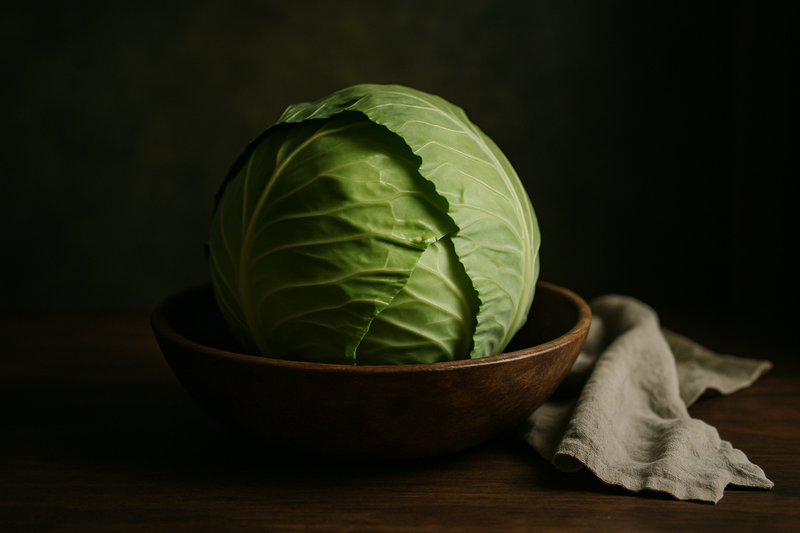
Fermented Green Cabbage Rolls (Whole-Leaf Kraut) · Photograph
Whole-leaf kraut is exactly what it sounds like: entire heads of green cabbage (Brassica oleracea var. capitata) submerged in a salty brine and left to ferment until the leaves turn pleasantly sour and pliable. Once fermented, the leaves peel away cleanly and make surprisingly sturdy, low-calorie wrappers for cooked grains, lentils, and vegetables — the plant-based answer to stuffed cabbage rolls found across Eastern European and Middle Eastern cuisines.
Key Nutrients
% Daily Value based on 2,000 cal diet
Key active compounds in fermented cabbage
- Lactic acid bacteria (LAB): L. plantarum, L. brevis, and related strains produced during fermentation; act as probiotics (live microorganisms that confer a health benefit when consumed in adequate amounts).
- Lactic acid and organic acids: Lower the gut's local pH; may inhibit pathogens and support microbiome balance.
- Glucosinolates: Sulfur-containing compounds from the cabbage itself; converted by enzymes and microbial action into isothiocyanates (see below).
- Isothiocyanates (e.g., sulforaphane-like compounds): Bioactive metabolites that may activate the body's cellular defense and detoxification systems in lab and animal models.
- Phenolic acids and flavonoids: Plant antioxidants that undergo partial transformation during fermentation, potentially increasing their absorbability.
- Bacteriocins: Antimicrobial peptides secreted by LAB that help keep spoilage organisms in check both in the jar and possibly in the gut.
- Fiber (including prebiotic fractions): Feeds beneficial gut bacteria even after live LAB have passed through the digestive tract.
Buying guide for fermented cabbage and whole-leaf kraut
Fresh vs. refrigerated vs. canned:
- Refrigerated, raw/unpasteurized jars (found near specialty deli or fermented foods sections): look for "naturally fermented," "raw," or "live cultures" on the label and a simple ingredient list: cabbage and salt only.
- Canned sauerkraut (shelf-stable): typically pasteurized; fiber and organic acids present, live cultures absent. Lower cost but higher sodium.
- Whole heads fermented at home: the most control over sodium concentration (most recipes use 2–2.5% salt by weight) and fermentation time, but requires strict food-safety practices.
Label tips:
- Ingredients should be cabbage + salt (and possibly water). Avoid products with added vinegar — that's quick-pickled, not lacto-fermented, so the probiotic and organic-acid profile is different.
- Check sodium per serving carefully; some brands offer "low-sodium" varieties that start at roughly half the standard sodium level.
- For live cultures, the jar should be unpasteurized and stored cold.
Prep and pairing ideas
How to prepare the leaves: Peel leaves from a fermented head gently (they soften significantly during fermentation). Rinse each leaf under cold water for 15–30 seconds to reduce surface salt — this removes brine without stripping the fiber or most fermentation compounds. Pat dry before rolling.
Classic plant-based roll filling: Cooked short-grain brown rice + sautéed mushrooms + lentils + a spoonful of tomato paste, seasoned with dill and black pepper. The sour leaf provides its own seasoning — taste before adding salt.
Three practical pairings and why they work:
- Cooked millet or farro + roasted root vegetables: Millet and farro add slow-digesting complex carbohydrates and protein, balancing the sour leaf and creating a complete plant-based meal with complementary amino acid profiles.
- Hummus or white-bean spread + shredded beets: Legume-based fillings add iron and zinc whose absorption is improved by the vitamin C in fermented cabbage — a genuine food-synergy pairing.
- Lightly sautéed mushrooms + fresh herbs (dill, parsley): Mushrooms contribute umami depth that flatters the sour leaf, while herbs provide additional polyphenols and brighten the flavor without added sodium.
Bottom line
Fermented green cabbage rolls are one of the more interesting whole-food applications of lacto-fermentation: they deliver probiotic bacteria, prebiotic fiber, organic acids, vitamin C, and cruciferous phytochemicals in a very low-calorie, naturally sour package. The most credible human evidence supports modest digestive benefits — particularly for IBS symptoms and gut microbiota modulation — with emerging signals for metabolic health. Anti-inflammatory and cardiovascular effects are plausible but not yet firmly established in clinical trials.
The practical reality is that sodium is the ingredient to watch. Rinsing the leaves, keeping portions around 50–100 g per day, and pairing them with low-sodium fillings makes whole-leaf kraut rolls a genuinely useful addition to a plant-forward diet. If you are on warfarin, antihypertensives, or MAOIs, a quick conversation with your prescriber is worth the two minutes.
Explore how fermented cabbage fits into your overall eating goals on Plantopedia's goals page.
How Fermented Green Cabbage Rolls (Whole-Leaf Kraut) Compares
| Compared with | What's different |
|---|---|
| Fermented Green Cabbage Rolls (Whole-Leaf Kraut) vs. Standard Sauerkraut | Finely shredded texture, often pasteurized; whole-leaf kraut uses intact, pliable leaves for wrapping. |
| Fermented Green Cabbage Rolls (Whole-Leaf Kraut) vs. Pickled Cabbage Leaves | Naturally fermented in brine for a sour profile; Sarma-style leaves have no added vinegar or sugar. |
| Fermented Green Cabbage Rolls (Whole-Leaf Kraut) vs. Kimchi | Spiced with chili and ginger; fermented cabbage rolls are typically mild, salty, and sour. |
Health Benefits
Things to Know
Sodium is significant.: A 100 g serving delivers ~29% of the daily sodium limit. If you have hypertension, heart failure, or chronic kidney disease, rinse leaves before rolling and keep portions to 1–2 leaves per meal.
Warfarin (blood thinner) users: Cabbage and its fermented forms contain vitamin K, which affects how warfarin works. You don't need to avoid it, but keep your intake consistent from week to week and let your prescriber know. Erratic swings in vitamin K foods are more problematic than a steady, moderate habit.
MAOI antidepressants: Fermented foods can contain biogenic amines (e.g., histamine, tyramine). Sauerkraut typically has lower levels than aged cheese or cured meat, but caution and medical guidance are warranted.
Histamine sensitivity: Some people react to fermented foods with headaches, flushing, or GI upset. Start with a small portion (1–2 tablespoons of filling, one leaf wrap) and observe your response.
IBS and sensitive guts: Fermented cabbage contains FODMAPs (fermentable carbohydrates that can trigger IBS symptoms in some people). Ironically, it also showed symptom relief in a clinical IBS trial — the key is starting small and increasing gradually.
Pregnancy: Stick to pasteurized commercial products. Home-fermented whole-leaf kraut carries a small but real risk from improper fermentation technique.
Immunocompromised individuals: Same guidance — pasteurized commercial products are safer than home-fermented raw versions.
Antihypertensive drugs and diuretics: Excess sodium from fermented cabbage can work against blood pressure control. Manage portions and rinse leaves.
Blood glucose medications: If you're on insulin or oral hypoglycemics and planning to eat fermented cabbage regularly, monitor blood sugar during dietary transitions — not because fermented cabbage has a strong hypoglycemic effect, but because any meaningful dietary change can shift patterns.
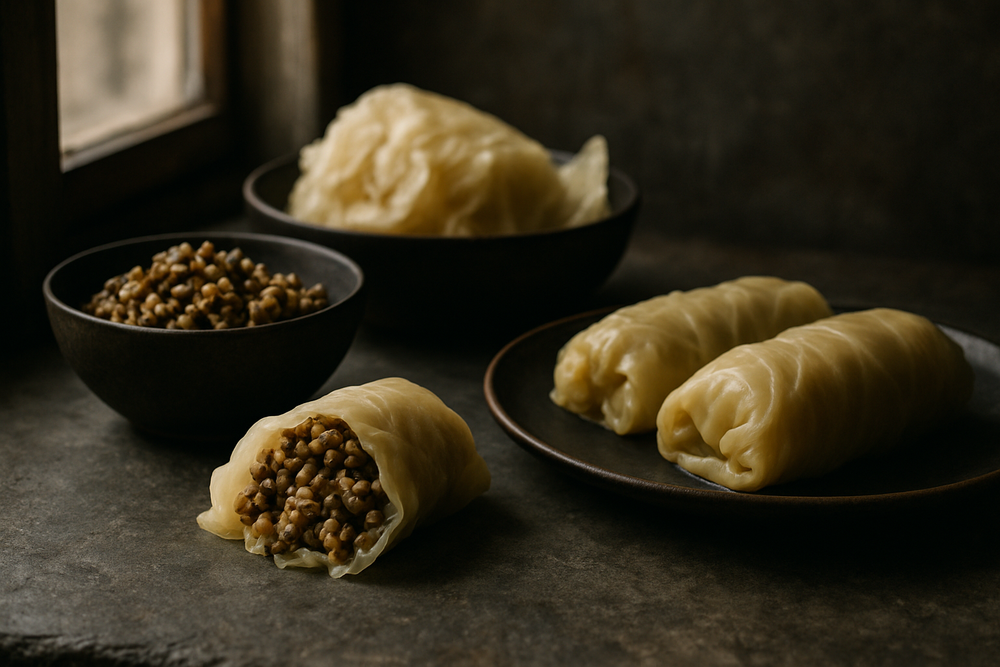
Prep Ideas
- — Cooked millet or farro + roasted root vegetables: Millet and farro add slow-digesting complex carbohydrates and protein, balancing the sour leaf and creating a complete plant-based meal with complementary amino acid profiles.
- — Hummus or white-bean spread + shredded beets: Legume-based fillings add iron and zinc whose absorption is improved by the vitamin C in fermented cabbage — a genuine food-synergy pairing.
- — Lightly sautéed mushrooms + fresh herbs (dill, parsley): Mushrooms contribute umami depth that flatters the sour leaf, while herbs provide additional polyphenols and brighten the flavor without added sodium.
Glossary
Shop This Ingredient
Stock your pantry with quality fermented green cabbage rolls (whole-leaf kraut).
Buy on AmazonAs an Amazon Associate, Plantopedia earns from qualifying purchases. This costs you nothing extra and helps us keep the encyclopedia free.
Frequently Asked Questions
Heart and circulation Direct evidence linking sauerkraut or whole-leaf kraut to improved blood pressure or cholesterol is thin. Most human studies have focused on gut symptoms and obesity-related markers rather than heart-specific endpoints. Some fermented kimchi (seasoned fermented cabbage) trials show modest improvements in body weight and waist circumference, which can indirectly reduce cardiovascular risk, but these results come from complex dietary interventions rather than cabbage alone. The counterpoint: fermented cabbage's high sodium content (661 mg per 100 g) can work against heart health if portions aren't managed. Rinsing the leaves and pairing them with an otherwise low-sodium filling is a practical way to keep a heart-friendly overall dish. Digestive health and microbiome This is where the evidence is clearest. A randomized, double-blind trial in 34 Norwegian adults with IBS (irritable bowel syndrome — a common functional gut disorder causing cramping, bloating, and irregular stools) found that eating lacto-fermented sauerkraut daily for six weeks significantly reduced IBS Symptom Severity Scores in both a pasteurized group (39-point mean reduction) and an unpasteurized group (57-point mean reduction). Both groups also showed measurable changes in gut microbiota composition, with L. plantarum and L. brevis detected more frequently in the unpasteurized group's stool samples. A broader review of fermented foods confirmed sauerkraut as one of the only fermented foods with published clinical trial data in functional bowel disorders. Importantly, improvements occurred even in the pasteurized group — where live bacteria were absent — suggesting that fiber, organic acids, and prebiotic compounds (substances that feed beneficial gut bacteria) also play a meaningful role. Small sample sizes and the absence of a non-fermented-cabbage control group limit firm conclusions, but the signal is consistent. Blood sugar and metabolism Evidence here is emerging rather than established. A registered German clinical trial (DRKS00027007) is specifically studying the effect of fresh versus pasteurized sauerkraut on blood sugar control and inflammatory markers — results are not yet widely published. Fermented kimchi studies in people with obesity show that fermented kimchi produced more pronounced changes in gut microbiota and obesity-related clinical markers than fresh kimchi, hinting at metabolic benefits. At this stage, fermented cabbage is best viewed as a supportive food within a balanced dietary pattern, not a standalone approach to blood sugar management. Inflammation and recovery Anti-inflammatory claims for fermented cabbage are mechanistically plausible — glucosinolates and isothiocyanates have anti-inflammatory effects in cell and animal models, and a review of LAB from sauerkraut notes potential immunomodulatory properties. However, a narrative review on sauerkraut's anti-inflammatory effects found only a few small human studies and concluded that evidence for systemic effects remains preliminary and inconsistent. Treat inflammation benefits as a promising hypothesis rather than a proven outcome.
Whole-leaf kraut (the focus here): Fermented cabbage heads that keep the leaves intact for use as wraps. Nutritionally equivalent to shredded sauerkraut. Rinsing reduces surface salt while retaining most fiber and organic acids. Best for people who want a low-calorie, whole-food wrap format. Unpasteurized (raw) fermented cabbage: Refrigerated, unheated products preserve live LAB. Most relevant if your goal is probiotic delivery. Requires proper hygiene and cold storage; the IBS trial found larger microbiota shifts in this group, though symptom improvements occurred in both forms. Pasteurized jarred or canned sauerkraut: Heat treatment kills live bacteria but retains fiber, most micronutrients, and organic acids. The IBS trial demonstrated meaningful symptom relief even with pasteurized sauerkraut. Safer option for immunocompromised individuals and pregnant people. Sodium tends to be high — rinse before use. Kimchi-style fermented cabbage: Uses similar fermentation but adds chili, garlic, and other seasonings. Larger leaves can function as wraps. Associated with favorable metabolic findings in human trials, though sodium and chili content are additional considerations.
Human studies on fermented cabbage offer a practical target range: The Norwegian IBS trial used approximately 75 g per day (about ½ cup of sauerkraut) for 6 weeks. Fermented kimchi intervention studies commonly use 50–100 g per day. A practical starting point for most people: 30–50 g per day (roughly one large wrap leaf, or 2–3 tablespoons of shredded sauerkraut) for the first 1–2 weeks. Start low, go slow: Fermented cabbage is high in fiber and organic acids. Jumping from none to a large daily serving can cause bloating and loose stools. Increase gradually over 2–4 weeks. Timing: There's no strong evidence that timing relative to meals matters significantly, but including it as part of a meal (rather than eating it on an empty stomach) may reduce the chance of GI discomfort. A note on sodium: At 75 g per day (the IBS trial dose), you're consuming roughly 500 mg of sodium from fermented cabbage alone before rinsing — about 22% of the daily limit. Rinsing the leaves or using lower-sodium ferments brings this down meaningfully.
Quick Answers
Common questions, answered in a line.
Whole-leaf kraut is made by submerging entire heads of green cabbage in a salty brine to ferment until the leaves become sour and pliable. These fermented leaves function as sturdy, low-calorie wrappers for grains and vegetables, serving as a plant-based alternative to traditional stuffed cabbage rolls.
Fermented cabbage rolls provide probiotics, prebiotic fiber, organic acids, vitamin C, and cruciferous phytochemicals like isothiocyanates. These compounds support gut microbiome balance and may activate cellular defense systems, according to the article.
To prepare fermented cabbage leaves, peel them gently from the head, rinse under cold water for 15–30 seconds, and pat them dry. Rinsing is a key step because it reduces surface salt from the brine without stripping away beneficial fiber or fermentation compounds.
When buying fermented cabbage, look for refrigerated, unpasteurized jars labeled "raw," "naturally fermented," or "live cultures." The ingredient list should be simple, containing only cabbage and salt; you should avoid products with added vinegar as they are not truly lacto-fermented.
Fermented cabbage is high in sodium, with a 100g serving providing approximately 29% of the daily limit. Individuals with hypertension, heart failure, or kidney disease should rinse the leaves thoroughly and limit intake to 1–2 leaves per meal to manage salt consumption.
Individuals taking Warfarin should keep their fermented cabbage intake consistent because the Vitamin K in the cabbage affects how the medication works. Additionally, those on MAOI antidepressants or with histamine sensitivities should exercise caution due to the presence of biogenic amines.
Excellent plant-based fillings for fermented cabbage rolls include cooked short-grain brown rice, lentils, mushrooms, or protein-rich grains like millet and farro. Combining these with hummus or white-bean spreads can even improve iron and zinc absorption due to the vitamin C in the cabbage.
For Readers in the USA
Local context — sourcing, seasonality, and regional notes.
You can find whole-leaf kraut at European-style grocers like NetCost Market or specialty health food stores like Whole Foods. In the U.S., these are often sold in the refrigerated section under brands like Krinos or local artisanal fermenters to ensure the cultures remain live and active.
While green cabbage is grown year-round in states like California and Florida, the peak harvest for processing kraut in the U.S. occurs in late summer and fall. Buying cabbage from farmers markets during these months ensures the freshest leaves if you are planning to ferment whole heads at home.
Look for the USDA Organic seal and labels stating 'Perishable' or 'Keep Refrigerated' to ensure you are getting a product free from synthetic pesticides and containing live probiotics. The FDA does not strictly define the term 'probiotic' on food labels, so verifying that the product is 'unpasteurized' is the most reliable way to ensure beneficial bacteria are present.
In the U.S., these are frequently referred to as Sarma (Balkan) or Golabki (Polish), and while traditionally filled with meat, many U.S. deli counters now offer plant-based versions. Many American home cooks use the term 'stuffed cabbage' interchangeably, though 'whole-leaf kraut' specifically refers to the fermented variety rather than fresh steamed leaves.
AI Clinical Review
- Clearly explains lacto‑fermentation and why whole‑leaf kraut is nutritionally comparable to shredded sauerkraut; highlights the roles of live lactic acid bacteria, organic acids, and fiber.
- Accurately summarizes the best human evidence: daily sauerkraut improved IBS symptom scores in a small randomized trial, including pasteurized versions—supporting contributions from fiber and acids, not just live cultures.
- Appropriately identifies sodium as the key safety consideration and offers practical strategies (brief rinsing, low‑sodium pairings).
- Provides realistic intake guidance (start small; most studies use roughly 50–100 g/day) and sets expectations for modest, gut‑focused benefits rather than cure‑alls.
- Direct trials on whole‑leaf kraut rolls specifically are lacking; benefits are inferred from studies on shredded sauerkraut.
- Cardiovascular and systemic anti‑inflammatory effects remain uncertain; small, heterogeneous studies and sodium exposure complicate conclusions.
- Metabolic outcomes (blood sugar, weight) show early signals, especially in kimchi studies, but may not translate directly to plain fermented cabbage.
- Probiotic effects are strain‑ and dose‑dependent; organisms generally colonize transiently, and pasteurization removes live cultures even though non‑microbial components may still help.
- Sodium: about 661 mg per 100 g before rinsing—meaningful if you have hypertension, heart failure, or chronic kidney disease. A brief cold rinse reduces surface salt without erasing fiber or acids.
- Medications and conditions: keep vitamin K intake consistent if you take warfarin; monitor overall sodium if on antihypertensives/diuretics; those on MAOIs or with histamine intolerance may be more reactive.
- Food safety and form: choose pasteurized products during pregnancy or if immunocompromised; raw/unpasteurized options have live cultures but need cold storage and careful handling.
- Digestive tolerance: fermented cabbage contains FODMAPs. Start with smaller portions (for example, one leaf or a few tablespoons) and increase gradually with meals to minimize gas or bloating.
Salty brine; rinse leaves before rolling.
References
- USDA FoodData Central — Sauerkraut, canned, solids and liquids (FDC ID 169279): primary nutrition reference for calories, macros, sodium, and vitamin C (fdc.nal.usda.gov)
- USDA ARS Nutritive Value of Foods table: supporting nutrition data including sauerkraut entry (ars.usda.gov)
- Randomized double-blind trial — lacto-fermented sauerkraut improves IBS symptoms (PubMed 30256365): Norwegian IBS trial (n=34), 6-week intervention, significant IBS-SSS reductions, gut microbiota shifts (pubmed.ncbi.nlm.nih.gov)
- Review — Fermented Foods, Gut Microbiota, and GI Health (PMC 6723656): covers sauerkraut, kimchi, and other fermented foods; confirms sauerkraut as one of few with clinical IBS trial data (pmc.ncbi.nlm.nih.gov)
- Review — Anti-Inflammatory and Immunomodulatory Properties of Sauerkraut and Its LAB (PMC 8147091): reviews phytochemical and microbiological mechanisms; concludes systemic anti-inflammatory evidence is preliminary (pmc.ncbi.nlm.nih.gov)
- Clinical trial registry — Impact of sauerkraut consumption on metabolic control, inflammatory status, and host-microbiome interactions (DRKS00027007): registered German university hospital trial on glycemic and inflammatory effects (drks.de)
- Randomized trial — Contrasting effects of fresh and fermented kimchi on obesity-related clinical parameters (PubMed 25688926): fermented kimchi showed greater gut microbiota changes and favorable obesity markers vs fresh kimchi (pubmed.ncbi.nlm.nih.gov)
- Narrative review on fermented cabbage and gut-microbiome interactions (PMC 11817299): broad overview of mechanistic and human data for fermented cruciferous vegetables (pmc.ncbi.nlm.nih.gov)
Know Your Numbers
Eating healthy is a start. Now get to know your biomarkers.
Food changes bloodwork — inflammation, lipids, blood sugar and nutrient status all respond to what you eat. 59 markers from $59.
- Results in 7–10 days at 2,000+ Quest sites
- Licensed provider reviews every result
- One flat price, no membership, HSA/FSA eligible
Educational information only, not medical advice. Panels are ordered and reviewed through our licensed partner; Plantopedia may earn a commission.