Goji Berries — health benefits and uses
Fiber + phytonutrients; use as a whole-food sweet, snack, or smoothie base
The Short Answer
Goji berries are nutrient-dense dried fruits known for their high antioxidant content, specifically zeaxanthin for eye health and polysaccharides for immune support. A 28g serving provides 4g of protein and 54% of your daily Vitamin A.
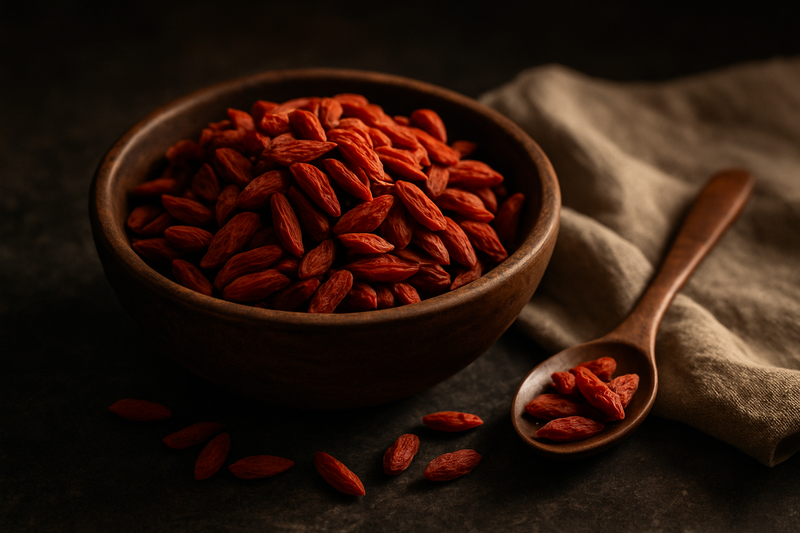
Goji Berries · Photograph
Goji berries (Lycium barbarum, also called wolfberries) are small, bright red-orange fruits native to China and parts of Central Asia. Outside of Asia they are eaten almost exclusively in their dried form — chewy, mildly sweet, and slightly tangy, like a cross between a cranberry and a cherry. They have been used in traditional Chinese medicine for centuries, but modern nutrition science has only recently started to catch up with the hype.
Key Nutrients
% Daily Value based on 2,000 cal diet
Key active compounds
Goji berries contain several groups of bioactive plant compounds (also called phytochemicals). Here is a plain-English rundown of the main ones:
- Lycium barbarum polysaccharides (LBPs): Water-soluble carbohydrate chains considered the primary bioactive components of goji. In studies they show antioxidant, immune-modulating, and metabolic effects. Polysaccharides are simply long chains of sugar molecules that behave differently from table sugar — they are not rapidly absorbed and have structural and functional roles in the body.
- Carotenoids (zeaxanthin, lutein, beta-carotene): Fat-soluble pigments that give goji berries their orange-red color. Zeaxanthin and lutein accumulate in the retina (the light-sensitive layer at the back of the eye) and are strongly linked to eye health. Beta-carotene is a precursor to vitamin A.
- Phenolic compounds (phenolic acids, flavonoids, coumarins, lignans): A broad family of polyphenols — plant chemicals with antioxidant and anti-inflammatory properties — concentrated in the fruit pulp.
- Anthocyanins: Water-soluble pigments particularly abundant in black goji varieties. They contribute to antioxidant and anti-inflammatory effects and are responsible for the dark purple-black color.
- Melatonin: A hormone and antioxidant present in notably high amounts in goji compared with other dried fruits. It is best known for regulating sleep-wake cycles.
- Non-protein amino acids (GABA, hydroxyproline, citrulline): Compounds related to amino acids (the building blocks of protein) that are not incorporated into proteins but may have metabolic and nerve-signaling roles.
Prep and pairing ideas
Goji berries are versatile and forgiving — no cooking required. A few simple ideas:
- Oatmeal or overnight oats: Stir a tablespoon into your oats with some pumpkin seeds and cinnamon. The warm liquid softens them nicely.
- Trail mix: Combine with walnuts, pumpkin seeds, and dark chocolate chips for a portable snack with complementary antioxidants and healthy fats. The fat helps with carotenoid absorption.
- Salads and grain bowls: Scatter over a spinach salad with orange segments and a sesame-ginger dressing — the citrus boosts iron absorption from both the goji and the greens.
- Smoothies: Blend a tablespoon of dried or powdered goji with frozen mango, carrot, and a squeeze of orange. The carotenoid theme continues.
- Warm herbal infusion: Steep a small handful in near-boiling water for 10 minutes, drink the liquid, and eat the softened berries. A traditional, comforting way to consume them.
🥗 **Try Plantopedia's **recipe builder to find plant-based recipes that already include goji berries or swap them in for other dried fruits automatically.
How Goji Berries Compares
| Compared with | What's different |
|---|---|
| Goji Berries vs. Dried Cranberries | Higher in vitamin C and more tart; goji berries are earthier and higher in protein and vitamin A. |
| Goji Berries vs. Raisins | Sweeter and higher in sugar; goji berries have a lower glycemic profile and distinct savory notes. |
| Goji Berries vs. Mulberries | Lower in protein and fiber per gram; goji berries provide more iron and specific eye-health antioxidants. |
Health Benefits
Things to Know
Warfarin / blood thinners: Case reports suggest goji berries can alter warfarin metabolism, potentially increasing bleeding risk. If you take warfarin or any anticoagulant, consult your doctor before eating goji berries regularly.
Diabetes medications: Goji's potential blood-sugar-lowering effects could add to the action of insulin or oral hypoglycemic drugs, increasing low-blood-sugar risk. Monitor closely and discuss with your clinician.
Blood pressure medications: Some sources flag a possible additive effect on blood pressure; clinical evidence is sparse, but caution is reasonable if you are on antihypertensives and plan to eat large amounts.
Immunosuppressive therapy: Goji polysaccharides have immune-stimulating properties in lab studies. Whole-food amounts are unlikely to be a practical concern, but those on immunosuppressants should flag this to their doctor.
Allergies: Cross-reactive allergies have been reported in people sensitive to nightshades (tomatoes, peppers), peaches, tobacco, and tree nuts. If you have these sensitivities, introduce goji berries slowly.
Pregnancy and breastfeeding: Normal food amounts have a long history of traditional use. Concentrated extracts or very large supplemental doses lack safety data for pregnancy; stick to modest food portions and consult your midwife or doctor.
Dried fruit sugar content: Like all dried fruits, goji berries are calorie- and carbohydrate-dense relative to their volume. A standard serving is manageable; eating handfuls throughout the day can add up.
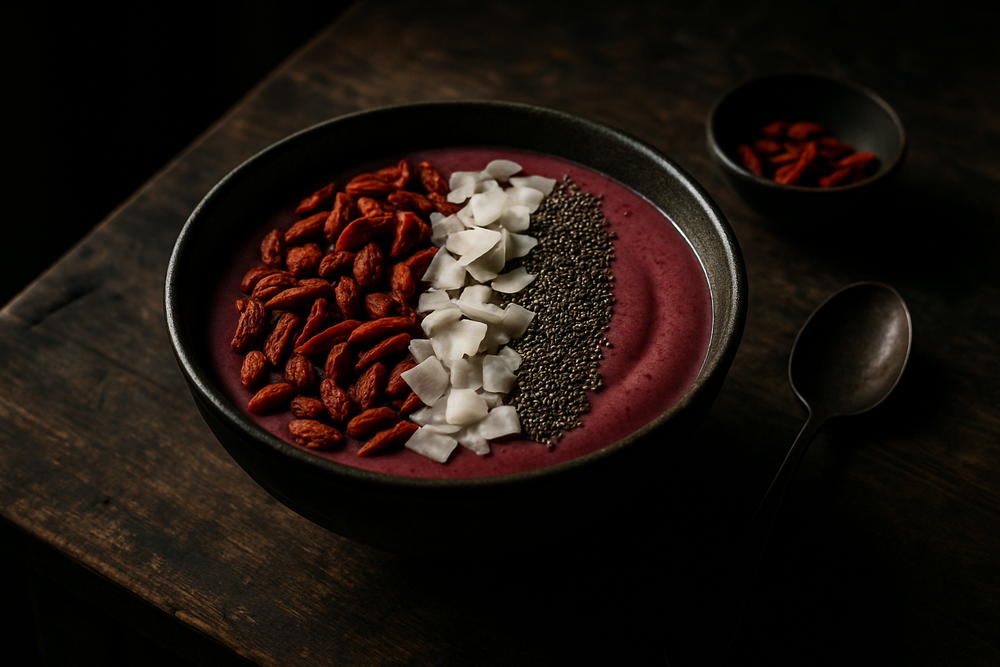
Prep Ideas
- — Oatmeal or overnight oats: Stir a tablespoon into your oats with some pumpkin seeds and cinnamon. The warm liquid softens them nicely.
- — Trail mix: Combine with walnuts, pumpkin seeds, and dark chocolate chips for a portable snack with complementary antioxidants and healthy fats. The fat helps with carotenoid absorption.
- — Salads and grain bowls: Scatter over a spinach salad with orange segments and a sesame-ginger dressing — the citrus boosts iron absorption from both the goji and the greens.
- — Smoothies: Blend a tablespoon of dried or powdered goji with frozen mango, carrot, and a squeeze of orange. The carotenoid theme continues.
- — Warm herbal infusion: Steep a small handful in near-boiling water for 10 minutes, drink the liquid, and eat the softened berries. A traditional, comforting way to consume them.
Shop This Ingredient
Stock your pantry with quality goji berries.
Buy on AmazonAs an Amazon Associate, Plantopedia earns from qualifying purchases. This costs you nothing extra and helps us keep the encyclopedia free.
Frequently Asked Questions
The honest answer: goji berries have genuinely impressive nutritional and phytochemical profiles, and human studies show several promising effects. But most trials are small and short-term. The sections below describe where evidence is stronger versus more preliminary. Eye health and vision This is the most specific and biologically plausible benefit. Goji berries are one of the richest known food sources of zeaxanthin, a carotenoid that accumulates in the macula (the central part of the retina responsible for sharp, detailed vision). Higher macular zeaxanthin levels are associated with reduced risk of age-related macular degeneration (AMD) — a leading cause of vision loss in older adults. Human studies confirm that eating goji berries regularly increases zeaxanthin concentrations in the blood and retina. This aligns with established carotenoid physiology rather than being a speculative claim. That said, no study has proven that goji berries prevent AMD or treat any eye disease — they are a supportive food within a diet pattern that prioritizes eye health. Heart and circulation Evidence is emerging and mostly indirect. A 2022 review found that goji polysaccharides show antilipidemic (cholesterol-lowering) and anti-obesity effects in experimental models, and some small human trials using 6–30 g per day reported modest improvements in markers of lipid metabolism. Antioxidant and anti-inflammatory activities of goji compounds may also support cardiovascular health indirectly. High-quality long-term trials specifically measuring heart events, blood pressure, or cholesterol changes are still lacking. Treat goji berries as one antioxidant-rich fruit within a heart-healthy eating pattern — not a standalone cardiovascular intervention. Digestive health and fiber Each 28 g serving provides 3.6 g of dietary fiber, which supports bowel regularity, feeds beneficial gut bacteria (the microbiome), and contributes to satiety (the feeling of fullness). Small human trials using whole goji berries or goji juice report subjective improvements in gastrointestinal regularity and well-being, but robust clinical trials on specific digestive outcomes are not yet available. The digestive benefit is likely driven primarily by fiber content — the same mechanism that makes other high-fiber fruits useful — rather than any unique pharmacologic effect. Blood sugar and metabolism Research suggests that goji berries and their polysaccharides may help improve insulin sensitivity (how well cells respond to insulin to clear sugar from the blood) and modulate glucose metabolism. Small human studies in people with diabetes associated goji intake with modest reductions in blood sugar. This is preliminary. Goji berries should not be used as a treatment for diabetes. They can, however, be a nutrient-dense fruit option within a blood-sugar-conscious meal pattern. Anyone on diabetes medication should monitor closely and consult their clinician before adding significant amounts. Inflammation and recovery Multiple classes of compounds in goji berries — polysaccharides, carotenoids, phenolic acids, flavonoids — show antioxidant and anti-inflammatory effects in lab and animal studies. Some human trials report improvements in antioxidant status (measurable markers in blood). Direct clinical evidence on hard inflammatory outcomes (like reducing joint pain or lowering C-reactive protein significantly) is limited. Consider this a promising but early-stage area. Hormones and sleep Goji berries contain unusually high levels of dietary melatonin compared with most other dried fruits. Melatonin regulates the sleep-wake cycle and also acts as an antioxidant. The GABA (gamma-aminobutyric acid) also present has calming, neuromodulatory roles. Whether eating goji berries meaningfully shifts sleep quality or hormone levels in practice has not been confirmed in targeted human clinical trials — so this remains a biologically plausible but theoretically framed benefit.
Form matters. Here is a quick comparison: | Form | Pros | Watch out for | |---|---|---| | Dried whole berries | Full fiber, full phytochemical range, easy to portion | Can be chewy; soak briefly to soften | | Rehydrated / infusion | Softens texture, adds a mild herbal drink | Some water-soluble nutrients leach into the liquid — drink that too | | Goji juice / juice blends | Used in some clinical studies; convenient | Less fiber, higher sugar concentration; check for added sugars | | Powder (whole berry, no additives) | Easy to add to smoothies and bowls | Concentrated — watch portions; check label for fillers | | Standardized extracts (LBP supplements) | Used in research; higher dose of specific compounds | These are supplements, not whole foods; outside Plantopedia's whole-food approach | Bottom line on form: Plain dried whole berries are the most whole-food-aligned option and closest to what human studies use. Powder from whole berries is a solid second. Juice is occasional-use at best.
Persona 1 — The person looking to support their eye health naturally Eating a small daily handful of goji berries is one of the most efficient ways to increase dietary zeaxanthin intake from food Works especially well paired with a fat source (nuts, seeds, avocado) to improve carotenoid absorption No need for exotic preparations — sprinkle on oatmeal or mix into trail mix Persona 2 — The plant-based eater trying to diversify their antioxidant intake Goji berries add a different antioxidant profile to the typical blueberry-and-spinach rotation The iron content (11% DV per serving) is a bonus for people avoiding meat Pair with vitamin C-rich foods (citrus, bell pepper) to enhance non-heme (plant-source) iron absorption
Human interventional studies have typically used 6 to 30 grams per day of dried goji berries, which corresponds to roughly one small handful to five tablespoons. A standard nutrition serving of 28 g (5 tablespoons) sits comfortably in that range. Practical starting guidance: New to goji berries: Start with 1–2 tablespoons (about 10–15 g) to assess tolerance, especially if you have a sensitive gut or any of the caution conditions above. Regular use: A daily handful (around 28 g) is consistent with amounts studied and is unlikely to cause problems in healthy adults. Ceiling: There is no firmly established upper limit for food amounts, but concentrated extracts or very large quantities (several hundred grams per day) have not been studied for safety
Quick Answers
Common questions, answered in a line.
Goji berries are a rich source of zeaxanthin, lutein, and beta-carotene, which are fat-soluble pigments strongly linked to protecting the retina. These carotenoids accumulate in the back of the eye and support long-term vision health.
Goji berries contain notably high amounts of melatonin compared to other dried fruits, a hormone best known for regulating sleep-wake cycles. They also contain Lycium barbarum polysaccharides (LBPs) which have shown antioxidant and immune-modulating effects in studies.
You should avoid or limit goji berries if you take blood thinners like warfarin, as they may alter medication metabolism and increase bleeding risk. They may also interact with diabetes medications by potentially lowering blood sugar further, or with blood pressure and immunosuppressive drugs.
Eat goji berries with healthy fats like walnuts or pumpkin seeds to improve the absorption of their fat-soluble carotenoids. You can also pair them with vitamin C-rich foods like oranges to boost iron absorption from the berries and accompanying greens.
Yes, goji berries are members of the nightshade family and may cause cross-reactive allergic reactions in people sensitive to tomatoes, peppers, tobacco, or peaches. If you have these sensitivities, it is recommended to introduce goji berries into your diet slowly.
Goji berries can be eaten raw right out of the bag, stirred into oatmeal to soften them, or steeped in near-boiling water to make a traditional herbal infusion. They are also popular as a topping for salads, grain bowls, and smoothies, requiring no cooking before consumption.
For Readers in the USA
Local context — sourcing, seasonality, and regional notes.
Dried goji berries are widely available at major US retailers like Whole Foods Market, Trader Joe's, Sprouts Farmers Market, and increasingly in the "Natural Foods" or "Health" aisles of Walmart and Kroger. You can also find high-quality bulk options or specialized varieties at local Asian grocery stores or through online health food subscriptions.
While many goji berries sold in the US are imported from China, they can be grown in USDA Hardiness Zones 3 through 9, which covers the majority of the continental United States. Because they are drought-tolerant and cold-hardy, they are becoming a popular choice for home gardeners and boutique growers in states like California, Nevada, and Utah.
Look for the USDA Organic seal on goji berry packaging to ensure the fruit was grown without synthetic pesticides or fertilizers, which is a common concern for imported dried fruits. Since the FDA regulates goji berries as a food product, organic certification provides an extra layer of oversight regarding production standards and chemical residues.
In the US, goji berries are most commonly used as a nutritional "superfood" topping for smoothie bowls, acai bowls, and yogurt parfaits in health-conscious cafes and juice bars. Unlike in East Asia, where they are often simmered in savory soups, the American culinary context treats them primarily as a functional ingredient for breakfast and snack foods.
AI Clinical Review
- Clear, evidence-aligned emphasis on eye health: goji berries are rich in zeaxanthin/lutein, which accumulate in the macula and support vision, though they don’t treat disease.
- Balanced view of the research: small human trials show improvements in antioxidant markers and some metabolic measures, but claims are kept modest.
- Practical nutrition snapshot: a typical serving (~28 g) is nutrient-dense (fiber, provitamin A, iron) without being high in calories compared with many dried fruits.
- Sensible dose framing: most human studies use roughly 6–30 g/day; suggesting a small daily handful is consistent with available data.
- Cardiometabolic outcomes (cholesterol, blood pressure, clinical events): early signals exist, but larger, longer trials are needed before drawing firm conclusions.
- Glycemic control: small studies hint at modest blood-sugar benefits; effects in people with diabetes on modern therapies remain uncertain.
- Inflammation and recovery: antioxidant changes are documented, but links to symptomatic improvements (e.g., joint pain, CRP reduction) are not well established.
- Sleep and hormones: dietary melatonin and GABA are biologically plausible contributors, yet targeted human trials on sleep quality are limited.
- Safety and interactions: documented case reports with warfarin (bleeding risk); use caution and seek clinician input if on anticoagulants. Monitor if using diabetes or blood-pressure medications due to potential additive effects.
- Allergies and sensitivities: rare cross-reactivity noted with nightshades (tomato/pepper), peach, tobacco, and some tree nuts—introduce gradually if you have related allergies.
- Form matters: dried whole berries retain fiber and a broad phytochemical mix; juices concentrate sugars and lose fiber; powders are convenient but more concentrated—watch portions.
- Practical amounts: starting with 1–2 tablespoons to assess tolerance and aiming around one small handful (~28 g/day) fits studied ranges; very large intakes or concentrated extracts lack robust safety data, especially in pregnancy or for those on immunosuppressants.
Frame as food education, not disease treatment.
References
- PMC, National Library of Medicine — Health Benefits and Applications of Goji Berries in Functional Food Products Development: A Review (pmc.ncbi.nlm.nih.gov)
- PMC, National Library of Medicine — Goji Berries as a Potential Natural Antioxidant Medicine: An Insight into Their Molecular Mechanisms of Action (pmc.ncbi.nlm.nih.gov)
- PubMed — Lycium barbarum (goji berry): A comprehensive review of chemical composition, bioactive compounds, health-promoting activities, and applications in functional foods and beyond (pubmed.ncbi.nlm.nih.gov)
- PubMed — Polyphenolic Spectrum of Goji Berries and Their Health-Promoting Activity (pubmed.ncbi.nlm.nih.gov)
- PMC, National Library of Medicine — Lycium barbarum Berries (Solanaceae) as Source of Bioactive Compounds for Healthy Purposes: A Review (pmc.ncbi.nlm.nih.gov)
- PubMed — Goji (Lycium barbarum and L. chinense): Phytochemistry, pharmacology and safety in the perspective of traditional uses and recent popularity (pubmed.ncbi.nlm.nih.gov)
- USDA FoodData Central — USDA FoodData Central (fdc.nal.usda.gov)
- MDPI — 2673 9976 (mdpi.com)
- Oxford Academic — Vvaf232 (academic.oup.com)
Know Your Numbers
Eating healthy is a start. Now get to know your biomarkers.
Food changes bloodwork — inflammation, lipids, blood sugar and nutrient status all respond to what you eat. 59 markers from $59.
- Results in 7–10 days at 2,000+ Quest sites
- Licensed provider reviews every result
- One flat price, no membership, HSA/FSA eligible
Educational information only, not medical advice. Panels are ordered and reviewed through our licensed partner; Plantopedia may earn a commission.