Grapeseed Oil — health benefits and uses
Use intentionally; compare extracted oil vs whole-food fat alternatives
The Short Answer
Grapeseed oil is a neutral cooking oil high in Vitamin E and omega-6 fatty acids, best used for light sautéing and dressings. While it has a high smoke point, its high polyunsaturated fat content makes it prone to oxidation if overheated or reused.

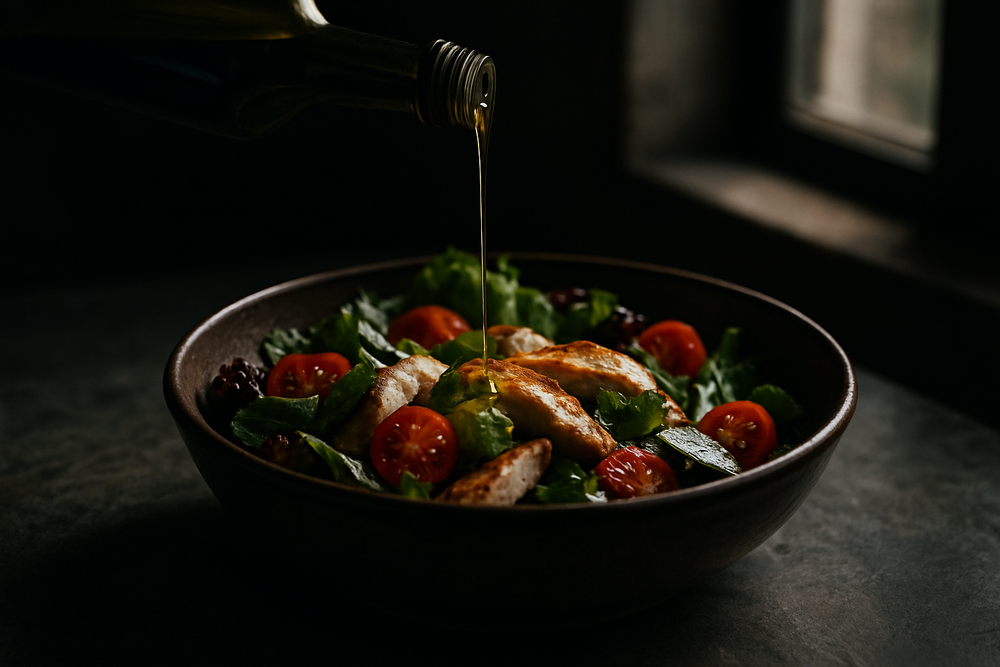
Grapeseed Oil · Photograph
Grapeseed oil (Vitis vinifera seed oil) has gained popularity as a cooking oil with a high smoke point and neutral flavor. Made by pressing or extracting oil from grape seeds—a byproduct of winemaking—this refined oil is rich in polyunsaturated fats and vitamin E. While it can serve specific culinary purposes, questions remain about its place in a healthy diet, especially given its high omega-6 content and processed nature.
Key Nutrients
% Daily Value based on 2,000 cal diet
Key active compounds
Linoleic acid (omega-6 PUFA): The dominant fatty acid, making up about 68-78% of grapeseed oil. This essential fat supports cell membrane structure but can promote inflammation when intake greatly exceeds omega-3 fats.
Vitamin E (alpha-tocopherol): Provides significant antioxidant activity, with about 19-26% of daily needs per tablespoon, helping protect the oil itself and your cells from oxidative damage.
Oleic acid (omega-9 MUFA): Present in smaller amounts (12-25%), this monounsaturated fat supports healthy cholesterol profiles.
Phenolic compounds: Include flavonoids and proanthocyanidins from grape seeds, but in much lower concentrations than in grape seed extract supplements.
Phytosterols: Plant compounds that can modestly help reduce cholesterol absorption when consumed in adequate amounts.
Prep and pairing ideas
Light sautéing: Use for vegetables or plant proteins at moderate temperatures Salad dressings: Mix with vinegar and herbs for neutral-flavored dressings
Baking: Replace butter or other oils in plant-based baked goods Finishing drizzle: Add to cooked dishes just before serving Avoid: Deep frying or repeated high-heat cooking, which can create harmful oxidation products
Buying guide for grapeseed oil
Fresh vs. processed forms:
- Cold-pressed: More expensive but retains more natural compounds
- Refined: More affordable, longer shelf life, higher smoke point
- Organic: May reduce pesticide exposure from conventional grape growing
Label reading tips:
- Look for "expeller-pressed" or "cold-pressed" on labels
- Check harvest/pressing dates if available
- Avoid oils with added synthetic antioxidants like BHT/BHA
- Choose dark glass bottles to protect from light damage
Bottom line
Grapeseed oil occupies a middle ground in the spectrum of cooking oils. It's not inherently harmful when used occasionally and in small amounts, especially when replacing saturated fats. However, its high omega-6 content, processed nature, and lack of significant nutrients make it a less-than-ideal choice for everyday use.
For most people, extra-virgin olive oil or whole food fat sources (nuts, seeds, avocado) offer better nutritional profiles and align more closely with long-term health goals. Reserve grapeseed oil for specific culinary applications where its neutral flavor and cooking properties are particularly valuable.
The evidence simply doesn't support grapeseed oil as a superfood or therapeutic intervention—it's a cooking tool that should be used thoughtfully within a broader pattern of whole, minimally processed foods.
How Grapeseed Oil Compares
| Compared with | What's different |
|---|---|
| Grapeseed Oil vs. Extra Virgin Olive Oil | Higher monounsaturated fat and lower smoke point; stronger savory flavor profile. |
| Grapeseed Oil vs. Avocado Oil | Higher smoke point for deep frying; significantly lower in omega-6 polyunsaturated fats. |
| Grapeseed Oil vs. Flaxseed Oil | High in omega-3 fats and very low smoke point; unsuitable for any heat application. |
Health Benefits
Things to Know
Start small: If trying grapeseed oil, begin with small amounts (1-2 teaspoons) to assess tolerance
Omega-3 balance: Ensure adequate omega-3 intake from sources like flax, chia, walnuts, or algae to balance the high omega-6 content
WFPB considerations: Strict whole food plant-based approaches typically avoid extracted oils in favor of whole food fats
Grape allergy: Avoid if you have known grape or wine allergies
Medication interactions: High vitamin E intake may theoretically affect blood clotting; discuss with healthcare providers if on anticoagulants
Pregnancy and breastfeeding: Generally safe in small culinary amounts, but whole food fats are preferable
Storage: Keep in cool, dark place and use within 6 months of opening to prevent rancidity
Shop This Ingredient
Stock your pantry with quality grapeseed oil.
Buy on AmazonAs an Amazon Associate, Plantopedia earns from qualifying purchases. This costs you nothing extra and helps us keep the encyclopedia free.
Frequently Asked Questions
Heart and circulation Grapeseed oil's polyunsaturated fats can support cardiovascular health when used to replace saturated and trans fats. The American Heart Association recognizes that substituting PUFAs for saturated fats can lower LDL cholesterol and reduce cardiovascular risk. However, most evidence comes from studies on mixed vegetable oils rather than grapeseed oil specifically. The oil's phytosterol content may provide modest cholesterol-lowering benefits, though you'd need to consume it in larger amounts than typically used for cooking. Digestive health and microbiome Limited research suggests grapeseed oil doesn't significantly impact digestive health compared to other cooking oils. Its refined nature means it lacks the fiber and complex compounds found in whole grapes that support beneficial gut bacteria. Blood sugar and metabolism One small study found that grapeseed oil improved insulin resistance markers compared to sunflower oil in overweight women, but this preliminary finding needs replication. Any blood sugar benefits are likely modest and related to overall dietary pattern rather than the oil itself. Inflammation and recovery This is where grapeseed oil presents a paradox. While it contains anti-inflammatory vitamin E and some phenolic compounds, its extremely high omega-6 content may promote inflammation when not balanced with adequate omega-3 intake. Most anti-inflammatory evidence for grape products comes from concentrated extracts, not the oil.
Cold-pressed or expeller-pressed: Retains more natural compounds and avoids chemical solvents. These versions may have slightly more phenolic compounds and vitamin E, though they're still fundamentally extracted oils. Refined grapeseed oil: Most common commercially, with neutral flavor and higher smoke point. Processing removes some beneficial compounds but creates a more stable cooking oil. Topical cosmetic oil: Often used for skin and hair care due to its light texture and vitamin E content. This use bypasses dietary concerns about omega-6 balance. For cooking purposes, cold-pressed versions are preferable if you choose to use grapeseed oil, though the differences are relatively small.
People transitioning away from butter and saturated fats May find grapeseed oil's neutral flavor easier to accept than olive oil Can use it as a stepping stone toward healthier fat choices Individuals with specific cooking needs Bakers who need neutral-flavored oils for certain recipes Those requiring higher smoke point oils for specific techniques
Most dietary studies suggest 1-2 tablespoons (15-30 mL) daily as part of total added oils, but this doesn't mean grapeseed oil should make up your entire oil intake. Given its high omega-6 content and processed nature, smaller amounts are preferable. Conservative approach: 1-2 teaspoons (5-10 mL) occasionally, with emphasis on whole food fats for daily needs Flexible approach: Up to 1 tablespoon daily, ensuring adequate omega-3 balance WFPB approach: Minimal to no routine use, focusing on nuts, seeds, and avocado instead Start low and monitor how you feel, especially regarding any digestive sensitivity or inflammatory markers.
Quick Answers
Common questions, answered in a line.
Grapeseed oil is a neutral-flavored oil extracted from grape seeds, primarily composed of linoleic acid (omega-6) and vitamin E. It is a byproduct of the winemaking process and is available in both refined and cold-pressed varieties for culinary use.
Grapeseed oil has a high smoke point and neutral flavor, making it suitable for light sautéing, baking, and salad dressings. However, it should not be used for deep frying or repeated high-heat cooking because these methods can create harmful oxidation products.
Grapeseed oil is high in vitamin E, providing approximately 19-26% of the daily requirement per tablespoon. This alpha-tocopherol content acts as an antioxidant that protects both the oil and your body's cells from oxidative damage.
Grapeseed oil is approximately 68-78% linoleic acid, an omega-6 polyunsaturated fatty acid. While this fat supports cell membrane structure, the article notes it can promote inflammation if consumption greatly exceeds your intake of omega-3 fats.
You should store grapeseed oil in a cool, dark place, preferably in a dark glass bottle to protect it from light damage. Once opened, it should be used within six months to prevent the oil from becoming rancid.
Grapeseed oil should be avoided by individuals with known allergies to grapes or wine. Additionally, because its high vitamin E content may affect blood clotting, individuals on anticoagulant medications should consult a healthcare provider.
Cold-pressed grapeseed oil is generally superior because it retains more natural compounds and phenolic antioxidants. Refined versions are more affordable and have a higher smoke point but undergo more processing and may lose delicate nutrients.
For Readers in the USA
Local context — sourcing, seasonality, and regional notes.
In the United States, most grapeseed oil is produced in California's wine-growing regions, such as Napa and Sonoma, where grape seeds are collected after the fall harvest. While the harvest occurs in late summer and autumn, the oil is processed year-round and sold as a pantry staple.
Grapeseed oil is widely available at major US retailers like Whole Foods Market, Trader Joe's, Kroger, and Safeway, typically found in the baking or specialty oil aisle. You can also find premium, domestically produced bottles at local farmers markets in California, Oregon, and Washington.
The USDA Organic seal on grapeseed oil ensures the grapes were grown without synthetic pesticides and the oil was extracted without chemical solvents like hexane. This is a common choice for US consumers concerned about the extraction process of conventional refined oils.
AI Clinical Review
- Clearly explains that grapeseed oil is predominantly linoleic acid (omega‑6 PUFA) and a modest source of vitamin E, with calories coming entirely from fat.
- Accurately frames potential heart benefits as a substitution effect: replacing saturated/trans fats with PUFAs can lower LDL cholesterol and cardiovascular risk.
- Notes useful culinary properties (neutral flavor, relatively high smoke point) while cautioning against repeated high‑heat use due to oxidation.
- Sensibly positions extra‑virgin olive oil and whole‑food fat sources as better everyday options, with grapeseed oil as an occasional, task‑specific choice.
- Inflammation: The idea that higher omega‑6 intake inherently drives inflammation is debated; many human studies do not show linoleic acid raising common inflammatory markers, though adequate omega‑3 intake remains prudent.
- Direct evidence specific to grapeseed oil is limited; much of what we know comes from mixed‑vegetable‑oil trials or from grape seed extract (a different product), so unique health effects of the oil are uncertain.
- A high smoke point does not guarantee thermal stability; formation of oxidation products depends on time, actual pan temperature, and oil reuse—areas where real‑world data are mixed.
- Any LDL‑lowering from phytosterols in grapeseed oil is likely small at typical culinary amounts; the clinical magnitude in everyday diets is unclear.
- Serving size: There is no established therapeutic dose. Culinary amounts in the range of 1–2 teaspoons up to about 1 tablespoon can fit within total added‑oil limits based on your calorie needs.
- Omega‑3 balance: Grapeseed oil contributes virtually no omega‑3. Include ALA‑rich foods (e.g., flax, chia, walnuts) or consider marine/algal sources as appropriate to maintain overall fatty‑acid balance.
- Safety: Generally safe in cooking amounts. Avoid if you have grape allergy. People on anticoagulants or with bleeding disorders should be cautious with high‑dose vitamin E supplements; vitamin E from typical oil portions is unlikely to be clinically significant.
- Product and storage: Expeller‑ or cold‑pressed options avoid chemical solvents; refined oil offers a neutral taste. Store in a cool, dark place and use within a few months; discard if the oil smells or tastes rancid.
Flag strict WFPB limitations for extracted oils and highly processed fat products.
References
- USDA FoodData Central - Grapeseed oil nutrition profile (fdc.nal.usda.gov)
- Medical News Today - Grapeseed oil health and beauty benefits analysis
- Grape Seed Oil Compounds: Biological and Chemical Actions for Health - PMC comprehensive review (pmc.ncbi.nlm.nih.gov)
- American Heart Association - Dietary fats and cardiovascular health guidance
- Harvard T.H. Chan School of Public Health - Healthy Eating Plate oils guidance (nutritionsource.hsph.harvard.edu)
- USDA MyPlate - Oils and healthy fats recommendations (myplate.gov)
- NIH National Center for Complementary and Integrative Health - Plant oils safety information
- Healthline - Grapeseed oil for skin benefits and risks analysis
Know Your Numbers
Eating healthy is a start. Now get to know your biomarkers.
Food changes bloodwork — inflammation, lipids, blood sugar and nutrient status all respond to what you eat. 59 markers from $59.
- Results in 7–10 days at 2,000+ Quest sites
- Licensed provider reviews every result
- One flat price, no membership, HSA/FSA eligible
Educational information only, not medical advice. Panels are ordered and reviewed through our licensed partner; Plantopedia may earn a commission.