Hemp Oil — health benefits and uses
Use intentionally; compare extracted oil vs whole-food fat alternatives
The Short Answer
Hemp seed oil is a nutrient-dense culinary fat providing 8g of polyunsaturated fats and 53% of your daily Vitamin E per tablespoon. It is prized for its 3:1 ratio of omega-6 to omega-3 fatty acids but should not be used for high-heat frying.

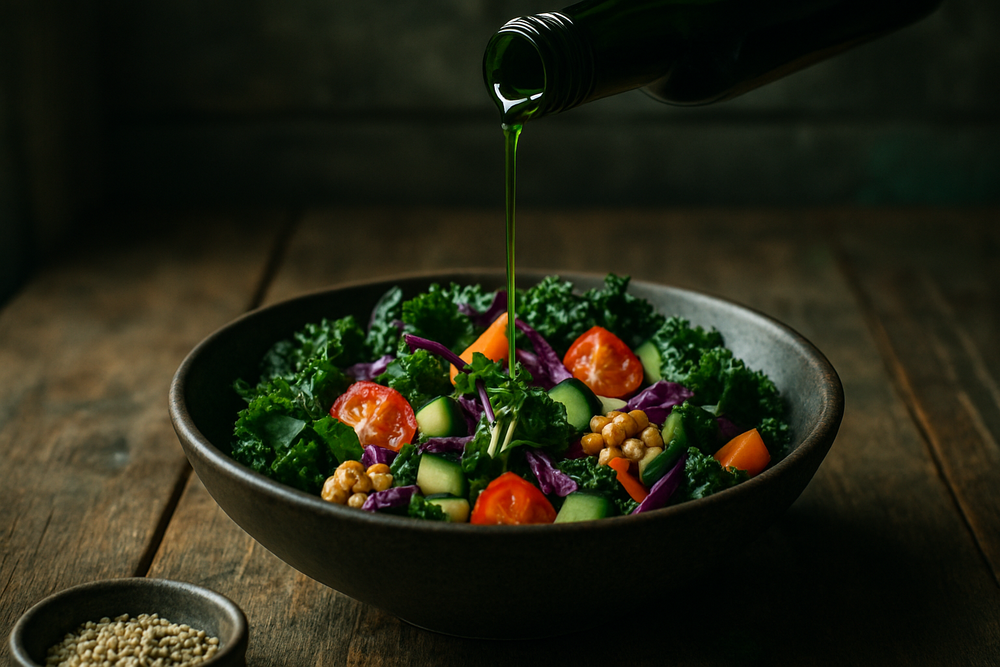
Hemp Oil · Photograph
Hemp seed oil has earned a spot on health-food shelves and kitchen counters alike — and for some good reasons. Pressed from the seeds of Cannabis sativa, it delivers a rare and favorable balance of omega-3 and omega-6 fatty acids, a light nutty flavor, and a handful of skin-supportive compounds. But it is also a refined, calorie-dense extracted fat with real limitations, and it is frequently misunderstood — especially in relation to CBD oil, which is an entirely different product.
Key Nutrients
% Daily Value based on 2,000 cal diet
Key active compounds in hemp seed oil
Hemp seed oil's potential benefits come primarily from its fatty acid composition and a few supporting micronutrients:
- Linoleic acid (LA, omega-6): The dominant fat in hemp seed oil. An essential fatty acid — meaning the body cannot make it and must get it from food. LA is a key building block of cell membranes and a precursor to signaling molecules that regulate inflammation and vascular function.
- Alpha-linolenic acid (ALA, omega-3): The principal plant-based omega-3. ALA can be converted in the body to EPA and DHA (the longer-chain omega-3s found in fish), though conversion efficiency is low — typically under 10%. Still, ALA itself has independent associations with heart health.
- Gamma-linolenic acid (GLA, omega-6): A less common omega-6 that is metabolized into anti-inflammatory compounds. Hemp seed oil contains modest amounts of GLA; borage and evening primrose oils contain more. Some small studies of GLA-rich oils show benefits for inflammatory skin conditions and joint symptoms.
- Vitamin E (tocopherols): A fat-soluble antioxidant that helps protect polyunsaturated fats from oxidizing — both in the bottle and in your body.
- Phytosterols (e.g., beta-sitosterol): Plant compounds that structurally resemble cholesterol. When consumed in sufficient amounts, phytosterols can modestly compete with cholesterol absorption in the gut.
- Minor phenolics and terpenes: Present in small amounts in cold-pressed oils; contribute some antioxidant potential, but evidence is mostly from lab studies, not human trials.
Buying guide: choosing the right hemp seed oil
Not all hemp oils are equal. Here is what to look for:
- Cold-pressed or expeller-pressed: This method uses mechanical pressure rather than heat or chemical solvents, preserving more of the delicate PUFAs, GLA, and vitamin E. Look for this on the label.
- Unrefined vs. refined: Unrefined (raw) hemp oil is darker green, nuttier in flavor, and richer in micronutrients. Refined hemp oil is lighter in color and flavor but has fewer active compounds. For health purposes, cold-pressed unrefined is preferable.
- Dark glass bottle: PUFAs are sensitive to light as well as heat. Hemp seed oil packaged in dark (amber or green) glass protects the oil from photo-oxidation. Avoid clear plastic bottles.
- Refrigerate after opening: Hemp seed oil can go rancid quickly at room temperature. Once opened, store it in the fridge and use within 3–6 weeks.
- Check for "hemp seed oil" specifically: "Hemp oil" can sometimes refer to CBD-containing extracts. If you want the culinary/nutritional oil with negligible cannabinoids, confirm the label says "hemp seed oil" and lists Cannabis sativa seed oil as the ingredient.
- Not the same as CBD oil: CBD products come from the flowers and leaves of the hemp plant, contain pharmacologically active cannabinoids, and fall under different regulatory oversight. Hemp seed oil and CBD oil should not be confused or used interchangeably.
Prep and pairing ideas
Hemp seed oil's light, slightly nutty flavor makes it versatile as a finishing touch. Here are three practical pairings:
1. Hemp oil + lemon + dark leafy greens Whisk hemp oil with fresh lemon juice, a pinch of salt, and black pepper for a simple dressing on kale, arugula, or spinach salad. The vitamin C in citrus may help iron absorption from the greens, while hemp oil contributes its omega-3 and GLA content.
2. Hemp oil + whole grain bowl (rice, farro, or quinoa) Stir a teaspoon of hemp oil into a warm grain bowl just before serving. It adds richness and healthy fat that slows down glucose absorption — particularly useful for blood sugar stability at mealtimes.
3. Hemp oil + smoothie with ground flaxseed Combining hemp oil with ground flaxseed in a smoothie stacks two complementary omega-3 sources. Flaxseed adds lignans (plant compounds with additional heart and hormonal benefits) and fiber that hemp oil lacks. This pairing is especially useful for plant-based eaters who do not eat fish.
How Hemp Oil Compares
| Compared with | What's different |
|---|---|
| Hemp Oil vs. CBD Oil | Contains cannabinoids from flowers; hemp seed oil is a culinary fat pressed only from seeds. |
| Hemp Oil vs. Olive Oil | Lower in omega-3s and vitamin E; higher smoke point suitable for high-heat cooking. |
| Hemp Oil vs. Flaxseed Oil | Similar omega-3 content but lacks the anti-inflammatory Gamma-linolenic acid (GLA) found in hemp. |
Health Benefits
Things to Know
Blood thinners (e.g., warfarin) or antiplatelet drugs (e.g., aspirin, clopidogrel): Hemp oil's omega-3 fatty acids may affect blood clotting and could increase bleeding risk when combined with these medications. Speak with your doctor before use.
Blood pressure medications: Hemp seed oil may have a modest blood-pressure-lowering effect that could add to the effect of antihypertensive drugs, potentially causing blood pressure to drop too low.
Upcoming surgery: Because of potential effects on clotting and blood pressure, clinicians may advise stopping hemp oil at least 1–2 weeks before any surgical procedure. Always inform your surgical team about all supplements.
Gallbladder disease, fat malabsorption, or history of pancreatitis: Concentrated dietary fats of any kind may worsen these conditions. Hemp oil is no exception.
Pregnancy and breastfeeding: Adequate omega-3 intake matters during pregnancy, but hemp-specific safety data are limited. If you are pregnant or breastfeeding, consult your healthcare provider before using hemp oil supplements. Algae-based DHA/EPA supplements have a stronger evidence base for this life stage.
Strict WFPB or therapeutic heart-disease diets: Some evidence-based approaches (notably the Ornish and Esselstyn protocols) advise eliminating all added oils. If you are following such a program, whole hemp seeds, walnuts, ground flaxseed, or chia seeds are your preferred omega-3 sources.
Hemp allergy: Rare but possible. If you have known allergies to hemp or related plants, avoid hemp seed oil or use only under medical guidance.
Starting dose: Introduce hemp oil gradually — start with 1 teaspoon and increase slowly to avoid digestive upset.
Shop This Ingredient
Stock your pantry with quality hemp oil.
Buy on AmazonAs an Amazon Associate, Plantopedia earns from qualifying purchases. This costs you nothing extra and helps us keep the encyclopedia free.
Frequently Asked Questions
Heart and circulation Hemp seed oil's omega-3 and omega-6 fat profile aligns well with established heart-health guidance. Replacing saturated fats (like butter or coconut oil) with polyunsaturated plant fats is consistently associated with lower LDL cholesterol (often called "bad" cholesterol) and reduced cardiovascular risk across large population studies. Hemp oil's ALA content and phytosterols add to this biological plausibility. However, there are no large, long-term clinical trials specifically testing hemp seed oil on heart events, heart attack rates, or stroke. The heart-health evidence is largely inferred from its fat composition. Some sources report that hemp seed oil's omega-3s may help lower blood pressure in people with hypertension — this is extrapolated from broader omega-3 research, not hemp-specific studies. Evidence level: emerging. Digestive health and microbiome Hemp seed oil contains no fiber, so it does not feed gut bacteria directly the way whole seeds or legumes do. Some sources suggest that its healthy fat profile may support gut hormone balance or microbial diversity, but direct human trials on hemp oil and gut health are very limited. In fact, large amounts of any concentrated fat can cause loose stools or digestive discomfort — hemp oil is no exception. Evidence level: low; whole hemp seeds are more digestive-health relevant. Blood sugar and metabolism Hemp seed oil contains no carbohydrate and does not raise blood glucose directly. Some general evidence suggests that swapping saturated fats for unsaturated fats may modestly improve insulin sensitivity, but there is no hemp-specific clinical research on this. As a calorie-dense fat, excessive use can contribute to weight gain, which indirectly worsens blood sugar control. Evidence level: very limited. Hormones and cycle health GLA in hemp oil has been linked — through studies on other GLA-rich oils like evening primrose — to potential relief from PMS symptoms such as breast tenderness and mood changes. Animal studies suggest hemp seed compounds may have some effect on menopausal symptoms. Human evidence specific to hemp oil is sparse and mostly indirect. Evidence level: very preliminary. Inflammation and recovery The combination of ALA (omega-3) and GLA (a specific omega-6 with anti-inflammatory properties) gives hemp seed oil a more balanced inflammatory profile than most cooking oils. Some small studies of GLA-rich oils report reduced joint pain and skin inflammation. The same benefits are plausible for hemp oil but have not been confirmed in large hemp-specific trials. Expectations should be modest. Evidence level: emerging.
This is one of the most common practical questions — and the answer matters. Hemp seed oil is high in polyunsaturated fatty acids (PUFAs), which are inherently less heat-stable than saturated or monounsaturated fats. At high temperatures, PUFAs can oxidize — a chemical process that breaks the fat down into potentially harmful compounds and strips away many of the health benefits you bought the oil for in the first place. Best uses for hemp seed oil: Drizzled over salads as a dressing base Stirred into hummus, dips, or grain bowls after cooking Blended into smoothies or protein shakes Mixed into cold sauces, pestos, or dips Taken by the teaspoon as a supplement Avoid using it for: High-heat frying or stir-frying Roasting vegetables at oven temperatures Sautéing over medium-high or high heat For high-heat cooking, extra-virgin olive oil, avocado oil, or refined coconut oil are more stable options. For everyday omega-3-rich finishing oil, hemp oil and flaxseed oil are comparable; flaxseed oil has a slightly higher ALA content, while hemp oil has a more favorable omega-6/omega-3 ratio overall.
There is no official recommended daily intake specific to hemp seed oil. Here is what practical guidance and the available research suggest: General culinary use: 1–2 teaspoons (5–10 mL) per serving, with a typical daily total of up to 1–2 tablespoons (15–30 mL), counted as part of your total daily fat intake. For an active 2,000-calorie diet: MyPlate and Harvard's Healthy Eating Plate both recommend using healthy oils in modest amounts — roughly 5–6 teaspoons of total added oils per day from all sources. Hemp seed oil
Quick Answers
Common questions, answered in a line.
Hemp seed oil contains a rare balance of omega-3 and omega-6 fatty acids, along with Gamma-linolenic acid (GLA), which are known for their anti-inflammatory properties. These compounds, along with antioxidant Vitamin E, may support heart health and improve inflammatory skin conditions.
Hemp seed oil and CBD oil are different products; hemp seed oil is pressed from seeds and contains negligible cannabinoids, while CBD oil is extracted from flowers and leaves. CBD oil contains pharmacologically active compounds that are used for different therapeutic purposes.
You should store hemp seed oil in the refrigerator in a dark glass bottle to prevent it from going rancid. Because it is highly sensitive to light and heat, it should be used within three to six weeks after opening.
Hemp seed oil may increase the risk of bleeding when taken with blood thinners like warfarin or antiplatelet drugs such as aspirin. It may also lower blood pressure, potentially causing an unsafe drop if combined with antihypertensive medications.
When buying hemp seed oil, look for "cold-pressed" or "expeller-pressed" unrefined oils in dark glass bottles. Unrefined oils are darker green and retain more nutrients like Vitamin E and GLA compared to lighter, refined versions.
Yes, hemp seed oil can be added to smoothies, grain bowls, or used as a salad dressing base. To maximize benefits, it is often paired with lemon for nutrient absorption or ground flaxseed to increase omega-3 intake.
Hemp seed oil contains phytosterols, such as beta-sitosterol, which are plant compounds that can modestly compete with cholesterol absorption in the gut. It also provides Alpha-linolenic acid (ALA), a plant-based omega-3 associated with heart health.
For Readers in the USA
Local context — sourcing, seasonality, and regional notes.
In the US, you can find culinary hemp seed oil at major retailers like Whole Foods Market, Sprouts Farmers Market, and Kroger, as well as at many local food co-ops and health food stores. It is typically stocked in the refrigerated supplement section or the specialty oil aisle near flaxseed oil rather than with standard olive oils.
Hemp seed oil produced in the US is primarily sourced from North Dakota, Montana, and Colorado, which lead the nation in industrial hemp acreage following the 2018 Farm Bill. While Canada remains a top supplier, the domestic industry has grown rapidly in the Midwest and Pacific Northwest to meet rising demand.
To ensure quality, US consumers should look for the USDA Certified Organic seal and the Non-GMO Project Verified badge on hemp seed oil labels. These certifications provide third-party assurance that the seeds were grown without synthetic pesticides and meet specific US regulatory standards for organic agricultural products.
AI Clinical Review
- Clearly distinguishes hemp seed oil from CBD oil and explains that culinary hemp seed oil contains negligible cannabinoids.
- Accurately highlights the favorable fatty acid profile (roughly 3:1 omega‑6:omega‑3), presence of ALA and some GLA, plus vitamin E/phytosterols—consistent with guidance to replace saturated fats with polyunsaturated fats for heart health.
- Gives sound cooking advice: use as a finishing oil and avoid high heat because polyunsaturated fats oxidize more readily.
- Emphasizes that hemp seed oil is an extracted, calorie‑dense fat (~120 kcal per tablespoon) with no fiber or protein—use in context and modest portions.
- Offers practical purchasing and storage tips (cold‑pressed/unrefined, dark glass, refrigerate after opening), which help preserve quality.
- Cardiovascular outcomes: benefits are inferred from fat composition and broader polyunsaturated/ALA data; there are no large, long‑term trials testing hemp seed oil on heart attacks or strokes.
- Blood pressure, inflammation, PMS/menopausal symptoms, and joint/skin claims rely largely on extrapolation (e.g., from GLA‑rich oils) and small or mixed studies; hemp‑specific human data are limited.
- ALA conversion to EPA/DHA is low and variable; whether hemp oil meaningfully raises long‑chain omega‑3 status is uncertain for most people.
- Gut and metabolic effects: direct trials on microbiome, insulin sensitivity, or weight outcomes with hemp seed oil are scarce; impacts depend on what the oil replaces in the diet and total calories.
- Typical culinary range: about 1–2 teaspoons per serving, up to ~1–2 tablespoons per day counted within total added oils; whole seeds (hemp hearts, flax, chia, walnuts) add fiber/protein that oil lacks. Consider algae‑based EPA/DHA if you avoid fish.
- Safety/medications: check with a clinician if you use anticoagulants/antiplatelets or blood‑pressure medicines; many surgeons prefer stopping added omega‑rich oils 1–2 weeks before procedures. Use caution with gallbladder disease, fat malabsorption, or prior pancreatitis.
- Life stages and dietary patterns: discuss use during pregnancy/breastfeeding with your provider; those following therapeutic no‑added‑oil plans may prefer whole‑food omega‑3 sources.
- Form and handling: choose cold‑pressed, unrefined hemp seed oil labeled as such; store refrigerated and use within 3–6 weeks after opening; avoid frying/roasting to limit oxidation.
Flag strict WFPB limitations for extracted oils and highly processed fat products.
References
- PMC, National Library of Medicine — A Review of Hemp as Food and Nutritional Supplement (pmc.ncbi.nlm.nih.gov)
- PubMed — The Effect of Hemp (Cannabis sativa L.) Seeds and Hemp Seed Oil on Vascular Dysfunction in Obese Male Zucker Rats (pubmed.ncbi.nlm.nih.gov)
- PubMed — Effects of dietary hemp seed oil to sows on fatty acid profiles, nutritional and immune status of piglets (pubmed.ncbi.nlm.nih.gov)
- PMC, National Library of Medicine — Dietary hempseed and cardiovascular health: nutritional composition, mechanisms and comparison with other seeds (pmc.ncbi.nlm.nih.gov)
- PubMed — Toxicological safety of VOHO Hemp Oil; a supercritical fluid extract from the aerial parts of hemp (pubmed.ncbi.nlm.nih.gov)
- PMC, National Library of Medicine — Assessment of the Stability and Nutritional Quality of Hemp Oil and Pumpkin Seed Oil Blends (pmc.ncbi.nlm.nih.gov)
- USDA FoodData Central — USDA FoodData Central (fdc.nal.usda.gov)
Know Your Numbers
Eating healthy is a start. Now get to know your biomarkers.
Food changes bloodwork — inflammation, lipids, blood sugar and nutrient status all respond to what you eat. 59 markers from $59.
- Results in 7–10 days at 2,000+ Quest sites
- Licensed provider reviews every result
- One flat price, no membership, HSA/FSA eligible
Educational information only, not medical advice. Panels are ordered and reviewed through our licensed partner; Plantopedia may earn a commission.