Green Cabbage — health benefits and uses
Folk remedy for digestive complaints and topical poultices.
The Short Answer
Green cabbage is a nutrient-dense cruciferous vegetable providing 36.6 mg of Vitamin C and 76 mcg of Vitamin K per cup. It is prized for its high glucosinolate content, which supports gut health and antioxidant activity.

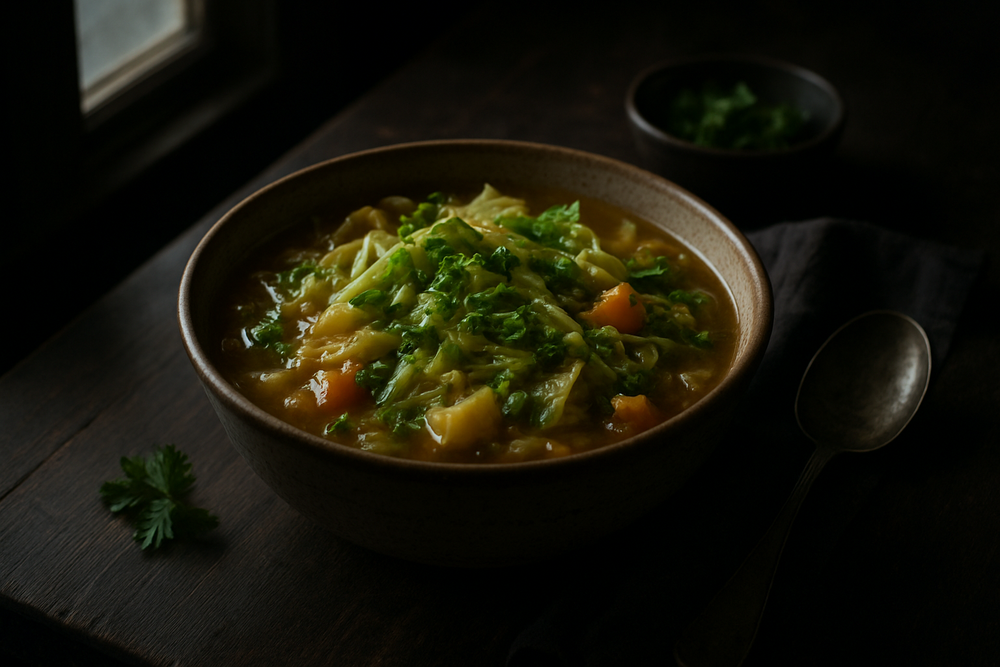
Green Cabbage · Photograph
Discover the green cabbage health benefits backed by evidence — from gut health and blood sugar support to immune function and heart health. Includes nutrition facts, raw vs. cooked guidance, thyroid safety notes, and easy everyday prep tips.
Key Nutrients
% Daily Value based on 2,000 cal diet
Key active compounds in green cabbage
- Glucosinolates — Sulfur-containing precursor compounds that break down during chopping, chewing, and digestion into active metabolites including isothiocyanates and indoles. They are what give cabbage its slightly peppery bite.
- Isothiocyanates — Breakdown products of glucosinolates studied for antioxidant and anti-inflammatory properties in cell, animal, and some observational human research.
- Indoles (e.g., indole-3-carbinol) — Nitrogen-containing compounds also derived from glucosinolates, investigated for effects on hormone metabolism and cellular signaling; most evidence remains mechanistic.
- Vitamin C — A water-soluble antioxidant (a molecule that helps neutralize cell-damaging free radicals) that supports immune defense and collagen production.
- Vitamin K (phylloquinone) — Fat-soluble vitamin critical for blood clotting and bone health; notable because it can interact with anticoagulant medications.
- Dietary fiber — Both soluble and insoluble types that feed gut bacteria, bulk stools, and support satiety.
Prep and pairing ideas
Green cabbage shines in more dishes than most people realize. Here are practical ways to work it in:
- Thin-shredded slaw — Use a mandoline or sharp knife to get ribbon-thin shreds. Toss with lemon juice, a little olive oil, and black pepper. Rest for 10 minutes and the texture softens without cooking.
- Quick stir-fry — Heat a pan until hot, add a small amount of oil, then add wedges or thick shreds of cabbage. Cook two to three minutes on high heat for a lightly caramelized, still-crunchy result. Finish with soy sauce, sesame oil, and ginger.
- Slow braise — Quarter the cabbage and braise low and slow with broth, vinegar, and spices (caraway seeds are traditional). Long cooking makes it silky and mild-flavored.
- Stuffed cabbage rolls — Blanch large outer leaves briefly, then wrap around fillings like lentils, mushrooms, or whole grain rice. A classic across Eastern European, Middle Eastern, and Asian cuisines.
- Fermented — Sauerkraut stirred into grain bowls, or kimchi added to scrambled tofu or rice dishes, adds tang, texture, and gut-supportive compounds.
Common pairings
- Cabbage + apple cider vinegar — The acid brightens cabbage's flavor, helps preserve vitamin C, and makes raw cabbage easier to digest by softening the cell structure slightly. A foundational combination in any quick slaw.
- Cabbage + caraway seeds — Traditional for a reason: caraway is a carminative herb (one that helps reduce gas), which can offset cabbage's tendency to cause bloating. Use in braised dishes, soups, or sauerkraut.
- Cabbage + mustard — Mustard contains its own myrosinase enzyme, which when combined with cabbage's glucosinolates may actually increase isothiocyanate production — meaning a mustard dressing on a cabbage slaw isn't just tasty, it may enhance the bioavailability of cabbage's beneficial compounds.
Buying guide: getting the most from your cabbage
At the store:
- Choose heads that feel dense and heavy for their size — lightness signals moisture loss.
- Look for tightly packed, crisp outer leaves with no brown edges, cracks, or slimy spots.
- Green cabbage is available year-round, but peak season is fall and winter in most regions.
Storage:
- Whole heads keep in the fridge for 1 to 2 weeks. Once cut, wrap tightly and use within 3 to 5 days.
- Do not wash until ready to use — moisture speeds spoilage.
Fresh vs. frozen:
- Fresh cabbage is nutritionally superior and better for texture in most preparations.
- Frozen cabbage exists but becomes quite soft and watery when thawed — better for soups, stews, or blended preparations.
Fermented (sauerkraut/kimchi) labels to check:
- "Live cultures" or "unpasteurized" means the product still contains active microorganisms beneficial for gut health. Most shelf-stable jars have been pasteurized (which kills the live cultures but doesn't affect other nutrients).
- Check sodium content — a single serving can contain 300 to 500 mg of sodium, which matters if you're managing blood pressure.
Bottom line
Green cabbage is a genuinely nutritious, budget-friendly vegetable that earns its place in a health-supporting diet. Its combination of fiber, vitamin C, vitamin K, folate, and glucosinolate compounds aligns with established dietary guidance for heart health, digestive function, immune support, and blood sugar management. Most of the human evidence looks at cruciferous vegetables as a group rather than cabbage in isolation, so realistic expectations matter — cabbage is a meaningful contributor to a healthy diet, not a cure or treatment for any condition.
For most people, 1 to 2 cups a few times a week (raw, cooked, or fermented) is both safe and beneficial. If you're managing a thyroid condition, taking warfarin, or following a low-FODMAP diet, a brief conversation with your doctor or dietitian is the smartest first step.
Looking to build a full vegetable-rich eating pattern around ingredients like this? Browse the Plantopedia goals guide for practical frameworks.
How Green Cabbage Compares
| Compared with | What's different |
|---|---|
| Green Cabbage vs. Red cabbage | Higher in vitamin C and contains anthocyanins, with a bolder, peppery flavor profile. |
| Green Cabbage vs. Napa cabbage | Cylindrical shape with tender, crinkled leaves and a much milder, sweeter taste. |
| Green Cabbage vs. Savoy cabbage | Distinctive ruffled, lacy leaves that stay tender when cooked rather than turning mushy. |
Health Benefits
Things to Know
Gas and bloating: — Cabbage's fermentable fiber (specifically a type called FODMAPs — fermentable oligosaccharides, disaccharides, monosaccharides, and polyols) can cause significant gas, bloating, or loose stools in sensitive individuals, particularly those with IBS (irritable bowel syndrome) or small intestinal bacterial overgrowth. Starting with small amounts and cooking cabbage well can help manage this.
Thyroid concerns: — Cabbage contains glucosinolates that can theoretically compete with iodine for thyroid uptake (hence the term "goitrogen" — a substance that may interfere with thyroid iodine use). However, human data consistently show that typical cooked portions are safe for iodine-sufficient people. Risk appears meaningful only with very large, chronic raw intakes (such as juicing multiple heads daily) in people with iodine deficiency or existing hypothyroidism. If you have a thyroid condition, speak with your doctor rather than avoiding cabbage entirely.
Warfarin and blood thinners: — Cabbage is rich in vitamin K, which plays a central role in blood clotting. If you take warfarin (or another vitamin K antagonist anticoagulant), you don't need to avoid cabbage, but you should keep your intake consistent week to week. Sudden large increases can alter how your medication works.
Levothyroxine (thyroid hormone replacement): — Very high or dramatically changing raw cruciferous intake may theoretically complicate thyroid hormone management in sensitive individuals, especially with iodine deficiency. Consistency and communication with your prescriber matters more than elimination.
Low-FODMAP diets: — If you've been advised to follow a low-FODMAP diet for IBS, you may need to temporarily limit cabbage. A registered dietitian specializing in gut health can help you reintroduce it over time.
Pregnancy: — Cabbage is safe to eat during pregnancy in typical food amounts. Its folate content is a bonus, supporting healthy fetal development. Fermented cabbage should be fully pasteurized to avoid food safety risks.
Prep Ideas
- — Thin-shredded slaw — Use a mandoline or sharp knife to get ribbon-thin shreds. Toss with lemon juice, a little olive oil, and black pepper. Rest for 10 minutes and the texture softens without cooking.
- — Quick stir-fry — Heat a pan until hot, add a small amount of oil, then add wedges or thick shreds of cabbage. Cook two to three minutes on high heat for a lightly caramelized, still-crunchy result. Finish with soy sauce, sesame oil, and ginger.
- — Slow braise — Quarter the cabbage and braise low and slow with broth, vinegar, and spices (caraway seeds are traditional). Long cooking makes it silky and mild-flavored.
- — Stuffed cabbage rolls — Blanch large outer leaves briefly, then wrap around fillings like lentils, mushrooms, or whole grain rice. A classic across Eastern European, Middle Eastern, and Asian cuisines.
- — Fermented — Sauerkraut stirred into grain bowls, or kimchi added to scrambled tofu or rice dishes, adds tang, texture, and gut-supportive compounds.
- — Cabbage + apple cider vinegar — The acid brightens cabbage's flavor, helps preserve vitamin C, and makes raw cabbage easier to digest by softening the cell structure slightly. A foundational combination in any quick slaw.
- — Cabbage + caraway seeds — Traditional for a reason: caraway is a carminative herb (one that helps reduce gas), which can offset cabbage's tendency to cause bloating. Use in braised dishes, soups, or sauerkraut.
- — Cabbage + mustard — Mustard contains its own myrosinase enzyme, which when combined with cabbage's glucosinolates may actually increase isothiocyanate production — meaning a mustard dressing on a cabbage slaw isn't just tasty, it may enhance the bioavailability of cabbage's beneficial compounds.
Glossary
Shop This Ingredient
Stock your pantry with quality green cabbage.
Buy on AmazonAs an Amazon Associate, Plantopedia earns from qualifying purchases. This costs you nothing extra and helps us keep the encyclopedia free.
Frequently Asked Questions
Heart and circulation Cabbage's profile — fiber, potassium, low sodium, and antioxidant vitamins — maps onto the nutrient pattern consistently associated with heart health in human studies. Dietary fiber is linked in meta-analyses (pooled analyses of multiple studies) to lower LDL cholesterol and blood pressure. Potassium helps the body balance fluid and supports healthy blood vessel function. No large randomized trials have tested cabbage on its own for cardiovascular outcomes, but its nutrient composition aligns well with dietary guidance for heart health from organizations like the American Heart Association. Digestive health and gut microbiome This is where cabbage has some of its strongest, most practical evidence — though much of it applies to fiber-rich vegetables as a category rather than cabbage specifically. The roughly 2.5 g of fiber per cup contributes to stool bulk and helps maintain bowel regularity. Fiber also feeds beneficial gut bacteria (the community of microorganisms living in your large intestine, sometimes called the microbiome), promoting a more diverse and balanced gut environment. Fermented cabbage — sauerkraut and cabbage-based kimchi — goes a step further by supplying organic acids and, when unpasteurized, live microorganisms that may further support microbiome diversity. Small human trials on fermented vegetables broadly are encouraging, though large cabbage-specific trials are still limited. Worth noting: cabbage contains fermentable carbohydrates (short-chain carbs that some gut bacteria ferment rapidly), which is why it can cause gas or bloating — especially when eaten raw or in large amounts. More on this below. Blood sugar and metabolism Green cabbage is very low in digestible carbohydrates and has a low glycemic load (a measure of how much a food raises blood sugar in a typical serving). Its fiber slows carbohydrate absorption, which may blunt post-meal blood sugar spikes. A published scientific review in the Journal of Food Science explored cabbage's potential role in type 2 diabetes prevention and management, highlighting its glucosinolates, antioxidant compounds, and low energy density as mechanisms of interest. That said, most human evidence examines broader vegetable-rich dietary patterns rather than isolated cabbage consumption, and cabbage should not be thought of as a standalone blood sugar treatment. It is, however, an excellent low-carbohydrate, high-fiber vegetable to include regularly in a balanced diet. Inflammation and recovery Cabbage contributes to antioxidant intake through vitamin C and its glucosinolate-derived compounds. Chronic low-grade inflammation (persistent, low-level immune activation linked to many modern diseases) is an active area of nutrition research, and observational studies consistently associate higher vegetable intake — cruciferous vegetables in particular — with lower inflammatory markers in the blood. Most cabbage-specific mechanistic data come from cell and animal studies, so the evidence is promising but not yet definitive for humans. Immune support Vitamin C's role in immune function is well established across many human studies: it supports white blood cell activity, helps maintain skin and mucosal barriers, and acts as an antioxidant in immune cells. One cup of raw cabbage provides over 40% of the recommended daily value, making it a practical and affordable way to meet vitamin C needs — especially in winter months when fresh produce variety narrows.
Each form has genuine advantages, and the "best" choice depends on your goals and digestive tolerance. Raw cabbage preserves the most vitamin C and keeps glucosinolate-converting enzymes (called myrosinase) active, which means more isothiocyanates are produced when you chew it. Shredded thin, it works beautifully in slaws and quick salads. The trade-off: raw cabbage is harder to digest and more likely to cause gas. Cooked cabbage — sautéed, braised, steamed, or stir-fried — is gentler on the gut. Brief cooking inactivates myrosinase but still allows some glucosinolate breakdown in the digestive tract. It also significantly reduces the goitrogenic enzyme activity (the mechanism by which cabbage could theoretically affect the thyroid). Nutrient losses are minimal with short, high-heat cooking methods. Fermented cabbage (sauerkraut, kimchi) offers a different benefit profile: probiotics (live beneficial microorganisms), organic acids, and sometimes enhanced B vitamin content. Watch sodium levels in commercial products if blood pressure is a concern — many brands are quite salty.
There is no established upper daily limit for cabbage as a food. General vegetable intake guidelines from organizations like the USDA MyPlate recommend 2 to 3 cups of vegetables per day for most adults, and cabbage counts toward that total. Practical starting point: 1 to 2 cups (roughly 75 to 150 g) of cooked or raw cabbage, a few times per week, is a sensible and well-tolerated amount for most people. This falls comfortably within the intake range considered safe for thyroid health in iodine-sufficient individuals. If you're new to cabbage or have a sensitive gut: Start with half a cup of cooked cabbage and increase gradually. Cooking and chewing thoroughly reduce gas-causing compounds. If you have a specific health condition (thyroid disease, IBS, or you take warfarin), check with your healthcare provider before significantly increasing your intake. Consistency matters more than quantity in most of these cases.
Quick Answers
Common questions, answered in a line.
Green cabbage contains glucosinolates, which break down into isothiocyanates and indoles that have been studied for their antioxidant and anti-inflammatory properties. These compounds are responsible for the vegetable's slightly peppery bite and may support cellular signaling.
Green cabbage is rich in Vitamin C for immune defense and collagen production, and Vitamin K, which is critical for bone health and blood clotting. It also provides dietary fiber to support gut bacteria and satiety, along with folate which is beneficial during pregnancy.
To maximize nutrients, pair green cabbage with mustard, as the myrosinase enzymes in mustard can increase the production of beneficial isothiocyanates. You can also use apple cider vinegar to help preserve Vitamin C and soften the cabbage's structure for easier digestion.
Choose cabbage heads that feel dense and heavy for their size, as lightness typically signals moisture loss. Look for tightly packed, crisp outer leaves and avoid any heads with brown edges, cracks, or slimy spots.
Store whole heads of green cabbage in the refrigerator for one to two weeks, keeping them dry until you are ready to use them. Once the cabbage has been cut, wrap it tightly and consume it within three to five days to maintain freshness.
Cabbage contains fermentable fibers known as FODMAPs that can cause gas or bloating, particularly for those with IBS or sensitive digestive systems. To manage this, try eating smaller portions, cooking the cabbage thoroughly, or pairing it with carminative herbs like caraway seeds.
If you take warfarin or other blood thinners, you should keep your green cabbage intake consistent from week to week because its high Vitamin K content affects blood clotting. Sudden large increases in cabbage consumption can alter how these anticoagulant medications work.
Cooked green cabbage is generally safe for the thyroid when eaten in typical portions, as the risk of interfering with iodine uptake is mainly linked to very large, chronic raw intake. People with iodine deficiency or hypothyroidism should consult a doctor before juicing large amounts.
For Readers in the USA
Local context — sourcing, seasonality, and regional notes.
Green cabbage is grown year-round in the United States, with major production centered in California, Florida, Texas, and New York. While you can find it in grocery stores in every season, peak harvest for the freshest heads typically occurs during the cooler months of fall and winter.
Green cabbage is a staple in every major US supermarket chain, including Kroger, Walmart, and Whole Foods, and is widely available at local farmers markets. For the highest nutrient density, look for USDA Organic labels or visit local growers during the fall harvest season.
In American cuisine, green cabbage is most famously used for coleslaw at summer barbecues and as a traditional accompaniment to corned beef on St. Patrick’s Day. It is also a foundational ingredient in Southern-style boiled greens and regional adaptations of Eastern European stuffed cabbage.
According to the FDA, you should remove the outer layer of leaves and thoroughly rinse green cabbage under cold running water before slicing to remove lingering soil or debris. Unlike some sturdier vegetables, the USDA recommends storing cabbage in the refrigerator's crisper drawer to maintain its Vitamin C content.
AI Clinical Review
- Presents a balanced, evidence‑aligned view of cabbage as a low‑calorie source of fiber, vitamin C, and vitamin K, and correctly situates glucosinolates within the broader cruciferous family.
- Explains well the trade‑offs among raw, cooked, and fermented forms (vitamin C retention, digestibility, and probiotics), which matches nutrition science.
- Accurately notes that fiber and fermented varieties can support bowel regularity and a diverse gut environment, while acknowledging gas/bloating potential.
- Sensibly emphasizes consistency (not avoidance) for people on warfarin or with thyroid conditions, reflecting standard clinical guidance.
- Most human data examine cruciferous vegetables as a group; cabbage‑specific randomized trials for heart, metabolic, or inflammatory outcomes are limited.
- Fermented cabbage and microbiome benefits are promising but based on small studies with variable strains and doses; effects may not generalize across products.
- The myrosinase “synergy” (e.g., adding mustard to boost isothiocyanates) is biochemically plausible, yet clinical relevance for disease outcomes remains uncertain.
- Associations with lower inflammation or improved blood sugar largely reflect overall vegetable‑rich patterns; cabbage alone should not be viewed as a treatment.
- Practical intake: for most adults, 1–2 cups several times per week is reasonable; if you’re sensitive, start with 1/2–1 cup cooked and increase gradually.
- Thyroid: typical portions are safe when iodine intake is adequate; risk mainly arises with very large, chronic raw intakes. If you use levothyroxine, keep cruciferous intake steady and discuss big changes with your clinician.
- Anticoagulants: cabbage is high in vitamin K—maintain a consistent weekly amount if you take warfarin or other vitamin K–antagonist blood thinners.
- Gut and sodium considerations: cabbage contains FODMAPs (fermentable carbs that can cause gas); cooked portions are often better tolerated. Fermented options can be salty—check labels if managing blood pressure.
High-fiber; may cause gas. Contains goitrogens relevant only in very large raw amounts with iodine deficiency.
References
- USDA FoodData Central — Cabbage, raw (nutrition data) (fdc.nal.usda.gov)
- USDA SNAP-Ed: Cabbage seasonal produce guide (snaped.fns.usda.gov)
- USDA Food and Nutrition Service: Cabbage, Fresh fact sheet (fns-prod.azureedge.us)
- Journal of Food Science review — Cabbage and type 2 diabetes prevention and management (human and mechanistic evidence) (ift.onlinelibrary.wiley.com)
- NIH/NCBI Endotext — Table of dietary goitrogens and iodine deficiency (thyroid safety reference) (ncbi.nlm.nih.gov)
- Thyra Health: Cruciferous vegetables and the thyroid — what the evidence says (usethyra.com)
- Kresser Institute: Goitrogenic foods and thyroid health (kresserinstitute.com)
- Science Insights: What not to eat with thyroid problems — myths vs. facts (scienceinsights.org)
- Verywell Health: Why is cabbage healthy? (nutrient overview) (verywellhealth.com)
- MyPlate — USDA vegetable intake guidance (myplate.gov)
Know Your Numbers
Eating healthy is a start. Now get to know your biomarkers.
Food changes bloodwork — inflammation, lipids, blood sugar and nutrient status all respond to what you eat. 59 markers from $59.
- Results in 7–10 days at 2,000+ Quest sites
- Licensed provider reviews every result
- One flat price, no membership, HSA/FSA eligible
Educational information only, not medical advice. Panels are ordered and reviewed through our licensed partner; Plantopedia may earn a commission.