Green Coffee Beans — health benefits and uses
Coffee's origin seed, historically eaten with fat by East African peoples before brewing spread.
The Short Answer
Green coffee beans are unroasted seeds containing chlorogenic acid, which may help lower blood pressure and support blood sugar management. Unlike roasted coffee, they have a mild, grassy flavor and are often steeped as a light tea or taken as an extract.
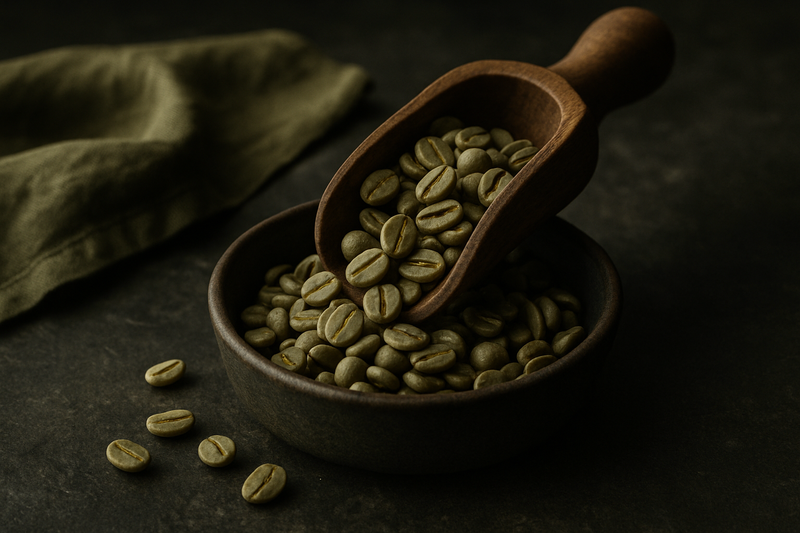
Green Coffee Beans · Photograph
Discover the real green coffee beans health benefits and side effects, from blood pressure support to modest weight changes. Learn what the research says about chlorogenic acid, safe dosage, and who should be cautious before trying green coffee bean extract.
Key Nutrients
% Daily Value based on 2,000 cal diet
Key active compounds in green coffee beans
- Chlorogenic acids — A family of polyphenolic compounds (esters of caffeic and quinic acids) that are the primary bioactive interest in green coffee. They act as antioxidants, may slow intestinal glucose absorption, and appear to influence blood vessel tone. Largely degraded during roasting.
- Caffeine — A methylxanthine alkaloid (a naturally occurring stimulant compound) that acts on the central nervous system. Present in green coffee at roughly similar levels to roasted coffee, though brewed green coffee tends to be lighter in flavor and sometimes prepared more dilutely.
- Diterpenes (cafestol and kahweol) — Lipid-soluble compounds found in coffee oil. In unfiltered preparations they can raise LDL cholesterol (the "bad" cholesterol), but they also show anti-inflammatory properties in lab studies.
- Trigonelline — A nitrogen-containing alkaloid that partially breaks down during roasting into niacin (vitamin B3). Shows antioxidant and potential neuroprotective (nerve-protecting) effects in early research.
- Other polyphenols and flavonoids — Minor phenolic compounds that contribute additional antioxidant capacity and may support blood vessel function based on early mechanistic data.
Prep and pairing ideas
Green coffee is not a culinary ingredient in the same way a vegetable or grain is, but there are practical ways to work it into a daily routine.
Brew it as a light beverage. Steep 1–2 teaspoons of coarsely crushed green coffee beans in hot (not boiling) water — around 80–85°C / 175–185°F — for 10–12 minutes, then strain. The flavor is mild, slightly grassy, and much less bitter than roasted coffee. A squeeze of lemon and a little honey make it more pleasant for most palates.
Common pairings and why:
- Green coffee + lemon — Citric acid from lemon may enhance the absorption of certain polyphenols (plant compounds), and the flavor contrast works well against green coffee's earthy, slightly vegetal taste.
- Green coffee extract + a protein-rich meal — Taking the extract with food slows caffeine absorption, which reduces the risk of GI upset and jitteriness. Pairing with protein and healthy fat also moderates the blood-sugar effect of any carbohydrates in the meal, which aligns with green coffee's proposed glucose-moderating mechanism.
- Green coffee + ginger — A small piece of fresh ginger brewed alongside green coffee beans adds warmth to the flavor and brings its own anti-nausea and anti-inflammatory properties, which may help offset any mild digestive discomfort from the coffee's caffeine and acidity.
Bottom line
Green coffee beans offer an intriguing window into the "food as medicine" approach to plant compounds. The evidence is clearest — though still modest — for small reductions in blood pressure, particularly in people who already have mildly elevated levels. Emerging but preliminary data suggest supportive effects on blood sugar control, insulin sensitivity, inflammation markers, and body weight. None of these effects are large enough to replace medical treatment, but they may be meaningful as part of a broader dietary and lifestyle strategy.
The most important caveats: green coffee contains caffeine and delivers concentrated bioactive compounds, especially in extract form. It is not a casual supplement for everyone, and it interacts with several common medications. If you have high blood pressure, diabetes, or take any regular medications, talk with your healthcare provider before starting.
For people who are generally healthy and curious, brewed green coffee is a low-risk way to explore this ingredient. If you want the doses used in clinical research, a standardized third-party-tested extract is a more reliable option than a homebrew.
Want to explore other ingredients that support heart health and metabolic balance? Browse Plantopedia's full collection at /health.
How Green Coffee Beans Compares
| Compared with | What's different |
|---|---|
| Green Coffee Beans vs. Roasted Coffee Beans | Contains high levels of chlorogenic acid, which is mostly destroyed during the roasting process. |
| Green Coffee Beans vs. Green Tea | Provides a grassy, herbal flavor and higher chlorogenic acid compared to tea's catechins. |
Health Benefits
Things to Know
Caffeine sensitivity: Green coffee contains caffeine. If coffee makes you jittery, anxious, or disrupts your sleep, green coffee extract will likely do the same or worse in concentrated form.
Blood pressure medications: Green coffee extract can modestly lower blood pressure. If you are already on antihypertensive drugs, combined use could lower pressure too much. Discuss with your doctor first.
Diabetes medications: Green coffee may improve insulin sensitivity and lower fasting blood glucose. If you take insulin or oral glucose-lowering drugs, monitor blood sugar closely — there is a theoretical risk of additive glucose-lowering and hypoglycemia (dangerously low blood sugar).
Stimulant medications or supplements: Combining green coffee with other caffeine sources, ADHD stimulants, or decongestants can increase the risk of rapid heart rate, high blood pressure, anxiety, and insomnia.
Anticoagulants (blood thinners): High caffeine and polyphenols may influence platelet function and drug metabolism; use cautiously if taking warfarin or similar medications.
Pregnancy and breastfeeding: Concentrated extracts have not been studied in these groups. General caffeine limits during pregnancy are well established (most guidelines recommend under 200 mg/day total); a full clinical dose of GCBE could push you over that threshold. Avoid concentrated extracts unless cleared by your provider.
Children and adolescents: Appropriate dosing and safety data do not exist for these age groups.
Gastrointestinal conditions: Caffeine and acidic polyphenols can aggravate acid reflux (GERD), gastritis, or irritable bowel syndrome (IBS) symptoms in sensitive individuals.
Pre-surgery: Stop caffeine-containing products at least one week before surgery, or as directed by your surgical team.
Liver disease: Long-term safety data for concentrated green coffee extracts are lacking; people with liver conditions should exercise additional caution.

Prep Ideas
- — **Green coffee + lemon** — Citric acid from lemon may enhance the absorption of certain polyphenols (plant compounds), and the flavor contrast works well against green coffee's earthy, slightly vegetal taste.
- — **Green coffee extract + a protein-rich meal** — Taking the extract with food slows caffeine absorption, which reduces the risk of GI upset and jitteriness. Pairing with protein and healthy fat also moderates the blood-sugar effect of any carbohydrates in the meal, which aligns with green coffee's proposed glucose-moderating mechanism.
- — **Green coffee + ginger** — A small piece of fresh ginger brewed alongside green coffee beans adds warmth to the flavor and brings its own anti-nausea and anti-inflammatory properties, which may help offset any mild digestive discomfort from the coffee's caffeine and acidity.
Glossary
Shop This Ingredient
Stock your pantry with quality green coffee beans.
Buy on AmazonAs an Amazon Associate, Plantopedia earns from qualifying purchases. This costs you nothing extra and helps us keep the encyclopedia free.
Frequently Asked Questions
Heart health and blood pressure This is the area with the most consistent human evidence. Multiple randomized controlled trials (studies where participants are randomly assigned to a treatment or placebo group) and meta-analyses (statistical poolings of multiple trials) show that green coffee bean extract can produce small but statistically meaningful reductions in blood pressure. A 2019 meta-analysis found that green coffee supplementation reduced systolic blood pressure (the top number) by about 3.1 mmHg and diastolic pressure (the bottom number) by about 2.2 mmHg on average. A 2024 meta-analysis confirmed similar findings, reporting significant reductions in both readings without materially affecting heart rate. Earlier dose-ranging trials in people with mild hypertension (mildly elevated blood pressure) showed systolic reductions of roughly 3–6 mmHg, with effects appearing to increase at higher chlorogenic acid doses. The likely mechanism: chlorogenic acids may improve endothelial function (the health and responsiveness of the inner lining of blood vessels), increase nitric oxide availability (nitric oxide helps blood vessels relax and widen), and reduce vascular resistance. It is worth noting that one randomized trial testing a multi-ingredient formula combining green coffee, olive leaf, and beetroot did not show a blood-pressure benefit, suggesting that dose and formulation matter significantly. Important context: These reductions are modest — roughly comparable to other dietary strategies like increasing potassium or following a DASH-style diet. Green coffee should not replace prescribed antihypertensive (blood-pressure-lowering) medication. Digestive health and microbiome Direct evidence for green coffee's effects on the gut microbiome (the community of bacteria and microorganisms living in your digestive tract) is currently limited. However, chlorogenic acids are polyphenols, and polyphenols in general are associated with beneficial shifts in gut bacterial populations in other research contexts. Chlorogenic acids also appear to slow intestinal glucose absorption in mechanistic studies, which affects how quickly carbohydrates are processed — a digestive-level action with downstream metabolic effects. Some people experience gastrointestinal side effects (nausea, stomach upset, or reflux) from green coffee, particularly at higher doses or when taken on an empty stomach. Blood sugar and metabolism Several small-to-moderate trials suggest green coffee extract may support blood sugar control, particularly in people with metabolic syndrome (a cluster of conditions including excess abdominal fat, high blood pressure, high blood sugar, and abnormal cholesterol levels) or type 2 diabetes. A 2023 randomized controlled trial in adults with type 2 diabetes found that 800 mg/day of green coffee aqueous extract for 10 weeks significantly reduced fasting blood sugar, insulin resistance (measured by a marker called HOMA-IR), triglycerides (a type of blood fat), and C-reactive protein (a marker of inflammation), while increasing HDL cholesterol (the "good" cholesterol). An earlier trial in people with metabolic syndrome reported similar improvements in fasting glucose, abdominal obesity, and systolic blood pressure. Proposed mechanisms include reduced intestinal glucose absorption and lower hepatic (liver) glucose output, both mediated by chlorogenic acids. However, these trials are small, short (10–12 weeks), and conducted in specific populations. Long-term outcome data — the kind that would show reduced rates of diabetes complications — do not yet exist for green coffee. Inflammation and recovery Early human data suggest green coffee extract may reduce systemic inflammation. In the 2023 diabetes trial above, supplementation significantly reduced C-reactive protein (CRP), a widely used blood marker of low-grade systemic inflammation. Improvements in abdominal obesity and metabolic markers in other trials indirectly support an anti-inflammatory effect, since excess abdominal fat is itself a driver of chronic inflammation. Chlorogenic acids and other polyphenols in green coffee have well-documented antioxidant and anti-inflammatory actions in laboratory and animal models. However, robust human data directly linking green coffee intake to reduced risk of inflammatory diseases are still lacking. These findings are preliminary and should not be overstated. Weight and body composition Weight management is the most-researched non-cardiovascular application for green coffee bean extract, and also the area with the most controversy. Multiple meta-analyses have found statistically significant but modest reductions in body weight and waist circumference compared to placebo: A 2010 systematic review found an average of about 2.5 kg more weight loss than placebo, but flagged serious limitations including small study sizes and risk of bias. A 2023 meta-analysis focusing on chlorogenic acid ≥500 mg/day found a statistically significant reduction of about 1.3 kg versus controls. A 2023 umbrella review (a review of multiple meta-analyses) estimated reductions of about 1.2 kg in weight, 0.48 kg/m² in BMI, and 0.55 cm in waist circumference — with slightly stronger effects at doses ≤600 mg/day and durations longer than 7 weeks. A 2013 critical review concluded that, due to low evidence quality, concerns about data integrity in some primary trials (one notable trial was later retracted), and potential safety issues, green coffee extract cannot be recommended as a pharmacological (drug-like) weight-loss treatment. The NIH Office of Dietary Supplements echoes this cautious position. Bottom line on weight: The effect is real in the aggregate data but small in absolute terms — roughly 1–2.5 kg across studies. It should be viewed as a potential modest adjunct to diet and exercise, not a standalone weight-loss solution.
Buying guide: choosing the right green coffee product Brewed green coffee beverage Whole or crushed green beans steeped in hot water. This is the most "whole food" approach and provides chlorogenic acids alongside the full range of minor compounds. The caffeine content and phytochemical dose are lower and more variable than in extracts. Good for people who want a gentle daily ritual and are not seeking a therapeutic dose. Standardized extract capsules or tablets Most clinical trials use these. Look for products standardized to 45–50% chlorogenic acids, which gives you a known and consistent dose. This is the form used in blood pressure and blood sugar research. Check that the product has been third-party tested (look for NSF, USP, or ConsumerLab seals) to verify label accuracy and absence of contaminants. Decaffeinated green coffee extract Some manufacturers reduce caffeine while retaining chlorogenic acids. A sensible choice for people sensitive to caffeine, those who already consume multiple caffeine sources, or anyone using the supplement primarily for cardiometabolic (heart and metabolic health) rather than alertness benefits. Multi-ingredient blends Be cautious. As noted above, at least one randomized trial found no blood-pressure benefit from a green coffee + olive leaf + beetroot combination compared to placebo. Results from single-ingredient studies do not automatically apply to blends. Label tip: Avoid products that make cure or treatment claims (illegal in most countries), list "proprietary blends" without amounts, or do not specify the percentage of chlorogenic acids in the extract.
There is no single universally established dose, but here is what the research suggests: Blood pressure support: Trials showing meaningful reductions used chlorogenic acid doses of roughly 46–185 mg/day from green coffee extracts, or total extract doses of approximately 90–400 mg/day over 4 weeks. Dose-response data suggest that higher chlorogenic acid intakes produce greater blood pressure reductions in people with mildly elevated levels. Metabolic and blood sugar support: The 2023 diabetes trial used 800 mg/day of green coffee aqueous extract for 10 weeks. The metabolic syndrome trial used 400 mg/day. Weight management: Meta-analyses suggest the most consistent (though modest) body weight and waist circumference reductions occur at total extract doses ≤600 mg/day taken for more than 7 weeks. Practical guidance: Start with the lower end of the range (e.g., 200–400 mg/day of an extract standardized to 45–50% chlorogenic acids) to assess tolerance. Split the daily dose into 1–3 servings taken 30–60 minutes before meals, as most trials used pre-meal dosing. Do not exceed 800 mg/day without medical supervision. Take the minimum effective dose, and reassess at 8–12 weeks. Remember that each serving of a typical 400 mg extract may provide roughly 50–80 mg of caffeine; factor this into your total daily caffeine intake.
Quick Answers
Common questions, answered in a line.
Green coffee beans are unroasted coffee seeds that contain higher levels of chlorogenic acids than roasted beans. These bioactive compounds are largely degraded during the roasting process, making green coffee a more potent source of specific antioxidants.
Green coffee beans contain chlorogenic acids, caffeine, diterpenes like cafestol and kahweol, and trigonelline. These active compounds contribute to the plant's antioxidant, anti-inflammatory, and potential neuroprotective properties.
To brew green coffee, steep 1–2 teaspoons of crushed beans in 80–85°C (175–185°F) water for 10–12 minutes before straining. The resulting drink has a mild, grassy flavor that is often improved with a squeeze of lemon or a bit of honey.
Green coffee beans contain caffeine and may lower blood pressure and blood sugar, which can lead to interactions with antihypertensive and diabetes medications. Individuals who are pregnant, breastfeeding, or have gastrointestinal conditions like GERD should also exercise caution.
Green coffee beans may support heart health by modestly reducing blood pressure and improving blood vessel tone. The chlorogenic acids and other polyphenols in the beans act as antioxidants that support overall cardiovascular and metabolic function.
Adding lemon to green coffee may enhance the absorption of its polyphenols, while ginger can help offset potential digestive discomfort from caffeine and acidity. Pairing green coffee extract with a protein-rich meal can also slow caffeine absorption and reduce jitteriness.
For Readers in the USA
Local context — sourcing, seasonality, and regional notes.
You can purchase green coffee beans at major US retailers like Whole Foods Market and Sprouts Farmers Market, or via specialized online coffee importers. While most local grocery stores stock only roasted beans, health food stores often carry green beans in the bulk section or as a packaged supplement.
While most coffee is imported, the US produces green coffee beans in Hawaii and Puerto Rico, with harvest seasons typically running from late summer through early spring. Beans grown in the Kona region of Hawaii are highly prized and can often be purchased directly from domestic estates or specialty roasters.
The FDA does not approve green coffee bean extract for safety or effectiveness before it is marketed, but it does regulate the industry through Current Good Manufacturing Practices (cGMP). Consumers should look for third-party certifications like NSF or USP to ensure the supplement contains the ingredients listed on the label.
In the US, green coffee is most commonly consumed as a standardized extract in capsule form or as a concentrated liquid drop added to smoothies. While brewed green coffee is gaining niche popularity in "wellness cafes," the extract remains the primary way Americans use it for metabolic support.
AI Clinical Review
- Clearly explains that green coffee is unroasted coffee and why it’s richer in chlorogenic acids (a polyphenol family) than roasted coffee.
- Accurately portrays the blood‑pressure effect as small but meaningful in trials of standardized extracts, and not a substitute for prescribed therapy.
- Frames weight effects appropriately as modest (about 1–2.5 kg in studies) with mixed evidence quality.
- Offers practical product guidance (look for 45–50% chlorogenic acids, third‑party testing) and notes decaffeinated options for those sensitive to caffeine.
- Blood sugar and inflammation findings come from small, short‑term RCTs; longer studies with clinical outcomes (e.g., fewer complications) are lacking.
- Microbiome benefits are largely inferred from mechanistic polyphenol data; direct human studies with green coffee are limited.
- The weight‑loss literature includes risk of bias and at least one retracted trial; pooled effects are statistically significant but small in real‑world terms.
- Optimal dosing, duration, and best formulation (brew vs standardized extract; caffeinated vs decaf) have not been firmly established, and product variability is high.
- Typical research ranges: consider starting around 200–400 mg/day of an extract standardized to ~45–50% chlorogenic acids; many trials use ≤600 mg/day for ≥7 weeks. Avoid >800 mg/day unless supervised by a clinician.
- Caffeine adds up: a 400 mg extract often supplies ~50–80 mg caffeine. It can aggravate anxiety, insomnia, palpitations, and reflux; decaffeinated extracts are available.
- Medication and condition cautions: discuss use if you take antihypertensives or diabetes drugs (additive BP or glucose lowering), stimulants/decongestants, or anticoagulants; avoid during pregnancy/breastfeeding and in children; use caution with arrhythmias, GERD/IBS, or liver disease.
- Form matters: unfiltered coffee oils (cafestol, kahweol) can raise LDL cholesterol; filtered beverages or capsule extracts limit this effect. Follow perioperative advice to stop caffeine before surgery.
Contains caffeine; green-bean extracts are concentrated—use cautiously.
References
- 2024 systematic review and meta-analysis on green coffee and blood pressure — pooled analysis confirming significant systolic and diastolic reductions (pubmed.ncbi.nlm.nih.gov)
- Randomized double-blind trial: antihypertensive effects of green coffee extract in mild hypertension — dose-response trial showing 3–6 mmHg systolic reduction (nature.com)
- 2019 meta-analysis of RCTs on green coffee and blood pressure — found ~3.1/2.2 mmHg reductions with low heterogeneity (pubmed.ncbi.nlm.nih.gov)
- 2010 Cochrane-style systematic review on green coffee for weight loss — average ~2.5 kg benefit over placebo, but flags major methodological limits (pmc.ncbi.nlm.nih.gov)
- 2023 RCT in adults with type 2 diabetes — 800 mg/day for 10 weeks improved weight, CRP, triglycerides, HOMA-IR, and HDL (pmc.ncbi.nlm.nih.gov)
- 2023 meta-analysis: chlorogenic acid ≥500 mg/day and body weight — statistically significant ~1.3 kg reduction vs controls (systematicreviewsjournal.biomedcentral.com)
- RCT: blood pressure and safety of chlorogenic acids from green coffee in mild hypertension — dose-response data supporting safety over several weeks (pubmed.ncbi.nlm.nih.gov)
- RCT: green coffee extract in metabolic syndrome — improvements in blood glucose, abdominal obesity, and blood pressure (pubmed.ncbi.nlm.nih.gov)
- 2023 umbrella review of meta-analyses on green coffee and obesity indices — ~1.2 kg weight, ~0.48 kg/m² BMI, ~0.55 cm waist reduction; stronger at ≤600 mg/day (pubmed.ncbi.nlm.nih.gov)
- USDA FoodData Central — reference database for nutrient composition of foods and beverages (fdc.nal.usda.gov)
- NIH Office of Dietary Supplements: Dietary Supplements for Weight Loss — consumer fact sheet noting limited evidence for green coffee as a weight-loss supplement (ods.od.nih.gov)
Know Your Numbers
Eating healthy is a start. Now get to know your biomarkers.
Food changes bloodwork — inflammation, lipids, blood sugar and nutrient status all respond to what you eat. 59 markers from $59.
- Results in 7–10 days at 2,000+ Quest sites
- Licensed provider reviews every result
- One flat price, no membership, HSA/FSA eligible
Educational information only, not medical advice. Panels are ordered and reviewed through our licensed partner; Plantopedia may earn a commission.