Green Papaya — health benefits and uses
Its papain enzyme has long been used as a digestive aid in tropical folk medicine.
The Short Answer
Green papaya is a nutrient-dense vegetable providing 61mg of vitamin C and only 28 calories per cup. It is prized for its high concentration of papain, a natural enzyme that aids protein digestion.
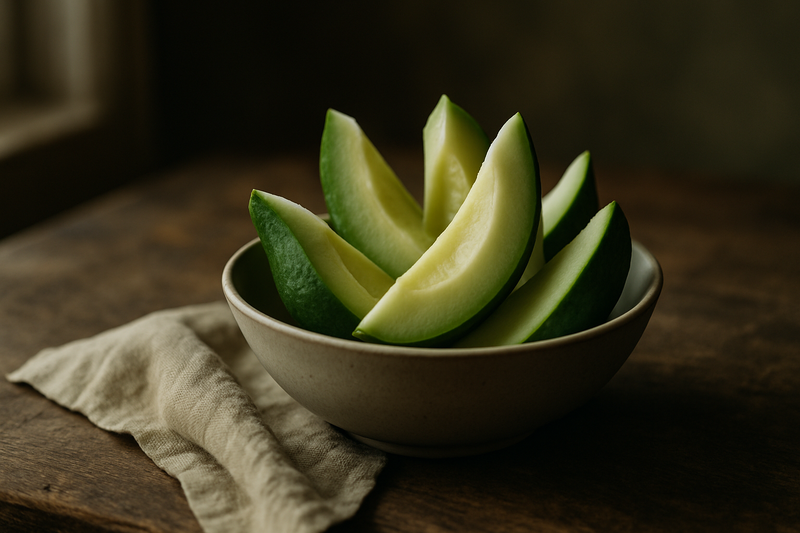
Green Papaya · Photograph
Discover the green papaya health benefits and side effects backed by nutrition science. Learn how this crunchy, low-calorie vegetable supports digestion, immune health, and weight management — plus who should avoid it and how to eat it Thai-salad style.
Key Nutrients
% Daily Value based on 2,000 cal diet
Key active compounds in green papaya
- Papain — A cysteine protease (protein-cutting enzyme) concentrated in the milky latex of unripe fruit. Helps break down dietary proteins and underlies most digestive and uterine-stimulating effects.
- Chymopapain and related proteases — Sister enzymes to papain; participate in protein digestion and contribute to the uterotonic effects seen in animal models.
- Phenolic compounds — A broad family of plant secondary metabolites with antioxidant properties, found in unripe papaya pulp.
- Flavonoids — A subgroup of polyphenols detected in unripe papaya extracts; may modulate inflammation-related cell signaling in lab studies.
- Carotenoids (e.g., beta-carotene) — Pigmented compounds that the body converts partly into vitamin A; levels are lower in very green fruit than in fully ripe papaya but still contribute to antioxidant status.
Prep and pairing ideas
Green papaya's mild, slightly astringent crunch is a blank canvas that absorbs dressings and spices beautifully. Here are three practical uses:
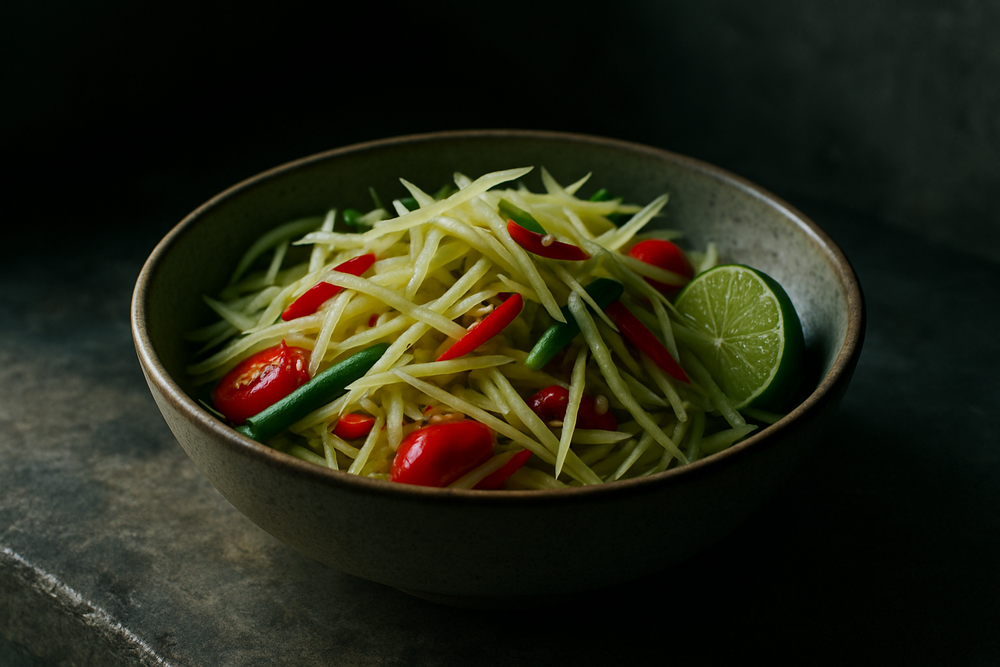
Classic Thai Som Tum (Green Papaya Salad) Peel and julienne (cut into matchstick strips) a small green papaya using a box grater or mandoline. Toss with lime juice, fish sauce or tamari, a little palm sugar or maple syrup, crushed garlic, bird's eye chili, halved cherry tomatoes, and long beans. Top with crushed roasted peanuts. The acid in the lime juice brightens flavor while adding a small extra hit of vitamin C.
Vietnamese-Style Papaya Salad (Gỏi) Shred green papaya and combine with julienned carrots, mint, Vietnamese coriander, and thinly sliced shallots. Dress with a mixture of lime juice, rice vinegar, chili, and a touch of sweetener. The carrots add beta-carotene alongside the papaya's own carotenoids, making this a double antioxidant combination.
Green Papaya and Tofu Soup Cube peeled green papaya and simmer in a light vegetable or chicken broth with silken tofu and ginger for 15–20 minutes until tender. Heat reduces papain activity, but you retain minerals, fiber, and a satisfying warming meal — ideal in cooler months when a raw salad feels less appealing.
Common pairings and why they work
- Lime juice — The acidity complements green papaya's mild bitterness and helps preserve vitamin C through its own antioxidant action in the dish.
- Chili peppers — Add capsaicin, another phytochemical with metabolic and anti-inflammatory properties in lab research, and create the classic som tum flavor contrast.
- Carrots — Pair naturally in texture; the fat-soluble carotenoids in carrots are absorbed better when eaten alongside even a tiny amount of dietary fat (like peanuts or dressing oil), improving the overall nutrient yield of the salad.
Bottom line
Green papaya is a genuinely useful, nutrient-dense addition to a plant-rich diet. Its standout features are low calories, high vitamin C, and a unique enzyme profile (particularly papain) that may support protein digestion. The research backing is strongest at the level of nutrition science and mechanistic enzyme biology; large randomized controlled trials on fresh green papaya as a food are largely absent, so benefits should be understood as evidence-informed rather than clinically proven.
The most important safety note is clear: avoid large amounts of unripe papaya if you are pregnant, due to the uterotonic potential of papaya latex. For everyone else, enjoying it raw in a Thai or Vietnamese-style salad is one of the tastiest ways to add variety and micronutrients to your vegetable intake.
Looking to eat more ingredients like green papaya that support digestion and healthy weight? Explore the Plantopedia digestive health guide.
How Green Papaya Compares
| Compared with | What's different |
|---|---|
| Green Papaya vs. Ripe Papaya | Sweeter, soft texture, and higher sugar content compared to the crunchy, savory green fruit. |
| Green Papaya vs. Cucumber | Higher in vitamin C and fiber, with a crunchier texture that holds up better in acidic dressings. |
| Green Papaya vs. Daikon Radish | Contains the protein-digesting enzyme papain, which is absent in daikon. |
Health Benefits
Things to Know
Pregnancy — avoid in large amounts.: Unripe papaya latex contains papain and related enzymes that have demonstrated uterotonic (uterus-contracting) activity in animal models. Multiple obstetric and consumer health sources advise avoiding unripe or semi-ripe papaya, especially in the first trimester. Ripe papaya appears lower risk due to reduced latex content, but when in doubt, skip it until after delivery.
Trying to conceive or fertility treatment.: Out of caution, those undergoing fertility treatment may wish to limit green papaya until they have spoken with their care team.
Latex allergy.: Papaya latex contains proteins cross-reactive with natural rubber latex. If you have a confirmed latex allergy, speak with an allergist before eating significant amounts of green papaya.
Known papaya or papain allergy.: If you have reacted to ripe papaya, papaya enzyme supplements, or meat tenderizers containing papain, avoid green papaya.
Sensitive digestion.: Large amounts of any high-fiber fruit or vegetable can cause temporary bloating or loose stools, especially if your gut is unaccustomed to them. Start with a small serving (½ cup) and increase gradually.
Drug interactions (primarily from concentrated supplements).: High-dose papain supplements may enhance the blood-thinning effect of warfarin or antiplatelet agents like aspirin — check with your prescriber before combining. Culinary amounts are unlikely to cause the same effect, but caution is reasonable. People taking NSAIDs (non-steroidal anti-inflammatory drugs) should be cautious with concentrated papaya enzyme products due to potential additive GI irritation.
Best Forms
Look for a fully green skin with no yellow patches, firm to the touch. A small white nick should ooze milky-white latex — a sign the papain content is high. Available at Asian grocery stores year-round in most cities.
Convenient for salads; check the date and use within 1–2 days. Some pre-shredded options are soaked in water, which may leach a small amount of water-soluble vitamins like vitamin C.
Widely available in Asian markets. Shelf-stable and convenient, but expect reduced enzyme activity and added sodium. Rinse before eating to lower salt load.
These are extracted and concentrated from papaya latex — not the same as eating the fruit. If using for digestive support, follow label dosing; avoid in pregnancy and if you have a latex allergy.
For fresh fruit, the only ingredient should be Carica papaya. For pickled versions, check for added sugars and look for products with fewer than 300 mg sodium per serving.
Prep Ideas
- — Lime juice — The acidity complements green papaya's mild bitterness and helps preserve vitamin C through its own antioxidant action in the dish.
- — Chili peppers — Add capsaicin, another phytochemical with metabolic and anti-inflammatory properties in lab research, and create the classic som tum flavor contrast.
- — Carrots — Pair naturally in texture; the fat-soluble carotenoids in carrots are absorbed better when eaten alongside even a tiny amount of dietary fat (like peanuts or dressing oil), improving the overall nutrient yield of the salad.
Shop This Ingredient
Stock your pantry with quality green papaya.
Buy on AmazonAs an Amazon Associate, Plantopedia earns from qualifying purchases. This costs you nothing extra and helps us keep the encyclopedia free.
Frequently Asked Questions
Digestive health and gut enzymes The most discussed green papaya benefit for digestion comes from papain, the proteolytic (protein-digesting) enzyme in its latex. Mechanistically, papain cleaves the peptide bonds in dietary proteins, potentially easing the digestive workload — a property exploited in commercial meat tenderizers and enzyme supplement products for decades. Human studies using papaya-derived enzyme supplements do show improvements in dyspepsia (uncomfortable digestion) and constipation in some populations. However, controlled trials specifically using fresh raw green papaya salad are sparse, so benefits for green papaya itself are largely extrapolated from enzyme research and traditional use. If you are looking to support digestive comfort, incorporating green papaya as part of a balanced, fiber-rich diet is a reasonable, low-risk strategy. Blood sugar and metabolism Green papaya provides around 10 g of carbohydrates and 1.7 g of fiber per 100 g — a modest carbohydrate load relative to its volume and satiety potential. There are no controlled human trials measuring postprandial (after-meal) glucose responses specifically to green papaya, so any glycemic benefit is inferred rather than proven. The real-world advantage may be displacement: using shredded green papaya as a salad base instead of white rice noodles or refined-carb ingredients naturally lowers the glycemic load of the overall meal. Heart and circulation Green papaya contributes potassium, vitamin C, and fiber — nutrients associated with cardiovascular health in broader dietary research. Potassium supports healthy blood pressure by countering the effects of sodium; vitamin C supports vascular wall integrity. That said, no human intervention trial has tested green papaya specifically for blood pressure reduction or lipid improvement. Its heart-friendly profile is real, but it operates through overall dietary pattern benefits rather than as a standalone therapy. Inflammation and antioxidant support Vitamin C and the phenolic compounds in unripe papaya pulp show antioxidant activity in lab and compositional studies — meaning they can neutralize free radicals (unstable molecules that can damage cells) in test conditions. Whether eating a cup of som tum salad measurably reduces inflammatory markers in a human body is an open question; no well-controlled clinical trials have tested this outcome directly. Green papaya antioxidants and immune support from vitamin C are best framed as contributions to a broader plant-rich diet rather than targeted anti-inflammatory therapy. Weight management At roughly 35 calories per 100 g, green papaya is one of the more volume-efficient vegetable options available. It is 88–90% water, which means a generous bowlful adds genuine fullness with minimal caloric cost. Research on weight management consistently supports high-volume, low-energy-density foods as tools for reducing overall intake without hunger — and green papaya salad benefits for weight loss fit this model well. Again, direct trials on green papaya specifically are lacking, but its profile aligns with the evidence on vegetable-rich dietary patterns.
Raw shredded green papaya — as in a classic Thai som tum or Vietnamese papaya salad — is the form most likely to preserve papain activity and retain vitamin C and heat-sensitive polyphenols. Cooking (soups, curries, stews) softens the texture pleasantly but reduces enzyme activity and some vitamin C. Buying guide: choosing and storing green papaya Fresh whole fruit: Look for a fully green skin with no yellow patches, firm to the touch. A small white nick should ooze milky-white latex — a sign the papain content is high. Available at Asian grocery stores year-round in most cities. Pre-shredded fresh: Convenient for salads; check the date and use within 1–2 days. Some pre-shredded options are soaked in water, which may leach a small amount of water-soluble vitamins like vitamin C. Pickled or jarred green papaya: Widely available in Asian markets. Shelf-stable and convenient, but expect reduced enzyme activity and added sodium. Rinse before eating to lower salt load. Papain enzyme supplements: These are extracted and concentrated from papaya latex — not the same as eating the fruit. If using for digestive support, follow label dosing; avoid in pregnancy and if you have a latex allergy. Label tip: For fresh fruit, the only ingredient should be Carica papaya. For pickled versions, check for added sugars and look for products with fewer than 300 mg sodium per serving.
There is no established clinical dosage for green papaya as a food. Most nutrition guidance treats it like any other vegetable: a serving of around ½ to 1 cup shredded (50–100 g) consumed as part of a mixed meal is a sensible, evidence-consistent amount for most healthy adults. Practical guidance: If you are new to green papaya, start with ½ cup (about 50 g) per sitting to gauge digestive tolerance. Most people can enjoy 1 cup (100 g) per meal without issue; eating multiple cups daily is unusual in practice but unlikely to cause problems in healthy, non-pregnant adults. There is no benefit to eating more than you enjoy — green papaya's advantages come from consistent inclusion in a varied vegetable-rich diet, not from high-dose use. If you are pregnant, trying to conceive, or have a latex allergy, avoid or sharply limit green papaya and talk to your clinician.
The crunchy-salad seeker trying to manage weight You want a salad base that is genuinely filling without loading on calories. A 100 g serving of shredded green papaya is 35 calories — about one-quarter the calories of the same weight of cooked white rice noodles. The high water content and mild crunch make a generous-sized bowl feel satisfying without energy-density concerns. The digestive health enthusiast You are interested in food-based enzyme support for protein digestion. Raw green papaya preserves papain and related proteases (protein-digesting enzymes) at higher levels than cooked preparations. You prefer getting enzyme support from a whole food rather than a supplement, though you understand direct clinical evidence for fresh green papaya specifically is still limited.
Quick Answers
Common questions, answered in a line.
Pregnant women should avoid large amounts of unripe papaya because the latex contains enzymes like papain that have demonstrated uterotonic (uterus-contracting) activity. These effects have been seen in animal models, leading experts to advise avoiding it, particularly during the first trimester.
Green papaya contains papain, a cysteine protease enzyme that helps the body break down dietary proteins. These protein-cutting enzymes are concentrated in the milky latex of the unripe fruit and are the primary reason green papaya is associated with digestive support.
You should avoid green papaya if you have a confirmed latex allergy, as the fruit's latex contains proteins that are cross-reactive with natural rubber latex. Additionally, those with known allergies to ripe papaya, papain supplements, or meat tenderizers should also stay away.
To make a classic Thai green papaya salad (Som Tum), peel and julienne the fruit into matchsticks, then toss with lime juice, fish sauce, palm sugar, garlic, chili, tomatoes, and long beans. Top the dish with crushed roasted peanuts to add healthy fats that help with nutrient absorption.
Green papaya provides a range of antioxidants including phenolic compounds, flavonoids, and carotenoids like beta-carotene. It is also a significant source of vitamin C, which is further preserved and brightened when the fruit is paired with acidic ingredients like lime juice.
Concentrated papain (found in green papaya) may enhance the blood-thinning effects of medications like warfarin or antiplatelet agents such as aspirin. While culinary amounts are generally safe, those taking NSAIDs should be cautious with concentrated enzyme products due to potential gastrointestinal irritation.
For Readers in the USA
Local context — sourcing, seasonality, and regional notes.
You can find green papaya at H Mart, 99 Ranch Market, or local Thai and Vietnamese grocers, and it is increasingly available in the produce section of Whole Foods or Sprouts. In the U.S., look for it near other tropical fruits like mangoes or in the refrigerated Asian vegetable section.
Green papaya is primarily grown in Hawaii, Florida, and California, ensuring a steady domestic supply throughout the year in many U.S. states. While tropical, these regions utilize greenhouse and field cultivation to meet the growing demand for Southeast Asian culinary staples year-round.
Under USDA regulations, green papaya sold in the U.S. may be labeled organic if it meets NOP standards, and it is often monitored by the FDA for safety regarding imported shipments. When buying, look for the USDA Organic seal if you want to ensure the fruit was grown without synthetic pesticides or fertilizers.
In U.S. markets, you might see green papaya labeled simply as "unripe papaya" or "cooking papaya" to distinguish it from the orange, dessert-style fruit. While most varieties are Hawaiian (Solo) or Mexican (Maradol), they are all harvested early to achieve the firm, white-fleshed state required for salads.
AI Clinical Review
- Accurately frames green papaya as a low‑calorie, vitamin C–rich vegetable that fits well in vegetable-forward, weight‑conscious eating patterns.
- Explains papain and related proteolytic enzymes in plain language and appropriately distinguishes whole‑food intake from concentrated supplements.
- Describes why raw preparations preserve enzymes and vitamin C, while cooked forms still provide fiber and minerals—useful, practical guidance.
- Highlights key safety point for pregnancy (avoid unripe papaya due to uterotonic latex) and notes latex/papain allergy considerations.
- Digestive benefits are largely extrapolated from papaya‑derived enzyme supplements; controlled trials using fresh green papaya dishes are scarce.
- Claims around glycemic impact, blood pressure, and lipids are plausible via overall dietary pattern substitution but have not been directly tested with green papaya in humans.
- Enzyme and phytochemical levels vary by ripeness, cultivar, storage, and preparation (e.g., soaking or pickling), so real‑world effects likely differ from lab findings.
- Some cited resources are consumer‑oriented; stronger conclusions would require consistent evidence from peer‑reviewed human studies.
- Typical food amounts are sensible: about ½–1 cup (50–100 g) shredded per meal; increase gradually if you’re sensitive to fiber.
- Pregnancy: avoid unripe or semi‑ripe papaya; those trying to conceive or in fertility treatment should discuss intake with their clinician.
- Allergy and cross‑reactivity: people with latex, papaya, or papain allergy should avoid green papaya or seek allergist guidance.
- Supplements vs food: high‑dose papain supplements can interact with anticoagulants (e.g., warfarin) or add GI irritation, especially with NSAIDs; culinary amounts of the fruit are unlikely to have these effects.
- Product form matters: pickled/jarred versions may be high in sodium and have lower enzyme activity; rinsing can reduce salt, but raw fresh fruit best preserves enzymes.
Avoid large amounts in pregnancy; the latex can stimulate contractions.
References
- USDA FoodData Central — Papaya nutritional data (fdc.nal.usda.gov)
- USDA MyPlate — Vegetables Group guidance (myplate.gov)
- Healthline — Papaya in pregnancy: safety overview (healthline.com)
- Happiest Baby — Is papaya safe during pregnancy? (happiestbaby.com)
- PubMed / S.K. Lans et al. — Papaya consumption and pregnancy safety (peer-reviewed) (pubmed.ncbi.nlm.nih.gov)
- Pushpinder Kaur et al. — Exploration of nutritional potential of unripe papaya (Carica papaya), Ukaaz Publications 2025 (ukaazpublications.com)
- Science Insights — Is green papaya good for you? Benefits and cautions (scienceinsights.org)
- University of Hawaii CTAHR — Papaya crop and food facts (ctahr.hawaii.edu)
- Ulu Co-op — Get to Know Green Papaya (food education resource) (ulu.coop)
- Organic Facts — Nutrition and benefits of green papaya (organicfacts.net)
Know Your Numbers
Eating healthy is a start. Now get to know your biomarkers.
Food changes bloodwork — inflammation, lipids, blood sugar and nutrient status all respond to what you eat. 59 markers from $59.
- Results in 7–10 days at 2,000+ Quest sites
- Licensed provider reviews every result
- One flat price, no membership, HSA/FSA eligible
Educational information only, not medical advice. Panels are ordered and reviewed through our licensed partner; Plantopedia may earn a commission.