Kohlrabi — health benefits and uses
Central European staple valued as a light, cooling vegetable.
The Short Answer
Kohlrabi is a cruciferous vegetable that tastes like a mild, sweet cross between a broccoli stem and a radish. It is best prepared by peeling the tough outer skin and then slicing it raw for slaws or roasting it as a low-calorie alternative to potatoes.
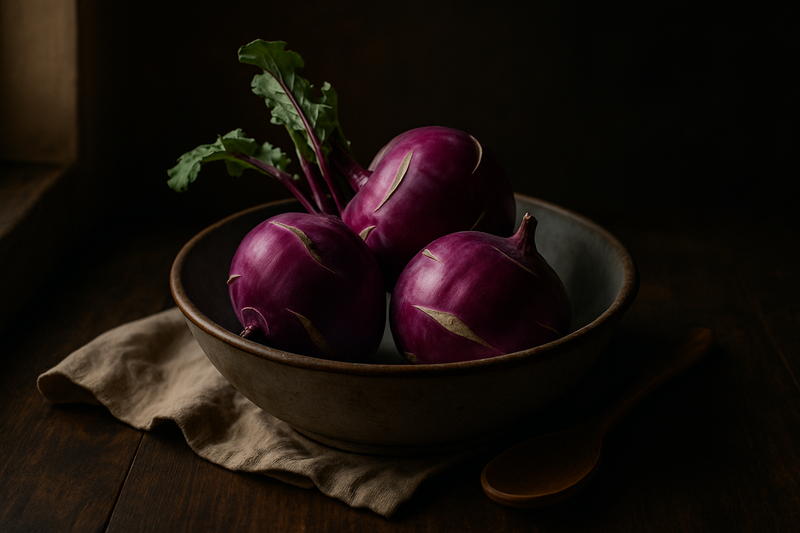
Kohlrabi · Photograph
Discover kohlrabi health benefits and nutrition facts — from immune-boosting vitamin C and gut-friendly fiber to blood sugar support and weight management. Learn how to eat it raw, roasted, or in slaws, plus what to know about thyroid safety and daily amounts.
Key Nutrients
% Daily Value based on 2,000 cal diet
Key Active Compounds
- Glucosinolates — Sulfur-containing compounds unique to Brassica vegetables. When you cut or chew kohlrabi, an enzyme called myrosinase converts them into isothiocyanates and indoles, which research links to anti-inflammatory and possible protective effects against certain cancers (primarily studied at the level of cruciferous vegetables, not kohlrabi alone).
- Isothiocyanates — The breakdown products of glucosinolates. They appear to activate the body's own antioxidant and detoxification pathways in cell and animal studies; human evidence is promising but still building.
- Anthocyanins (purple kohlrabi only) — Flavonoid pigments that give purple kohlrabi its color. Studies on anthocyanin-rich foods suggest antioxidant and vascular (blood vessel) protective effects, though kohlrabi-specific data are limited.
- Carotenoids — Plant pigments with antioxidant activity that support eye health. Kohlrabi contains modest amounts alongside other vegetables in a varied diet.
- Vitamin C (ascorbic acid) — Functions as a direct antioxidant, supports collagen production, and is well established in boosting immune defense.
- Dietary fiber (soluble and insoluble) — Feeds beneficial gut bacteria, slows glucose absorption, and adds bulk to stool.
Prep and Pairing Ideas
Kohlrabi requires almost no skill to prepare. Cut off the leafy stalks, peel the outer skin (it's tougher than it looks — use a vegetable peeler or a paring knife), and you have a crisp, mild vegetable ready to use immediately.
Three easy starting points:
- Raw sticks with hummus or guacamole — The simplest possible snack. Kohlrabi sticks hold dips well and stay crisp longer than celery. Great for meal prep: slice on Sunday, store in water in the fridge, and snack all week.
- Shredded kohlrabi slaw — Grate or julienne kohlrabi and toss with shredded red cabbage, a squeeze of lime, apple cider vinegar, and a little olive oil. The acidity enhances absorption of iron from any plant proteins you serve alongside.
- Roasted kohlrabi wedges — Peel, cut into 1-inch wedges, toss with olive oil, smoked paprika, and garlic, and roast at 400°F (200°C) for 25–30 minutes until golden. Serve as a side in place of roasted potatoes — you get roughly one-third the calories with twice the fiber.
Common pairings and why they work:
| Pairing | Why It Works |
|---|---|
| Kohlrabi + lemon + fresh herbs (mint, parsley) | Lemon's acidity brightens kohlrabi's mild flavor and boosts vitamin C absorption; herbs add phytochemical diversity. |
| Kohlrabi + chickpeas or lentils | Fiber from kohlrabi combined with protein and iron from legumes creates a balanced, filling meal; the vitamin C in kohlrabi enhances non-heme (plant-based) iron absorption. |
| Kohlrabi + miso or tahini dressing | Umami-rich dressings complement kohlrabi's subtle sweetness and make it palatable to people unfamiliar with the vegetable, encouraging consistent intake. |
Bottom Line
Kohlrabi is a genuinely underrated vegetable that earns its place on any evidence-aligned plate. Nearly a full day's vitamin C, 5 g of fiber, meaningful potassium, and a glucosinolate profile that links it to the well-researched health benefits of cruciferous vegetables — all in 36 calories per cup. Most of its specific health evidence is extrapolated from cruciferous vegetable research and its nutrient profile rather than kohlrabi-only clinical trials, but that is true of most whole vegetables, and the overall picture is consistently positive.
It is safe to eat raw or cooked for most people, genuinely versatile in the kitchen, and one of the more affordable nutrient-dense vegetables when in season. If you've been looking for a new crunchy snack or a lower-calorie swap for starchy sides, kohlrabi is worth picking up next time you see it at the market.
Explore more vegetables by health goal: See how kohlrabi fits into broader eating patterns at Plantopedia Goals.
How Kohlrabi Compares
| Compared with | What's different |
|---|---|
| Kohlrabi vs. Cabbage | Kohlrabi is a stem vegetable with a crisper, water-rich texture and a milder, sweeter flavor profile. |
| Kohlrabi vs. Turnip | Kohlrabi has a more peppery, radish-like bite when raw and stays firm when roasted. |
| Kohlrabi vs. Potato | Kohlrabi is significantly lower in calories and carbohydrates while providing more fiber per serving. |
Health Benefits
Things to Know
Thyroid and goitrogen concern: Kohlrabi contains goitrogens — naturally occurring compounds (mainly glucosinolates) that in very large amounts can interfere with iodine uptake by the thyroid gland. At normal food quantities (1–2 cups per day), this is not a realistic risk for healthy people with adequate iodine intake. If you have hypothyroidism or iodine deficiency, discuss high cruciferous vegetable intake with your doctor; cooking reduces goitrogenic activity.
Gas and bloating: Increasing cruciferous fiber abruptly can cause temporary digestive discomfort. Start small — a half cup — and increase gradually over 1–2 weeks with adequate hydration.
IBS and SIBO: People with irritable bowel syndrome or small intestinal bacterial overgrowth (SIBO — a condition where bacteria grow excessively in the small intestine) may be more sensitive to the fermentable fibers in kohlrabi. A registered dietitian can help you assess your tolerance.
Kidney disease: Kohlrabi contains about 472 mg of potassium per cup. For most people this is beneficial, but those on potassium-restricted diets for kidney conditions should account for it within their overall daily limits.
Medication interactions:
Thyroid hormones (e.g., levothyroxine): Very large daily intakes of raw cruciferous vegetables may modestly affect iodine utilization. Standard culinary amounts are unlikely to matter, but it is a common precaution to space thyroid medication from high-crucifer meals.
Potassium-sparing diuretics: Monitor cumulative dietary potassium if taking medications that raise potassium levels.
Other oral medications: Sudden large increases in fiber intake can mildly alter the absorption timing of some medications. Keep intake consistent rather than dramatically variable.
Pregnancy: The folate and vitamin C in kohlrabi make it a sensible vegetable choice during pregnancy. No specific concerns at food amounts.
Cruciferous allergy: Rare, but people with confirmed Brassica allergy should avoid kohlrabi.
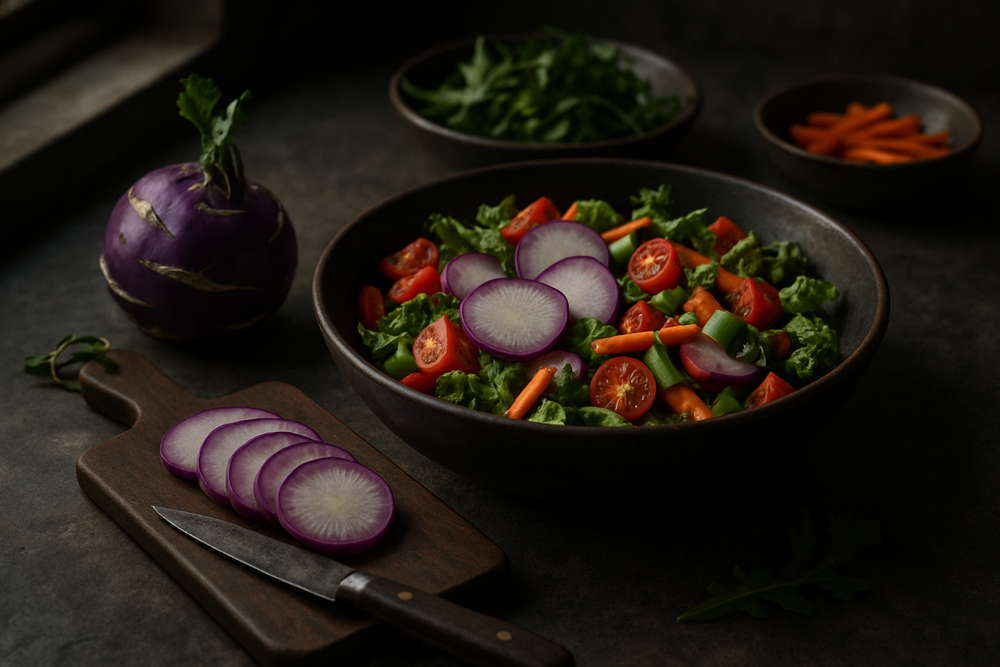
Prep Ideas
- — **Raw sticks with hummus or guacamole** — The simplest possible snack. Kohlrabi sticks hold dips well and stay crisp longer than celery. Great for meal prep: slice on Sunday, store in water in the fridge, and snack all week.
- — **Shredded kohlrabi slaw** — Grate or julienne kohlrabi and toss with shredded red cabbage, a squeeze of lime, apple cider vinegar, and a little olive oil. The acidity enhances absorption of iron from any plant proteins you serve alongside.
- — **Roasted kohlrabi wedges** — Peel, cut into 1-inch wedges, toss with olive oil, smoked paprika, and garlic, and roast at 400°F (200°C) for 25–30 minutes until golden. Serve as a side in place of roasted potatoes — you get roughly one-third the calories with twice the fiber.
Glossary
Shop This Ingredient
Stock your pantry with quality kohlrabi.
Buy on AmazonAs an Amazon Associate, Plantopedia earns from qualifying purchases. This costs you nothing extra and helps us keep the encyclopedia free.
Frequently Asked Questions
Heart and Circulation Kohlrabi contributes to heart health mainly through two well-studied pathways: dietary fiber and potassium. High-fiber diets are consistently linked to improved blood lipid profiles (lower LDL — the so-called "bad" cholesterol) and reduced cardiovascular risk in large human studies. Potassium supports healthy blood pressure by countering sodium's effects on fluid balance. At 472 mg per cup and nearly zero sodium, kohlrabi fits naturally into DASH-style and Mediterranean-style eating patterns — both of which are supported by strong human evidence for reducing heart disease risk. As a cruciferous vegetable, kohlrabi also delivers glucosinolates, which in observational studies on vegetable consumption are associated with lower vascular inflammation markers — though direct kohlrabi clinical trials are lacking. Digestive Health and the Gut Microbiome This is where kohlrabi earns the strongest evidence. Five grams of fiber per cup is a substantial serving toward the recommended daily intake of 25–38 g for adults. Dietary fiber from vegetables like kohlrabi feeds beneficial bacteria in the large intestine (a process called fermentation), supports regular bowel movements, improves stool bulk, and may reduce constipation risk. Extension nutrition resources from the University of Minnesota and UMass Amherst specifically highlight kohlrabi as a high-fiber vegetable that actively supports digestive function. One note: a rapid, large increase in cruciferous fiber can cause gas or bloating, especially if your current fiber intake is low. Start with half a cup and build up gradually with adequate water. Blood Sugar and Metabolism Kohlrabi is a non-starchy vegetable with about 8 g of total carbohydrates and 5 g of fiber per cup, giving it a very low net carbohydrate content and a minimal glycemic impact (glycemic impact = how quickly a food raises blood glucose). Human studies consistently show that high-fiber, non-starchy vegetable-rich diets improve glycemic control and insulin sensitivity — though these studies address overall dietary patterns, not kohlrabi in isolation. Practically, swapping refined carbohydrates for kohlrabi in meals lowers the meal's overall glycemic load, and the fiber slows stomach emptying and carbohydrate absorption, both of which moderate post-meal blood sugar rises. For people watching blood sugar — including those with type 2 diabetes — kohlrabi is a smart, low-risk vegetable choice. Inflammation and Recovery Kohlrabi's glucosinolates, isothiocyanates, and vitamin C all contribute to its anti-inflammatory profile. Vitamin C at 84 mg per cup is a direct antioxidant that helps neutralize free radicals — unstable molecules that can damage cells and drive inflammation. Observational studies on people who eat cruciferous vegetables regularly show associations with lower blood markers of inflammation, though these findings haven't been replicated in kohlrabi-specific trials. Purple kohlrabi adds an extra layer via anthocyanins, which in studies of anthocyanin-rich foods (such as berries and red cabbage) show vascular-protective and anti-inflammatory activity. This remains emerging and is not yet confirmed in human kohlrabi trials.
Both forms have merit — the best way to eat kohlrabi depends on what you're optimizing for. Raw kohlrabi preserves the most vitamin C (heat-sensitive) and keeps the myrosinase enzyme active, which produces more isothiocyanates from glucosinolates than cooked versions. Eaten as crisp sticks with hummus or shredded into a slaw, it also provides maximum crunch and satiety with minimal prep. This is the form that delivers the "turnip-broccoli hybrid" texture described above. Roasted kohlrabi caramelizes the natural sugars slightly, producing a nuttier, sweeter flavor that many people find more approachable. Roasting reduces vitamin C somewhat but preserves fiber, potassium, magnesium, and the structural glucosinolates. It's an excellent gateway preparation for people new to the vegetable. Steamed or boiled kohlrabi is the gentlest on digestion, useful for people with IBS or sensitive guts. Water-soluble vitamins (especially C) leach into cooking water, so if you boil it, consider using the cooking liquid in soups or sauces. Kohlrabi leaves are edible and can be sautéed like kale or collard greens — they add additional fiber and nutrients, though their nutritional data are less well standardized than the bulb. Bottom line on form: Raw maximizes vitamin C and isothiocyanate formation; roasted maximizes palatability and consistent intake; steamed or cooked is gentler on sensitive digestion. All forms count toward daily vegetable goals and provide fiber and minerals.
There is no clinical "dose" for kohlrabi — it is a food, not a supplement. USDA MyPlate guidelines recommend 2–3 cups of vegetables daily for most adults, and kohlrabi counts as a non-starchy vegetable within that target. In practical terms: ½ cup (about 65–70 g): A gentle starting amount if you are new to high-fiber or cruciferous vegetables. Provides 18 calories, 2.5 g fiber, and 42 mg vitamin C. 1 cup (135 g): A satisfying snack or side dish. Provides 36 calories, 5 g fiber, and 84 mg vitamin C — nearly a full day's vitamin C needs. 1–2 cups daily: A reasonable range within a varied vegetable diet, consistent with the broader evidence on cruciferous vegetable intake and health outcomes. More than 2–3 cups raw daily, every day: Unlikely to cause harm in healthy people, but the theoretical goitrogen consideration becomes more relevant, particularly if iodine intake is marginal. Cooking reduces this risk. Start low, go slow if you currently eat little fiber. Add half a cup for the first week, then scale up. Drink plenty of water as fiber intake increases.
Quick Answers
Common questions, answered in a line.
You can eat kohlrabi by slicing it into raw sticks for dipping, shredding it into a fresh slaw, or roasting wedges in the oven until golden. To prepare it, simply cut off the leafy stalks and peel the tough outer skin with a vegetable peeler or paring knife before slicing.
Kohlrabi is a nutrient-dense, low-calorie vegetable providing nearly a full day's vitamin C, 5 grams of fiber, and meaningful potassium in just 36 calories per cup. It also contains glucosinolates, which are sulfur-containing compounds linked to anti-inflammatory and protective effects.
Kohlrabi contains naturally occurring compounds called goitrogens that can interfere with iodine uptake by the thyroid if consumed in very large amounts. For healthy individuals with adequate iodine intake, eating 1–2 cups per day is not considered a realistic risk.
Kohlrabi is an excellent choice for weight management because it is very low in calories while providing twice the fiber of starchy sides like potatoes. One cup contains only 36 calories, and its high fiber content helps add bulk to the diet and promotes a feeling of fullness.
Individuals with kidney disease who are on a potassium-restricted diet should monitor their kohlrabi intake, as one cup contains approximately 472 mg of potassium. Additionally, those with IBS or SIBO may be sensitive to its fermentable fibers and should assess their personal tolerance.
Purple kohlrabi contains anthocyanins, which are flavonoid pigments that give the vegetable its color and offer additional antioxidant and vascular protective effects. While both green and purple varieties are healthy, the purple skin specifically provides these extra plant pigments.
Kohlrabi supports digestive health through its high content of both soluble and insoluble dietary fiber, which feeds beneficial gut bacteria and adds bulk to stool. To avoid temporary gas or bloating, it is recommended to start with a half-cup serving and increase intake gradually.
For Readers in the USA
Local context — sourcing, seasonality, and regional notes.
Kohlrabi is a cool-weather crop primarily grown in northern US states like Wisconsin, Minnesota, and New York, as well as in California's temperate coastal valleys. While it is available year-round in many regions, its peak domestic seasons are typically from June through November in the North and through the winter in the South.
You can find kohlrabi at major US grocery chains like Whole Foods Market, Trader Joe's, and Wegmans, as well as at local farmers markets. Look for it in the refrigerated produce section near other cruciferous vegetables like kale and Brussels sprouts, or in the "value-added" section as pre-spiraled "kohlrabi noodles."
In the US, kohlrabi is sometimes referred to as a "German turnip" or "cabbage turnip," reflecting its European heritage and flavor profile. It is a staple in American CSA (Community Supported Agriculture) boxes and is increasingly popular in Midwestern German-American culinary traditions.
US-grown kohlrabi labeled as "USDA Organic" must be produced without synthetic fertilizers or prohibited pesticides, following strict federal standards. The FDA considers kohlrabi a "low-acid" vegetable, and they provide specific guidelines for safe home canning and refrigeration to prevent foodborne illness.
AI Clinical Review
- Accurately places kohlrabi in the cruciferous family and explains glucosinolates converting to isothiocyanates with chopping/chewing, noting that most human data come from studies of cruciferous vegetables as a group.
- Nutrition snapshot is on point: roughly 36 calories per cup with high vitamin C (~84 mg), about 5 g of fiber, and meaningful potassium (~472 mg) — a combination linked to digestive regularity, satiety, and blood‑pressure support.
- Practical guidance on raw vs cooked is balanced: heat can lower vitamin C and inactivate myrosinase, while minerals and fiber are largely retained; different preparations can help with tolerance and enjoyment.
- Safety context is reasonable: typical food amounts are safe for most people, and the goitrogen/thyroid issue is framed appropriately as a concern mainly at very high raw intakes in iodine‑insufficient individuals.
- Specific kohlrabi human trials for outcomes like inflammation, cardiovascular events, or cancer prevention are limited; benefits are largely inferred from broader cruciferous‑vegetable research and nutrient profiles.
- Anthocyanin‑related benefits in purple kohlrabi are extrapolated from other anthocyanin‑rich foods; typical serving amounts and real‑world impact for kohlrabi itself are not well quantified.
- Claims about blood sugar control and weight management reflect strong evidence for overall high‑fiber, non‑starchy vegetable patterns, but standardized glycemic index/load values and kohlrabi‑specific trials are lacking.
- Portion guidance is sensible: starting around ½ cup and building to 1–2 cups per day fits general vegetable targets and helps minimize gas/bloating; increase gradually with adequate fluids if your baseline fiber is low.
- Thyroid considerations: very large, chronic raw cruciferous intakes plus low iodine status could affect thyroid function. People with hypothyroidism or on levothyroxine should keep crucifer intake consistent and may prefer some cooked portions.
- Potassium and medications: at ~472 mg potassium per cup, those with chronic kidney disease or on potassium‑sparing diuretics/ACE inhibitors/ARBs should account for intake. Sudden big fiber increases can modestly affect timing of oral medication absorption — consistency helps.
- IBS/SIBO or sensitive digestion: cruciferous fibers can be gassy for some. Smaller servings and cooked/steamed forms are often better tolerated; personalize based on symptoms.
Generally safe; goitrogenic only in extreme raw quantities.
References
- USDA FoodData Central — Kohlrabi, raw (nutrition data used throughout this page): (fdc.nal.usda.gov)
- USDA MyPlate — Vegetables Group (vegetable intake guidance and daily targets): (myplate.gov)
- Cleveland Clinic — Kohlrabi: What It Is, Nutrition and Benefits (health benefits overview and safety): (health.clevelandclinic.org)
- Healthline — What Is Kohlrabi? Nutrition, Benefits, and Uses (nutrient profile, fiber, and vitamin C data): (healthline.com)
- WebMD — Health Benefits of Kohlrabi (balanced overview including cautions): (webmd.com)
- University of Minnesota Extension — Kohlrabi (Real Life Good Food) (practical preparation and nutrition guidance): (reallifegoodfood.umn.edu)
- UMass Amherst — Kohlrabi Produce Spotlight (extension nutrition education resource): (umass.edu)
- Michigan State University Extension — Vegetables: Give Kohlrabi a Try (cruciferous vegetable context and fiber benefit): (canr.msu.edu)
- Nutrivore — Kohlrabi Nutrients (comprehensive micronutrient breakdown): (nutrivore.com)
- Dr. Axe — Kohlrabi: A Disease-Fighting, Phytochemical Powerhouse (glucosinolate and phytochemical discussion): (draxe.com)
Know Your Numbers
Eating healthy is a start. Now get to know your biomarkers.
Food changes bloodwork — inflammation, lipids, blood sugar and nutrient status all respond to what you eat. 59 markers from $59.
- Results in 7–10 days at 2,000+ Quest sites
- Licensed provider reviews every result
- One flat price, no membership, HSA/FSA eligible
Educational information only, not medical advice. Panels are ordered and reviewed through our licensed partner; Plantopedia may earn a commission.