Lion's Mane Mushroom — health benefits and uses
Traditionally used in Chinese medicine and studied for nerve and cognitive support.
The Short Answer
Lion's mane mushroom is a functional edible fungus known for its seafood-like texture and brain-health compounds called hericenones and erinacines. It provides 2.5g of protein and 2.3g of fiber per cup while supporting nerve growth factor production.
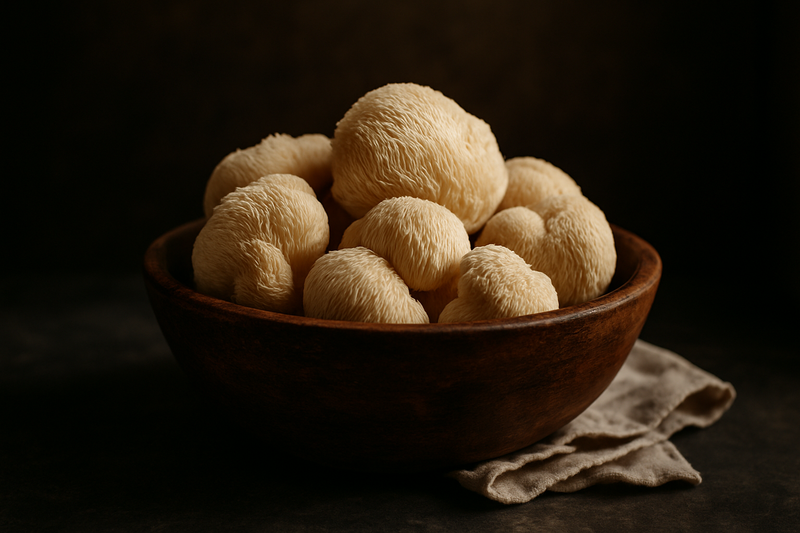
Lion's Mane Mushroom · Photograph
Discover lion's mane mushroom benefits and how to use it — from brain and gut health to immune support. Includes nutrition facts, cooking tips, safety notes, and what the human research actually shows.
Key Nutrients
% Daily Value based on 2,000 cal diet
Key active compounds
- Beta-glucans — Branched polysaccharides (complex sugar chains) found in all edible mushrooms. In lion's mane they contribute to immune modulation, gut health, and potential cholesterol support.
- Hericenones — Aromatic compounds unique to the lion's mane fruiting body. In experimental models they prompt the brain to produce nerve growth factor, which helps maintain and repair neurons (brain cells).
- Erinacines — Diterpenoid compounds (a type of natural chemical) found primarily in lion's mane mycelium. They also stimulate NGF and have shown anti-inflammatory and potential anti-tumor effects in preclinical studies.
- Phenolic compounds — Antioxidant molecules that help neutralize free radicals (unstable molecules that can damage cells).
- Sterols (ergosterol) — Fungal equivalents of cholesterol. Ergosterol is a precursor to vitamin D; when mushrooms are exposed to UV light, it converts to a usable form of the vitamin.
Prep and pairing ideas
Lion's mane is one of the most cook-friendly specialty mushrooms available. Here's how to get the most out of it:
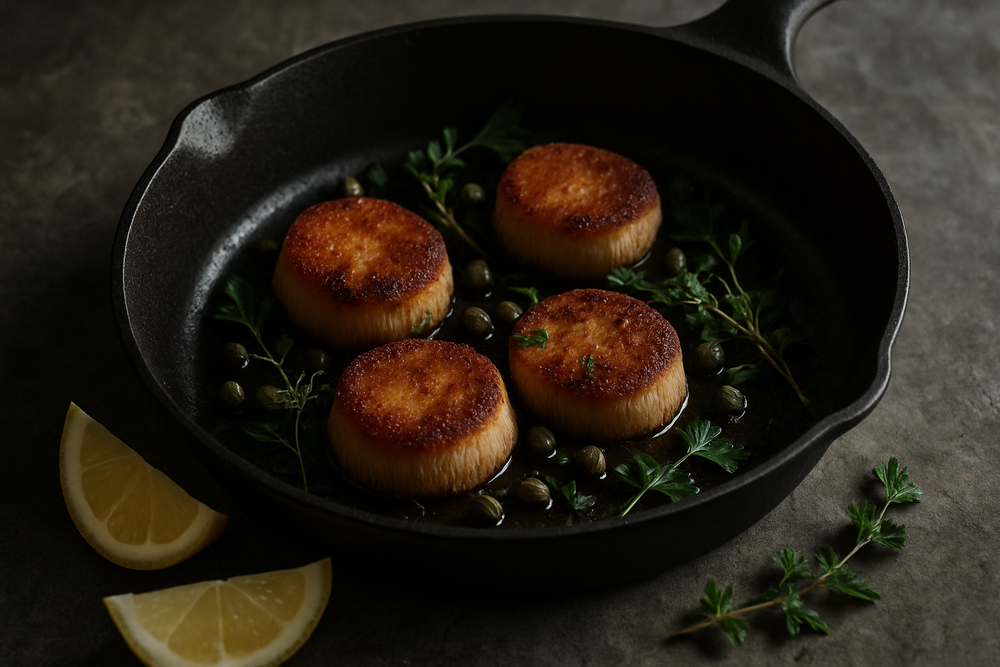
How to sear lion's mane mushroom like seafood:
- Cut the mushroom into 1–2 cm slabs (like a thick steak or scallop).
- Pat dry thoroughly — moisture is the enemy of a good sear.
- Heat a heavy pan (cast iron works best) over medium-high with a small amount of oil or vegan butter until shimmering.
- Press each slab flat with a spatula and sear undisturbed for 3–4 minutes per side until golden-brown. Season with salt, a squeeze of lemon, and fresh herbs.
- The interior stays tender and slightly stringy — remarkably close to crab cake or scallop in texture.
Buying guide — what to look for:
| Form | What to look for | Watch out for |
|---|---|---|
| Fresh | Bright white, firm, no yellowing or sliminess | Yellow or brown patches = old; discard if slimy |
| Dried slices/powder | Minimal ingredients, no fillers, airtight packaging | Added starch, grain substrate, or mystery "blends" |
| Capsules/tablets | States "fruiting body," lists standardization for hericenones or erinacines | "Mycelium on grain" only — lower in key bioactives |
Three practical pairings:
- Lion's mane + lemon + capers — The acidity cuts through the mushroom's richness and mimics a classic seafood preparation. Works beautifully as a plant-based "scallop" dish.
- Lion's mane + miso broth + ginger — Miso provides umami depth and probiotic support; ginger adds anti-inflammatory phenolics. A gut-friendly pairing with complementary whole-food benefits.
- Lion's mane + whole grain noodles + garlic — The fiber from whole grain noodles amplifies the prebiotic effect of lion's mane beta-glucans; garlic adds its own prebiotic compounds and flavor.
Bottom line
Lion's mane mushroom is one of the most nutritionally interesting and culinarily versatile ingredients in the functional food world. It provides fiber, B vitamins, copper, and a set of bioactive compounds — hericenones, erinacines, beta-glucans — that don't exist in this combination anywhere else on a dinner plate. Small but genuine human trials support a potential role in cognitive function and mood, while gut health, blood sugar, heart, and immune benefits are backed mainly by promising but early-stage research.
As a whole food, lion's mane is a low-risk, high-reward addition to a plant-based diet. As a supplement, quality and form matter enormously. Either way, it's not a treatment for any condition — it's a genuinely nourishing ingredient with a research profile worth watching.
How Lion's Mane Mushroom Compares
| Compared with | What's different |
|---|---|
| Lion's Mane Mushroom vs. Oyster Mushroom | Lion's mane has a stringy, seafood-like texture while oysters are silky and fan-shaped. |
| Lion's Mane Mushroom vs. Button Mushroom | Lion's mane contains unique nerve-growth compounds not found in standard white mushrooms. |
Health Benefits
Things to Know
Allergic reactions: Discontinue use immediately if you notice any skin rash, hives, difficulty breathing, or other signs of allergic reaction. Cross-reactive responses have been reported in people with known mushroom, mold, or seafood allergies.
Cook fresh mushroom thoroughly.: Raw lion's mane is not recommended; thorough cooking improves digestibility and safety.
Pregnancy and breastfeeding: Insufficient safety data exist for supplemental lion's mane in these groups. Eating cooked lion's mane as a normal food ingredient is likely fine, but high-dose supplementation should be avoided.
Autoimmune conditions: Lion's mane has immunomodulatory (immune-regulating) effects. People on immunosuppressive therapies (such as corticosteroids or biologics) should consult their doctor before supplementing.
Diabetes medications: Possible additive blood sugar–lowering effects with insulin, sulfonylureas, metformin, or GLP-1 agonists. Monitor blood glucose and inform your care team.
Blood thinners: Theoretical effects on platelet function mean caution is warranted with warfarin, direct oral anticoagulants (DOACs), aspirin, or clopidogrel.
Blood pressure medications: Theoretical additive effects; inform your doctor if you're on ACE inhibitors, ARBs, beta-blockers, or diuretics.
Children and adolescents: Most trials have focused on adults; pediatric safety data are lacking for supplemental use.
Long-term supplementation: Safety data beyond 16 weeks are limited. Periodic breaks from supplementation are a reasonable precaution.
Prep Ideas
- — Cut the mushroom into 1–2 cm slabs (like a thick steak or scallop).
- — Pat dry thoroughly — moisture is the enemy of a good sear.
- — Heat a heavy pan (cast iron works best) over medium-high with a small amount of oil or vegan butter until shimmering.
- — Press each slab flat with a spatula and sear undisturbed for 3–4 minutes per side until golden-brown. Season with salt, a squeeze of lemon, and fresh herbs.
- — The interior stays tender and slightly stringy — remarkably close to crab cake or scallop in texture.
- — **Lion's mane + lemon + capers** — The acidity cuts through the mushroom's richness and mimics a classic seafood preparation. Works beautifully as a plant-based "scallop" dish.
- — **Lion's mane + miso broth + ginger** — Miso provides umami depth and probiotic support; ginger adds anti-inflammatory phenolics. A gut-friendly pairing with complementary whole-food benefits.
- — **Lion's mane + whole grain noodles + garlic** — The fiber from whole grain noodles amplifies the prebiotic effect of lion's mane beta-glucans; garlic adds its own prebiotic compounds and flavor.
Glossary
Shop This Ingredient
Stock your pantry with quality lion's mane mushroom.
Buy on AmazonAs an Amazon Associate, Plantopedia earns from qualifying purchases. This costs you nothing extra and helps us keep the encyclopedia free.
Frequently Asked Questions
This is where lion's mane earns its most credible headlines — though the evidence is still early. Cognitive function and memory Several small randomized controlled trials (studies where participants were randomly assigned to lion's mane or a placebo, neither knowing which they received) have found modest improvements in cognitive test scores over 8–16 weeks in older adults with mild cognitive impairment (early-stage memory and thinking difficulties). One well-cited Japanese trial found significant score differences on a standard cognitive assessment between the lion's mane group and the placebo group after 16 weeks — with scores declining again after supplementation stopped. The keyword here is modest. These are small trials, often with fewer than 50 participants, and they used standardized extract capsules rather than cooked fresh mushroom. We don't yet have large, long-term trials confirming these findings, and lion's mane cannot be described as a treatment for dementia or any other neurological condition. Mood: anxiety and depression A small number of human studies suggest lion's mane supplementation may reduce self-reported symptoms of anxiety and depression compared to placebo. Researchers speculate this could relate to NGF stimulation or the mushroom's anti-inflammatory properties. Sample sizes are very limited, formulations vary, and these effects have not been replicated consistently. Promising, but far from settled. Digestive health and microbiome Lion's mane contains dietary fiber and prebiotic polysaccharides (compounds that feed beneficial gut bacteria). Most direct evidence for gut benefits — including protection of the stomach lining, inhibition of Helicobacter pylori (the bacteria linked to stomach ulcers), and positive shifts in gut microbiota — comes from animal and lab studies. A handful of human reports note improved digestive comfort, but robust clinical trials are lacking. As a whole food, lion's mane contributes to gut health in the same way other fiber-rich vegetables do. Blood sugar and metabolism Animal models and cellular experiments suggest lion's mane may improve glucose tolerance and insulin sensitivity (how well your body responds to the hormone that manages blood sugar). Direct human clinical data are sparse. Any effect likely reflects the combined action of fiber, beta-glucans, antioxidant compounds, and possible anti-inflammatory pathways — rather than a single magic ingredient. People managing diabetes should not rely on lion's mane as a substitute for prescribed treatment. Heart and circulation Non-human research suggests lion's mane extracts may help maintain healthier cholesterol levels and protect blood vessel walls, but controlled human cardiovascular trials are very limited. As a low-fat, fiber-rich whole food, it may contribute indirectly to heart health when it replaces more processed options in the diet. Strong lion's mane–specific evidence for cardiovascular outcomes doesn't yet exist. Inflammation and antioxidant activity Lion's mane contains phenolic compounds and other antioxidants. Early human studies report changes in some inflammatory markers with supplementation, but the majority of evidence comes from cell culture and animal experiments. As part of an overall anti-inflammatory dietary pattern, lion's mane is a useful contributor — but isolated claims about preventing specific chronic diseases should be interpreted cautiously.
This is one of the most common questions, and the honest answer is: it depends what you're looking for. Fresh or cooked whole mushroom delivers fiber, micronutrients, beta-glucans, phenolics, and a spectrum of bioactives as part of a real meal. It's the most natural, lowest-risk form and fits the "food as medicine" philosophy perfectly. A 100 g serving (about the size of a generous side dish) is a realistic and satisfying portion. Dried mushroom slices, powder, or tea concentrate the polysaccharides and nutrients, though potency varies depending on how the mushroom was dried and processed. A good middle ground between food and supplement. Standardized extract capsules or tablets are what most human clinical trials have actually used — typically 1–3 g per day of dried fruiting body powder or mycelial extract, sometimes standardized for hericenones or erinacines content. These offer the most concentrated dose of specific bioactives but vary widely in quality. Look for products that specify whether they use the fruiting body or mycelium and whether they are standardized for key compounds. Mycelial biomass powders (grown on grain in a lab) tend to differ in bioactive composition from fruiting body products and may contain significant amounts of grain substrate. This is a meaningful distinction if you're buying supplements. The bottom line on form: Eating fresh lion's mane as a whole food is a solid, evidence-consistent choice for general wellness. If you're specifically interested in cognitive support at doses used in trials, a standardized fruiting body extract may offer higher concentrations of the relevant compounds — but this is a supplement decision to make with a healthcare provider, not a food decision.
For culinary use, 50–100 g of fresh mushroom per serving is a typical and practical portion — roughly half to one full mushroom cluster, or about a heaping cup chopped. For supplementation (based on human clinical trials): Cognitive/mood studies have typically used 1–3 g per day of dried fruiting body powder or mycelial extract, taken for 8–16 weeks. Some trials have used higher doses (up to 5 g/day) without significant adverse effects in short periods. Start low — begin with a smaller amount and assess tolerance before increasing. There is no universally established "optimal" dose, and doses used in studies varied widely in form and standardization. If you're considering lion's mane supplements for a specific health goal — especially cognitive support — discuss dosing with a healthcare provider who can account for your full health picture and any medications you take.
Quick Answers
Common questions, answered in a line.
You can sear lion's mane mushroom by cutting it into 1–2 cm slabs, patting them dry, and cooking them in a heavy pan over medium-high heat for 3–4 minutes per side. Pressing the slabs flat helps achieve a golden-brown crust similar to a scallop or crab cake.
Lion's mane contains unique compounds called hericenones and erinacines that stimulate nerve growth factor (NGF), which helps the brain maintain and repair neurons. These bioactive molecules, found in the fruiting body and mycelium, are primary drivers of its cognitive benefits.
When buying fresh lion's mane, look for specimens that are bright white and firm to the touch. You should avoid mushrooms that have yellow or brown patches, or any signs of sliminess, as these are indicators that the mushroom is old and should be discarded.
Lion's mane mushroom may interact with diabetes medications, blood thinners, blood pressure medications, and immunosuppressive therapies. Because it can affect blood sugar and platelet function, you should consult a doctor if you are taking drugs like metformin, warfarin, or insulin.
Lion's mane is often described as having a tender, slightly stringy texture that is remarkably similar to seafood like crab or scallops. Because of this, it is frequently paired with lemon, capers, or miso to enhance its natural richness and umami depth.
It is not recommended to eat lion's mane mushroom raw; it should be cooked thoroughly to improve digestibility and ensure safety. Thorough cooking helps break down the mushroom's structure, making its nutrients and bioactive compounds more accessible.
Lion's mane supports gut health through beta-glucans, which are branched polysaccharides that provide prebiotic support for the microbiome. Pairing the mushroom with ingredients like garlic or whole grain noodles can further amplify these digestive benefits.
For Readers in the USA
Local context — sourcing, seasonality, and regional notes.
You can find fresh lion's mane at specialty grocers like Whole Foods Market and Sprouts, or at local farmers markets where mushroom foragers and indoor cultivators sell their harvest. Due to their short shelf life, they are less common in standard supermarkets, though many now carry dried or powdered versions in the supplement aisle.
In the United States, lion's mane grows naturally in the wild across the Northeast and Midwest during the late summer and fall, typically appearing on decaying hardwood trees like beech or oak. However, because most culinary lion's mane is grown in climate-controlled indoor farms, it is available year-round in most U.S. states.
Look for the USDA Organic seal to ensure your lion's mane was grown without synthetic pesticides, and check if the label specifies "fruiting body" versus "mycelium on grain." While the FDA regulates mushrooms as food, lion's mane supplements are not pre-approved for efficacy, so choosing brands that utilize third-party lab testing is recommended.
Lion's mane has become a popular "seafood" substitute in the U.S. plant-based community, frequently used to make "lion's mane crab cakes" or "mushroom scallops" due to its stringy, meaty texture. It is also a staple in the American functional coffee movement, where it is often blended into lattes and boosters for its purported cognitive benefits.
AI Clinical Review
- Clearly explains why lion’s mane is distinctive (hericenones/erinacines and potential NGF activity) while grounding this in a food-first approach.
- Accurately characterizes the human evidence for cognition and mood as small, modest, and not a treatment for dementia or other conditions.
- Provides practical culinary guidance and a realistic serving range, plus a useful nutrient snapshot relevant to plant-forward eating.
- Highlights meaningful product differences (fruiting body vs. mycelium on grain; standardization), which is key when comparing supplements.
- Most data for gut, immune, metabolic, and cardiovascular effects come from lab or animal studies; well-powered human trials are limited.
- Extract doses used in studies don’t translate cleanly to fresh mushroom portions, and bioavailability/standardization of actives varies by product.
- Long-term safety beyond about 16 weeks—and safety in pregnancy, breastfeeding, and children—has not been established.
- Mood findings are inconsistent across small trials and need replication with standardized preparations.
- Typical culinary use: about 50–100 g cooked per serving. Supplement studies often use ~1–3 g/day of dried powder or extract for 8–16 weeks; discuss targeted use with a clinician.
- Potential interactions: diabetes medications (additive glucose-lowering), anticoagulants/antiplatelets, blood-pressure drugs, and immunosuppressants—coordinate with your care team.
- Allergic reactions can occur; stop if rash or breathing symptoms develop. Cook thoroughly; raw intake isn’t advised.
- If choosing supplements, look for products that identify fruiting body vs. mycelium and provide standardization markers; consider periodic pauses given limited long-term data.
Cook thoroughly; discontinue if any allergic skin reaction occurs.
References
- USDA FoodData Central — nutritional data for culinary mushrooms (fdc.nal.usda.gov)
- MyPlate Vegetables Food Group — mushrooms as part of healthy eating patterns (myplate.gov)
- NIH PMC 2025 review — nutritional and health-promoting properties of Hericium erinaceus (pmc.ncbi.nlm.nih.gov)
- NIH PMC 2025 — benefits, side effects, and uses of Hericium erinaceus (pmc.ncbi.nlm.nih.gov)
- NIH PMC 2025 — functional and nutritional properties of lion's mane in oat-based gels (human trial) (pmc.ncbi.nlm.nih.gov)
- WebMD supplement monograph — lion's mane mushroom uses, side effects, and interactions (webmd.com)
- Cleveland Clinic — 5 lion's mane mushroom benefits (health.clevelandclinic.org)
- Medical News Today — lion's mane mushroom uses, benefits, and side effects (medicalnewstoday.com)
- BBC Good Food — 9 potential benefits of lion's mane mushrooms (bbcgoodfood.com)
- AUT Open Repository — lion's mane: nutritional profile, bioactive compounds, and functional applications (academic review) (openrepository.aut.ac.nz)
Know Your Numbers
Eating healthy is a start. Now get to know your biomarkers.
Food changes bloodwork — inflammation, lipids, blood sugar and nutrient status all respond to what you eat. 59 markers from $59.
- Results in 7–10 days at 2,000+ Quest sites
- Licensed provider reviews every result
- One flat price, no membership, HSA/FSA eligible
Educational information only, not medical advice. Panels are ordered and reviewed through our licensed partner; Plantopedia may earn a commission.