Mahewu (Fermented Maize Drink) — health benefits and uses
A traditional thirst-quencher and energy drink for laborers across Southern Africa.
The Short Answer
Mahewu is a traditional Southern African fermented maize drink that provides 12g of protein and 7g of fiber per cup. It is rich in lactic acid bacteria, B vitamins, and potassium, serving as an energizing, probiotic-rich beverage for gut health.

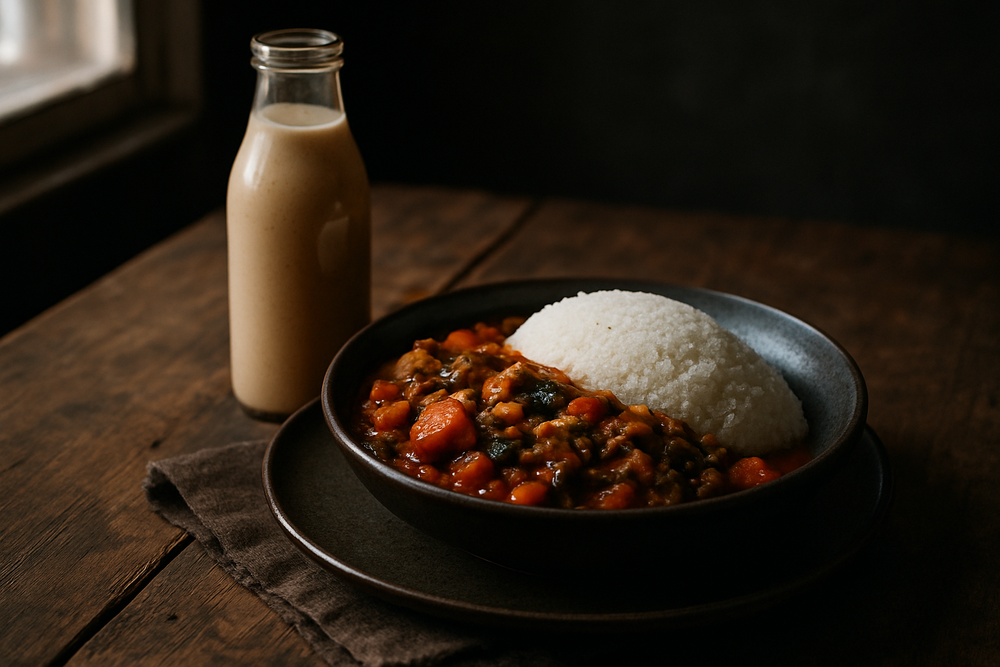
Mahewu (Fermented Maize Drink) · Photograph
Discover mahewu (mageu) health benefits and nutrition facts. Learn how this traditional Southern African fermented maize drink supports gut health, energy, and B vitamin intake — plus safety tips, sugar warnings, and how homemade compares to commercial mageu.
Key Nutrients
% Daily Value based on 2,000 cal diet
Key active compounds in mahewu
- Lactic acid bacteria (LAB) — The microbes that drive fermentation. Strains isolated from mahewu show good in-vitro probiotic properties, including resistance to stomach acid and bile, and the ability to adhere to intestinal surfaces. Whether these properties translate to measurable gut changes in humans remains to be confirmed.
- Dietary fiber — Both soluble and insoluble fiber from the maize grain, which feeds beneficial gut bacteria and supports bowel regularity.
- Phenolic compounds — Plant-derived antioxidant molecules that may help reduce oxidative stress (cellular damage caused by unstable molecules called free radicals).
- Squalene — A natural plant compound with antioxidant and cell-membrane-stabilising properties, identified in mahewu metabolomics (chemical fingerprinting) studies.
- γ-Sitosterol — A plant sterol (a cholesterol-like molecule from plants) that may compete with dietary cholesterol for absorption in the gut.
- α- and γ-Tocopherols (Vitamin E forms) — Lipid-soluble antioxidants that protect cell membranes; detected in mahewu's chemical profile.
- B vitamins — Niacin (B3), folate (B9), riboflavin (B2), thiamine (B1), pantothenic acid (B5), B6, and B12 are all supported by fermentation and contribute to energy and nervous system health.
- β-Carotene (provitamin A) — Present in mahewu made from biofortified (nutritionally enhanced through breeding) maize varieties; retained after fermentation and convertible to vitamin A in the body.
Prep and pairing ideas
Mahewu is versatile and can be consumed on its own or built into a broader meal pattern.
Plain as a breakfast drink Pour 250–300 ml over ice on a warm morning. Homemade mahewu at this thickness is substantial enough to tide you over for a few hours. Add a pinch of ground cinnamon or a squeeze of lemon for brightness without adding sugar.
Blended with banana and peanut butter A small banana and a tablespoon of natural peanut butter blended into 200 ml of unsweetened mahewu creates a filling, protein-and-potassium-rich smoothie. The banana's natural sweetness means no added sugar is needed. This pairing is especially useful for active individuals or children who need more calories.
Alongside a vegetable stew or beans In traditional Southern African meals, mahewu often accompanies a main dish of stewed vegetables or legumes (such as cowpeas or sugar beans). The fermented drink's acidity and B vitamins complement the iron from plant-based legumes — and because mahewu's fermentation has reduced phytates, it may slightly improve iron absorption from the rest of the meal.
Bottom line
Mahewu is one of Southern Africa's most practical and culturally rooted fermented foods. It provides whole-grain carbohydrates, dietary fiber, lactic acid bacteria with probiotic potential, B vitamins, and key minerals — all in a form that is filling, affordable, and easy to consume. The fermentation process meaningfully improves mineral bioavailability compared with plain maize porridge, and emerging compositional research reveals a richer array of antioxidant phytochemicals than most people would expect from a simple grain drink.
The honest caveat: the human clinical trial evidence specific to mahewu is thin. Most health inferences are drawn from its composition and from the broader literature on fermented foods, whole grains, and dietary fiber. That does not mean mahewu is not beneficial — it means we should celebrate what it offers without overpromising.
The single most important practical point: if you are buying commercial mageu or mahewu, read the label. Many commercial products carry significant added sugar that undermines the whole-food benefits. Homemade, minimally sweetened, or biofortified versions are almost always the better nutritional choice.
If you want to explore more fermented and functional foods in the same spirit as mahewu, see the related guides below.
Looking to put mahewu into a broader gut-health or energy-support eating plan? Explore how it fits into your health goals at Plantopedia Goals.
How Mahewu (Fermented Maize Drink) Compares
| Compared with | What's different |
|---|---|
| Mahewu (Fermented Maize Drink) vs. Kefir | Mahewu is a thicker, maize-based grain drink, while kefir is a thin, dairy-based probiotic milk. |
| Mahewu (Fermented Maize Drink) vs. Kombucha | Mahewu is fermented from corn porridge; kombucha is a fermented tea with a vinegar-like profile. |
Health Benefits
Things to Know
People with diabetes or insulin resistance: should choose homemade or unsweetened commercial mahewu. Commercial versions can carry significant added sugar, raising postprandial (after-meal) blood glucose. Always account for mahewu's carbohydrate content in meal planning and medication timing.
Maize or corn allergy: Mahewu is based on maize meal and is not suitable for those with confirmed maize allergy or intolerance.
Alcohol-sensitive individuals: Fermented maize drinks can contain trace amounts of ethanol (alcohol) below 1%, even when labelled non-alcoholic. This is unlikely to be clinically significant for most people but is worth noting for those with strict alcohol avoidance requirements.
Immunocompromised individuals, pregnant women, and young infants: Prioritise commercially prepared, pasteurised mahewu over homemade versions, since improperly fermented or stored homemade batches carry a small risk of microbial contamination.
Infants as a primary food: Traditional mahewu should not replace breast milk or a nutritionally complete weaning diet in infants, as its protein quality and micronutrient density (particularly calcium and vitamin A in unfortified versions) are insufficient to meet infant growth needs on their own.
Potassium-sparing diuretics, ACE inhibitors, ARBs: Mahewu's potassium content is modest per serving but relevant for anyone on medications that raise blood potassium; very high habitual intake alongside these drugs warrants a conversation with your doctor.
Diabetes medications and insulin: The starch and sugar load of sweetened commercial mahewu may affect dosing timing. Discuss with your prescriber or dietitian.
Storage: Once opened or prepared, mahewu is perishable. Homemade versions should be refrigerated and consumed within two to three days; commercial products should follow the label guidance once opened.
Shop This Ingredient
Stock your pantry with quality mahewu (fermented maize drink).
Buy on AmazonAs an Amazon Associate, Plantopedia earns from qualifying purchases. This costs you nothing extra and helps us keep the encyclopedia free.
Frequently Asked Questions
Heart and circulation There are no mahewu-specific randomised controlled trials (studies that assign people to different groups to test a treatment) measuring blood pressure, cholesterol, or other cardiovascular outcomes. The potential heart-related benefits of mahewu are inferred from its composition: potassium is the most abundant mineral — relevant because higher potassium intake is associated with healthier blood pressure in the broader nutrition literature. The plant sterol γ-sitosterol found in mahewu may contribute modestly to lowering LDL cholesterol (low-density lipoprotein, sometimes called "bad" cholesterol) by competing with dietary cholesterol for absorption. The beverage is also naturally low in saturated fat. However, commercial mahewu often contains added sugar, which can raise triglycerides (a type of fat in the blood) and caloric load if consumed in large quantities — a potential counterweight to any cardiovascular benefit. Digestive health and gut microbiome The gut microbiome refers to the trillions of microbes living in your digestive tract that influence digestion, immunity, and even mood. Mahewu contains both dietary fiber — which acts as a prebiotic (food for beneficial gut bacteria) — and lactic acid bacteria from fermentation that may act as probiotics (live microbes that confer a health benefit). Laboratory studies show that LAB isolated from mahewu are acid-tolerant and bile-tolerant, two key qualities for surviving the journey through the stomach into the intestines. However, these findings are in-vitro (in a lab dish, not inside a human body), and controlled human trials directly measuring gut microbiota changes or bowel symptoms after drinking mahewu have not yet been published. Soluble fiber in mahewu may also support stool bulk and regularity, based on general cereal-fiber research, though this has not been tested in a mahewu-specific trial. Blood sugar and metabolism Mahewu provides starch-based carbohydrates, and its dietary fiber may help slow glucose absorption — a mechanism associated with better blood sugar control in the broader fiber and whole-grain literature. Fermentation partially breaks down phytates, which improves mineral bioaccessibility and may support metabolic enzymes. That said, no controlled human studies have directly measured blood glucose or insulin responses to mahewu. Importantly, many commercial mageu products contain significant added sugar, which can meaningfully raise the glycaemic load (how quickly and how much a food raises blood sugar). People with diabetes, prediabetes, or insulin resistance should treat sweetened commercial mahewu with caution and prioritise homemade or minimally sweetened versions. Inflammation and recovery Metabolomics studies have identified phenolic compounds, squalene, plant sterols, and vitamin E forms in mahewu — all of which have recognised antioxidant or anti-inflammatory properties in other research contexts. Anti-inflammatory effects mean reducing the body's inflammatory response, which when chronically elevated is linked to conditions like heart disease, type 2 diabetes, and certain cancers. There are currently no human trials measuring inflammatory markers such as C-reactive protein (CRP, a blood marker of inflammation) in response to mahewu consumption, so any anti-inflammatory benefit remains theoretical at this stage. Energy and B vitamin support This is arguably where mahewu's evidence is most practical. B vitamins — particularly niacin, riboflavin, folate, and thiamine — are involved in converting food into usable energy at a cellular level. Fermentation of cereal-based foods is known to increase the bioavailability (the amount your body can actually use) of several B vitamins. Communities across Southern Africa have historically used mahewu as a quick, affordable energy source, and its carbohydrate and B-vitamin content support that traditional role. Research on mahewu fortified with Moringa oleifera (a nutrient-dense tree native to South Asia and Africa) shows that adding Moringa leaf powder to mahewu substantially boosts protein, iron, calcium, and fiber — making an already functional drink considerably more nutrient-dense.
Homemade traditional mahewu Made by cooking maize meal to a thick porridge, cooling it, and then inoculating it with malted cereal (such as dried maize malt or millet) or a portion of a previous batch. Fermentation takes one to three days at room temperature, driven by naturally occurring LAB and wild yeasts. This version retains the most intact fiber and live microbes, contains no added sugar, and most closely mirrors what has been eaten traditionally. The downside is variability in microbial profile and the hygiene demands of home fermentation. Commercial mahewu / mageu (ready-to-drink) Standardised, pasteurised (heat-treated to kill pathogens), and homogenised (blended to a uniform texture). Pasteurisation extends shelf life but destroys most live bacteria, meaning commercial mageu may not offer the same probiotic potential as fresh homemade versions. Many commercial products are flavoured (vanilla, strawberry, banana) and sweetened with sugar, sometimes significantly. Always check the ingredients list and nutrition panel — the shorter and plainer, the better. Fortified and biofortified variants Mahewu made from provitamin A-biofortified maize retains meaningful β-carotene after fermentation, offering a practical way to improve vitamin A intake in populations at risk of deficiency. Sorghum-based mahewu enriched with Moringa leaf powder has been shown in compositional studies to provide substantially more protein, calcium, iron, and fiber than standard mahewu, while remaining acceptable to consumers in taste tests. These variants represent some of the most promising mahewu innovations from a nutrition perspective.
People in communities where dietary diversity is limited Mahewu provides accessible carbohydrates, fiber, protein, and key minerals in a single affordable beverage. Fortified variants (provitamin A maize, Moringa-enriched) can address specific nutrient gaps like vitamin A deficiency and iron deficiency anaemia. Its drinkable format makes it suitable for young children, elderly people, and anyone with poor appetite or difficulty eating solid food. Active adults looking for a whole-food energy drink alternative Provides slow-release carbohydrate energy alongside B vitamins that support cellular energy metabolism. Naturally low in fat and, in its traditional form, free from artificial additives. The fermented nature means it works on gut health while fuelling activity — something most commercial sports drinks do not offer. Best chosen in homemade or minimally sweetened form to avoid excess sugar.
There is no established clinical dosage for mahewu — it is a food beverage, not a supplement. Traditional consumption patterns in Southern African communities suggest that 200–500 ml per serving, once or twice daily, is typical, often at breakfast or as a midday snack. A practical starting guide: Start with 200 ml (roughly one small cup) per day if mahewu is new to you, especially if your gut is not used to fermented foods. Some people experience temporary bloating or increased gas when they first increase their fermented food intake. Build up to 300–500 ml per day if tolerated well, which provides a meaningful contribution of fiber, B vitamins, and minerals without overwhelming your daily carbohydrate budget. Sweetened commercial versions: If this is your primary option, treat a single 250 ml serving as your daily maximum and account for its sugar content within your overall diet. Fortified variants: If using provitamin A biofortified or Moringa-enriched mahewu as part of a nutrition intervention (for example, for a child at risk of vitamin A deficiency), follow the guidance of a health professional who can account for total nutrient intake. As with any fermented food, consistency matters more than quantity. A moderate daily amount over time is likely more beneficial than large occasional servings.
Quick Answers
Common questions, answered in a line.
Mahewu contains lactic acid bacteria (LAB) with probiotic properties that can resist stomach acid and adhere to the intestinal surface. These microbes, along with dietary fiber from the maize grain, support gut health and help maintain regular bowel movements.
Mahewu provides a rich array of B vitamins, including niacin (B3), folate (B9), riboflavin (B2), thiamine (B1), and B6, which are enhanced during the fermentation process. These vitamins are essential for maintaining energy levels and supporting the health of the nervous system.
Mahewu may help improve iron absorption because the fermentation process reduces phytates, which are compounds that typically block mineral uptake. This makes it an ideal drink to pair with iron-rich plant foods like beans or cowpeas.
Diabetics should choose homemade or unsweetened commercial mahewu because many store-bought versions contain high amounts of added sugar. Since it is a carbohydrate-rich drink, it is important to account for its starch content in meal planning and medication timing.
Mahewu contains antioxidant compounds such as phenolic molecules, squalene, and Vitamin E (tocopherols) that protect cell membranes. These active compounds help the body reduce oxidative stress caused by unstable free radicals.
Yes, mahewu made from biofortified maize varieties contains β-carotene, a provitamin A that is retained even after the fermentation process. Once consumed, the body can convert this β-carotene into active vitamin A.
While mahewu is fermented, it is considered a non-alcoholic drink, though it can contain trace amounts of ethanol below 1%. This small amount is usually not clinically significant but should be noted by those who strictly avoid alcohol.
For Readers in the USA
Local context — sourcing, seasonality, and regional notes.
You can typically find commercial mageu in the international or African aisle of specialty grocers in major U.S. cities, or through online retailers specializing in Southern African goods. Many American enthusiasts also purchase white or yellow cornmeal from local supermarkets to prepare the drink at home from scratch.
While not a traditional American staple, mahewu fits into the U.S. diet as a plant-based, gluten-free fermented beverage similar to drinkable yogurt or kefir. It is increasingly popular among American consumers seeking dairy-free probiotic alternatives and those following whole-grain, plant-based eating patterns.
When buying ingredients or commercial versions in the U.S., look for the USDA Organic seal to ensure the maize was grown without synthetic pesticides or GMOs. For commercial drinks, checking the FDA-mandated Nutrition Facts label is essential to identify products with high added sugar content.
AI Clinical Review
- Clearly explains mahewu as a traditional fermented maize drink and how lactic acid bacteria (LAB) and fermentation can lower phytates, which may improve iron and zinc absorption.
- Appropriately distinguishes homemade (live cultures, no added sugar) from commercial products (pasteurised, often sweetened), a key point for gut health and blood sugar.
- Frames health claims cautiously: likely benefits (gut support, energy/B‑vitamin contribution) are based on composition and broader fermented-grain research rather than direct clinical trials.
- Highlights promising fortification approaches (provitamin A maize, Moringa) that can meaningfully raise micronutrients where deficiencies are common.
- Human trials specific to mahewu are limited; effects on microbiome composition, glycaemia, lipids, blood pressure, or inflammatory markers have not been tested in randomized studies.
- Probiotic claims rely on in‑vitro traits of LAB (acid/bile tolerance, adhesion); these do not always translate into clinical outcomes in people.
- Antioxidant/anti‑inflammatory potential inferred from metabolomics and known compounds (phenolics, tocopherols, plant sterols) lacks confirmation in human biomarker studies (e.g., CRP).
- Nutrient values can vary widely by recipe, fermentation time, and fortification; treat single‑serving macronutrient estimates as ranges rather than fixed numbers.
- Form matters: pasteurised commercial mageu is safer microbiologically but has minimal live cultures; many brands add sugar. If blood sugar is a concern, choose unsweetened options and count the carbohydrates.
- Safety: those who are pregnant, immunocompromised, or preparing food for very young children should prioritise pasteurised products or meticulous hygiene for homemade batches; note trace ethanol (<1%) may be present.
- Allergies and medications: avoid with known maize allergy; people on potassium‑raising drugs (ACE inhibitors, ARBs, potassium‑sparing diuretics) should discuss regular intake with a clinician.
- Practical use: as a food (not a supplement), starting around 200 ml/day and titrating up to 300–500 ml if tolerated is reasonable; expect transient gas/bloating when introducing more fermented foods. It should not replace breast milk or a complete weaning diet in infants.
Often commercially sweetened; choose lightly sweetened versions.
References
- Nutritional and phytochemical composition of mahewu — MDPI Fermentation journal (2023) (mdpi.com)
- Production, nutritional, and microbiological evaluation of mahewu (scispace.com)
- Nutritional properties of provitamin A-biofortified maize amahewu — FAO AGRIS (agris.fao.org)
- In vitro probiotic properties of lactic acid bacteria isolated from mahewu — University of Zimbabwe (ir.uz.ac.zw)
- Lactic acid bacteria in cereal fermentation — PMC review (2019) (pmc.ncbi.nlm.nih.gov)
- Nutritional composition and consumer acceptability of Moringa oleifera-supplemented mahewu — SMU research portal (purerims.smu.ac.za)
- Sorghum-based mahewu enriched with Moringa leaf powder — International Journal of Food Science and Technology (academic.oup.com)
- Comparative metabolomics investigation of white maize mahewu — International Journal of Food Science and Technology (2025) (academic.oup.com)
- Mageu (mahewu) overview, alcohol content, and composition — Wikipedia (en.wikipedia.org)
- USDA FoodData Central — Maize/corn grain nutritional reference (fdc.nal.usda.gov)
Know Your Numbers
Eating healthy is a start. Now get to know your biomarkers.
Food changes bloodwork — inflammation, lipids, blood sugar and nutrient status all respond to what you eat. 59 markers from $59.
- Results in 7–10 days at 2,000+ Quest sites
- Licensed provider reviews every result
- One flat price, no membership, HSA/FSA eligible
Educational information only, not medical advice. Panels are ordered and reviewed through our licensed partner; Plantopedia may earn a commission.