Mortgage Lifter Beans — health benefits and uses
An heirloom named for the productivity that once helped farmers pay off debts.
The Short Answer
Mortgage Lifter beans are creamy heirloom legumes providing 8 grams of protein and 7 grams of fiber per cooked cup. They are rich in resistant starch and folate, supporting gut health and sustained energy levels when properly cooked.
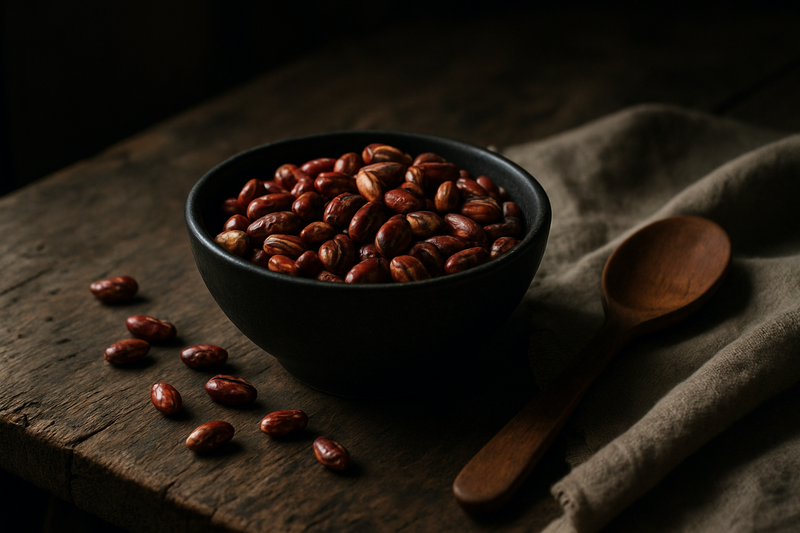
Mortgage Lifter Beans · Photograph
Discover Mortgage Lifter beans nutrition and health benefits — from heart health and blood sugar support to digestion and plant protein. Learn how to cook this creamy heirloom bean safely, plus how much to eat and who benefits most.
Key Nutrients
% Daily Value based on 2,000 cal diet
Key active compounds in Mortgage Lifter beans
These compounds are why beans do more than just fill you up.
- Resistant starch — A type of starch that skips digestion in your small intestine and gets fermented by gut bacteria instead. Acts as a prebiotic (food for beneficial gut microbes) and supports the production of short-chain fatty acids, which help maintain the gut lining.
- Soluble and insoluble fiber — Soluble fiber dissolves in water and forms a gel that slows glucose and cholesterol absorption; insoluble fiber adds bulk and keeps digestion moving.
- Oligosaccharides (raffinose, stachyose) — Short-chain carbohydrates that are not digested in the small intestine. They feed beneficial gut bacteria but can also cause gas in some people, especially if you increase intake too quickly.
- Phenolic acids (e.g., ferulic acid) — Antioxidant compounds (substances that protect cells from oxidative damage) found in the bean coat and inner flesh. Pale beans like Mortgage Lifter have somewhat lower total polyphenol content than deeply pigmented varieties, but they still contribute.
- Flavonoids — Another class of antioxidant plant compounds linked to improved blood vessel function when consumed regularly through legumes.
- Lectins — Naturally occurring proteins that bind to carbohydrates. At high levels (as in raw beans), they can cause acute poisoning. Proper cooking completely inactivates them. See the cooking section below.
- Phytates (phytic acid) — Phosphorus-containing compounds that can slightly reduce absorption of minerals like iron and zinc. Soaking and cooking reduce phytate levels; their net effect in a mixed diet is generally modest.
- Saponins — Soap-like plant compounds that may contribute to cholesterol-lowering effects of regular legume consumption; human data are still developing.
Prep and pairing ideas
Brothy bean soup with greens and garlic Mortgage Lifter beans shine in a simple broth — olive oil, garlic, rosemary, and a generous pour of vegetable stock. Add leafy greens like kale or chard toward the end. The vitamin C in the greens boosts iron absorption from the beans, and the fat from olive oil improves absorption of fat-soluble antioxidants.
Bean and grain bowl Cooked Mortgage Lifter beans over farro or barley, with roasted vegetables and a lemon-tahini dressing. Complementary amino acid profiles (the building blocks of protein) between beans and grains means you get a fuller set of essential amino acids across the meal, though you don't need to combine them at the same sitting.
Creamy white bean spread Blend fully cooked Mortgage Lifter beans with lemon juice, garlic, and a little olive oil into a smooth spread. Use as a sandwich base, a dip for raw vegetables, or a sauce thickener. This format is especially useful for people who find whole beans harder to digest — blending doesn't remove fiber but may be gentler on sensitive guts.
Practical tip for gas reduction: Start with ¼ cup cooked beans per meal, a few days a week. Gradually increase over 2–4 weeks. Thorough cooking (until very soft), rinsing canned beans, and using fresh cooking water (not soaking water) all help reduce oligosaccharide content.
Bottom line
Mortgage Lifter beans are a big, creamy, mild-flavored heirloom legume with a genuinely impressive nutritional profile. They deliver protein, fiber, folate, and key minerals in a package with almost no fat and zero cholesterol. The health evidence behind regular bean consumption — for heart health, blood sugar control, gut microbiome support, and weight management — is among the most consistent in nutrition research, and Mortgage Lifter beans share this evidence base fully as members of the common bean family.
They're not a cure for anything. But as a practical, whole-food ingredient that fits easily into soups, stews, grain bowls, and spreads, they offer a lot of nutritional value per meal and per dollar. Cook them fully, start slowly if your gut is sensitive, and enjoy them as a regular anchor of a plant-forward plate.
Looking to build more legume-forward meals into your routine? Explore Plantopedia's plant-based health goals section for practical guidance.
How Mortgage Lifter Beans Compares
| Compared with | What's different |
|---|---|
| Mortgage Lifter Beans vs. Navy beans | Mortgage Lifters are larger and creamier, whereas Navy beans are small and hold their shape better. |
| Mortgage Lifter Beans vs. Cannellini beans | Cannellini have a nuttier flavor and firmer skin compared to the thin-skinned, buttery Mortgage Lifter. |
| Mortgage Lifter Beans vs. Great Northern beans | Mortgage Lifters are heftier heirlooms; Great Northerns are medium-sized and slightly more starchy. |
Health Benefits
Things to Know
Never eat raw or undercooked beans.: Raw common beans contain lectins (particularly phytohaemagglutinin) at levels that cause nausea, vomiting, and diarrhea within hours. Full boiling inactivates them completely.
Kidney disease / potassium restriction: Beans contribute meaningful potassium (about 320 mg per half-cup). If you're on a potassium-restricted diet due to chronic kidney disease, discuss portion limits with your care team.
Blood sugar medications: Improved glycemic control from regular bean eating can enhance the effect of insulin, sulfonylureas, or GLP-1 medications — which is generally a good thing, but may occasionally require medication adjustment. Inform your doctor if you significantly increase bean intake.
Blood pressure medications: Similarly, the blood pressure benefits of beans may add to antihypertensive drugs; periodic monitoring is sensible.
Potassium-sparing diuretics and ACE inhibitors / ARBs: These drugs can raise potassium levels; combining them with a high-potassium diet like beans may require monitoring of serum potassium.
Warfarin and anticoagulants: Beans contain modest vitamin K. Sudden large changes in overall legume and vegetable intake can shift how much warfarin you need. Keep intake consistent rather than wildly variable.
Irritable bowel syndrome (IBS): The fermentable fibers (FODMAPs — fermentable oligosaccharides, disaccharides, monosaccharides, and polyols) in beans can trigger symptoms. A low-FODMAP approach may require limiting serving size; a registered dietitian can help calibrate this.
Legume allergy: People with known legume or peanut allergies may react to common beans. Cross-reactivity varies; seek allergy-specialist guidance.
Gout: Beans are moderately high in purines (compounds that break down into uric acid in the body). They are generally less problematic than red meat or seafood, but people with active gout may want to moderate portions and discuss with a clinician.
Pregnancy: Folate from beans actively supports normal fetal neural tube development and is strongly encouraged during pregnancy — this is one case where a "may help" becomes a clearer positive.

Glossary
Shop This Ingredient
Stock your pantry with quality mortgage lifter beans.
Buy on AmazonAs an Amazon Associate, Plantopedia earns from qualifying purchases. This costs you nothing extra and helps us keep the encyclopedia free.
Frequently Asked Questions
The research behind these benefits applies to beans and pulses broadly. Mortgage Lifter beans share the same nutritional profile as other common beans, so the evidence translates directly. Heart and circulation Multiple large prospective cohort studies (long-term studies that follow people over time and track what they eat) show that people who eat legumes more often have 10–22% lower risk of coronary heart disease events compared with those who eat them rarely. Randomized controlled trials — considered the strongest type of nutrition evidence — in people with high cholesterol or metabolic syndrome (a cluster of risk factors including high blood sugar, excess belly fat, and high triglycerides) find that replacing refined carbohydrates or animal protein with beans and other pulses lowers total cholesterol and LDL ("bad") cholesterol, modestly reduces blood pressure, and improves overall cardiometabolic risk profiles. The mechanisms are well understood: soluble fiber forms a gel in the gut that traps cholesterol-containing bile acids and carries them out of the body; potassium and magnesium help regulate blood pressure; and replacing saturated fat sources with beans removes a significant driver of LDL elevation. Mortgage Lifter beans contribute all three of these properties. Digestive health and microbiome Clinical studies show that increasing legume fiber intake improves stool bulk and frequency and reduces constipation. More importantly for long-term gut health, the resistant starch and oligosaccharides in beans act as prebiotics — fermentation by beneficial gut bacteria produces short-chain fatty acids, especially butyrate, that nourish the cells lining the colon and support gut barrier integrity (the gut's ability to prevent unwanted substances from leaking into the bloodstream). One honest note: these same fermentable fibers are what cause gas and bloating, particularly when you haven't been eating many beans. This is normal and manageable — see the "Prep and pairing ideas" section for practical strategies. Blood sugar and metabolism Beans consistently score low on the glycemic index (a scale measuring how quickly a food raises blood sugar compared to pure glucose). The combination of slowly digested starch, resistant starch, and viscous fiber blunts the blood sugar spike after a meal. In randomized feeding trials among people with type 2 diabetes, diets that include a daily cup of beans and other pulses improve HbA1c (a three-month average of blood sugar control), fasting glucose, and insulin sensitivity compared with higher-glycemic carbohydrate patterns. Swapping Mortgage Lifter beans in place of white rice or refined pasta in a meal is one of the most straightforward glycemic-load reductions you can make. Inflammation and recovery Observational studies (studies that look at eating patterns in large groups rather than testing one ingredient) link higher legume intake to lower levels of C-reactive protein (CRP), a blood marker of systemic inflammation. Small intervention trials suggest bean-rich diets may reduce some inflammatory markers compared with control diets higher in refined grains or red meat. The evidence here is described as "emerging" — effect sizes are modest, study durations are short, and not all findings are consistent. The likely drivers are fiber-driven microbiome improvements, better glycemic control, and the antioxidant polyphenols in beans. Hormones and cycle health Direct human data on non-soy beans and hormone levels are limited — most hormone-focused trials involve soy isoflavones (estrogen-like plant compounds found specifically in soy). Mortgage Lifter beans are not a meaningful source of isoflavones. That said, high-fiber, legume-rich dietary patterns can influence estrogen metabolism by increasing fecal excretion of estrogens and altering gut reabsorption. Any hormonal effect is most likely mediated indirectly through fiber, weight management, and general metabolic improvements rather than a direct hormonal action. For people with hormone-sensitive conditions, beans are generally considered safe within a plant-forward diet — but this is an area where your care team's guidance matters.
The busy home cook looking for a simple, satisfying protein anchor Needs a hands-off, batch-cookable protein that doesn't require special skills Benefits from the mild flavor, which pairs with almost any spice profile Gets practical folate, fiber, and potassium without supplements or expensive products The person managing cholesterol or blood sugar through diet Research most directly supports regular legume intake (around ½–1 cup cooked most days) for LDL cholesterol reduction and glycemic control The low glycemic impact makes Mortgage Lifter beans a useful swap for refined starch at meals High soluble fiber content is the mechanism — making the creamy texture a bonus, not a trade-off
Dried whole beans are the most common form available, and they're almost always superior to canned equivalents for flavor and texture — especially with a larger, creamier heirloom variety like Mortgage Lifter. Dried beans (the standard form): Soak in cold water for 8–12 hours (or use a quick-soak: bring to a boil for 2 minutes, then soak for 1 hour). Discard the soaking water, rinse the beans, then cover with fresh water by at least 2 inches and boil vigorously for a minimum of 10 minutes before reducing to a simmer. Continue cooking until the beans are completely tender all the way through — no chalky center. This step is non-negotiable for safety and digestibility. Pressure cooking / instant pot: Pressure cooking works well and cuts time significantly. Make sure you use enough liquid and that the cooker reaches full boiling temperature (not just low-pressure steam), which is sufficient to inactivate lectins. Follow manufacturer recommendations for bean quantity and liquid ratios. Canned equivalent: Canned common beans are pre-cooked at high temperatures and are safe to eat without further boiling. Rinse them if the can contains added sodium. Mortgage Lifter beans are less commonly available canned; if you find them, treat them like any canned white bean. Storage: Dried uncooked beans: store in an airtight container in a cool, dark pantry for up to 2 years (older dried beans take longer to cook and may never soften fully). Cooked beans: refrigerate in their cooking liquid for up to 5 days, or freeze in portions for up to 3 months.
In the studies that show heart and blood sugar benefits, participants typically ate roughly ½ to 1 cup (90–180 g) of cooked beans or mixed pulses daily — often as a main component of lunch or dinner rather than a side dish. Dietary guidelines from major health organizations, including the U.S. Dietary Guidelines and the American Heart Association, recommend at least 3 cups of legumes per week for adults, with more being associated with greater cardiometabolic benefit up to about 1 cup per day. Practical starting points: New to beans: start with ¼ cup cooked (about 3–4 tablespoons) twice a week, and increase gradually over 3–4 weeks Already eating some beans: aim for ½ cup cooked at 4–5 meals per week as a realistic, sustainable target For targeted blood sugar or cholesterol support: research doses cluster around ½–1 cup cooked daily, embedded within an overall plant-forward or Mediterranean-style eating pattern Larger amounts aren't harmful for most people, but the marginal benefit flattens, and very high intakes can cause digestive discomfort and, in people with kidney disease, may contribute excess potassium. There is no established upper limit for healthy adults eating beans as a whole food.
Quick Answers
Common questions, answered in a line.
You should never eat Mortgage Lifter beans raw because they contain lectins that can cause acute poisoning, including nausea, vomiting, and diarrhea. Boiling the beans until they are fully soft completely inactivates these proteins, making them safe to consume.
Mortgage Lifter beans support digestive health by providing resistant starch and fiber that act as prebiotics for beneficial gut bacteria. These compounds help maintain the gut lining and add bulk to stool to keep digestion moving regularly.
To reduce gas from Mortgage Lifter beans, start with a small portion like ¼ cup and gradually increase intake over several weeks. Thoroughly cooking the beans until soft, rinsing them, and using fresh cooking water instead of soaking water also helps remove gas-causing oligosaccharides.
Mortgage Lifter beans are an excellent food for pregnancy because they are rich in folate, which supports normal fetal neural tube development. They also provide essential plant protein and minerals like iron and zinc in a low-fat, cholesterol-free package.
People with chronic kidney disease or those on potassium-sparing diuretics should monitor their intake of Mortgage Lifter beans due to their potassium content. Additionally, those with gout or legume allergies should consult a doctor, as beans contain purines and may cause cross-reactivity.
Mortgage Lifter beans can improve blood sugar control, which may enhance the effects of insulin or GLP-1 medications. If you significantly increase your bean intake while taking these medications, you should inform your doctor as your dosage may eventually require adjustment.
Mortgage Lifter beans contain phenolic acids and flavonoids, which are antioxidant compounds that protect cells from oxidative damage. While pale beans like these have slightly lower levels than darker varieties, they still contribute to improved blood vessel function.
For Readers in the USA
Local context — sourcing, seasonality, and regional notes.
Mortgage Lifter beans are primarily grown in the Appalachian region, particularly West Virginia and Kentucky, where they are prized as a hardy heirloom variety. These pole beans thrive in USDA hardiness zones 5 through 9 and are typically harvested in late summer or early fall.
You can find Mortgage Lifter beans at Appalachian farmers markets or through specialty heirloom seed and grain suppliers like Rancho Gordo or Southern Exposure Seed Exchange. While rare in major national grocery chains like Kroger or Safeway, they are occasionally stocked by high-end natural food stores or regional cooperatives.
In the United States, Mortgage Lifter beans are often simmered with a ham hock or salt pork and served alongside cornbread, reflecting their deep roots in Southern and Appalachian foodways. They are also popular at regional "bean dinners" and community festivals throughout the Ohio River Valley.
Mortgage Lifter beans sold as "USDA Organic" must be grown without synthetic fertilizers or pesticides, ensuring they meet federal standards for sustainable agriculture. When buying from local farmers markets, you may also find "naturally grown" versions that follow similar practices without the formal certification costs.
AI Clinical Review
- Clearly explains that Mortgage Lifter is an heirloom variety of common bean (Phaseolus vulgaris), so the broader legume research reasonably applies.
- The nutrition snapshot (high fiber, plant protein, folate) and the note about pairing beans with vitamin C to enhance non‑heme iron absorption align with established data.
- Cardiometabolic benefits are presented accurately: regular legume intake can modestly lower LDL cholesterol and blunt post‑meal glucose spikes, largely via soluble fiber and resistant starch.
- Safety guidance on lectins and the need for a vigorous boil before simmering (and pre‑boiling before slow‑cooker use) is evidence‑based and practical.
- Intake guidance (about 3 cups/week, up to ~½–1 cup/day) matches common dietary recommendations and amounts used in clinical trials.
- Variety‑specific data for Mortgage Lifter (exact micronutrients and phytochemicals) are limited; most values are inferred from similar white/common beans.
- Microbiome and inflammation benefits are promising but heterogeneous; effects vary by individual diet and study design, and average changes are modest.
- Human data on saponins, phenolics, and other bioactives driving cardiovascular benefits are not yet definitive and are hard to separate from overall dietary patterns.
- Non‑soy legumes’ effects on hormones/cycle health are likely indirect (through fiber and metabolic changes); direct clinical trials are scarce.
- Safety and prep: Always boil hard for at least 10 minutes, then cook until fully soft; slow cookers alone may not reach temperatures that inactivate lectins unless beans are pre‑boiled.
- Digestive tolerance: Start small (~¼ cup cooked) and increase over 2–4 weeks; discard soak water and rinse canned beans to reduce gas‑forming oligosaccharides.
- Medications/conditions: If you have chronic kidney disease or take ACE inhibitors/ARBs or potassium‑sparing diuretics, monitor potassium; keep intake steady if on warfarin; people with IBS or legume allergies may need individualized guidance.
- Practical use: Aim for ½–1 cup cooked on bean days within a balanced diet; canned beans are safe and convenient—choose low‑sodium or rinse; refrigerate cooked beans up to ~5 days or freeze for longer storage.
Cook fully before eating.
References
- Harvard T.H. Chan School of Public Health – Legumes and Pulses overview (nutritionsource.hsph.harvard.edu)
- USDA FoodData Central – Cooked common bean nutrition data (fdc.nal.usda.gov)
- Michigan Bean Commission – Bean Nutrition Facts for health professionals (michiganbean.com)
- Centre for Food Safety, Hong Kong – Phytohaemagglutinin poisoning from undercooked beans (cfs.gov.hk)
- Food Safety Authority of Ireland – Precautionary advice on uncooked or raw beans and pulses (fsai.ie)
- Finnish Food Authority – Instructions for use and warning labels: beans (ruokavirasto.fi)
- Food Safety Information Council Australia – Kidney beans safety guide (foodsafety.asn.au)
- Native Seeds/SEARCH – Mortgage Lifter / White Bordal bean product description (nativeseeds.org)
- Ha V. et al. – Systematic review and meta-analysis of dietary pulse consumption on cardiometabolic risk factors (randomized controlled trials) — key source for cholesterol and blood sugar evidence
- Jenkins D.J.A. et al. – Legume-based low-glycemic index dietary intervention and glycemic control in type 2 diabetes — key source for blood sugar and HbA1c data
Know Your Numbers
Eating healthy is a start. Now get to know your biomarkers.
Food changes bloodwork — inflammation, lipids, blood sugar and nutrient status all respond to what you eat. 59 markers from $59.
- Results in 7–10 days at 2,000+ Quest sites
- Licensed provider reviews every result
- One flat price, no membership, HSA/FSA eligible
Educational information only, not medical advice. Panels are ordered and reviewed through our licensed partner; Plantopedia may earn a commission.