Mustard Seeds — health benefits and uses
Flavor-first apothecary angle; use food amounts rather than supplement claims
The Short Answer
Mustard seeds are versatile spices used for tempering in hot oil, pickling, and making pungent pastes. To unlock their full flavor, toast whole seeds until they pop or grind them and mix with water to activate their sharp heat.
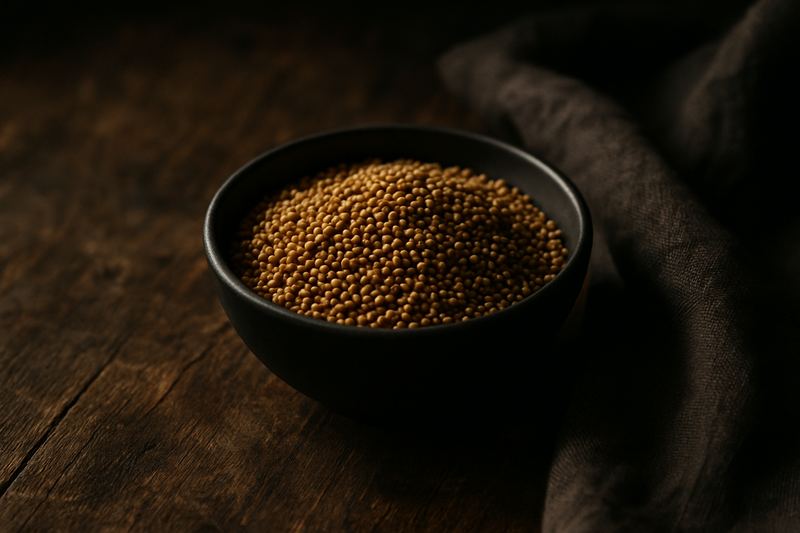
Mustard Seeds · Photograph
Mustard seeds are among the oldest spices on the planet — referenced in ancient Sanskrit texts, Greek medical writing, and the Bible — and they remain a cornerstone of kitchens from Mumbai to Marseille. They come from several related Brassica species: yellow or white mustard (Sinapis alba), brown mustard (Brassica juncea), and black mustard (Brassica nigra). Tiny in size but surprisingly complex in flavor and chemistry, they occupy a unique space between everyday seasoning and apothecary-style botanical.
Key Nutrients
% Daily Value based on 2,000 cal diet
Key active compounds (phytochemicals)
- Glucosinolates (sinigrin, sinalbin): Sulfur-containing compounds stored in the seed in inactive form. When seeds are ground or chewed in the presence of moisture, plant enzymes convert them into isothiocyanates and related compounds that have been studied for roles in cellular defense and detoxification enzyme activity.
- Allyl isothiocyanate (AITC): The pungent, volatile compound produced mainly in brown and black seeds. It is responsible for the sharp, sinus-clearing sensation of fresh mustard and has been studied in cell and animal models for antimicrobial and antioxidant properties.
- Phenolic compounds: A broad group of plant secondary metabolites — including phenolic acids and flavonoids — that contribute to antioxidant capacity and flavor complexity.
- Volatile essential oils: Aromatic oils released when seeds are heated or ground; they drive the characteristic aroma bloom when mustard seeds are toasted or tempered in oil.
- Carotenoids and minor pigments: Present in small amounts, contributing modestly to antioxidant intake and the yellow-orange color of ground mustard.
Quick definition: Phytochemicals are biologically active compounds made by plants. They are not vitamins or minerals, but they can influence how the body functions in ways researchers are still mapping.
Prep and pairing ideas
Tempering (tadka) — the cornerstone technique: Heat a small amount of oil in a pan over medium-high heat. Add whole mustard seeds and wait — in about 20–30 seconds, they will begin to pop and dance. At that moment, add the rest of your aromatics (cumin seeds, curry leaves, garlic, dried chili). Pour this fragrant oil directly over cooked dal, lentil soup, or steamed vegetables. This technique extracts fat-soluble aroma compounds and dramatically amplifies the flavor payoff of the seeds.
Pickling: Add a teaspoon of whole yellow or brown mustard seeds to quick-pickling brine for cucumbers, cauliflower
How Mustard Seeds Compares
| Compared with | What's different |
|---|---|
| Mustard Seeds vs. Yellow Mustard Seeds | Milder and slightly sweeter, used for classic table mustard and pickling. |
| Mustard Seeds vs. Brown Mustard Seeds | Significantly hotter and more pungent; common in Indian cooking and hot mustard pastes. |
| Mustard Seeds vs. Black Mustard Seeds | Smaller, more bitter, and the most pungent variety, often used for tempering in hot oil. |
Health Benefits
Things to Know
Mustard allergy is real and regulated.: Mustard is a designated priority allergen in the EU, Canada, and several other jurisdictions. Even small amounts can trigger serious reactions in sensitive individuals. If you have a spice or food allergy history, check with an allergist before using mustard regularly.
Acid reflux and gastritis.: Very pungent or spicy food preparations can aggravate reflux, gastritis, or peptic ulcers in some people. Start with small amounts and pay attention to your body.
Thyroid considerations.: Mustard seeds, like all cruciferous foods, contain goitrogenic glucosinolates — compounds that can theoretically interfere with iodine uptake by the thyroid at very high intakes. Normal culinary use is generally considered safe, but people with thyroid conditions should avoid extremely high intakes (e.g., concentrated supplements or large daily doses of mustard flour) without guidance from their healthcare provider.
Asthma and multiple allergies.: People with asthma or a history of multiple food sensitivities may have a higher risk of hypersensitivity reactions to spices. Be cautious with new spice introductions.
Drug interactions at culinary doses: low risk.: No specific, well-established drug–nutrient interactions have been confirmed for mustard seeds at normal food use levels. There is a theoretical (unconfirmed) possibility that very high intakes could influence liver detoxification enzymes that process some medications — but this has not been demonstrated with everyday cooking amounts. If you are on complex medication regimens, mention significant dietary changes to your care team.
Children.: Whole seeds can be a choking hazard for young children. Very spicy preparations are also uncomfortable for small children's developing palates and digestion.
Pregnancy.: Culinary amounts are generally considered safe. Concentrated mustard preparations or mustard oil used medicinally (e.g., as a traditional treatment) fall outside the scope of this guide; consult a midwife or physician.

Shop This Ingredient
Stock your pantry with quality mustard seeds.
Buy on AmazonAs an Amazon Associate, Plantopedia earns from qualifying purchases. This costs you nothing extra and helps us keep the encyclopedia free.
Frequently Asked Questions
The honest answer is: the direct human research on whole mustard seeds is modest. Most health insights are extrapolated from broader cruciferous vegetable research, mechanistic studies on isolated glucosinolates, and traditional use. That is still meaningful — it just warrants measured language. Here is what the evidence currently supports. Heart and circulation Mustard seeds contain small amounts of unsaturated fats, including omega-3 alpha-linolenic acid (ALA), which can contribute to a heart-healthy dietary pattern. Some observational work from South Asia has compared mustard oil (pressed from the seeds) with other cooking fats and found associations with favorable lipid profiles, but these studies are confounded by overall dietary patterns. There are no robust, seed-specific clinical trials clearly linking culinary amounts of mustard seeds to improved cardiovascular outcomes. The most defensible framing: using mustard seeds to build bold flavor in plant-forward dishes may help reduce reliance on salt and saturated fat — and that dietary shift, over time, can support heart health. Digestive health and the microbiome Traditional food systems — including Ayurveda and folk medicine traditions across Europe and the Middle East — have long positioned pungent spices as digestive stimulants. Biologically, this makes sense: pungent compounds can increase salivation and encourage gastric secretion, which primes the digestive system for a meal. However, well-controlled human trials on mustard seeds specifically and digestive outcomes are sparse. A practical perspective: whole mustard seeds tempered into dals, lentil soups, and vegetable dishes make high-fiber, gut-friendly meals more aromatic and satisfying — which is its own underrated contribution to digestive wellness. Blood sugar and metabolism There is very limited direct human research on mustard seeds and blood glucose. Some experimental studies have incorporated mustard seed flour into breads or mixed-grain products and found modest effects on glycemic response (how quickly blood sugar rises after eating), but the sample sizes are small and the effects are likely due to the added fiber, fat, and protein rather than a unique glucose-lowering property of mustard itself. Mustard seeds are not a substitute for evidence-based blood sugar management. Practically, they can help make balanced, high-fiber meals more delicious — and choosing those meals consistently supports metabolic health. Inflammation and recovery Mustard seeds contain selenium and magnesium — two minerals linked to antioxidant enzyme function and inflammation regulation — along with glucosinolates and phenolic compounds that can modulate antioxidant and detoxification pathways in cell and animal experiments. Population-level data on cruciferous vegetables generally support their association with lower inflammatory markers, but these studies focus on broccoli, cabbage, and kale, not specifically on culinary doses of mustard seeds. Until better human data arrive, mustard seeds are best framed as one flavorful member of the cruciferous family, adding variety and bioactive diversity to an overall plant-forward pattern. Mustard seeds as part of the cruciferous family Cruciferous vegetables are among the most studied plant foods for potential cancer-protective effects, largely due to their glucosinolate content. Mustard seeds share these compounds. However, the human data on cancer risk reduction is primarily tied to regular consumption of high-volume cruciferous vegetables (broccoli, Brussels sprouts, kale), not to culinary spice amounts of seeds. The biology is interesting and worth watching; the current evidence does not support making direct health claims for mustard seeds in this area.
There is no single "best" form — each has a distinct culinary role. Choosing the right form is more about the dish than about nutritional superiority. Whole seeds (yellow, brown, or black) The most versatile starting point. Yellow seeds (Sinapis alba) are the mildest and slightly sweet — great for pickling, American-style mustard, and dishes where you want gentle warmth. Brown seeds (Brassica juncea) are noticeably hotter and earthier, ideal for Indian cooking, Dijon-style preparations, and heartier vegetable dishes. Black seeds (Brassica nigra) are the most intensely pungent and aromatic; they are used in classic South Indian tadka (tempering) and are harder to find in Western supermarkets but worth seeking out at South Asian grocery stores. Ground mustard (mustard powder or flour) Made by milling the seeds, sometimes after partial oil removal. Grinding and mixing with liquid activates the myrosinase enzyme that converts glucosinolates into pungent isothiocyanates — so freshly ground mustard mixed with cool water can be quite sharp. Letting it sit for a few minutes before using allows the flavor to develop and then mellow slightly. Ground mustard is ideal for dressings, dry rubs, sauces, and baked goods. Prepared mustard condiments Yellow, Dijon, whole-grain, and spicy brown prepared mustards are convenient culinary vehicles. They vary in sodium content, so they fit best in a mindful approach to salt. Whole-grain Dijon, which keeps many seeds intact, is a particularly versatile option for dressings, sandwiches, and grain bowls. Mustard oil A traditional cooking fat in parts of South Asia, pressed from mustard seeds. Its strong flavor means a little goes a long way. Note: in some countries, pure mustard oil is regulated or labeled for external use only because of erucic acid content (a fatty acid present in some Brassica seed oils that is monitored for safety). For culinary use, it is best treated as a traditional fat in its regional context rather than a supplement.
Quick Answers
Common questions, answered in a line.
Mustard seeds are rich in glucosinolates like sinigrin and sinalbin, as well as allyl isothiocyanate (AITC), which provide antioxidant and antimicrobial properties. These sulfur-containing compounds are activated when the seeds are ground or chewed in the presence of moisture. Additionally, they contain phenolic compounds and volatile essential oils that contribute to cellular defense.
Mustard seeds contain glucosinolates, which act as goitrogens that can theoretically interfere with iodine uptake by the thyroid if consumed in extremely high amounts. While normal culinary use is generally considered safe, individuals with thyroid conditions should avoid high-potency mustard supplements or large daily doses of mustard flour.
To temper mustard seeds, heat a small amount of oil in a pan and add whole seeds until they begin to pop and dance, usually within 20 to 30 seconds. This technique, also known as tadka, extracts fat-soluble aroma compounds and amplifies the flavor. Once the seeds pop, you can add other aromatics like cumin or garlic before pouring the oil over your dish.
Mustard seeds are a designated priority allergen in regions like the EU and Canada, meaning even small amounts can trigger serious reactions in sensitive individuals. People with a history of spice or food allergies should consult an allergist before incorporating mustard into their regular diet. Furthermore, those with asthma may face a higher risk of hypersensitivity.
Mustard seeds release allyl isothiocyanate (AITC), a pungent and volatile compound, when they are ground or chewed. This specific chemical is responsible for the sharp, sinus-clearing sensation characteristic of fresh mustard. It is found most prominently in brown and black varieties of the seed.
Mustard seeds can aggravate symptoms of acid reflux, gastritis, or peptic ulcers due to their pungent and spicy nature. It is recommended to start with small culinary amounts to see how your body reacts. Additionally, whole seeds can pose a choking hazard for young children and should be served with caution.
For Readers in the USA
Local context — sourcing, seasonality, and regional notes.
North Dakota and Montana are the primary producers of mustard seeds in the United States, as these states offer the cool, dry climate necessary for high-quality yields. Together, these two states account for nearly all domestic production, though the U.S. also imports large quantities from Canada.
Yellow and brown mustard seeds are widely available at major U.S. grocery chains like Kroger, Whole Foods, and Safeway, while black mustard seeds are typically found at specialized Indian or Asian markets. You can find them in the spice aisle, usually sold in glass jars or bulk plastic bags depending on the retailer.
In the U.S., the FDA classifies mustard as a common spice rather than a major allergen, though the USDA ensures that any product labeled "Organic Mustard Seed" meets strict federal standards for synthetic-free production. Unlike in the European Union, mustard is not currently required to be highlighted in bold on U.S. food labels.
Mustard seeds are a staple of American canning culture, particularly in the South and Midwest, where they are essential for flavoring "bread and butter" pickles and spicy relishes. They also play a major role in regional BBQ dry rubs, providing the sharp base needed to cut through fatty meats.
AI Clinical Review
- Provides a cautious, food-first perspective: culinary use of mustard seeds can support flavorful, plant-forward meals without overpromising medical effects.
- Accurately explains key compounds (glucosinolates → isothiocyanates like AITC) and that moisture/enzymes activate pungency—consistent with cruciferous biology.
- Nutrition snapshot and serving-size framing are reasonable: small amounts add minerals and phytochemicals but won’t overhaul nutrient intake on their own.
- Safety notes are appropriate, including true allergy risk, reflux sensitivity for some, and context around mustard oil and erucic acid.
- Human trials on whole mustard seeds are limited; most health claims are extrapolated from broader crucifer research or animal/cell studies.
- Cardiometabolic outcomes (lipids, glucose, inflammation) lack robust, seed-specific clinical data; any benefits likely come from the overall dietary pattern.
- Microbiome and cancer-protective discussions are plausible by mechanism but not confirmed for typical culinary doses of seeds.
- Differences among forms (whole seed, ground, prepared mustard, oil) change exposure to bioactives; the health impact of these differences hasn’t been well quantified.
- Typical culinary amounts are small: about 1–2 teaspoons (≈2–6 g) of whole seeds or 1/2–1 teaspoon mustard powder in a dish is common; more can increase pungency and GI discomfort for some.
- Allergy precautions: mustard is a regulated allergen in many regions. People with known spice/seed allergies, asthma, or multiple food allergies should introduce cautiously and consider discussing with an allergist.
- Thyroid and pregnancy: routine food use is generally fine, but very high or supplemental intakes of mustard flour/extracts aren’t well studied; those with thyroid disease or who are pregnant should avoid concentrated products and check with a clinician.
- Prepared mustard and oils vary: condiments can be high in sodium (check labels), and traditional mustard oil may contain erucic acid—use within cultural culinary norms rather than as a health supplement. Drug interactions at food doses appear unlikely but mention significant dietary changes to your care team.
Use culinary framing; avoid treatment claims or supplement-dose guidance.
References
- PMC, National Library of Medicine — Biologically Active Compounds in Mustard Seeds: A Toxicological Perspective (pmc.ncbi.nlm.nih.gov)
- PubMed — Glucosinolates and Omega-3 Fatty Acids from Mustard Seeds: Phytochemistry and Pharmacology (pubmed.ncbi.nlm.nih.gov)
- PubMed — Phytochemistry and Application of White Mustard (Sinapis alba) in Medicine and Dentistry-A Narrative Review (pubmed.ncbi.nlm.nih.gov)
- PMC, National Library of Medicine — An Exploration of the Biochemistry of Mustard Seed Meals: A Phytochemical and In Silico Perspective (pmc.ncbi.nlm.nih.gov)
- Taylor & Francis — 87559129.2021.2015774 (tandfonline.com)
- MDPI — 1422 0067 (mdpi.com)
- USDA FoodData Central — USDA FoodData Central (fdc.nal.usda.gov)
Know Your Numbers
Eating healthy is a start. Now get to know your biomarkers.
Food changes bloodwork — inflammation, lipids, blood sugar and nutrient status all respond to what you eat. 59 markers from $59.
- Results in 7–10 days at 2,000+ Quest sites
- Licensed provider reviews every result
- One flat price, no membership, HSA/FSA eligible
Educational information only, not medical advice. Panels are ordered and reviewed through our licensed partner; Plantopedia may earn a commission.