Peppermint — health benefits and uses
Classic carminative used to soothe indigestion and ease tension headaches.
The Short Answer
Peppermint is a potent medicinal herb known for its high menthol content, which acts as a natural antispasmodic to relax gut muscles and relieve bloating. It provides small amounts of Vitamin A and iron, alongside antioxidant polyphenols like rosmarinic acid.
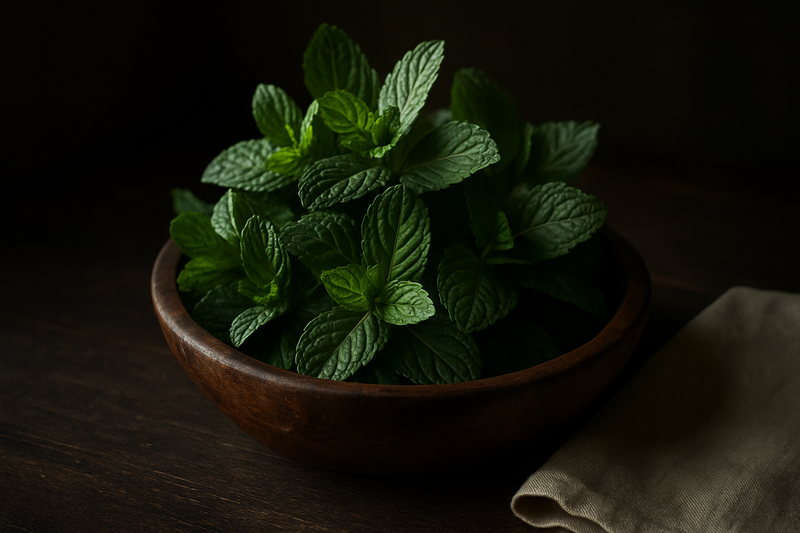
Peppermint · Photograph
Discover the science-backed peppermint health benefits, uses, and side effects — from peppermint tea benefits for digestion and bloating to IBS relief, antioxidant properties, and who should be cautious. A practical, evidence-aligned guide for everyday use.
Key Nutrients
% Daily Value based on 2,000 cal diet
Key active compounds in peppermint
Peppermint's benefits trace back to a set of tightly interlocking plant chemicals in its leaves and essential oil.
- Menthol — A monoterpene (a small, fragrant carbon molecule) alcohol and the principal cooling compound in peppermint. It activates TRPM8 receptors — the same cold-sensing nerve receptors triggered by actual cold — producing that characteristic icy sensation without any temperature change. Menthol also relaxes smooth muscle in the gut wall, which is central to peppermint's antispasmodic (cramp-reducing) action.
- Menthone — A monoterpene ketone closely related to menthol. It contributes to peppermint's aroma and works with menthol to support smooth muscle relaxation and mild antimicrobial activity.
- Menthofuran — An oxygenated monoterpene present in peppermint oil at low levels. At high doses it can stress the liver, which is why quality peppermint oil products are formulated to keep it within safe limits.
- Rosmarinic acid — A polyphenol (a plant-made antioxidant compound) shared across the mint family. It scavenges free radicals and modulates inflammatory signalling pathways.
- Flavonoids (luteolin, hesperidin) — Additional polyphenols that support endothelial (blood vessel lining) function and add to peppermint's overall antioxidant profile.
- Tannins — Astringent polyphenols that provide mild antimicrobial effects; in very concentrated forms they can irritate the stomach lining in sensitive people.
Prep and pairing ideas
Peppermint's sharp, cooling character makes it one of the most versatile herbs in the kitchen. Here are three practical pairings that work especially well:
1. Peppermint + dark chocolate Menthol and cocoa butter are natural partners. Finely chop fresh peppermint and steep in barely simmering plant-based cream or coconut milk for 15 minutes, strain, then use to melt over 70%+ dark chocolate. The cooling contrast deepens the chocolate's bitterness and adds a clean, aromatic finish. Bonus: dark chocolate contributes its own antioxidant flavonoids.
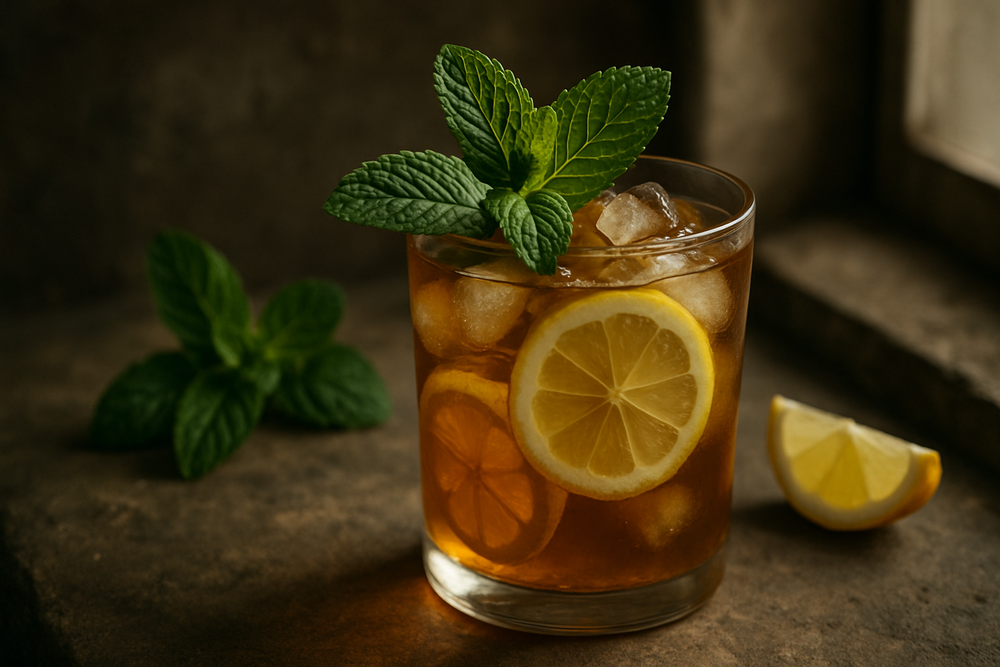
2. Peppermint + lemon in a detox-style after-dinner tea Combine 2–3 g dried peppermint with a slice of fresh ginger and a squeeze of lemon in a teapot. Steep 8–10 minutes. The lemon's acidity brightens the menthol, ginger adds its own gut-calming ginger compounds, and the warmth supports post-meal comfort. This is a classic peppermint detox tea format with a pleasant flavour payoff.
3. Peppermint + whole grains (tabbouleh-style) A generous handful of fresh peppermint leaves torn into a bulgur or quinoa bowl with cucumber, tomato, and lemon juice adds brightness, micronutrients, and digestive phytochemicals. This is peppermint at its most whole-food: no processing, no concentration, just leaves doing their job.
Basic fresh-leaf tea: Steep 8–10 large fresh peppermint leaves in just-boiled water (not aggressively boiling — that can cook off volatile menthol) for 5–7 minutes. Cover the cup while it steeps to trap aromatic oils.
Buying guide
Fresh leaves: Look for bright, deep-green leaves with no yellowing or bruising. The stronger the scent when you rub a leaf, the higher the menthol content. Rinse well, store wrapped in a damp paper towel in a sealed bag in the fridge, and use within 5–7 days. Alternatively, freeze fresh leaves in an ice cube tray with a little water for use in teas and smoothies year-round.
Dried loose leaf or teabags: Choose whole-leaf or cut-and-sifted dried peppermint over powdered forms — the volatile oils are better preserved. Check for a single-ingredient list (just Mentha × piperita or "peppermint leaf"); avoid blends with added flavouring if you want the real phytochemical profile. A best-before date within 12–18 months usually signals reasonable freshness.
Enteric-coated oil capsules: Look for products that state the oil content per capsule (typically 0.2 mL per capsule), specify enteric-coated on the label, and have been manufactured to pharmacopoeial (official quality standard) specifications. Third-party tested products offer an additional quality assurance layer. Avoid discount bulk oils presented as ingestible without clear formulation information.
Avoid for internal use: Undiluted essential oil sold for aromatherapy is not the same as food-grade or pharmaceutical-grade peppermint oil. Do not ingest concentrated aromatherapy oils.
Bottom line
Peppermint is a genuinely useful herb — not because of hype, but because it has earned its reputation in both the kitchen and the clinic. As a after-meal tea or a flavour-forward ingredient in dark chocolate desserts and grain bowls, it is one of the lowest-effort, highest-enjoyment herbs you can work into a plant-rich diet. Its digestive benefits are backed by some of the strongest clinical evidence available for any culinary herb, particularly when it comes to IBS and functional bloating.
The key is matching the form to the goal. Fresh leaves and tea are food — use them freely. Concentrated oil capsules are supplements — use them carefully and with guidance. And if you have acid reflux, gallbladder issues, or a baby in the house, the safety notes in this guide are not optional reading.
Used thoughtfully, peppermint is a sharp, cooling, evidence-supported addition to a food-as-medicine kitchen.
How Peppermint Compares
| Compared with | What's different |
|---|---|
| Peppermint vs. Spearmint | Higher menthol content for a sharper, cooling sensation and medicinal use. |
| Peppermint vs. Thai Basil | Stronger licorice-like flavor with notes of clove rather than menthol. |
Health Benefits
Things to Know
Acid reflux and GERD: Peppermint relaxes the lower oesophageal sphincter. If heartburn or reflux is already an issue, start with a very weak tea and stop if symptoms worsen. Concentrated oil preparations are generally best avoided.
Hiatal hernia: The same sphincter-relaxing mechanism applies; check with your doctor before using peppermint medicinally.
Gallbladder disease or bile duct obstruction: Peppermint oil is not recommended without medical supervision; it may stimulate bile flow in a way that becomes problematic.
Liver disease: Concentrated peppermint oil — especially the compound menthofuran — may place additional strain on an already-stressed liver.
Infants and children under ~30 months: Never apply peppermint oil near a baby's face, nostrils, or chest. There are documented reports of apnea (pauses in breathing) and laryngospasm (airway spasm). This is a serious safety rule, not a minor caution.
Children under 12: Avoid topical or inhalation use of strong peppermint oil on the face or feet; children are more sensitive to menthol's airway effects.
Pregnancy and breastfeeding: Food-level peppermint (tea, fresh leaves) is generally considered safe. Evidence on concentrated oil preparations is limited; cautious use is recommended.
Asthma or airway hyperreactivity: Strong menthol inhalation may provoke bronchoconstriction (airway tightening) in sensitive individuals.
Menthol or mint allergy: If you have a history of contact dermatitis, burning mouth syndrome, or oral ulcers triggered by mint products, avoid peppermint.
Drug interactions to flag with your prescriber:
Felodipine (a calcium channel blocker for blood pressure): peppermint oil may increase its absorption and side effects.
Cyclosporine (an immunosuppressant): animal data suggest peppermint oil increases bioavailability; relevant for transplant patients.
Antacids and acid-suppressing drugs: may alter how enteric-coated capsules release in the gut.
Glossary
Shop This Ingredient
Stock your pantry with quality peppermint.
Buy on AmazonAs an Amazon Associate, Plantopedia earns from qualifying purchases. This costs you nothing extra and helps us keep the encyclopedia free.
Frequently Asked Questions
Digestive health and microbiome This is peppermint's strongest evidence base. Multiple randomised controlled trials — the gold standard in clinical research — show that enteric-coated peppermint oil capsules (0.2–0.4 mL taken three times daily) significantly reduce global IBS symptoms, abdominal pain, and bloating compared to placebo. A systematic review and meta-analysis (a study that pools results from many trials) confirmed that peppermint essential oil is efficacious and well-tolerated for short-term IBS symptom management. Standardised combinations of peppermint oil with caraway oil have also shown benefits for functional dyspepsia — the medical term for ongoing upper-abdominal discomfort without a clear structural cause. For peppermint tea, the picture is supported mainly by traditional use and by extrapolating from oil data. High-quality trials on tea alone are limited, but the mechanistic case is solid: menthol relaxes the smooth muscle of the gut wall, which can ease post-meal cramping, gas, and the sensation of fullness. Peppermint tea is consistently described by major health references as safe and reasonable for mild indigestion and wind — just don't expect tea to deliver the clinical-trial dose of concentrated oil. Important caveat: Menthol also relaxes the lower oesophageal sphincter — the valve between your oesophagus and stomach. In people prone to acid reflux or GERD, this can allow stomach acid to travel upward, worsening heartburn. See the cautions section below. Heart and circulation A small but notable clinical trial found that twice-daily peppermint oil supplementation (50 µL) favourably influenced blood pressure and triglyceride (blood fat) levels in adults with elevated cardiometabolic risk markers. These results are encouraging, but the trial was modest in size and duration, and used a specific oral oil regimen — not tea. More and larger controlled trials are needed before peppermint can be considered a reliable cardiovascular intervention. Its antioxidant compounds do have plausible mechanisms for supporting vascular health, but the evidence remains emerging. Blood sugar and metabolism Robust human trials specifically targeting blood glucose with peppermint are scarce. Preclinical work (cell and animal studies) suggests peppermint's polyphenols may influence carbohydrate metabolism, but these findings have not yet been consistently replicated in humans. At a culinary level, peppermint is best thought of as a near-zero-calorie flavour boost and digestive aid rather than a glucose-lowering herb. Inflammation and recovery Peppermint and menthol show antioxidant and anti-inflammatory activity in laboratory and animal models — reducing pro-inflammatory mediators (chemical signals that drive inflammation) and protecting cells from oxidative stress (damage caused by unstable oxygen molecules). Some of the symptom relief seen in IBS trials may partly reflect these anti-inflammatory and neuromodulatory (nerve-calming) effects in the gut. However, clinical trials measuring specific inflammation markers like CRP in humans are limited, so the inflammation story is still being written. In everyday culinary use, peppermint contributes mild antioxidant and phytochemical intake as part of a broader plant-rich diet. Focus, nausea, and pain relief Clinical and observational reports suggest peppermint may reduce chemotherapy-induced nausea, ease post-operative anxiety, and improve comfort during colonoscopy procedures when used under medical protocols. Small human studies on aromatherapy (inhaling peppermint) have linked it to modest improvements in alertness and short-term memory, and to reduced tension headache severity. These benefits depend on specific administration routes — aromatherapy diffusion, topical dilution, or supervised intra-procedural use — rather than a cup of tea, but they point to genuine neuromodulatory activity via menthol's effects on sensory receptors.
The right form depends entirely on your goal. Fresh or dried peppermint leaves are a whole-food culinary ingredient. Use them liberally in teas, salads, smoothies, and desserts. They are the safest form, provide phytochemicals and modest micronutrients, and carry virtually no risk at typical food quantities. Peppermint herbal tea (3–6 g of dried peppermint steeped for 10–15 minutes) is the traditional approach for post-meal digestive comfort, gas, and mild cramping. Up to three cups per day is the typical traditional dosing range. It is safe for most adults, gentle enough to use daily, and the easiest entry point for beginners. Enteric-coated peppermint oil capsules are a standardised supplement, not a food. The enteric coating means the capsule passes through the stomach before dissolving in the small intestine, which reduces the risk of heartburn and upper-GI irritation. These capsules (0.2–0.4 mL, three times daily) are what the IBS clinical trials used, and they should be treated like a supplement — follow product instructions, and check with a practitioner if you have liver, gallbladder, or complex GI conditions. Tinctures, topical oils, and aromatherapy have more specialised uses. Diluted peppermint oil in a balm or cream may help with tension headaches and muscle discomfort; aromatherapy diffusion may support alertness. Neither replaces medical care, and both require attention to dilution and safety rules around children.
For most healthy adults, one to three cups of peppermint tea per day made from fresh or dried leaves sits firmly in the safe, traditional-use range. Major herbal medicine references cite 3–6 g of dried peppermint per cup as a standard infusion dose. If you are just starting out, one cup after your main meal is a reasonable place to begin. This lets you assess your personal tolerance — particularly for any reflux tendency — before making it a daily habit. For enteric-coated peppermint oil capsules, the clinically studied dose is 0.2–0.4 mL per capsule, three times daily with IBS in mind. This is a supplement dose, not a culinary dose, and should be treated as such. Do not attempt to recreate this with home-made oil preparations. There is no established tolerable upper limit for peppermint tea in healthy adults. Drinking very large quantities daily is unlikely to be harmful for most people, but there is no benefit to exceeding a few cups, and excessive tannin intake from any herbal tea may cause mild gastrointestinal irritation over time. Start low, go slow, and if you are on prescription medications or have a complex health history, loop in your doctor before adding concentrated peppermint preparations.
Quick Answers
Common questions, answered in a line.
Peppermint contains menthol, which relaxes the smooth muscle in the gut wall to provide antispasmodic effects. This action, combined with the presence of menthone, helps reduce cramps and supports digestive comfort, particularly for those dealing with functional bloating or IBS.
Peppermint contains polyphenols like rosmarinic acid, luteolin, and hesperidin that scavenge free radicals. These antioxidant compounds help modulate inflammatory signaling pathways and support the health of the endothelial lining in blood vessels.
Peppermint should be avoided by individuals with acid reflux, GERD, or hiatal hernias because it relaxes the lower esophageal sphincter. It is also not recommended for those with gallbladder disease, bile duct obstructions, or liver disease due to potential strain on these organs.
Never apply peppermint oil near the face, nostrils, or chest of infants and children under 30 months. Documented reports indicate that menthol can cause serious reactions in young children, including apnea (pauses in breathing) and laryngospasm (airway spasms).
Steep 8–10 large fresh peppermint leaves in just-boiled water for 5–7 minutes, keeping the cup covered to trap the aromatic oils. Using water that is not aggressively boiling prevents the volatile menthol from cooking off, ensuring a more effective and flavorful brew.
Peppermint oil may increase the absorption and side effects of the blood pressure medication Felodipine and can increase the bioavailability of the immunosuppressant Cyclosporine. It may also interfere with how antacids and acid-suppressing drugs interact with enteric-coated capsules.
Look for enteric-coated capsules that specify an oil content of approximately 0.2 mL and meet official pharmacopoeial quality standards. Choosing enteric-coated versions ensures the oil is released appropriately in the gut rather than the stomach, which is vital for safety and efficacy.
For Readers in the USA
Local context — sourcing, seasonality, and regional notes.
Peppermint grows as a perennial in USDA Hardiness Zones 3 through 9, flourishing in the damp, temperate climates of the Pacific Northwest and the Northeast. While it can be harvested year-round in warmer states like California, it reaches its peak flavor and menthol potency during the summer months before it flowers.
You can find fresh peppermint year-round in the produce section of major US grocery chains like Kroger, Safeway, and Whole Foods, usually sold in plastic clamshells or small bundles. For the highest quality, look for USDA Organic certified bunches at local farmers markets from June through September, when the herb is most abundant and fragrant.
In American cooking, peppermint is a staple of Mediterranean-style grain bowls and summer salads, though it is most culturally prominent in seasonal treats like candy canes and peppermint bark during the winter holidays. Beyond sweets, it is a popular "remedy" herb in the US, frequently used in iced teas and mojitos to provide a cooling sensation during hot humid summers.
AI Clinical Review
- Strong clinical support is correctly emphasized for enteric‑coated peppermint oil in IBS: multiple randomized trials and meta-analyses show modest, short‑term reductions in global symptoms, pain, and bloating.
- The piece appropriately distinguishes forms: food‑level tea/leaves for gentle digestive comfort vs standardized, enteric‑coated oil capsules (coating designed to dissolve in the intestine) for targeted symptom relief.
- Mechanisms are accurately described (menthol’s smooth‑muscle relaxation and TRPM8 activation), including the important caveat that sphincter relaxation can aggravate reflux.
- Safety messaging around infants/young children, reflux/hiatal hernia, gallbladder and liver concerns, and quality considerations (true enteric coating, menthofuran limits) is practical and aligned with clinical references.
- Cardiometabolic findings (blood pressure, triglycerides) come from small, short trials with heterogeneous methods; they are hypothesis‑generating, not practice‑changing.
- Claims around blood sugar and metabolic effects remain largely preclinical; consistent human data are limited.
- Anti‑inflammatory/antioxidant benefits are biologically plausible but not well quantified in controlled human studies using culinary doses.
- Aromatherapy and topical uses (alertness, nausea, tension headache) show mixed, setting‑specific results and may not generalize to routine home use without standardized protocols.
- Form and dose matter: typical tea is 3–6 g dried leaf steeped 10–15 minutes, up to about 1–3 cups/day for most adults; IBS studies used enteric‑coated capsules providing ~0.2–0.4 mL oil per dose, up to three times daily. Do not ingest aromatherapy oils.
- Use caution or seek advice if you have GERD/hiatal hernia, gallbladder disease, or liver disease; food‑level use in pregnancy/lactation is generally acceptable, but avoid concentrated oils unless a clinician advises.
- Children: avoid topical/inhaled peppermint oil near the face in infants and very young children due to rare but serious breathing risks; be conservative with strong topical menthol products in children under 12.
- Potential interactions: peppermint oil may affect absorption of drugs like felodipine and cyclosporine; antacids/acid‑suppressing meds can alter release of enteric‑coated capsules—check with your clinician if you take these.
May worsen acid reflux in some people; avoid concentrated oil near infants.
References
- USDA FoodData Central — Peppermint, fresh (nutrition data) (fdc.nal.usda.gov)
- Nutrivore — Peppermint nutrients and nutrient density (nutrivore.com)
- Systematic review and meta-analysis: peppermint essential oil for IBS — University of Central Lancashire (clok.uclan.ac.uk)
- Peppermint and menthol: comprehensive review of pharmacology and safety — Tandfonline (2023) (tandfonline.com)
- Clinical trial: peppermint oil effects on cardiometabolic risk factors — Journal ARRB (journalarrb.com)
- Peppermint oil in IBS and functional dyspepsia — American Academy of Family Physicians (aafp.org)
- Peppermint oil — European Medicines Agency herbal summary for the public (ema.europa.eu)
- Peppermint — Mount Sinai Health Library (safety and clinical use overview) (mountsinai.org)
- Peppermint — Memorial Sloan Kettering Cancer Center Integrative Medicine (mskcc.org)
- Peppermint safety information — National Association for Holistic Aromatherapy (naha.org)
Know Your Numbers
Eating healthy is a start. Now get to know your biomarkers.
Food changes bloodwork — inflammation, lipids, blood sugar and nutrient status all respond to what you eat. 59 markers from $59.
- Results in 7–10 days at 2,000+ Quest sites
- Licensed provider reviews every result
- One flat price, no membership, HSA/FSA eligible
Educational information only, not medical advice. Panels are ordered and reviewed through our licensed partner; Plantopedia may earn a commission.
Filed Under
Health Goals This Supports
Related Ingredients
What to Avoid Eating Late at Night
A ranked, evidence-weighted look at which late-night foods and drinks are most likely to disrupt sleep, how timing and dose change the answer, and which common restrictions are not worth making.
What to Eat When You Feel Bloated
When bloating hits, eat a smaller, slower meal built around well-cooked, low-gas vegetables (carrots, zucchini, spinach), a portion of lean protein, and a modest amount of rice or oats, and skip carbonated drinks, sugar alcohols, and raw cruciferous vegetables for a few hours. Peppermint tea or...