What to Eat When You Feel Bloated
When bloating hits, eat a smaller, slower meal built around well-cooked, low-gas vegetables (carrots, zucchini, spinach), a portion of lean protein, and a modest amount of rice or oats, and skip carbonated drinks, sugar alcohols, and raw cruciferous vegetables for a few hours. Peppermint tea or...
Direct answer
When bloating hits, eat a smaller, slower meal built around well-cooked, low-gas vegetables (carrots, zucchini, spinach), a portion of lean protein, and a modest amount of rice or oats, and skip carbonated drinks, sugar alcohols, and raw cruciferous vegetables for a few hours. Peppermint tea or peppermint oil has real trial evidence for easing IBS-type gas and cramping. If bloating shows up most days, the more durable fix is a short, structured trial of lower-FODMAP eating, ideally with a dietitian, not a single "de-bloating" food. Bloating that is new, constant, or paired with other symptoms deserves a medical check rather than a diet fix.
Key takeaways
- Occasional bloating after meals is usually digestive, driven by gas-producing carbohydrates, swallowed air, or a large meal, and is not itself a diagnosis.
- A short, structured low-FODMAP trial has the strongest evidence for recurring bloating, easing symptoms in a majority of people with irritable bowel syndrome who try it.
- Peppermint oil has randomized-trial support for reducing IBS symptoms, including cramping and gas, though evidence specific to bloating alone is thinner.
- No single food fixes bloating; portion size, eating pace, fiber type, and fluid intake all matter more than any one ingredient.
- Bloating paired with weight loss, blood in stool, fever, or a new pattern after age 50 needs a medical evaluation rather than a diet change.
Context and limits
Bloating (a subjective feeling of gas or fullness) and distension (visible abdominal swelling) usually come from how the gut handles certain carbohydrates, not from a disease. Short-chain carbohydrates that resist digestion in the small intestine, collectively called FODMAPs (fermentable oligo-, di-, monosaccharides and polyols), reach the colon, where bacteria ferment them and produce gas. That's a normal process, but in people with irritable bowel syndrome (IBS) or a sensitive gut, the resulting stretch is felt more intensely. Other common contributors include eating too fast, carbonated drinks, chewing gum, constipation (trapped stool and gas), and, less often, lactose or fructose intolerance. None of this means food is dangerous or that whole food groups need to be cut out permanently. Elimination diets like low-FODMAP are meant to be short, generally 2 to 6 weeks, followed by systematic reintroduction to find your actual triggers, ideally with a registered dietitian, because long-term restriction can reduce beneficial gut bacteria and is unnecessary for most people.
What to try first
Before restructuring your diet, try the lower-effort steps that address the mechanics of bloating: eat more slowly and chew thoroughly, cut portion size at any one sitting, cut back on carbonated drinks and drinking through a straw, limit sugar-free gum and sugar alcohols (sorbitol, xylitol, mannitol) found in some "sugar-free" products, and take a short walk after eating. A cup of peppermint tea, or enteric-coated peppermint oil capsules, has randomized-trial evidence for reducing IBS symptoms including cramping and bloating-type discomfort, with roughly one in four people who try it getting meaningful relief beyond placebo. Ginger has a longer history of use for nausea and mild digestive upset, but trial evidence for bloating specifically is mixed and weaker than peppermint's.
A simple plate and meal pattern
For a bloating-prone day, build meals around half the plate in well-cooked, lower-FODMAP vegetables (carrots, zucchini, cooked spinach, green beans), a palm-sized portion of protein (fish, eggs, tofu, or a small, well-tolerated portion of legumes), a modest portion of a lower-FODMAP starch (white rice, oats, quinoa, or a small serving of potato), and a small amount of added fat such as extra-virgin-olive-oil. Keep meals moderate in size and spaced through the day rather than one or two very large meals. Sip water or peppermint or ginger tea between meals instead of carbonated drinks.
Foods to prioritize
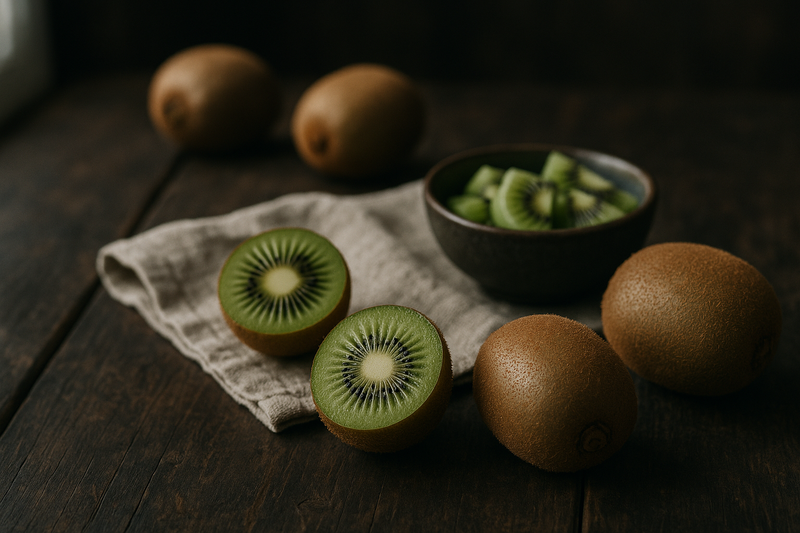
- Kiwi and small portions of blueberry: lower-FODMAP fruit options that are gentler on a sensitive gut than apple or pear.
- Oats: a gentler soluble-fiber grain when introduced in modest, well-cooked portions.
- Ginger and peppermint, typically as tea: traditional digestive aids, with peppermint having the stronger trial support for gas and cramping.
- Well-cooked carrots, zucchini, spinach, and green beans: lower-FODMAP vegetables that still supply fiber and micronutrients.
- Firm tofu and eggs: lower-FODMAP protein sources that don't add fermentable carbohydrate load.
- Extra-virgin-olive-oil in modest amounts: adds flavor and healthy fat without contributing to gas production.
Foods to adjust
These aren't "bad" foods, they're just higher in fermentable carbohydrate and worth moderating during a bloating flare, then reintroducing to check your personal tolerance: garlic and onion (very high FODMAP, a common trigger even in small amounts), wheat-based breads and pastas in large portions, beans and lentils (soak, rinse, and start with small portions when reintroducing), cruciferous vegetables like broccoli, cabbage, and cauliflower (especially raw), apples, pears, and mango (excess fructose and sorbitol), and carbonated beverages and sugar-free products containing sorbitol or xylitol. Reducing these for a short, defined trial, then reintroducing one at a time, tells you far more about your own triggers than avoiding them indefinitely.
A short action plan
- For 3 to 5 days, keep a simple food-and-symptom log noting meals, portion size, and bloating severity.
- Trial the "what to try first" steps (smaller meals, slower eating, less carbonation, peppermint tea) for a week.
- If bloating persists most days, consider a structured 2 to 6 week low-FODMAP elimination, ideally with a registered dietitian, followed by planned reintroduction.
- Stay hydrated and keep moving; both support normal gas transit and reduce the trapped-gas feeling.
- Reassess after 2 to 3 weeks; if nothing helps, or things get worse, move to the red-flag check below rather than trying another diet.
Red flags: when to seek care
Bloating usually isn't dangerous, but see a clinician promptly if it comes with any of the following: unintentional weight loss, blood in the stool or black, tarry stools, persistent vomiting, fever, a rapidly swelling or hard abdomen, difficulty swallowing, new bloating that started after age 50 with no clear cause, a family history of colorectal or ovarian cancer, or bloating that is constant rather than coming and going with meals. In women, bloating that is new, persistent, and paired with pelvic pain, early fullness when eating, or urinary urgency should be evaluated promptly, since these can, rarely, signal ovarian conditions and are easy to mistake for ordinary digestive bloating. None of these symptoms means something serious is definitely happening, but they are the signal to get examined rather than to keep adjusting your diet on your own.
Bottom line
Most bloating is a normal, if uncomfortable, response to how certain carbohydrates ferment in the gut, and it responds to practical changes: smaller, slower meals, less carbonation, and a short trial of lower-FODMAP eating if it's frequent. Peppermint has real evidence behind it; no food is a guaranteed fix. Persistent, worsening, or symptom-associated bloating is a reason to see a clinician, not a reason to try another elimination diet.
Frequently asked questions
Does drinking more water reduce bloating?
Adequate fluid intake supports normal digestion and helps fiber move through the gut, which can indirectly ease bloating linked to constipation. It won't reverse bloating caused by carbohydrate fermentation on its own, but dehydration tends to make sluggish digestion worse, so keeping up with fluids is a reasonable, low-risk step.
Are probiotics helpful for bloating?
Evidence is mixed and strain-specific; some people with IBS report less bloating with certain probiotic strains, but results vary a lot between studies and products, and no single strain is proven to work for everyone. If you try one, give it about four weeks and stop if it doesn't help.
Is bloating the same as weight gain?
No. Bloating is usually gas and fluid shifting within the digestive tract and typically resolves within hours; it isn't fat gain and doesn't reflect a change in body composition, even though the abdomen may visibly distend.
Can a food intolerance test tell me what's causing my bloating?
Most over-the-counter "food sensitivity" panels, particularly IgG antibody tests, lack strong evidence connecting IgG levels to symptoms, and major allergy and gastroenterology bodies do not recommend them for this purpose. A supervised elimination and reintroduction process, or evaluation by a gastroenterologist or dietitian, is more reliable.
How long should I try a low-FODMAP diet before giving up?
Most protocols use 2 to 6 weeks for the elimination phase. If there's no improvement by 4 weeks, it's reasonable to stop and discuss other causes with a clinician rather than continuing indefinitely.
Sources and evidence
- Low-FODMAP diet clinical review, StatPearls
- What is a low FODMAP diet, Yale Medicine
- Bloating and distension, Guts UK charity
- Bloating: causes and when to be concerned, Cleveland Clinic
- Peppermint oil meta-analysis for IBS, PMC
- Food sources of dietary fiber, Dietary Guidelines for Americans
- USDA FoodData Central
Know Your Numbers
Eating healthy is a start. Now get to know your biomarkers.
Food changes bloodwork — inflammation, lipids, blood sugar and nutrient status all respond to what you eat. 59 markers from $59.
- Results in 7–10 days at 2,000+ Quest sites
- Licensed provider reviews every result
- One flat price, no membership, HSA/FSA eligible
Educational information only, not medical advice. Panels are ordered and reviewed through our licensed partner; Plantopedia may earn a commission.