Ginger is a functional root rich in bioactive compounds such as gingerols and shogaols. Learn about its science-supported benefits for diges
Flavor-first apothecary angle; use food amounts rather than supplement claims
The Short Answer
Ginger is a functional root used to support digestion and reduce nausea through bioactive compounds like gingerols and shogaols. While it provides minimal macronutrients, it is a low-calorie source of manganese and copper.

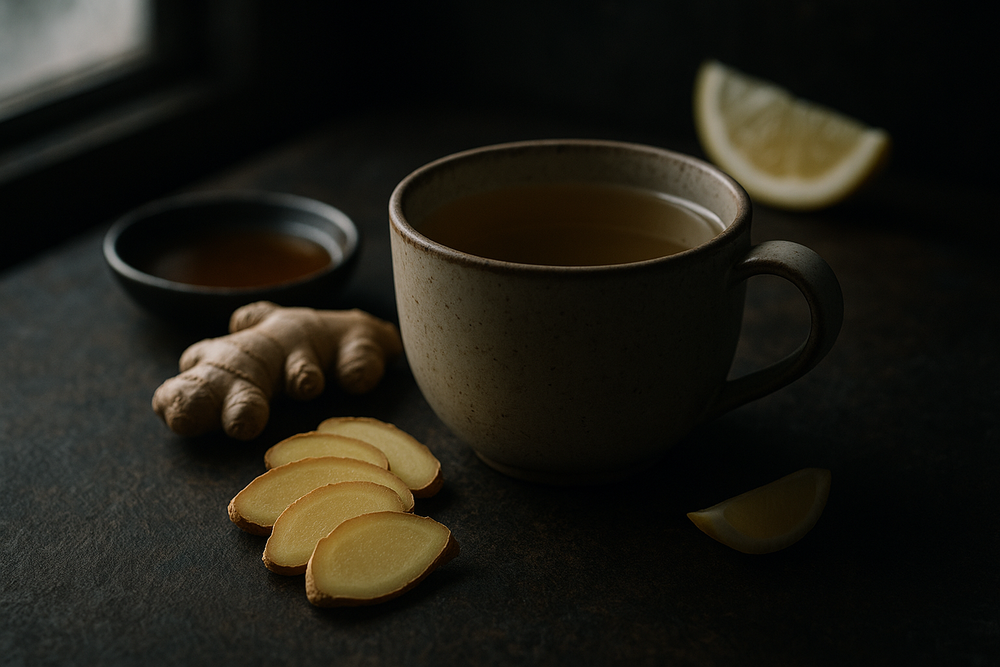
Ginger · Photograph
Ginger is biologically relevant because it contains multiple classes of active phytochemicals that interact with different physiological pathways. Rather than acting through a single mechanism, ginger influences gastrointestinal motility, oxidative stress signaling, and the expression of inflammatory mediators.
Key Nutrients
% Daily Value based on 2,000 cal diet
Key Takeaways
- 1. Ginger contains bioactive compounds, including gingerols and shogaols, that drive most of the effects studied.
- 2. The strongest human evidence supports ginger's role in reducing nausea and supporting digestion.
- 3. Typical intake ranges from 170 mg to 1 g of dried ginger powder per day.
- 4. Benefits for inflammation and metabolic markers are promising but modest.
- 5. Ginger is generally safe when used in culinary or moderate supplemental amounts.
Why Ginger Health Benefits Matter
Ginger is biologically relevant because it contains multiple classes of active phytochemicals that interact with different physiological pathways. Rather than acting through a single mechanism, ginger influences gastrointestinal motility, oxidative stress signaling, and the expression of inflammatory mediators.
The root is important in nutrition science because it represents a low-risk functional food with measurable biological activity. While ginger is not a treatment for disease, it offers supportive effects that may complement healthy dietary patterns.
Key Active Compounds
The biological effects of ginger are attributed to its phenolic and terpene compounds. Gingerols are the dominant active molecules in fresh ginger and are responsible for its pungent taste and many of its studied biological effects. Shogaols are formed when ginger is heated or dried and are often more potent in laboratory models, although clinical superiority has not been conclusively demonstrated.
Paradols are structurally related compounds that have been studied for potential effects on glucose regulation and thermogenesis. Zingerone is more common in processed ginger and contributes antioxidant and antibacterial properties. Terpenes such as zingiberene contribute to aroma and may participate in biological signaling pathways.
Best Form of Ginger
Fresh ginger root contains the highest concentration of gingerols and is typically preferred for culinary and general functional use. Dried ginger powder provides convenience and a higher zingerone concentration due to processing. Standardized extract supplements allow controlled dosing but may reduce the natural phytochemical synergy found in whole root consumption.
Buying Guide
When selecting fresh ginger, choose firm rhizomes with smooth skin and avoid pieces that appear shriveled, soft, or moldy. Store fresh ginger in a refrigerator for up to three weeks. For powders and supplements, prioritize organic certification when possible and verify third-party testing for purity and potency. Products should clearly disclose active compound content, especially gingerol concentration when available.
Prep & Pairing
Fresh ginger can be grated into teas, smoothies, soups, and stir-fried dishes. Thinly sliced ginger can be used for infusions or pickling. Ginger pairs well with turmeric, black pepper, citrus, and honey. Heating ginger converts gingerols into shogaols, which changes the bioactive profile and intensifies flavor.
Dosing
Culinary use can be flexible based on taste preferences. Research commonly uses 170 mg to 1 g of dried ginger powder per day in clinical studies. Fresh ginger servings of 5–10 g are typical in dietary use. Divide intake across meals to improve absorption and reduce potential gastrointestinal irritation.
Conclusion
Ginger is one of the most widely studied functional roots due to its digestive, anti-nausea, and anti-inflammatory properties. While human clinical evidence remains stronger for nausea relief than for chronic disease treatment, ginger offers biologically plausible metabolic and recovery support.
If you want to use ginger as part of a structured nutrition strategy, consider incorporating it into your daily meal pattern rather than relying on isolated supplementation.
How Ginger Compares
| Compared with | What's different |
|---|---|
| Ginger vs. Ginger | Yellowish flesh with a peppery, spicy heat; contains gingerols for digestion. |
| Ginger vs. Turmeric | Bright orange flesh with an earthy, bitter taste; contains curcumin for inflammation. |
| Ginger vs. Galangal | Light pink to white flesh with a pine-like, citrusy aroma and much thinner skin. |
Health Benefits
Common Uses
- —Ginger is used to support digestive comfort by helping reduce bloating, stomach fullness, and mild gastrointestinal discomfort.
- —It is consumed to help manage nausea, including motion-related nausea and pregnancy-associated nausea.
- —Many people also use ginger as part of dietary strategies to reduce inflammation or support metabolic health.
- —Ginger is also added to foods and beverages as a functional culinary spice.
Glossary
Shop This Ingredient
Stock your pantry with quality ginger.
Buy on AmazonAs an Amazon Associate, Plantopedia earns from qualifying purchases. This costs you nothing extra and helps us keep the encyclopedia free.
Frequently Asked Questions
Ginger is most strongly supported for nausea reduction and digestive support. Laboratory studies also suggest anti-inflammatory and antioxidant activity. Effects on blood sugar and cardiovascular markers appear modest. Ginger should be viewed as a supportive functional food rather than a primary medical treatment.
Typical research ranges from 170 mg to 1 g of dried ginger powder daily, or about 5–10 g of fresh ginger. Start with smaller amounts to assess digestive tolerance. Excess intake may cause heartburn or stomach irritation in sensitive individuals.
Fresh ginger contains more gingerols, which are responsible for many of the biological effects studied. Dried ginger powder contains more shogaols due to heat processing. Both forms have functional value, with fresh ginger preferred for phytochemical completeness and powder preferred for convenience.
Ginger is generally safe in culinary amounts for most adults. People taking blood thinners, diabetes medications, or those with gallbladder disease should consult a healthcare professional before long-term supplementation.
Ginger compounds can inhibit inflammatory signaling pathways in laboratory studies. Human clinical trials show modest reductions in pain and inflammatory markers, particularly in osteoarthritis. Effects are supportive rather than curative.
Ginger has been studied for pregnancy-related nausea at doses around 1 g per day. While short-term use appears generally safe, pregnant individuals should always consult a healthcare provider before using ginger therapeutically.
Quick Answers
Common questions, answered in a line.
Gingerols are the dominant active molecules in fresh ginger and are responsible for its pungent taste and many of its biological effects. These phenolic compounds are the primary bioactive markers used to study the root's impact on human health.
Heating or drying ginger converts gingerols into shogaols, which are molecules that can be more potent in laboratory models. This process changes the bioactive profile of the root and intensifies its flavor.
When buying fresh ginger, you should choose firm rhizomes that have smooth skin and avoid any pieces that appear shriveled, soft, or moldy. High-quality ginger should be stored in the refrigerator, where it can remain fresh for up to three weeks.
Ginger contains active phytochemicals that influence gastrointestinal motility, oxidative stress signaling, and the expression of inflammatory mediators. Rather than using just one mechanism, it interacts with several different physiological pathways.
The root of the ginger plant contains several active compound classes, including gingerols, shogaols, paradols, zingerone, and terpenes like zingiberene. Each contributes differently to the plant's aroma, taste, and potential effects on thermogenesis or glucose regulation.
Ginger pairs well with functional ingredients such as turmeric, black pepper, citrus, and honey. To incorporate it into a diet, it can be thinly sliced for infusions, pickled, or grated into smoothies, soups, teas, and stir-fry dishes.
For Readers in the USA
Local context — sourcing, seasonality, and regional notes.
Most ginger sold in U.S. grocery stores is imported from countries like Peru, Brazil, or Thailand, though Hawaii is the largest domestic producer. You can find high-quality fresh ginger year-round at major retailers such as Whole Foods, Kroger, and Publix, or at local Asian markets for competitive pricing.
The USDA National Organic Program (NOP) provides a specific "USDA Organic" seal for ginger grown without prohibited synthetic pesticides or fertilizers. U.S. consumers should look for this seal on fresh rhizomes or supplement labels to ensure the product meets federal organic standards for quality and sustainability.
"Baby ginger" is a young, pink-tipped variety harvested in the late summer and fall by small-scale farmers in states like North Carolina, Georgia, and New York. Unlike standard storage ginger found in supermarkets, this seasonal variety has a thinner skin that does not require peeling and a much shorter shelf life.
The FDA generally recognizes ginger as safe (GRAS) for use as a food ingredient and dietary supplement in the United States. While the FDA does not approve supplements for curing diseases, they provide guidance on manufacturing practices to ensure products are labeled correctly and free from contaminants.
AI Clinical Review
- Clearly explains that ginger's main active compounds are gingerols and shogaols, and that heat/drying shifts the balance toward shogaols—useful when choosing between fresh and dried forms.
- Appropriately frames much of the evidence as preclinical (lab/animal) and avoids overpromising on disease treatment.
- Highlights plausible digestive benefits and anti-inflammatory and antioxidant mechanisms consistent with existing research.
- Offers practical guidance on forms (fresh, powder, extracts) and basic quality cues for shopping.
- Human data are strongest for nausea and vomiting (pregnancy, postoperative, motion sickness) and for modest osteoarthritis pain reduction; cardiometabolic outcomes (blood sugar, lipids) show minor, inconsistent effects in small trials and need larger, longer studies.
- Claims about stimulating digestive enzymes and increasing micronutrient absorption are primarily based on animal or in vitro work; direct confirmation in well-controlled human studies is limited.
- Specific percentage claims for compounds (e.g., gingerols or shogaols as large fractions of the root by weight) are not standardized and vary widely by cultivar, harvest, and processing; exact numbers should be treated as approximate.
- Anti-inflammatory effects seen in cells/animals don’t always translate to meaningful clinical endpoints (pain, function) in people; benefits, when present, tend to be modest.
- Typical studied oral doses in adults: about 1–2 g/day of dried ginger powder (often in capsules) for 8–12 weeks in clinical trials; culinary use is much lower. In pregnancy, doses of 0.5–1 g/day for nausea are common in studies—discuss with your clinician first.
- Side effects are usually mild (heartburn, stomach upset, mouth irritation), but ginger can aggravate reflux/GERD at higher intakes.
- Use caution and consult a clinician if you take anticoagulants/antiplatelets, diabetes medications, or have gallstones; stop high-dose supplements before planned surgery due to potential bleeding risk.
- Form matters: fresh tends to be richer in gingerols; dried/extracts tend to be richer in shogaols/zingerone. If choosing supplements, look for products with standardized actives and third-party testing for quality.
Use culinary framing; avoid treatment claims or supplement-dose guidance.
References
- USDA FoodData Central - Ginger nutrition data (fdc.nal.usda.gov)
- A review of nutritional implications of bioactive compounds of ginger (itjfs.com)
- Functional bioactive compounds in ginger, turmeric, and garlic - Frontiers in Nutrition (frontiersin.org)
- Ginger Root - StatPearls/NCBI (ncbi.nlm.nih.gov)
- NIH National Center for Complementary and Integrative Health - Ginger (nccih.nih.gov)
- Mayo Clinic - Ginger safety and uses (mayoclinic.org)
- European Medicines Agency - Ginger assessment report (ema.europa.eu)
- Journal of Ethnopharmacology - Ginger bioactivity studies (sciencedirect.com)
- Critical Reviews in Food Science and Nutrition - Ginger health effects (tandfonline.com)
Know Your Numbers
Eating healthy is a start. Now get to know your biomarkers.
Food changes bloodwork — inflammation, lipids, blood sugar and nutrient status all respond to what you eat. 59 markers from $59.
- Results in 7–10 days at 2,000+ Quest sites
- Licensed provider reviews every result
- One flat price, no membership, HSA/FSA eligible
Educational information only, not medical advice. Panels are ordered and reviewed through our licensed partner; Plantopedia may earn a commission.
Filed Under
Health Goals This Supports
Related Ingredients
Best Low-Bloat Plant-Based Foods
If bloating is a recurring problem, the most consistent evidence points to lowering your total intake of rapidly fermentable carbohydrates (FODMAPs) rather than adding one "de-bloating" food. Whole plant foods like ripe kiwi, oats, well-pressed firm tofu, cooked spinach, less-ripe banana, chia...
Evening Foods That Are Gentle on Digestion
Why timing, portion size, fat load and texture decide whether an evening meal disturbs your night, plus eight gentle dinners and snacks with substitutions and cautions.
What to Eat When You Feel Bloated
When bloating hits, eat a smaller, slower meal built around well-cooked, low-gas vegetables (carrots, zucchini, spinach), a portion of lean protein, and a modest amount of rice or oats, and skip carbonated drinks, sugar alcohols, and raw cruciferous vegetables for a few hours. Peppermint tea or...