Almond Flour — health benefits and uses
Healthy fats, minerals, and texture; small-amount high-leverage add-in
The Short Answer
Almond flour is a nutrient-dense, gluten-free alternative to wheat flour made from blanched almonds, providing 6g of protein and 49% of the DV for vitamin E per quarter-cup serving.
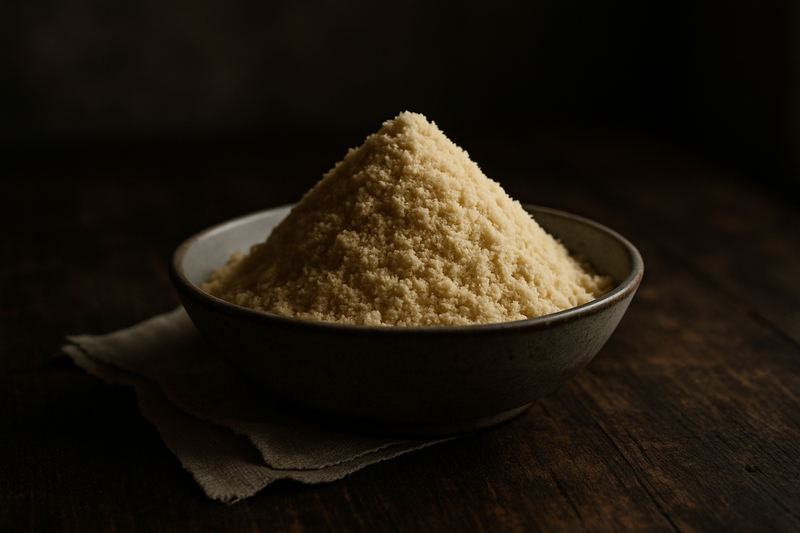
Almond Flour · Photograph
Almond flour is exactly what it sounds like — almonds ground into a fine, flour-like powder. Most commercial versions are made from Prunus dulcis (the sweet almond) that has been briefly blanched (dipped in hot water) to remove the brown skin, then dried and milled until smooth. The result is a pale, slightly nutty flour that swaps into baking recipes as a nutrient-dense, lower-carbohydrate alternative to refined wheat flour.
Key Nutrients
% Daily Value based on 2,000 cal diet
Key active compounds
Understanding why almond flour behaves the way it does in the body starts with knowing what it contains beyond basic macronutrients:
- Monounsaturated fatty acids (primarily oleic acid): The dominant fat in almonds and almond flour. These are the same heart-healthy fats found in olive oil. They help support healthy LDL (low-density lipoprotein, sometimes called "bad") cholesterol levels and contribute to sustained energy.
- Vitamin E–associated tocopherols: Almonds are one of the richest food sources of alpha-tocopherol, the main form of vitamin E. These fat-soluble antioxidants (molecules that protect cells from oxidative damage) protect fats in the body from going rancid and support immune function.
- Phenolic compounds: Polyphenols — plant-based antioxidant molecules — are found mostly in the almond's brown skin. Blanched almond flour contains fewer of these than whole almonds or unblanched almond meal, but some kernel-associated phenolics remain.
- Phytosterols: Plant compounds structurally similar to cholesterol that compete with dietary cholesterol for absorption in the gut, potentially nudging LDL levels downward when consumed regularly.
How Almond Flour Compares
| Compared with | What's different |
|---|---|
| Almond Flour vs. Coconut Flour | Lower in fat and calories but higher in carbohydrates and fiber than almond flour. |
| Almond Flour vs. Almond Meal | Coarser texture with brown skins included, resulting in denser baked goods and more fiber. |
| Almond Flour vs. Wheat Flour | High carbohydrate content with zero vitamin E, whereas almond flour provides 49% DV per serving. |
Health Benefits
Things to Know
Coeliac disease / gluten sensitivity: Almond flour is naturally gluten-free, but cross-contamination during milling is common. Always look for a certified gluten-free label if you have coeliac disease.
Calorie density: At ~160 kcal per ¼ cup, almond flour is substantially more calorie-dense than wheat flour (~100 kcal per ¼ cup). Using it cup-for-cup without adjusting recipe size can meaningfully increase total calorie intake. Portion awareness matters.
Kidney stones: Almonds and almond flour contain oxalates — compounds that, in high amounts, can contribute to calcium-oxalate kidney stones in susceptible people. If you have a history of this type of kidney stone, discuss nut intake with your healthcare provider.
Digestive conditions: People with pancreatitis, gallbladder disease, or fat-malabsorption disorders may poorly tolerate the high fat content. Those on a low-FODMAP diet for IBS should be cautious with large servings of nut-based flours.
Low-FODMAP note: Small servings (1–2 tablespoons) of almond flour are generally considered low-FODMAP; larger amounts are not.
Medication interactions:
Glucose-lowering medications and insulin: Replacing refined flour with almond flour lowers meal carbohydrate load and may reduce post-meal glucose. Monitor your levels and only adjust medication under clinical supervision.
Anticoagulants (e.g., warfarin): Almond flour is rich in vitamin E; very high supplemental vitamin E can affect bleeding risk, but food-level amounts are generally safe. Mention significant dietary changes to your prescriber.
Lipase inhibitors (e.g., orlistat for weight loss): The high fat content of almond flour may worsen GI side effects of this medication class.
Young children: Introduce tree nuts gradually

Shop This Ingredient
Stock your pantry with quality almond flour.
Buy on AmazonAs an Amazon Associate, Plantopedia earns from qualifying purchases. This costs you nothing extra and helps us keep the encyclopedia free.
Frequently Asked Questions
Most clinical trials have studied whole almonds rather than almond flour specifically. Because almond flour is essentially ground blanched almonds, its macronutrient and micronutrient profile closely mirrors that of the whole nut — so researchers and dietitians generally consider it reasonable to apply whole-almond findings to the flour, with appropriate caution. Here is what the evidence currently supports: Heart and circulation Research on whole almonds is among the strongest in nut nutrition science. Clinical trials using 30–84 g of almonds per day (roughly 1–3 oz) have reported LDL cholesterol reductions of up to around 10% compared to control diets. A 2015 study cited by MedicalNewsToday found that daily almond consumption reduced both LDL cholesterol and abdominal fat — two important cardiovascular risk markers. Almond flour contributes monounsaturated fats, phytosterols, vitamin E, magnesium, and fibre — all nutrients associated with lower cardiovascular risk. When almond flour replaces refined flour in recipes, it also reduces the refined starch load of a meal, which independently supports healthier lipid (fat) and blood sugar profiles. The evidence for heart benefit is strong for whole almonds; extrapolation to almond flour is reasonable but not yet confirmed by flour-specific trials. Digestive health and the role of fibre Almond flour provides around 4 g of fibre per ¼ cup — more than white wheat flour — which supports bowel regularity and feeds beneficial gut bacteria. It is also naturally gluten-free (gluten is the structural protein in wheat, barley, and rye that triggers immune reactions in people with coeliac disease), making it a practical option for people who cannot tolerate gluten but still want to bake. Human data specifically on almond flour and digestive outcomes such as microbiome (the community of bacteria living in the gut) changes are limited. What is well-established is that higher fibre intake generally supports healthier digestion. Note: large amounts of almond flour in one sitting — a high fat load combined with fermentable fibres — can cause bloating or loose stools in sensitive people. Starting with small portions and building up gradually is a sensible approach. Blood sugar and metabolism Almond flour has a very low glycaemic index (GI) — a measure of how quickly a food raises blood glucose. Its combination of low digestible carbohydrates, high fibre, fat, and protein all slow glucose absorption after a meal. Clinical trials on whole almonds show that including them with or alongside carbohydrate-rich foods can reduce post-meal blood glucose and insulin spikes in people with and without type 2 diabetes. Almond flour is popular in low-carbohydrate and ketogenic (very low-carb) diets precisely because of its minimal carbohydrate load. When used to replace refined flour in recipes, it lowers the overall glycaemic load of a dish. Direct evidence from almond flour–specific blood sugar trials is limited, but the direction of benefit is supported by almond research and basic nutrition science. Hormones and metabolic health Almond flour's magnesium content is relevant here: magnesium plays a role in insulin signalling and in the regulation of several hormones. Its unsaturated fats support the building blocks for steroid hormones and can improve insulin sensitivity (how well cells respond to insulin) when they replace refined carbohydrates or saturated fats. Some almond trials in people with type 2 diabetes or metabolic syndrome have shown improved insulin resistance markers. That said, no large, high-quality trials have looked specifically at almond flour and hormonal outcomes such as sex hormones, thyroid function, or reproductive health. The evidence here is indirect. Almond flour is best framed as a nutrient-dense, lower-glycaemic carbohydrate replacement rather than a direct hormone-balancing food. Inflammation and recovery Almonds are a significant source of vitamin E and other antioxidants that may help dampen oxidative stress — cellular damage caused by unstable molecules called free radicals — which is linked to chronic inflammation. A 12-week randomised study in people with type 2 diabetes found that regular almond consumption reduced markers of inflammation. Almond flour retains vitamin E, unsaturated fats, and magnesium, all of which may support a lower-inflammatory dietary pattern. Blanching removes the skin, where many polyphenols are concentrated, so almond flour has fewer of these antioxidants than whole almonds. The anti-inflammatory evidence remains emerging and flour-specific trials are lacking, but using almond flour in place of refined flour is an upgrade in terms of antioxidant density.
The right choice depends on what you are making and what nutrients matter most to you. | Form | Texture | Best use | Nutritional notes | |---|---|---|---| | Blanched almond flour | Fine, smooth, light-coloured | Cakes, cookies, crepes, gluten-free pastry | Highest vitamin E, good for delicate bakes | | Almond meal (unblanched) | Coarser, speckled brown | Rustic baked goods, crumb coatings, energy balls | Slightly more fibre and polyphenols from the skin | | Partially defatted almond flour | Fine, drier | High-protein baking formulas | Higher protein and fibre, lower fat; less common | | Flour blends (almond + other GF flours) | Varies | Bread, pizza bases, structured baking | Lower almond nutrient density; better structure for some recipes | Practical note: Fine blanched almond flour and almond meal are not interchangeable in all recipes. Blanched flour produces lighter, moister results; almond meal produces denser ones. For blood sugar and heart health goals, either works well — the differences in their nutrient profiles are modest.
Quick Answers
Common questions, answered in a line.
Almond flour is a nutrient-dense, lower-carbohydrate alternative to refined wheat flour made from blanched almonds that are dried and finely milled. It is typically produced from the sweet almond (Prunus dulcis) after being dipped in hot water to remove the brown skin.
Almond flour is naturally gluten-free, making it an excellent choice for individuals with coeliac disease or gluten sensitivity. However, consumers should look for a certified gluten-free label because cross-contamination can occur during the milling process.
Almond flour provides heart-healthy monounsaturated fatty acids, high levels of Vitamin E, and phytosterols that help manage cholesterol levels. These components work together to support immune function, protect cells from oxidative damage, and provide sustained energy.
Almond flour is significantly more calorie-dense than wheat flour, containing approximately 160 kcal per quarter cup compared to 100 kcal in wheat flour. Because of this difference, using it as a direct cup-for-cup replacement can meaningfully increase your total calorie intake.
People with a history of calcium-oxalate kidney stones should be cautious because almond flour contains high amounts of oxalates. Additionally, individuals with fat-malabsorption disorders or those on a low-FODMAP diet may need to limit their intake due to the high fat and fermentable content.
Almond flour can lower the carbohydrate load of a meal, which may reduce post-meal glucose and require monitoring if you take insulin or glucose-lowering drugs. It may also interact with lipase inhibitors like orlistat or affect bleeding risk due to high vitamin E levels if taken with anticoagulants.
For Readers in the USA
Local context — sourcing, seasonality, and regional notes.
California produces over 80% of the world’s almonds, making it the primary source for almond flour found in U.S. grocery stores. Because California-grown almonds are harvested in late summer and fall, you will find consistent, fresh supplies across all 50 states year-round.
You can find almond flour at major U.S. retailers like Costco, Walmart, and Whole Foods, often located in the baking aisle or the gluten-free specialty section. Popular American brands such as Blue Diamond and Bob’s Red Mill are widely available in both supermarkets and natural food stores.
Yes, almond flour sold in the U.S. is subject to FDA labeling requirements and can be certified USDA Organic if it meets specific federal pesticide and processing standards. Look for the USDA Organic seal on the packaging to ensure the almonds were grown without synthetic fertilizers or prohibited pesticides.
In the U.S., almond flour is a staple of Keto, Paleo, and gluten-free diets, often used to make grain-free versions of American classics like pancakes, muffins, and chocolate chip cookies. It gained mainstream popularity in the 2010s as domestic interest in low-carb lifestyles surged.
AI Clinical Review
- Clearly explains what almond flour is (blanched, ground almonds) and why it differs nutritionally from refined wheat flour—more healthy fats, plant protein, fibre, vitamin E, and minerals.
- Provides realistic per–¼ cup nutrition figures and points readers to USDA FoodData Central for brand-to-brand variability.
- Accurately frames benefits as extrapolated from whole‑almond research (cardiometabolic and glycaemic effects) and emphasizes that benefits are strongest when almond flour replaces refined flour.
- Offers practical distinctions between blanched almond flour vs almond meal and mentions partially defatted options, aligning form choice with recipe needs.
- Appropriately highlights key cautions: nut allergy, cross‑contamination risk for coeliac disease, calorie density, potential oxalate concerns, and medication considerations.
- Direct clinical trials on almond flour itself (lipids, A1c, microbiome, inflammation) are limited; most evidence comes from whole‑almond studies and reasonable inference.
- The impact of blanching (skin removed) on polyphenol content means antioxidant effects may differ from whole almonds; the clinical relevance of this difference isn’t well defined.
- Dose–response data are unclear: how much almond flour in common recipes—and over what duration—translates to measurable health changes.
- Long‑term weight and metabolic outcomes in free‑living settings are uncertain given the flour’s high energy density despite its low glycaemic load.
- Portion guidance: about ¼ cup (≈28 g) provides ~160 kcal; many baked goods deliver 1–2 tablespoons per serving—helpful for planning, especially for weight and blood‑glucose goals. For IBS/low‑FODMAP patterns, small servings (about 1–2 tablespoons) are typically better tolerated.
- Safety/caution groups: anyone with tree‑nut allergy; people with calcium‑oxalate kidney stones; those with pancreatitis, gallbladder disease, or fat‑malabsorption; and people using insulin or other glucose‑lowering drugs, warfarin (vitamin E–rich diets), or orlistat—check in with your clinician if making substantial swaps.
- Gluten‑free needs: almond flour is naturally GF but look for certified GF products if you have coeliac disease due to cross‑contact risk.
- Form matters: choose blanched flour for lighter, finer bakes; unblanched meal for more fibre and a rustic texture; partially defatted flour if you need higher protein/lower fat in recipes.
Mention allergy context where appropriate; keep serving size realistic.
References
- PMC, National Library of Medicine — Effects of animal fat replacement with almond flour on quality parameters of beef patties (pmc.ncbi.nlm.nih.gov)
- PMC, National Library of Medicine — Use of almond flour and stevia in rice-based gluten-free cookie production (pmc.ncbi.nlm.nih.gov)
- Oxford Academic — Article (academic.oup.com)
Know Your Numbers
Eating healthy is a start. Now get to know your biomarkers.
Food changes bloodwork — inflammation, lipids, blood sugar and nutrient status all respond to what you eat. 59 markers from $59.
- Results in 7–10 days at 2,000+ Quest sites
- Licensed provider reviews every result
- One flat price, no membership, HSA/FSA eligible
Educational information only, not medical advice. Panels are ordered and reviewed through our licensed partner; Plantopedia may earn a commission.