Sprouted Almonds — health benefits and uses
Healthy fats, minerals, and texture; small-amount high-leverage add-in
The Short Answer
Sprouted almonds are raw almonds that have been soaked and germinated to reduce phytic acid and enzyme inhibitors, which may make them easier to digest. They provide 6g of protein and 49% of your daily Vitamin E per one-ounce serving.

Sprouted Almonds · Photograph
Sprouted almonds start life as ordinary raw almonds (Prunus dulcis) — but before they reach your snack bowl they go through a simple transformation: a long soak in water, a short rest to allow germination to begin, and then careful drying. The result is a nut with a slightly softer bite, a subtler flavour, and — if the emerging research holds up — potentially a few digestive advantages over the everyday raw version.
Key Nutrients
% Daily Value based on 2,000 cal diet
Key active compounds in sprouted almonds
- Monounsaturated fatty acids (MUFAs) — primarily oleic acid, the same heart-friendly fat found in olive oil; MUFAs support healthy blood lipid profiles and cell membrane integrity.
- Polyphenols — a broad class of plant compounds concentrated in almond skins, including phenolic acids and flavonoids; these act as antioxidants and may support vascular function.
- Phytosterols — plant sterols structurally similar to cholesterol; they compete with dietary cholesterol for absorption in the gut, which can modestly lower LDL ("bad") cholesterol.
- Vitamin E (tocopherols) — fat-soluble antioxidant that protects cell membranes from oxidative damage and supports immune function; almonds are one of the richest whole-food sources.
- Phytic acid (before sprouting) — a storage form of phosphorus in seeds that binds minerals like iron, zinc, and calcium, potentially reducing how much you absorb; germination begins to break this down, though the degree of reduction varies and has not been confirmed robustly in human studies on almonds specifically.
- Enzyme inhibitors — proteins in raw nuts that can slow digestive enzymes; soaking and sprouting appears to deactivate some of these, which may contribute to the easier-to-digest experience many people report.
Prep and pairing ideas
Sprouted almonds are versatile precisely because their texture sits between soft and crunchy depending on how they are prepared.
3 practical pairings:
- Sprouted almonds + cooked oats + cinnamon — the healthy fats and protein in sprouted almonds slow the digestion of oat starch, blunting the glucose spike you might otherwise get from a large bowl of porridge. A classic blood-sugar-friendly breakfast pairing.
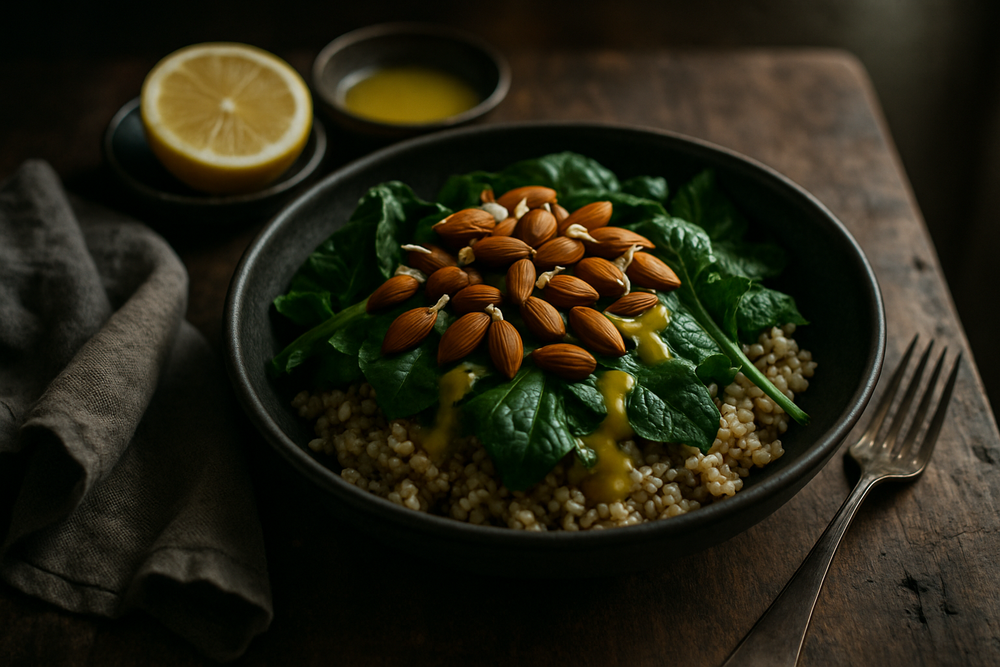
- Sprouted almonds + leafy greens + lemon dressing — vitamin C in citrus enhances non-haem iron absorption, and sprouted almonds contribute iron alongside magnesium. Scattering a tablespoon of chopped sprouted almonds over a spinach or rocket salad is an easy mineral boost.
- Sprouted almond butter + apple slices — the fibre and natural sugars in apple combine with the fat and protein in sprouted almond butter for a snack that sustains energy longer than fruit alone. Look for sprouted almond butters with no added oils or sweeteners.
Quick preparation tips:
- Add whole dehydrated sprouted almonds to grain bowls, overnight oats, or trail mixes.
- Blend into smoothies for creaminess — soak briefly first if using fresh sprouted almonds.
- Chop and use as a crunchy topping on roasted vegetables.
- Store open bags of dehydrated sprouted almonds in an airtight container away from light; their higher moisture history can make them slightly more susceptible to going rancid than regular almonds, so check the smell before eating.
How Sprouted Almonds Compares
| Compared with | What's different |
|---|---|
| Sprouted Almonds vs. Raw Almonds | Sprouted almonds have less phytic acid and a softer, less brittle crunch. |
| Sprouted Almonds vs. Walnuts | Walnuts have significantly more omega-3 fatty acids but less vitamin E and protein. |
Health Benefits
Things to Know
Tree nut allergy: Sprouting does not neutralise allergenic proteins. If you have a confirmed or suspected tree nut allergy, sprouted almonds carry the same risk as any other almond product.
Anaphylaxis history: Anyone with a history of severe allergic reactions to nuts should avoid all almond forms unless cleared by an allergist.
Pregnancy, older age, and immune suppression: Raw sprouted foods carry a higher bacterial contamination risk. Opting for commercially dehydrated or lightly roasted sprouted almonds rather than home-sprouted fresh versions is the more cautious choice.
Infants and young children: Whole nuts of any kind are a choking hazard. Use finely ground forms or thin nut butters, and check age-appropriate allergy introduction guidance.
Kidney disease: Almonds are concentrated sources of potassium and phosphorus. If you have been advised to limit these minerals, check nut intake with a renal dietitian.
Blood thinners (e.g., warfarin): Food-level vitamin E from a daily serving of almonds is generally considered safe, but high supplemental intakes of vitamin E can interact with anticoagulants. Stick to a realistic portion and discuss any major dietary changes with your clinician.
Calorie-dense food: Despite the healthful fat profile, almonds are energy-rich. If you are managing weight or following a calorie-restricted plan, count your serving within your total daily intake.
Home sprouting hygiene: If sprouting at home, use clean equipment, rinse almonds at least twice daily, and transfer to the refrigerator promptly after sprouting begins. Consume within about five to seven days or dehydrate for storage.
Prep Ideas
- — Sprouted almonds + cooked oats + cinnamon — the healthy fats and protein in sprouted almonds slow the digestion of oat starch, blunting the glucose spike you might otherwise get from a large bowl of porridge. A classic blood-sugar-friendly breakfast pairing.
- — Sprouted almonds + leafy greens + lemon dressing — vitamin C in citrus enhances non-haem iron absorption, and sprouted almonds contribute iron alongside magnesium. Scattering a tablespoon of chopped sprouted almonds over a spinach or rocket salad is an easy mineral boost.
- — Sprouted almond butter + apple slices — the fibre and natural sugars in apple combine with the fat and protein in sprouted almond butter for a snack that sustains energy longer than fruit alone. Look for sprouted almond butters with no added oils or sweeteners.
- — Add whole dehydrated sprouted almonds to grain bowls, overnight oats, or trail mixes.
- — Blend into smoothies for creaminess — soak briefly first if using fresh sprouted almonds.
- — Chop and use as a crunchy topping on roasted vegetables.
- — Store open bags of dehydrated sprouted almonds in an airtight container away from light; their higher moisture history can make them slightly more susceptible to going rancid than regular almonds, so check the smell before eating.
Shop This Ingredient
Stock your pantry with quality sprouted almonds.
Buy on AmazonAs an Amazon Associate, Plantopedia earns from qualifying purchases. This costs you nothing extra and helps us keep the encyclopedia free.
Frequently Asked Questions
Heart and circulation Human studies on regular almonds consistently show improvements in LDL cholesterol, HDL cholesterol, triglycerides, and overall cardiovascular risk markers when eaten in moderate portions as part of a balanced diet. The main drivers are MUFAs, phytosterols, vitamin E, and polyphenols — all of which sprouted almonds retain. One human trial on sprouted plant foods (not nut sprouts specifically) also found increases in HDL and reductions in triglycerides, suggesting that sprouted plant foods can support heart-health markers. No clinical trials have tested sprouted almonds specifically for cardiovascular outcomes, so current evidence is strong for regular almonds and inferred for the sprouted form. Digestive health and gut health This is where sprouting generates the most conversation. Germination activates endogenous enzymes (digestive helpers already present inside the seed), partially breaks down phytic acid, and reduces enzyme inhibitors. In grains and legumes, these changes reliably improve protein digestibility and mineral absorption. Many people report less bloating with sprouted almonds — but systematic human trials measuring digestive symptoms specifically after sprouted-almond consumption have not yet been published. What is clear is that food hygiene during sprouting matters enormously: inadequate rinsing or warm storage can allow bacteria or mould to grow, which would itself cause digestive upset. Blood sugar and metabolic health Adding regular almonds or mixed nuts to carbohydrate-rich meals is well-established in human trials to blunt post-meal glucose and insulin spikes, and longer-term interventions show modest improvements in glycaemic control in people with insulin resistance or type 2 diabetes. These trials used raw or roasted nuts, not sprouted almonds specifically, so the blood-sugar benefit for sprouted almonds is reasonably inferred rather than directly proven. Because sprouting does not appear to substantially change the core macronutrient profile — high healthy fat, moderate protein, relatively low carbohydrate — similar effects are plausible. Inflammation and recovery Almonds as a food group are associated in human studies with lower markers of oxidative stress and systemic inflammation, attributed to vitamin E, unsaturated fats, and polyphenols. Sprouting in grains and legumes can increase certain antioxidant compounds, and some sources suggest sprouted almonds follow suit — but direct measurements in sprouted almonds are sparse. The conservative read: sprouted almonds likely retain the core anti-inflammatory nutrient profile of regular almonds, with any incremental advantage from sprouting still speculative. Minerals and absorption This is the most mechanistically compelling case for sprouting. Phytic acid in raw almonds binds iron, zinc, calcium, and magnesium, meaning you absorb less than the label suggests. Germination starts to break phytic acid down, which could theoretically improve mineral delivery — helpful for people eating entirely plant-based diets where mineral bioavailability is already a consideration. However, Healthline notes that available data do not show consistent, reliable reductions in nut phytates after sprouting, and human feeding studies confirming improved mineral status from sprouted almonds have not been published. It remains a promising mechanism awaiting better evidence.
Each form has its place: | Form | Texture | Key trade-offs | |---|---|---| | Raw | Firm, slightly dense | Highest phytic acid, full nutrient retention, longest shelf life, lowest contamination risk | | Soaked (fresh sprouted) | Soft, juicy, mild | Lowest phytic acid after soaking, easiest to digest anecdotally, short fridge life (use within a week), higher hygiene demands | | Dehydrated sprouted | Crunchy, lighter than raw | Stable shelf life, convenient; low-temperature drying (around 70–75 °C) cited as sufficient to inhibit pathogenic bacteria while preserving most nutrients | | Lightly roasted sprouted | Crunchiest, deepest flavour | May reduce some heat-sensitive compounds slightly; safest preparation for vulnerable groups; still retains healthy fat and protein profile | | Sprouted almond butter | Creamy spread | Convenient way to use sprouted almonds; portion control is important since spreading is easy to overdo | For most people, dehydrated or lightly roasted sprouted almonds hit the sweet spot of convenience, safety, and texture without requiring home sprouting equipment.
The everyday plant-based eater looking to optimise mineral absorption Eats mostly whole plant foods and wants to reduce reliance on supplements for minerals like zinc, magnesium, and iron Already snacks on raw nuts but experiences mild bloating or heaviness Prefers food-first strategies over adding more supplements to their routine The person managing blood sugar through diet Has been diagnosed with pre-diabetes, type 2 diabetes, or insulin resistance and is actively using food choices to support glycaemic control Needs satisfying snacks that do not spike glucose — nuts are among the most evidence-backed choices here Interested in texture variety to keep a healthy eating pattern enjoyable long-term
General guidance for most adults: about 1 oz (28 g) per day — roughly 20–23 almonds or a small, cupped handful. Most heart-health eating patterns (Mediterranean, DASH, whole-food plant-based) recommend 1–1.5 oz (28–42 g) of nuts per day across all nut types. Spro
Quick Answers
Common questions, answered in a line.
Sprouted almonds are raw almonds that have undergone a long soak in water followed by a short rest to begin germination and a final drying process. This simple transformation results in a nut with a subtler flavor and a slightly softer bite than the everyday raw version.
The sprouting process helps deactivate enzyme inhibitors in raw nuts and begins to break down phytic acid, which may make the almonds easier to digest. Many people report improved digestive comfort with sprouted versions compared to standard raw almonds.
Sprouted almonds are rich in monounsaturated fatty acids (MUFAs), polyphenols, vitamin E, and phytosterols. They also contain essential minerals like magnesium and iron and provide fiber and protein to support sustained energy levels.
Phytic acid is a storage form of phosphorus that can bind to minerals like iron and zinc, potentially reducing their absorption in the gut. Germination in sprouted almonds begins to break this compound down, though the exact level of reduction can vary.
Pairing sprouted almonds with cooked oats and cinnamon can help blunt glucose spikes by slowing the digestion of oat starch. This combination of healthy fats and protein makes for a blood-sugar-friendly breakfast option.
People with tree nut allergies, kidney disease, or those taking blood thinners should exercise caution before consuming sprouted almonds. Additionally, pregnant women and those with suppressed immune systems should choose commercially dehydrated versions over home-sprouted ones to reduce bacterial risk.
To maintain freshness, store dehydrated sprouted almonds in an airtight container away from light to prevent them from going rancid. If you are sprouting them fresh at home, they should be stored in the refrigerator and consumed within five to seven days.
For Readers in the USA
Local context — sourcing, seasonality, and regional notes.
California produces about 80% of the world's almonds, making sprouted almonds widely available year-round across the United States. While the primary harvest occurs between August and October, the shelf-stable nature of dehydrated sprouted almonds ensures they remain a constant staple in American grocery stores.
You can find sprouted almonds at major national retailers like Whole Foods Market, Sprouts Farmers Market, and Trader Joe's, as well as through online health food platforms. Many local farmers markets in California and the Southwest also feature vendors who specialize in small-batch sprouted and dehydrated nuts.
The USDA requires most raw almonds grown in California to be pasteurized for safety, so look for the "USDA Organic" seal if you want almonds treated with steam rather than chemicals before the sprouting process. Products labeled as "sprouted" must still adhere to FDA food safety guidelines regarding moisture levels and bacterial prevention.
In the U.S., "activated almonds" is the most common regional synonym for sprouted almonds, a term often used in premium health food circles and specialty boutiques. While the terms are used interchangeably, both refer to the process of soaking and dehydrating to reduce phytic acid.
AI Clinical Review
- It accurately frames sprouted almonds as nutritionally similar to regular almonds, with any advantages likely modest.
- The heart and metabolic benefits described are supported by human data on regular almonds (MUFA fats, vitamin E, fiber, phytosterols), and it reasonably infers sprouted forms retain these nutrients.
- It fairly explains the sprouting rationale (potential reduction of phytic acid and enzyme inhibitors) while noting the evidence gap for almonds specifically.
- Practical guidance on food safety, allergy risk, portion size (~1 oz/28 g), and preparation options is balanced and consumer-friendly.
- There are few, if any, controlled human trials testing sprouted almonds specifically for digestion, mineral absorption, glycemic control, or lipid changes; most claims extrapolate from regular almonds or other sprouted foods.
- The degree to which sprouting lowers phytic acid and deactivates enzyme inhibitors in almonds varies by soaking/sprouting conditions and hasn’t been validated in real-world eating studies.
- Suggestions that sprouting meaningfully boosts antioxidant capacity in almonds remain preliminary and need direct measurements in human-relevant portions.
- Effects of sprouted almonds on the gut microbiome, inflammation, or long-term clinical outcomes have not been established.
- Portion and calories: a typical serving is about 1 oz (20–23 almonds), ~160–170 kcal; nut butters make it easy to overshoot portions.
- Safety: home-sprouted nuts carry higher bacterial risk—pregnant people, older adults, and those who are immunocompromised are safer choosing commercially dehydrated or lightly roasted products; refrigerate fresh sprouts and use within 5–7 days.
- Medical considerations: tree‑nut allergy risk is unchanged; people with chronic kidney disease may need to limit potassium/phosphorus; those with a history of calcium‑oxalate kidney stones may prefer variety and moderation across nut types; individuals on warfarin should keep vitamin E–rich foods consistent and discuss big diet shifts with a clinician.
- Product form matters: unsalted, minimally processed options (no added oils/sugars) support cardiometabolic goals; roasting can improve safety with small nutrient trade‑offs, while fresh sprouted almonds emphasize texture but require stricter hygiene.
Mention allergy context where appropriate; keep serving size realistic.
References
- PMC, National Library of Medicine — Almonds (Prunus Dulcis Mill. D. A. Webb): A Source of Nutrients and Health-Promoting Compounds (pmc.ncbi.nlm.nih.gov)
- USDA FoodData Central — nutrient composition database (fdc.nal.usda.gov)
- USDA MyPlate — food group guidance (myplate.gov)
Know Your Numbers
Eating healthy is a start. Now get to know your biomarkers.
Food changes bloodwork — inflammation, lipids, blood sugar and nutrient status all respond to what you eat. 59 markers from $59.
- Results in 7–10 days at 2,000+ Quest sites
- Licensed provider reviews every result
- One flat price, no membership, HSA/FSA eligible
Educational information only, not medical advice. Panels are ordered and reviewed through our licensed partner; Plantopedia may earn a commission.