Acorn Squash — health benefits and uses
Color, fiber, and everyday plate-building angle
The Short Answer
Acorn squash is a nutrient-dense winter squash recognized for its high fiber content (9g per cup) and sweet, nutty flavor. It is best prepared by roasting or stuffing and provides significant amounts of Vitamin C and potassium.
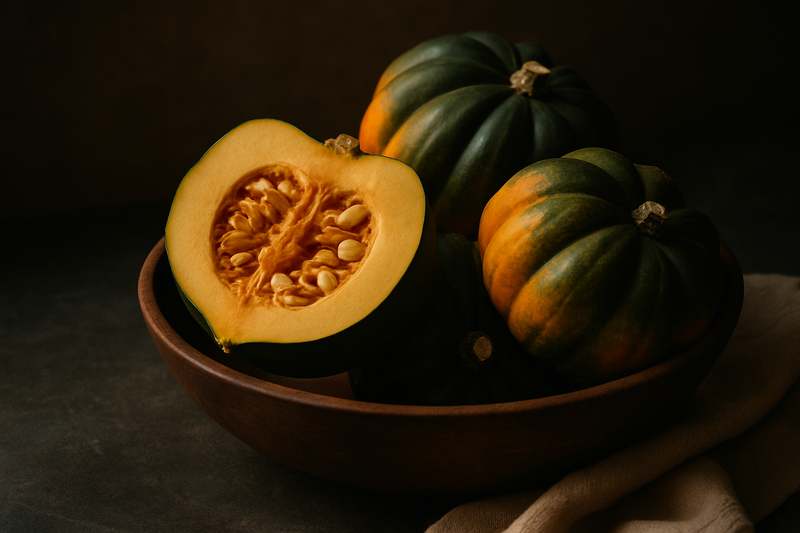
Acorn Squash · Photograph
Acorn squash (Cucurbita pepo) is a small, deeply ridged winter squash with forest-green skin and a sweet, nutty orange interior. It shows up at farmers markets from late summer through winter and tends to outlast most fresh produce in your pantry — whole, uncut squash can keep for one to three months in a cool, dry spot.
Key Nutrients
% Daily Value based on 2,000 cal diet
Key active compounds (phytochemicals)
- Beta-carotene — The orange-red pigment that gives acorn squash its warm color. The body converts it into vitamin A as needed. Also acts as an antioxidant (a compound that helps neutralize cell-damaging molecules called free radicals).
- Alpha-carotene — A close structural cousin of beta-carotene also found in orange vegetables. Like beta-carotene, it can be converted to vitamin A and has been linked in observational studies to lower chronic disease risk when part of an overall vegetable-rich diet.
- Lutein and zeaxanthin — Yellow carotenoids that concentrate in the retina (the light-sensitive tissue at the back of the eye). Higher dietary intakes are associated with lower risk of age-related macular degeneration (a leading cause of vision loss in older adults) in human observational studies.
- Phenolic acids (e.g., ferulic acid, p-coumaric acid) — Plant polyphenols (a broad family of antioxidant plant compounds) found in the cell walls of many vegetables including squash. They contribute antioxidant capacity and may help modulate inflammatory pathways, though most direct evidence comes from broader dietary studies rather than acorn squash-specific trials.
- Cucurbitacins (trace) — Bitter triterpenoid compounds naturally present throughout the Cucurbitaceae family (squash, cucumbers, melons). Commercial edible varieties are bred to contain very low levels, so they are not a practical concern in food amounts.
Buying guide: how to choose the best acorn squash
Whole, fresh squash (best choice for nutrition and shelf life) Look for squash that feels heavy for its size — a sign of dense, well-developed flesh. The skin should be deeply dark green (some varieties have orange patches, which is fine), firm, and free of soft spots or mold. A small patch of yellow or orange on one side is just where the squash rested on the ground; it doesn't affect quality. Avoid any squash with a dull, dry-looking stem or visible cracks.
Pre-cut or cubed (convenient, slightly faster to cook) Pre-cut acorn squash is widely available in produce sections. It's perfectly nutritious but needs to be used within 3 to 5 days. Look for pieces that are deep orange with no sliminess or browning.
Frozen cubes (underrated and practical) Frozen winter squash retains most of its nutrition because it's blanched and frozen quickly after harvest. It's softer when thawed, making it better for soups, mashes, and purees than for roasting crispy edges. A solid pantry option.
Canned acorn squash Less commonly available than canned pumpkin or butternut. If you find it, check for no-added-salt or low-sodium versions. Canned squash puree works well in soups and sauces.
Label tip: For any packaged form, the ingredient list should be short — ideally just squash, maybe water. Avoid versions with added sugar, cream, or sodium exceeding 140 mg per serving if you're watching those.
Common pairings: what to serve with acorn squash for a healthy meal
1. Acorn squash + lentils or black beans
Squash is low in protein. Pairing it with legumes (beans, lentils, chickpeas) adds plant protein and extra fiber, turning a side dish into a complete, satisfying meal. Think: stuffed acorn squash halves filled with spiced lentils and wilted spinach.
2. Acorn squash + warming spices (cinnamon, smoked paprika, cumin, or chili flakes)
Acorn squash has a mild, sweet base flavor that responds beautifully to both sweet and savory spice profiles. Warming spices like cinnamon and nutmeg lean into its natural sweetness; smoked paprika, cumin, and chili flakes push it in a savory, earthy direction. Neither direction requires much fat or salt to work well.
3. Acorn squash + leafy greens (kale, arugula, or spinach)
Winter squash and dark leafy greens are the classic cold-weather complement. The fat-soluble carotenoids in acorn squash (including beta-carotene) are absorbed better when consumed with even a small amount of fat — a drizzle of olive oil over a warm squash-and-greens bowl covers that nicely. Nutritionally, you're stacking carotenoids, vitamin C, vitamin K, iron, and calcium in one meal.
How Acorn Squash Compares
| Compared with | What's different |
|---|---|
| Acorn Squash vs. Butternut Squash | Denser, sweeter, and easier to peel; contains slightly more vitamin A but less fiber per cup. |
| Acorn Squash vs. Spaghetti Squash | Spaghetti-like strands instead of creamy flesh; significantly lower in calories and starch. |
| Acorn Squash vs. Kabocha Squash | Harder shell and more decorative; the flesh is more savory and less sweet than acorn varieties. |
Health Benefits
Shop This Ingredient
Stock your pantry with quality acorn squash.
Buy on AmazonAs an Amazon Associate, Plantopedia earns from qualifying purchases. This costs you nothing extra and helps us keep the encyclopedia free.
Frequently Asked Questions
Evidence below is categorized by strength: "well-established" = consistent findings across many human studies; "moderate" = good human observational data, fewer controlled trials; "emerging" = promising early evidence, not yet confirmed by large human trials. Heart and circulation Evidence level: Moderate Large cohort studies (long-term studies tracking thousands of people) and meta-analyses (statistical pooling of multiple studies) consistently link higher vegetable intake — especially fiber-rich and carotenoid-rich orange vegetables — with lower rates of coronary heart disease and stroke. Acorn squash contributes to this pattern through three main pathways: Fiber — Soluble fiber (the kind that dissolves in water) can bind to cholesterol in the gut and help carry it out of the body, potentially reducing LDL cholesterol (sometimes called "bad" cholesterol). Potassium — Adequate potassium intake is associated with healthier blood pressure in human studies, partly by counteracting the effects of sodium. Carotenoids — These antioxidants may help reduce oxidative stress (an imbalance between free radicals and the body's ability to neutralize them) and inflammation in blood vessels. No clinical trials have tested acorn squash alone as a heart disease treatment. Benefits should be understood as part of an overall vegetable-rich dietary pattern. Digestive health and microbiome Evidence level: Well-established (for dietary fiber as a category) With about 9 grams of fiber per cooked cup, acorn squash is one of the higher-fiber vegetables you can eat. Its mix of soluble and insoluble fiber (fiber that doesn't dissolve in water) contributes to: Bulkier, softer stools and more regular bowel movements Slower gastric emptying (food moves more gradually through the stomach), which supports satiety (feeling full) Fermentable substrate for beneficial gut bacteria — meaning the fiber feeds the microbiome (the community of microorganisms living in your gut), which produces short-chain fatty acids linked to colon health Practical note: If you're currently eating a low-fiber diet, increase acorn squash and other high-fiber foods gradually and drink enough water. Jumping up too fast can cause gas and bloating. Blood sugar and metabolism Evidence level: Moderate Human studies on dietary patterns consistently show that higher vegetable and fiber intake is associated with better blood sugar control and lower type 2 diabetes risk. Acorn squash is relevant here in two ways: Its fiber content slows digestion and can blunt the post-meal glucose (blood sugar) spike compared with low-fiber starchy foods As a whole food, its natural fiber-carbohydrate matrix (the way fiber, starch, and other compounds are physically bound together in the plant cell) behaves differently in the body than refined carbohydrates with the fiber stripped out Important caveat: Acorn squash is more carbohydrate-dense than non-starchy vegetables (think broccoli or spinach). One cup contains about 30 grams of carbs. If you have diabetes or prediabetes, count it as a carbohydrate serving and balance it with protein and healthy fat in the same meal. Inflammation and recovery Evidence level: Emerging Observational human data link higher blood levels of carotenoids and higher vegetable intake with lower levels of inflammatory markers like C-reactive protein (CRP, a blood protein that rises during inflammation). Acorn squash's orange flesh signals a meaningful carotenoid payload — including beta-carotene, alpha-carotene, and potentially lutein and zeaxanthin — along with vitamin C. These compounds may help modulate (regulate) inflammatory signaling pathways and reduce oxidative stress, but no direct trials have tested acorn squash specifically as an anti-inflammatory intervention. Think of it as a supporting player in an overall vegetable-forward diet, not a standalone treatment.
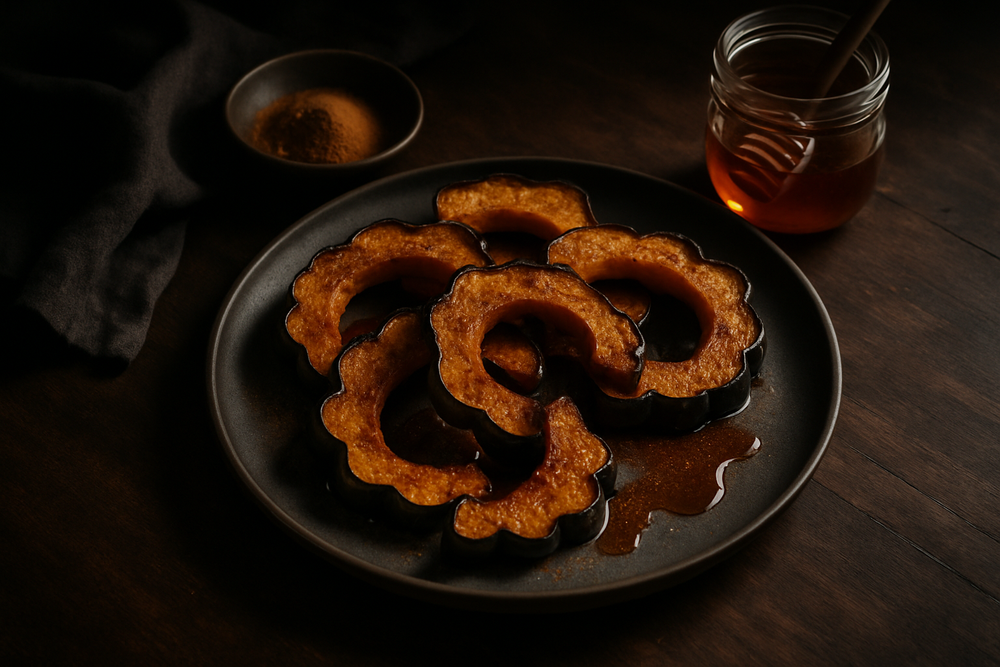
The short answer: roasting. High, dry oven heat concentrates flavor, caramelizes the cut edges, and makes the flesh meltingly tender — all without stripping nutrition the way boiling can (water-soluble vitamins like vitamin C and B6 leach into cooking water that gets discarded). Roasted halves (the classic) Preheat oven to 400°F (200°C). Carefully halve the squash from stem to tip (see the safety note in the FAQ below). Scoop out seeds and stringy fibers with a spoon. Brush the cut sides lightly with olive oil. Season with salt and your choice of sweet or savory spices. Place cut-side down on a parchment-lined baking sheet. Roast 35 to 45 minutes until flesh is easily pierced with a fork and the edges are golden. Flip cut-side up for the last 5 minutes if you want a little browning on the flesh. Roasted wedges or slices Slice the halved squash into half-moon wedges (skin on is fine). Toss with a teaspoon of oil and seasonings. Roast at 425°F (220°C) for 20 to 25 minutes, flipping once, until edges are caramelized. Works great as a sheet-pan side or salad topper. Stuffed squash halves Roast halves cut-side up, fill with a pre-cooked grain (quinoa, farro, or brown rice), lentils or beans, sautéed vegetables, and fresh herbs. Return to the oven for 10 minutes to meld. This is a full meal in one vessel. Mashed or pureed Roast or steam until very soft, scoop out the flesh, and mash with a fork or blend smooth. Season simply with herbs, a touch of olive oil, and spices. Works well in soups, as a swap for mashed potatoes, or as a base sauce for pasta. Roasted seeds Don't toss the seeds. Rinse them, pat dry, toss with a little olive oil and salt (or any spice blend you like), and roast at 325°F (160°C) for 15 to 20 minutes until golden and crunchy. They add texture and deliver fiber, healthy fats, and minerals.
Quick Answers
Common questions, answered in a line.
Acorn squash is rich in beta-carotene, alpha-carotene, lutein, zeaxanthin, and phenolic acids like ferulic and p-coumaric acid. These phytochemicals serve as antioxidants that help neutralize free radicals and may support eye health and inflammatory pathways.
Look for an acorn squash that feels heavy for its size with firm, deeply dark green skin that is free of soft spots, mold, or cracks. A small yellow or orange patch where it rested on the ground is normal, but avoid squash with a dull, dry-looking stem.
Whole, uncut acorn squash can be stored in a cool, dry spot for one to three months. This long shelf life allows it to outlast most other fresh produce in your pantry during the late summer through winter months.
Acorn squash contains lutein and zeaxanthin, yellow carotenoids that concentrate in the retina to help protect vision. Higher dietary intake of these compounds is associated with a lower risk of age-related macular degeneration in humans.
Acorn squash should be paired with a small amount of fat, such as a drizzle of olive oil, to help your body better absorb its fat-soluble carotenoids. Combining it with leafy greens or protein-rich legumes like lentils also creates a more nutritionally complete meal.
Frozen acorn squash is a practical, nutritious option because it is blanched and frozen quickly after harvest to retain its nutrients. While it becomes softer when thawed, it is ideal for use in soups, purees, and mashes.
For Readers in the USA
Local context — sourcing, seasonality, and regional notes.
Acorn squash is widely available at major U.S. grocery chains like Kroger, Publix, and Safeway, typically appearing in late summer and peaking through Thanksgiving. You can also find heirloom varieties at local farmers markets starting in September across most of the country.
Acorn squash grows in almost every U.S. state, but the largest commercial production occurs in cooler climates like Michigan, New York, and the Pacific Northwest. These regions provide the necessary growing season length and late-summer cooling required for the starches to develop.
When buying packaged pre-cut or frozen acorn squash in the U.S., look for the USDA Organic seal to ensure it was grown without synthetic pesticides. Additionally, the FDA regulates labeling to ensure that any "low sodium" claims on canned squash meet the requirement of 140mg or less per serving.
In the U.S., acorn squash is a quintessential ingredient for fall holidays, often served halved and roasted as a vegetarian main or side dish for Thanksgiving dinner. It is culturally celebrated for its "edible bowl" shape, which makes it a favorite for stuffed recipes in American home cooking.
AI Clinical Review
- Accurately highlights acorn squash as a high‑fiber vegetable (about 9 g per cooked cup), with well‑supported benefits for regularity, fullness, and overall cardiometabolic health when part of a vegetable‑rich diet.
- Correctly identifies key carotenoids (beta‑ and alpha‑carotene, lutein/zeaxanthin) and vitamin C, and notes that a little dietary fat helps absorption of fat‑soluble carotenoids.
- Sensibly frames heart and blood‑sugar benefits as coming from overall dietary patterns rather than from acorn squash as a stand‑alone “treatment.”
- Practical cooking guidance (especially roasting) aligns with nutrient‑retention principles compared with boiling, which can leach water‑soluble vitamins.
- Most claims are extrapolated from studies on vegetables, fiber, and carotenoids generally; there are few (if any) randomized trials testing acorn squash itself on health outcomes.
- Anti‑inflammatory benefits are based largely on observational links and biomarker changes (e.g., CRP), which do not prove cause‑and‑effect.
- Microbiome effects are plausible via fermentable fiber but are highly individual, and optimal amounts or forms have not been defined for this specific squash.
- A typical serving (about 1 cup cooked) provides roughly 30 g carbohydrate; people with diabetes or on lower‑carb plans should count it as a starch and pair it with protein and healthy fat.
- Potassium content can be meaningful; those with chronic kidney disease or on ACE inhibitors/ARBs or potassium‑sparing diuretics should confirm appropriate portions with a clinician.
- Increase intake gradually and hydrate to minimize gas or bloating from the higher fiber load.
- If the flesh tastes unusually bitter, don’t eat it (rare batches can have higher cucurbitacins, which may cause GI upset).
Frame as food education, not disease treatment.
References
- USDA FoodData Central — USDA FoodData Central (fdc.nal.usda.gov)
- University of Rochester Medical Center — Content - Health Encyclopedia - URochester Medicine (urmc.rochester.edu)
- USDA MyPlate — food group guidance (myplate.gov)
Know Your Numbers
Eating healthy is a start. Now get to know your biomarkers.
Food changes bloodwork — inflammation, lipids, blood sugar and nutrient status all respond to what you eat. 59 markers from $59.
- Results in 7–10 days at 2,000+ Quest sites
- Licensed provider reviews every result
- One flat price, no membership, HSA/FSA eligible
Educational information only, not medical advice. Panels are ordered and reviewed through our licensed partner; Plantopedia may earn a commission.