Butternut Squash — health benefits and uses
Color, fiber, and everyday plate-building angle
The Short Answer
Butternut squash is a nutrient-dense winter squash providing over 100% of your daily Vitamin A and 7 grams of fiber per cup. Its mild sweetness makes it ideal for roasting, soups, and high-fiber meal prep.

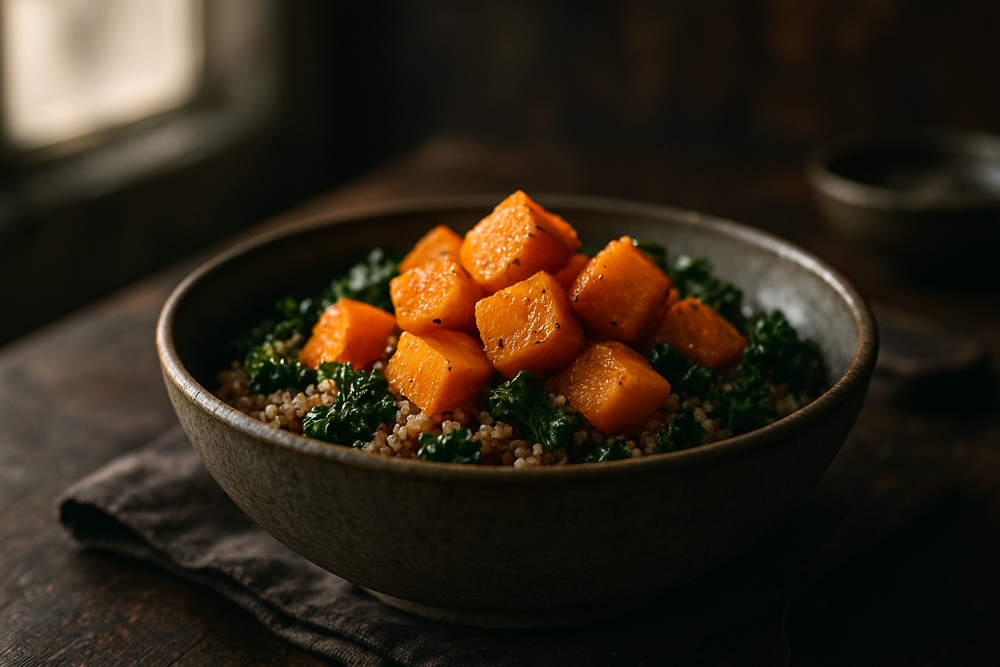
Butternut Squash · Photograph
Butternut squash (Cucurbita moschata) is a winter squash native to the Americas and one of the most versatile whole plant foods in a modern kitchen. Its signature deep-orange flesh signals an impressive concentration of beta-carotene, and its mild sweetness makes it one of the easier vegetables to eat more of — roasted on a sheet pan, blended into soup, stirred into a grain bowl, or tucked into a taco.
Key Nutrients
% Daily Value based on 2,000 cal diet
Key active compounds in butternut squash
- Beta-carotene — The dominant pigment and the main reason the flesh is orange. Beta-carotene is a provitamin A carotenoid, meaning the body converts it into vitamin A on demand. It also acts as an antioxidant (a molecule that neutralizes cell-damaging free radicals).
- Alpha-carotene and lutein — Related carotenoids present in smaller amounts, also associated with eye and skin health in dietary pattern research.
- Phenolic compounds — A broad class of plant-derived antioxidant molecules found throughout the squash flesh and skin, contributing to its overall antioxidant capacity.
- Vitamin C — A water-soluble antioxidant that supports immune function, collagen (the structural protein in skin and joints) synthesis, and iron absorption from plant foods.
- Dietary fiber (soluble and insoluble) — Two types of fiber that work differently: soluble fiber dissolves in water and can help lower LDL cholesterol; insoluble fiber adds bulk to stool and keeps digestion moving.
Myths vs. facts about butternut squash
Myth 1: "Butternut squash is too starchy and should be avoided if you're watching your weight." Fact: At roughly 82 calories per cooked cup with 7 g of fiber, butternut squash provides high volume and satiety for its calorie cost. The fiber slows digestion and helps you feel full. Most weight-management research supports choosing high-fiber, lower-calorie-density foods — which butternut squash qualifies as — over avoiding starchy vegetables entirely.
Myth 2: "Eating butternut squash will give you too much vitamin A and become toxic." Fact: Beta-carotene from plant foods is a provitamin A, not preformed vitamin A. The body converts only as much as it needs. Provitamin A from plants does not cause vitamin A toxicity at normal dietary amounts. Very high intake can occasionally cause carotenemia — a harmless temporary yellowing of the skin — but that resolves when intake drops.
Myth 3: "Frozen butternut squash is much less nutritious than fresh." Fact: Pre-cut frozen butternut squash is flash-frozen close to harvest, which preserves most nutrients. For practical weeknight cooking, frozen squash is a valid, time-saving option that still delivers beta-carotene, fiber, and potassium. Choose plain frozen squash without added sauces or seasonings to keep sodium and added sugar low.
How Butternut Squash Compares
| Compared with | What's different |
|---|---|
| Butternut Squash vs. Pumpkin | Sweeter with a creamy texture, whereas pumpkin is more fibrous and earthy. |
| Butternut Squash vs. Acorn Squash | Dense and nutty, while acorn squash is milder and has a thinner, edible skin. |
| Butternut Squash vs. Sweet Potato | Higher in fiber and Vitamin A, while sweet potatoes have more sugar and calories. |
Health Benefits
Things to Know
Starchy vegetable status: Count it as a carbohydrate portion alongside your meal planning. It is not a free vegetable like cucumbers or lettuce.
Diabetes and blood sugar: Butternut squash is a starchy vegetable. People counting carbohydrates should portion it similarly to other starchy sides and pair it with protein and fat. Talk to your dietitian about how it fits your plan.
Kidney disease: Butternut squash provides several hundred milligrams of potassium per cup. People with chronic kidney disease (CKD) who are on potassium-restricted diets should check with their care team before adding large portions regularly.
"Squash hands": Handling raw butternut squash can cause temporary itching, dryness, or a mild peeling sensation on the skin of some people — a reaction documented
Shop This Ingredient
Stock your pantry with quality butternut squash.
Buy on AmazonAs an Amazon Associate, Plantopedia earns from qualifying purchases. This costs you nothing extra and helps us keep the encyclopedia free.
Frequently Asked Questions
The research base here comes primarily from studies on high-fiber, carotenoid-rich vegetable consumption patterns rather than butternut squash-specific clinical trials. Evidence levels below reflect that context. Heart and circulation Butternut squash is a meaningful source of both soluble and insoluble fiber. Human studies consistently link higher dietary fiber intake — particularly soluble fiber — with lower LDL (low-density lipoprotein, the "bad" cholesterol) and reduced cardiovascular disease risk when it is part of an overall fiber-rich dietary pattern. The potassium and magnesium in butternut squash also matter: higher potassium intake from fruits and vegetables is consistently associated with lower blood pressure and reduced stroke risk in cohort studies and intervention trials. Carotenoids and vitamin C add antioxidant activity, and diets rich in these antioxidants are associated with lower risk of cardiovascular events in observational research. Evidence level: moderate. Practical note: To keep these benefits intact, roast or steam squash with minimal added saturated fat and sodium. Use olive oil, season with herbs and citrus, and serve alongside other vegetables, legumes, or whole grains. Digestive health and the gut microbiome The roughly 7 g of fiber in a cooked cup of butternut squash is a solid portion toward the 25–38 g daily target most adults fall short of. Soluble fiber feeds beneficial gut bacteria (the community of microorganisms living in your intestines, sometimes called the gut microbiome). Insoluble fiber adds bulk, supports regular bowel movements, and reduces constipation. Long-term high-fiber dietary patterns are associated in human data with lower risk of colorectal cancer and better gut microbiome diversity. Evidence level: strong for fiber's role in digestion generally. Practical note: If you are not used to eating much fiber, increase your portions gradually over a few weeks and drink more water. Starting with a half cup and building up reduces the likelihood of gas or bloating. Blood sugar and metabolism As a starchy vegetable, butternut squash provides complex carbohydrates. The fiber in those carbohydrates slows digestion and can help reduce post-meal blood sugar spikes compared with refined carbohydrate foods like white bread or rice. Health systems and nutrition education programs highlight this blood-sugar-moderating effect as a practical reason to swap refined starches for fiber-rich starchy vegetables. It is also relatively low in calories for its volume, which may support weight management as part of a balanced dietary pattern. Evidence level: moderate — direct randomized trials using butternut squash alone are lacking. Practical note: Treat butternut squash as a carbohydrate portion. Pairing it with protein, healthy fat, and non-starchy vegetables — such as roasted squash with lentils and leafy greens — produces a more balanced, blood-sugar-friendly meal than squash alone. Inflammation and recovery Beta-carotene and vitamin C are both antioxidants that help neutralize free radicals — unstable molecules that can damage cells and drive chronic inflammation (long-term, low-grade activation of the immune system linked with many chronic diseases). Dietary pattern research on carotenoid-rich vegetable intake is consistently associated with lower markers of oxidative stress and reduced risk of some cancers and chronic diseases. These conclusions are extrapolated from broader antioxidant research rather than squash-specific clinical trials. Evidence level: moderate. Practical note: Carotenoids are fat-soluble, meaning your body absorbs them better when squash is eaten alongside a small amount of fat — olive oil, avocado, or nuts. Combining it with other colorful vegetables increases antioxidant variety in a meal.
There is no single "best" method — each has strengths. Here is how they compare: | Method | Best for | Notes | |---|---|---| | Roasting cubes | Meal prep, bowls, salads, tacos | Caramelizes natural sugars; use a small amount of oil to enhance carotenoid absorption; reheats well | | Baking halves | Stuffed squash, scooping for purée | Hands-off; cut side down keeps moisture in | | Steaming or boiling | Purées, soups, baby food | Lower fat method; slight nutrient loss to water with boiling, minimal with steaming | | Pressure cooking | Speed; soup bases | Fast and nutrient-preserving | | Frozen, sautéed from frozen | Weeknight speed | Nutritionally comparable to fresh; no peeling required | How to cut butternut squash safely — This is where most people give up. The skin is tough and the squash rolls. Here is the practical approach: Microwave the whole squash for 2–3 minutes to soften the skin slightly. Trim both ends on a stable cutting board. Stand it upright and slice from top to bottom through the middle. Scoop seeds, then peel each half with a vegetable peeler or sharp knife. Cube on a flat cut surface. Alternatively, buy pre-cut fresh or frozen cubes and skip the process entirely — the nutrition difference is minimal.
- Butternut squash + lentils or beans Why it works: The squash provides beta-carotene and fiber; the legumes provide protein and iron. Vitamin C in the squash can enhance non-heme iron absorption from the lentils when eaten in the same meal. This combination makes a nutritionally complete bowl or soup — try a red lentil and butternut squash curry or a white bean and squash stew. 2. Butternut squash + leafy greens + a healthy fat Why it works: Dark leafy greens (kale, spinach, arugula) add calcium, folate, and a different class of carotenoids (lutein and zeaxanthin for eye health). The fat — olive oil, avocado, or tahini — enhances absorption of carotenoids from both the squash and the greens. Works beautifully as a warm grain bowl base or a roasted salad. 3. Butternut squash + warming spices (ginger, cumin, cinnamon, smoked paprika) Why it works: These spices have their own antioxidant profiles and make squash significantly more interesting to eat, which matters for habit formation. They also reduce the need for added salt or sugar to make a dish satisfying. Ginger-squash soup, cumin-roasted squash tacos, and cinnamon-squash oatmeal are all practical weeknight applications.
Quick Answers
Common questions, answered in a line.
Butternut squash is a high-fiber, lower-calorie-density food that provides roughly 82 calories and 7 grams of fiber per cooked cup. This fiber slows digestion and increases satiety, making it a valuable food choice for those focused on weight management.
Butternut squash is a starchy vegetable that should be counted as a carbohydrate portion in meal planning. Because it affects blood sugar, individuals with diabetes should portion it like other starchy sides and pair it with protein and fat to balance their intake.
The body converts beta-carotene from butternut squash into vitamin A only as it is needed, which prevents vitamin A toxicity from normal dietary intake. While very high consumption can cause a harmless, temporary yellowing of the skin called carotenemia, it is not considered toxic.
Frozen butternut squash is a highly nutritious and valid alternative to fresh squash because it is flash-frozen close to harvest to preserve its nutrients. It remains a reliable source of beta-carotene, fiber, and potassium, provided you choose versions without added sauces or seasonings.
Butternut squash is a significant source of potassium, providing several hundred milligrams per cup. People with chronic kidney disease (CKD) who are on potassium-restricted diets should consult their medical care team before consuming large portions.
The deep-orange flesh of butternut squash is primarily due to its high concentration of beta-carotene, a provitamin A carotenoid. It also contains smaller amounts of alpha-carotene and lutein, both of which are associated with eye and skin health.
Handling raw butternut squash can lead to "squash hands," a reaction causing temporary itching, dryness, or a mild peeling sensation on the skin. This documented reaction occurs for some individuals during the preparation of the raw vegetable.
For Readers in the USA
Local context — sourcing, seasonality, and regional notes.
Butternut squash is in peak season across the U.S. from early autumn through winter, typically harvested from September to November. Because it has a long shelf life and is widely grown in states like California and Florida, most American grocery stores carry it year-round.
Look for the USDA Organic seal to ensure your butternut squash was grown without synthetic pesticides or fertilizers. While the thick skin provides a natural barrier, many consumers prefer organic squash to support sustainable American farming practices and minimize environmental impact.
You can find butternut squash at major U.S. retailers like Kroger, Walmart, and Whole Foods, as well as local farmers markets during the fall. For convenience, most American supermarkets sell it pre-peeled and cubed in the produce section or flash-frozen in the freezer aisle.
In the U.S., butternut squash is a quintessential Thanksgiving side dish, often served roasted with maple syrup or blended into creamy autumnal soups. It is also a popular plant-based meat alternative in regional American cuisines, frequently used as a filling for vegetarian tacos or ravioli.
AI Clinical Review
- Clearly explains that butternut squash is a starchy vegetable that’s nutrient-dense (fiber, potassium, vitamin C) and especially rich in beta‑carotene (provitamin A).
- Appropriately links fiber and potassium–rich eating patterns with heart health and blood pressure support, and notes that benefits come from overall dietary patterns rather than a single food.
- Sensibly frames blood‑sugar effects: fiber and lower calorie density can help compared with refined starches, and pairing with protein and healthy fats is practical.
- Cooking guidance is balanced (roast/steam/pressure‑cook/frozen all viable) and the point about better carotenoid absorption with a little fat is accurate.
- Most data cited come from research on fiber- and carotenoid‑rich diets in general; there are few trials isolating butternut squash itself for specific outcomes.
- Antioxidant findings often reflect changes in biomarkers (e.g., oxidative stress) rather than hard clinical endpoints; translating those improvements to disease risk requires more study.
- Glycemic impact varies with portion size, overall meal composition, and cooking method, so individual blood‑glucose responses can differ.
- Microbiome benefits are based largely on associations with higher fiber intake; specific effects of butternut squash on gut species aren’t well characterized.
- Portion and carbs: count butternut squash as a carbohydrate side. A typical 1 cup cooked serving provides ~20–22 g carbs and ~7 g fiber; many people do well starting with ½–1 cup and adjusting to goals and meter/CGM feedback.
- Potassium: one cup supplies several hundred milligrams. If you have chronic kidney disease or are on a potassium‑restricted plan, discuss appropriate portions with your clinician or dietitian.
- Digestive tolerance: increasing fiber too quickly can cause gas/bloating. If you’re on a low‑FODMAP plan, mind serving sizes and personalize with your clinician/dietitian.
- Safety notes: beta‑carotene from foods does not cause vitamin A toxicity (even in pregnancy), though high intakes can cause temporary, harmless skin yellowing (carotenemia). Rarely, handling raw squash can irritate skin; wear gloves if needed. If a squash tastes unusually bitter, discard it rather than eating it.
Frame as food education, not disease treatment.
References
- PubMed — Nutritional characterization of Butternut squash (Cucurbita moschata D.): Effect of variety (Ariel vs. Pluto) and farming type (conventional vs. organic) (pubmed.ncbi.nlm.nih.gov)
- PubMed — Effects of Cucurbita Moschata squash (Butternut) seed paste in improving zinc and iron status in children attending Early Childhood Development centres in Limpopo province, South Africa (pubmed.ncbi.nlm.nih.gov)
- Cleveland Clinic — 4 Butternut Squash Benefits (health.clevelandclinic.org)
- PubMed — α-Carotene and β-Carotene Content in Raw and Cooked Pulp of Three Mature Stage Winter Squash "Type Butternut" (pubmed.ncbi.nlm.nih.gov)
- PMC, National Library of Medicine — Evaluation of bioactivity of butternut squash (Cucurbita moschata D.) seeds and skin (pmc.ncbi.nlm.nih.gov)
- USDA FoodData Central — USDA FoodData Central (fdc.nal.usda.gov)
Know Your Numbers
Eating healthy is a start. Now get to know your biomarkers.
Food changes bloodwork — inflammation, lipids, blood sugar and nutrient status all respond to what you eat. 59 markers from $59.
- Results in 7–10 days at 2,000+ Quest sites
- Licensed provider reviews every result
- One flat price, no membership, HSA/FSA eligible
Educational information only, not medical advice. Panels are ordered and reviewed through our licensed partner; Plantopedia may earn a commission.